
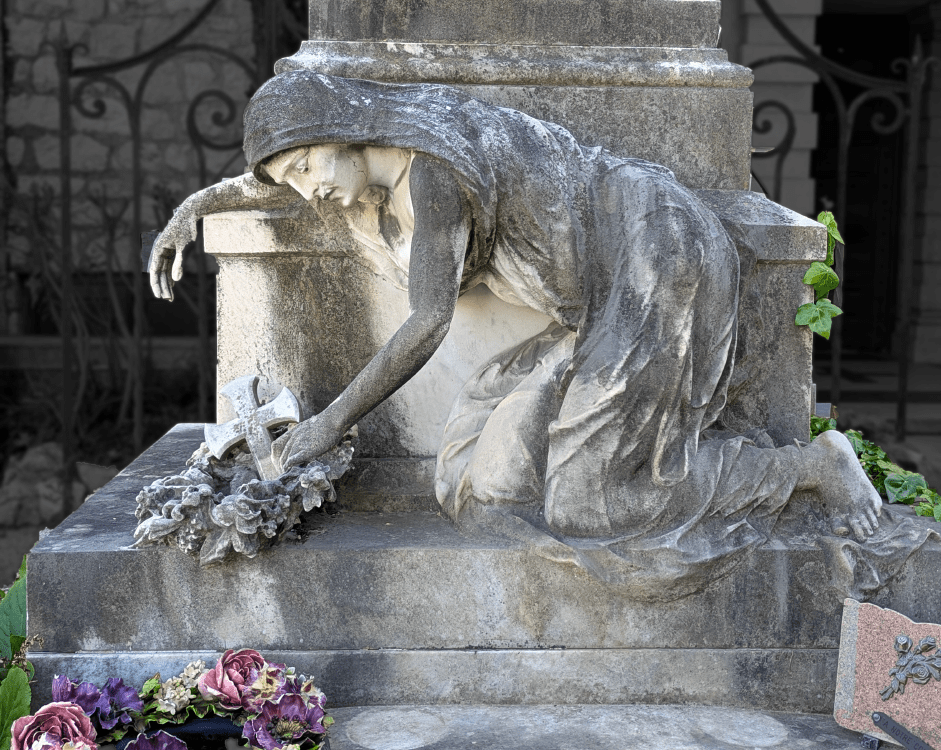

Above: Monument in Cimitiere du Chateau, Nice, France
A military citadel once crowned a hill overlooking the Bay of Nice. Bearing in mind that Nice did not become a permanent part of France until 1860, as part of one of the many wars fought during his reign, King Louis XIV (1638-1715) of France ordered the castle-fortress destroyed in 1706.
A portion of the grounds of the old citadel were opened as Cimetiere du Chateau in 1783. Instead of sentinels, monuments in the cemetery now occupy the most prominent vantage points for viewing the bay and surrounding countryside.
The cemetery* is an open space among the ruins, covered in winter with violets and daisies. It might make one in love with death, to think that one should be buried in so sweet a place.”
Preface to Adonais, Percy Bysshe Shelley, 1821
*This description was referencing the Protestant Cemetery in Rome, Italy.


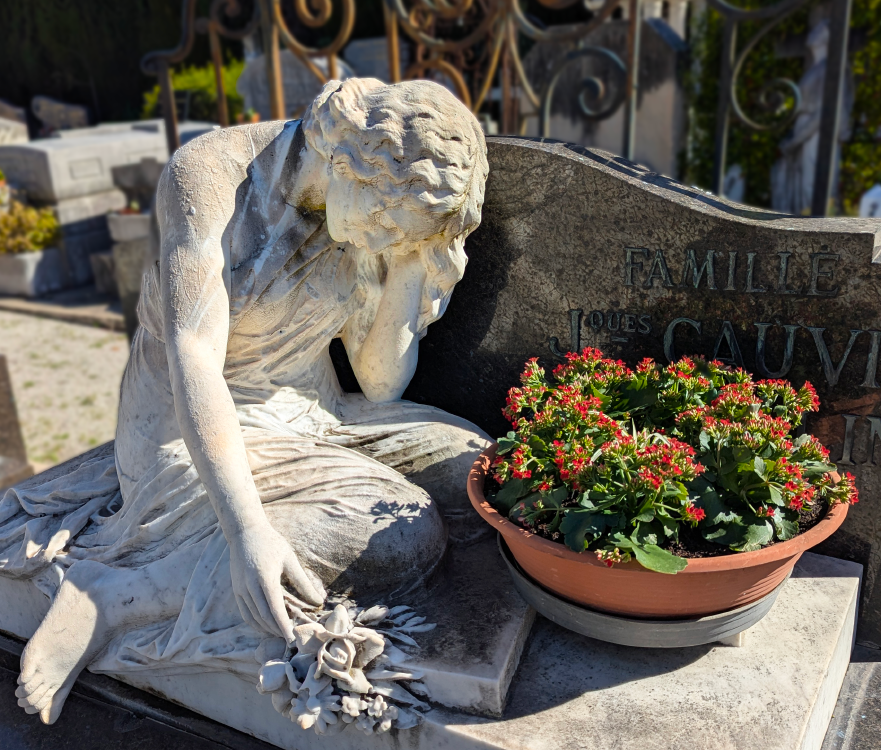
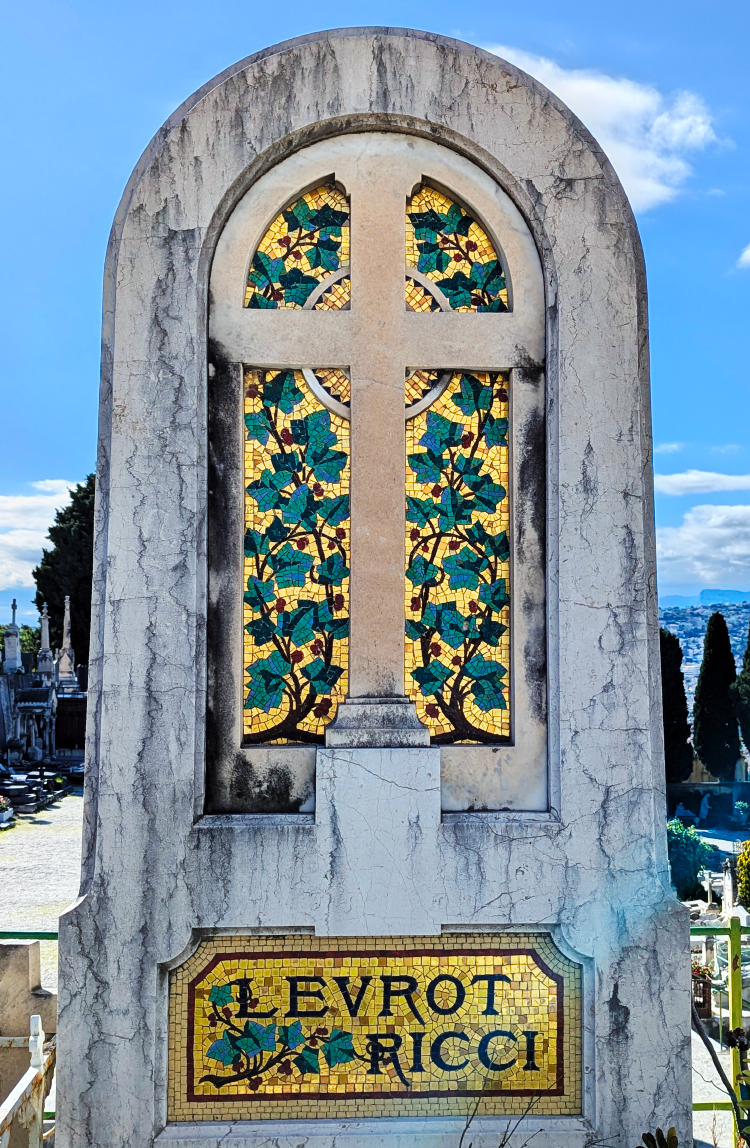


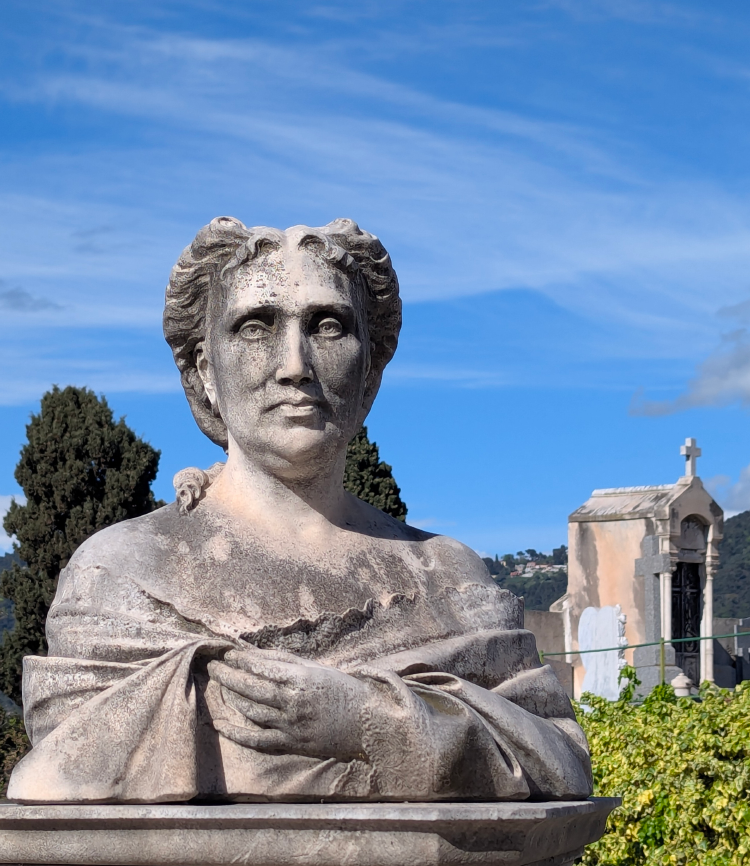
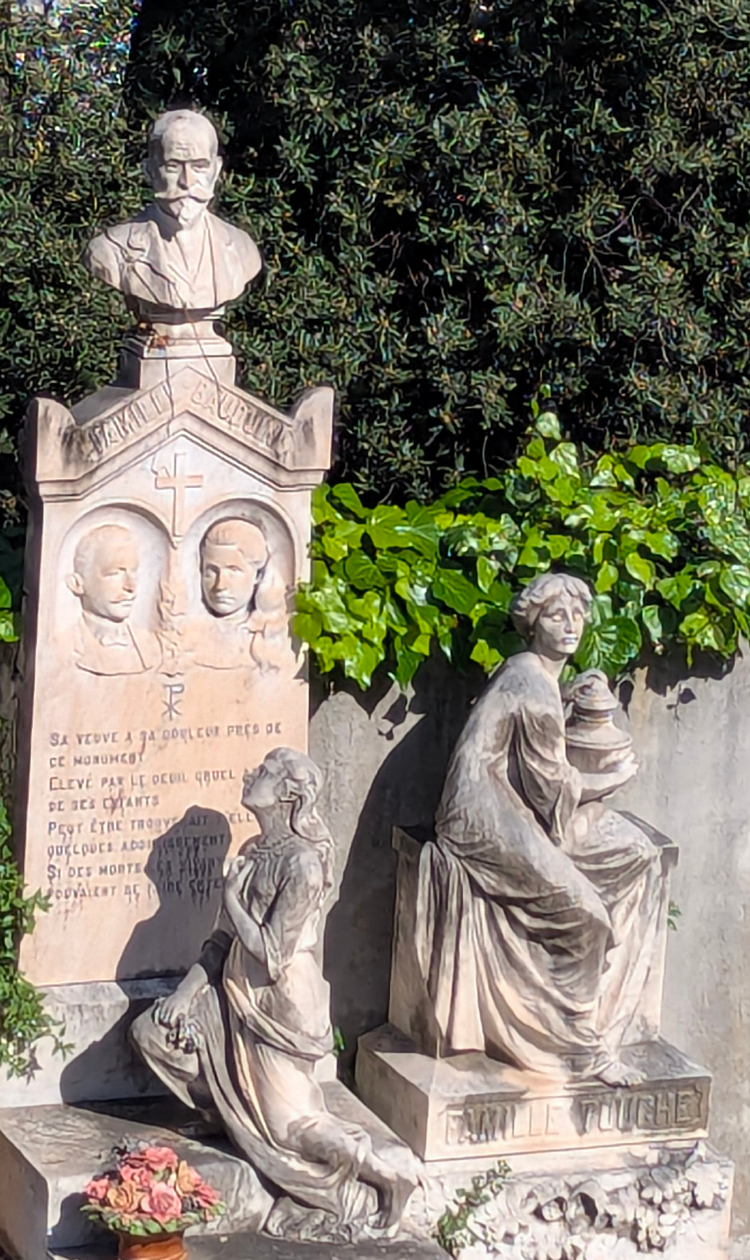
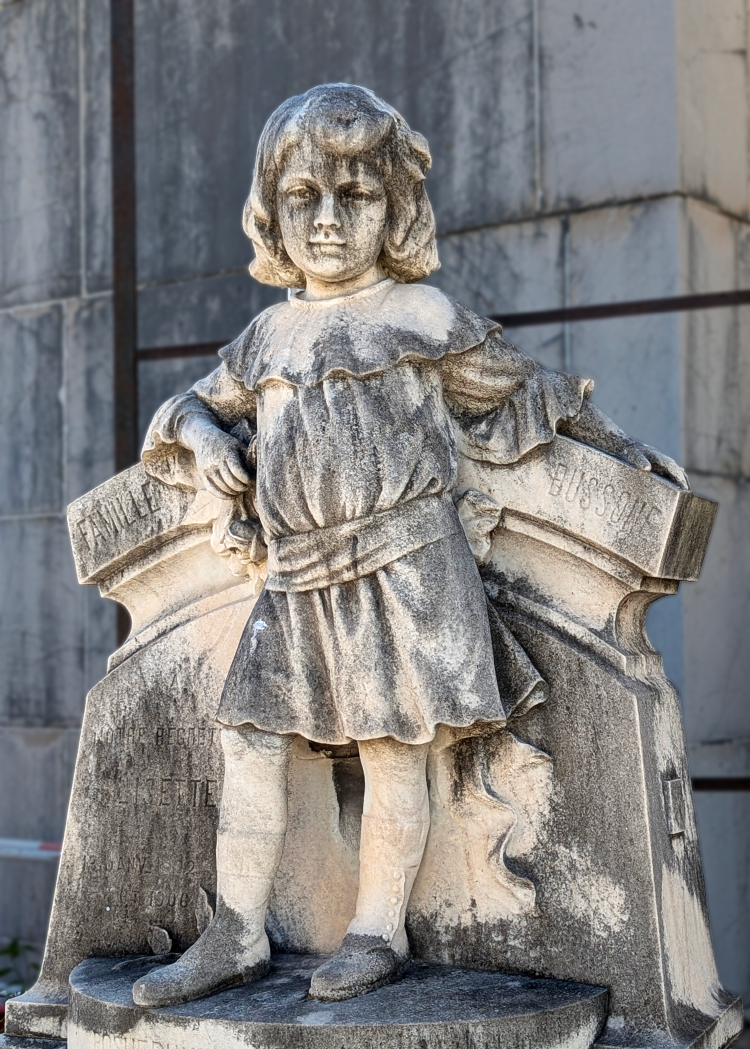
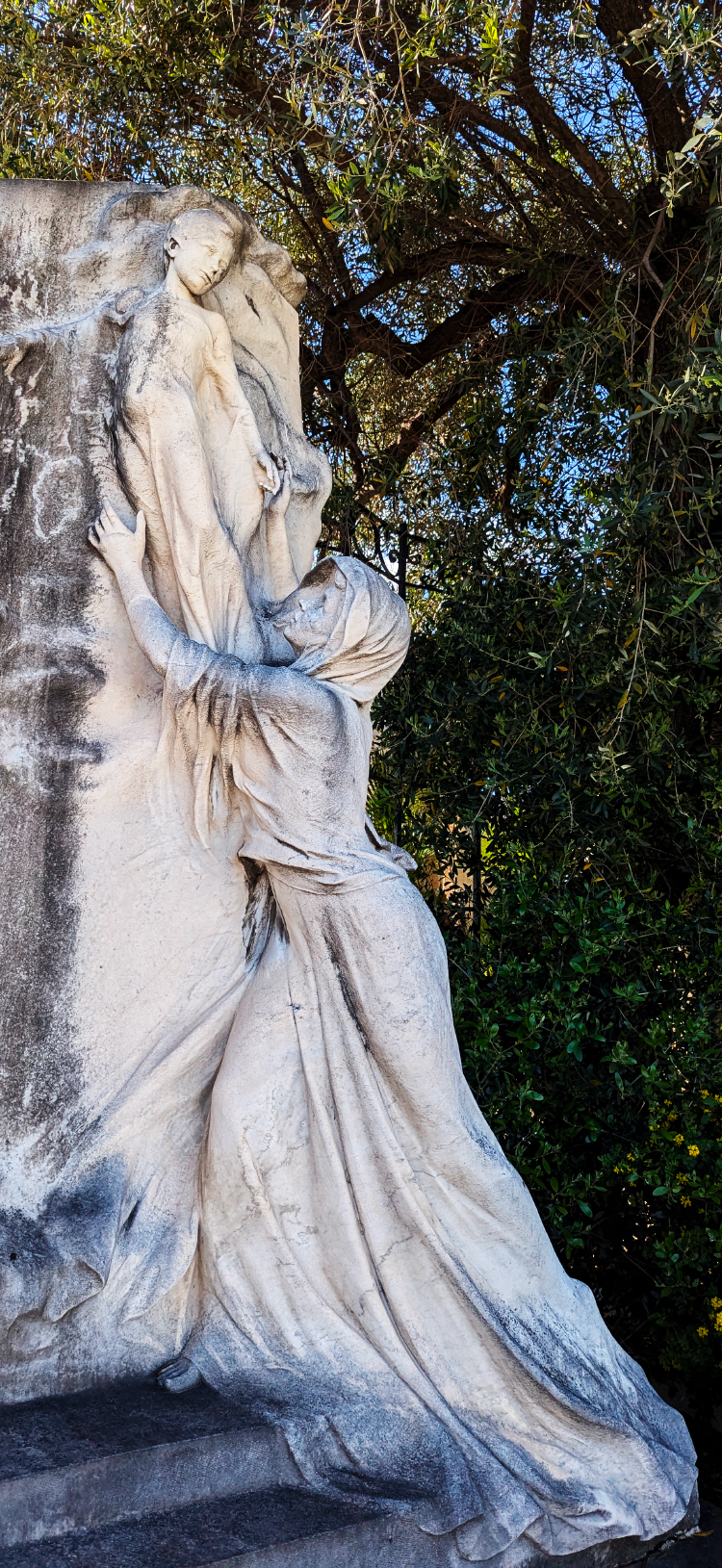
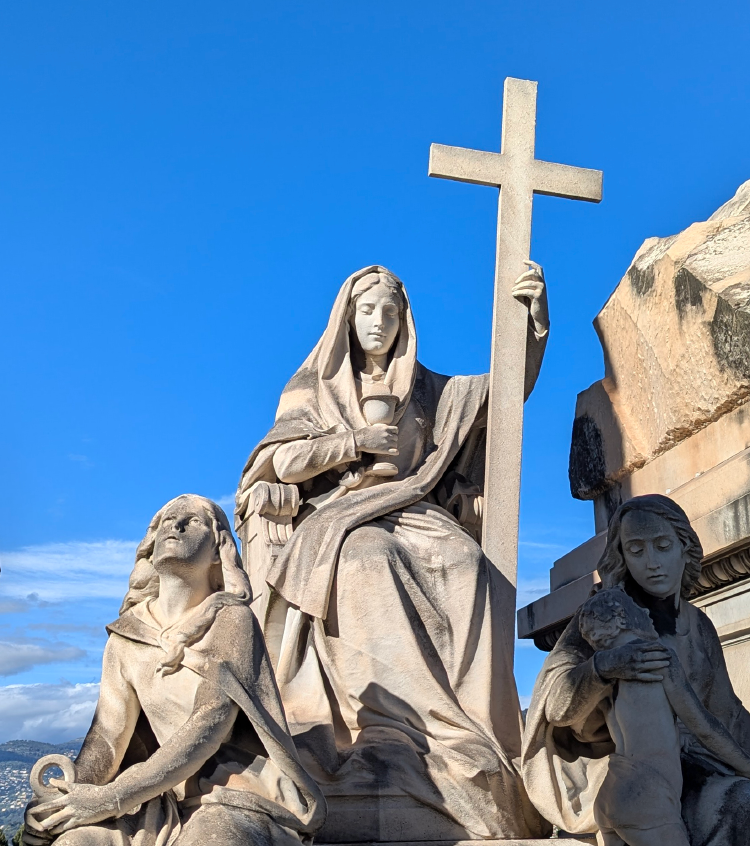
Above: Monumental sculpture in Cimetiere du Chateau, Nice
At the highest point in the cemetery, one angel soars above all others. With a finger raised as though to hush the grieving parents, she is perched atop a cloud-topped column marking the Francois Grosso family tomb.
Hope! You will find those you have cherished!”
A ribbon borne by a dove on the Grosso family tomb
A pair of chiseled oval medallions feature life-size reliefs of daughter Blanche (1877-1887) who died before her brother Edmond (1890-1894) was born. Their bodies are depicted rising up the column to heaven. Following the loss of both children, the prominent shipowner/merchant commissioned the 16-foot tall memorial. Francois (1847-1939) died four years earlier than his wife, Augustine Gianelli Grosso. The couple donated all their holdings to Nice to fund the House of the Mother and the Child, a charity they had founded.

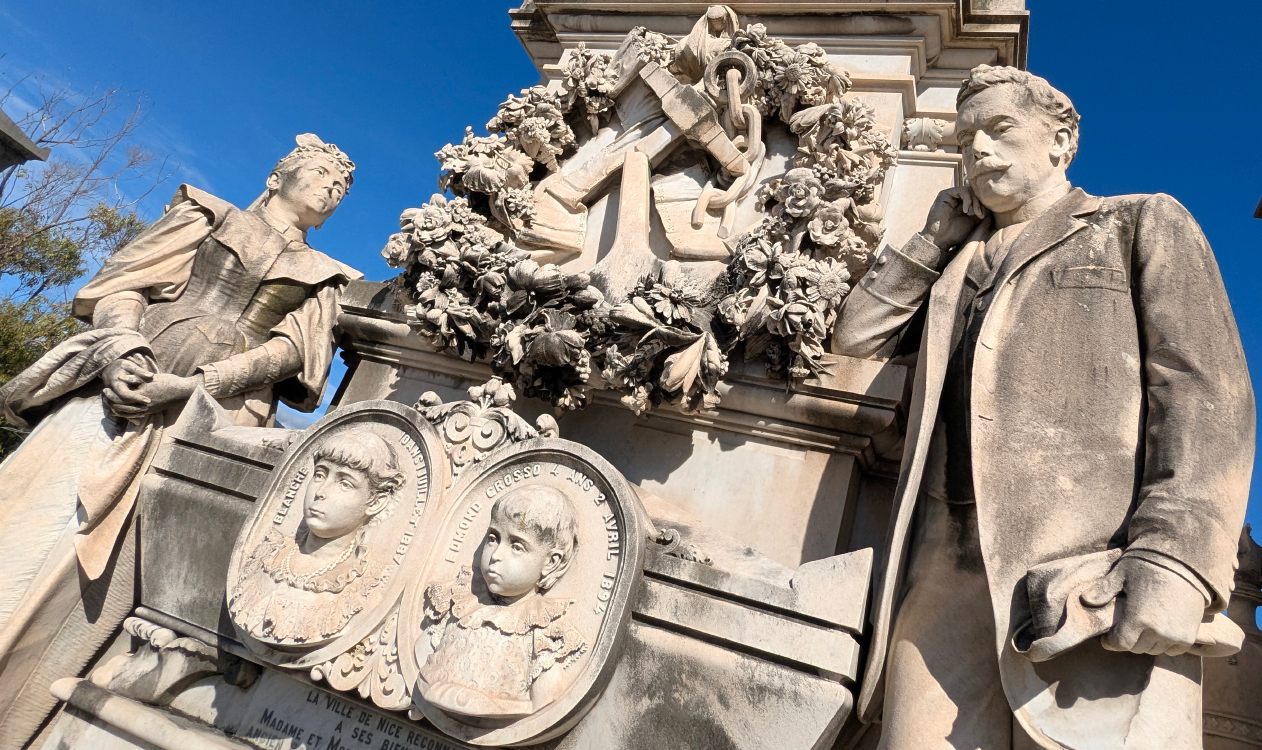
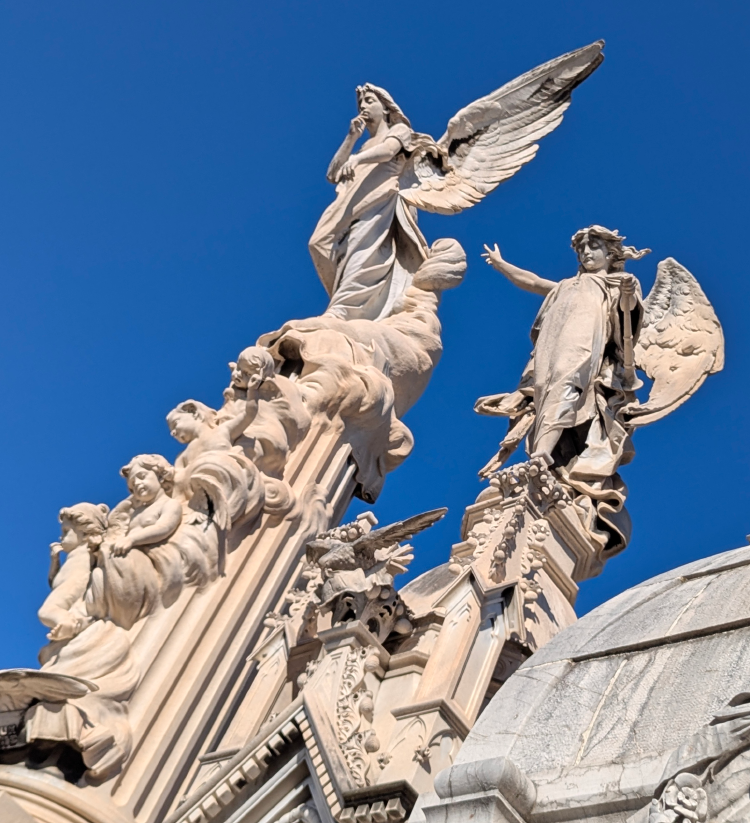
Above: White Carrara marble Grosso family tomb, Chateau du Cimetiere, Nice
If able to see, the dead at Nice’s Cimetiere du Monastere de Cimiez also would be blessed with impressive scenery. The hill has been home to a monastery since the 9th century. Franco-Ottoman forces destroyed the original one during their 1543 siege against the Holy Roman Empire. Franciscan friars began to erect a new church and monastery three years later. The cemetery entrance is but a few steps away.
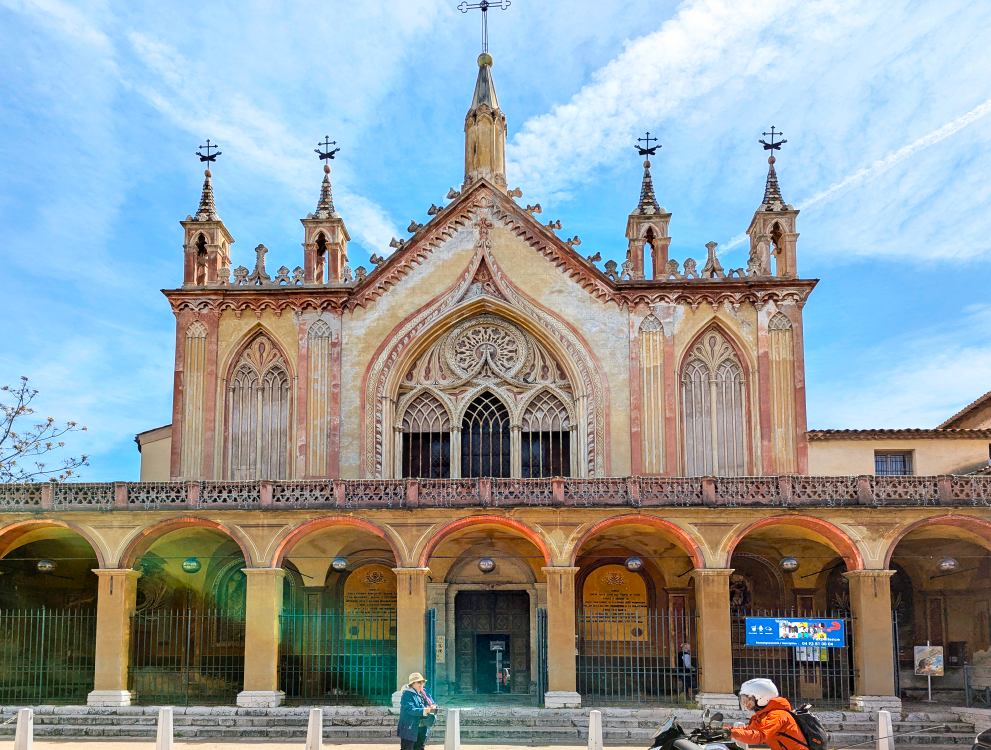


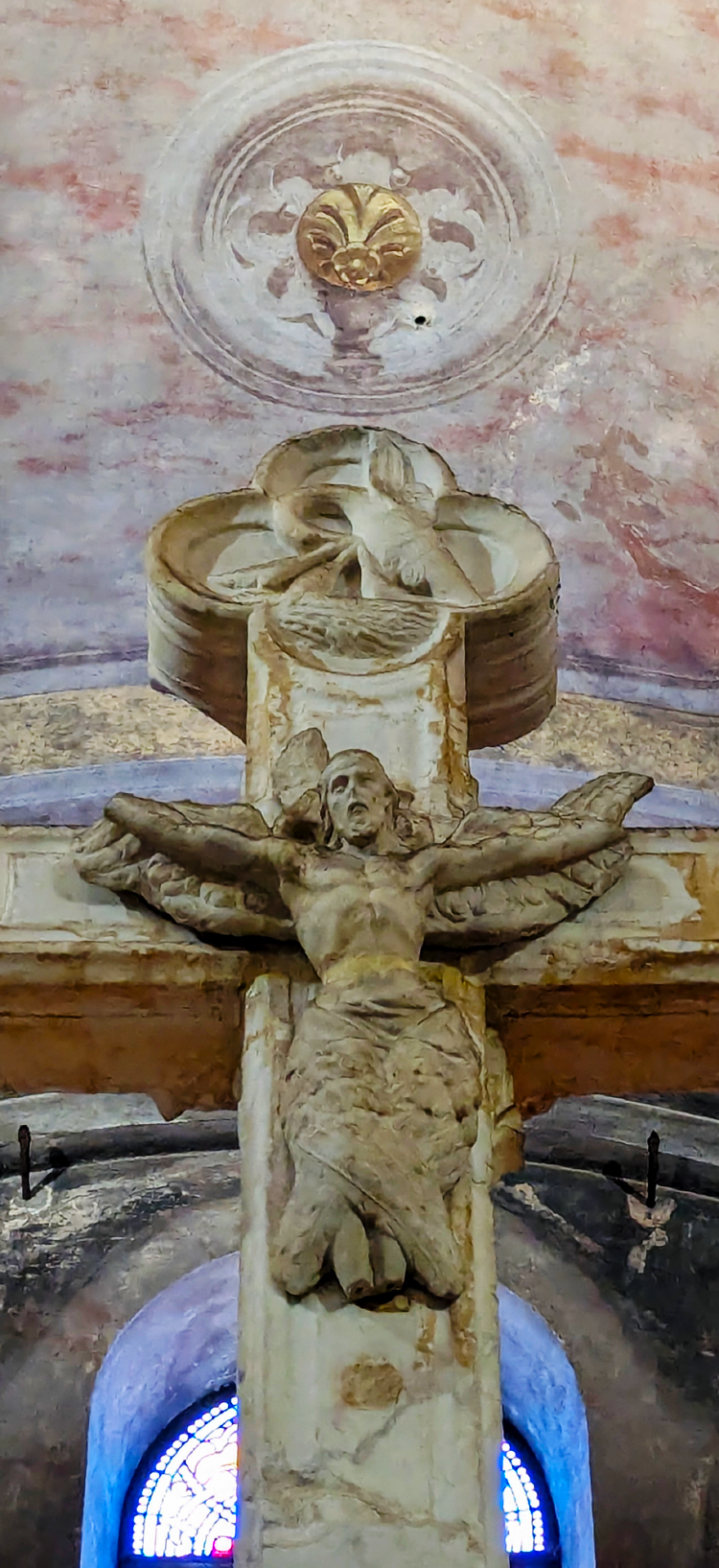

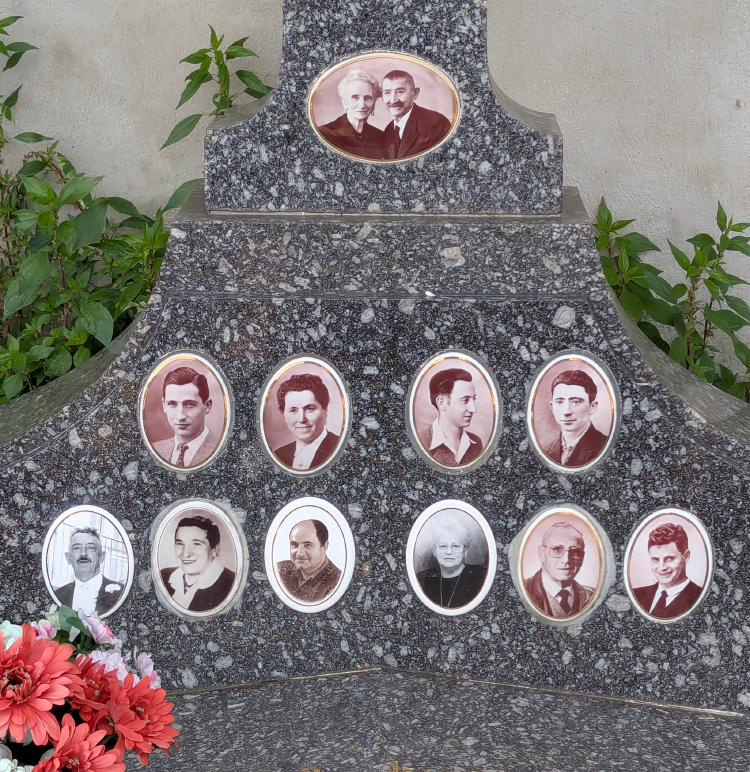
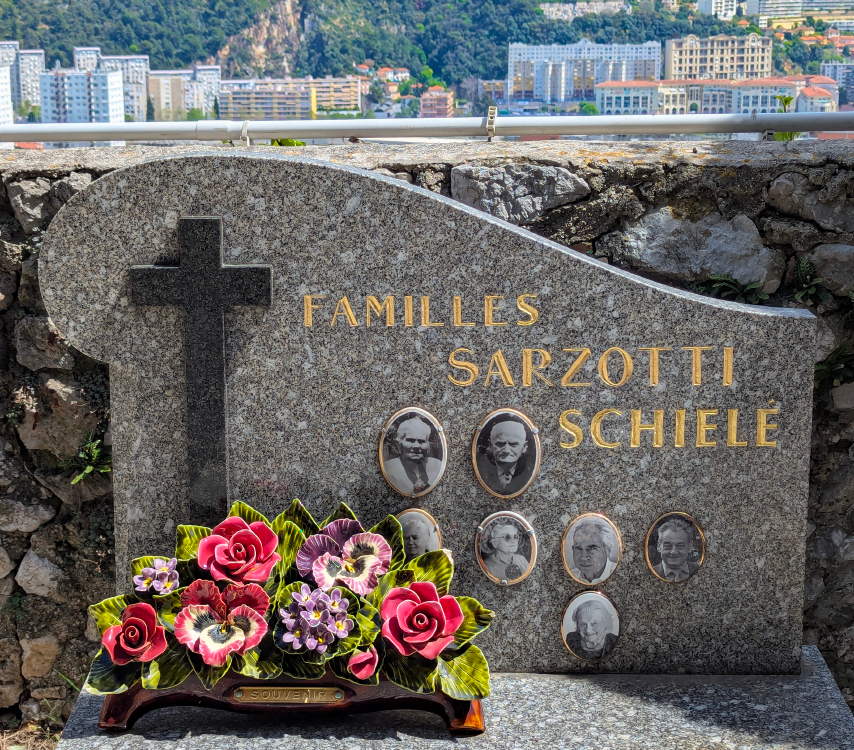
Above: The Monastery and Cemetery of Cimiez, Nice
The graves of artists Henri Matisse (1869-1954) and Raoul Dufy (1877-1953) are found there, but Matisse’s area was blocked off, and Dufy’s headstone is a humble marker. Among the most impressive monuments with a commanding view is that of General Francois Louis Auguste Goiran (1847-1927). General Goiran was France’s Minister of War before serving as Mayor of Nice for seven years; he died in Johannesburg, South Africa.
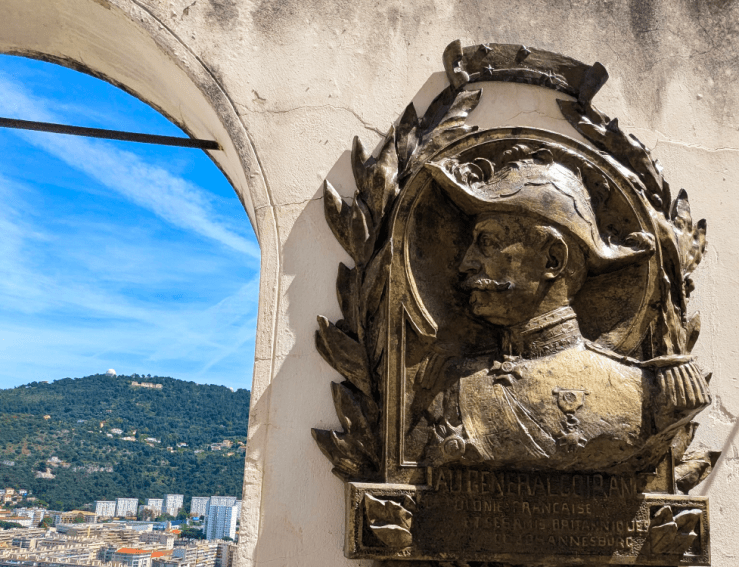
Above: Cenotaph dedicated to General Francois Louis Auguste Goiran, Cimetiere de Cimiez, Nice
Styles for family tombs in Cimitiere Saint-Pierre in Aix-en-Provence range from rustic faux-bois to elegant Gothic. Numerous ones featured masonic symbols, such as the owl. My favorite floral tributes are now the “immortal” brightly colored Majolica ceramic wreaths found in graveyards throughout France. The simple still-life arranged atop the marker for artist Paul Cezanne (1839-1906) was touching, but Lamar spotted a priceless tribute dedicated to a petanque, or boules, player missed by his friends.

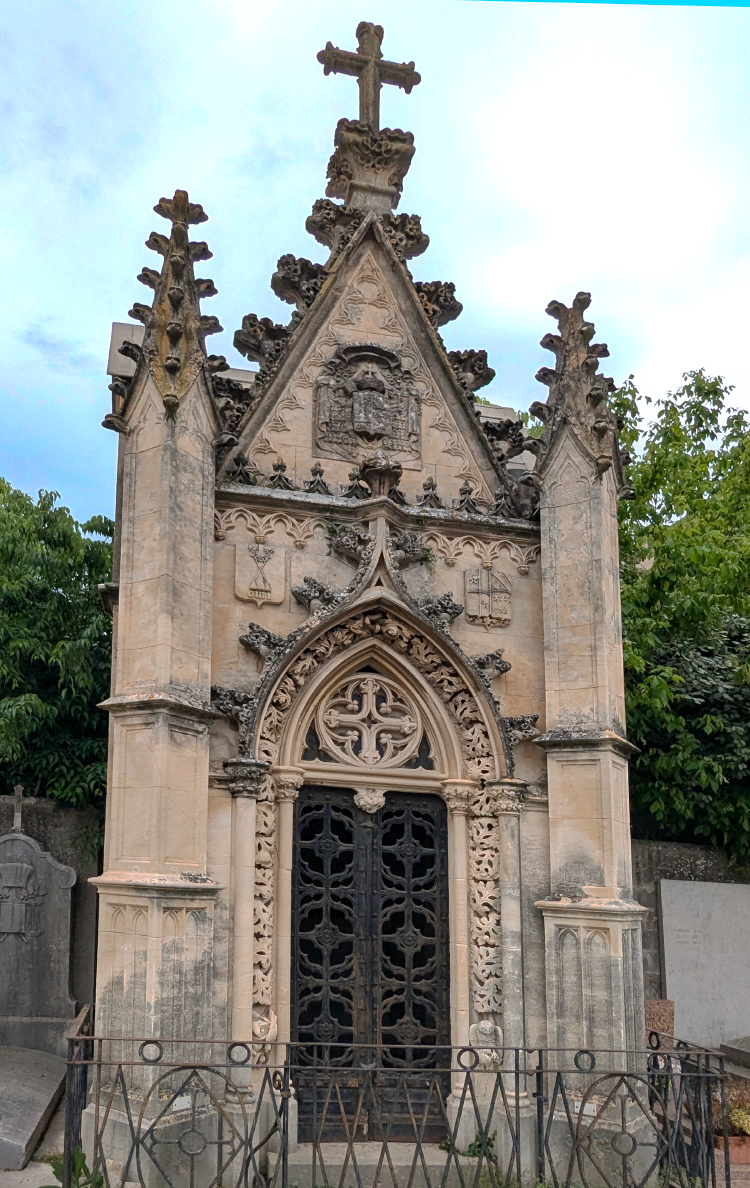
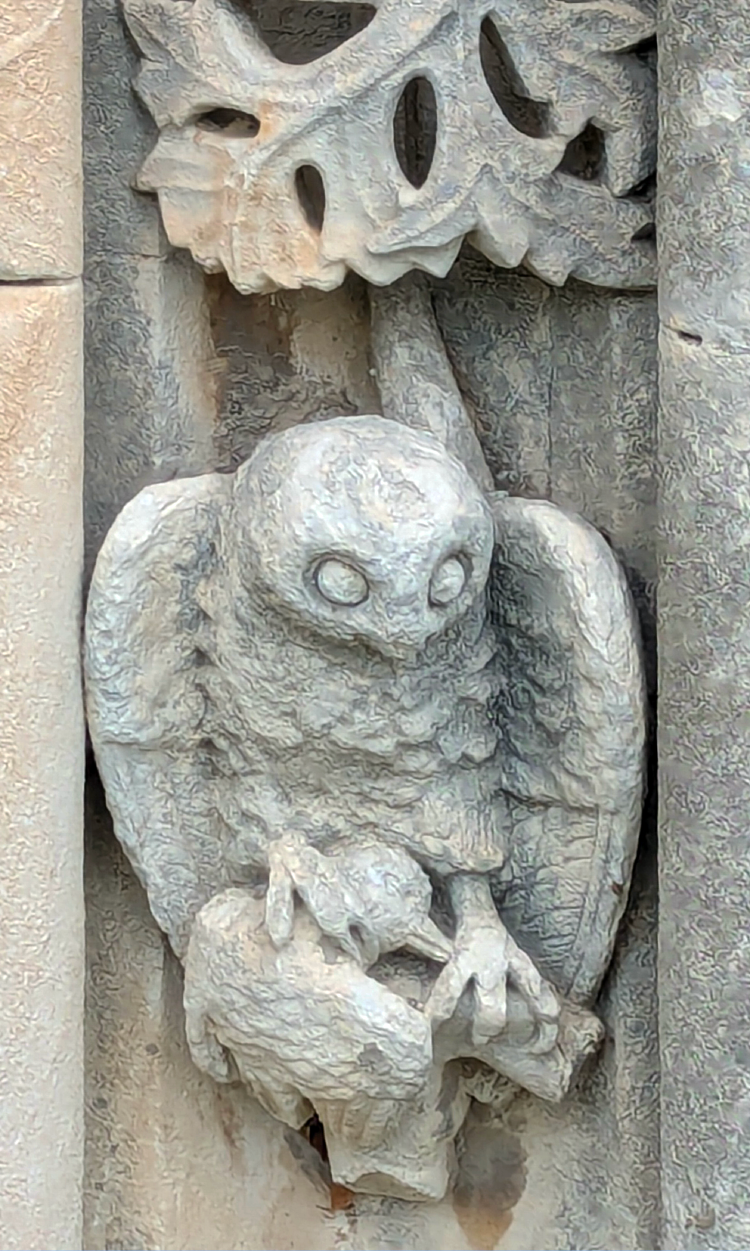


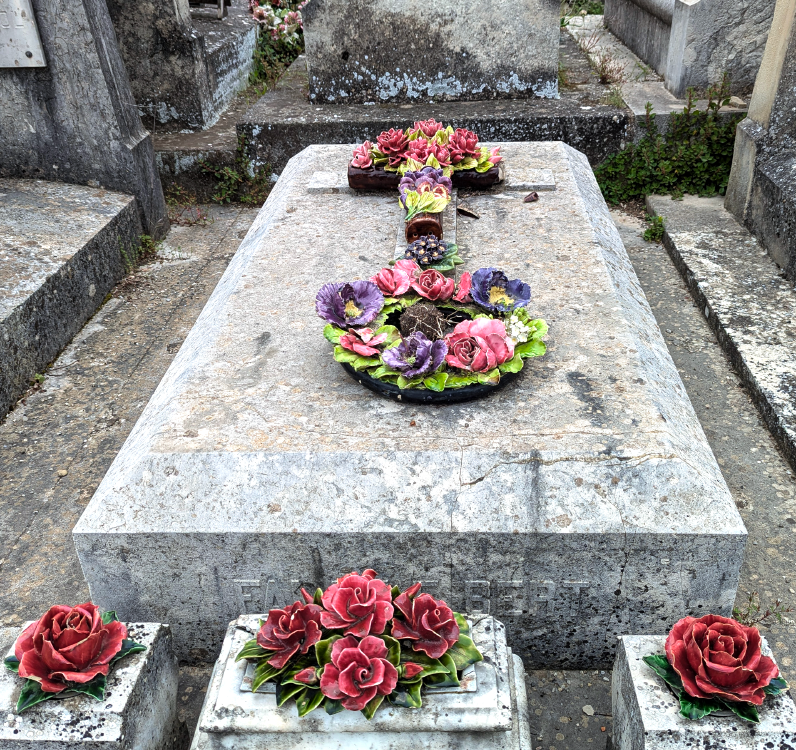


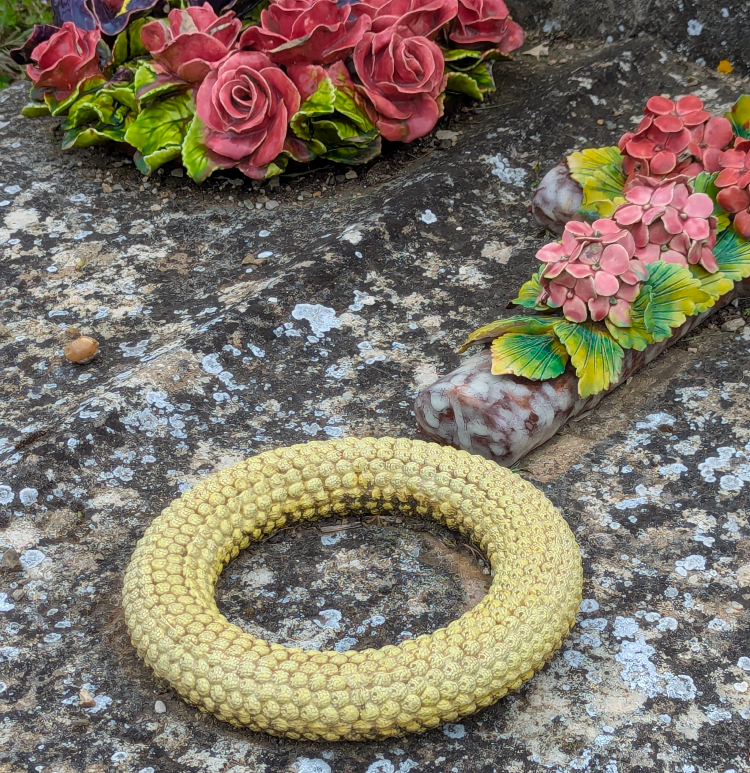
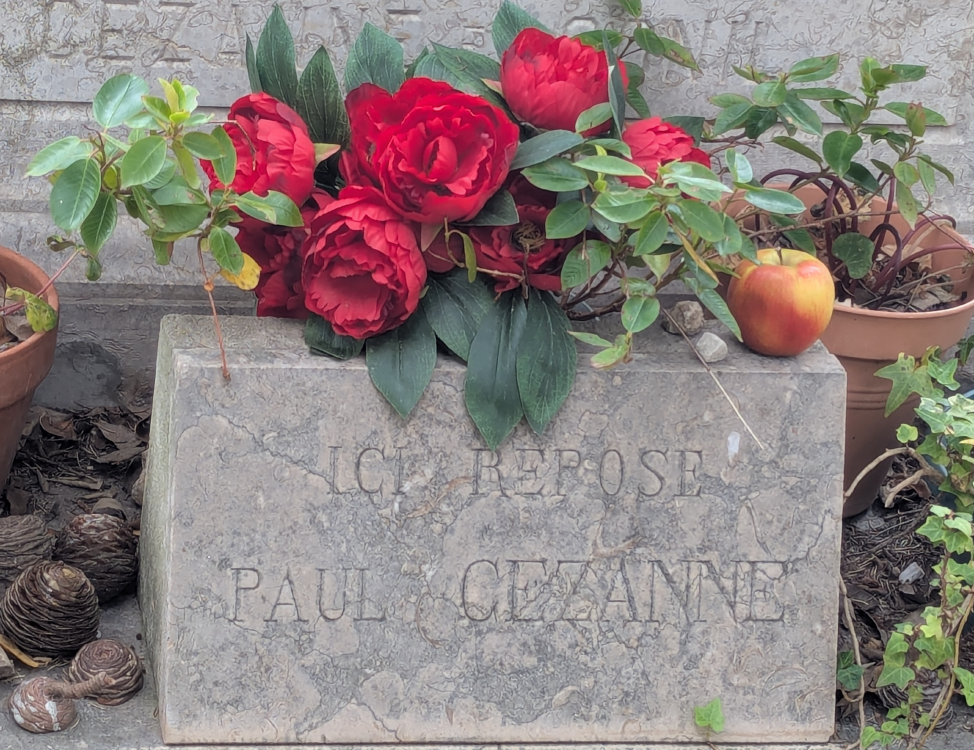

Above: Cimetiere Saint-Pierre, Aix-en-Provence
And, as always, there were cemetery cats.
And great appreciation expressed for my incredibly patient husband mired for half a century in marriage to a taphophile.
 Postcards from Barton Springs
I’m a fan of Cezanne, so his tomb is interesting. Why there, rather than Aix, i wonder?Sent from my iPad
LikeLiked by 1 person
Eric – Our only disappointment of the trip was the number of closed museums we encountered in Aix because of preparations for the month-later opening of the year-of-Cezanne exhibitions. But you are right. Cezanne is buried in Cimetiere Saint-Pierre in Aix-en-Provence. The post probably confused you because the first two cemeteries featured are in Nice; the third in Aix.
LikeLike