
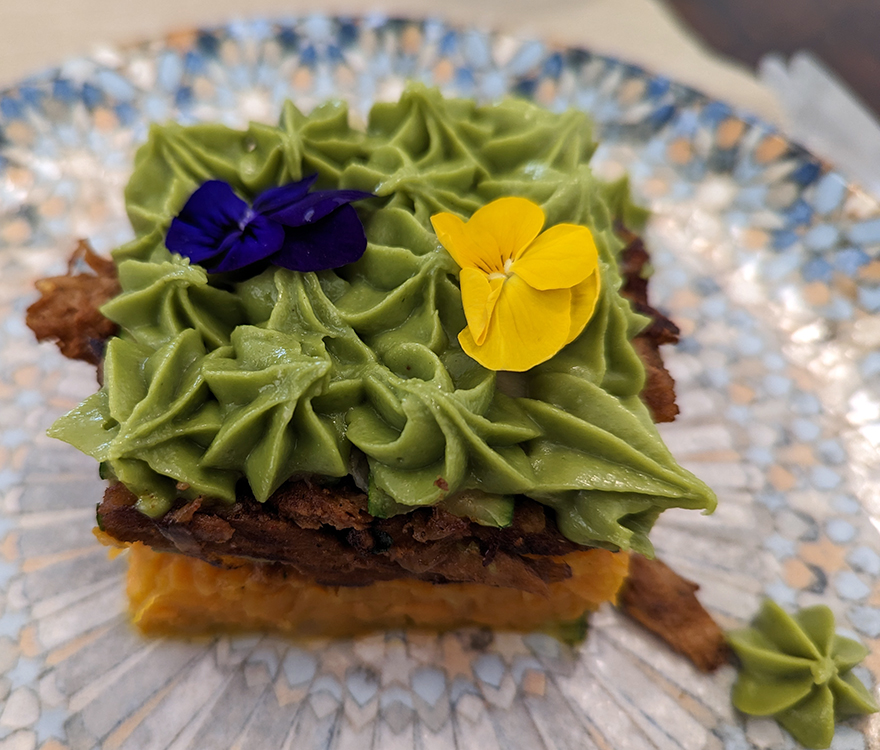
Above: Vegetable strata at Moon
A few more dishes originating in Sicily are introduced in this second part of alphabetized reviews of restaurants we sampled during our stay.
The first is braciolettine Messina, or spiedini. Thin slices of beef, pork, veal or fish are wrapped around a paste-like filling made from bread crumbs, parsley and provolone moistened by olive oil. The small bites are then threaded tightly together on wood skewers before grilling.
I assume that the method was developed to use filling to stretch the more expensive meat or seafood further, much like beccafico mentioned in the earlier half of the restaurant alphabet. While the dish originated northeast of Siracusa, the spot to order them in Siracusa is La Bracioletteria. We tried both swordfish and tuna, and they were cooked perfectly.
The second dish is caponata Messinese. Many variations of caponata are found throughout Sicily. The unifying must-have ingredient at the core is fried eggplant. All of the vegetables are cooked separately before combined in a sweet-and-sour agrodolce sauce and refrigerated for at least eight hours. La Bracioletteria’s version was delicious, with fried sweet red peppers and tender chunks of potatoes and, if remembering correctly, maybe celery, pine nuts, raisins and capers. The spot also offers a handsome platter of grilled vegetables.
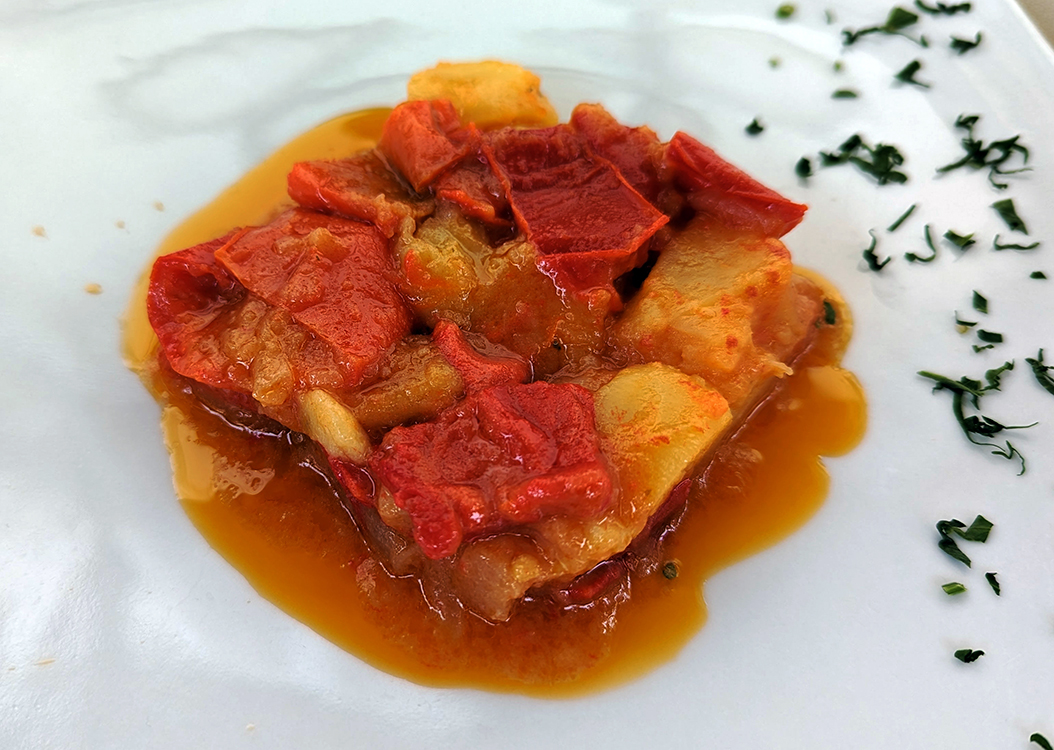
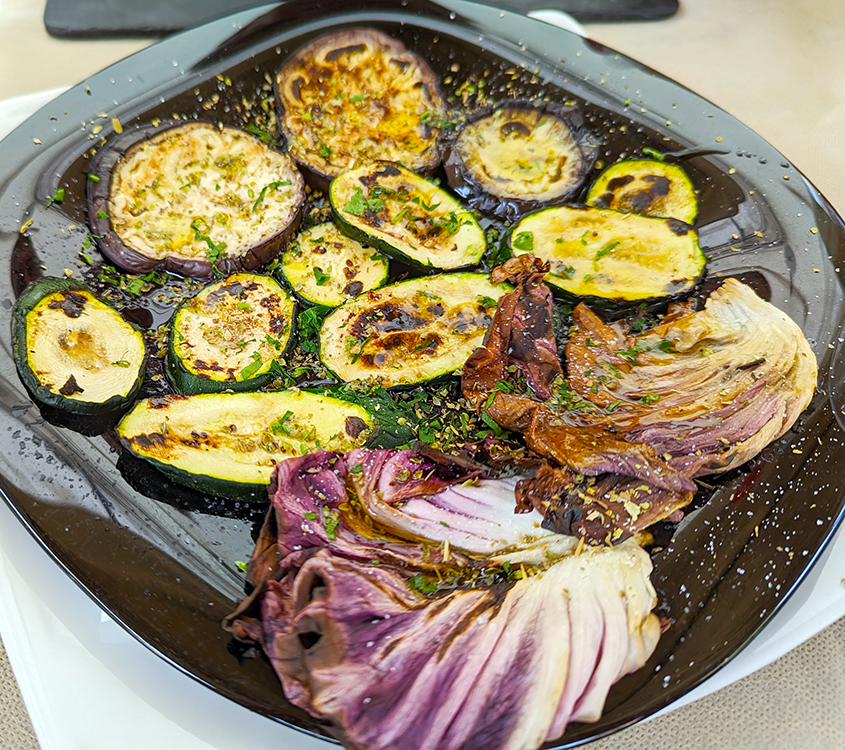
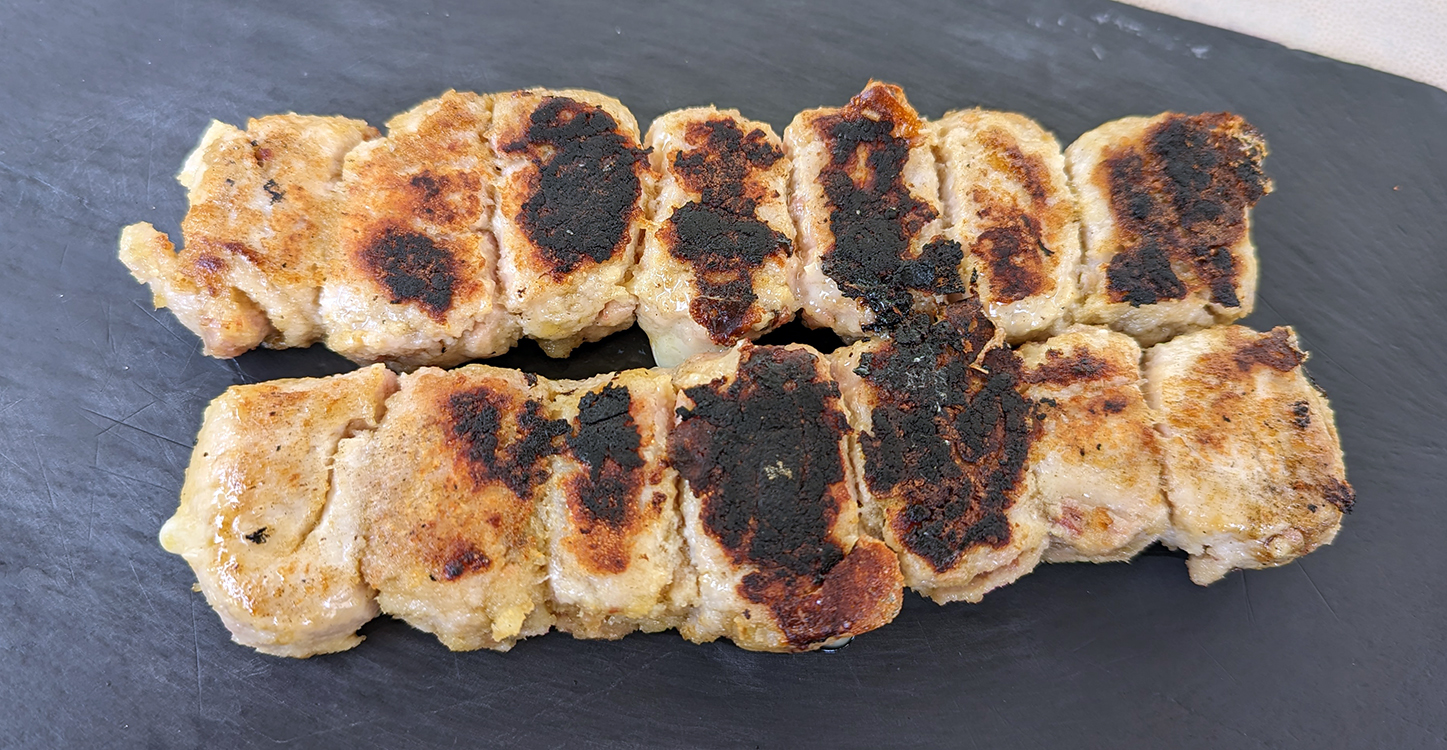
Above: La Bracioletteria
The interior of La Foglia 1984 is artfully staged by the sculptor and writer who run it. The combination of antiques and funky accessories create a homey atmosphere.
We tried both the pasta Norma and vegetable ravioli. Both were freshly prepared with good ingredients, but they tasted a bit bland, particularly the ravioli. The website for the restaurant explains, though, that the couple are not fancy chefs, they are cooks preparing traditional dishes the way a good home cook would. The hosts were friendly, as if welcoming you into their charming home.
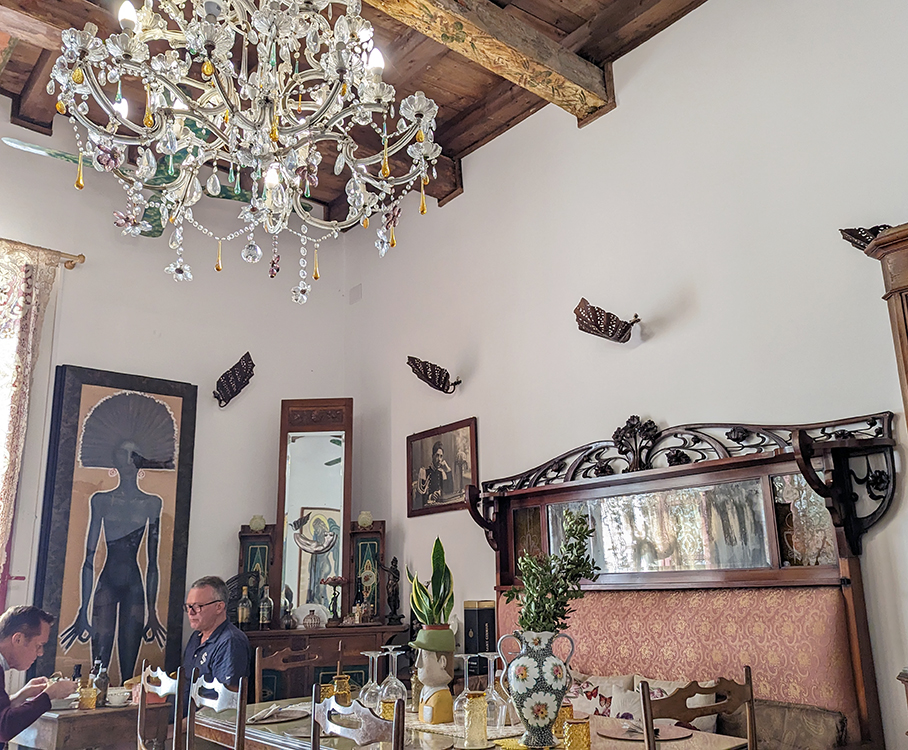

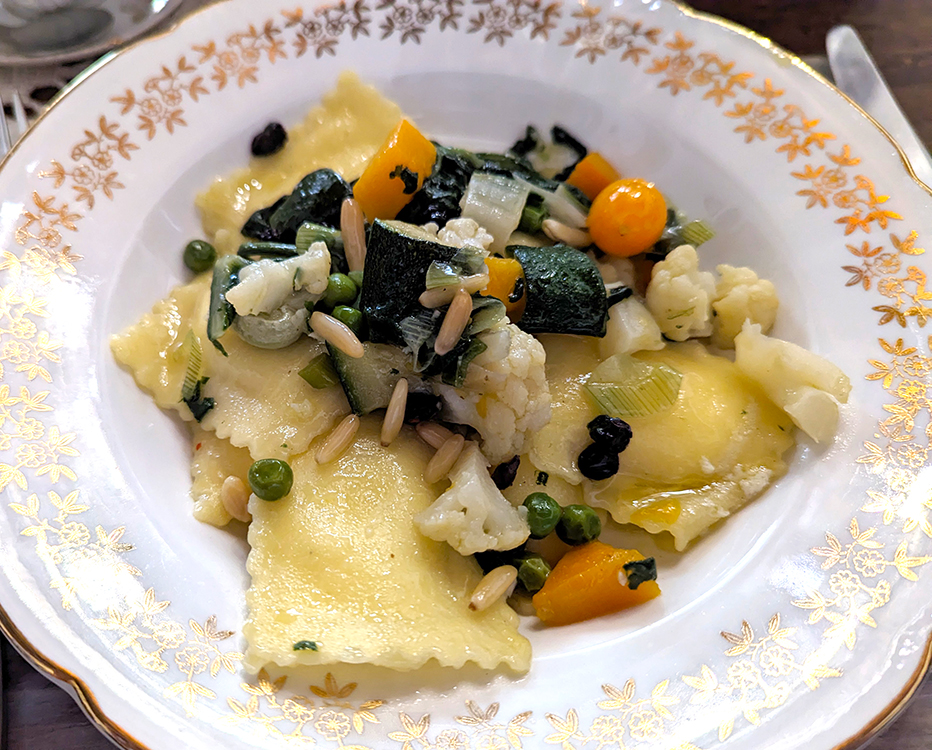
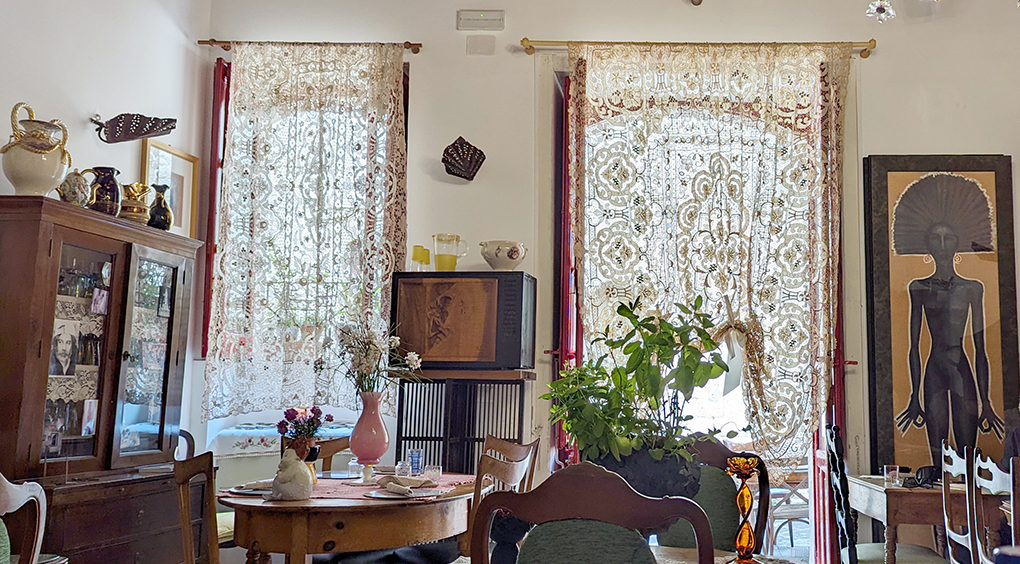
Above: La Foglia 1984
The seafood at Locanda del Collegio drew us in several times. Perfect on days when cruise ships docked in Siracusa as it was tucked on a side street the passengers tended not to wander down.
Many Italian restaurants in the United States offer eggplant parmigiana, but, unlike its Sicilian origins, they batter the eggplant slices heavily and fry them. In Sicily, batterless eggplant is fried in oil before layering with tomato sauce and cheese – a much better preparation. Fish was the filling the chef chose for arancini.
Among the other dishes pictured below are tender grilled octopus on a traditional bed of potato puree; grouper ravioli topped with seafood; and trofie pasta with swordfish in a pistachio crust. The only item we tried that we did not care for was Locanda’s take on sarde alla beccafico. The large patties looked more like fried hamburgers, packed with so much breading that we couldn’t taste the sardines.
But now, to the most surprisingly wonderful Sicilian dish – pasta con le sarde. We postponed ordering it about a week because a sardine-based sauce just did not sound appealing. I was so happy we didn’t wait any longer because we began to order it or its anchovy cousin repeatedly.
The ingredients and preparations vary greatly. Locanda’s sardine version included wild fennel, raisins, pine nuts and bread crumbs. The restaurant’s anchovy pasta, pictured below, included cherry tomatoes, capers, pine nuts and raisins. Both were served over spaghetti, while most places we ordered it used bucatini. Pasta in Sicily is definitely on the al dente side, and it was always better than any we’ve been served in restaurants in the United States.
Since returning, I’ve made pasta con sarde once, using fileted and skinned canned sardines. Sadly, no wild fennel was to be found, but the fresh fennel I bought substituted fairly well. In trying to replicate our favorite components, I combined parts of recipes drawn from Ursula Ferrigno’s Cucina Siciliana and Cettina Vicenzino’s The Sicily Cookbook. My version was good but needs some tinkering. Our pasta of choice was steel-cut bucatini, which we value even more after the great nationwide bucatini shortage of 2020, a crisis almost as major as the toilet paper shortage.
Small tables at restaurants everywhere can make it difficult to accommodate bottles of wine, particularly when they need to be kept chilled. Most places would bring a small stool, but the solution at Locanda del Collegio was among the most handsome – an acrylic ice bucket that simply clipped onto the table.
Also, note the length of the handsome knife and fork (Sorry to have used them first.). I’m convinced they were designed to enable one to simply reach across the table for shared appetizers or to pluck samples from your dining companions’ plates. I witnessed that form of exuberant camaraderie often in Sicily and found myself happy to embrace the behavior.
And, as he often did, someone at the table ordered deconstructed cannoli.
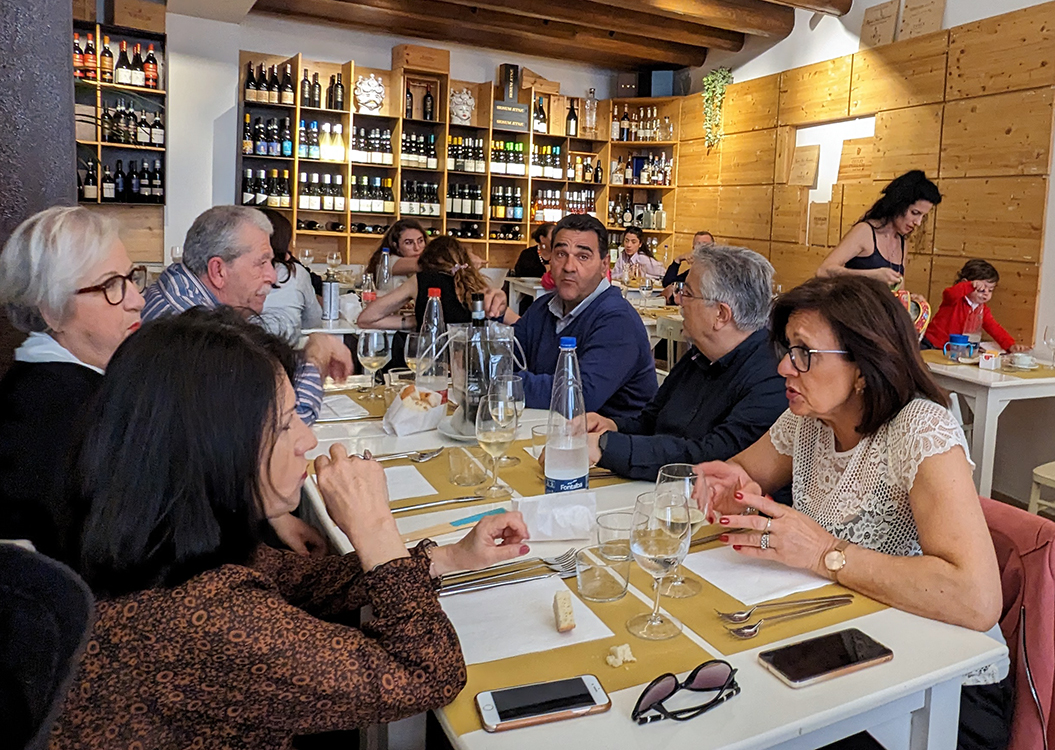
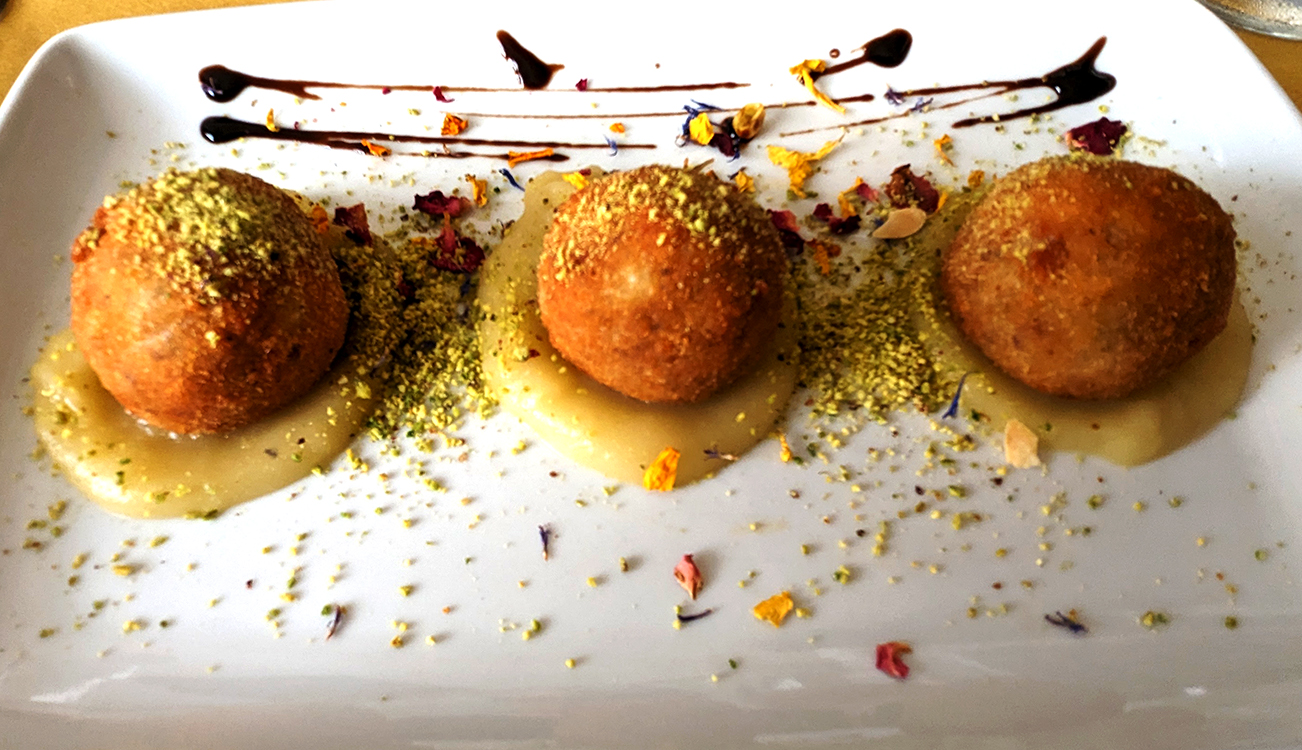
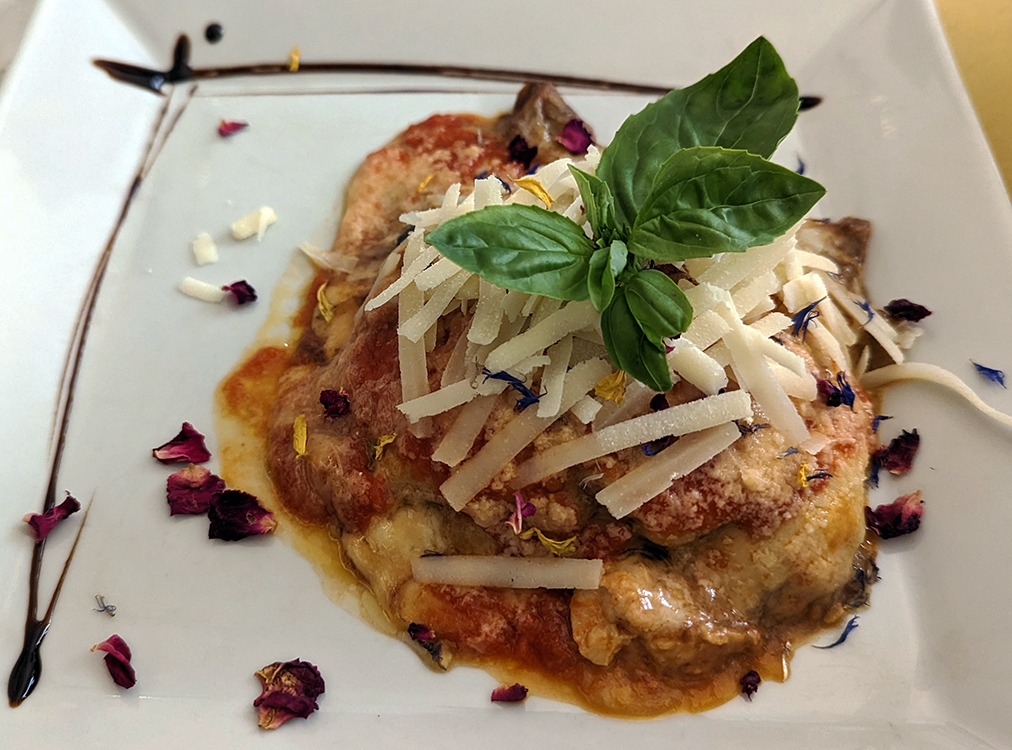
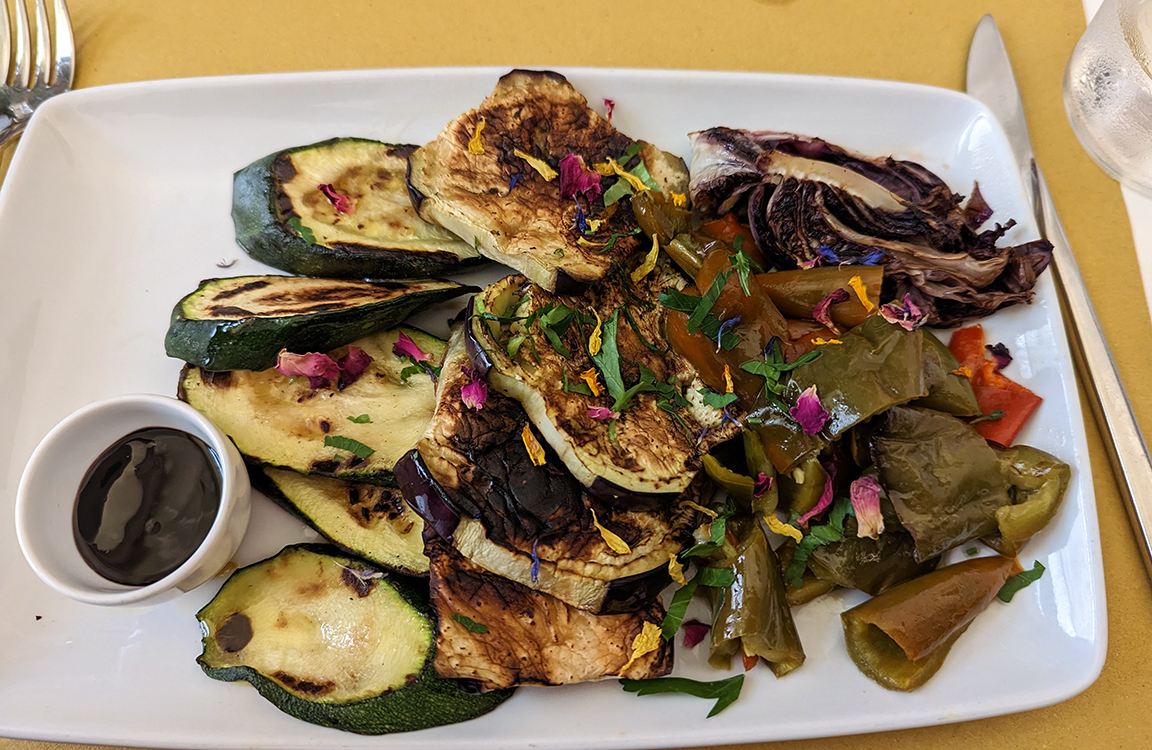

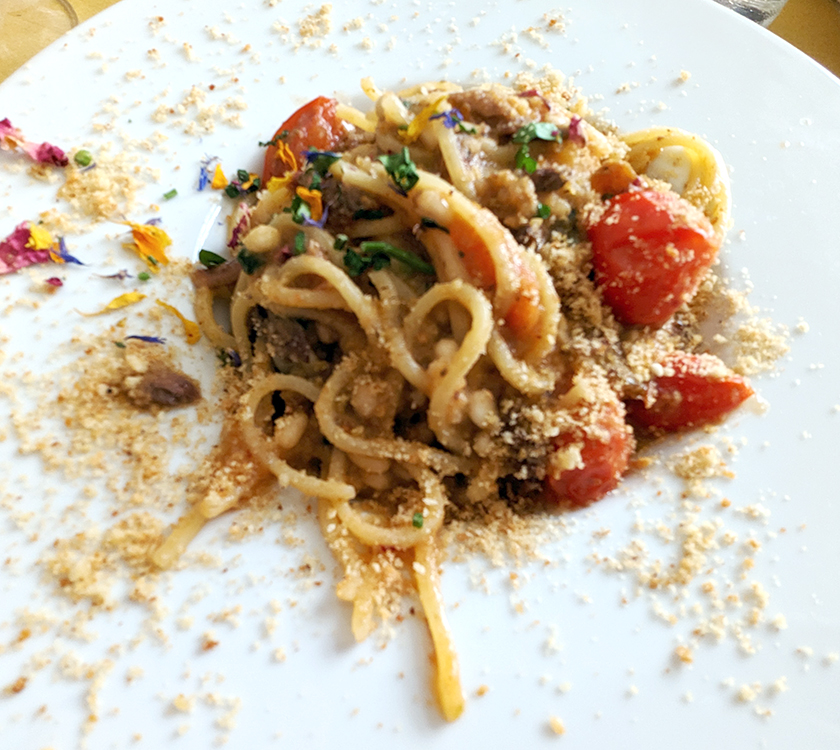
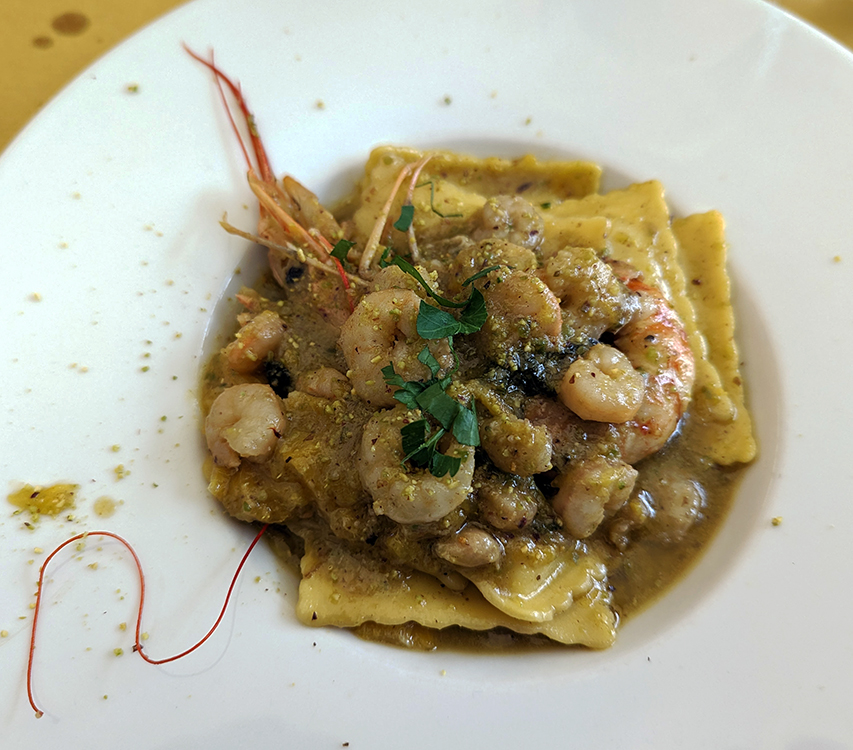
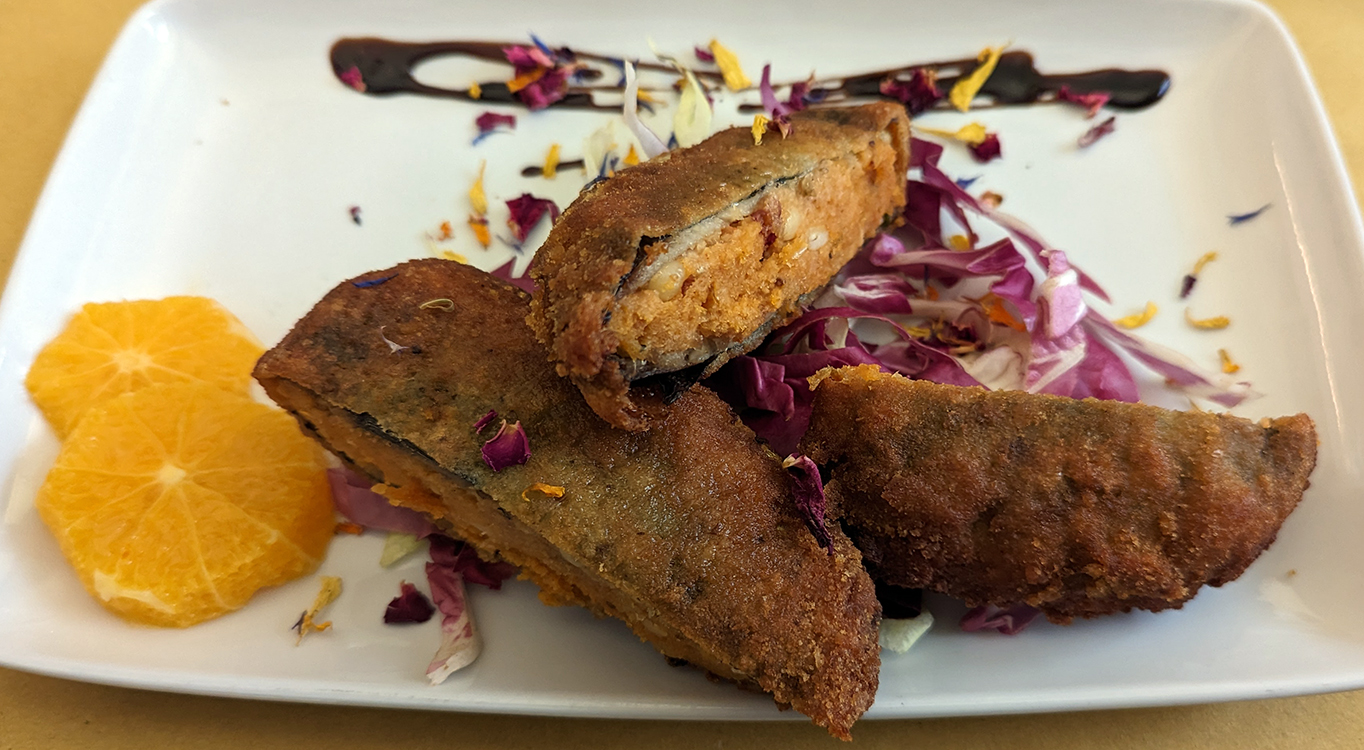

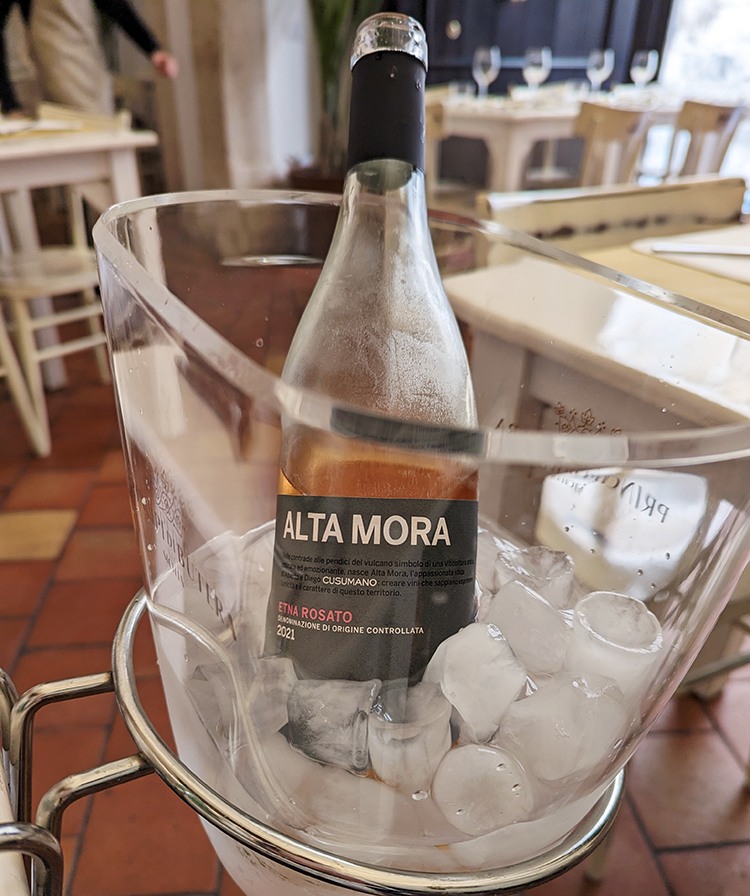


Above: Locanda del Collegio
The name of the restaurant Moon is an acronym derived from of “Move Ortigia Out of Normality,” and it certainly achieves that. Don’t let the fact that it’s vegan deter you from going. With neither seafood nor cheese on the menu, amazingly, Moon might have been our favorite place to eat in Sicily.
Moon’s menu changes often, but among the creative dishes we had were that lusciously rich vegetable strata featured at the top of this post, the natural sweetness of roasted pumpkin contrasting with a savory layer of mushrooms. Tagliatelle tempeh Bolognese somehow was better than many a meat version. The vegetable sushi served with mixed vegetables tempura was an order we repeated. The vegetable burger, enhanced by caramelized onion, was outstanding.
There was a surprising fish-free version of the sarde pasta sauce I described above, which emphasizes how much flavor is imbued by wild fennel, pine nuts, raisins and freshly made seasoned breadcrumbs. Cooked cabbage was the only vegetable my mother made that I disliked. I gradually discovered that I just want more done to it, and Moon did a lot of delicious things to the stuffed cabbage with a perky pansy on top. We never had room to even consider dessert.
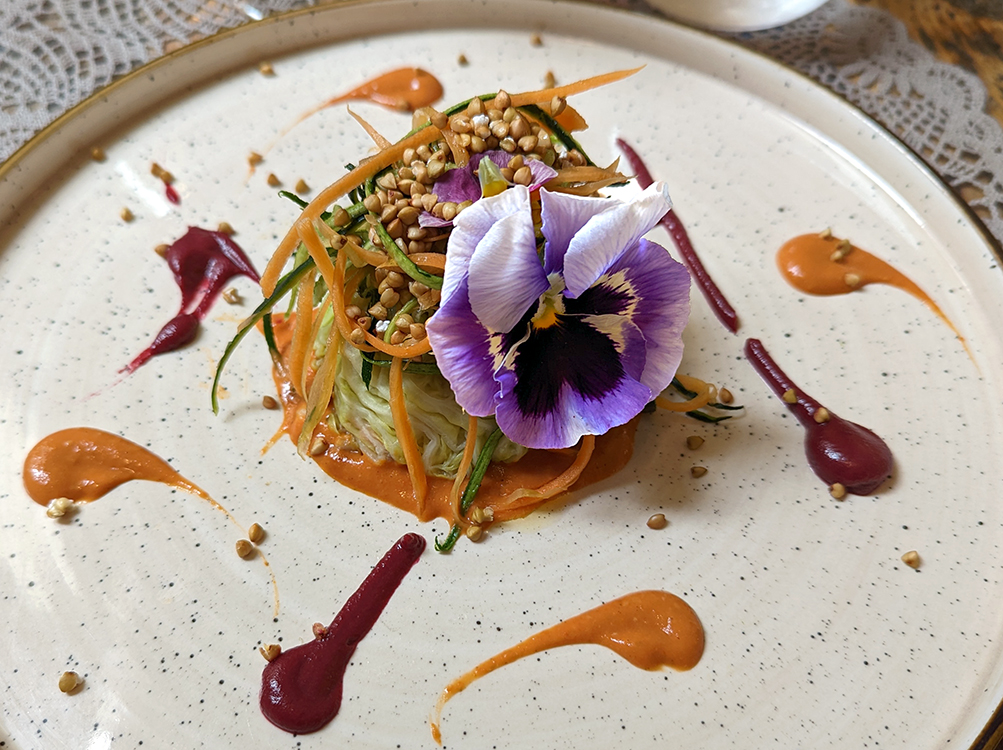
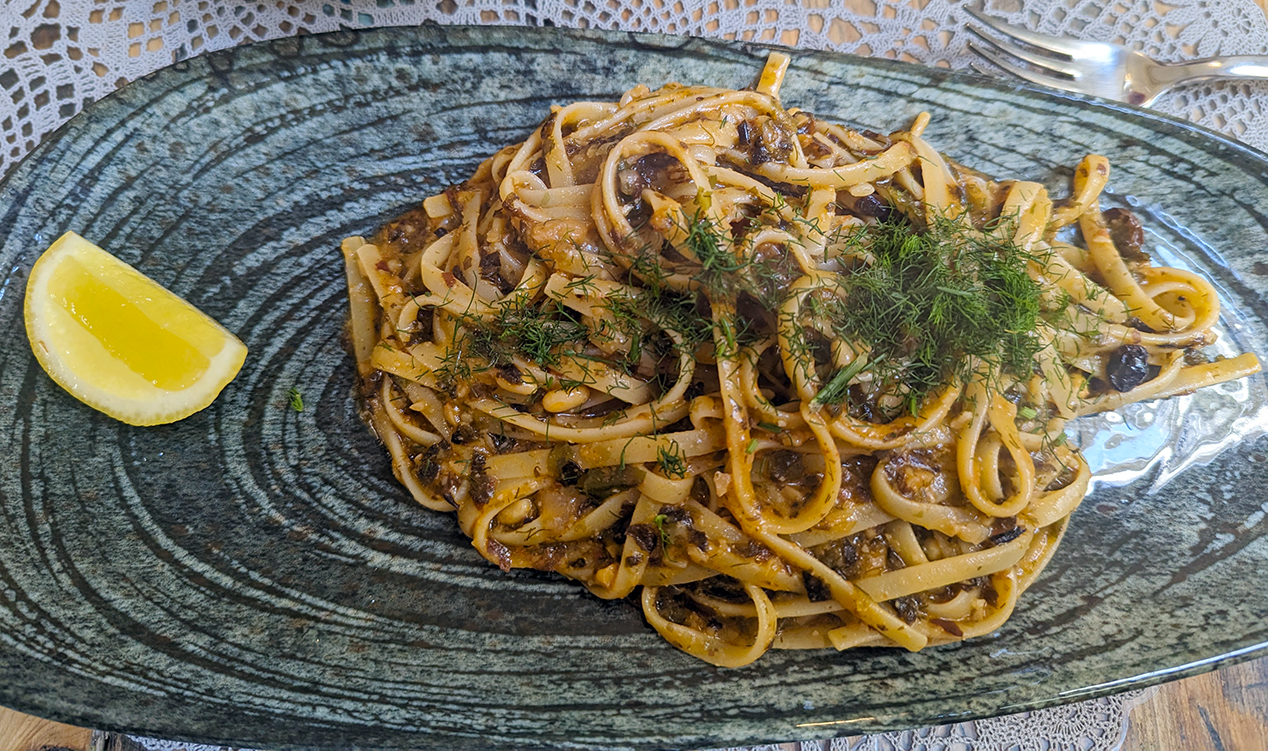
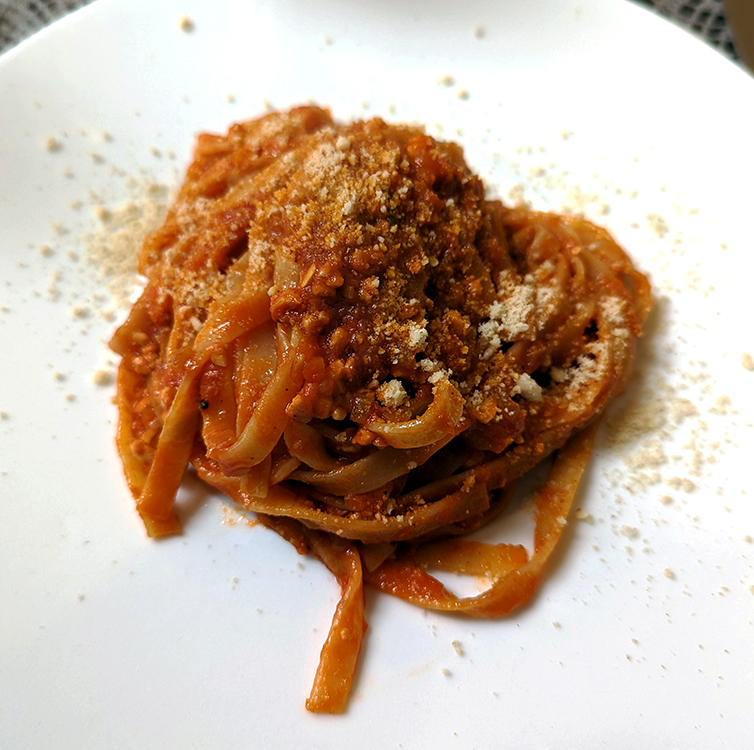
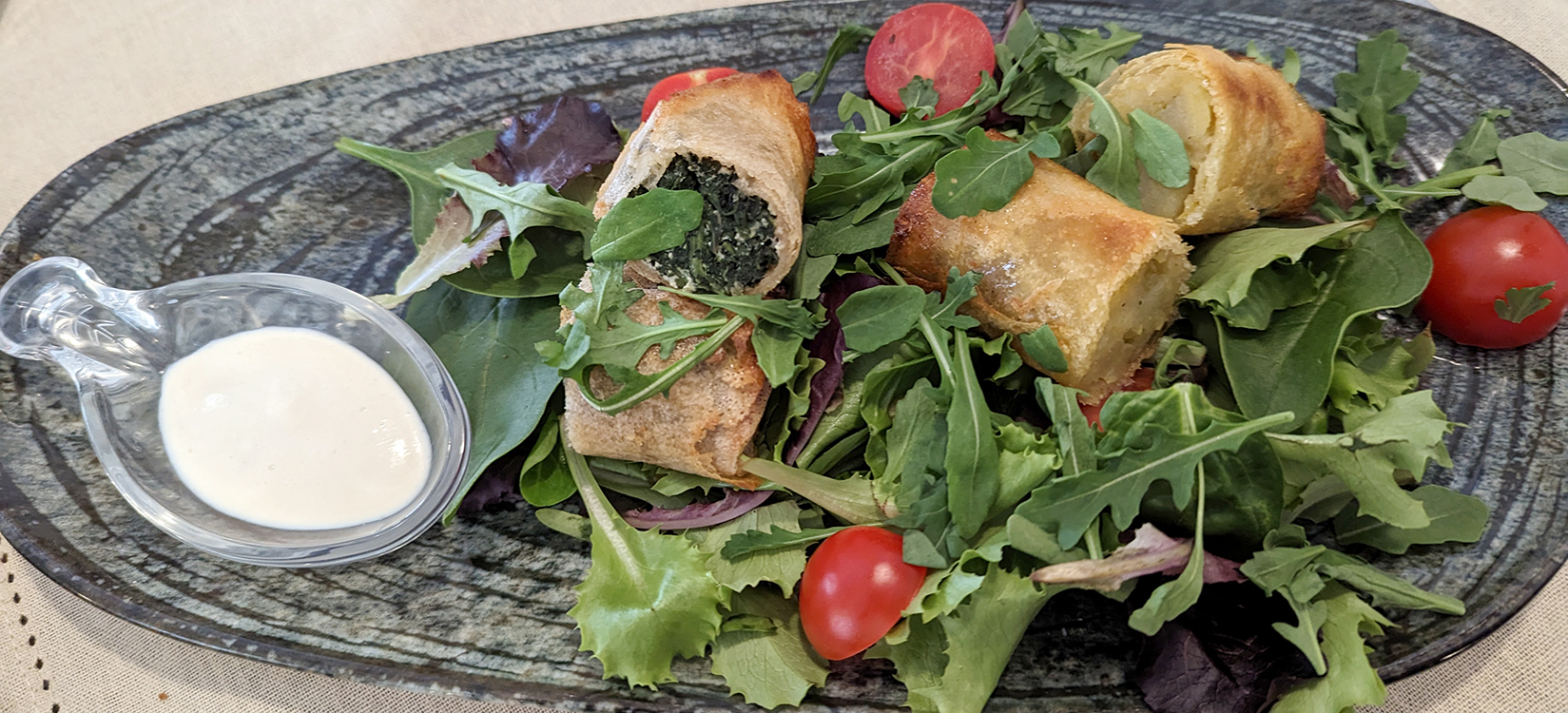
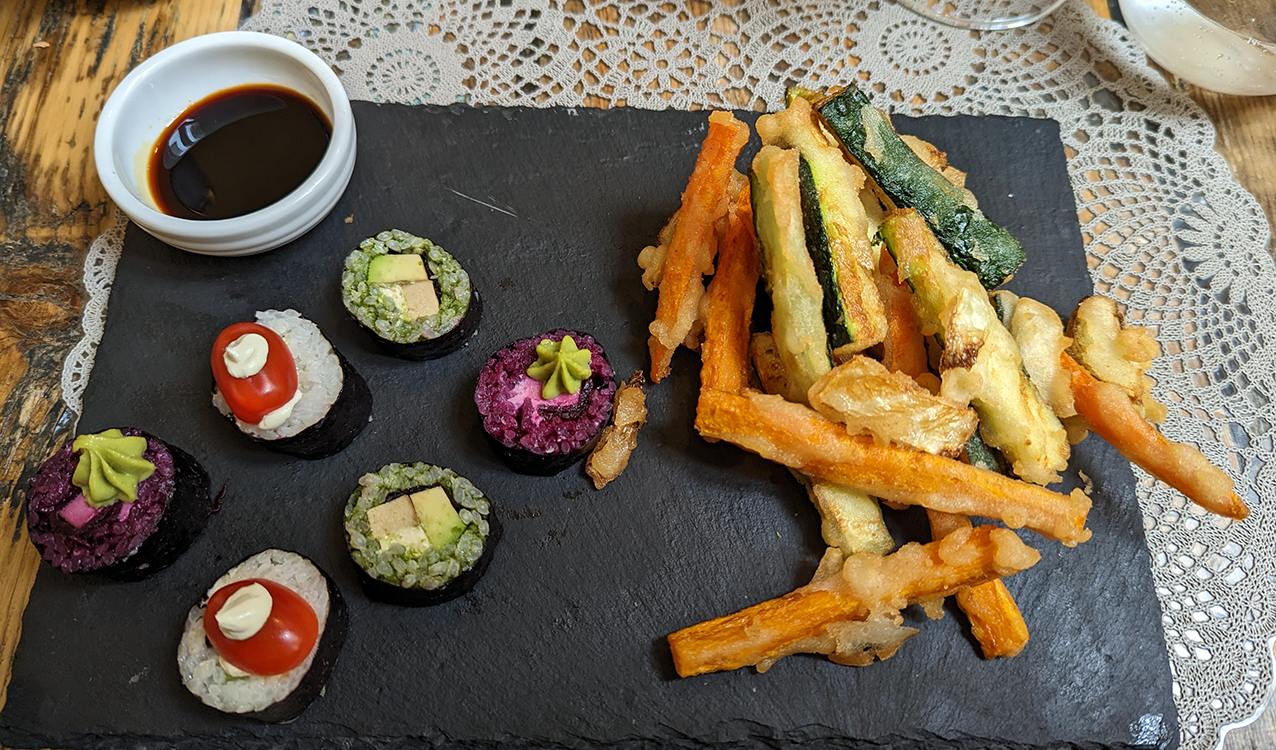

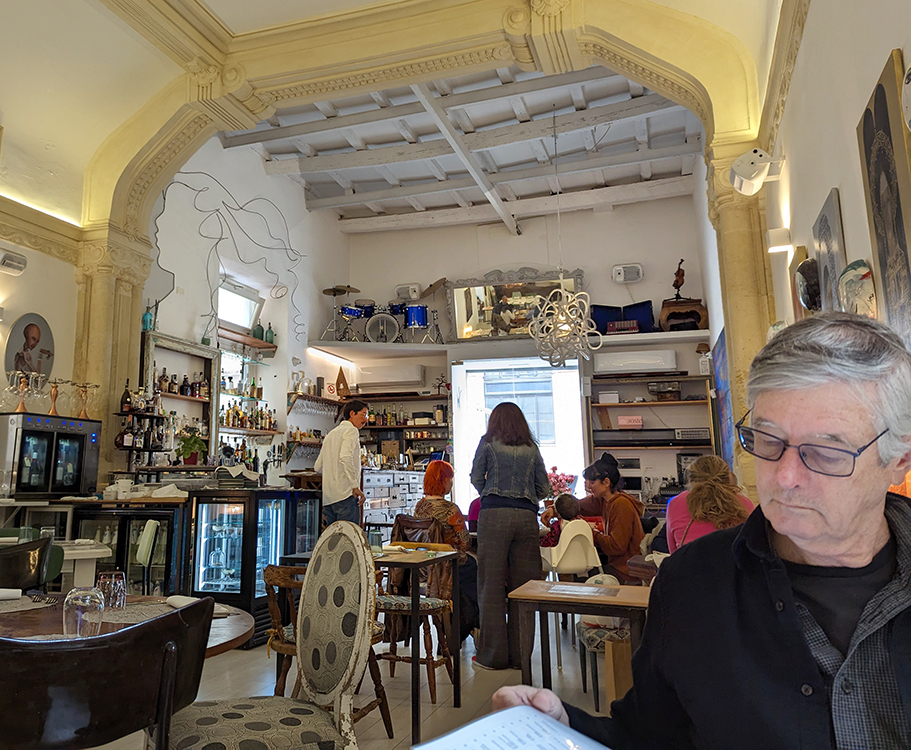
Above: Moon
On our final day, we had no time for a sit-down lunch in a restaurant so the Mister picked up a to-go order from Pane di Mare. The Mercato with tuna tartare, fried eggplant, tomato, buffalo mozzarella and basil pesto was excellent. The whole menu is enticing.
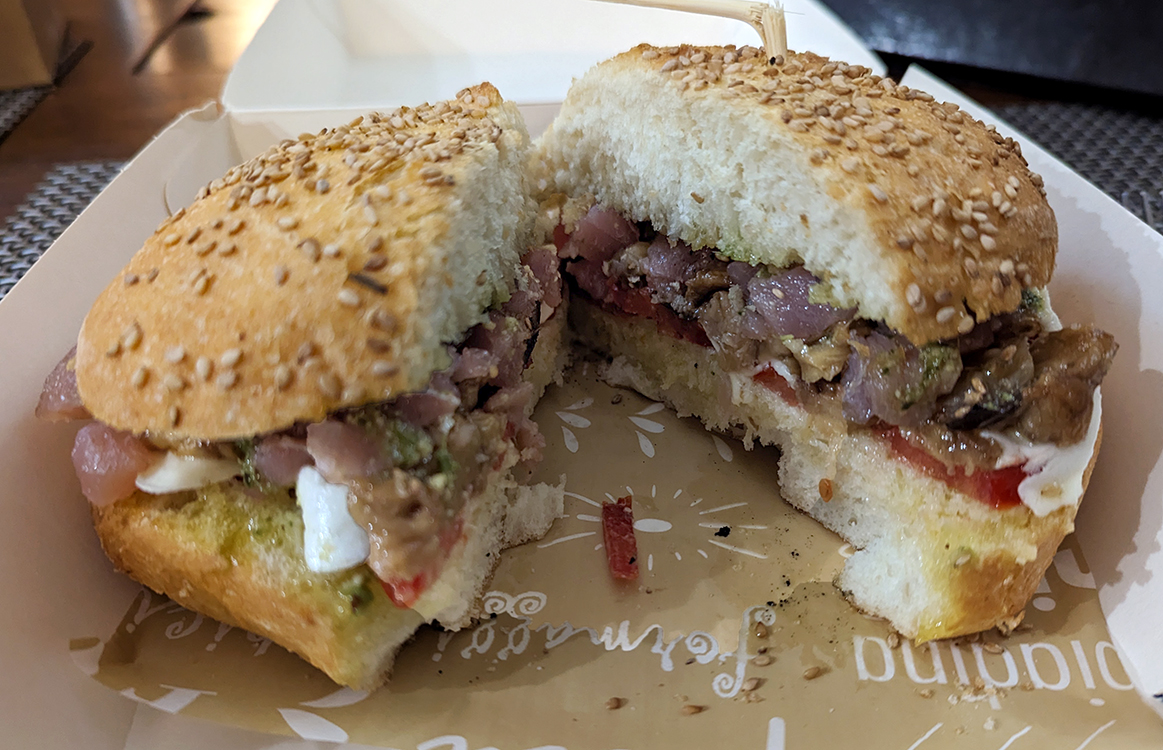

Above: Pane di Mare
High-vaulted ancient bricks and stones automatically add character to Schiticchio Pizzeria, one of the few firing up an oven at lunchtime that seems to attract more locals than tourists. The pizza was great, but the grilled vegetables, usually guaranteed to be good, were ruined by a weird sort of salad on the plate. The salad seemed akin to a pile of plain chopped iceberg lettuce completely covered by a slice of melted cheese. It did not work at all, and the photo of it was so unappetizing that I couldn’t bring myself to include it.

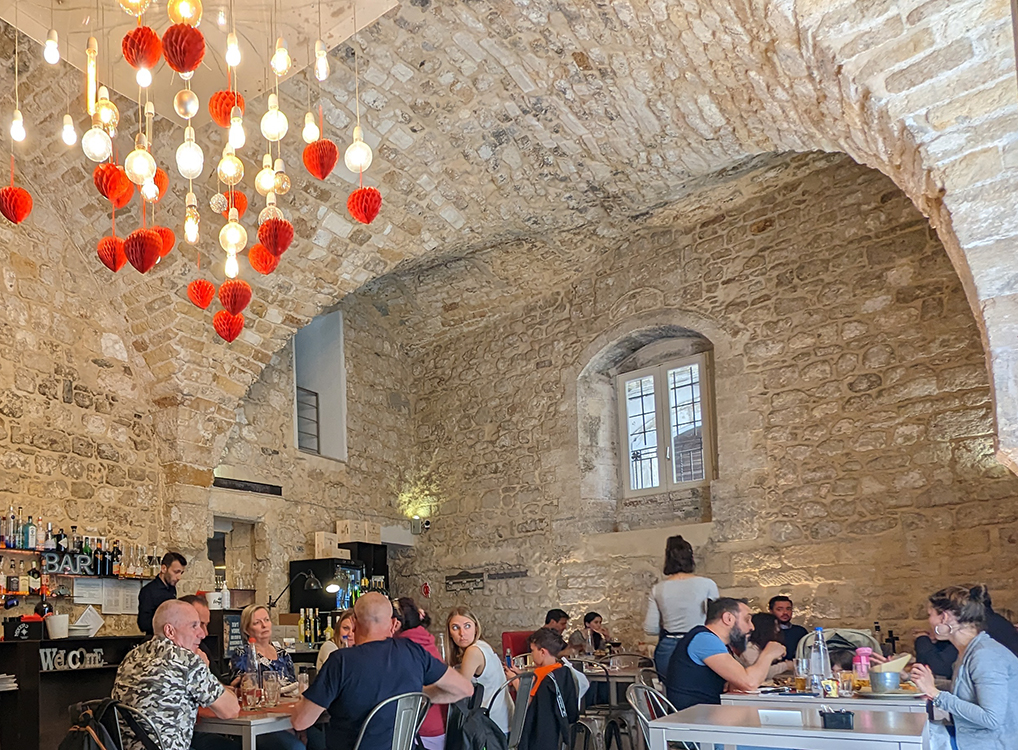
Above: Schiticchio Pizzeria
Scuola Alimentare‘s spaghetti with bottarga – dried mullet roe – and bread crumbs was interesting, but neither the simplicity of that presentation nor the clams atop paccheri had enough going to carry us through the plates of pasta. By that time, guess we had gotten spoiled by the umami of the pasta con sarde we’d been diving into elsewhere. The traditional preparation of grilled octopus was good, but not quite as good as at Locanda del Collegio. The cannoli presentation was beautiful, and I enjoyed the crema Catalan.
Its popularity indicates Scuola Alimentare must have made it into a couple of guidebooks. Everything was probably traditionally prepared, but we much preferred its less well-known next-door neighbor, Jobi, at the bottom of the first half of the alphabet page of reviews.
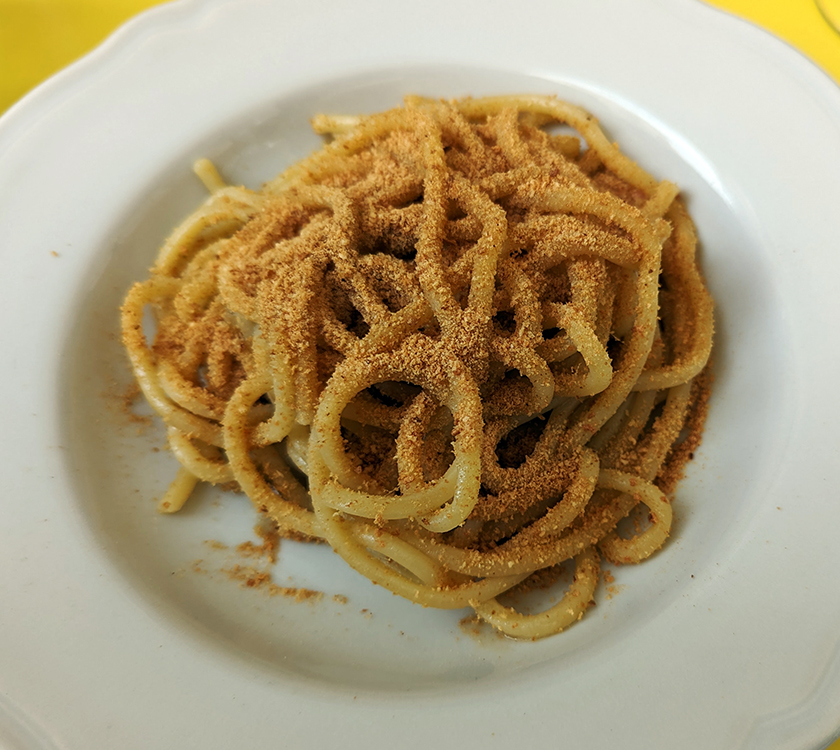
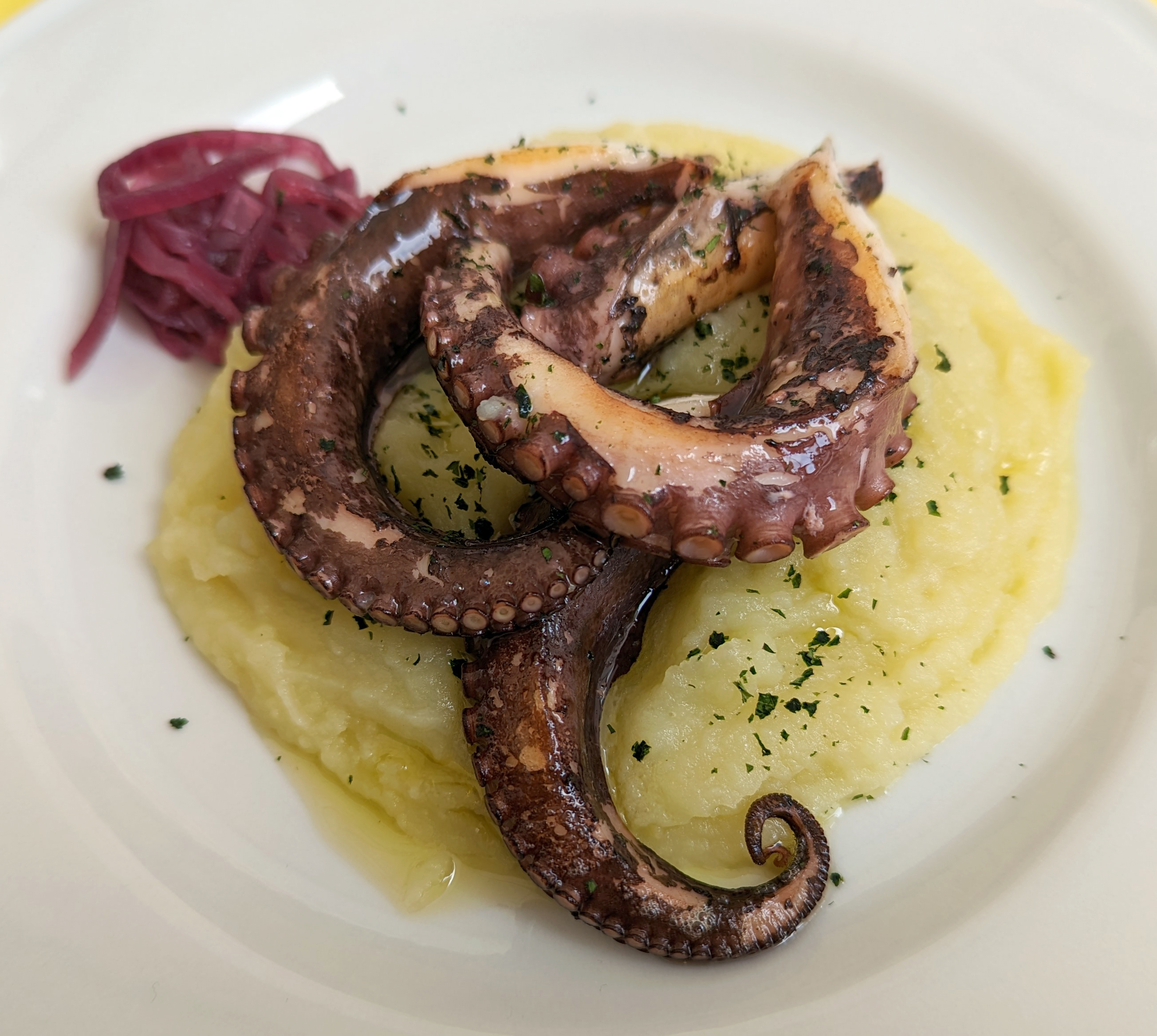

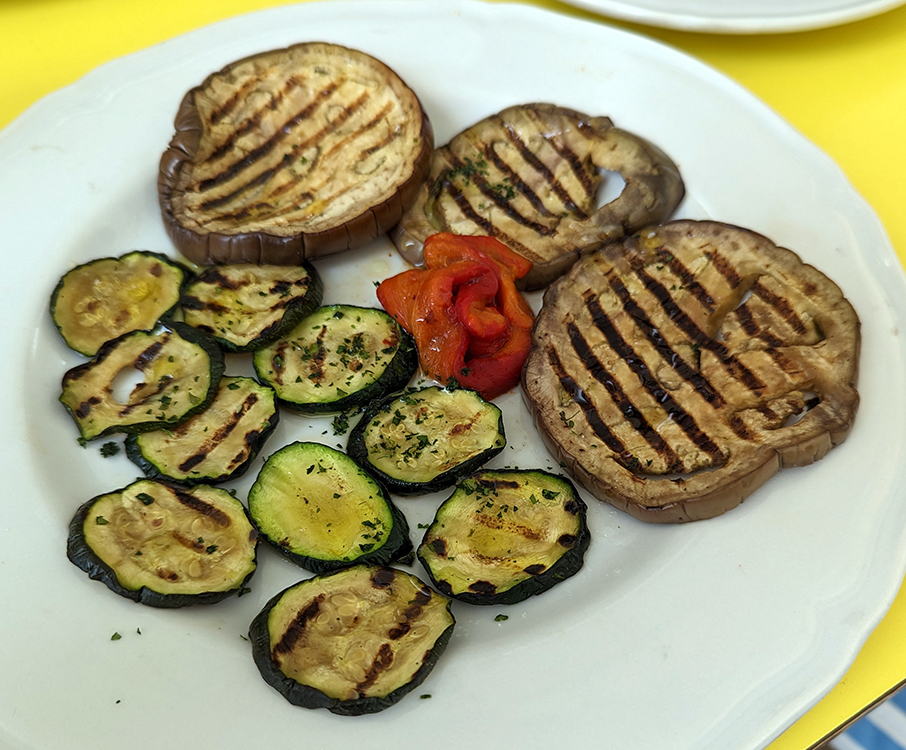
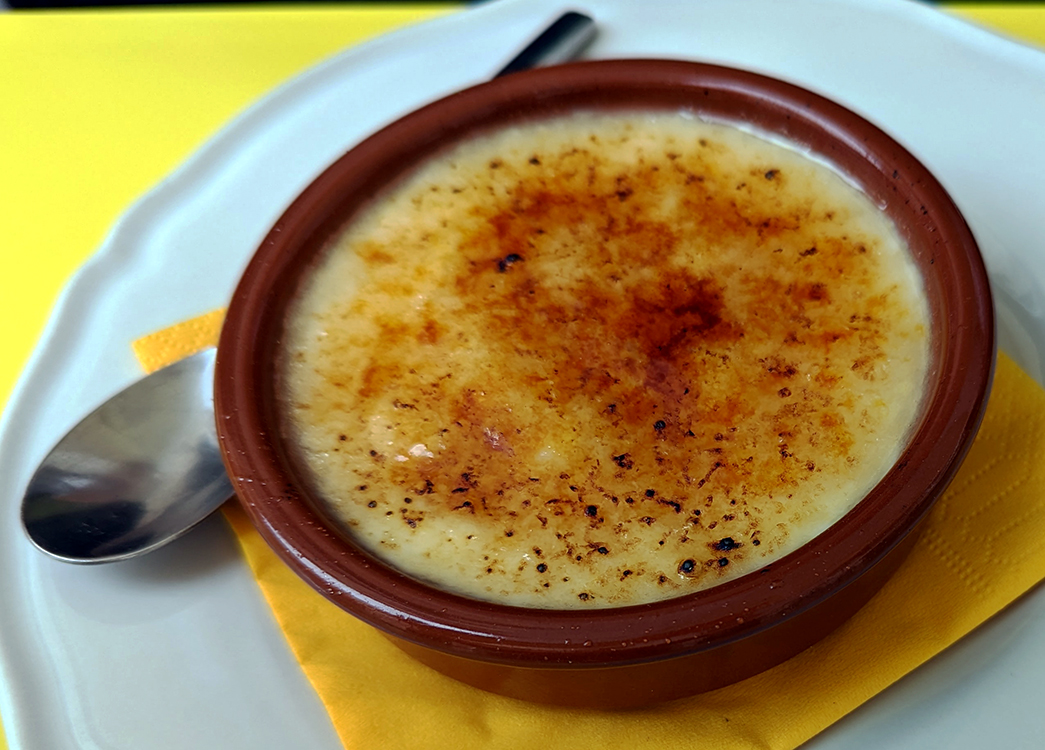
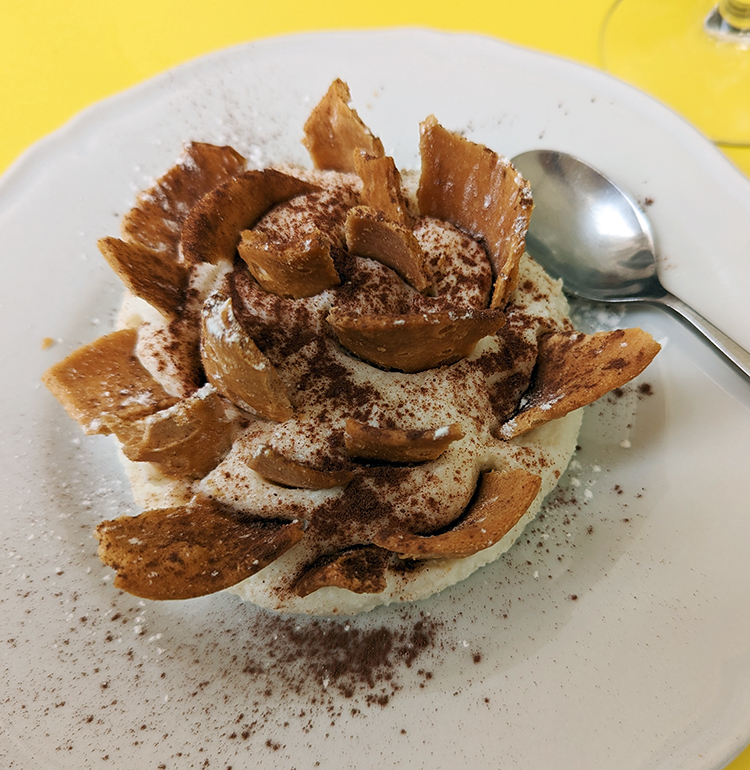
Above: Scuola Alimentare
Overall, no restaurants we tried in Ortigia were unworthy. Even varying what we ordered, we had yet to exhaust the tempting, distinctively Sicilian dishes offered.
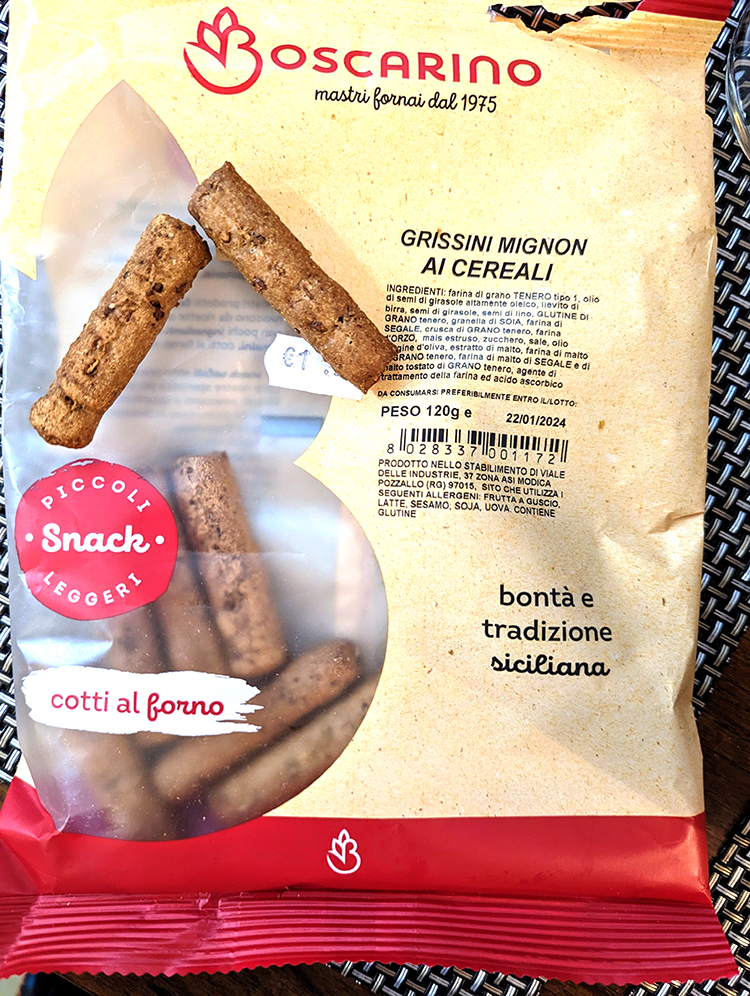
I’ll close out this food post with a few suggestions for your Sicilian market or grocery store list. The sharp sheep cheeses are addictive, the one below streaked with spicy chiles. As are the crunchy multi-grain grissini. Many a restaurant proudly presents Sicily’s handsomely-labeled Barbera olive oil.
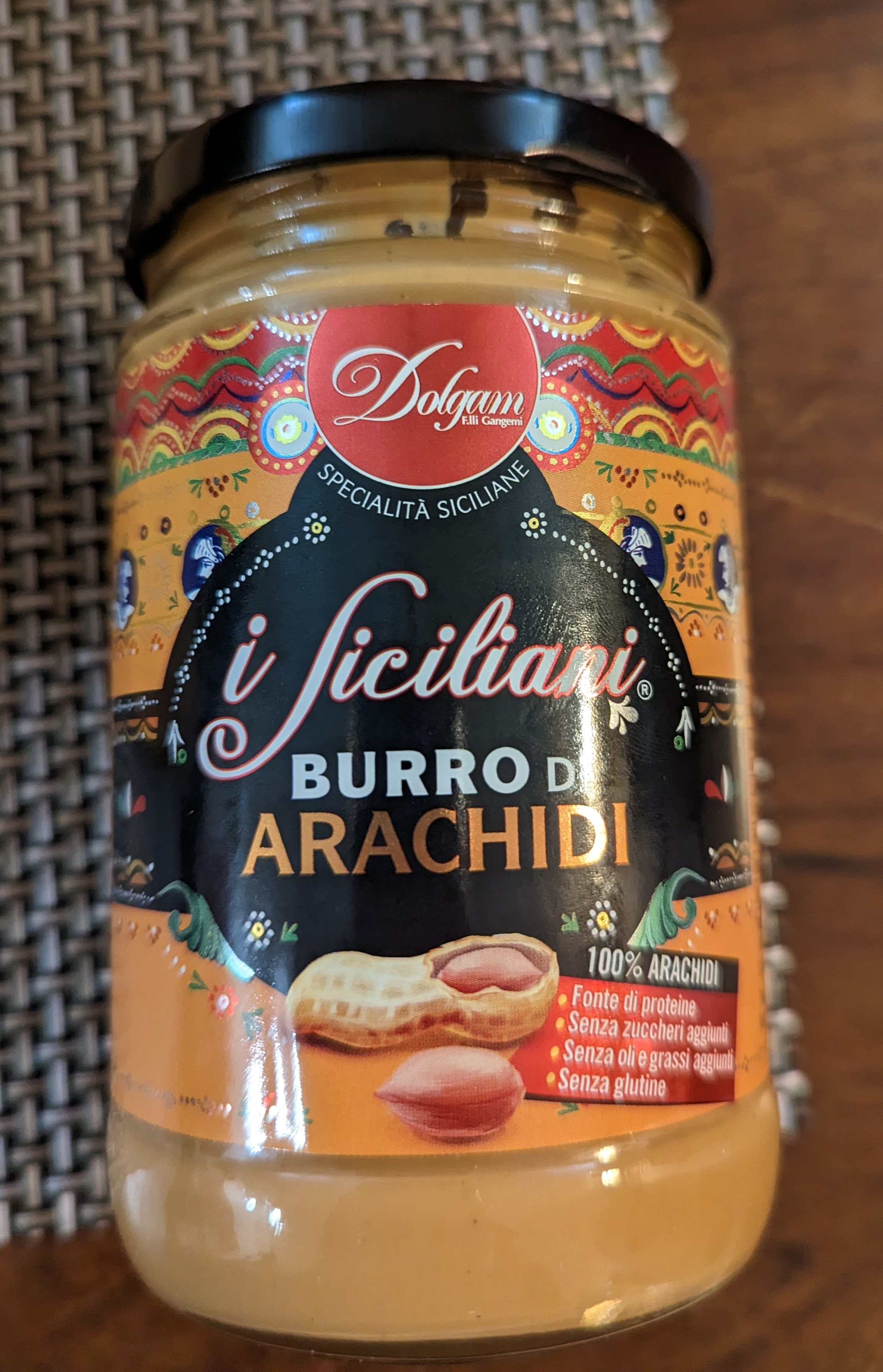
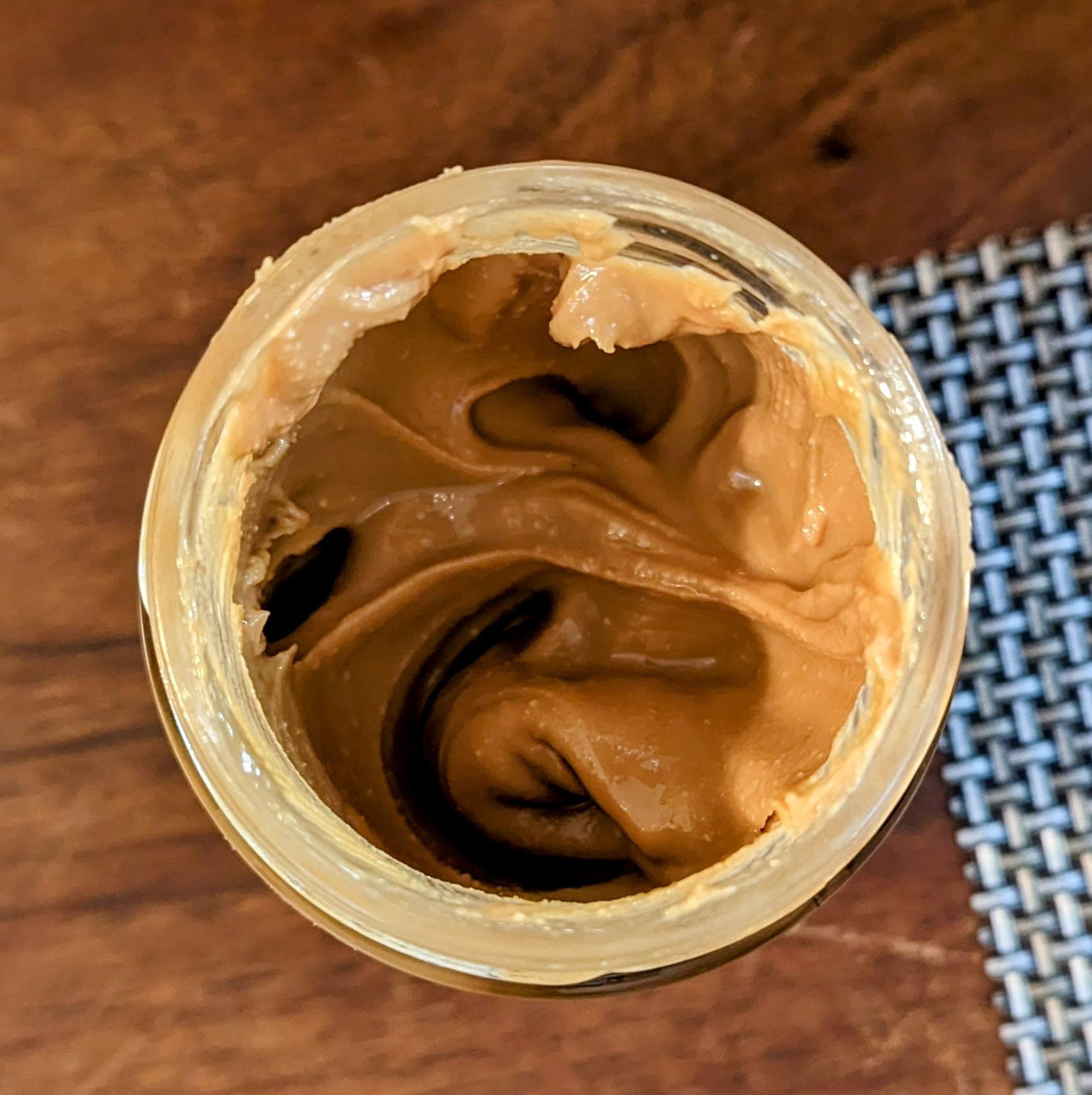
Okay, stop reading here unless you’re a peanut-butter fan – 100-percent-peanut peanut butter. The store where I bought this for my morning apple slices only had plain, but I did luck into some crunchy later. But look at the beauty of it.
Somehow the Sicilian manufacturer, Dolgam, of this burro di arachidi manages to manufacture an all-peanut butter that doesn’t separate. Don’t know how they achieve this because the ones I buy at home always require me to adopt strategies, such as storing them in the refrigerator upside down one day and right side up the next. Let me know if you find this available in the U.S.


 Postcards from Barton Springs