
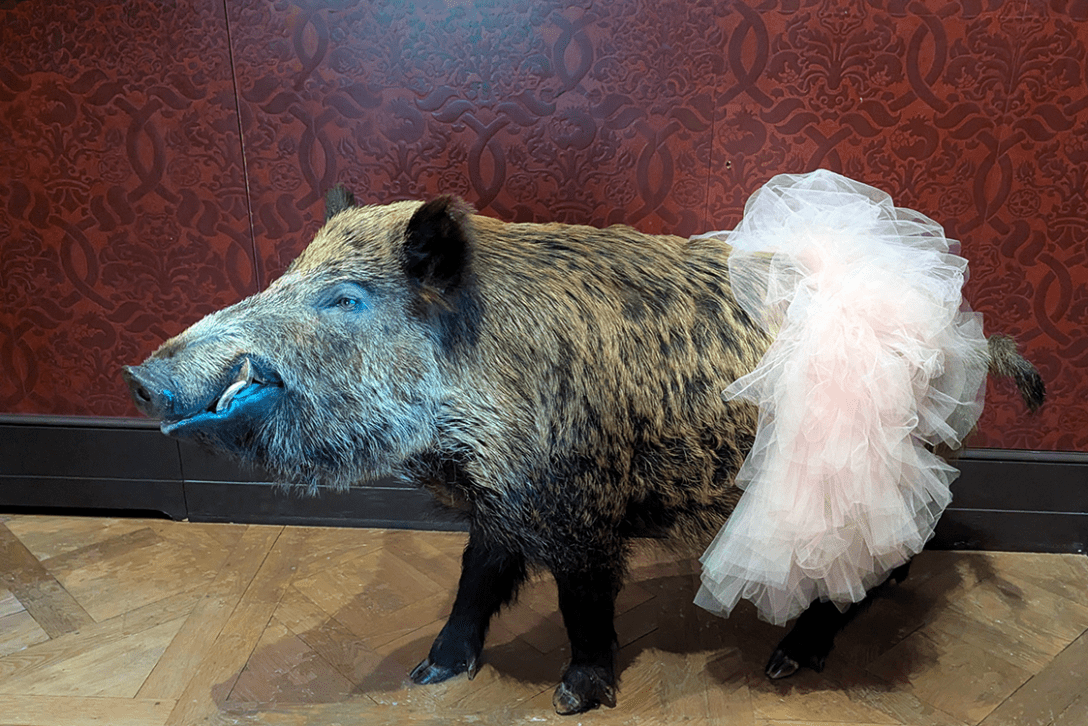
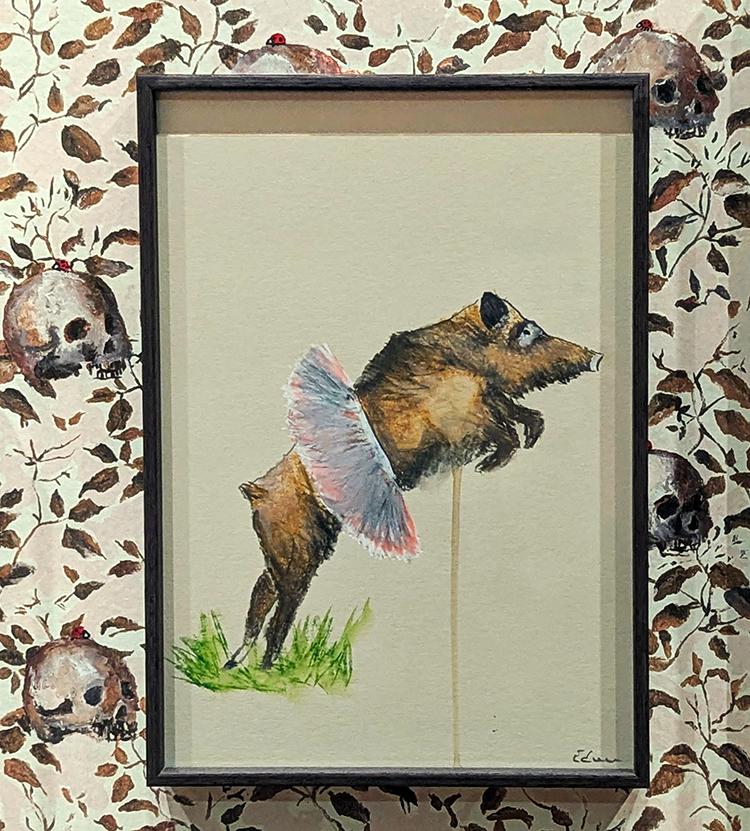
Above: Artist Edi Dubien’s addition of a tutu to a stuffed wild boar in the collection of Musee de la Chasse et de la Nature dramatically alters its perceived character.
My word was ignored, it could be heard without hearing it, it could disturb…. I make my characters speak, it’s the wounded childhood that I evoke, this ‘thing’ that comes out of my drawings is a cry, it’s a cry for life.”
Artist Edi Dubien
Your assignment, should you accept it, is to consider an entire museum stretching through the rooms of two historical mansions in Paris as your canvas. You are expected to interact with the immense collection housed within – one that includes paintings of hunting scenes, sculpture and a crowd of mounted deer racks and taxidermized animals of all sizes.
A contemporary artist’s dream commission. The Museum of Hunting and Nature extends the invitation for solo exhibitions to selected artists annually. Founded in 1967 by Jacqueline and Francois Sommer, the museum has broadened its focus from its core collection concentrating on hunting to the relationship between man and animal.
We observed this interaction a year ago via Edi Dubien’s installation, “Endless Lighting.” Born in 1964, the self-taught artist took full advantage of the opportunity by inserting approximately 200 works into the galleries – pen and ink drawings, sculpture, wallpaper designs and unlikely accessories or makeovers for taxidermy creatures. Some of his interventions were so subtle they were indistinguishable from the museum’s original displays.
The question of metamorphosis runs through all of his work, particularly in his representations of adolescents. Adolescence is sometimes described as a molting, in the manner of certain animals changing their skin. But what Edi Dubien’s adolescent figures seem to explore is more of a metamorphosis: a deeper movement where something of the subject is transformed while keeping the memory of what has been.”
Marc Antoine Bourdieu, “Metamorphoses of the Body in Edi Dubien,” conference speech
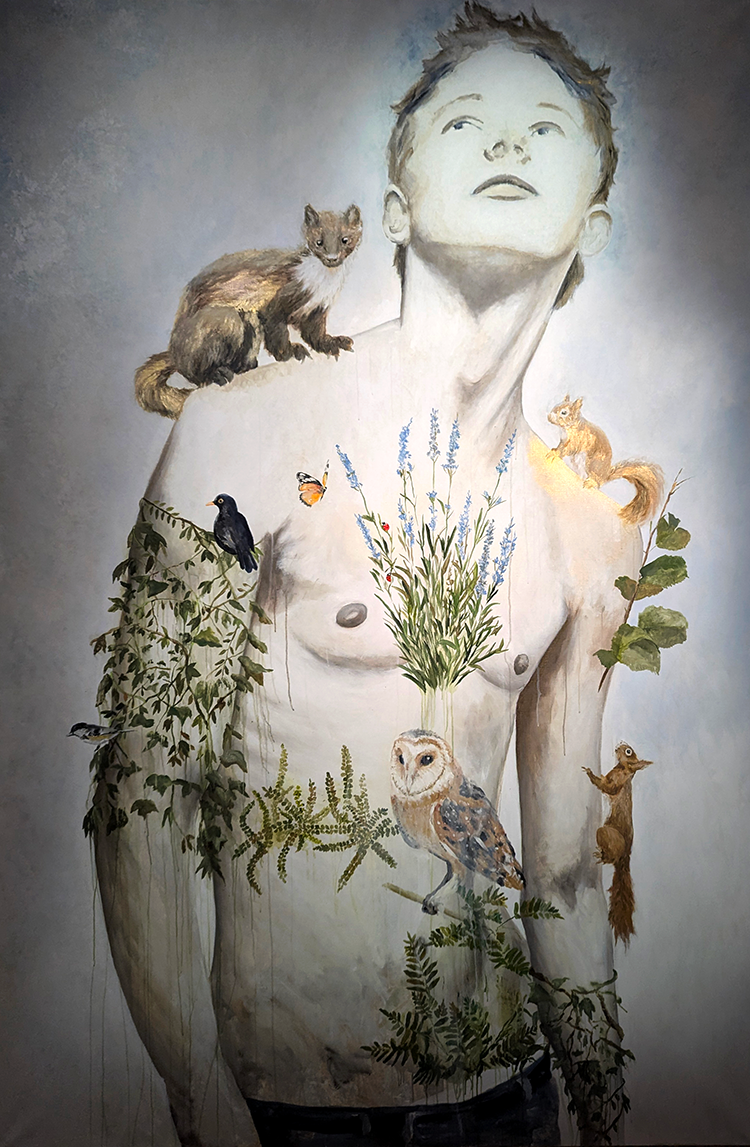
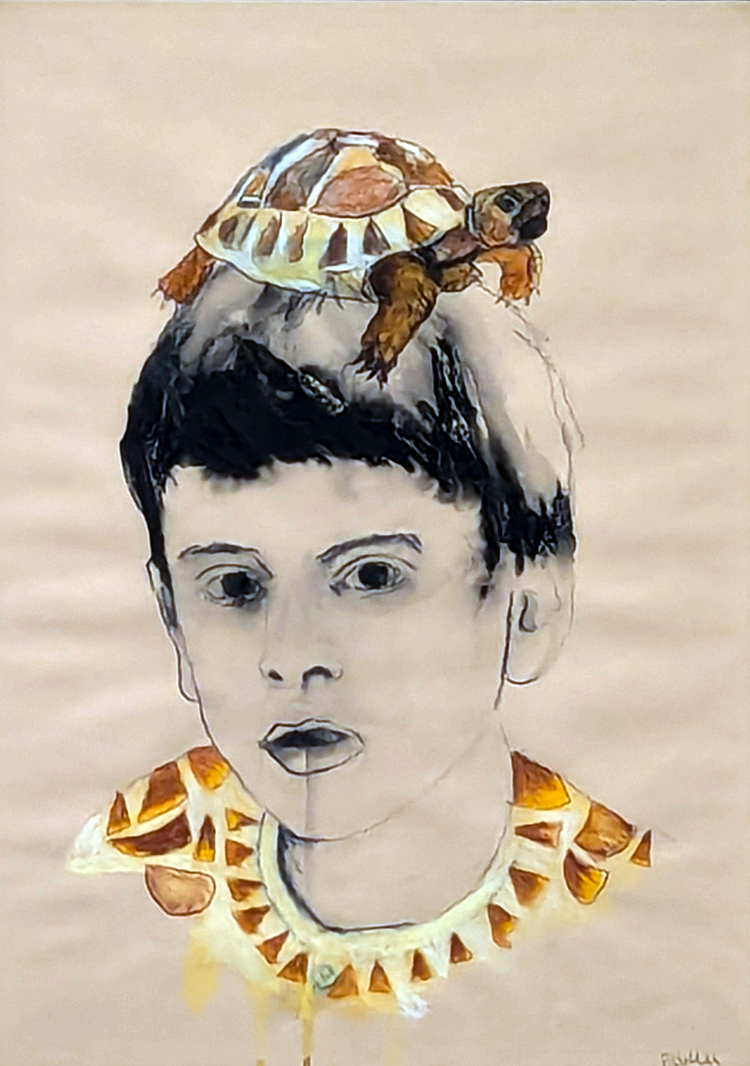
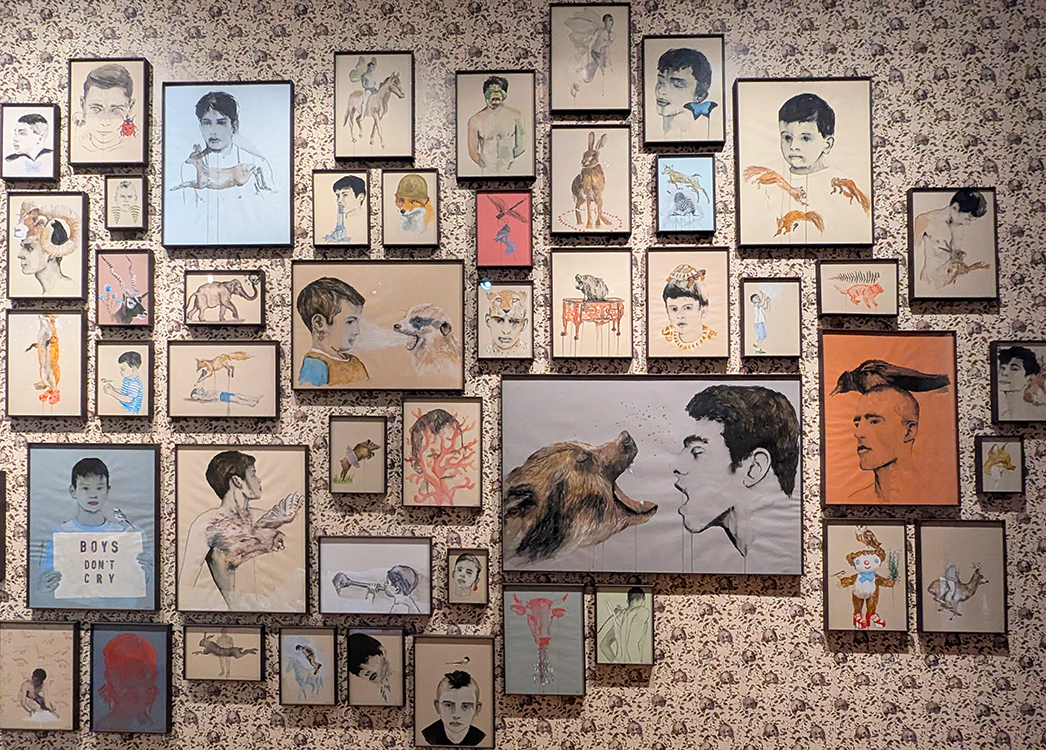
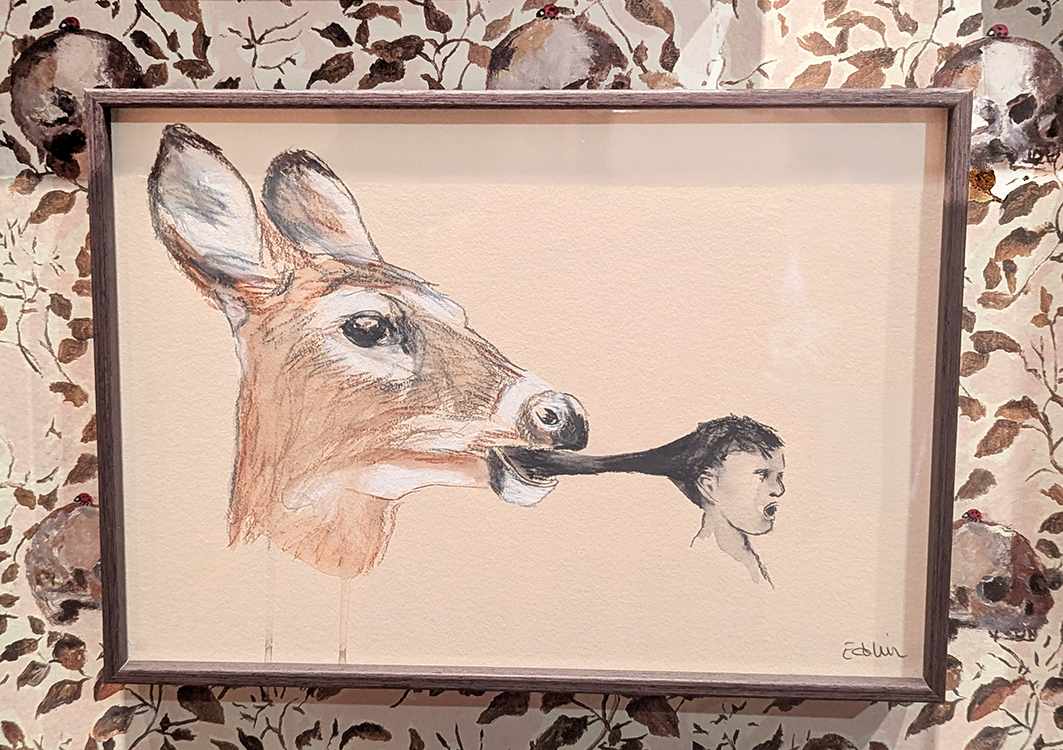
Above: Pen and ink drawings by Edi Dubien.
My tears are protective tears that give life, more than blades of sadness.”
Artist Edi Dubien
A blue-and-white sculptural installation features animals of the forest – a badger, owl, hedgehog, squirrel and rabbit – in a rowboat with no oars.
At the center floats a boat, symbolizing a sacred journey…. The young man sitting at the front, sheds blue tears that give life to the animals surrounding him. The journey, titled “Traverser le Temps,” carries animals in need of protection. It represents the communion between humans and non-humans….”
Curator notes, Museum of Hunting and Nature
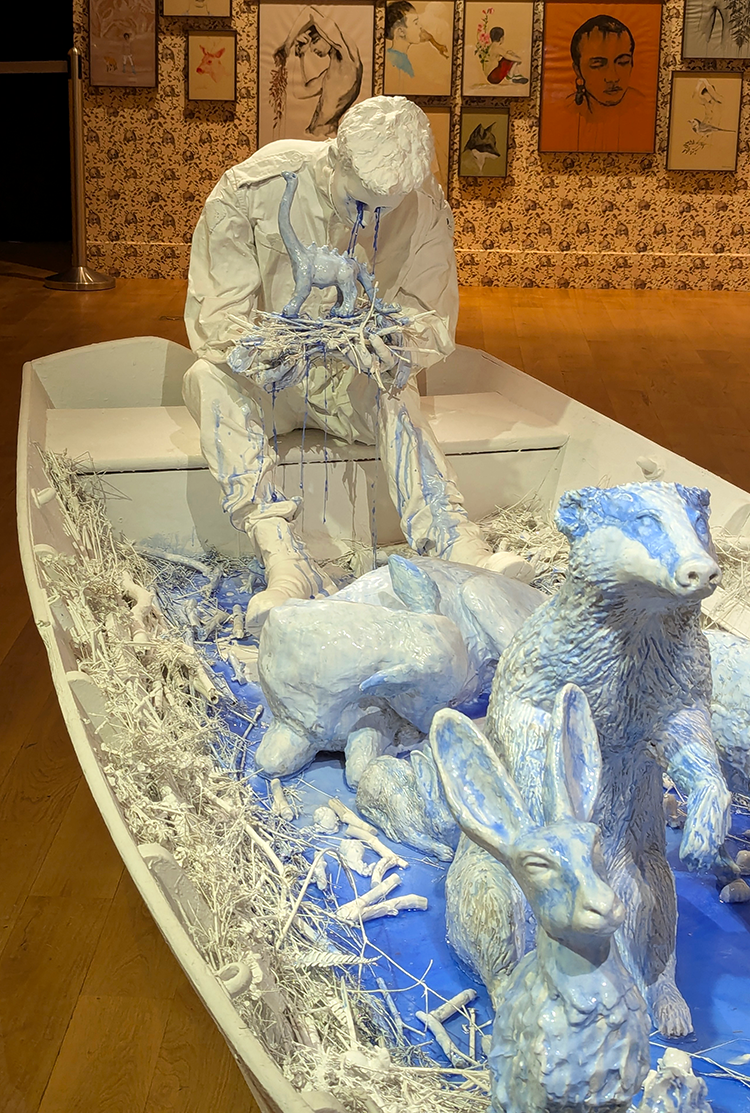
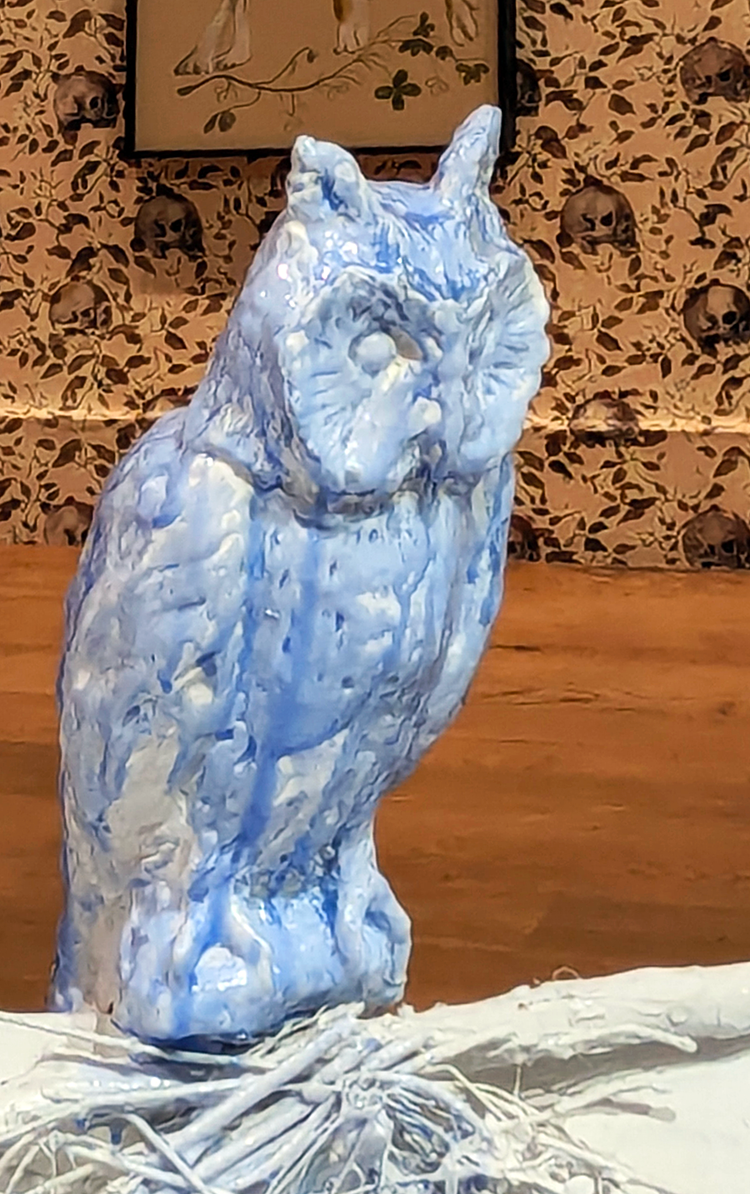
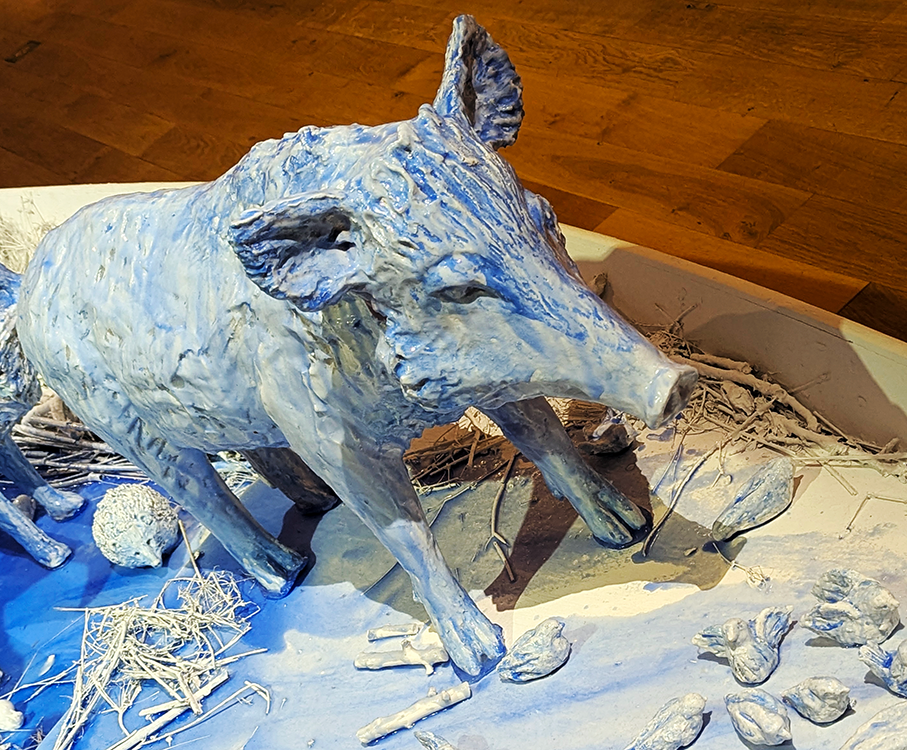
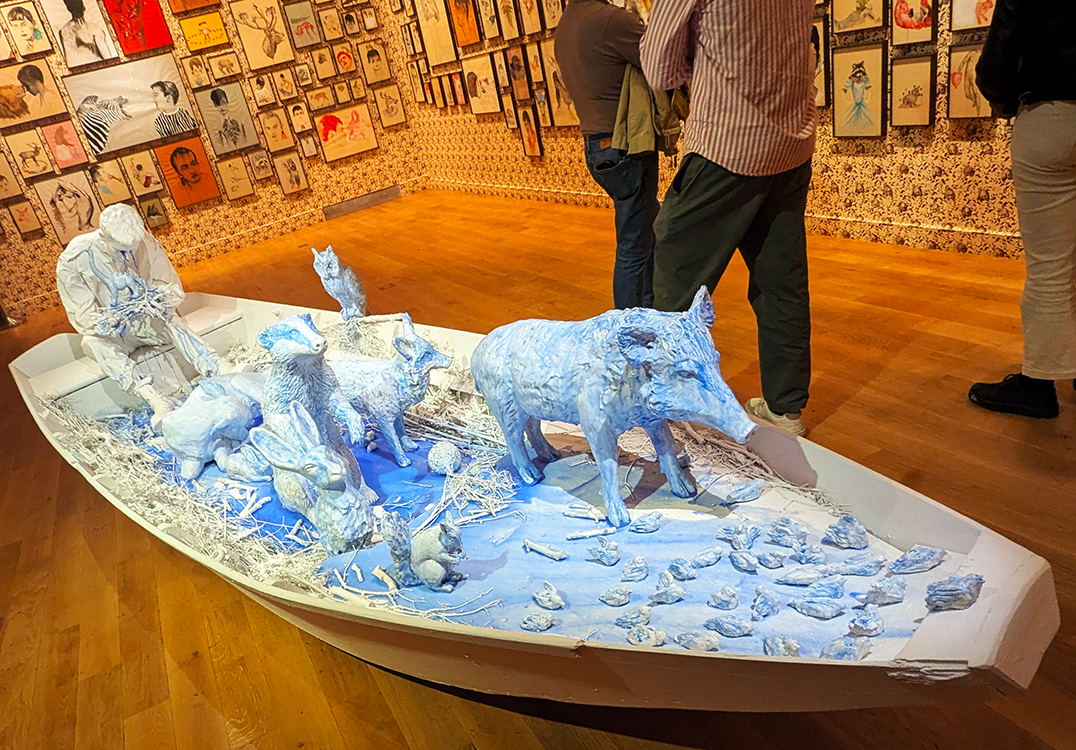
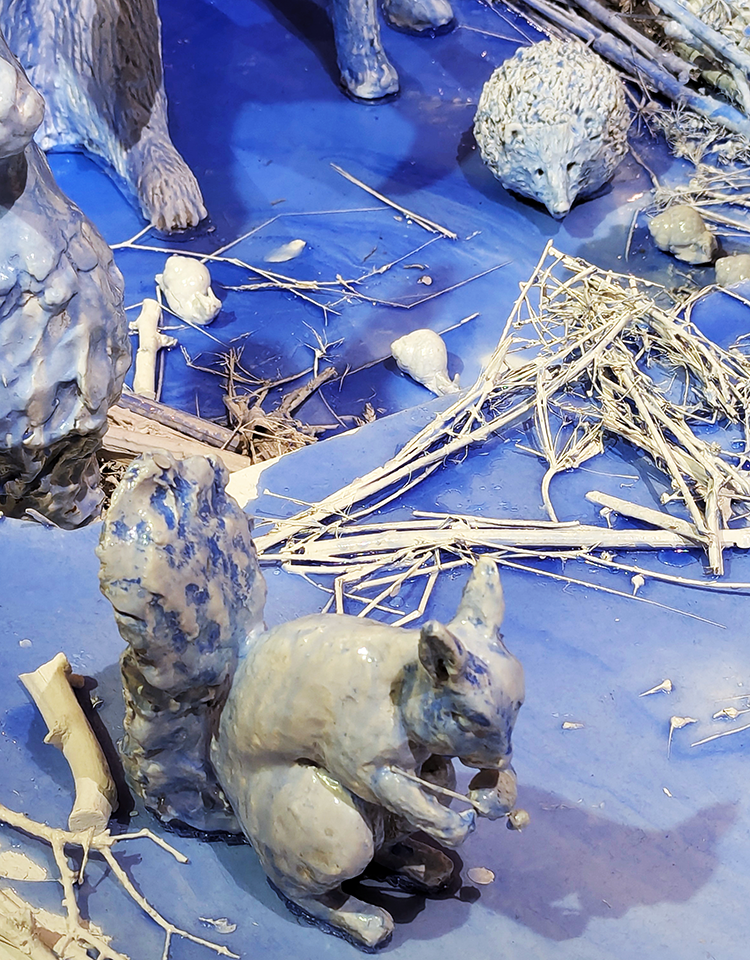
Above: “Traverser le Temps,” Edi Dubien.
My job is to shine a light on a fragile world…. Memory is one of the recurrences of my practice, I integrate my childhood, my transition, my reconstruction, my love for the animal and plant world, for freedom but which must not be transformed, one day, in a simple memory…. There is always a need to protect, whether it is childhood, the planet, which amounts to saving oneself.”
Edi Dubien’s “Biography”
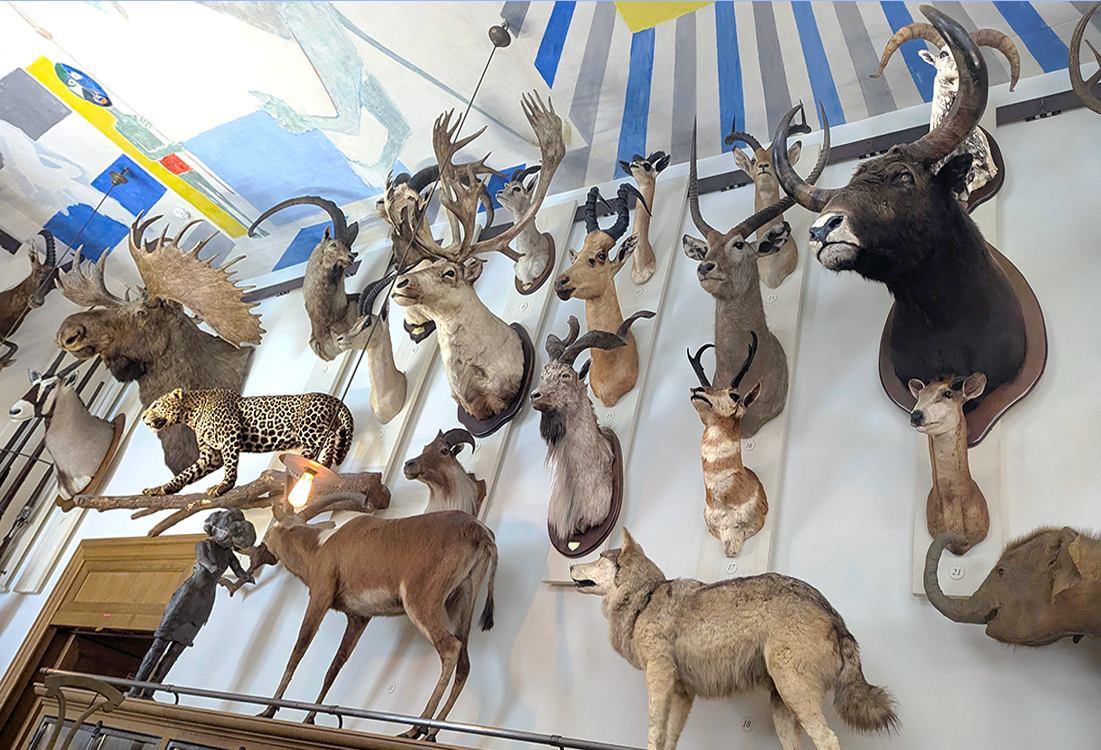
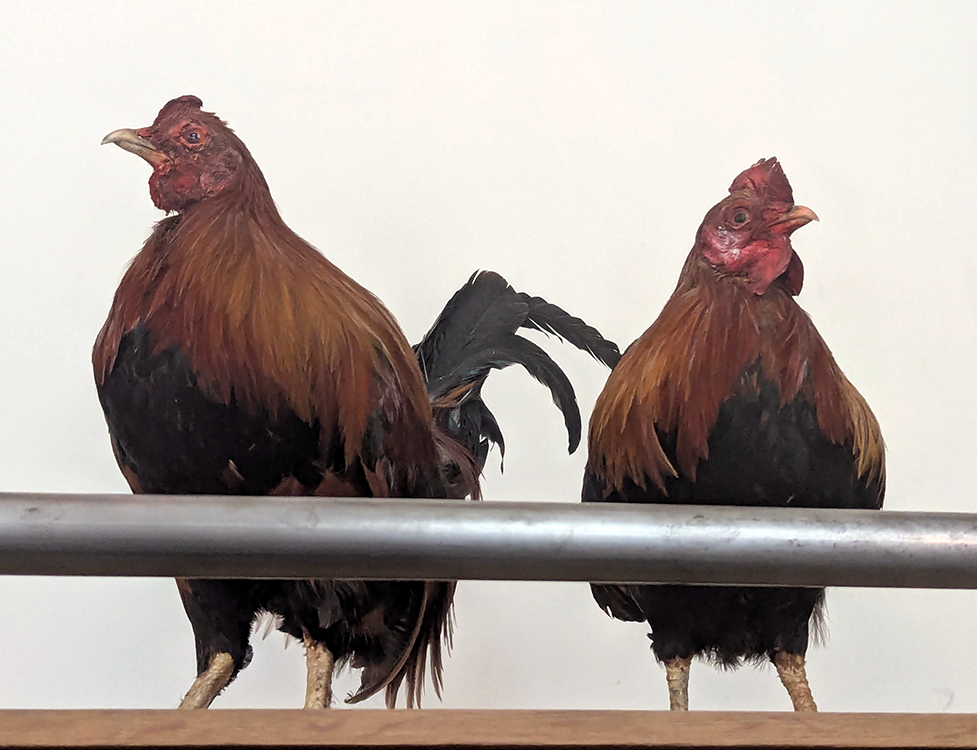
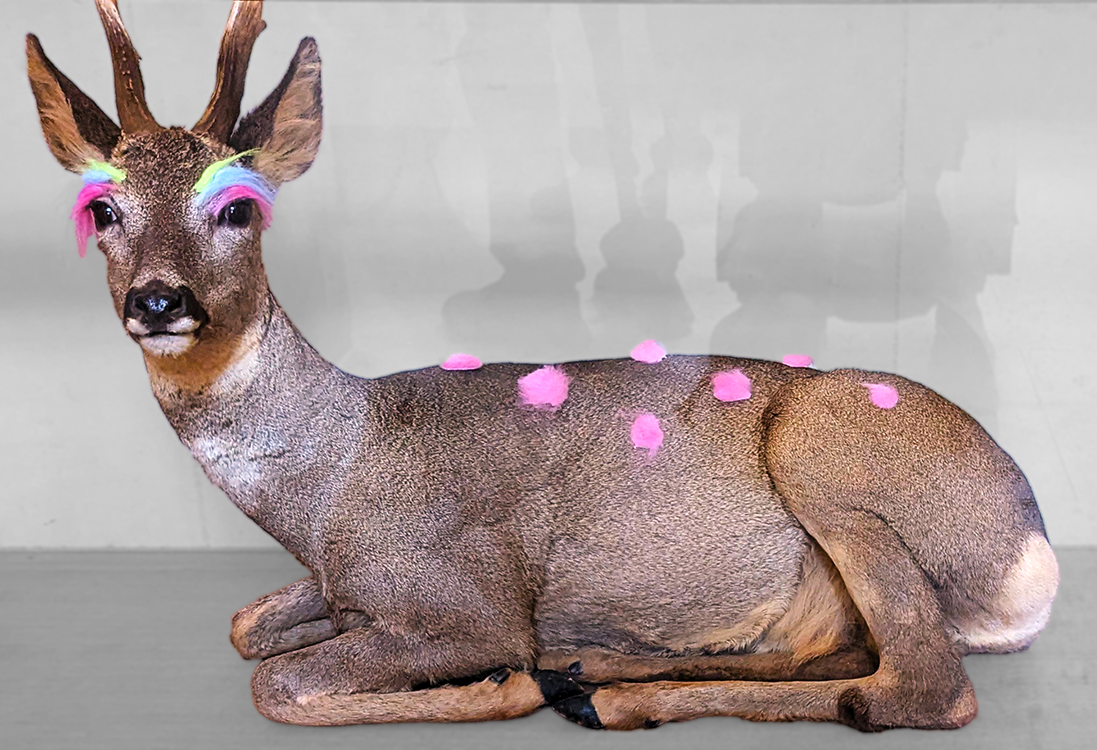
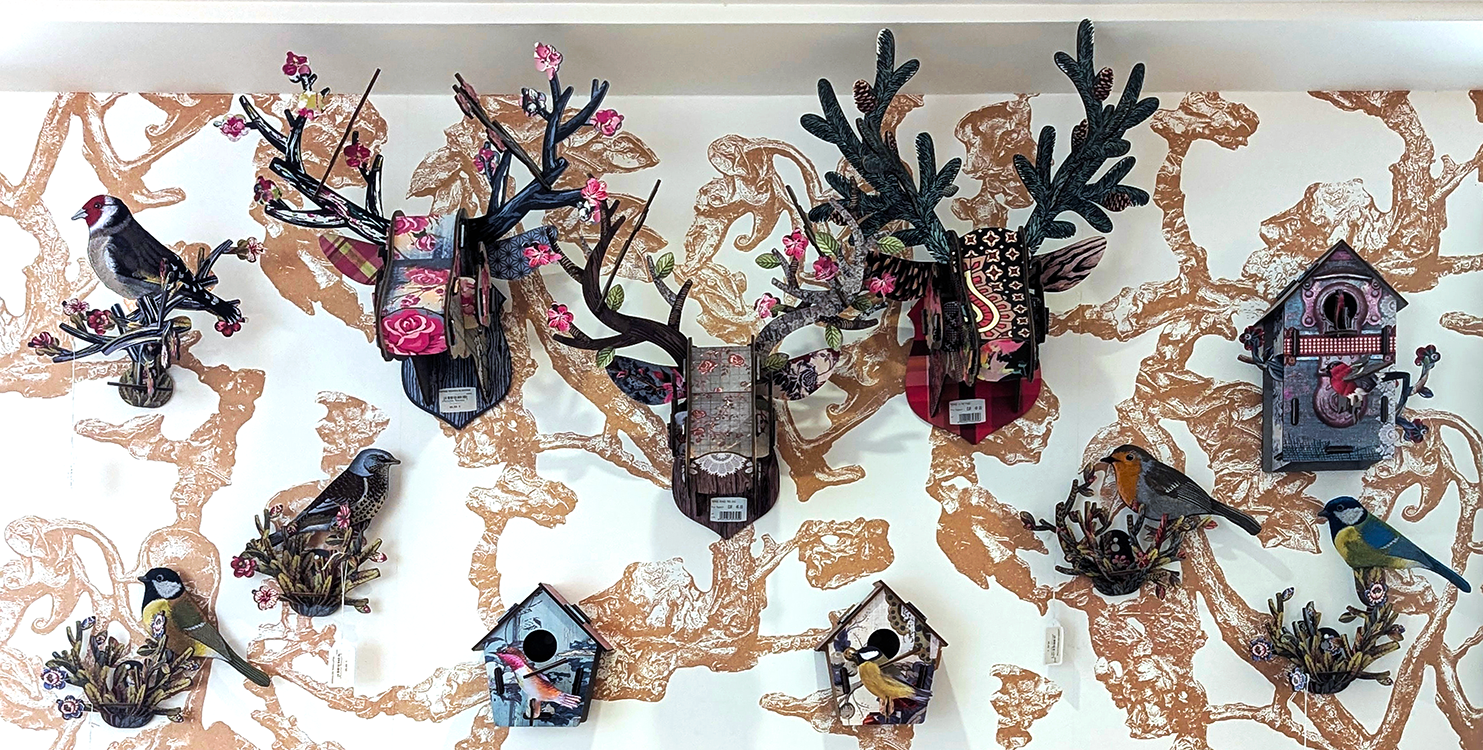
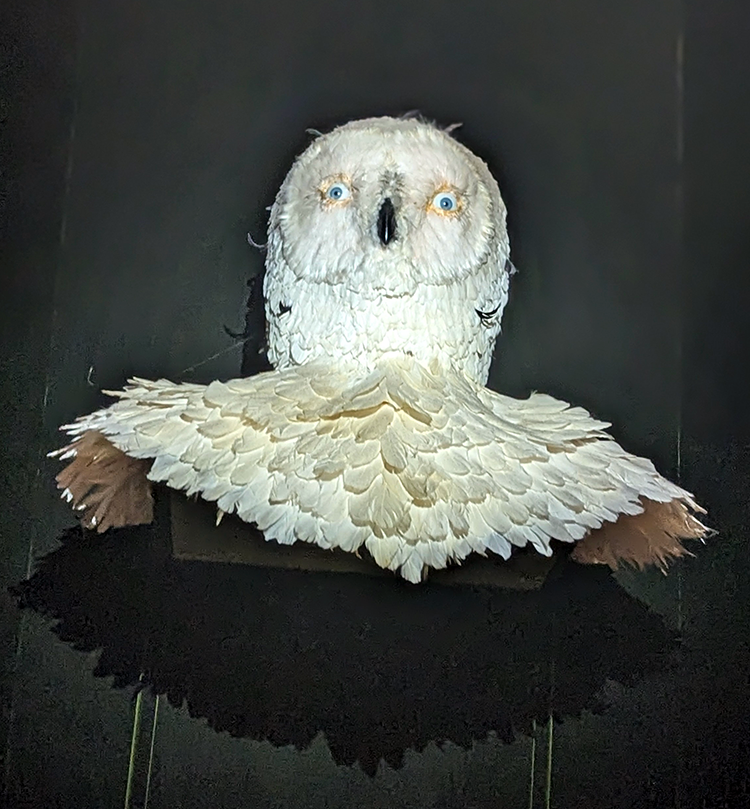
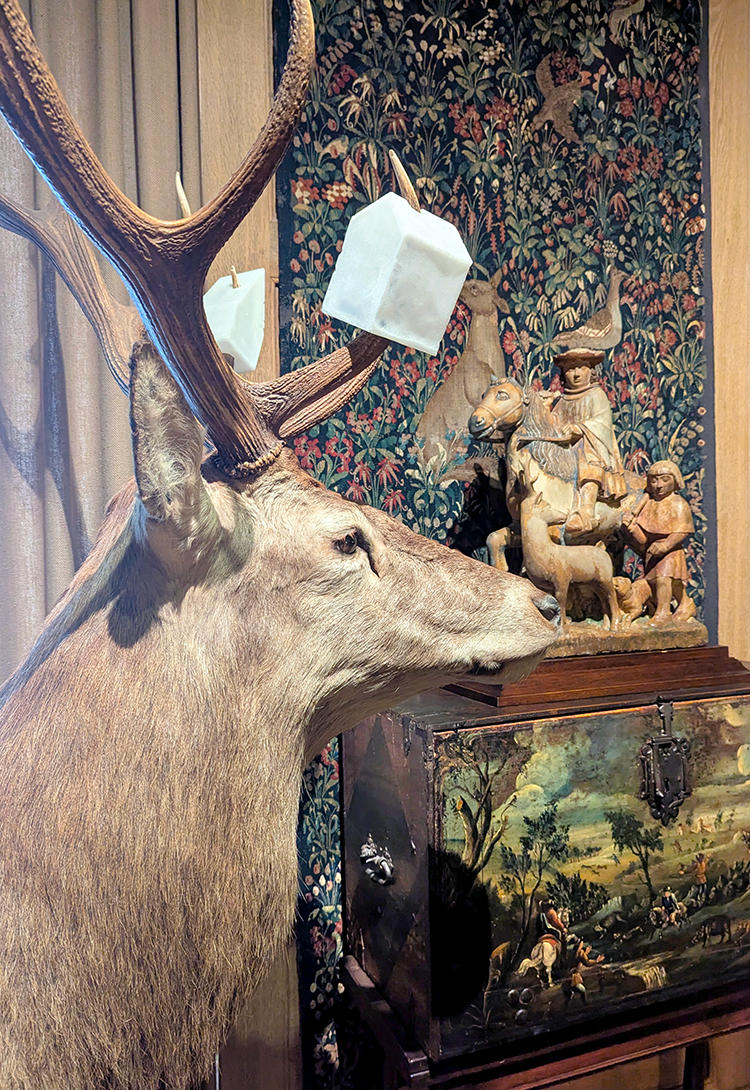
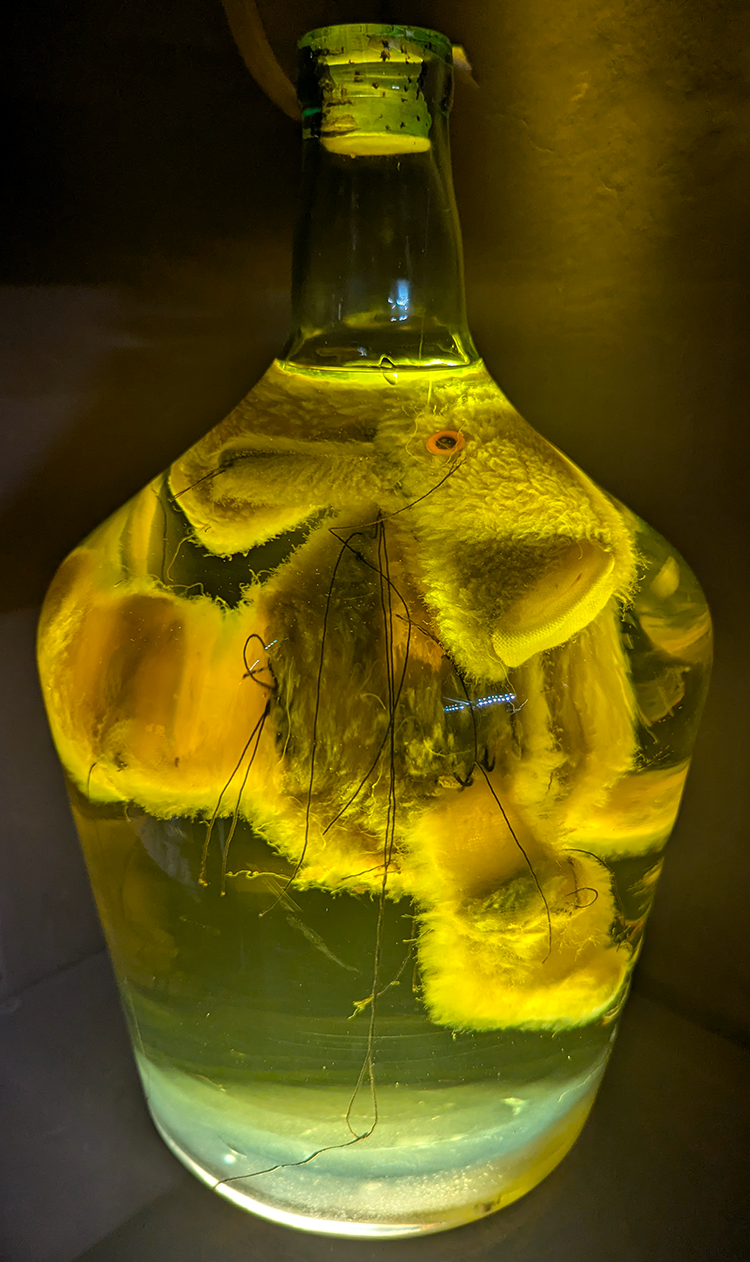
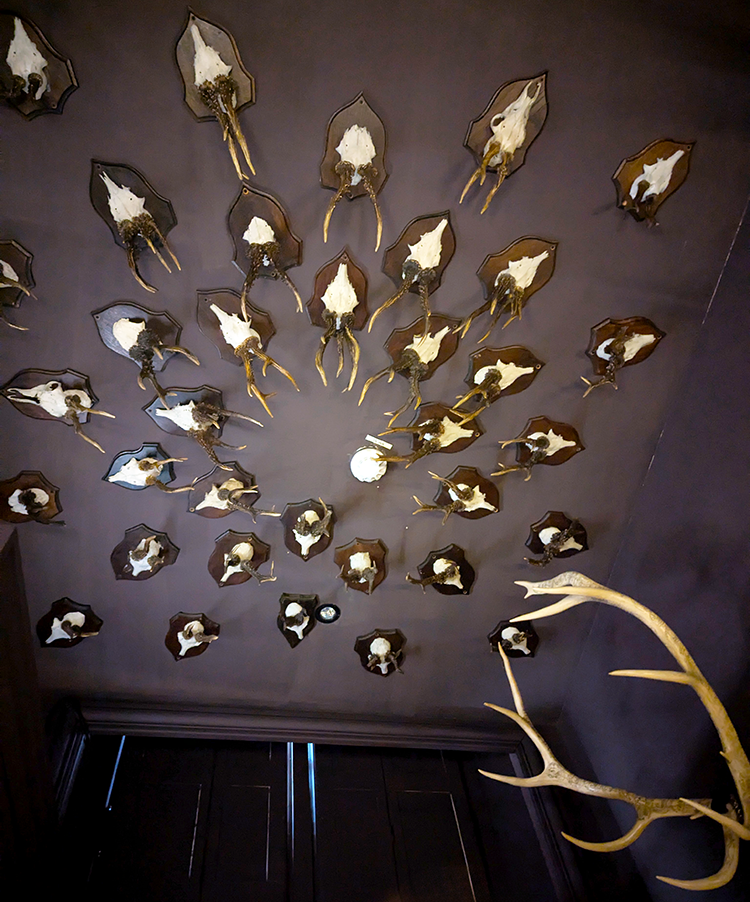
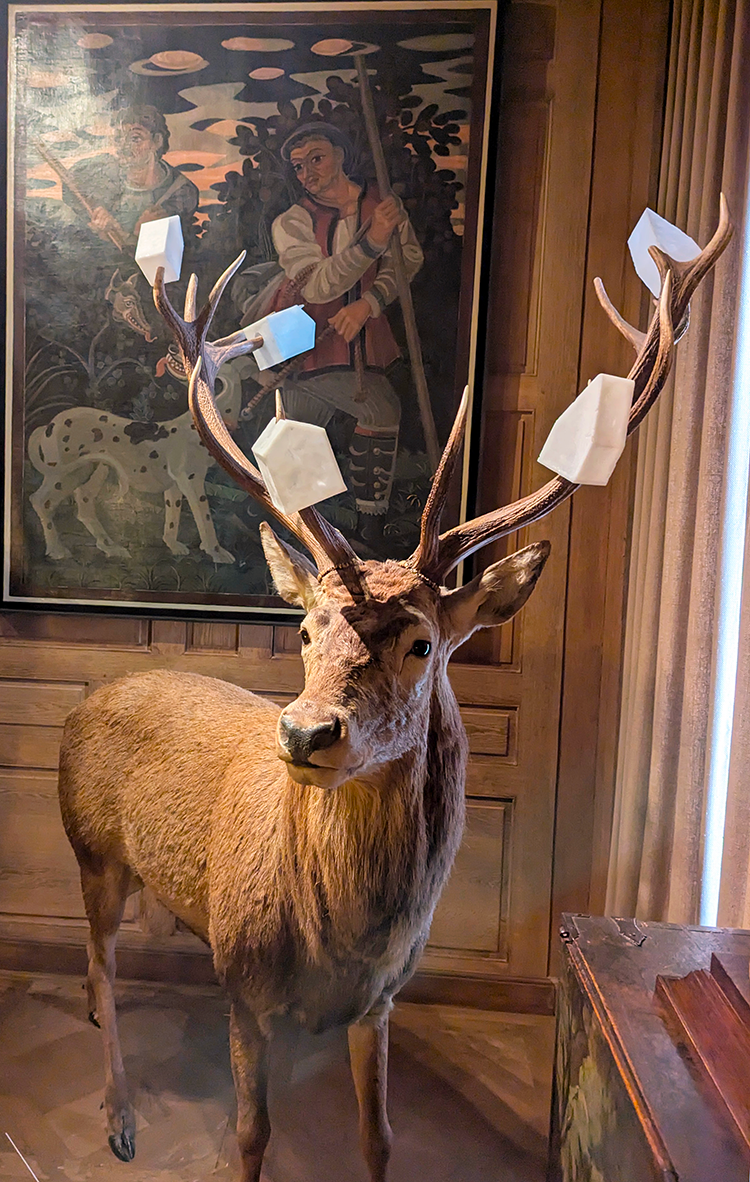
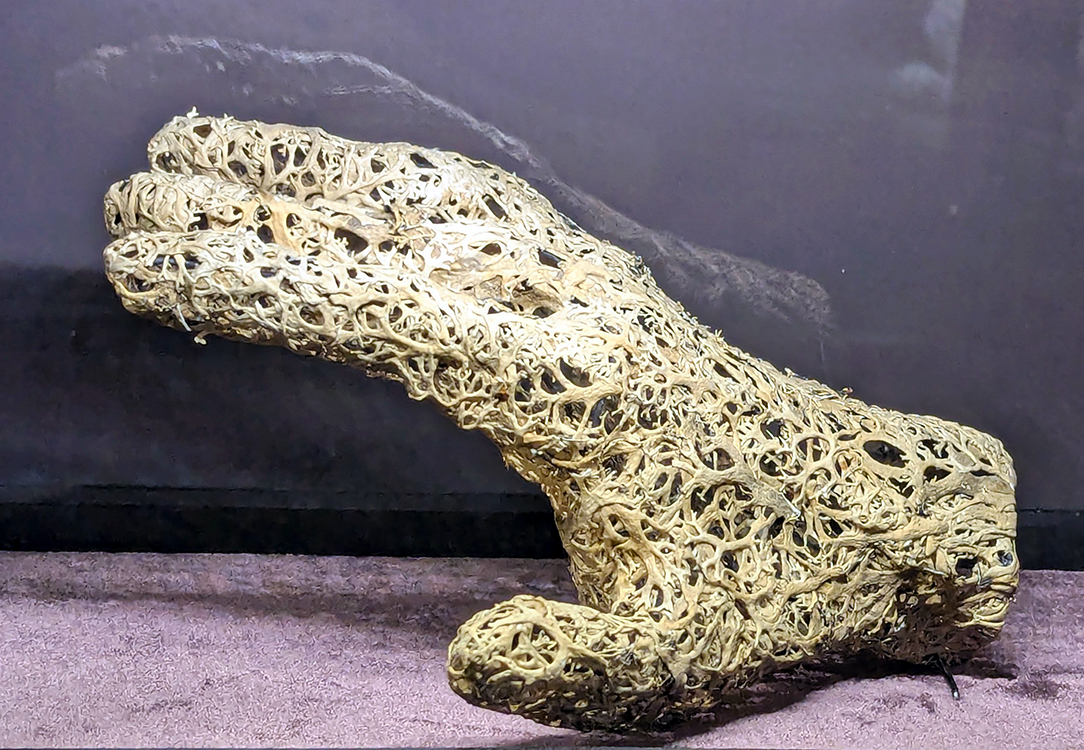
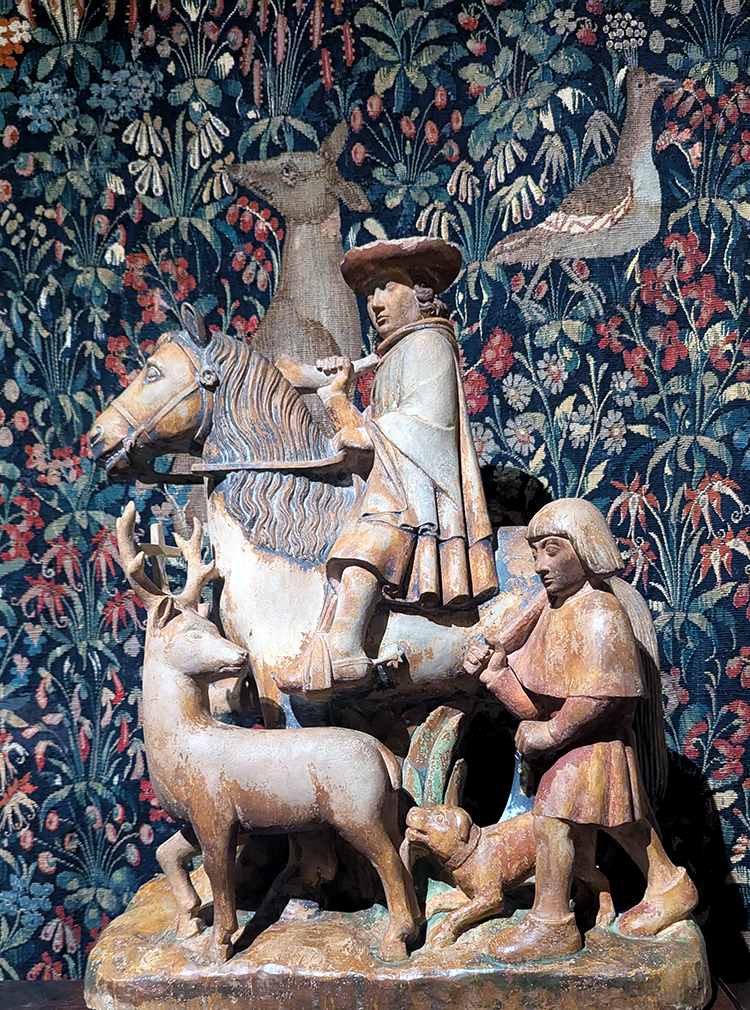
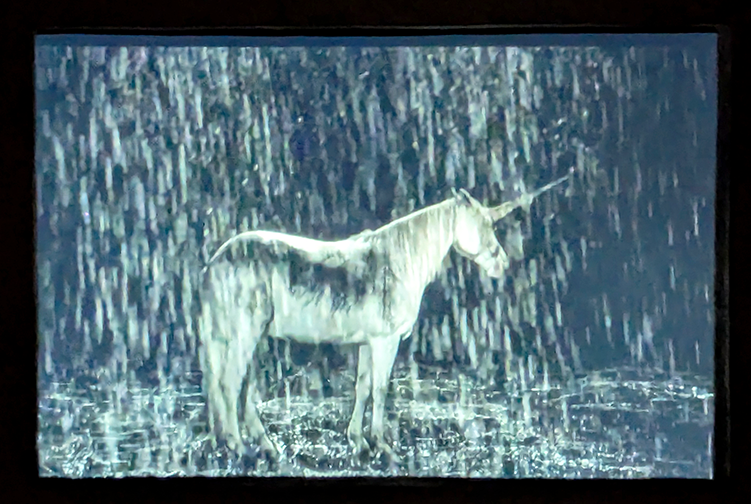
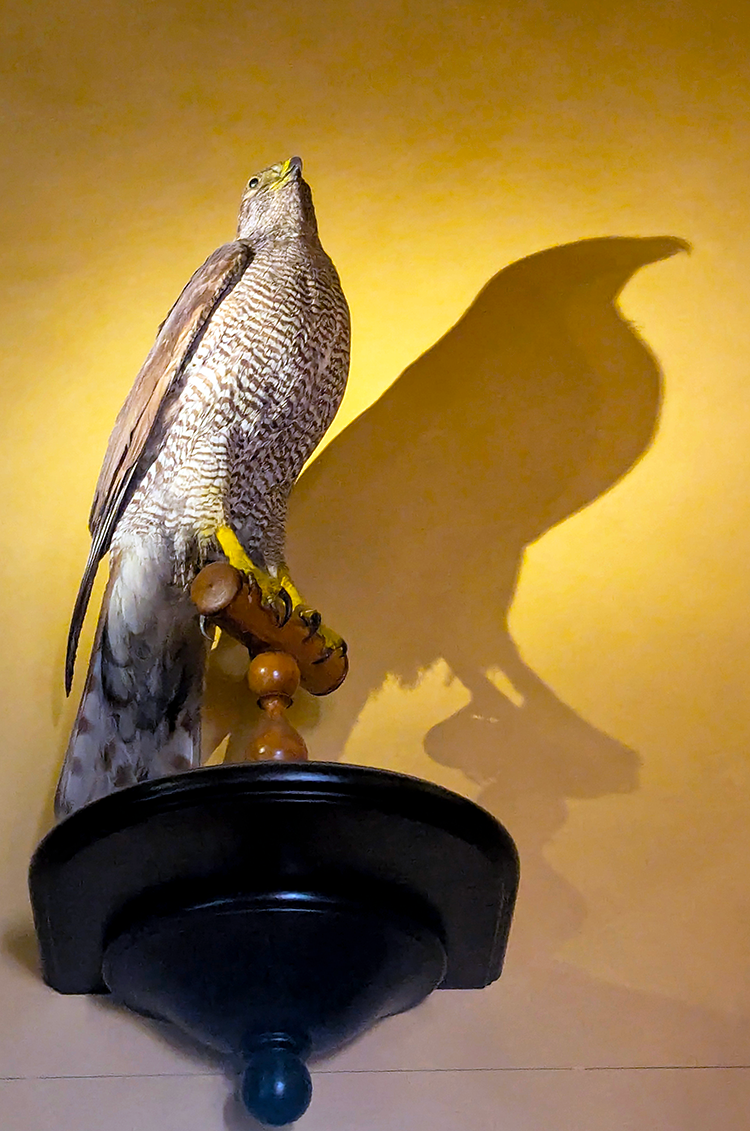
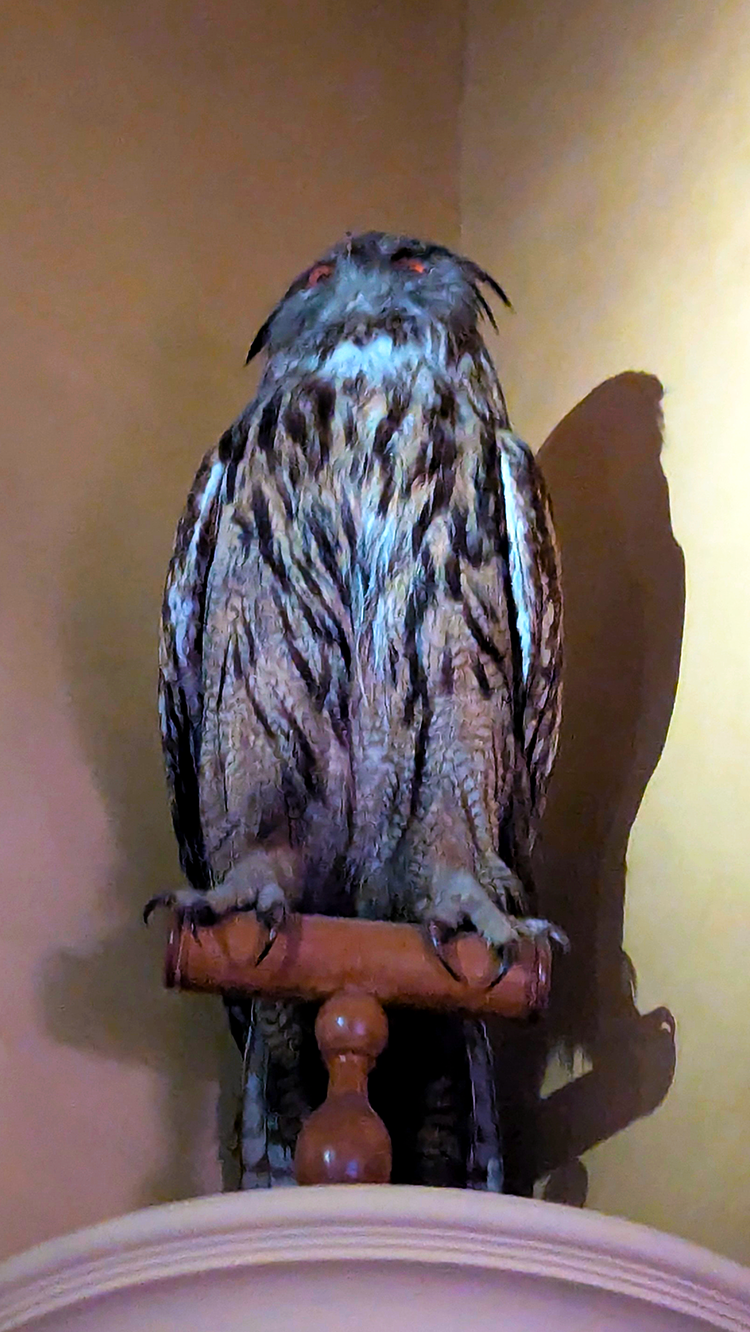
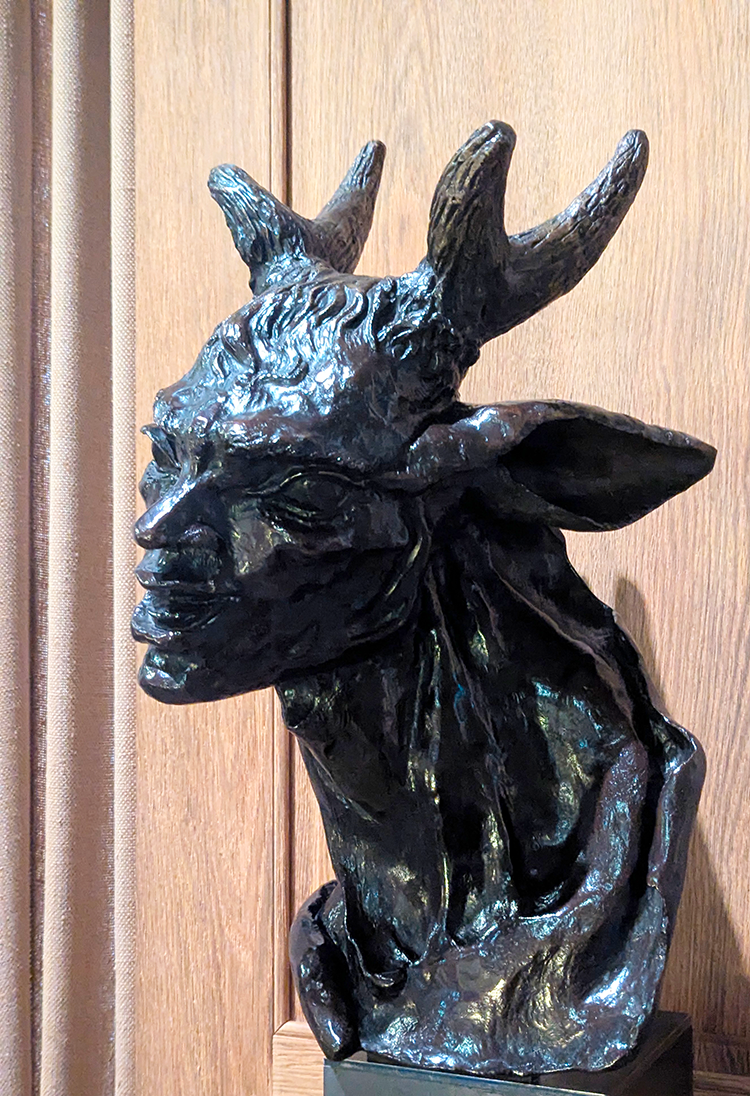
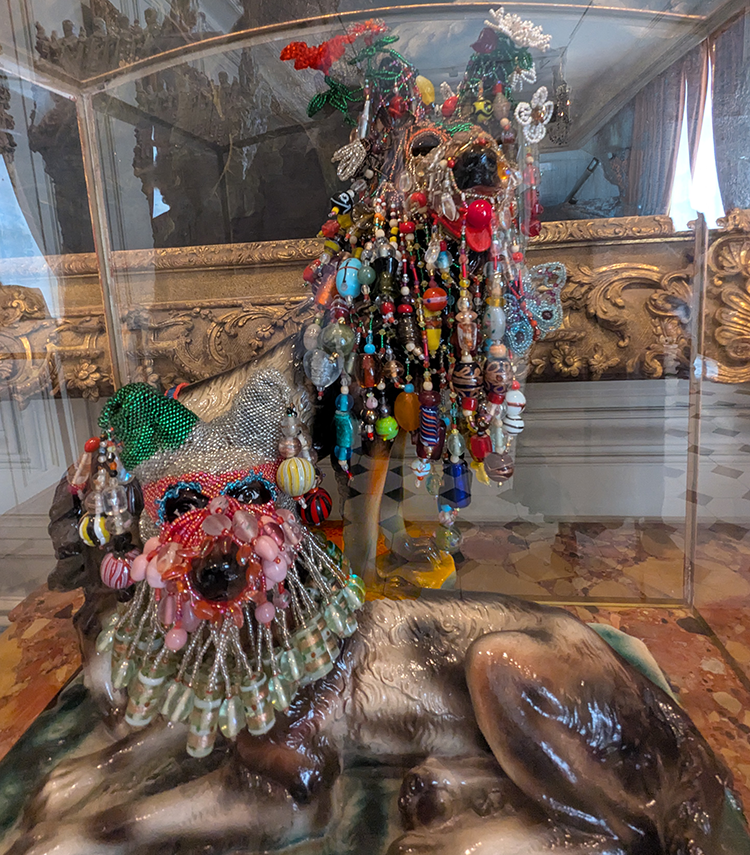
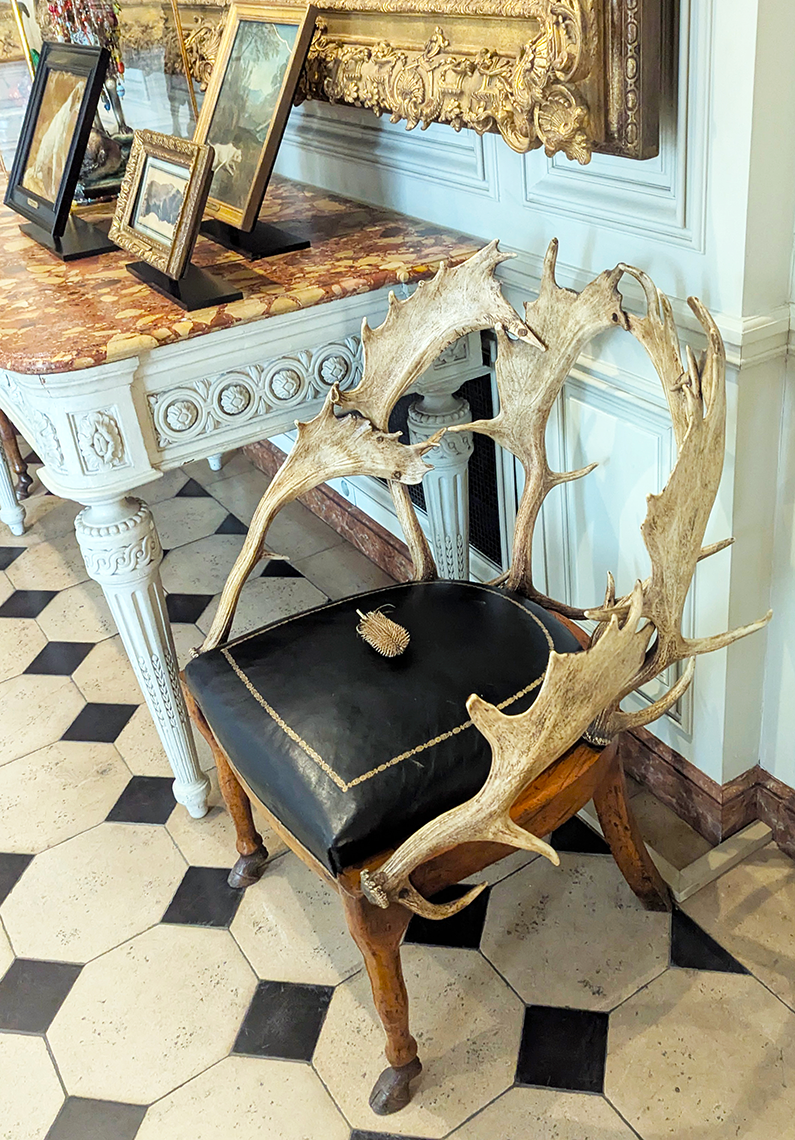
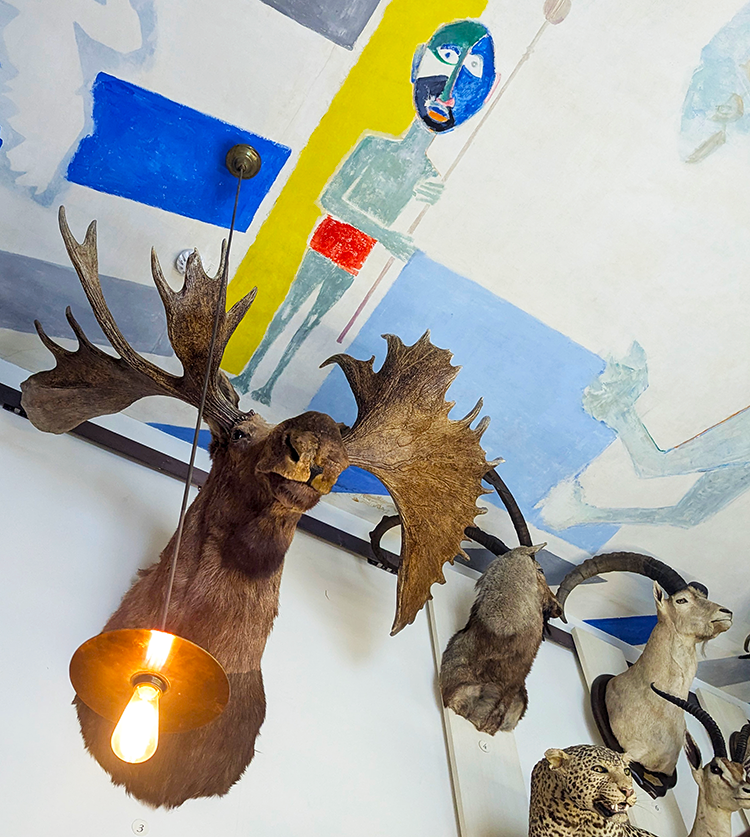
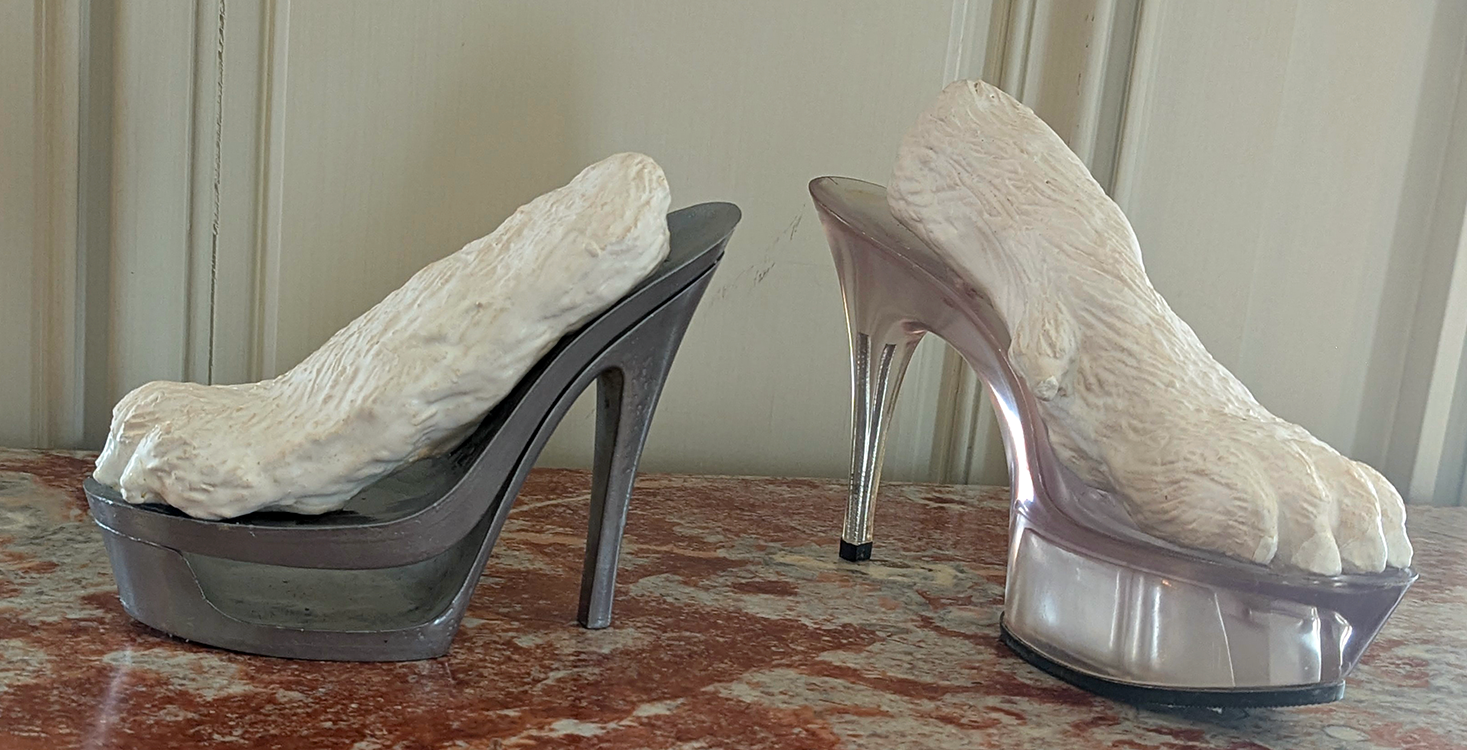
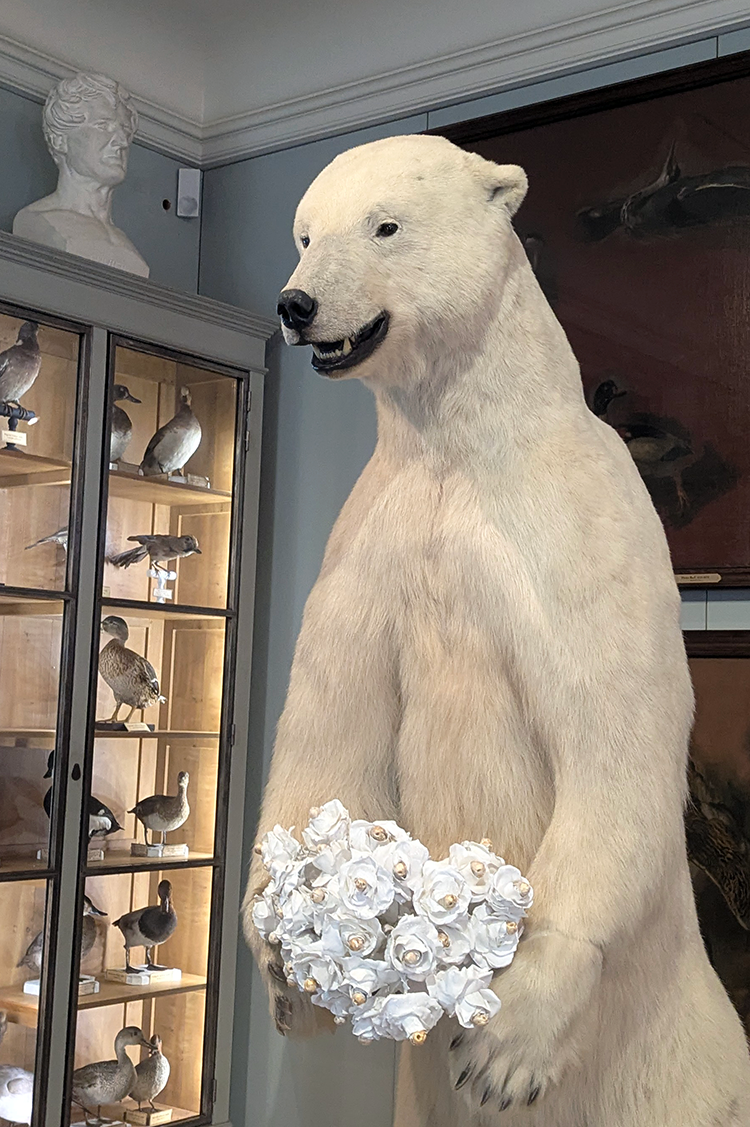
Above: Museum artifacts and Dubien’s interventions.
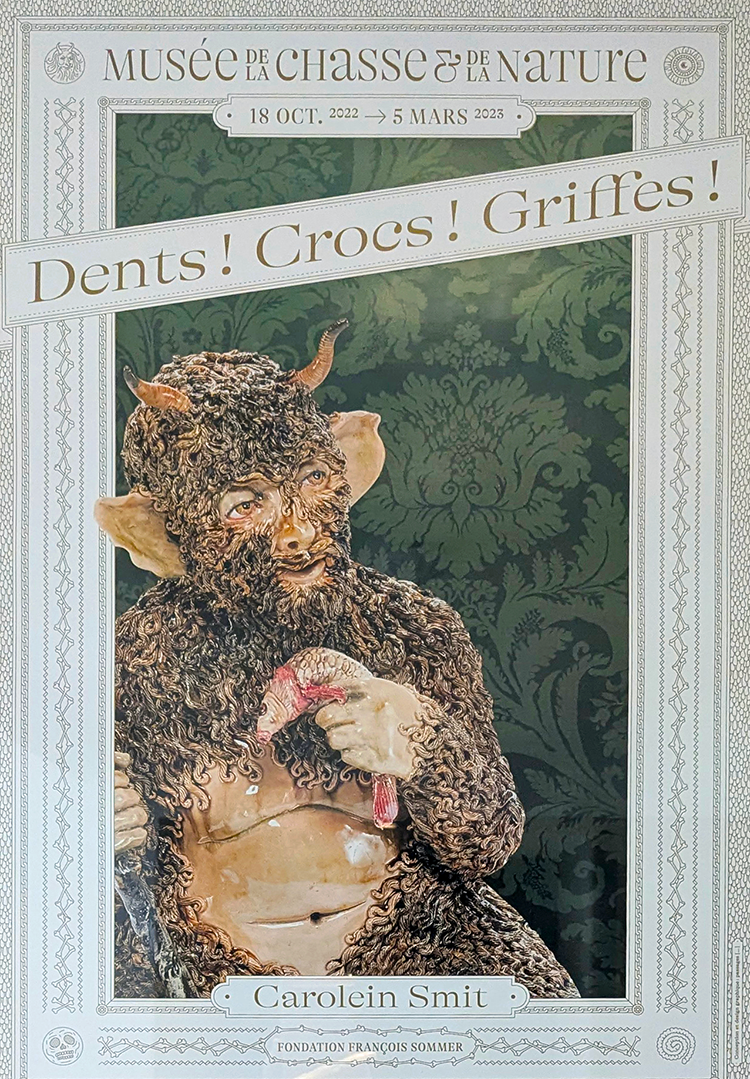
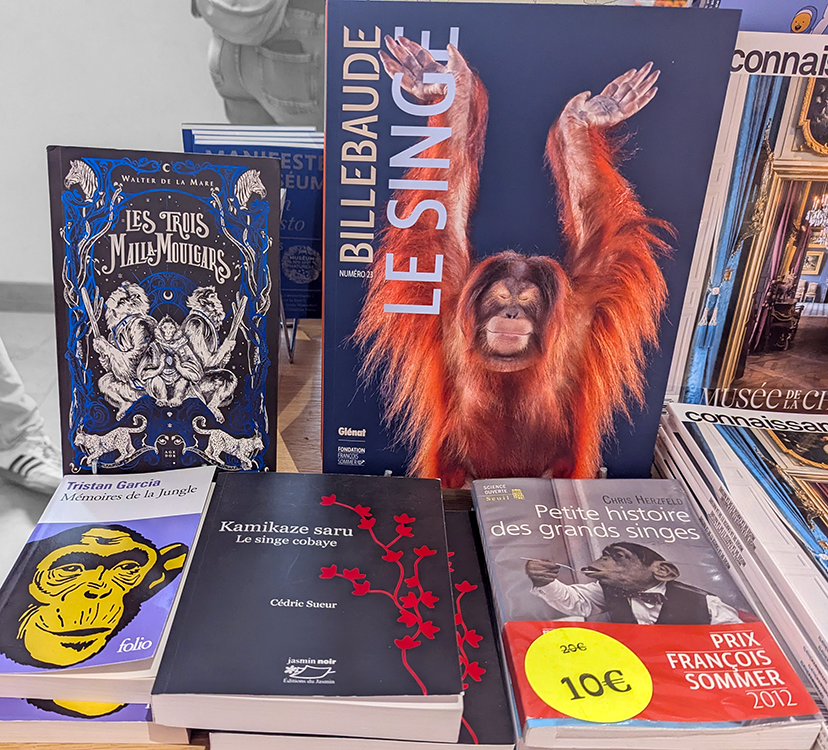
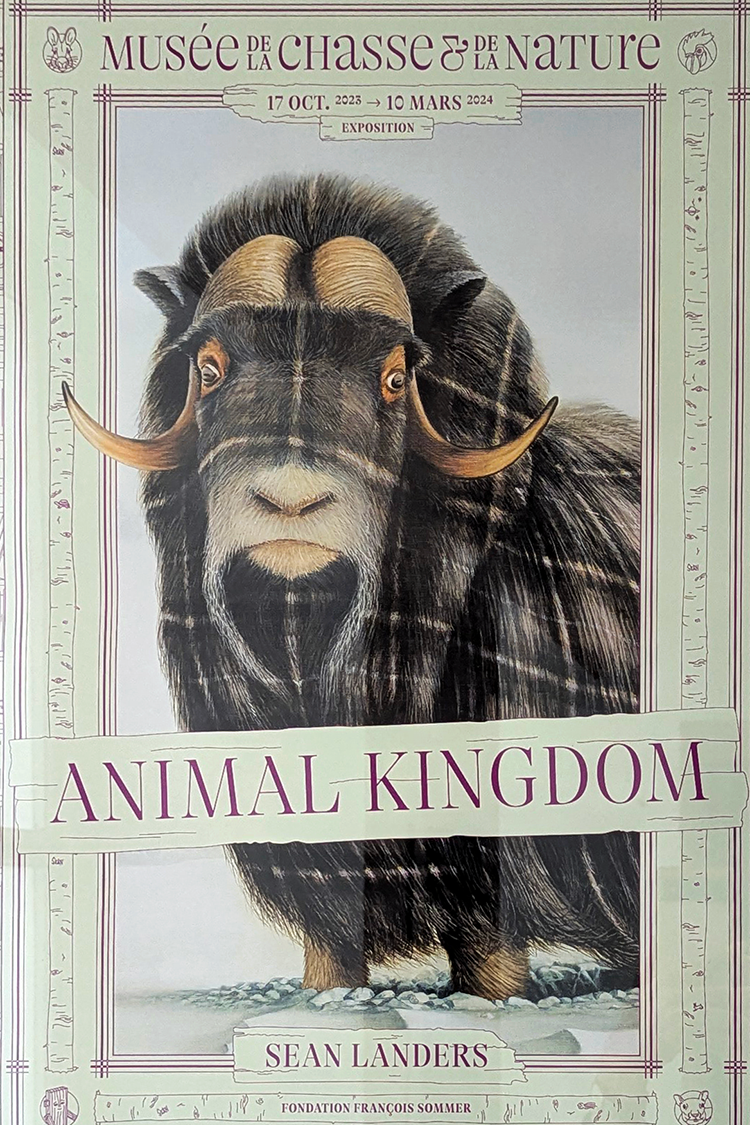
Above: Books and posters from earlier exhibitions in the Museum Gift Shop.
The curation trend of installing contemporary art complementing and contrasting with static collections keeps museums fresh and relevant for repeat visitation.
 Postcards from Barton Springs
Fascinating and so fundamental to the human experience. Human encounters with our earthly species cohabitors have been subjects of our art since the petroglyphs and the caves of Lascaux. And cross species mingling has been imagined in the Sphinx and the Löwenmensch. This art taps into that and more! Thanks for sharing. 🏄♂️
LikeLiked by 1 person
Thanks, Chuckster. I love the museum’s concept of viewing wildlife via different artists’ perspectives.
LikeLiked by 1 person