
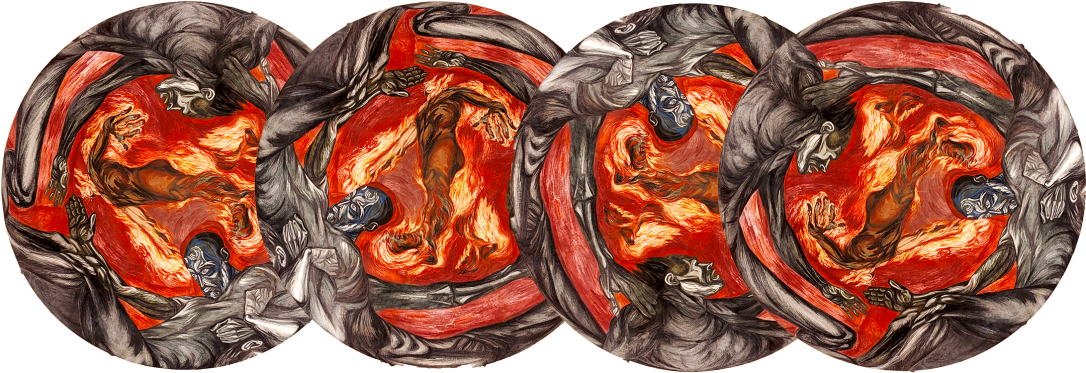
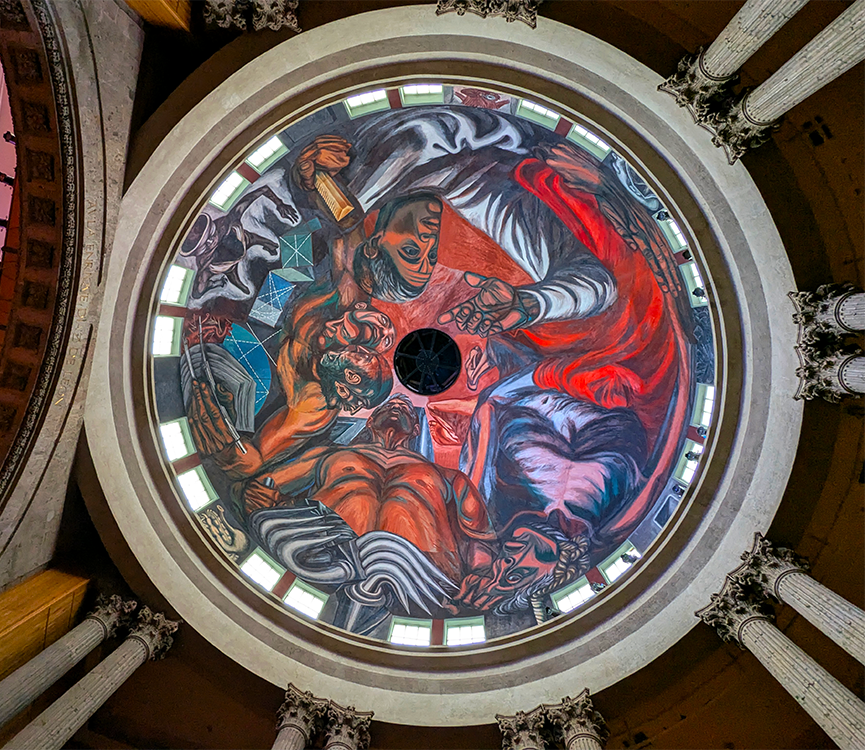
Above: Rotating views of Jose Clemente Orozco’s “Man of Fire” fresco in the dome of Instituto Cultural Cabanas, 1937-1939
An artist is a freedom fighter, fighting for the liberation of the human spirit.”
Jose Clemente Orozco (1883-1949)
At the age of 20, Orozco was in the process of prepping fireworks, when: Boom! He delayed treatment, and gangrene gained hold of his wound. So, his left hand had to be removed, a tragedy that spared him from being drafted into the trenches of the Mexican Revolution.
But the artist did not stand idly as history unfolded; he honed art as his weapon. His art evolved into something stark, dark and boldly modern. His offensive was against all and any institutions that kept the common man in a state of poverty – art meant to shame the rich and privileged and inspire the poor.
Art is born of rebellion, and it is against the law and norms where it finds its best expression.”
Jose Clemente Orozco
The work of Mexico’s great contemporary muralists became the rage of the art world in the United States in the 1920s, at the same time as political winds in Mexico blew them to seek safety in El Norte. Orozco was among those who received several major commissions. Wealthy American patrons were not accustomed, however, to being skewered within the finished frescoes by the very artists they were paying. Orozco was not easily tamed.
As the Great Depression continued, the well dried up. President Roosevelt’s WPA was not awarding public art commissions to artists from Mexico. With the Mexican governments then in a more settled state, Orozco returned to his Jalisco roots, obtaining several major contracts in Guadalajara.
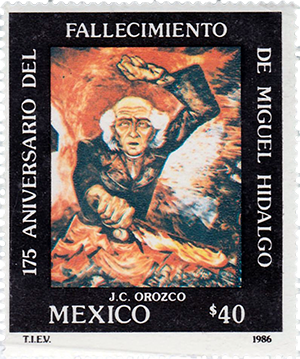
One of these murals was to celebrate the independence of Mexico by recognizing Father Miguel Hidalgo (1753-1811), considered the Father of Mexico. The fresco dominates the massive staircase in the 18th-century Government Palace of Jalisco, the building where Hidalgo abolished slavery in Mexico in 1810. A like provision repeated in the Mexican Constitution would propel slave-owning Texians toward revolt.
The stern yet heroic pose of Hidalgo echoes the mythic figure of Prometheus, dwarfing and intimidating all who approach, as well as the misfortunate poor trampled upon for the cause.
Orozco sought both to praise Hidalgo for his role in encouraging the Indians’ rebellion and to condemn him, a Roman Catholic priest, whose task it was to indoctrinate the Indians in a foreign faith. Thus, as Orozco framed it, while Hidalgo fought for the oppressed, he was also tragically contributing to their oppression.”
“Jose Clemente Orozco,” The Art Story
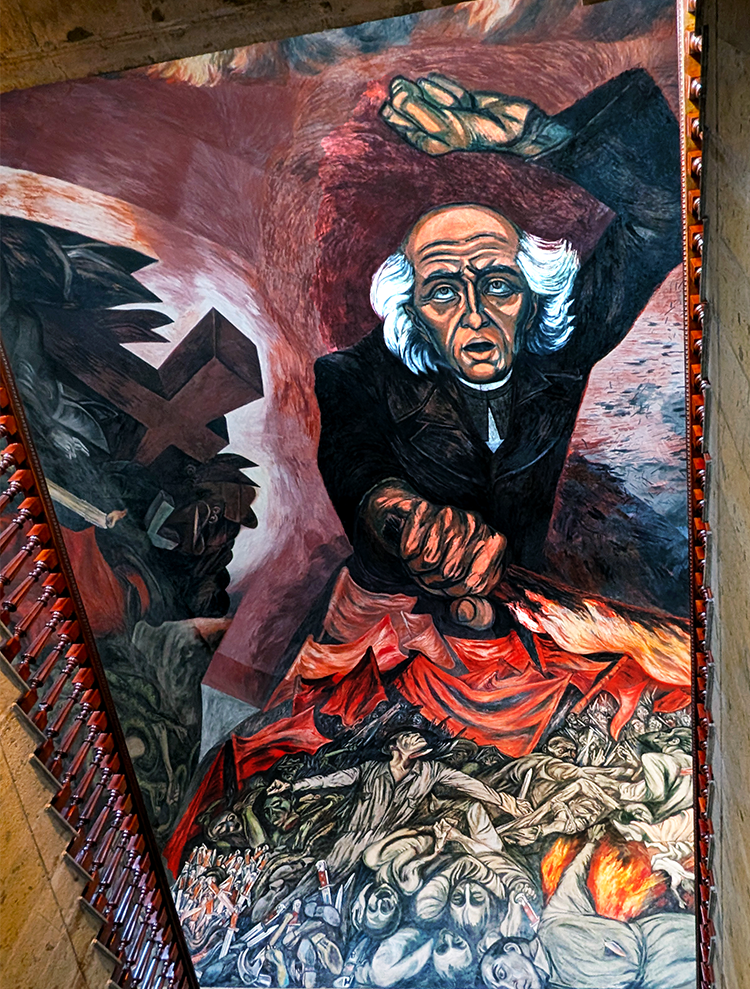
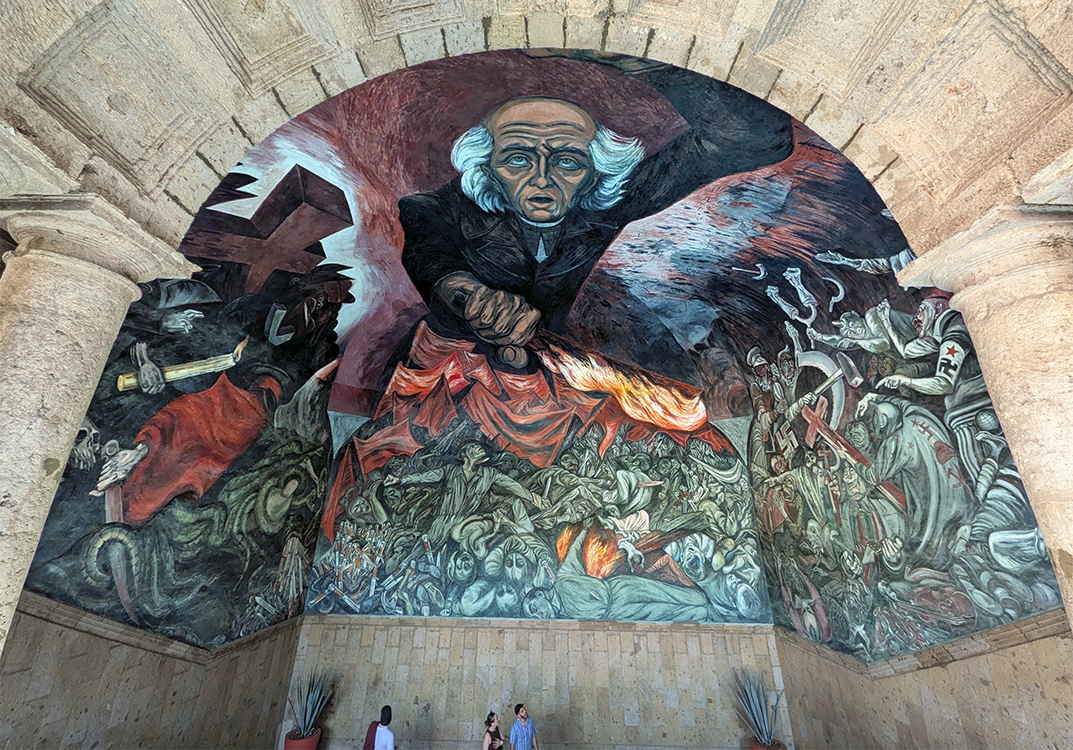
Above: “Hidalgo and National Independence,” Jose Clemente Orozco, Palacio de Gobierno, 1934-1937
Only by confronting darkness can we truly appreciate the light.”
Jose Clemente Orozco
Later, the artist returned to the palace to shine light on the political chaos near the end of World War II.
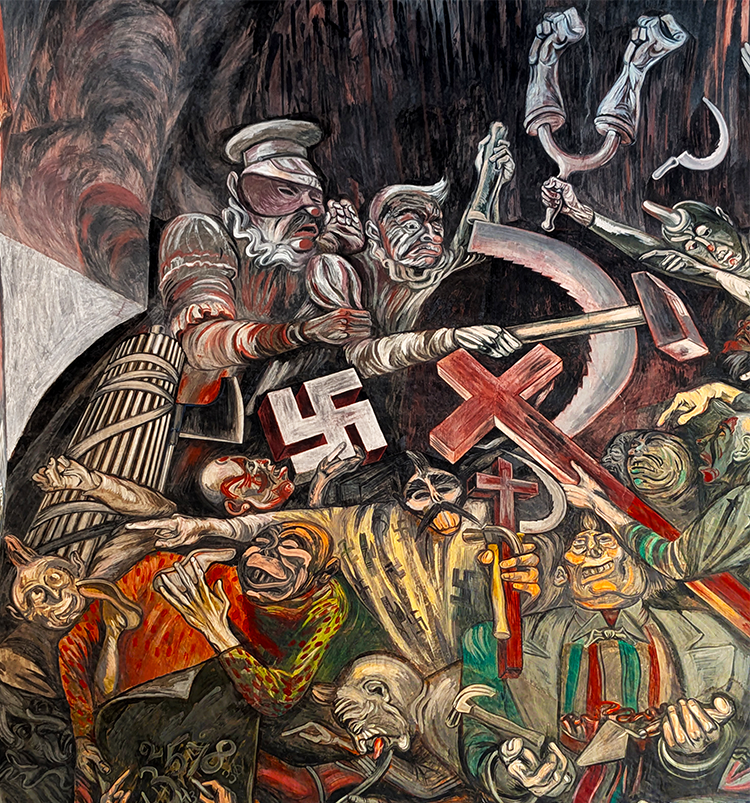
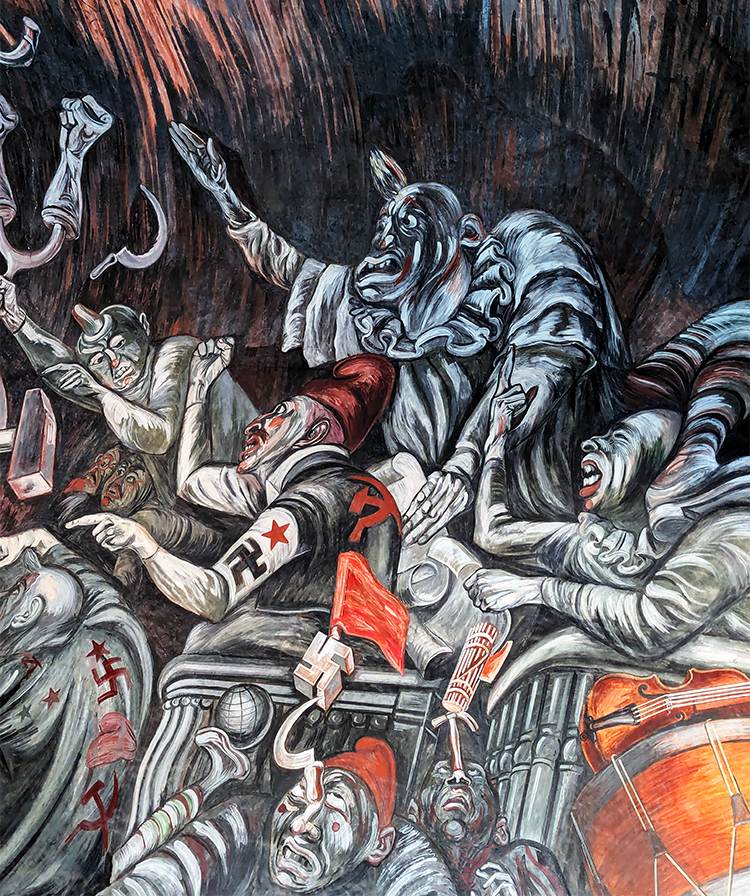
Above: “The Clowns of War Arguing in Hell” or “Carnival of the Ideologies,” Jose Clemente Orozco, Palacio de Gobierno, 1944
On the campus of the University of Guadalajara, the heart of the Museum of Art (MUSA) throbs from the power of Orozco’s critiques on the realities of history.
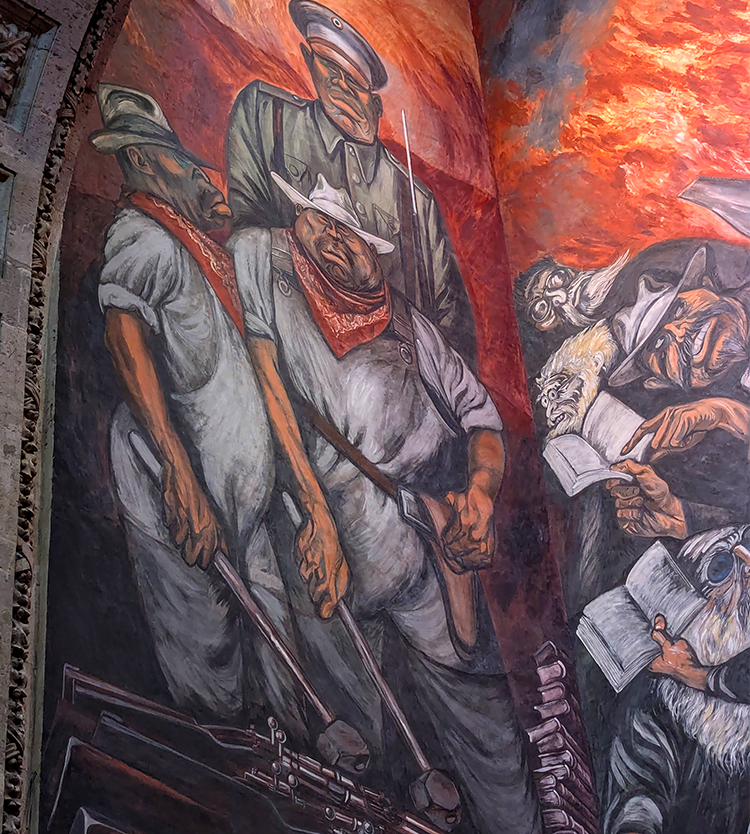
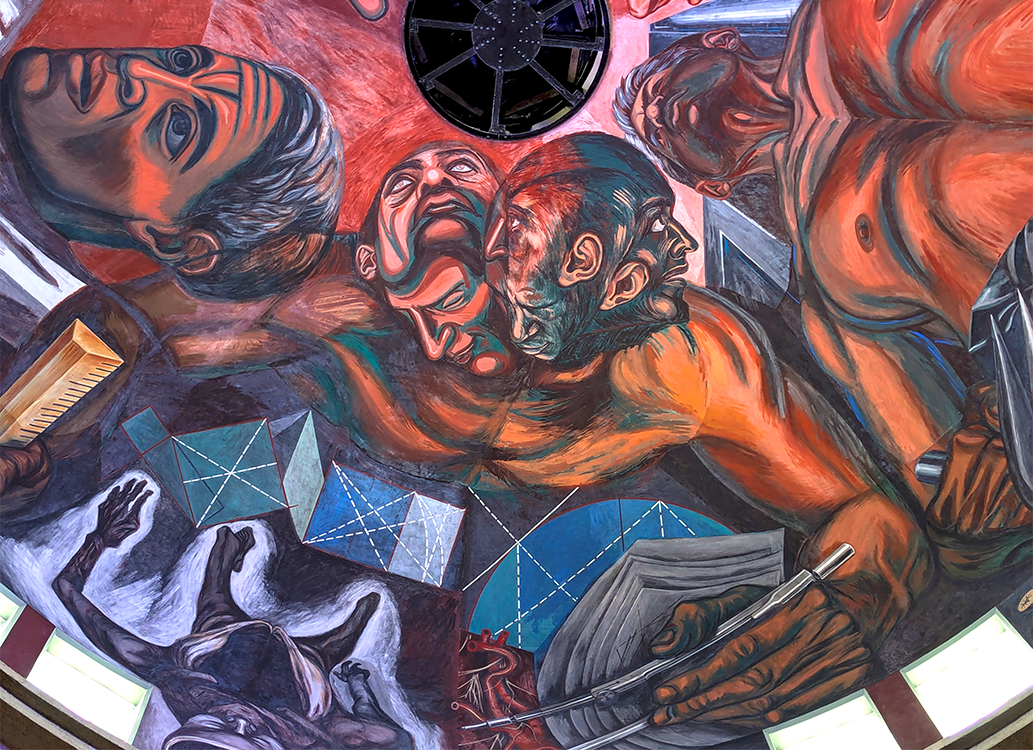
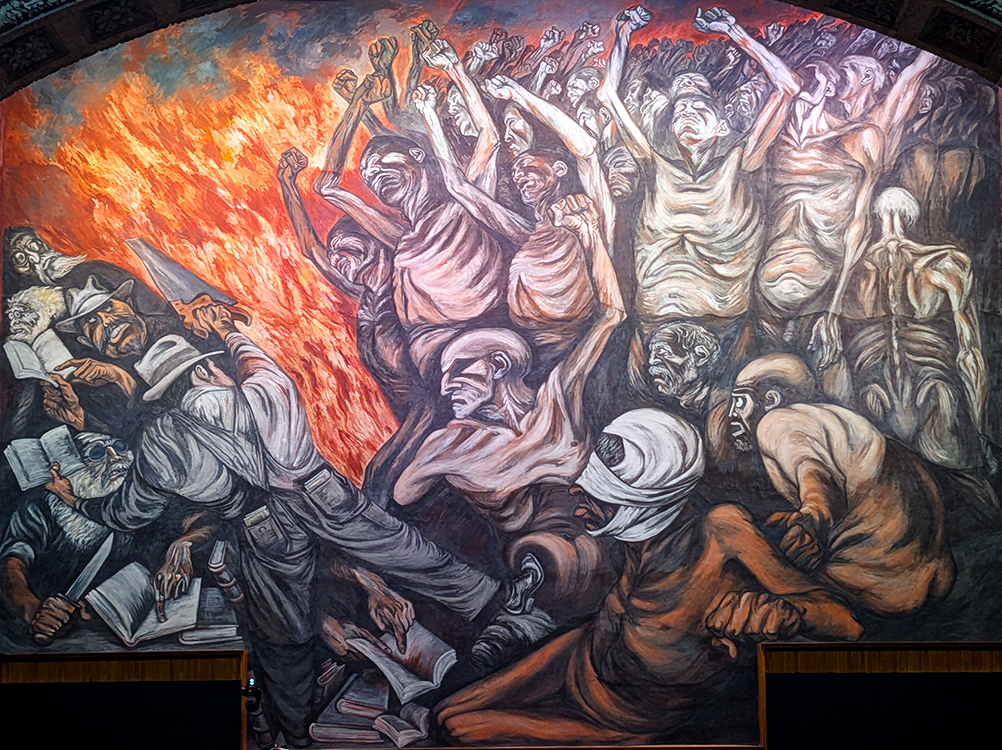
Above left and bottom right: “The People and Their False Leaders.” Top two on right in the dome: “The Creator and Rebel Man.” All by Jose Clemente Orozco, MUSA Museo de las Artes, 1935-1937.
Art is not about creating something pretty, but about creating something that resonates.”
Jose Clemente Orozco
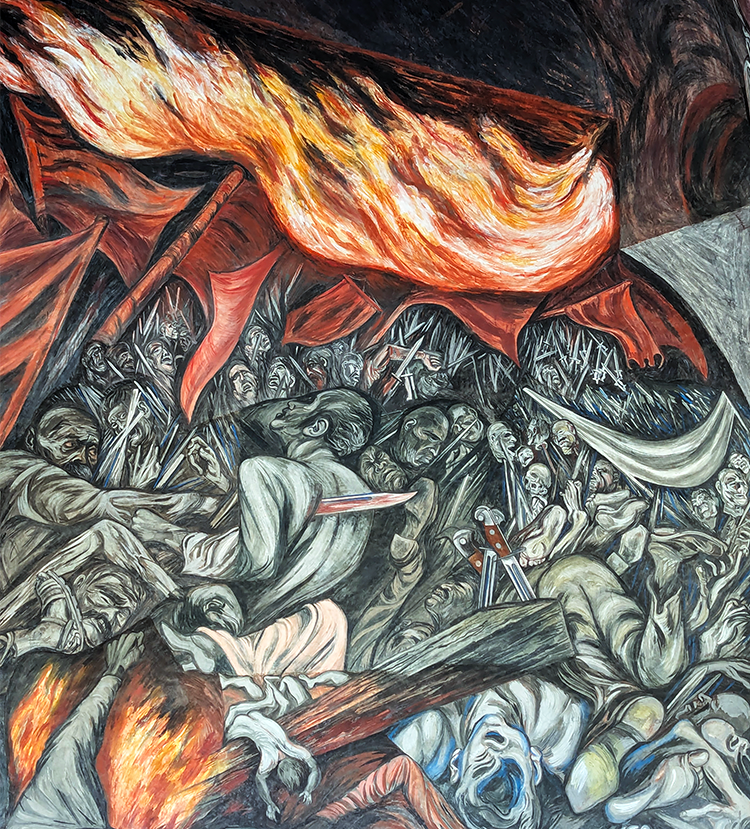
The neoclassical Hospicio Cabanas was completed by 1800 to shelter orphaned, homeless children and the elderly. The interior courtyard resembles those of a convent, but it is the main chapel that bears the imprint of Orozco.
More than a century after its construction, the government of Jalisco invited the artist to adorn the main chapel walls. Orozco took full advantage of the site, ambitiously covering its interior with 57 frescoes with themes ranging from creation through oppression of the indigenous people of Mexico.
In 1983, the doors of the former hospice were opened as Museo Cabanas, dedicated to the dissemination of the arts.
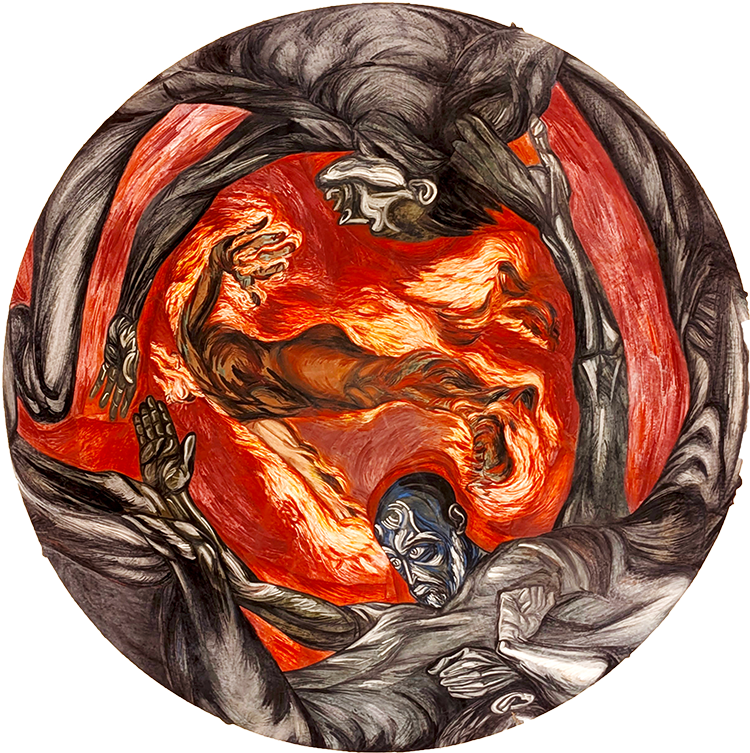
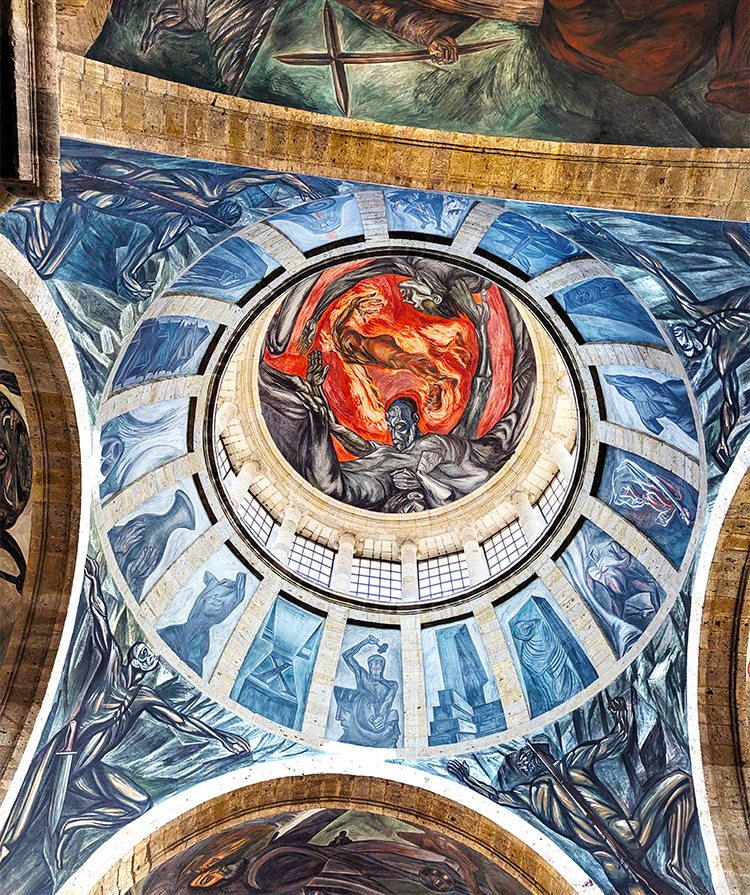
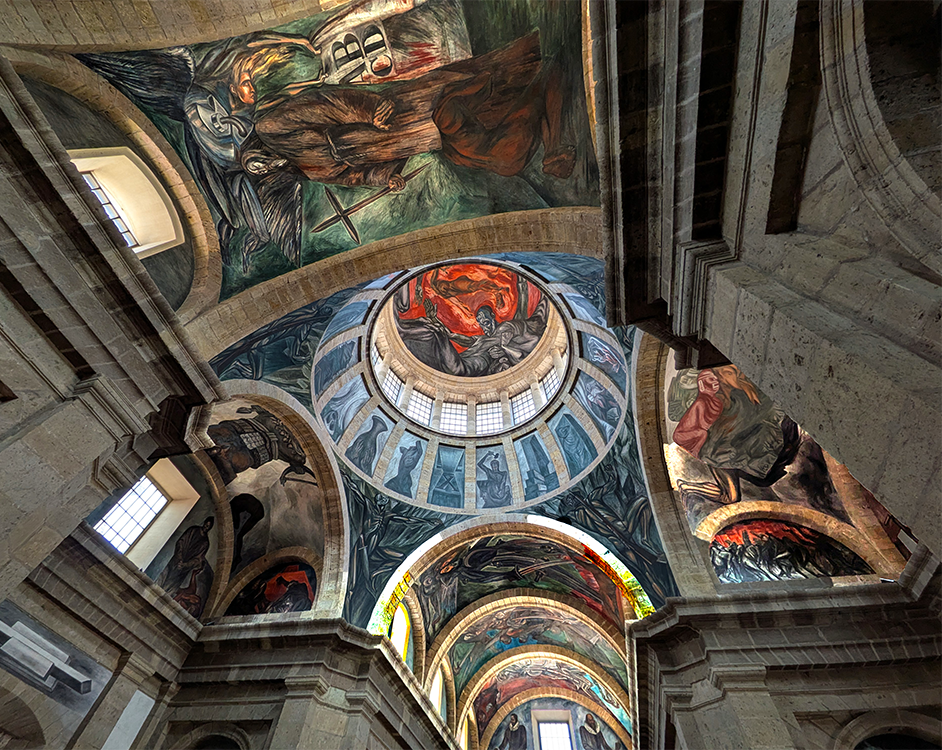
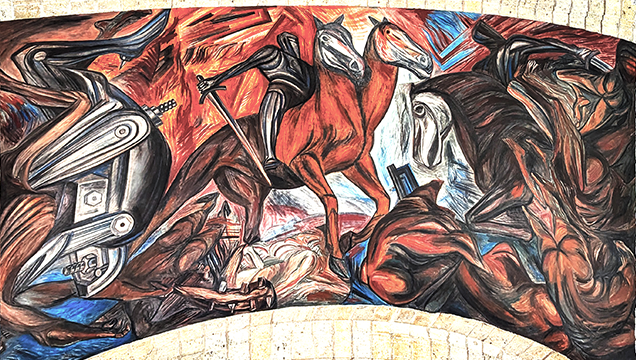
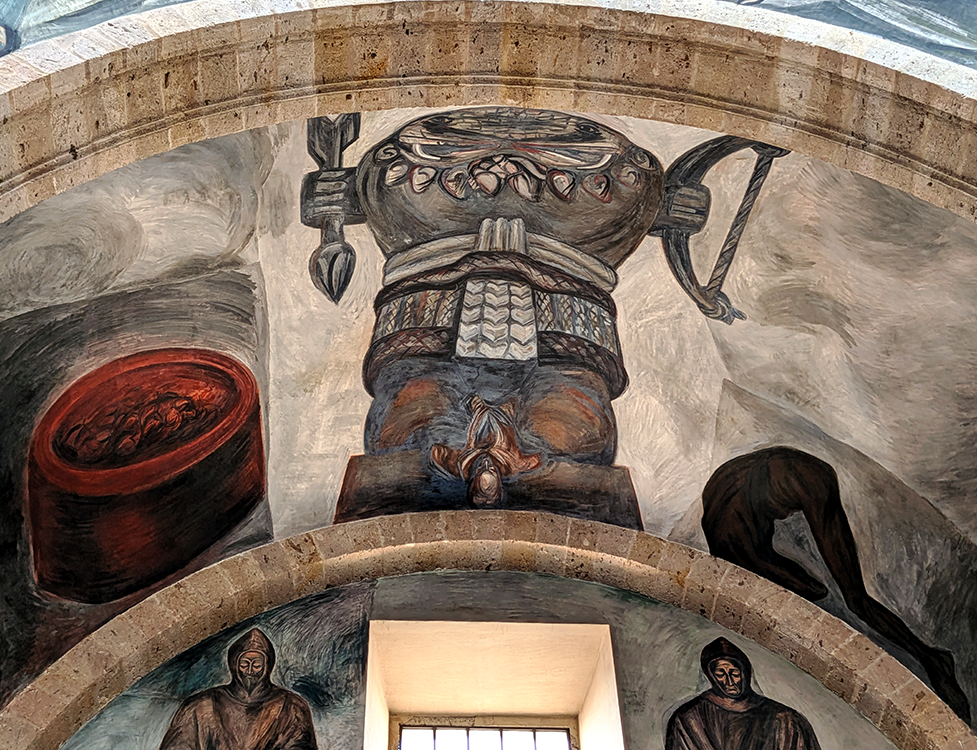
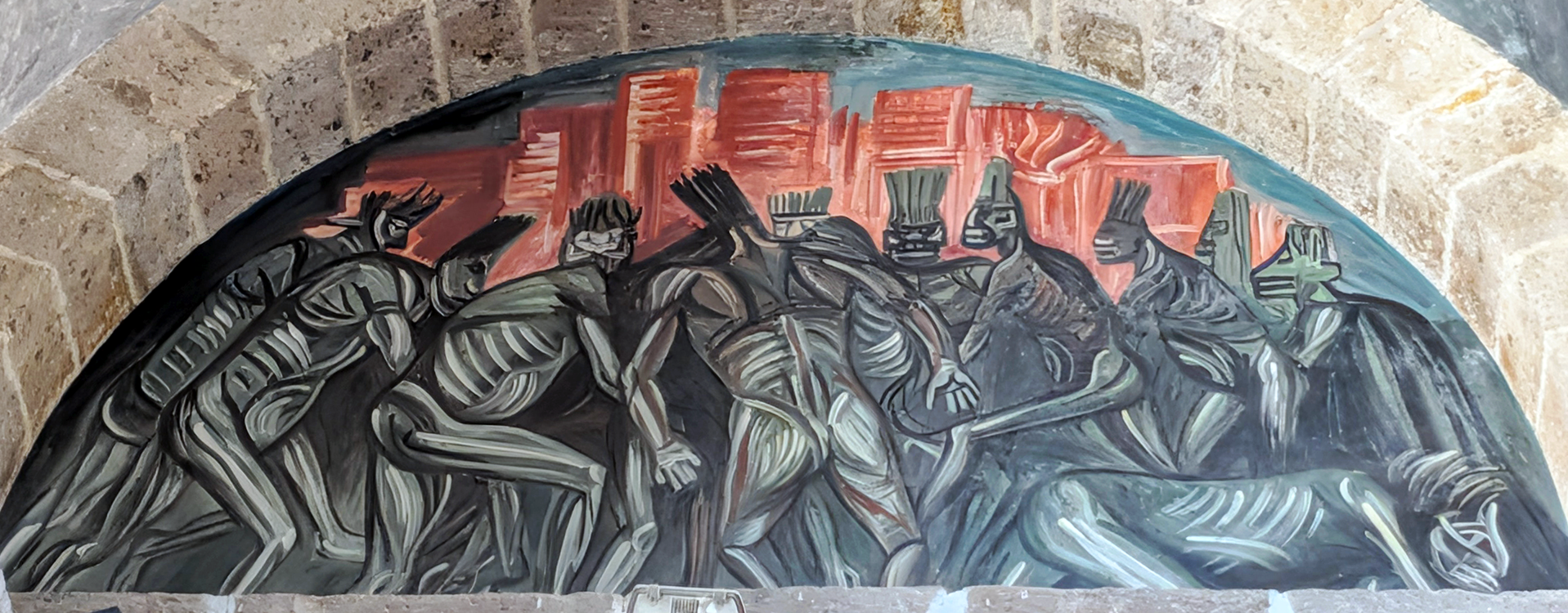
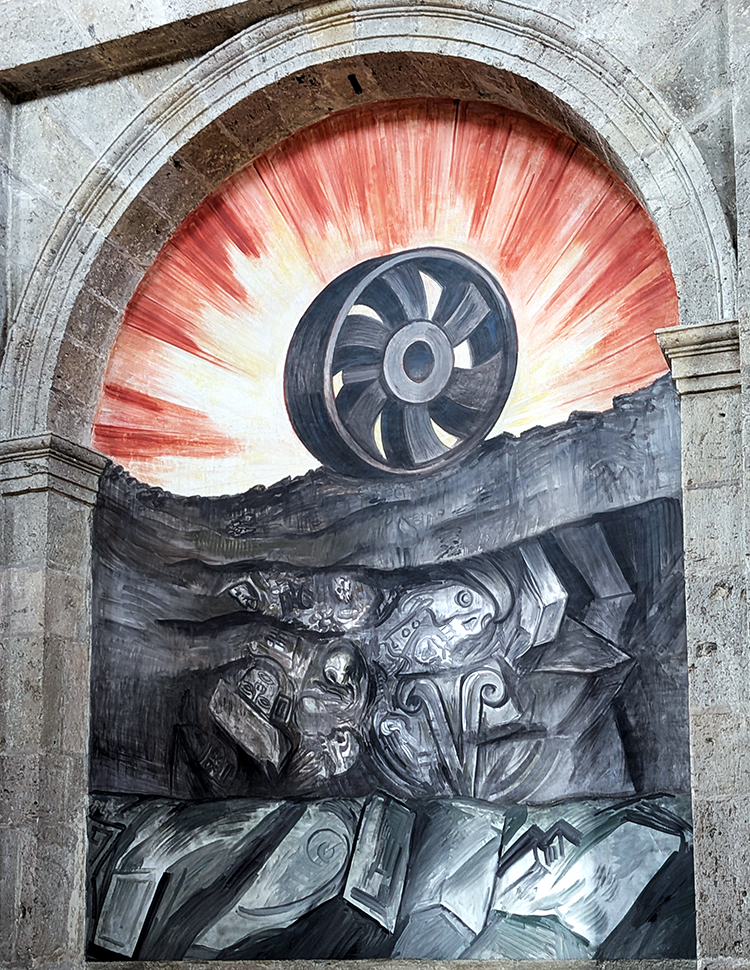
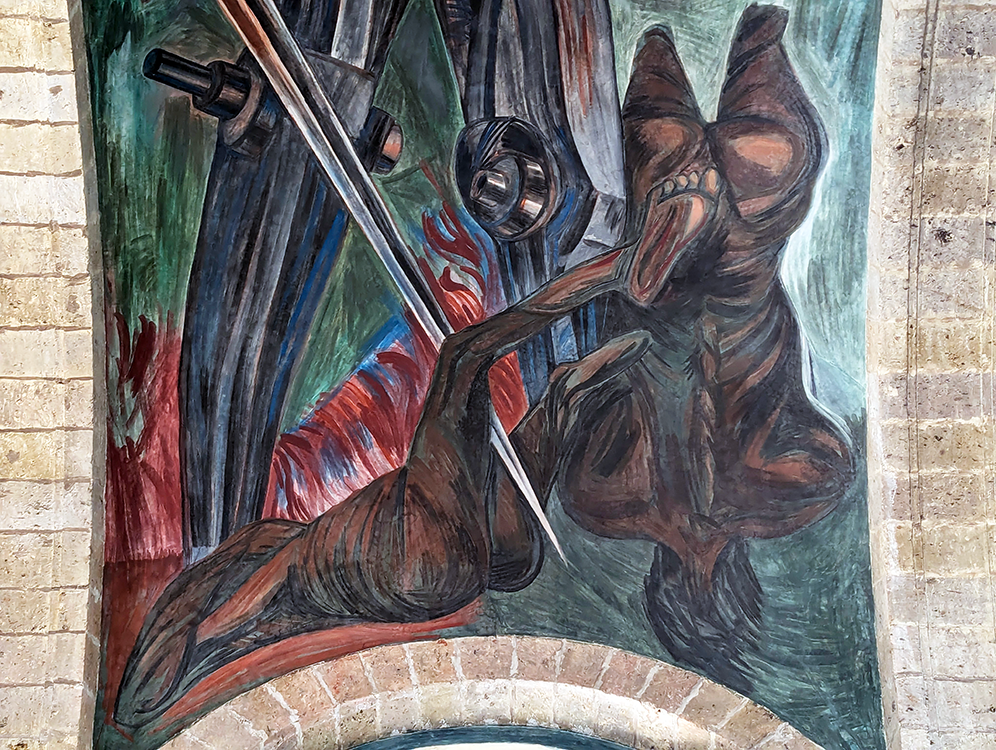
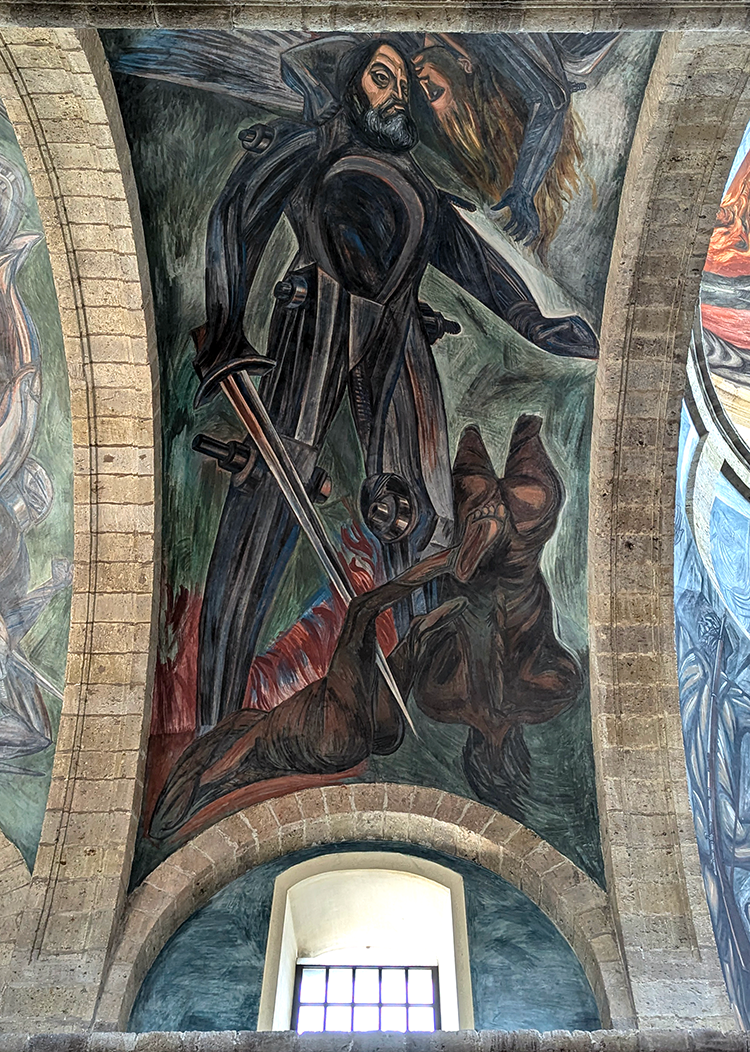
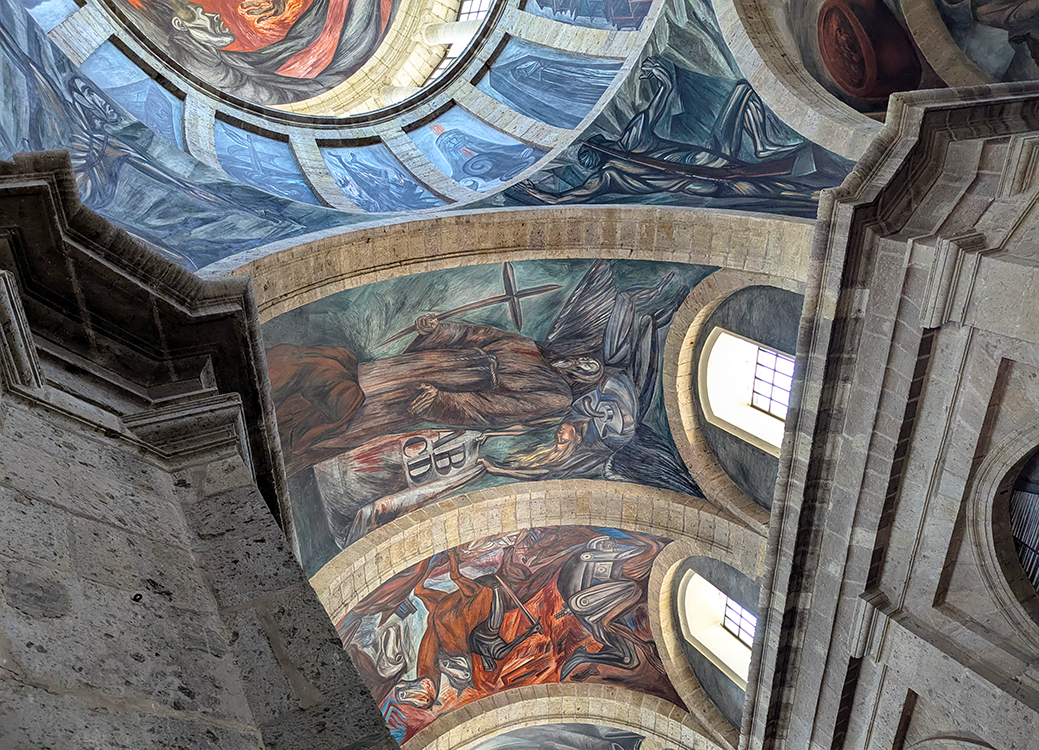
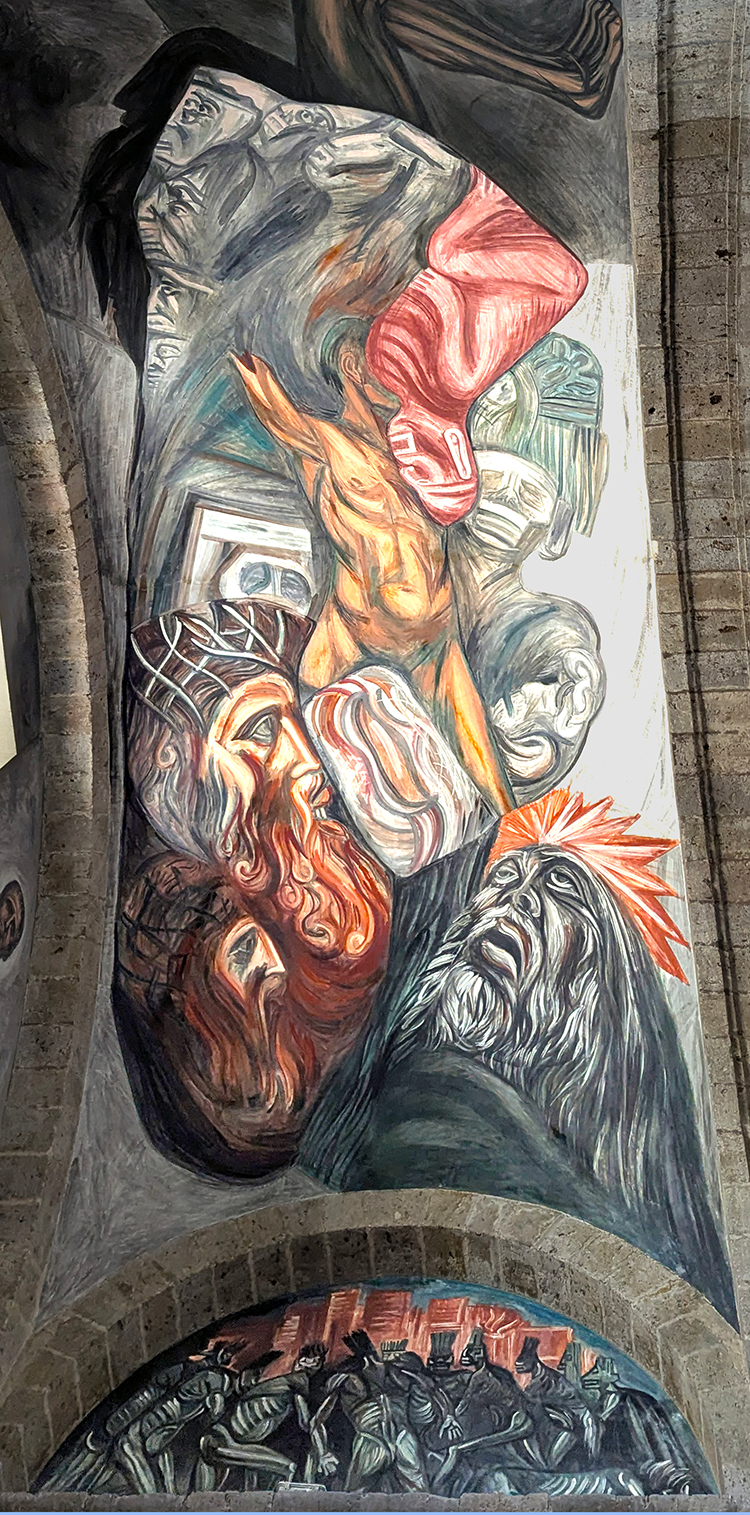
Above: Jose Clemente Orozco, Hospicio Cabanas, 1937-1939
To have a tragic vision in the Americas is extremely difficult because we were founded as the Brave New World of happiness, the great utopia. So when… a painter like Orozco breaks through the promise of Mexico of the New World, it is a very striking event.”
Carlos Fuentes (1928-2012)
Above, trailer for “Orozco: Man of Fire,” 2007: Broadcast on the PBS series American Masters, the one-hour documentary portrait of Mexican muralist José Clemente Orozco, whose ‘Man of Fire’ fresco is known as the Sistine Chapel of the Americas. The documentary was directed, written and produced by Laurie Coyle and Rick Tejada-Flores.
 Postcards from Barton Springs