
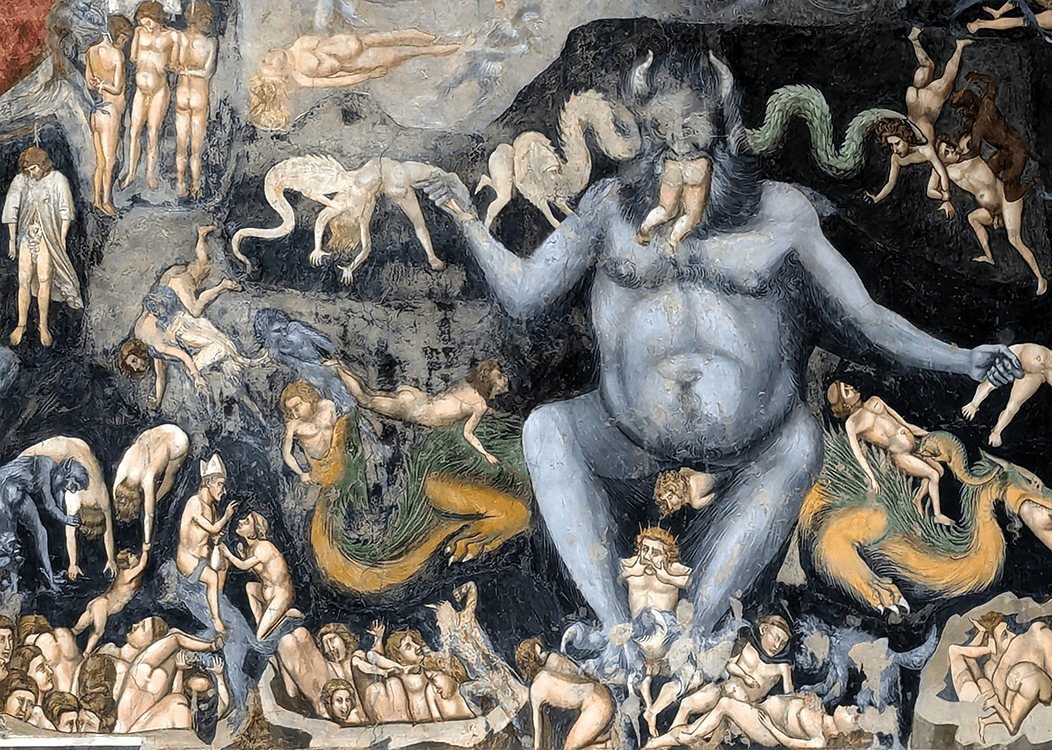

Above: The devil lording over Hell as depicted in “The Last Judgment” by Giotto (Ambrogiotto di Bondone, 1266-1337) in the Scrovegni Chapel
But as for the cowardly, the faithless, the detestable, as for murderers, the sexually immoral, sorcerers, idolaters, and all liars, their portion will be in the lake that burns with fire and sulfur, which is the second death.”
Book of Revelation, Chapter 21, Verse 8
Slides in Professor Bill White’s Renaissance art course at Hollins University groomed me into a Giotto groupie prior to standing in awe before Giotto’s actual frescoes in the Scrovegni Chapel. And Professor Henning surely pointed out Giotto’s horrific visions of Hell when I was on summer tour about a half-century ago, but I had sharper memories of gazing upward toward his Heaven.
I once viewed the nuns at Star of the Sea in Virginia Beach as cruel for terrifying me into believing that touching the Communion host, even accidentally, would mean a bolt of lightning would strike me dead. Right there, that instant, at the altar in front of Father Habit, the whole parish, God and, Lordy, my father. But just imagine if they’d pulled out snapshots of Giotto’s Hell. In hindsight, those nuns were sweet. Well, only by comparison.
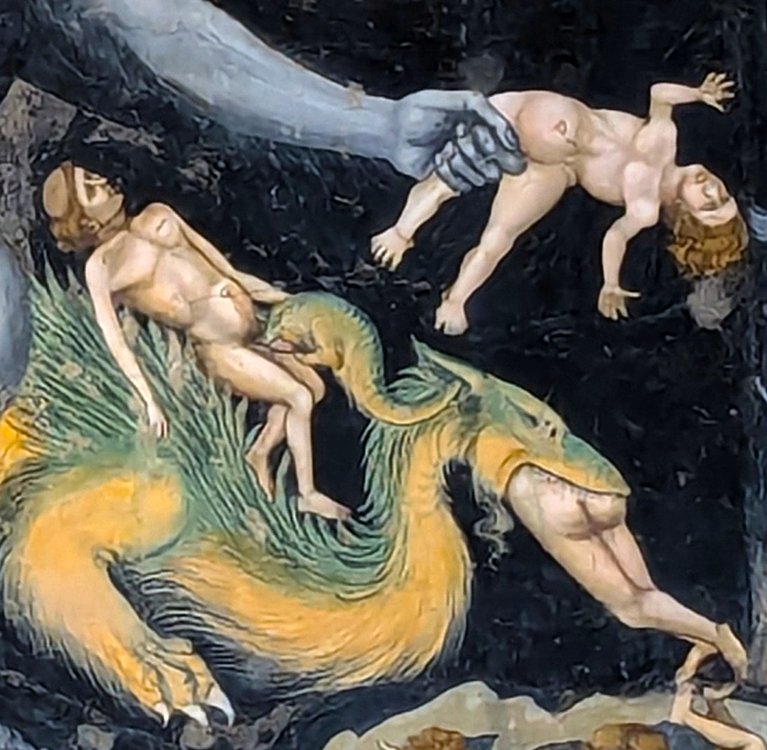
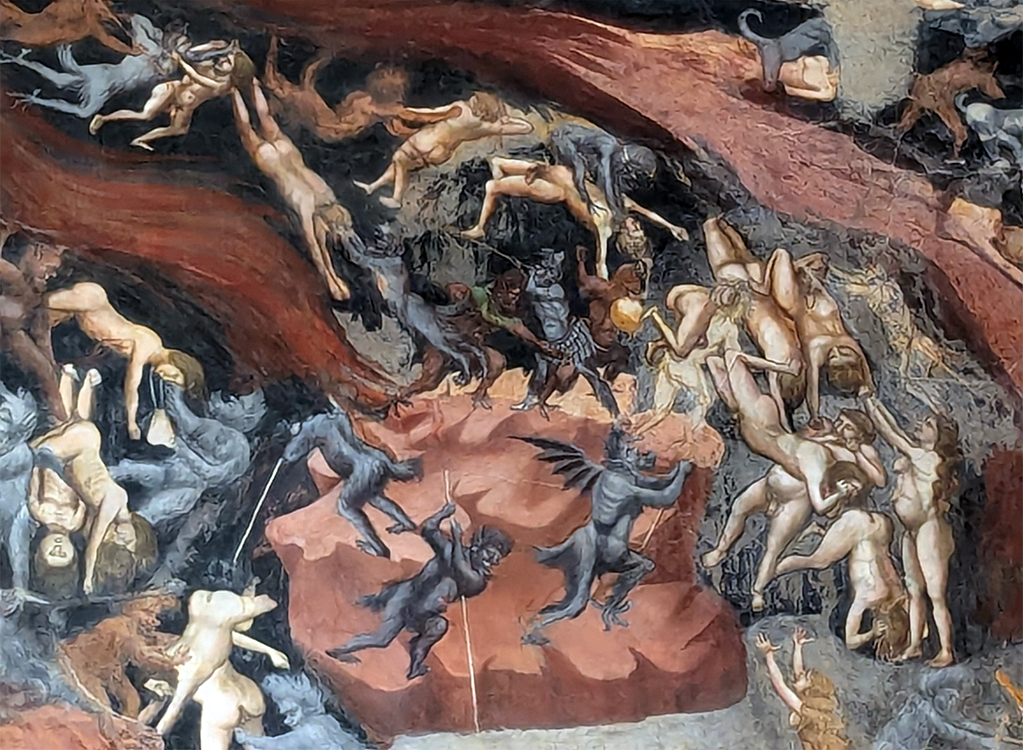
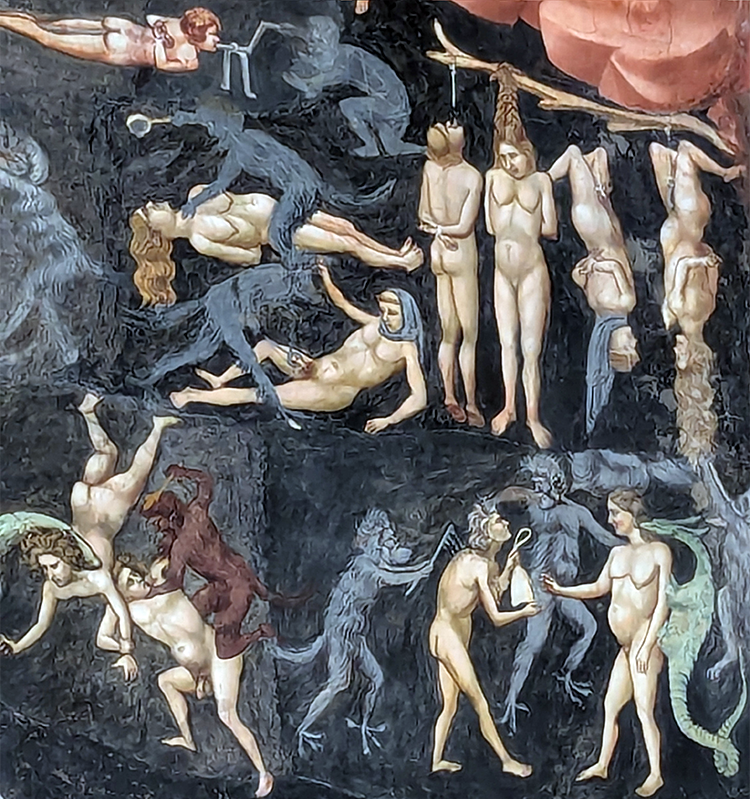
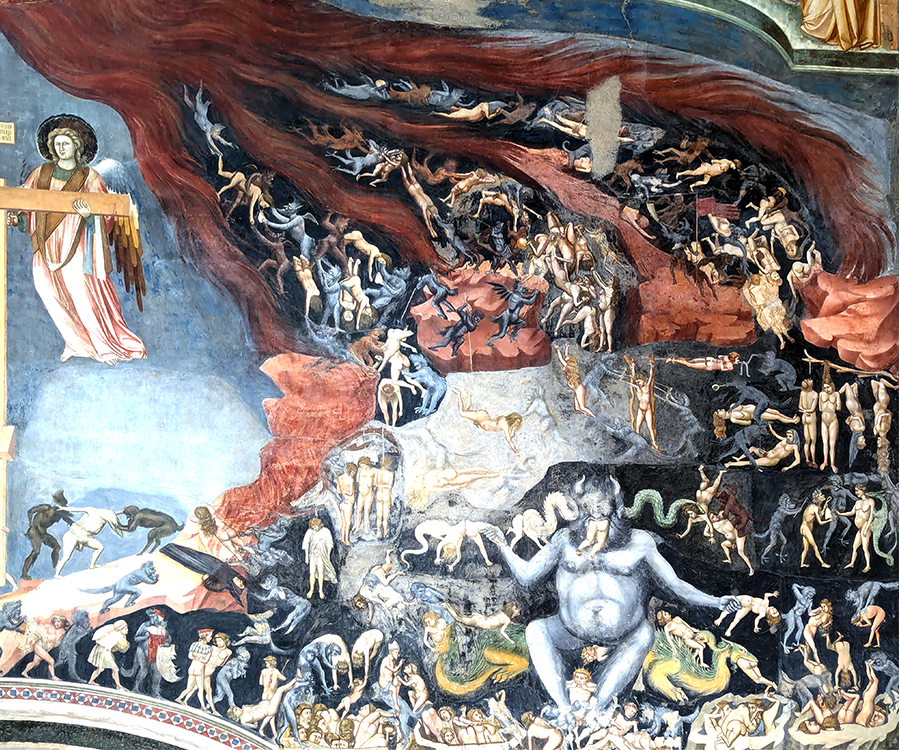
Above: Hell
Anyway, Hell certainly grabbed my attention this time. Maybe because my personal Judgment Day is in closer proximity.
Abandon all hope you who enter here.”
“Inferno,” The Divine Comedy, Dante (Durante di Alighiero, 1265-1321), 1314
Nowadays, the morality lesson must be absorbed quickly, as each visitor is allotted a mere 15 minutes in the chapel. And this after entering a sealed, air-conditioned antechamber for a 15-minute sort of decontamination period. A successful conservation effort.
But Giotto gets the message across.
There are six things that the Lord hates, seven that are an abomination to Him: haughty eyes, a lying tongue, and hands that shed innocent blood, a heart that devises wicked plans, feet that hurry to run to evil, a lying witness who testifies falsely, and one who sows discord in a family.”
Book of Proverbs, Chapter 6, Verses 16-19
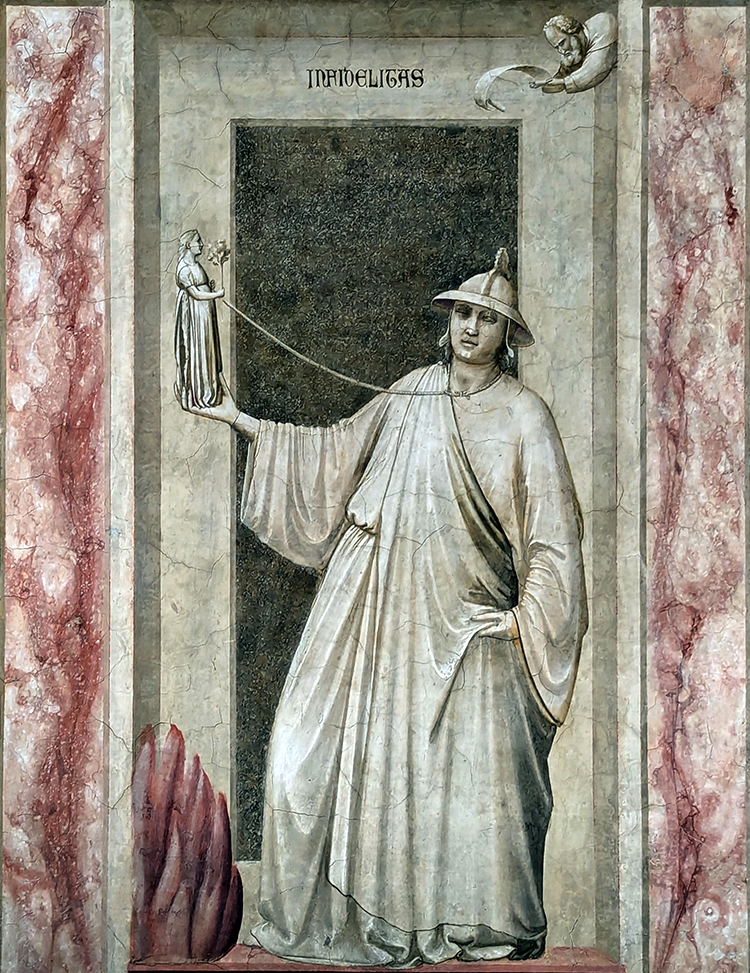
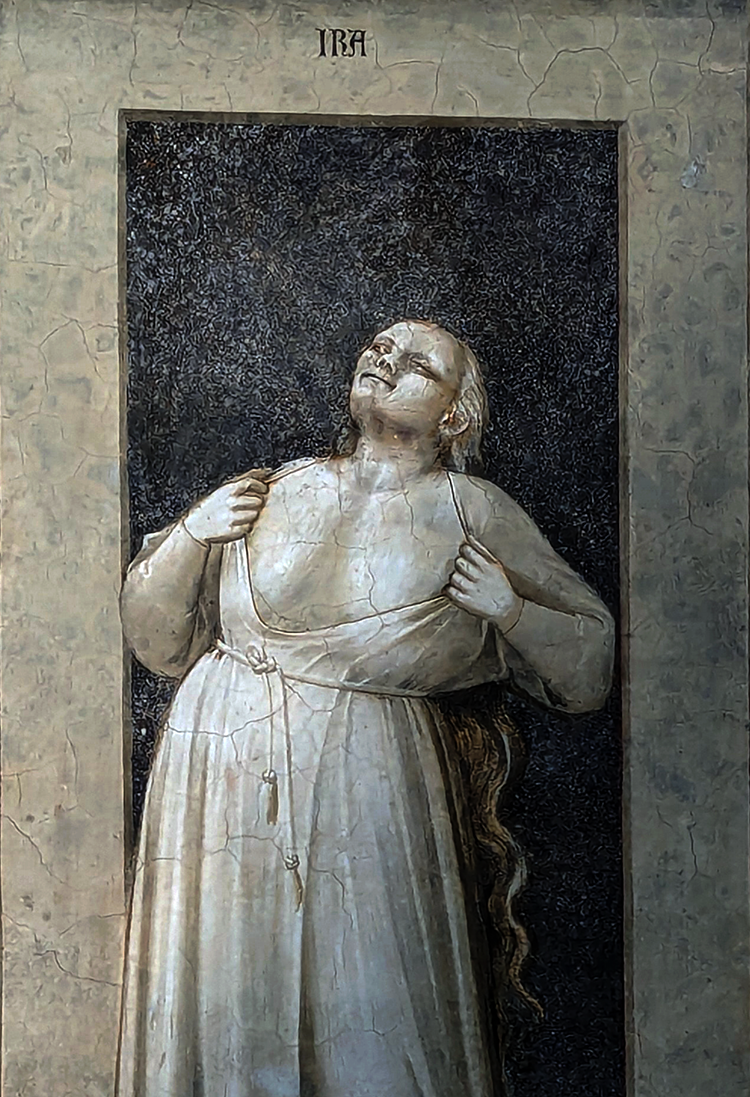
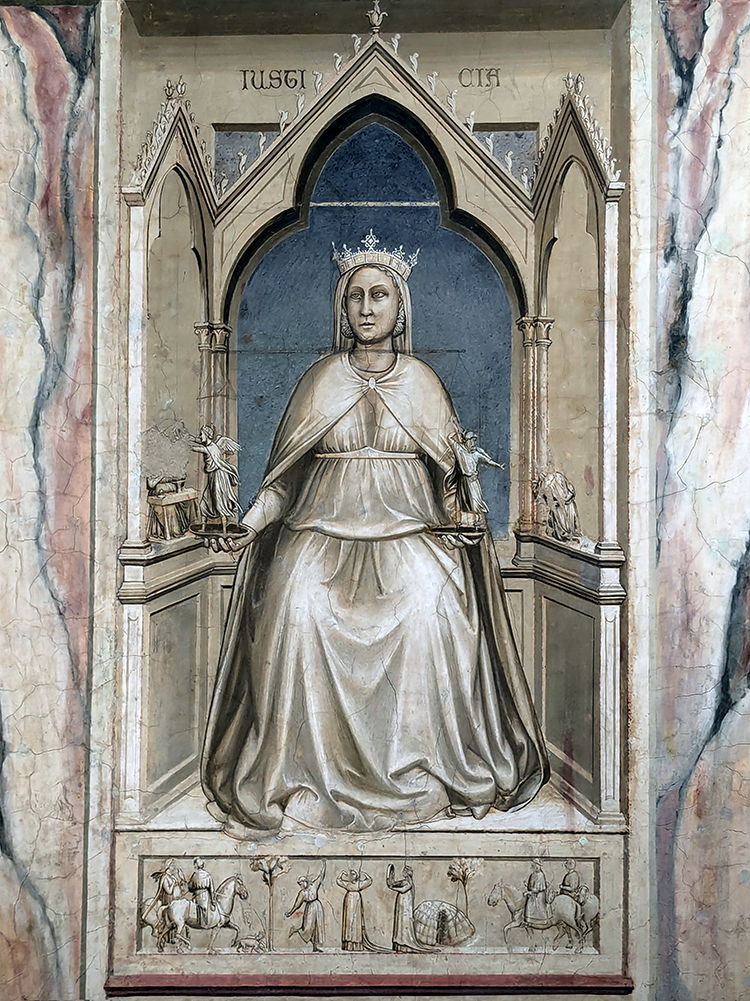
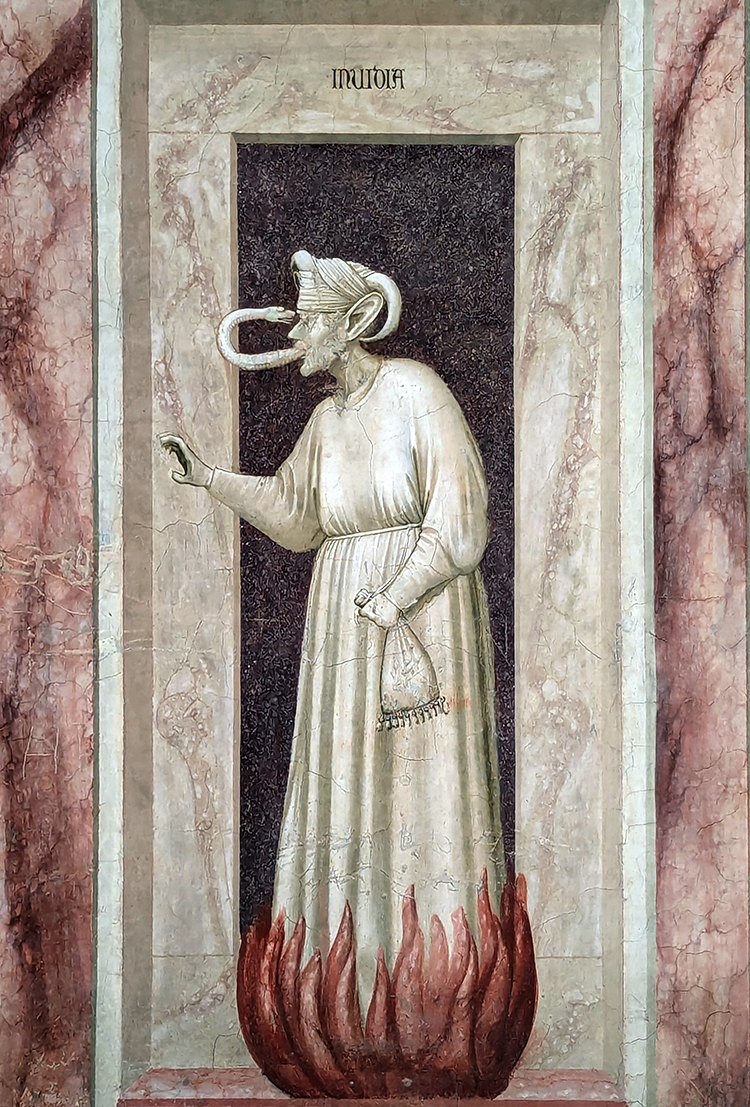
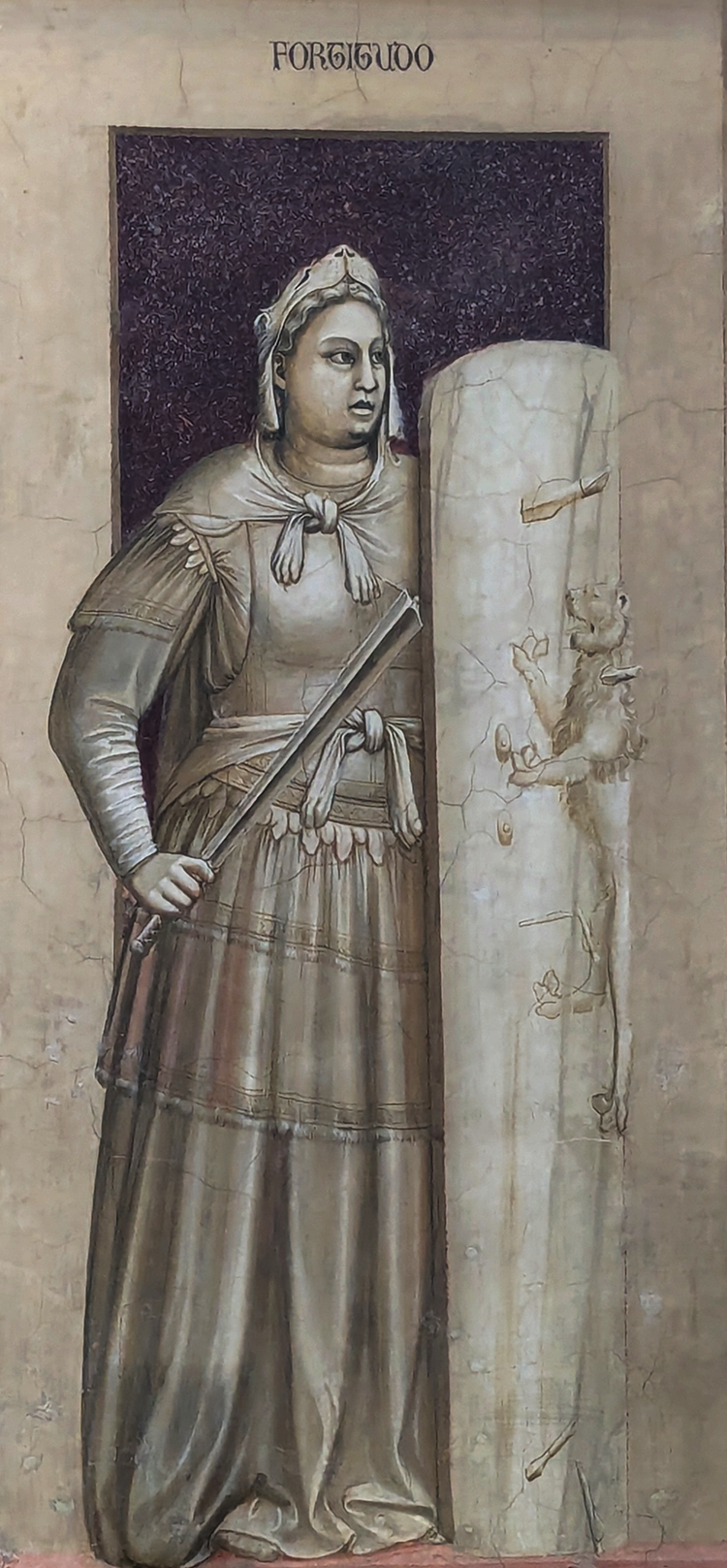
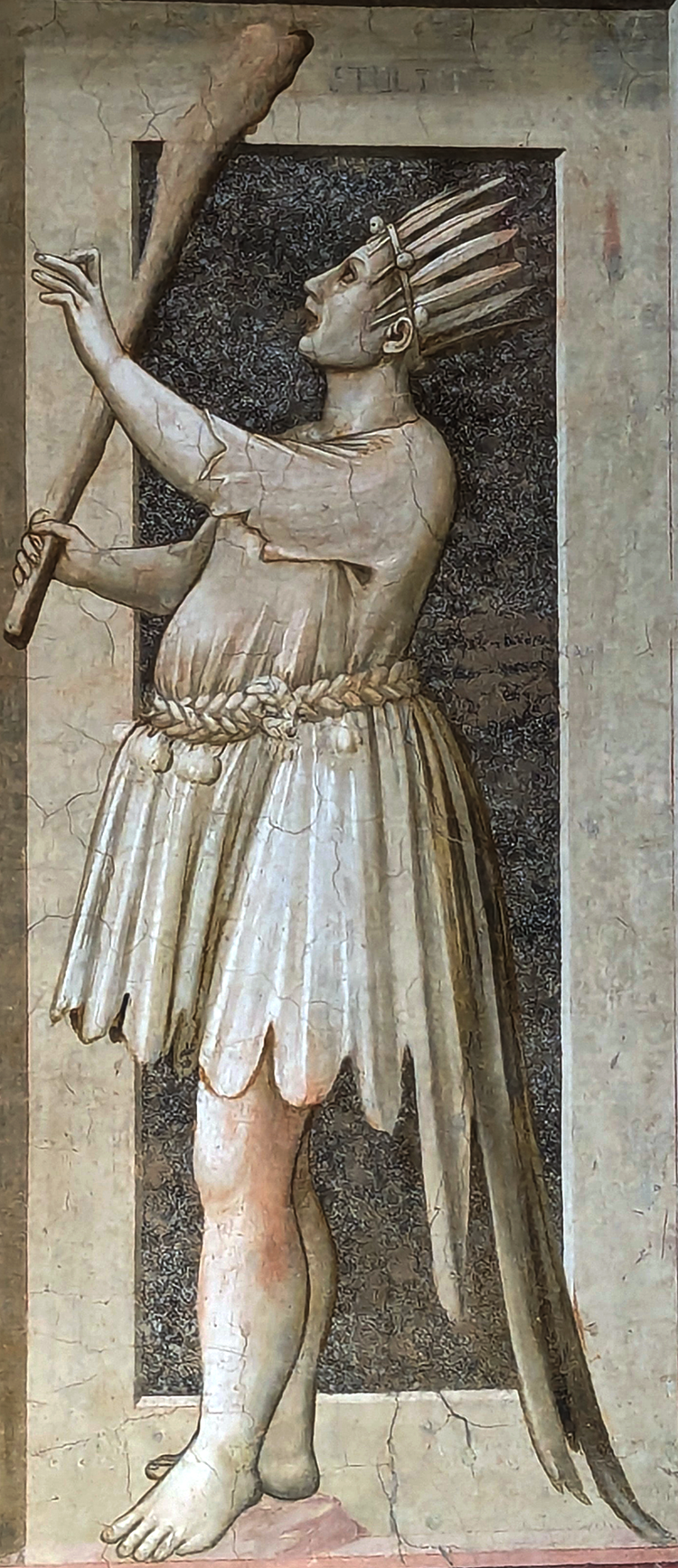
Above: Vices and Virtues
Of course, Giotto’s commission came with a mighty charge from his patron for the project, Enrico degli Scrovegni (1266-1336). Enrico built the chapel as an attempt to attain redemption for his father, Rinaldo di Ugolino Scrovegni (1200-1288), by profession a banker, widely regarded as a usurer.
Enrico’s efforts to redeem the family reputation were somewhat undermined by Dante, who seemingly transcribed Giotto’s visions of Hell in his epic poem, The Divine Comedy. Dante’s indictment of Rinaldo was far from subtle. He described a resident of Hell with a purse around his neck emblazoned with a blue sow, as did the Scrovegni coat of arms.
So I went on alone and even farther along the seventh circle’s outer margin, to where the melancholy people sat. Despondency was bursting from their eyes; this side, then that, their hands kept fending off at times the flames, at times the burning soil….
Dante, “Inferno”
Back to Giotto, tasked with trying to make a silk’s purse out of a sow’s ear.
Out of context, his portrayals of the lives of the Virgin Mary and Jesus depicted on the walls of the chapel might seem primitive, but they were revolutionary. Instead of flat, expressionless people, his depictions captured individuals’ emotions – a lightning bolt launching the Renaissance movement in art.
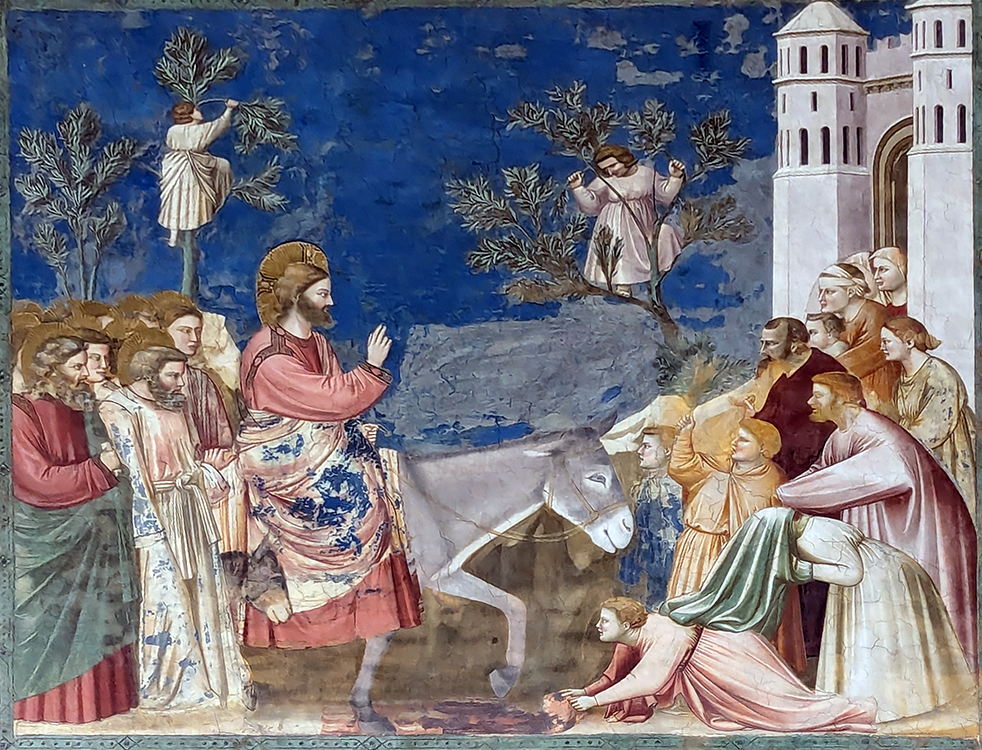
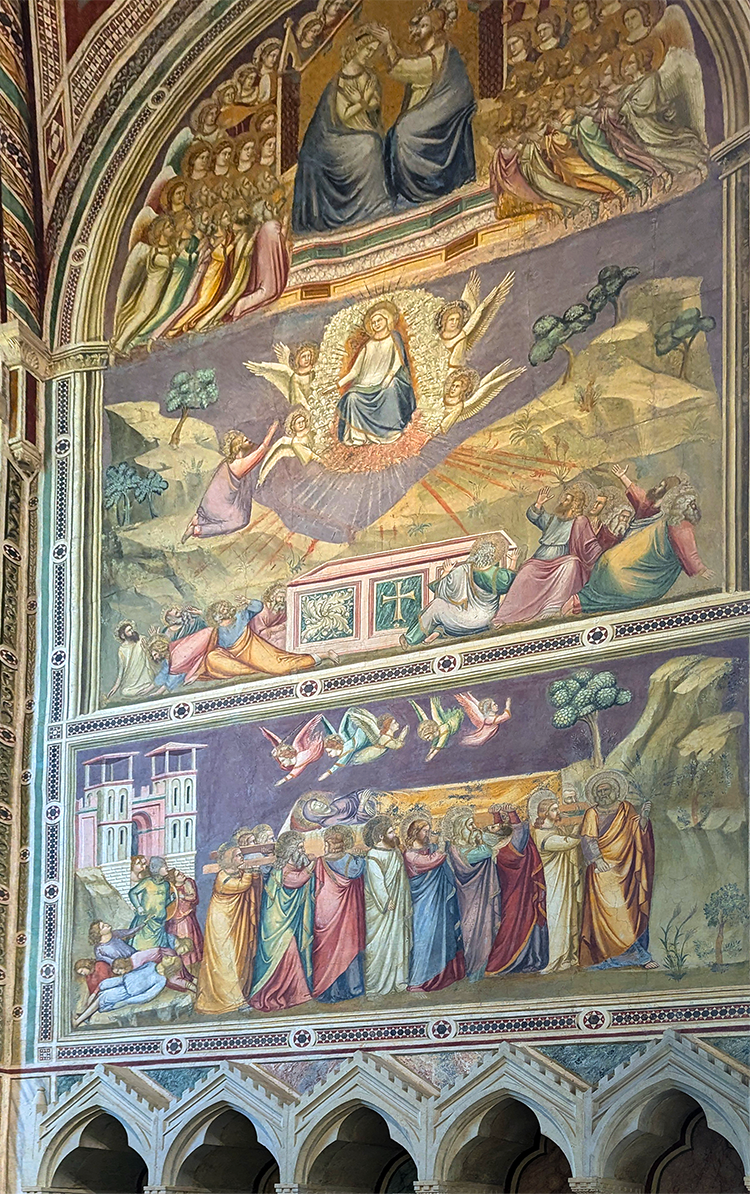
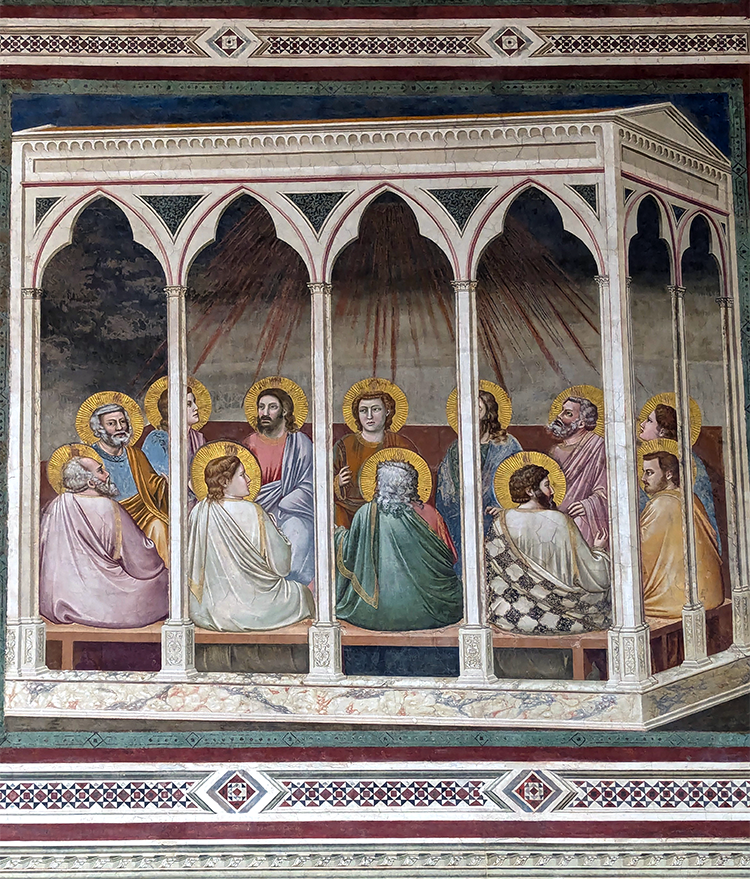
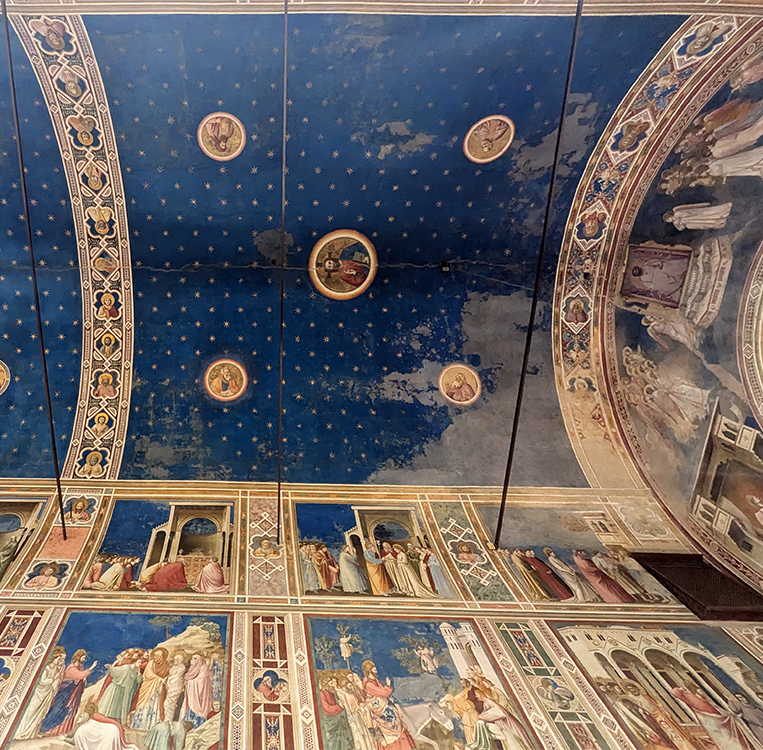

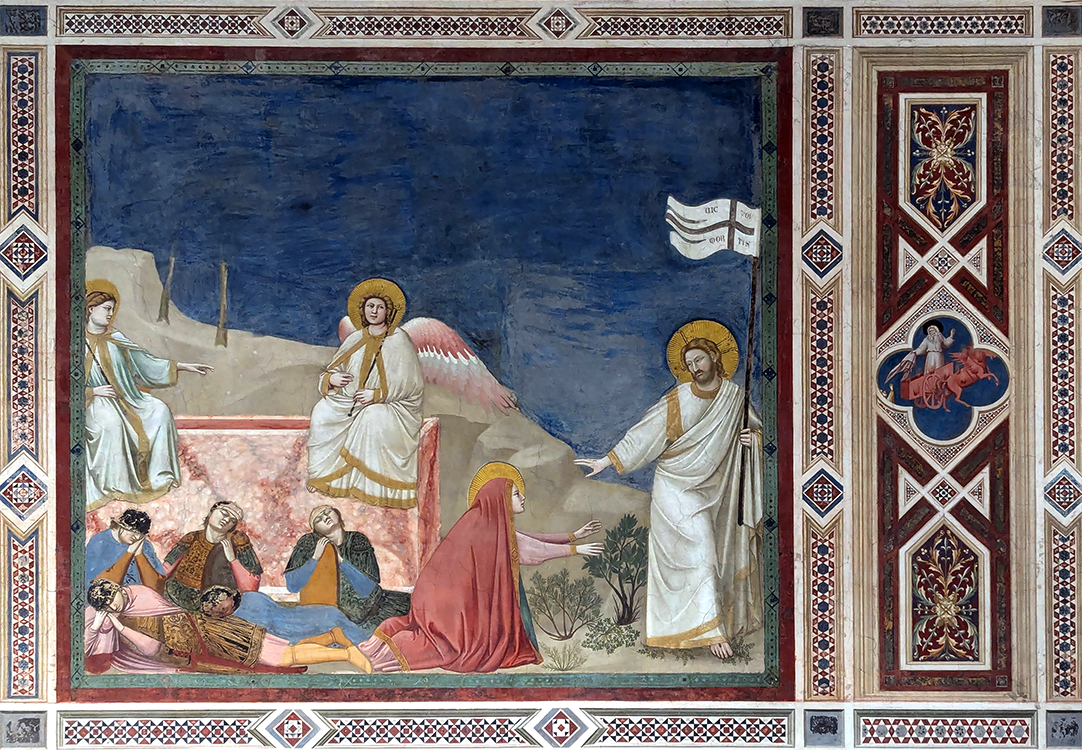
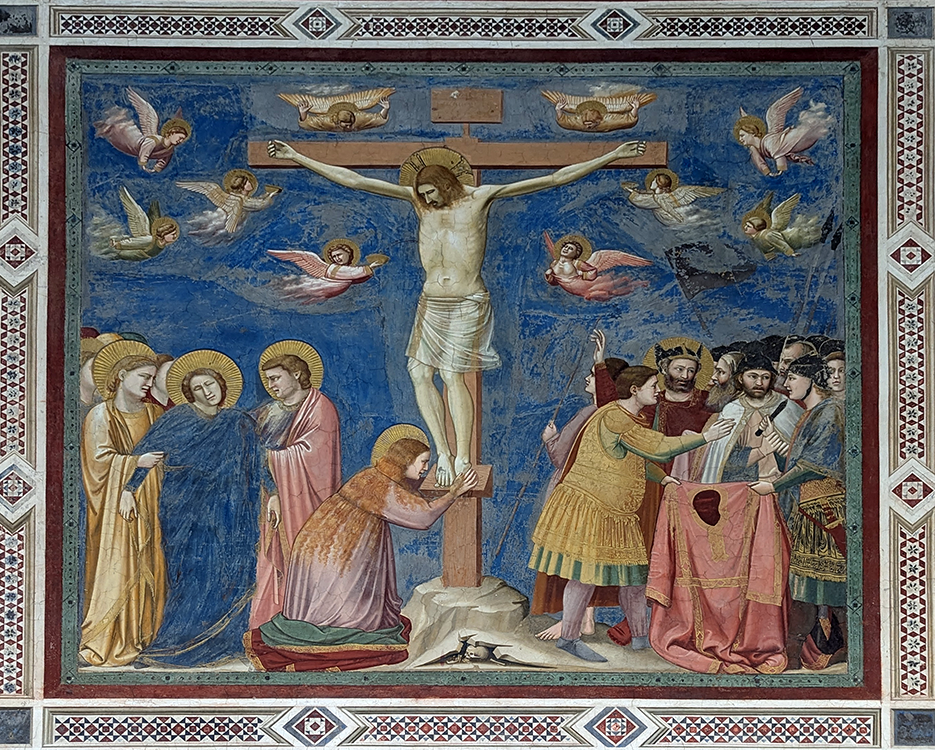
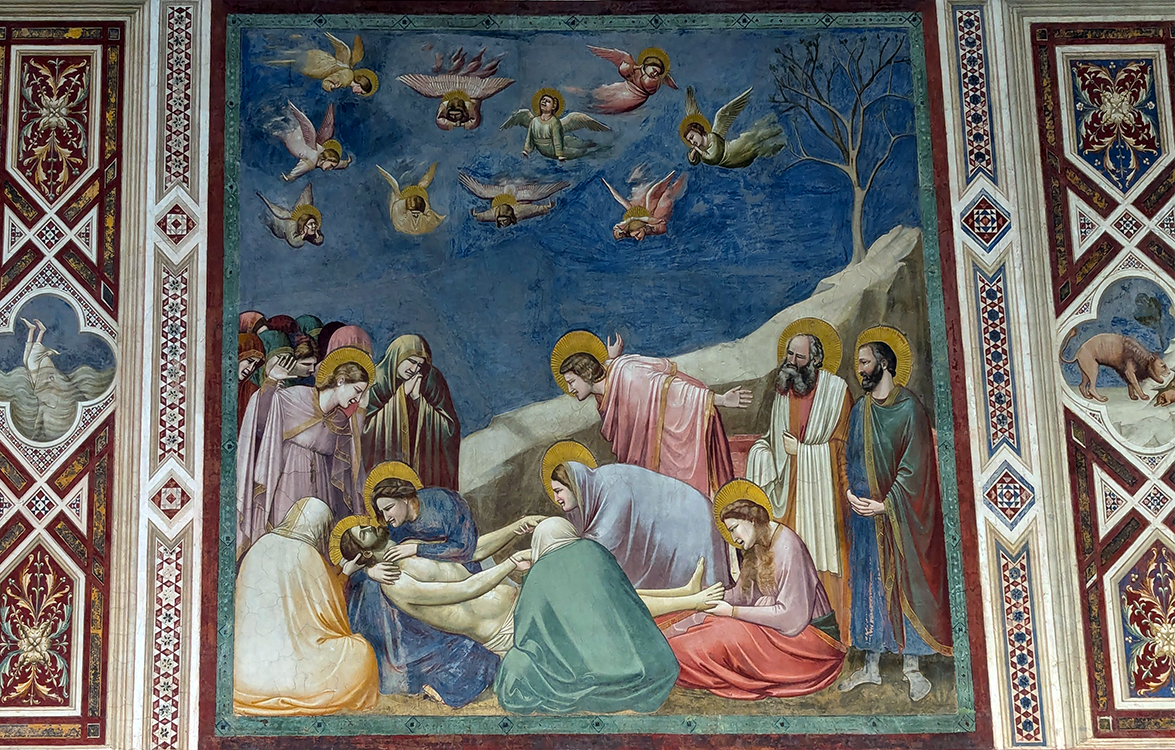
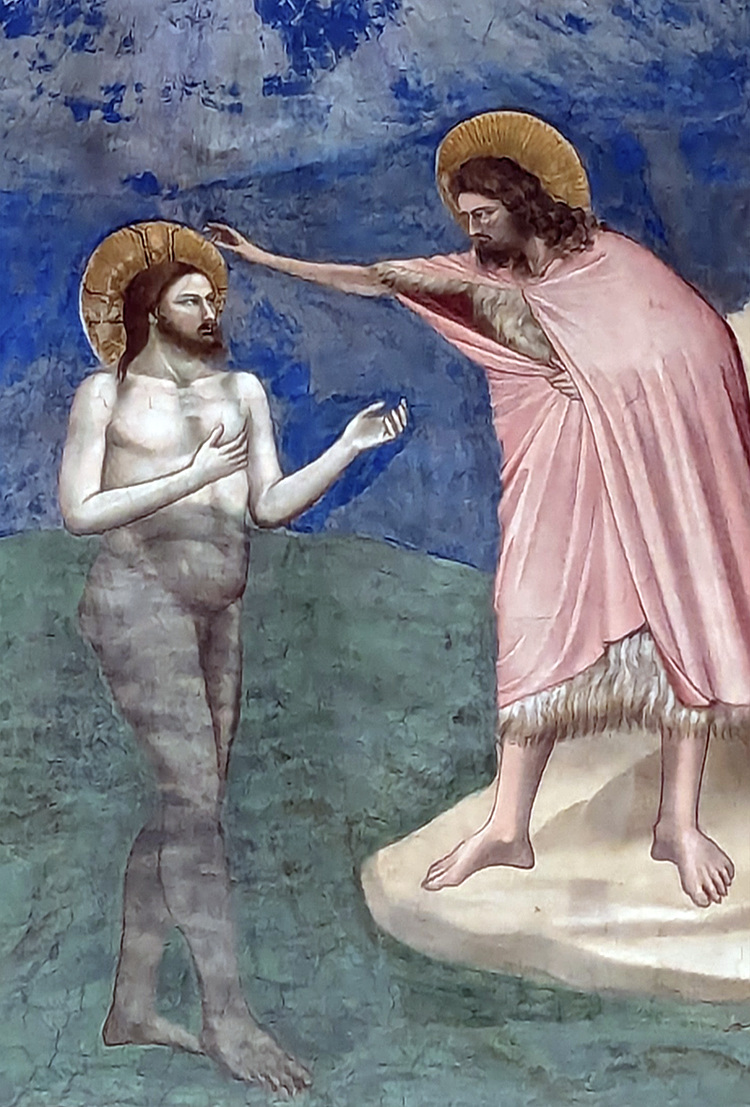
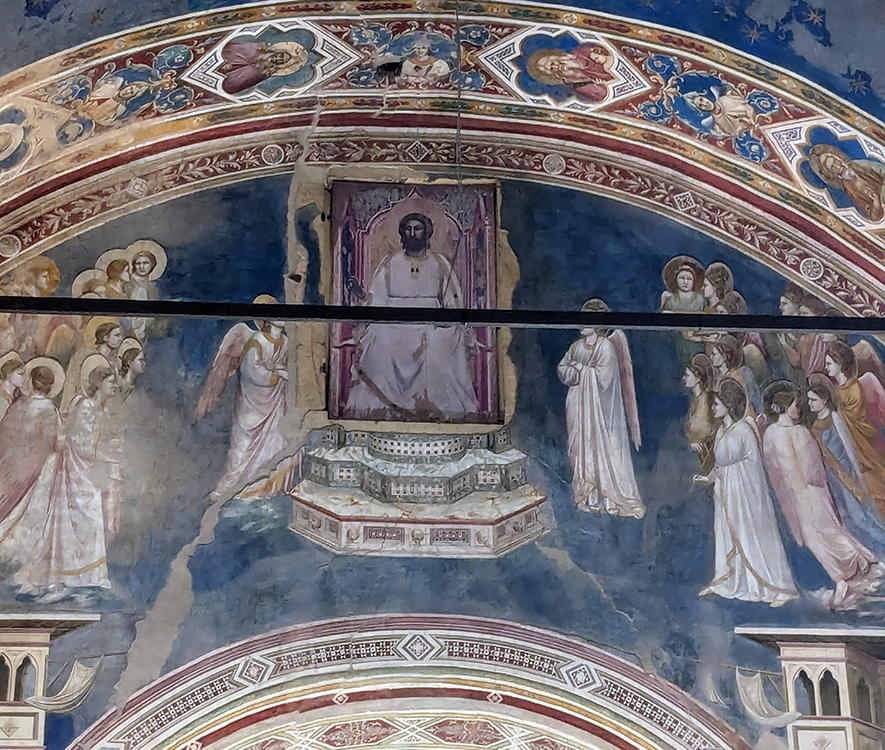
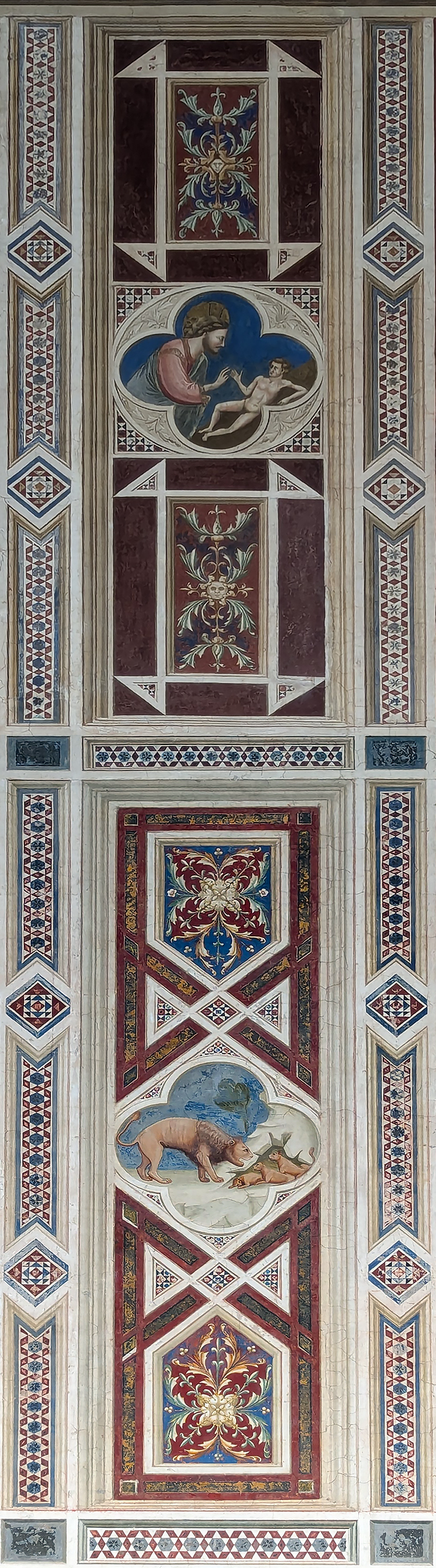
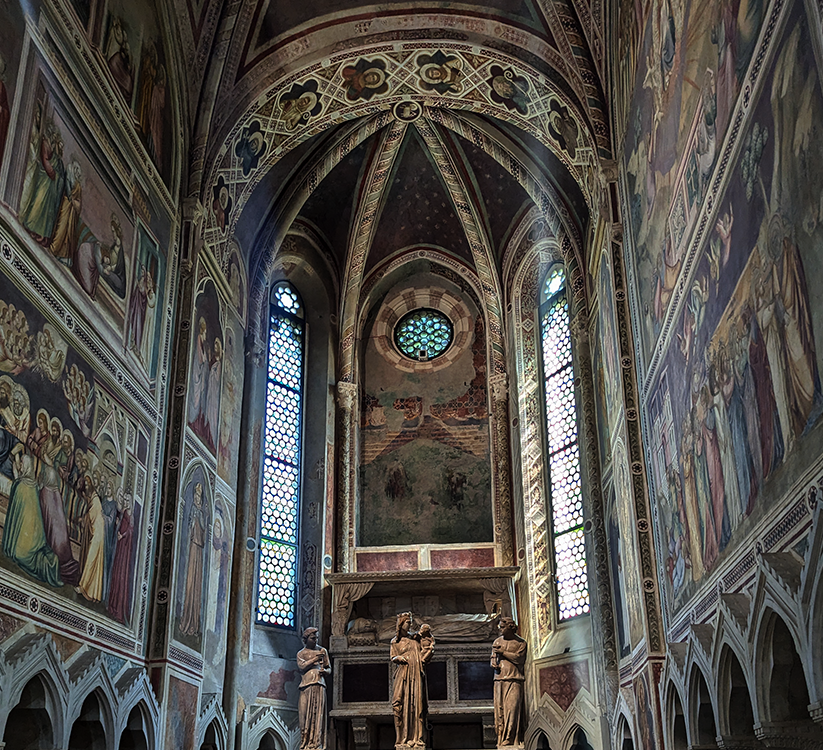
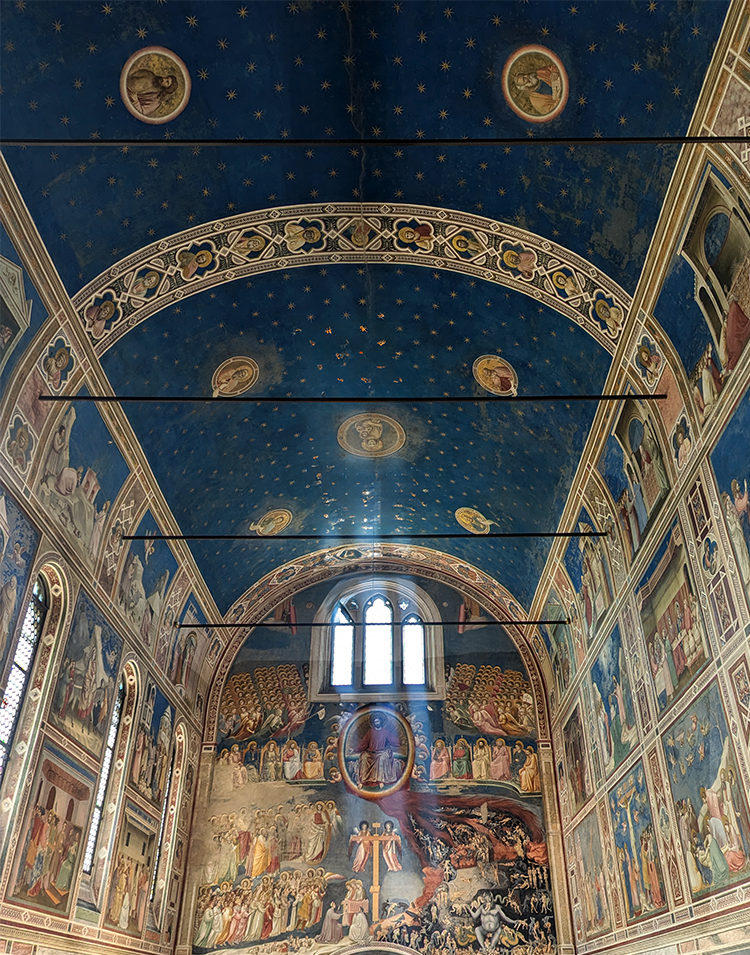
Above: Scrovegni Chapel
And Giotto brought us the “first kiss.” Okay, obviously, people mastered the art of doing a lot more than that, even in the Bible, or we wouldn’t be here. But scholars proclaim this the first kiss in western art – Joaquim and Anne, age 64 and 44, celebrating the intervention of the Holy Spirit resulting in the birth of the Virgin Mary, who would carry on the family tradition of miraculous conception. (I’m not attempting a theological or biological explanation of any of this.)
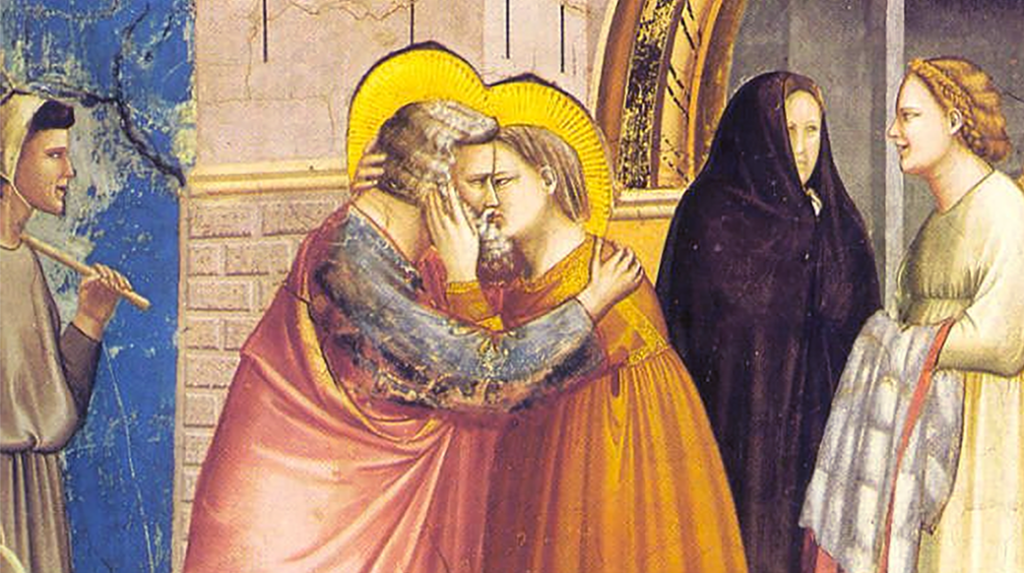
Above: Joaquim and Anne
The clock is ticking for all of us. Time to take Dante’s warning to heart:
The darkest places in Hell are reserved for those who maintain their neutrality in times of moral crisis.”
Dante
 Postcards from Barton Springs
Gre
LikeLike