
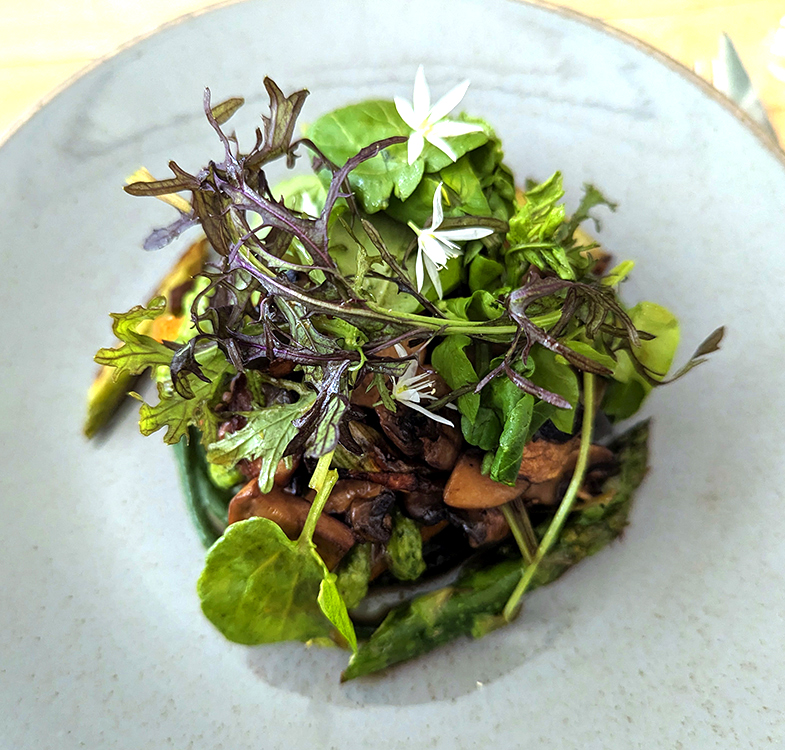
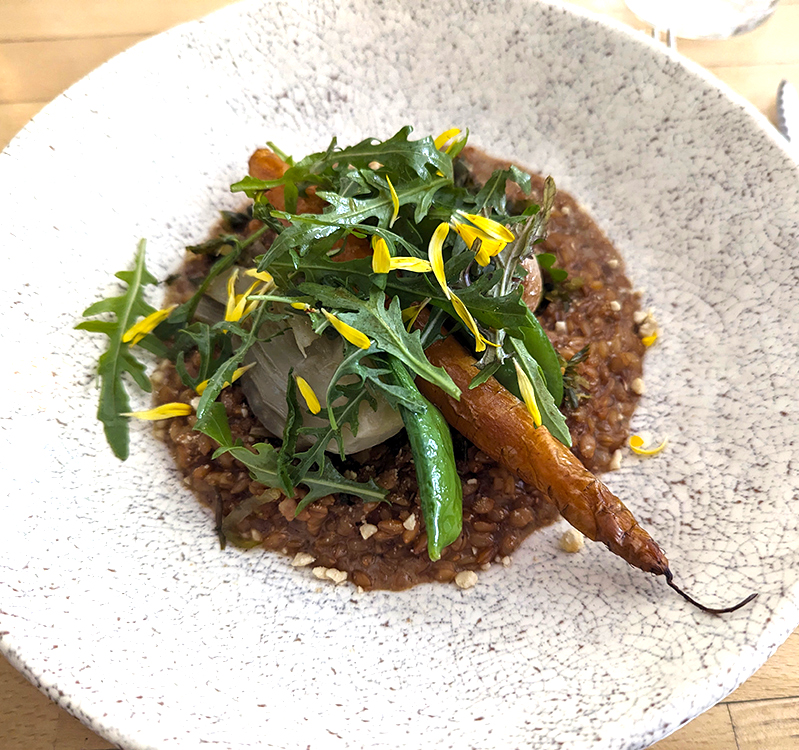
Above: Polenta and asparagus buried below a mound of fresh leafy ‘weeds’ at Les Mauvaises Herbes
Hope you’re ready to feast your eyes again because here comes part two of our restaurant experiences in the capitol of French gastronomy.
The pig in the name Le Cochon qui Boit intimidated me at first. I knew I wasn’t ready for a menu that goes all whole-hog-centric, but this is a drinking pig. That sounded more up my alley. Once inside gazing at the daily menu, I realized one even could graze all-vegetable there if desired. A red cabbage and hazelnut salad as an amuse bouche quickly confirmed the kitchen’s talents in that arena.
An endive salad was topped with ultra-thin slices of coppa ham and almonds, while tender cauliflower was paired with olives and fresh chervil. Shredded parmesan hides a serving of beet ravioli, and that shiny beige mound that appears to be a dessert is actually whipped up roasted parsnips, as good as a dessert. The rectangular dark wedge is Cochon Noir Gascon, meat of the highly prized black pig of the high Pyranees. This tender pork arrived with wedges of panisse and spinach.
The bottom three photos are actual desserts, some combining unexpected ingredients. Perhaps my favorite was grilled butternut squash topped with butternut sorbet drizzled with a caramelized chestnut sauce. Sauteed apples were paired with a dill Bavarian creme, and fresh slices of kiwi were sandwiched between a grilled slice of brioche and a creamy topping. Definitely a place to save room for dessert.


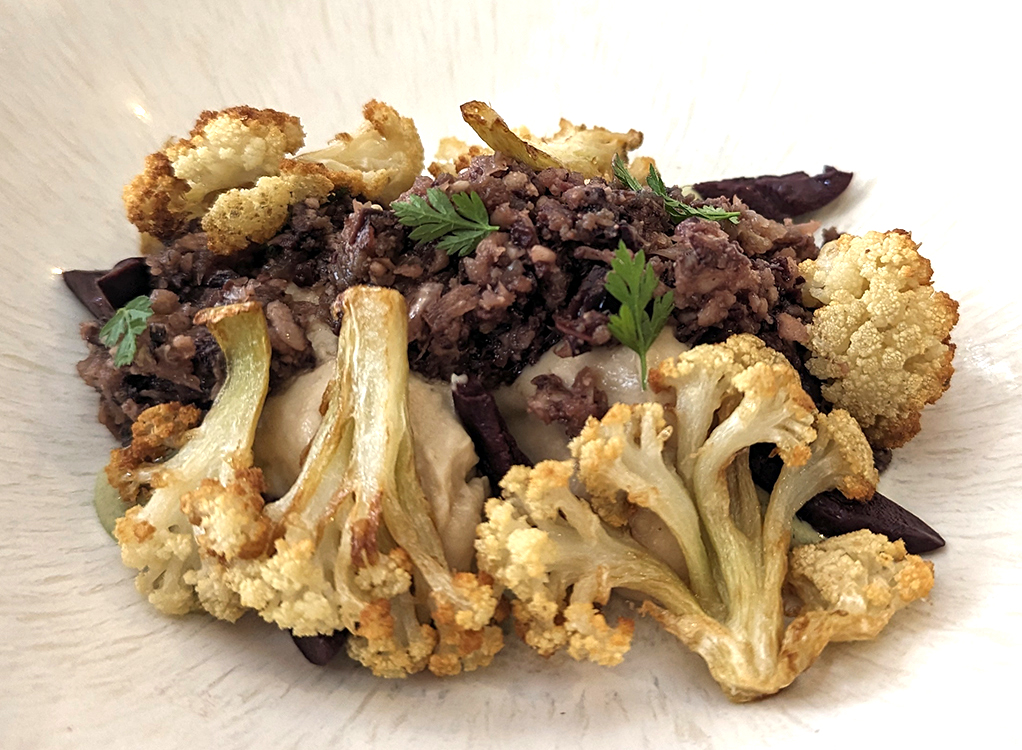


Above: Le Cochon qui Boit
You’d think a vegan restaurant in Lyon might not have a prayer, but scoring reservations at Les Mauvaises Herbes requires advance planning. I’d normally translate mauvais as meaning bad or evil. Combined with herbes, the phrase means weeds, but there is nothing bad about the fresh vegetables artfully presented here.
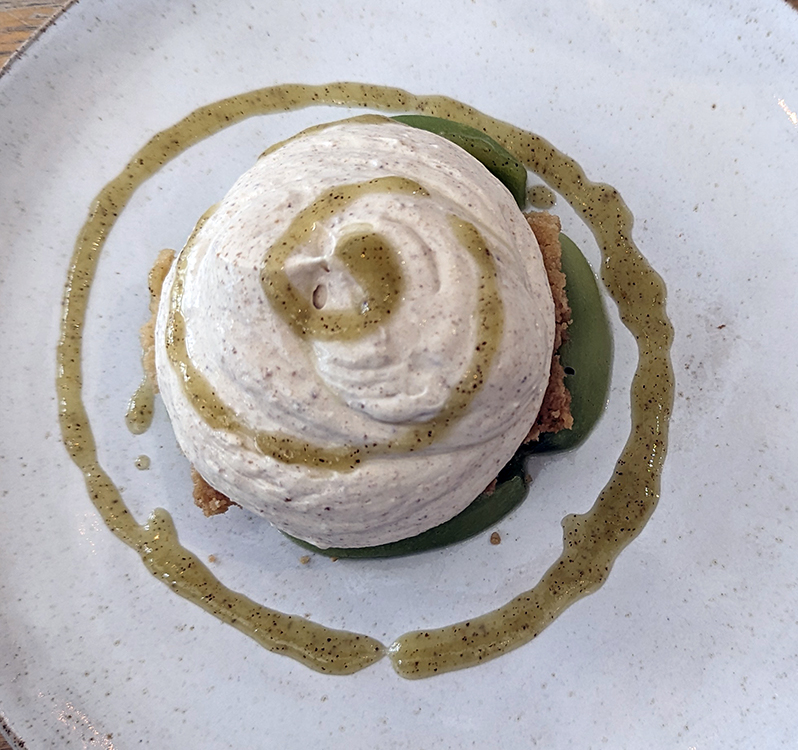
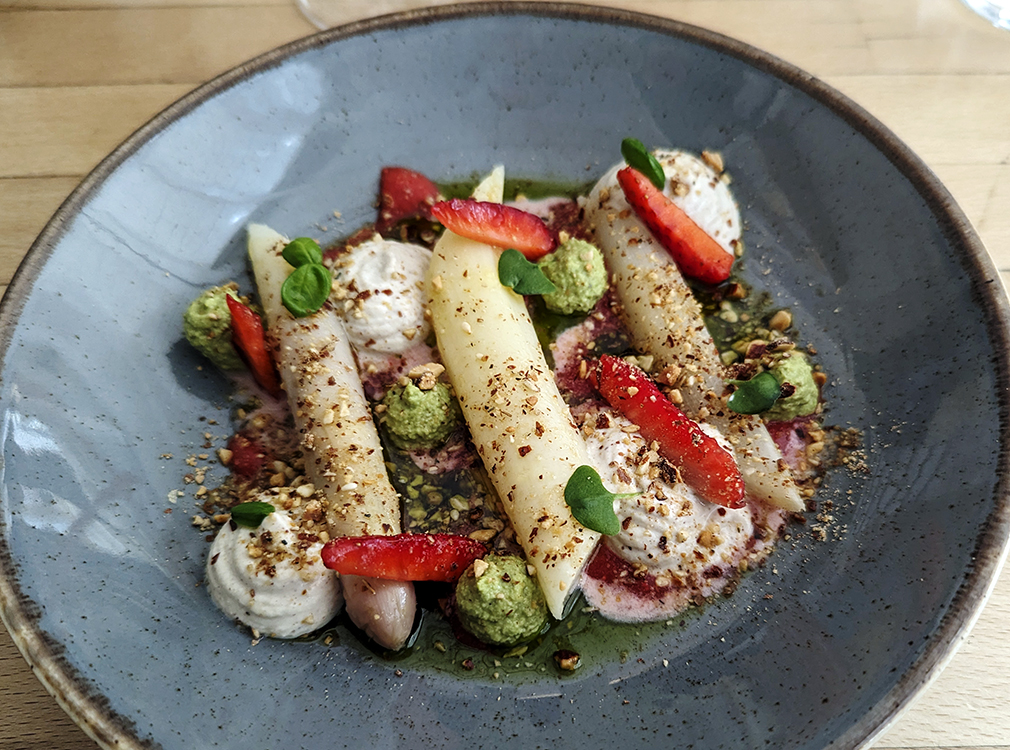
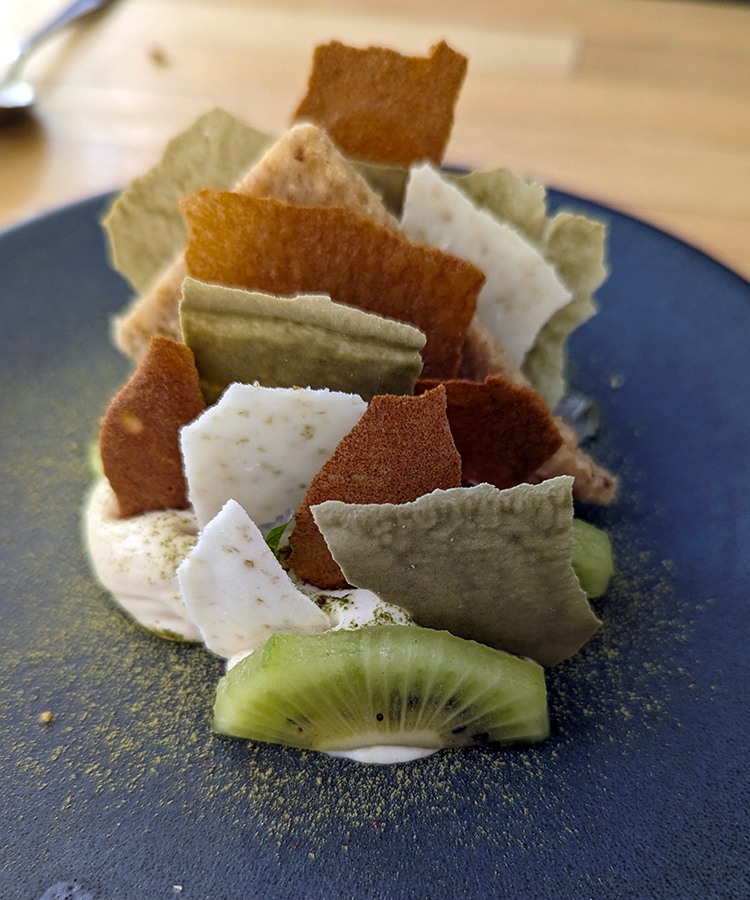
In addition to the polenta and asparagus above, we enjoyed plump white asparagus atop a coulis with vegan ricotta. A farro risotto featured glazed spring vegetables. A citrus vegan whipped cheese accompanied hazelnut shortbread and fresh kiwi. If time had been on our side, we definitely would have returned.

Above: Les Mauvaises Herbes
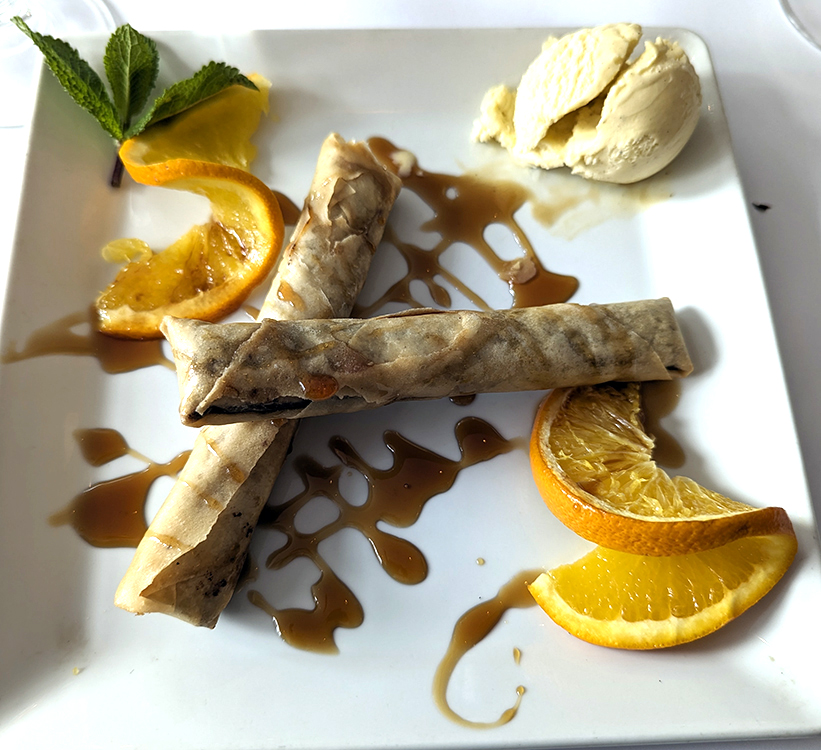
We found ourselves hankering for Vietnamese food and filled the need at L’Etoile d’Asie. Crispy rice cake rolls were filled with crab and shrimp, with lettuce and fresh basil for wrapping them into finger food. We both selected banh xeo, crispy crepes of rice flour and coconut milk stuffed with pork and shrimp. For dessert, a glass of sorbet with vodka and mint was refreshing, while slender chocolate rolls were overly sweet.


Above: L’Etoile d’Asie
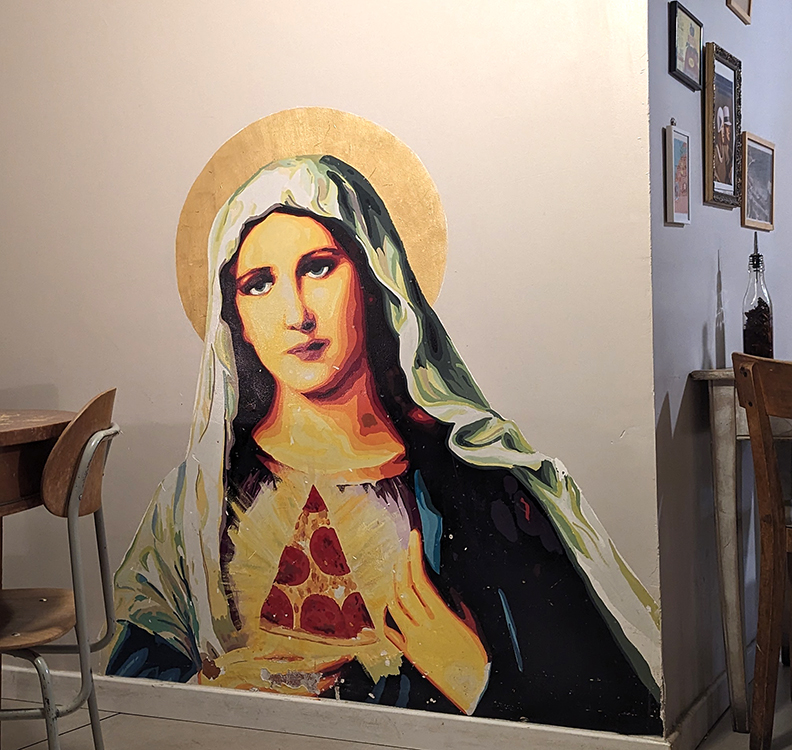
And we always find time for a pizza run, this one uphill to Maria Pizza in the Croix-Rousse neighborhood. There we found the Neapolitan-style crust we love. The Vomero has a creamy ricotta base with an additional four cheeses for a major dairy fix. A red sauce coated the Marianella, topped with fior di latte, Calabrian salami, roasted yellow pepper, Peranzana olives, pesto and fresh basil.
A destination for great pizza and handsome panozzo pocket sandwiches, but don’t head there for anything else. No salads or vegetable sides are found on the menu, unless an appetizer of olives and capers counts. Even if you have no intention of making a pizza run, brighten your day by turning on your sound and clicking Maria’s funky button on the home page.


Above: Maria Pizza
The Chef asserts this: there is no Provençal cuisine; there is only Mediterranean cuisine. Provence, Italy, Greece, the Maghreb, and Spain offer products which, for many, are similar…. The cuisine of the Mediterranean is fusion cuisine.”
Website of Regain
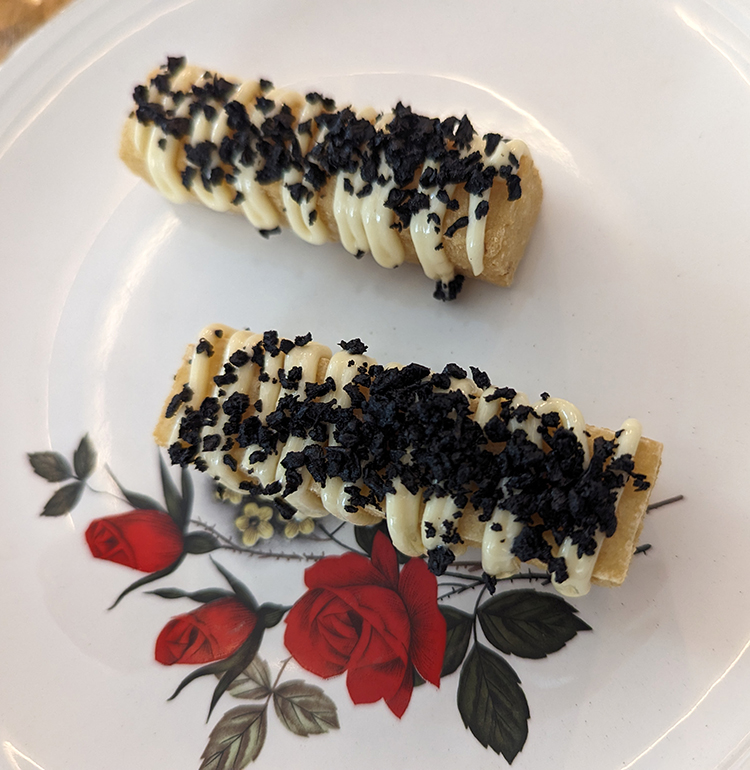
A rather bold statement for a chef to make in France. The website for Regain is on the pretentious side, but fusion works inside the kitchen of this comfortably casual restaurant. Dried olives (an ingredient I need to remember to fetch from Central Market’s bulk foods section) gave life to our panisse amuse-bouche. Asparagus arrived with a luscious aguachile sauce crowned with trout caviar and garlic. Thinly sliced fresh mushrooms and fermented shitake hid a risotto below.
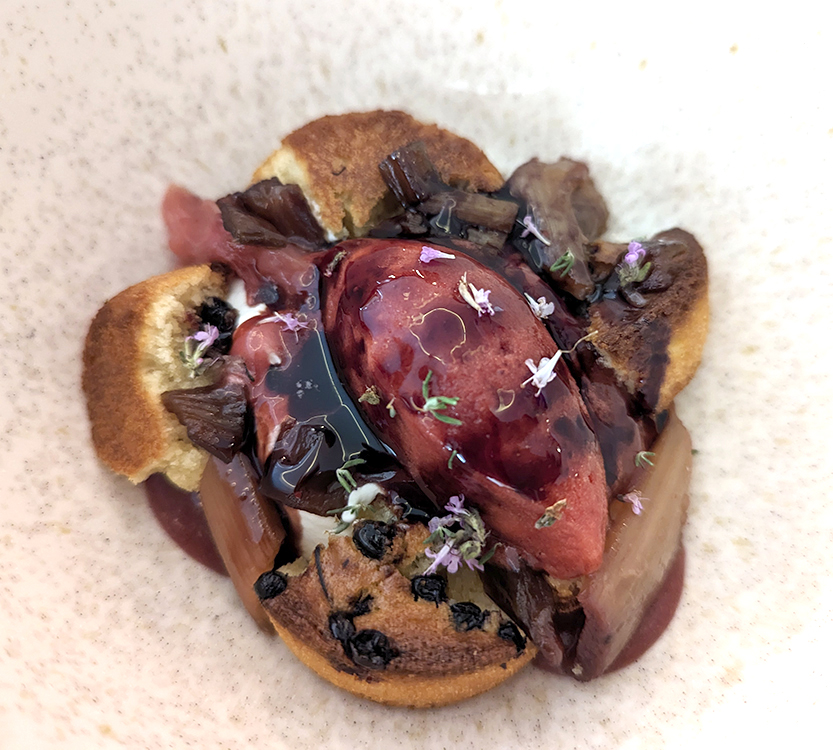
For our mains, caramelized pork perched upon a bed of beans, dandelion and horseradish. Yellow pollock floated on a raft of fresh green peas garnished with Mediterranean fish eggs. A roasted (I think) rhubarb dessert was seasoned with fresh thyme and accompanied by an assortment of other red berries, while honey sweetened an apple tartelette. This type of French-with-a-Mediterranean-accent fusion should not be refused.



Above: Regain
In the Korean culinary tradition, a dish must have 5 colors in equal proportions—green, red, yellow, black, and white representing the 5 natural elements, but also the 5 flavors, spice, sugar, sour, salty, and bitter. This marriage of colors and flavors symbolizes the 5 cosmic energies essential to inner harmony.”
Website of Sinabro
The importance of five. This I did not know. Now I’m staring at our photo of bulgogi bibimbap and wondering if it radiated the correct balance of cosmic energies. Whether proportionately correct or not, it harmonized well with our tastebuds. A fluffy kimchi pancake, exempt from the rule of five, was nicely crisped around the edges.
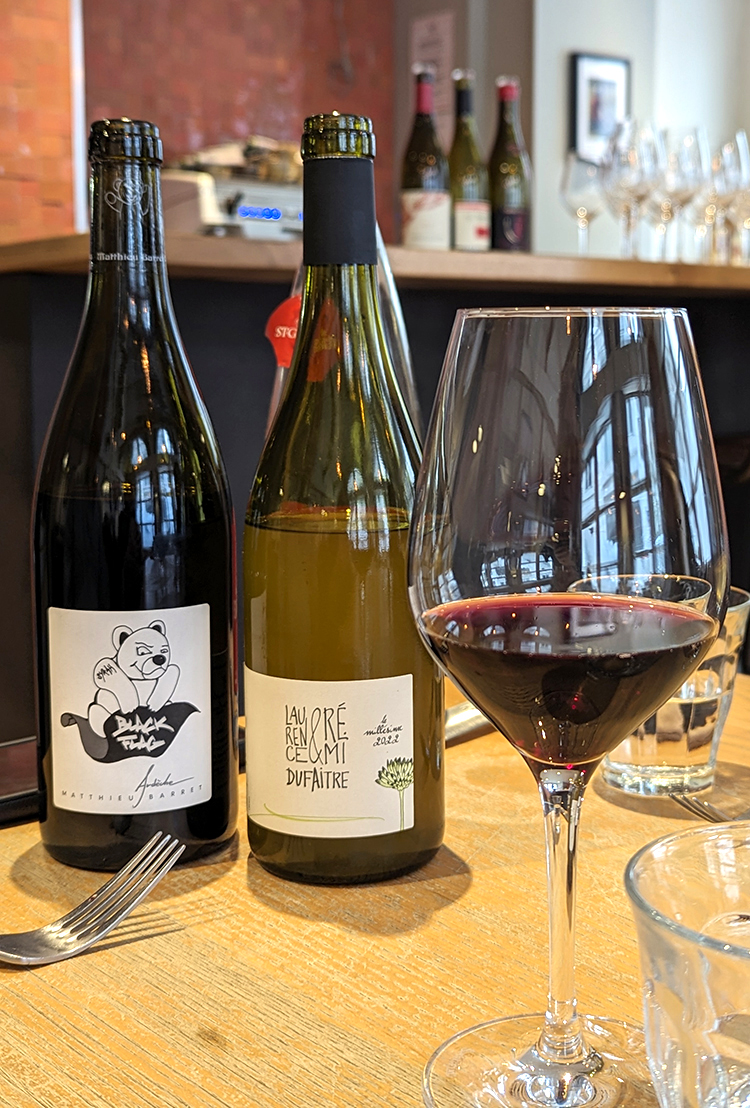
Escaravay, or beetle in the Occitan dialect, on the wine label seemed unusual. It turns out escaravailles was the nickname townspeople assigned the penitent monk landowners of the vineyard in the 17th century. The monks left, but the name stuck.


Above: Sinabro
The Toke Empanadas in our neighborhood usually was crowded with people standing at outside tables, beer in hand, and a line of others waiting to join them. We stopped a couple of times to grab a pair of empanadas to reheat later at home. Toke’s empanadas are well enough regarded to have an outpost in Les Halles Paul Bocuses that was referenced in the first post about Lyon restaurants.
Some of the everyday empanadas definitely have upscale innards. For example, Hercule is filled with a mozzarella and feta fondue with leeks, onions, cauliflower and basil. Ruelle fumee features pork shoulder braised in white wine and honey with sweet potatoes and onion. Ham and cheese oozes with emmental and raclette cheeses and is available in a truffled version. Plan to grab one.

Above: Toke Empanadas
When looking at where it all comes from, know that it comes from a culture where food is, simply put, important. Because it IS important. Eating well in France—as in Italy, Spain, most of Asia, much of Latin America—is a point of pride, an expression of identity, a birthright. Whether it’s simply a bowl of beans or a bony fish grilled over wood, its preparation is worth talking about. It’s worth arguing about passionately.
Our newfound American obsession with all things food and chefs may veer frequently into the silly zone; but we are in our own awkward way lurching towards what others have had for centuries: a basic understanding that food—GOOD food—is a fundamental, hugely important part of life well lived at whatever income bracket.”
Anthony Bourdain, Lyon Field Notes
 Postcards from Barton Springs
Formidable; merci!
LikeLiked by 1 person
Je t’en prie, Michele.
LikeLike