
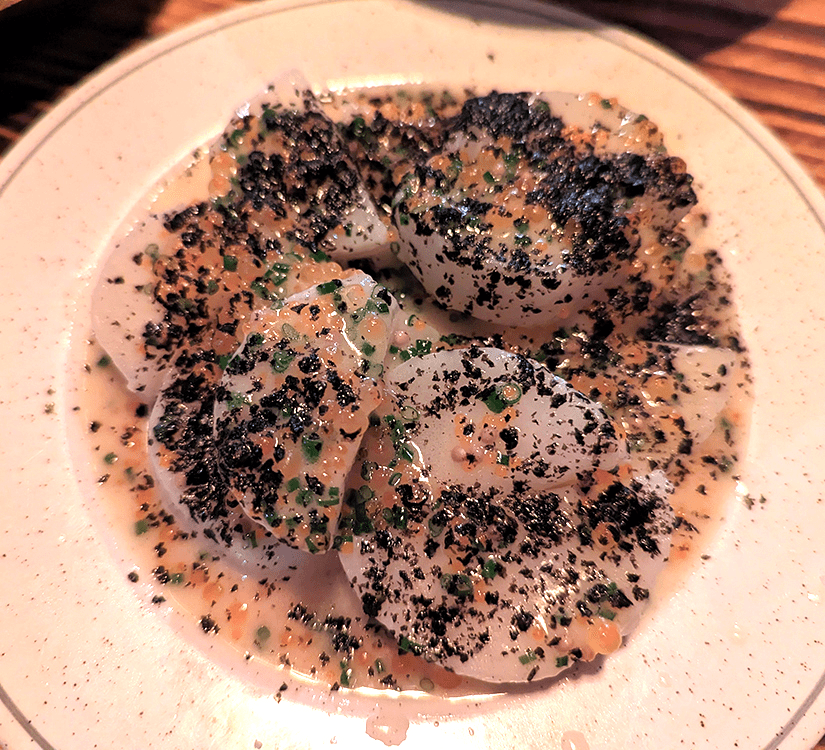
Above: Turnips with trout caviar at Armada
I know you might be thinking: “Seriously? Turnips?”
Lyon…. A culinary tradition that grew up to change the world of gastronomy…. It’s about food, lots of food, great food. Some of the greatest food on earth…. What is it exactly about this place? Over the past century, the system here, the tradition, whatever it is that took hold here, churned out a tremendous number of the world’s most important chefs…. Why Lyon? Why is this such a gastronomic capital?”
Anthony Bourdain, Parts Unknown: Lyon, France, April 27, 2014
I can’t answer that. For Bourdain’s explanation, you might have to watch that episode of Parts Unknown. But I can state we lingered over some excellent meals during our stay in Lyon and hope these photos help you navigate among the many choices available.
As my restaurant posts are alphabetical, you have to pause for an appetizer at Adonys before turnips. The Lebanese restaurant was not our first stop in Lyon, but it’s a homey spot when yearning for something different, as in falafel and an assortment of mezzes.


Above: Adonys
Now for your turnip course with trout caviar. Yes, with sparks of flavor from the caviar, the turnips were wonderful. The daily selection might be small, but everything we tried at Armada was delicious. The restaurant bills itself as: “Scoundrel food. Naughty wines.”
Here, we take pleasure in discovering dishes with original and elaborate ingredients, where the most playful will be tempted by an ‘armada’ of plates to share. Bubbling with ideas, the duo of chefs offers dishes combining the finesse of gastronomy, the guilty pleasure of street food and the conviviality of the bistro.”
Armada website
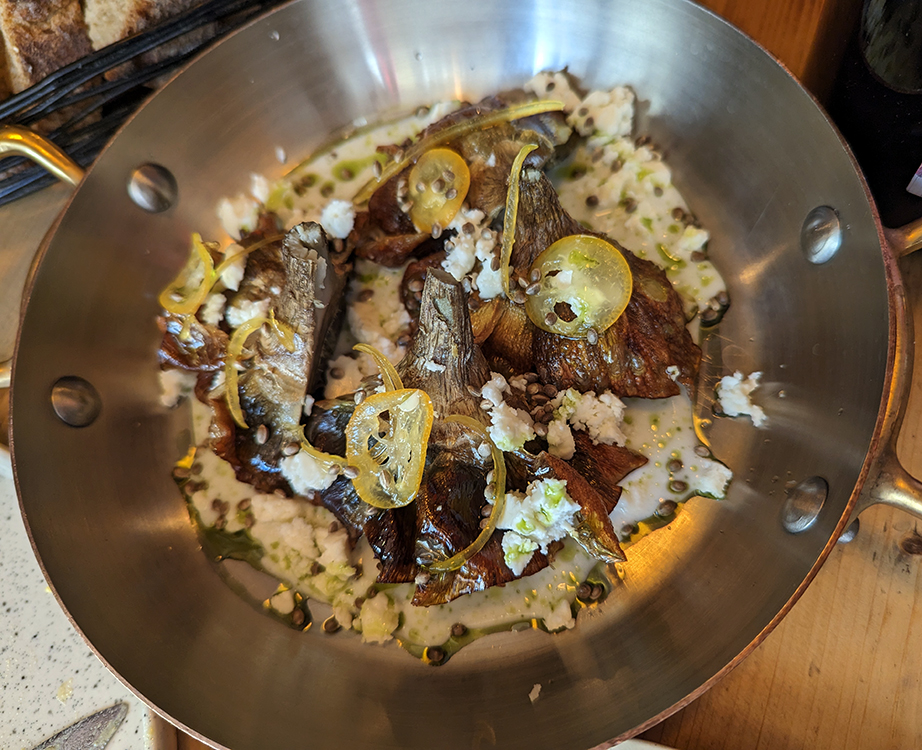
We were able to play with an abundance of shared plates, as our daughter and son-in-law joined us there once or twice. Artichokes were in season, so, on different days, we consumed artichokes a la romaine; a large leafy fried one; and crispy artichokes topped with crab.
Other dishes selected from the blackboard included plump white asparagus on a bed of wild garlic and feta with a coverlet of ultra-thin-sliced pork belly; lamb with mushrooms and peas; trout with spinach; and a pan of crispy guinea fowl tenders.
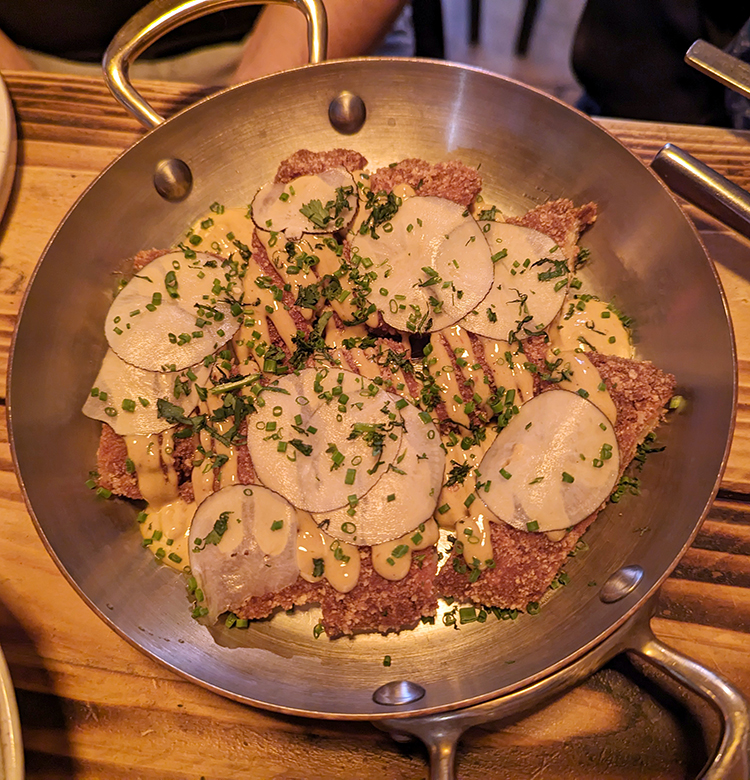
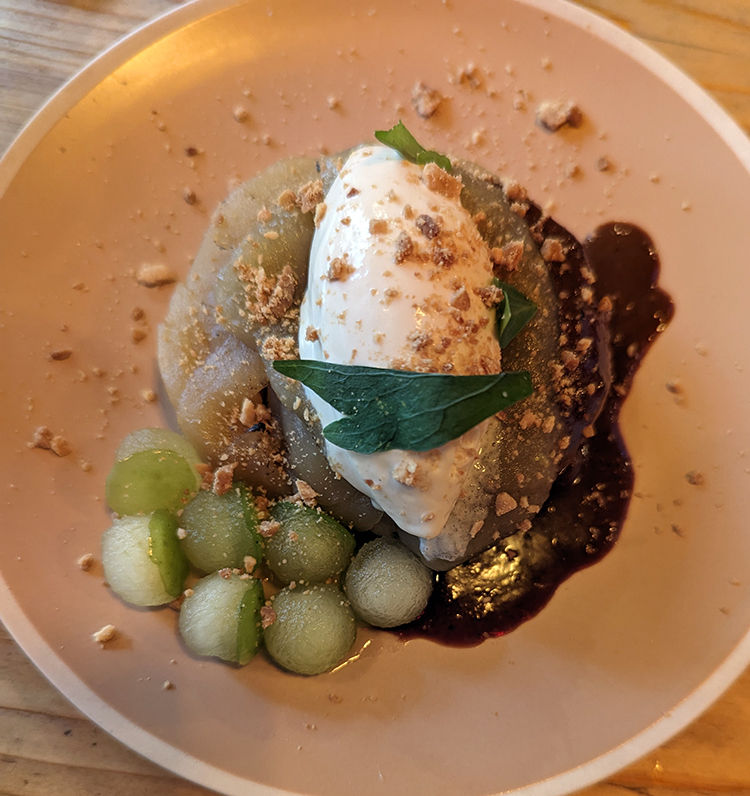
An unexpected arrival was ris de veau with roasted carrots. Surprising in two ways. First, the individual ordering it expected rice with veal. Rice is “riz” in French. On the other hand, “ris” means sweetbreads, as in veal innards not pastries. The best part of the surprise was that Armada transformed those innards into an amazing dish that we loved despite preexisting prejudices (top left photo below).

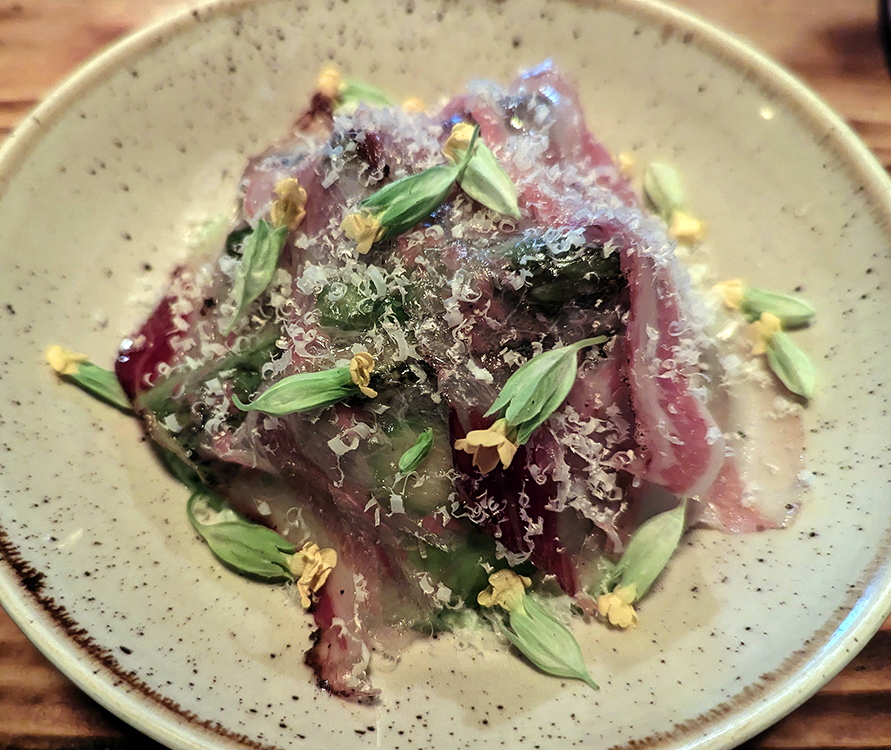
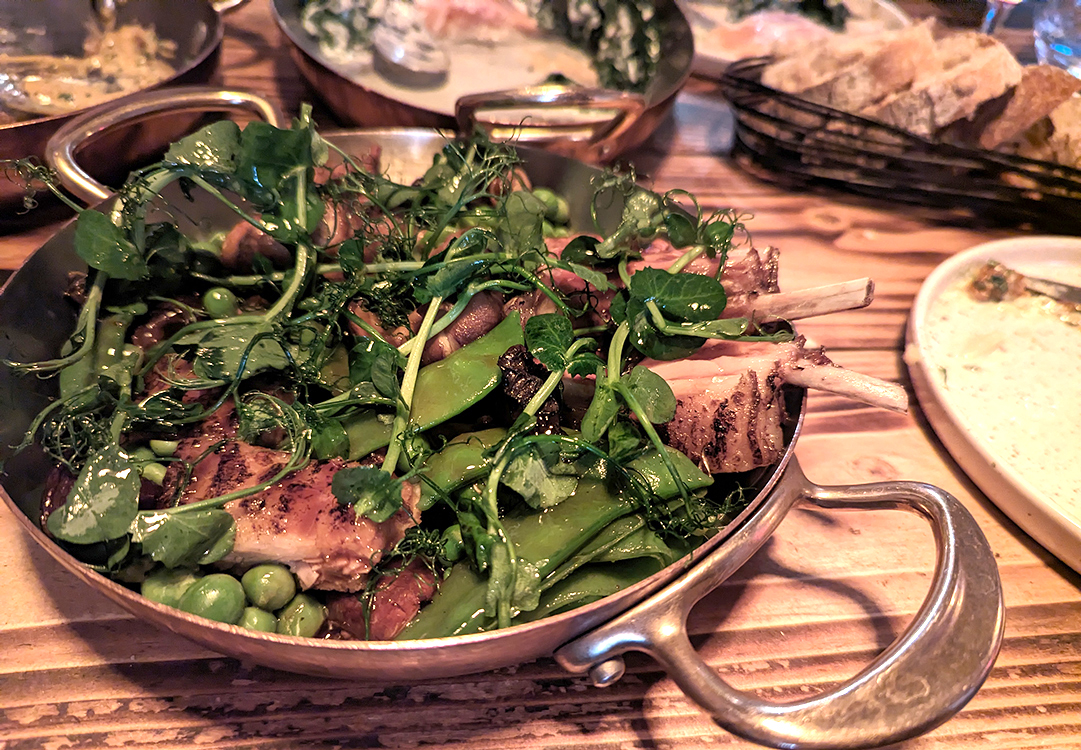




Above: Armada
Where do great chefs come from? They do not emerge fully formed in crisp Egyptian-cotton whites and towering toques, with imperious attitudes, into their dining rooms. In France, in and around Lyon…. they were survivors of ‘the System,’ products of a very old, entrenched military-style hierarchy that relied on methods we would now rightly call abuse….
Demanding a 12-to-16-hour workday of cooks was common practice, as was manhandling them. Slapping—even beating a cook—was not unheard of nor necessarily frowned upon. And if you worked with the best—as Daniel Boulud did, as a young Paul Bocuse did, as ALL who rose through the French system to become what, for lack of a better word, we have come to call “celebrity chefs”—the pressure night after night, day after day, year after year, was enormous.”
Anthony Bourdain, Lyon Field Notes
We did not dine at any restaurants bearing the name of Boulud or the late Bocuse, but we did visit the enormous food hall named in memory of Chef Paul Bocuse (1926-2018), referred to as “the pope of gastronomy.” Our pilgrimage to Les Halles de Lyon Paul Bocuse was for the temple of the frog, Baba la Grenouille. We ordered fricassee de supion and grenouilles sauvages, both prepared before our eyes, plated alongside hefty portions of well-crisped potatoes Dauphinoise.
As the French consume some 4,400 tons of frog legs per year, I assumed there was a province somewhere with acres and acres of marshy frog farms. My eyes had skipped over the word sauvages on the menu; they are what I’d call free-swamp frogs. Most are imported from Indonesia where they are hunted by villagers today using the same methods their fathers employed.
From behind his home, Suwanto and a group of fellow frog hunters set off into the darkness each night at 8 p.m., tiptoeing through the rice paddies and streams. The men often hunt into the early hours of the morning, with no talking in case the noise scares the slippery creatures away.
Their modus operandi looks simple – barefoot and armed with small handlamps, they use nets attached to long wooden poles to scoop up the frogs they find in the muck of the fields and riverbanks. But beyond their basic tools, the frog hunters seem to have a sixth sense for the amphibians, gathering dozens in just minutes from what would otherwise be an indistinguishable patch of dark swamp.”
“French taste for frogs legs feeds destruction of species in Indonesia,” News.Com.Au
Please ignore the source of the above quotation for now, as many a Frenchman dreads the intensifying pressure to preserve the balance of nature in Indonesia. Dear Mother Nature, please forgive us for over-consumption on our part. Maybe domestic frog farms are in Frances’s future.

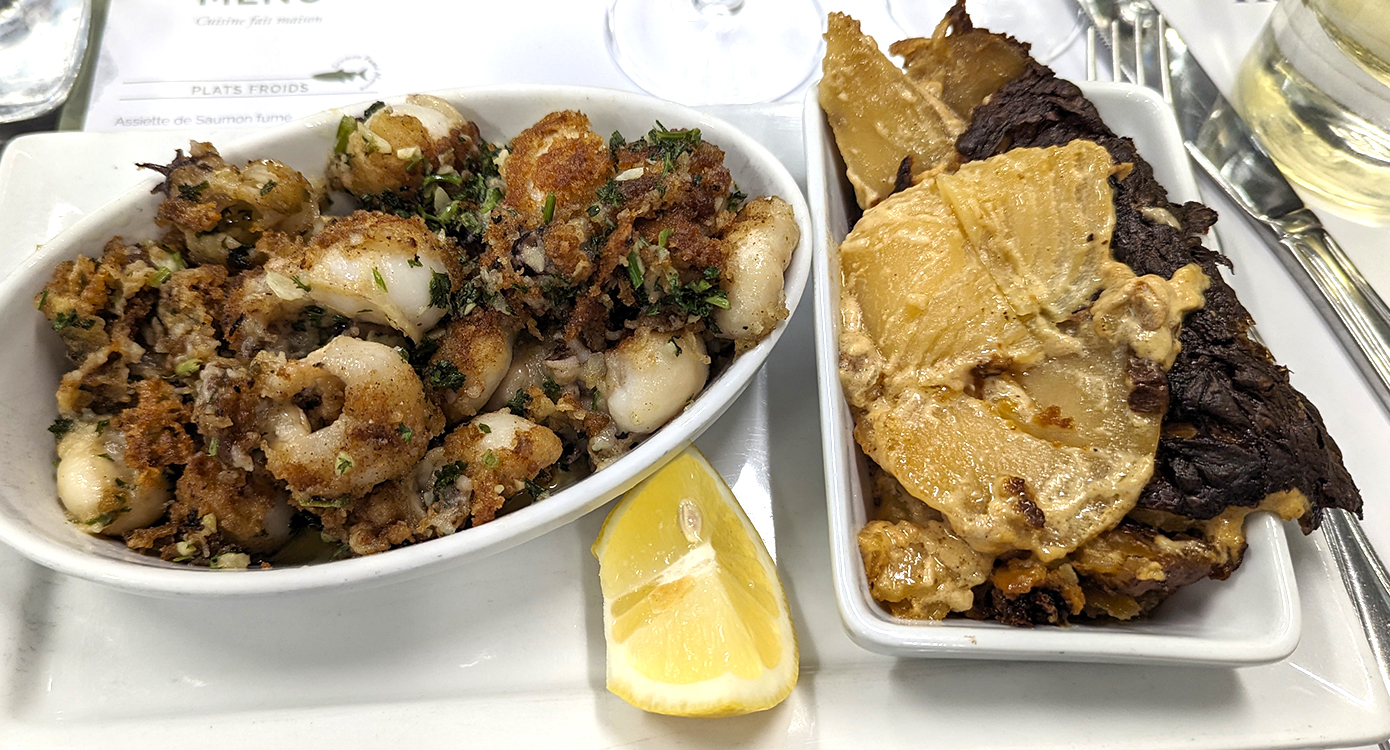
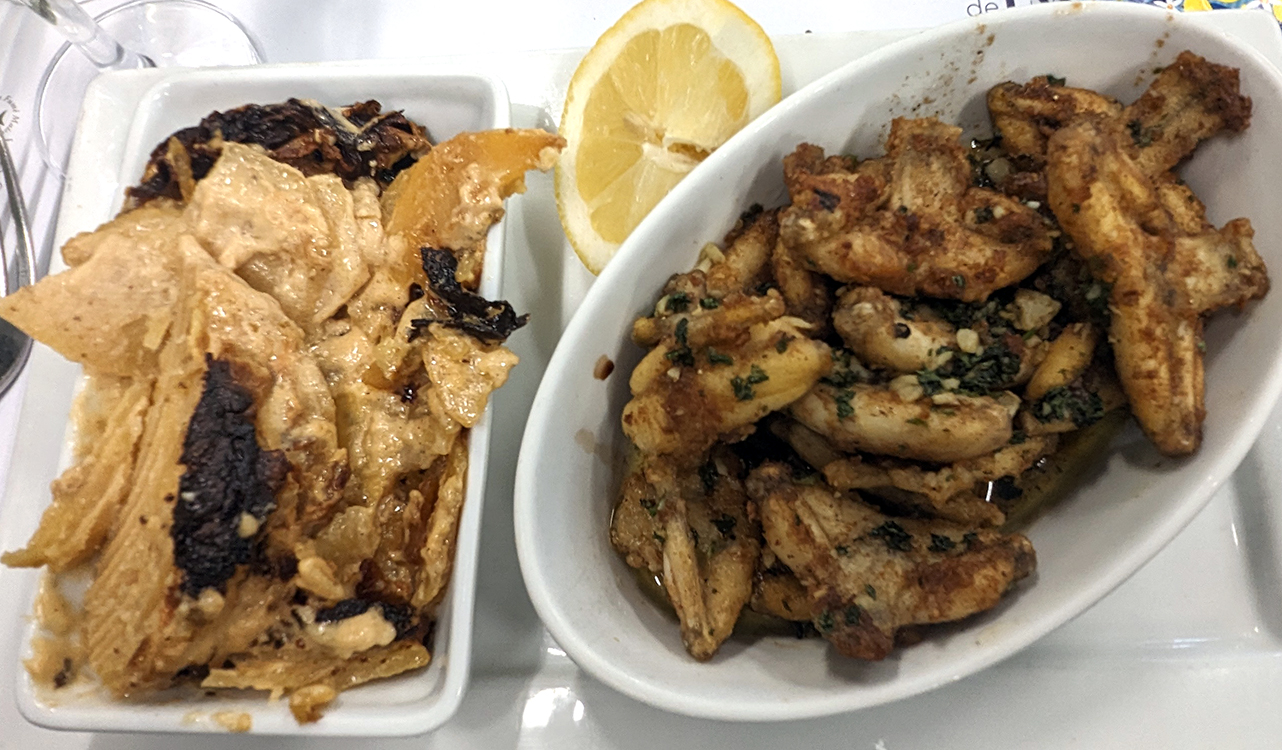
Above: Baba la Grenouille in Halles de Lyon Paul Bocuse
Moving on from food from the swamps to food from the sea – Barraceviche, where a Peruvian chef presents dishes from his homeland in a casual atmosphere. An appetizer of tuna tartare perched atop bruschettas. Ceviche bathing in leche de tigre included white fish, octopus, fried squid, sweet potatoes and the traditional large-kernel corn. We also shared a dish of creamy arroz con mariscos.
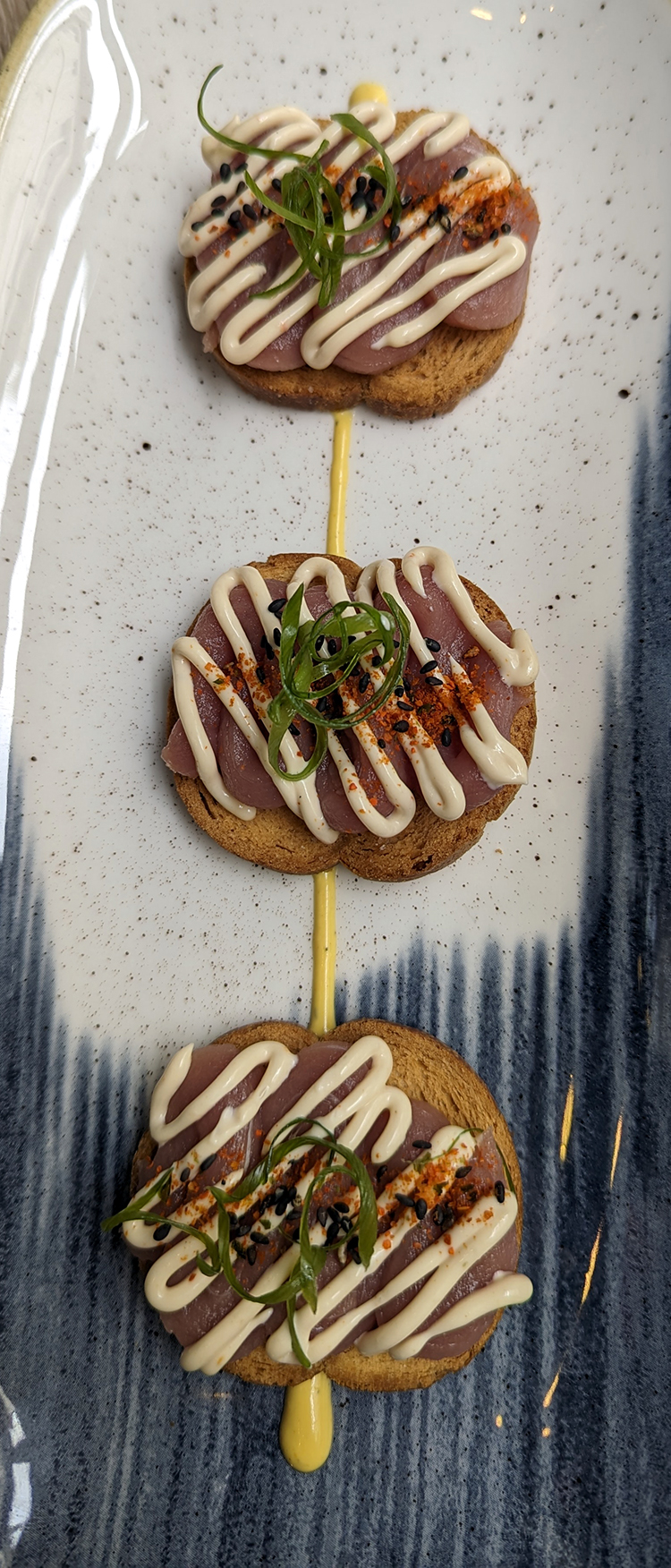

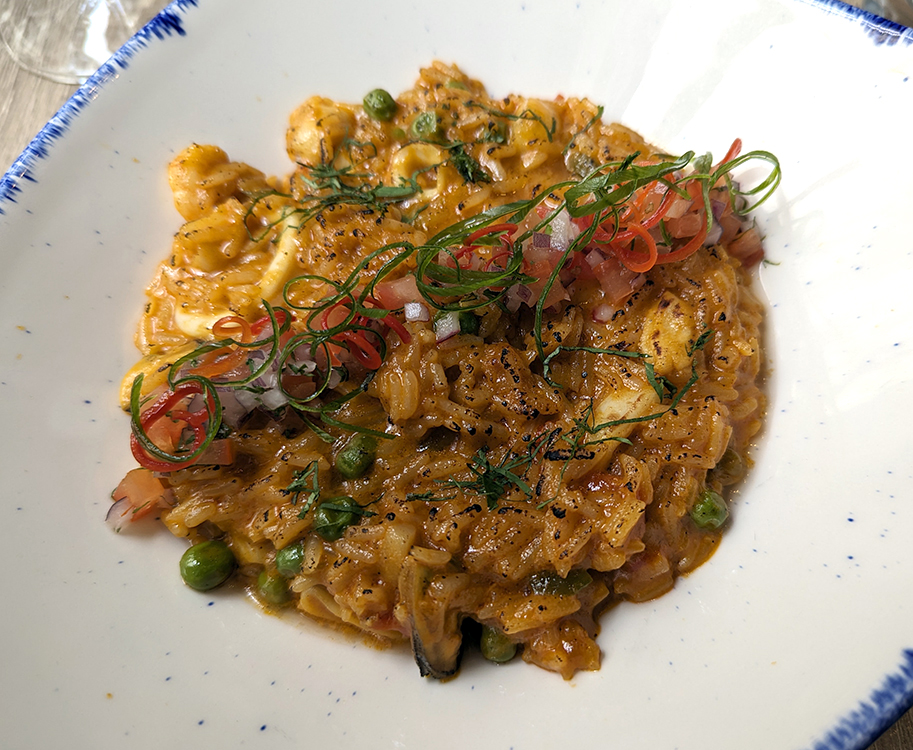
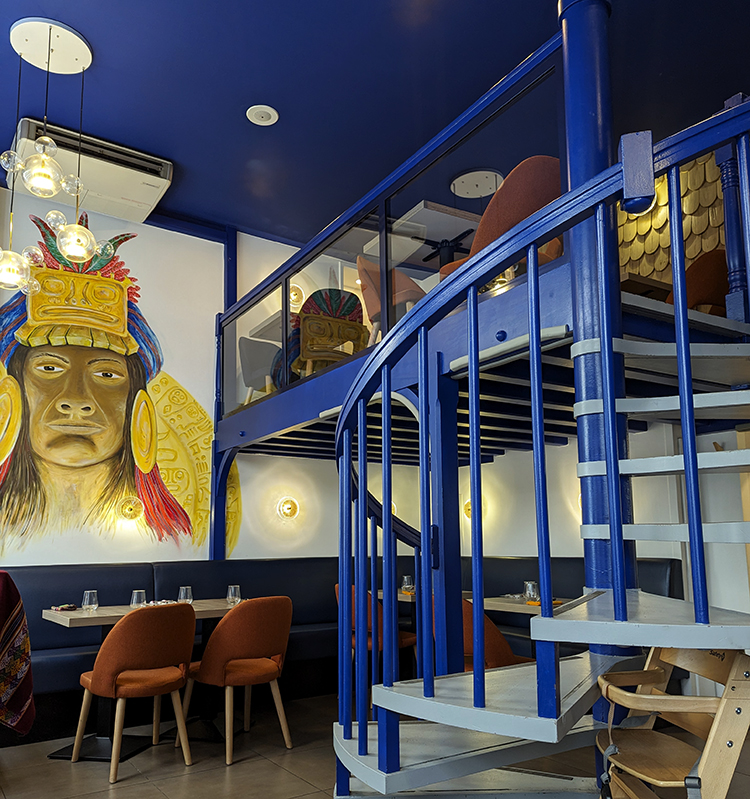
Above: Barraceviche
We have no idea what the normal menu offered at Bistrot Jutard is like because we were fortunate to discover the schedule for the fishmonger. Thursday through Sunday, September through May, plan on joining a long line of locals waiting for a table.
With no dressing but a squeeze of lemon, the fines Claires oysters were wonderful. The let-the-seafood-shine-on-its-own approach did not work for me when applied to supions, small cuttlefish. Fried squid, a cousin, went down much easier. And, no, we failed to order one of the gorgeous seafood platters or towers placed on multiple tables nearby.

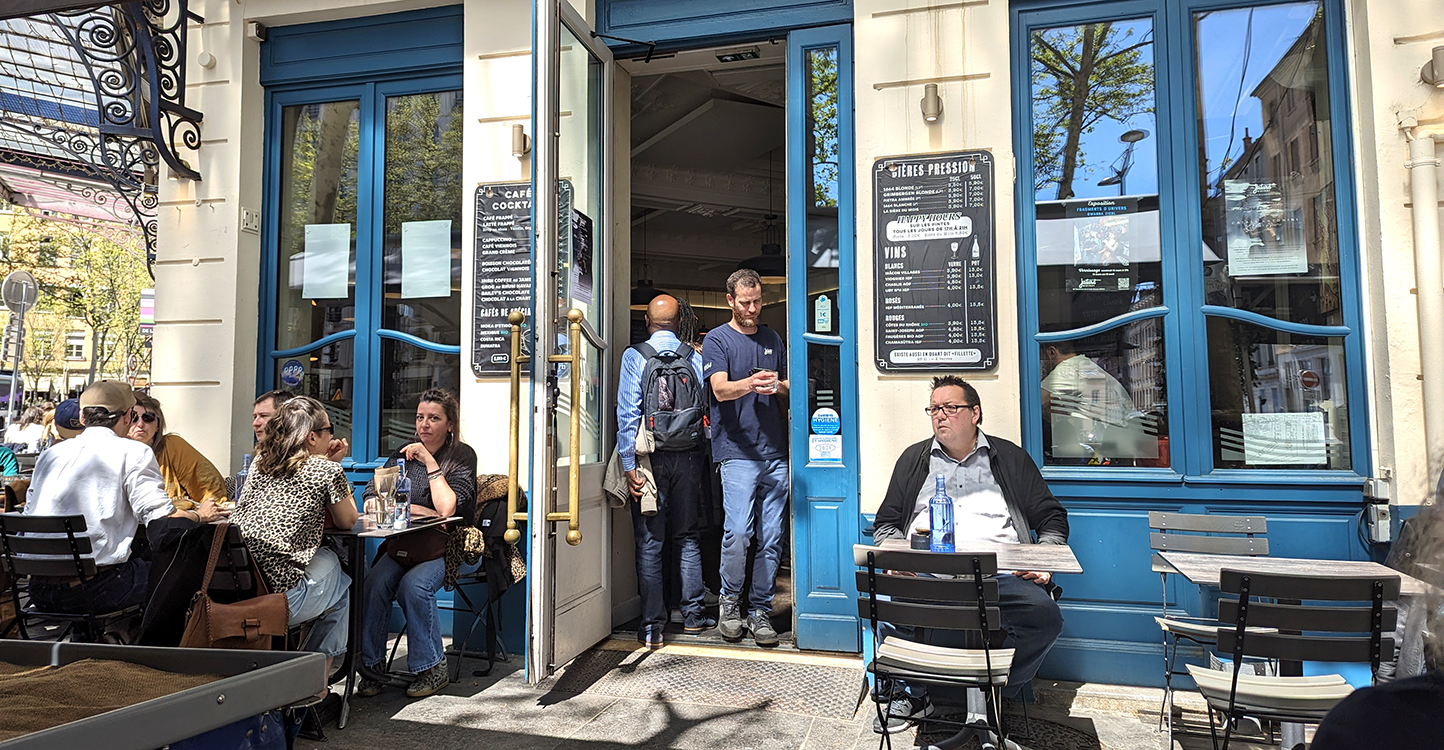
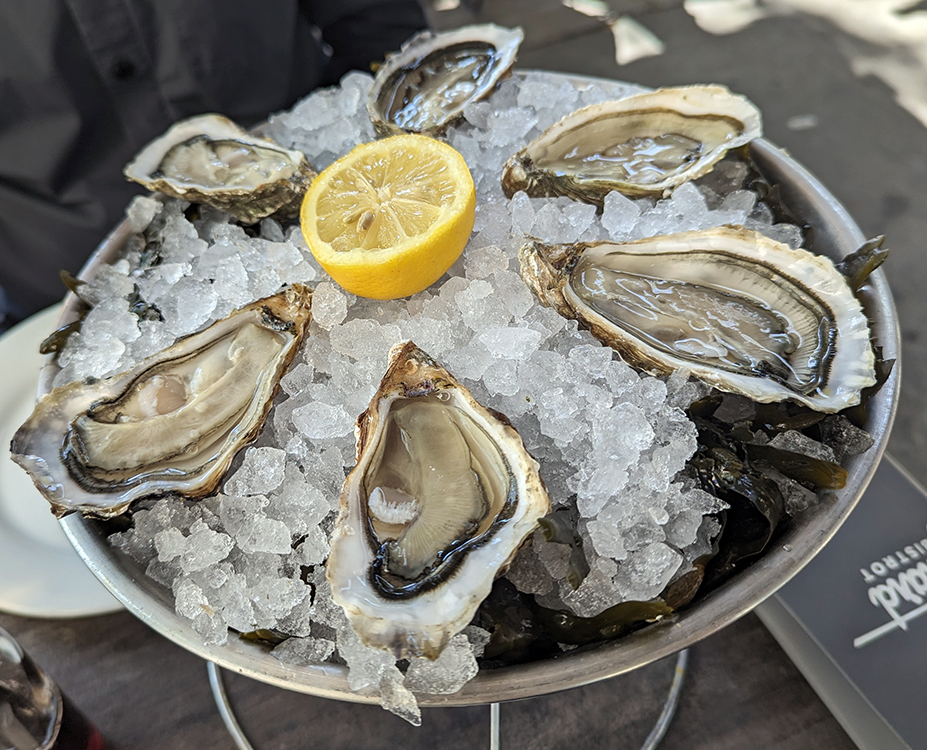
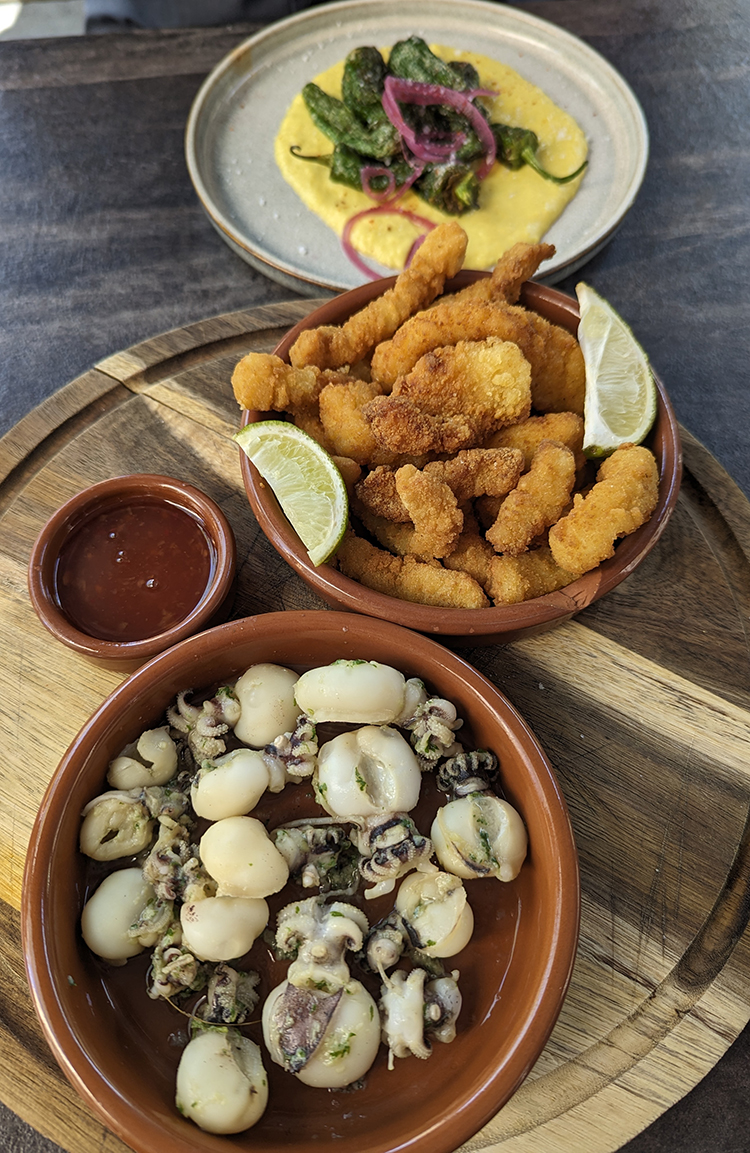
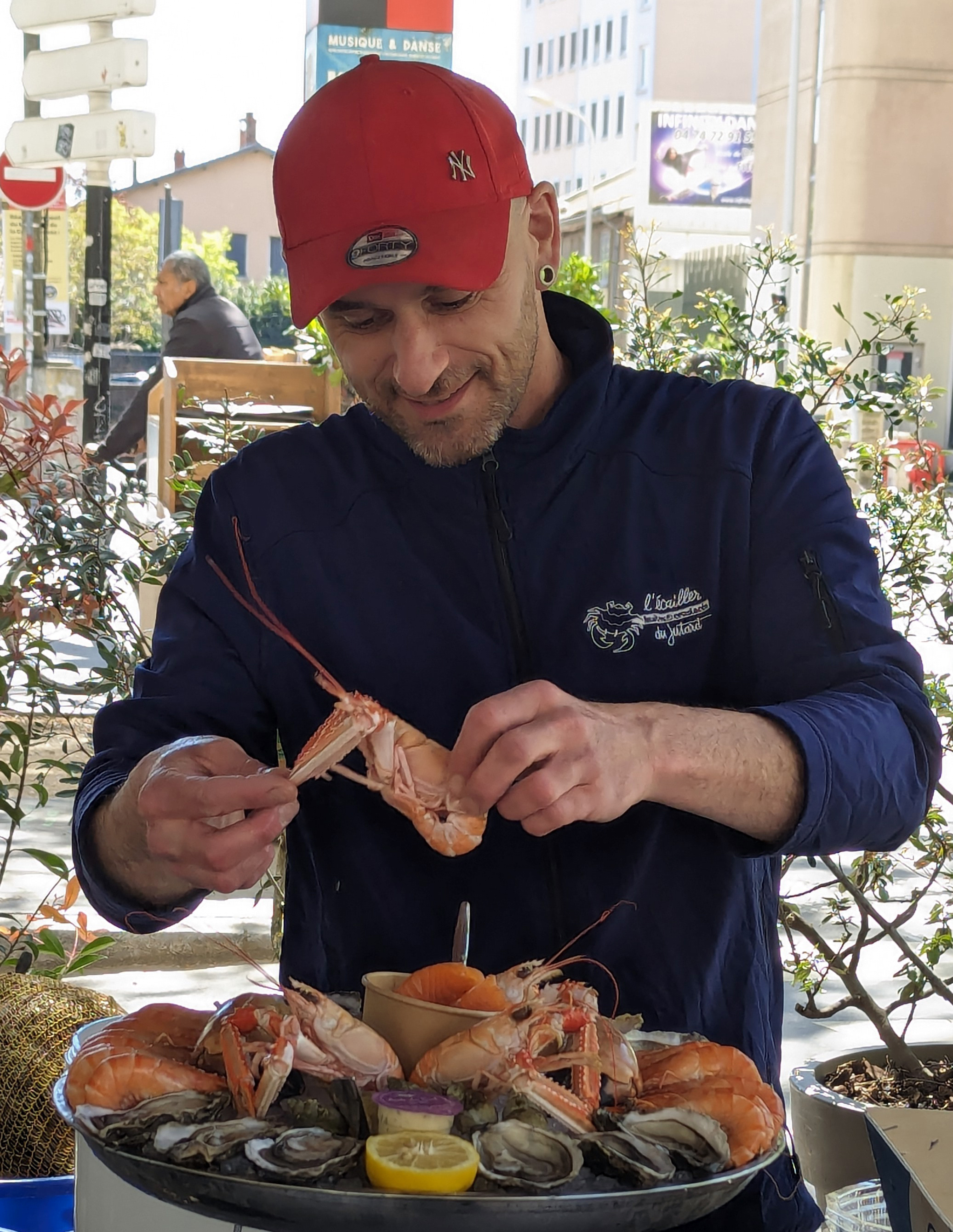
Above: Bistrot Jutard
A Lyonnaise tradition is to assemble the entire family at Brasserie Georges to celebrate birthdays, so choruses of “Joyeux Anniversaire” ripple continuously through the square-block-size dining room. The high ceiling and restored art deco decor definitely are worth a gander, but I preferred our brews in the bar over the dining experience.
The restaurant opened a mere 189 years ago, preceding even the train station next door. Rows of white-tableclothed tables squeezed together are serviced by waiters in starched white aprons with facial expressions appearing stiffly starched as well. The menu is traditional brasserie to the point one senses few of the recipes have changed since its opening.
Large escargots, not sauvages but bred and raised on an organic snail farm in Charantonnay, were classically prepared. Although the tableside presentation advertised on the menu was omitted from our “celebre gratinee au Madere,” the onion soup with fortified wine alongside was decadently rich. Petite ravioli awash in a sea of creamy cheese sauce is a restaurant staple in Lyon. The plain preparations of vegetables ordered on the side would not be accused of being nouvelle even two centuries ago.
Obviously, I’ve more than flunked offering any kind of objective look at Brasserie Georges. That old-school menu is simply not my cup of tea. Hordes of others disagree, as testified by the crowds sardined inside. Brasserie Georges has been known to turn more than 3,000 covers in a day.
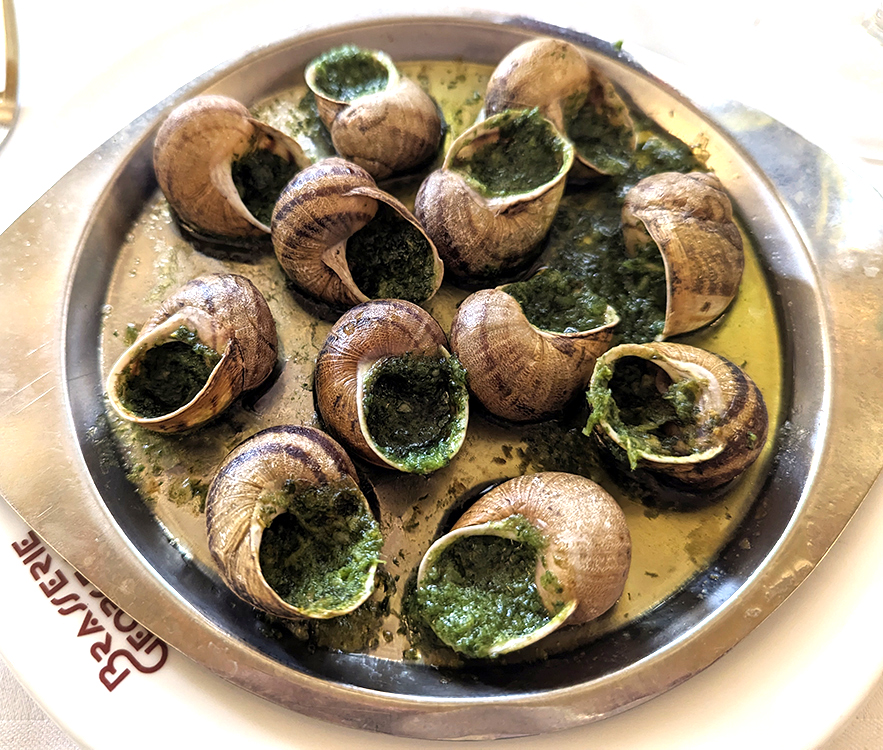

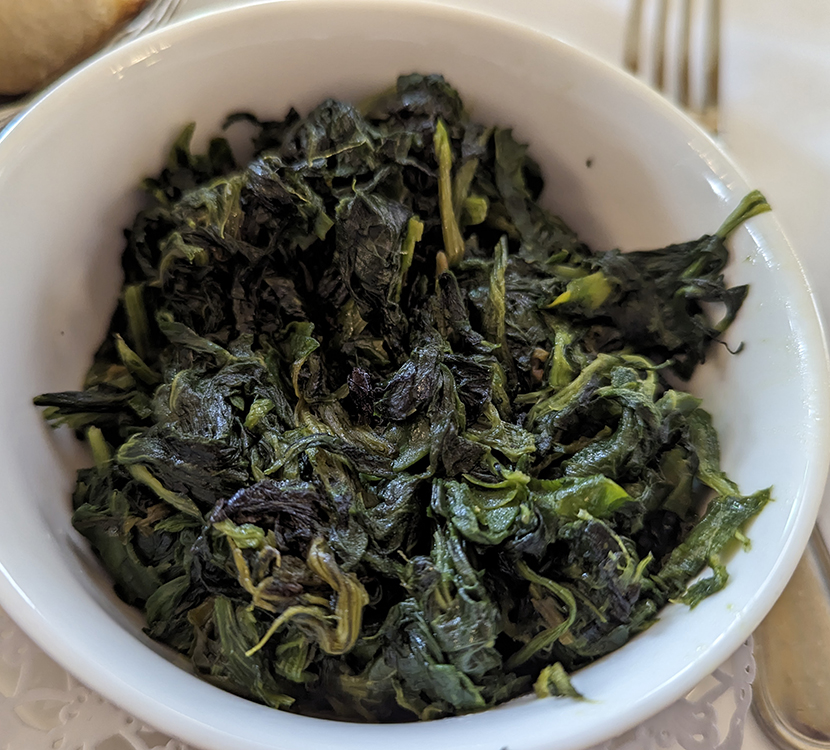


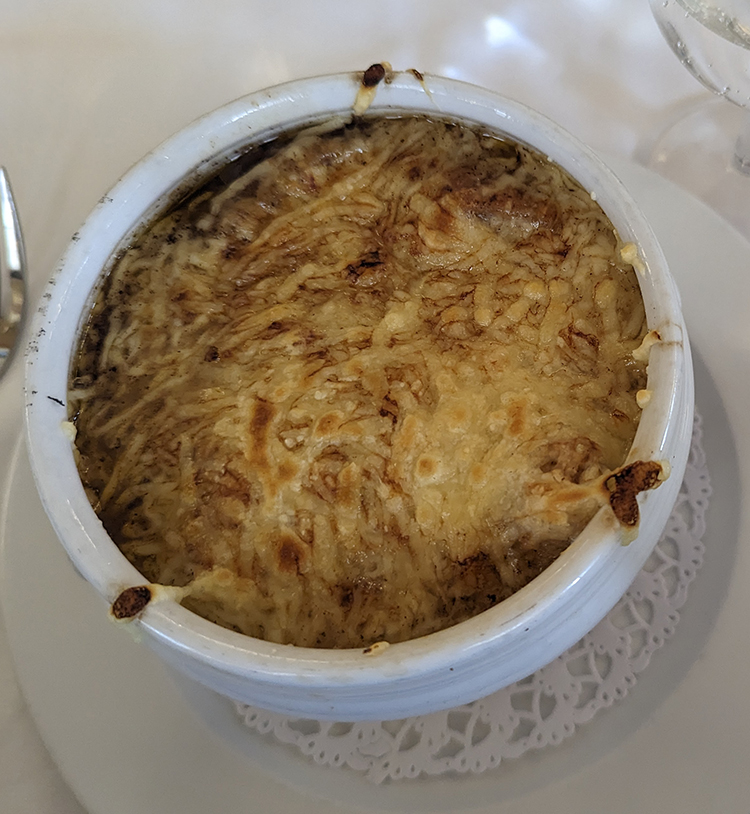
Above: Brasserie Georges
Chez Albert is traditional, but with a much more sophisticated menu than a bouchon. It proved a cozy, intimate, neighborhood harbor on a chilly, rainy day. And was filled.
Supreme de coq roti was elegant with its ballerina pose; black tiger shrimp over risotto did not disappoint; and dorado was complemented by a delicate fennel sauce. Desserts included a pear and apple crumble, and rhum baba disguised by a thick blanket of whipped cream.

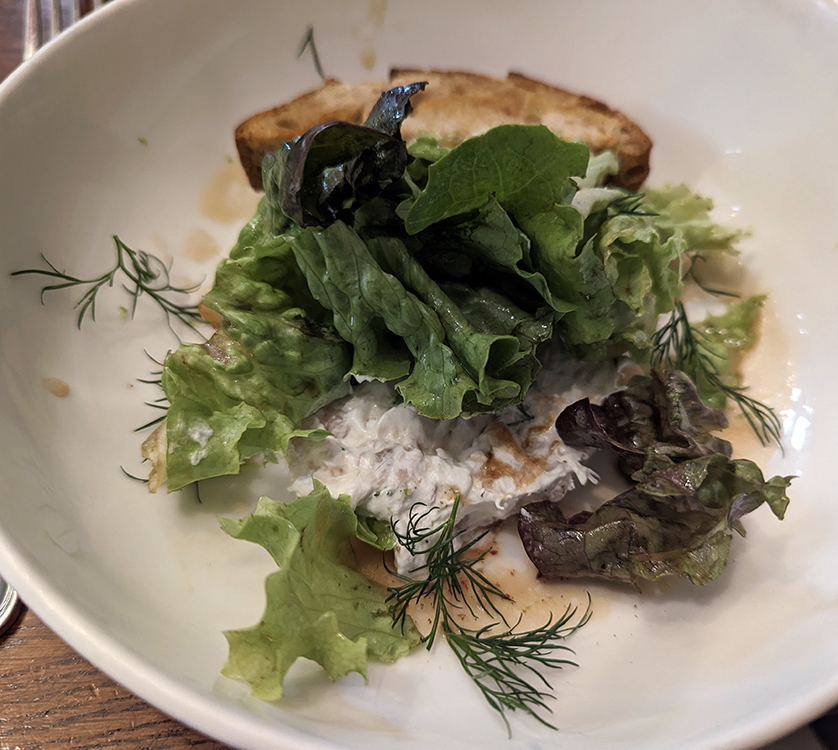
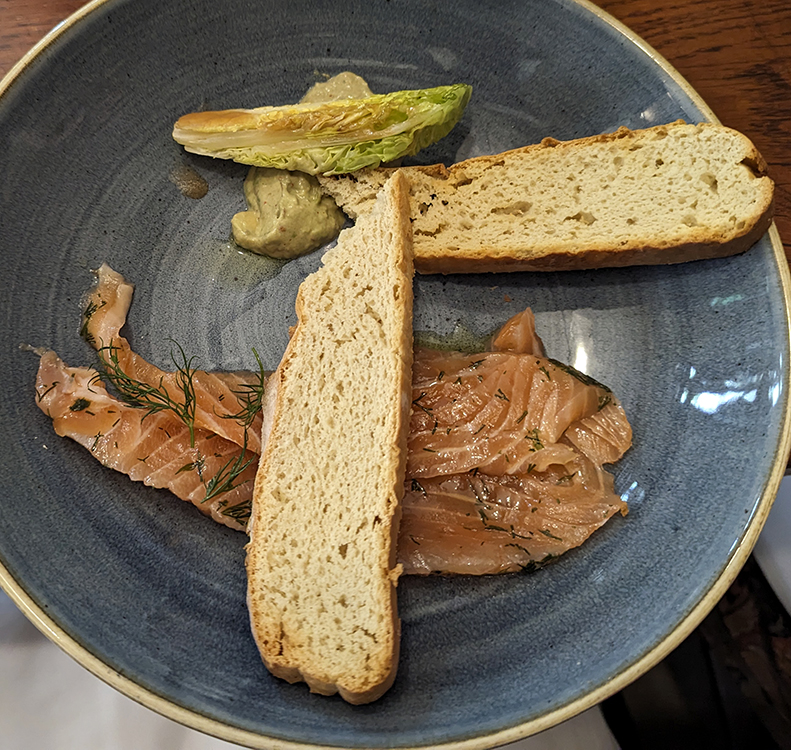

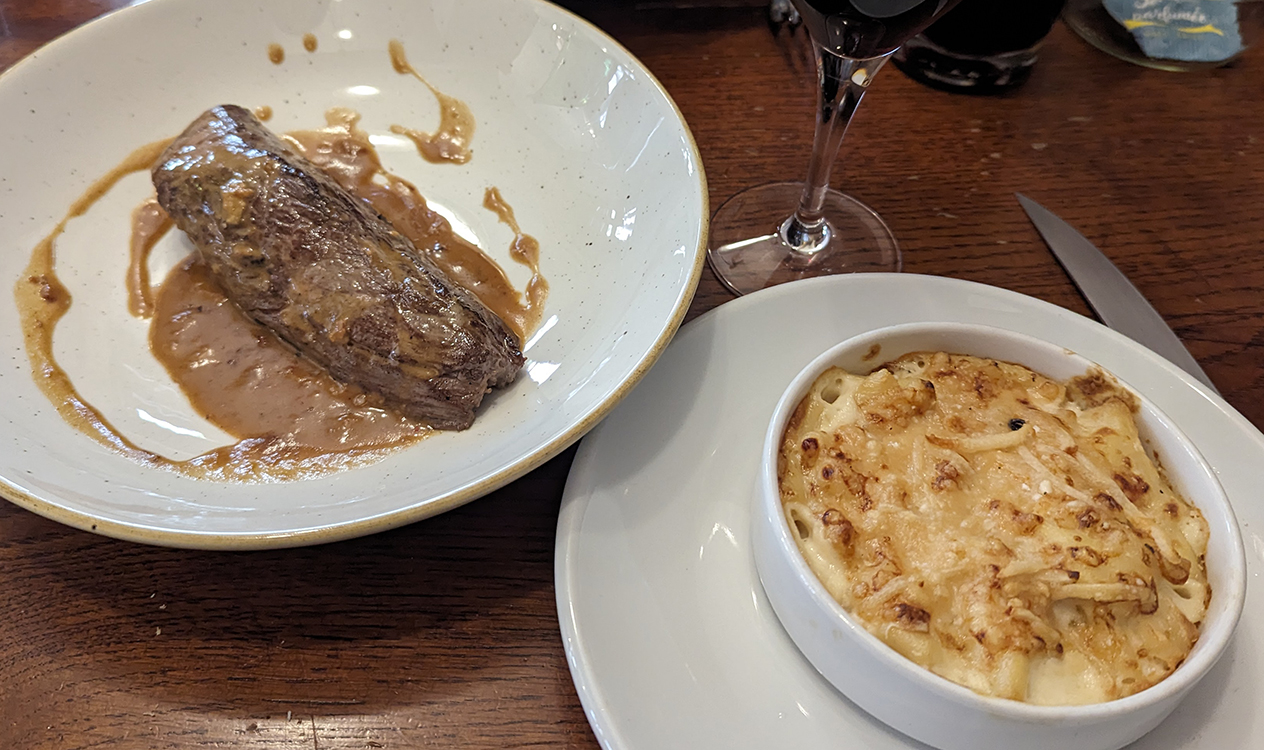


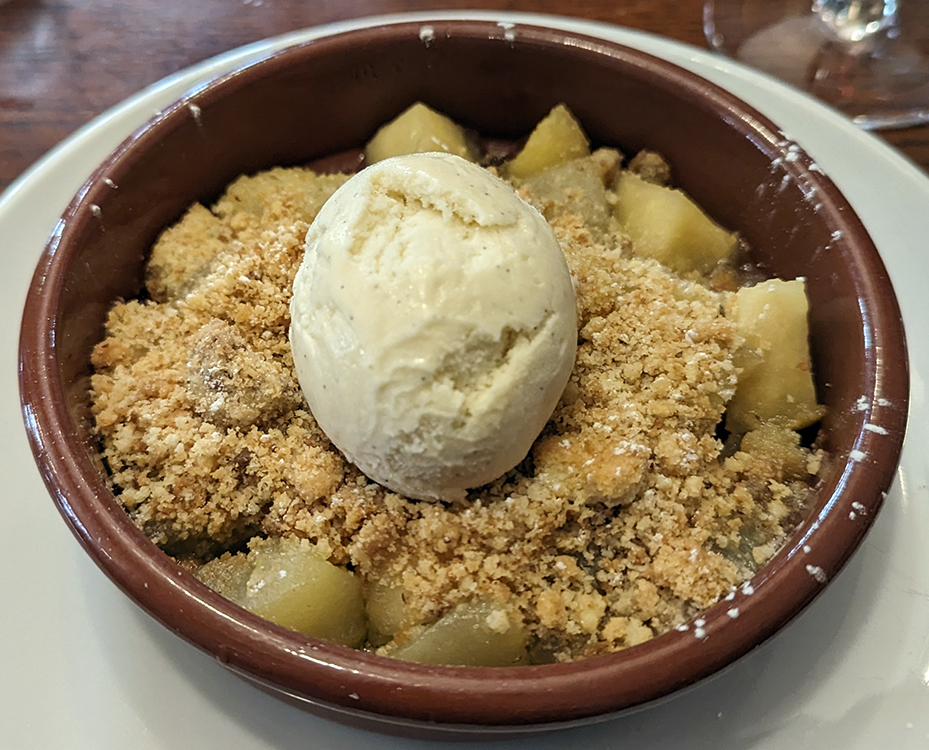

Above: Chez Albert
I so was trying to fit Lyon reviews into one tidy post, but it became as sprawling as Brasserie Georges. My computer objected to the length and crashed the whole thing. Rebuilt from scratch, this installment should satisfy your hunger until delivery of part two.
 Postcards from Barton Springs
My gosh, that all looks amazing! And your words make it all sound just as amazing as it looks. Great post.
LikeLiked by 1 person
Thanks so much, Chris. We did indeed eat well in Lyon.
LikeLike
I like rice and veal! Ris de veau is one of my favourites when
LikeLike