
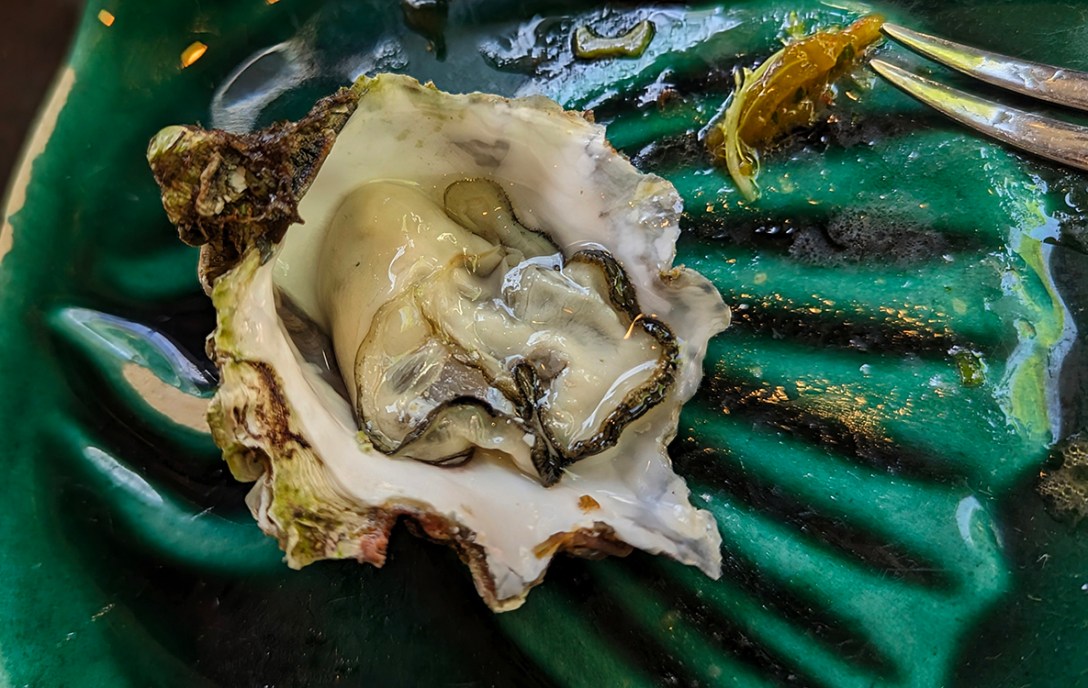

Above: Speciale de Claires oyster at La Boite a Sardine
A fair number of French will tell you in unguarded moments that ‘Marseille is not France,’ and what they mean by that is that it’s too Arab, too Italian, too Corsican, too mixed up with foreignness to be truly and adequately French. But, anybody who knows me knows that’s exactly the kind of mixed up gene pool I like to swim in and eat in. It is a glorious stew of a city, smelling of Middle Eastern spices, garlic, saffron and the sea.”
“Marseille is a Must-See City in France,” Anthony Bourdain, CNN, October 2, 2015
Offering up a quick alphabetical tour of restaurants we came across and enjoyed while in Marseille this past spring.
A trendy, upscale yet casual, lunch-only spot attracting neighborhood millennials to the point where reservations are recommended, Cantoche is not in a location you would simply stumble across as a tourist. But it’s definitely destination-worthy and less than a fifteen-minute walk from the Vieux Port.
Spending many a hour in their father’s restaurant as children, two sisters opened Cantoche in 2021. The menu concentrates on three main courses daily, depending on what’s in season. Unlike many restaurants, the kitchen devotes as much attention to the fresh vegetables plated alongside its dishes as the main course.
For starters we had a dish of mussels with an unusual combination of kohlrabi and kumquats. Pommes dauphine, a French classic combining mashed potatoes and choux pastry to form fried potato puffs, were served with a paprika aioli.
Seared mackerel and clams were accompanied by a mixture of asparagus, chard and bok choi in a light wine and garlic sauce; volaille – poultry – by mille feuilles of thin slices of celery root and granny smith apples, caramelized onions and radicchio. For dessert, we shared a slice of dense Parisian vanilla flan.

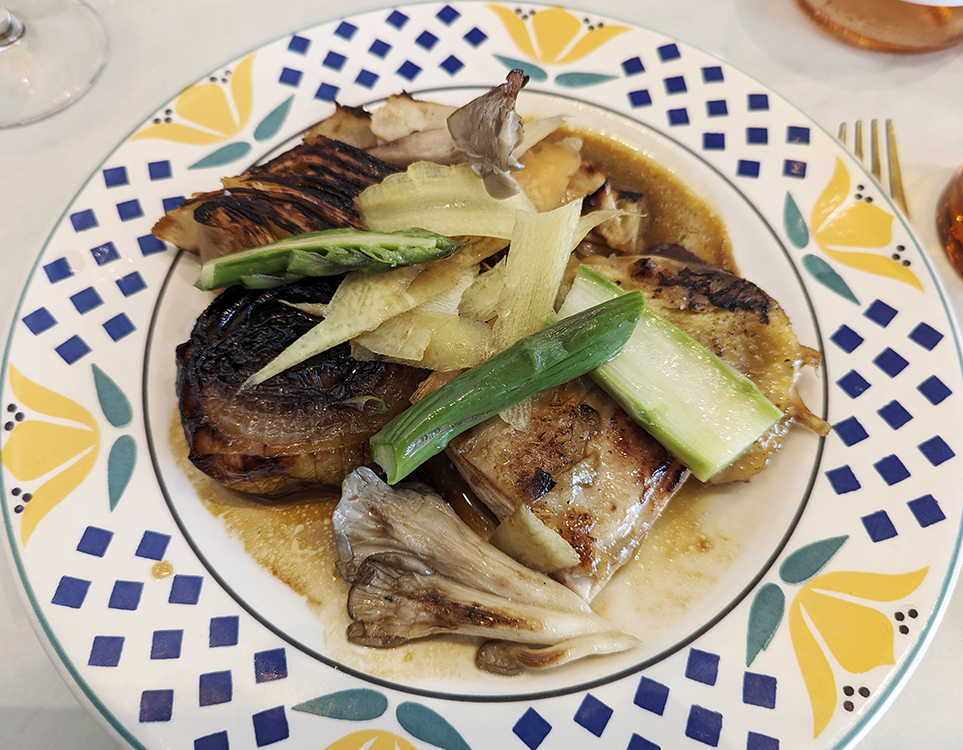

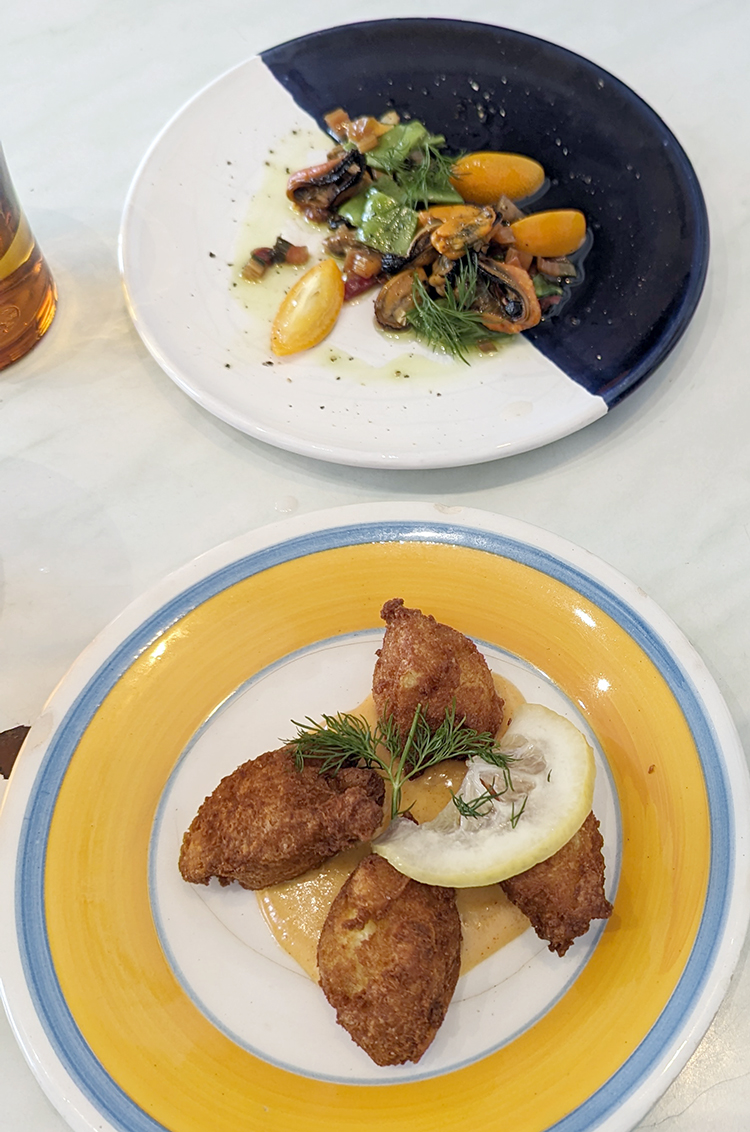
Above: Cantoche
In close proximity to the harbor, Ciao Marcello feels like a neighborhood pizza spot. A plate of roasted pimientos de padron provided us with some of the spicy flavors we yearned. The salad came with large portion of prosciutto, as often the case in Italy, and the pizza crust had a nice Neapolitan chew to it.


Above: Ciao Marcello
Whenever we are gone from home for a while, we inevitably end up on the prowl for a vegetarian or vegan restaurant or two. We found an enjoyable bottle of wine and a vegan mezze plate to share at Hododa in Le Panier neighborhood.
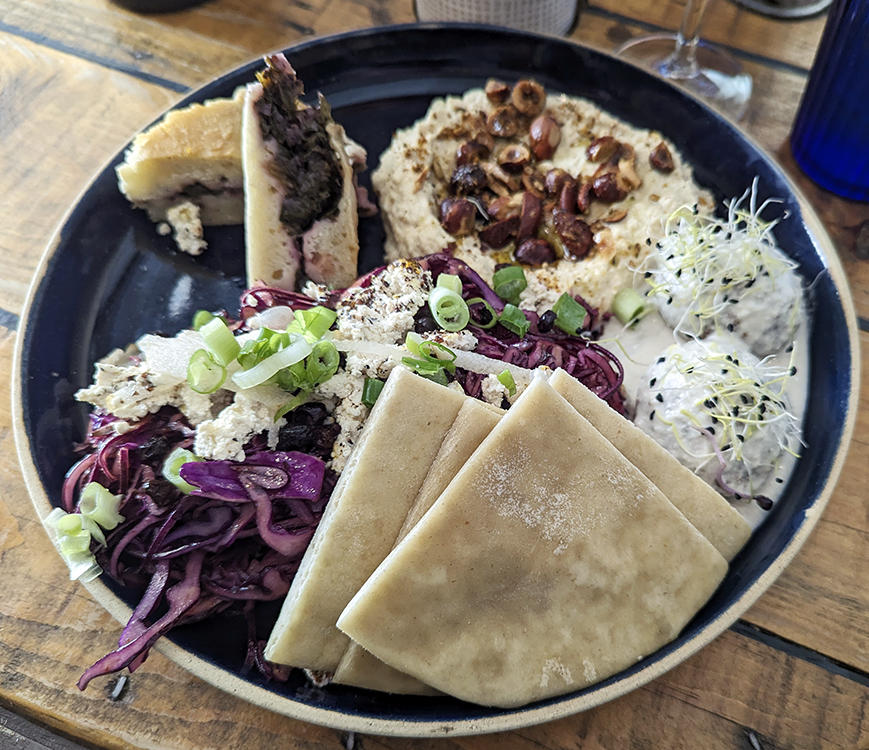

Above: Hododa
La Boite a Sardine manages to pull off its kitschy thematic decor, even while packing customers into its space like sardines in a… well, you know. Plus, the kitchen does know its way around seafood, both canned and fresh. We enjoyed anchovies; oysters; a board stuffed with sardines farcies and sweet potato fries; and ravioli filled with anglerfish.

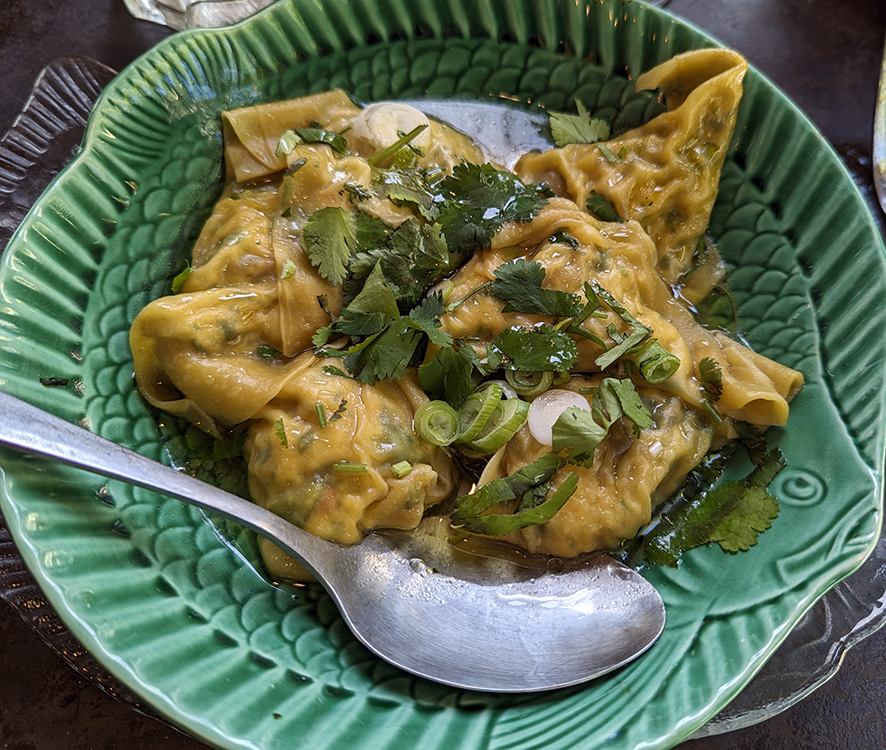

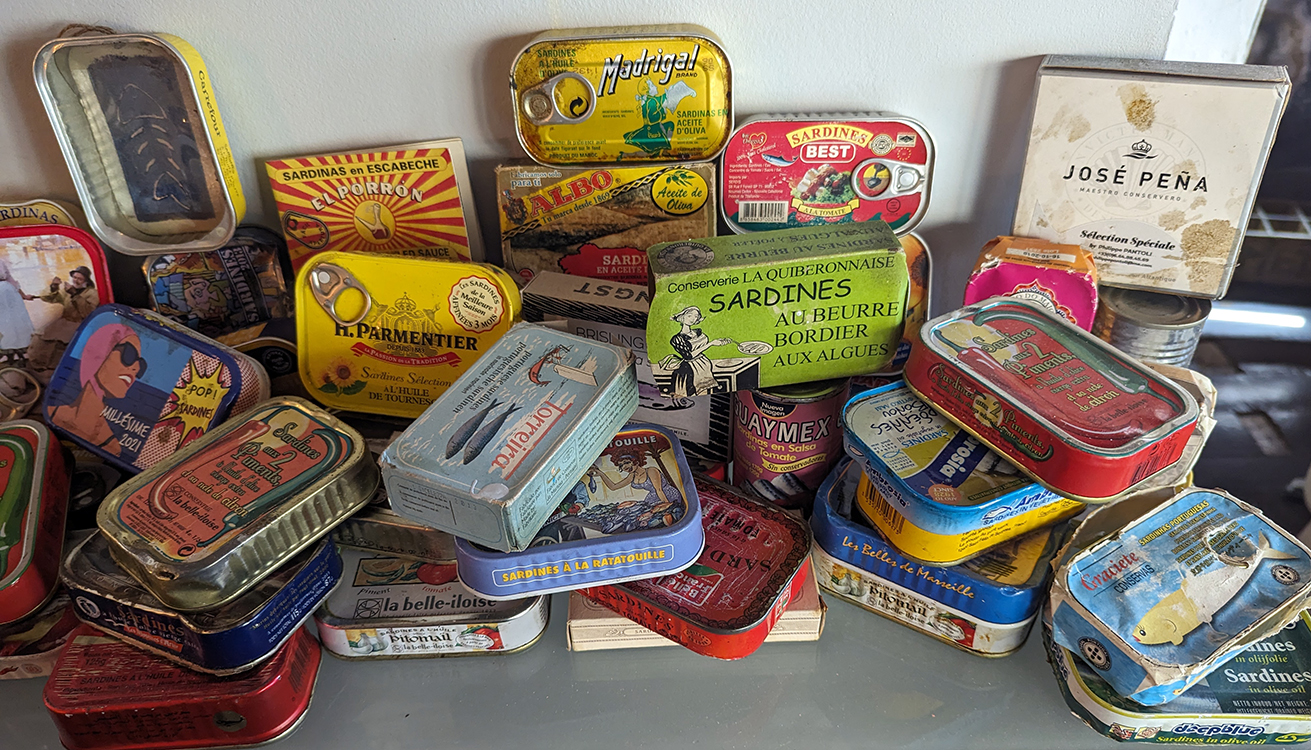

Above: La Boite a Sardine
La Tabla d’Augustine seemed to coast on its proximity to the tourist area. The presentation of seared octopus was rather parsimonious amidst microgreens, and a “trio” of panisse all seemed repetitive of the same chickpea flour triangles. Moules gratinees were baked until dried out, but the star of the show was the beautifully caramelized vegetables poulee.
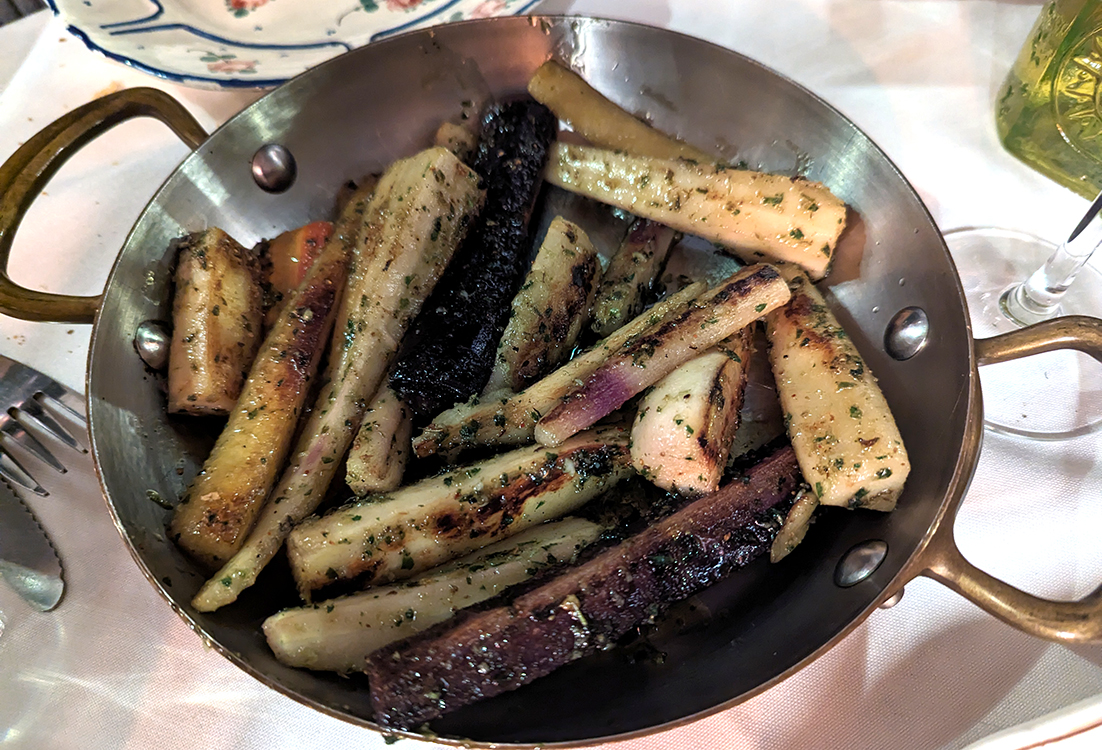
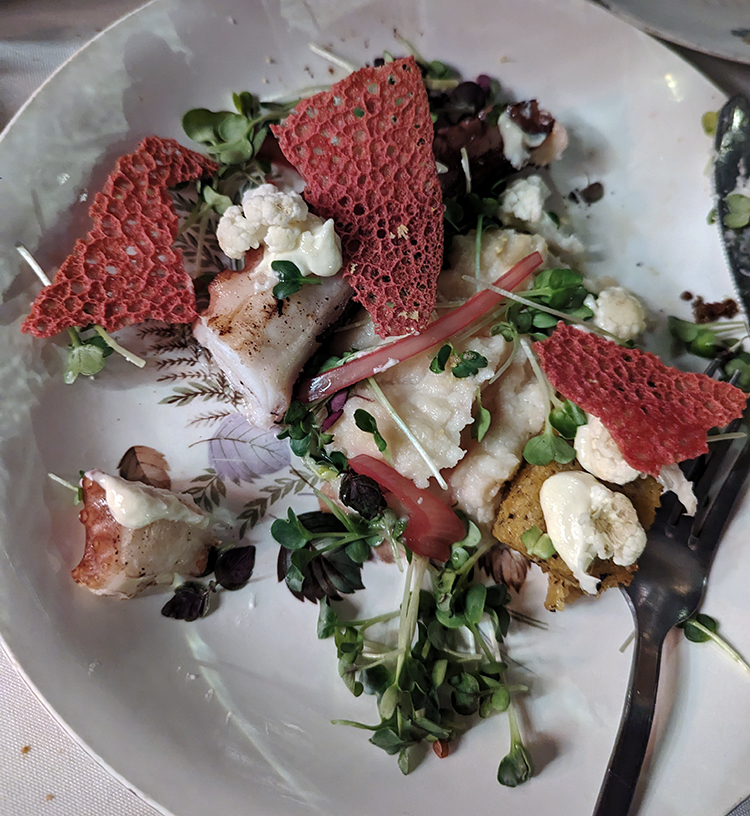
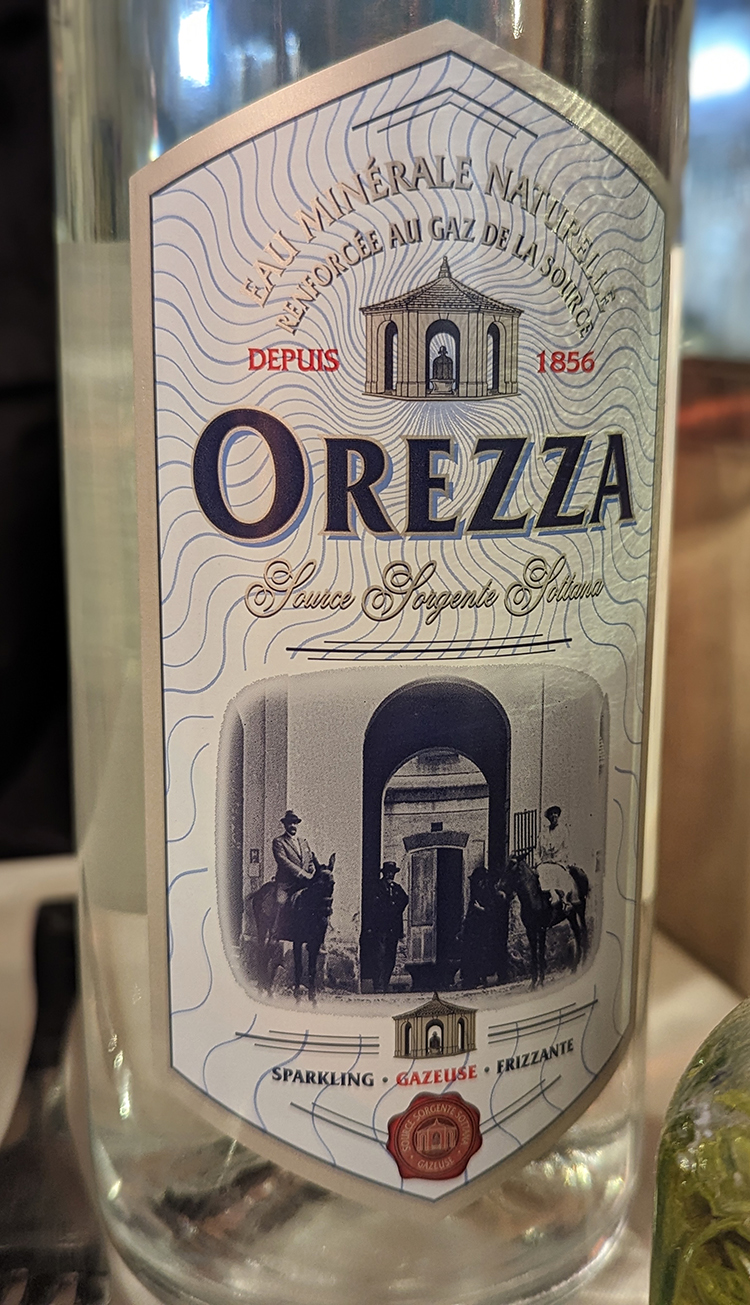


Above: La Tabla d’Augustine
Bouillabaisse is the only food I know that I could eat six times a day.”
Julia Child
Marseille is the birthplace of bouillabaisse, and its residents can get as worked up about where to get the best in much the same way people from Austin and San Antonio argue about tacos. The base of its rich bouille, or broth, is bony rock fish cooked slowly and combined with a spicy rouille, made from emulsified roasted red pepper, lemon juice, egg yolk, garlic, saffron, chile peppers and olive oil. The seafood is cooked separately and then arranged in a bowl before the bouille and rouille mixture is poured over it.
Although fishermen originally would make the dish at home from flawed fish rejected by fishmongers, it has evolved into a relatively expensive dish. Many restaurants are said to take shortcuts, such as buying their bouille and rouille already prepared. We had read the best was that in Vallon des Auffes, a picturesque fishing village perched around an inlet separated a bit from the Vieux Port that’s the heart of Marseille.
We passed the most well-known restaurant, which was packed primarily with tourists, to reach L’Avant Cour, a casual place recommended by a local reviewer as much less expensive. The bouille base did taste homemade and richly spiced, a needed foil for simply prepared seafood. How this compares to other spots, we are unable to say.
For our appetizer, rings of small squid called supions were served traditionally prepared with parsley and plenty of garlic. A fillet of sea bass focused on the fish plated atop an array of plain vegetables and a serving of potatoes gratin dauphinois, encircled by an extremely slender ring of citrus butter sauce.

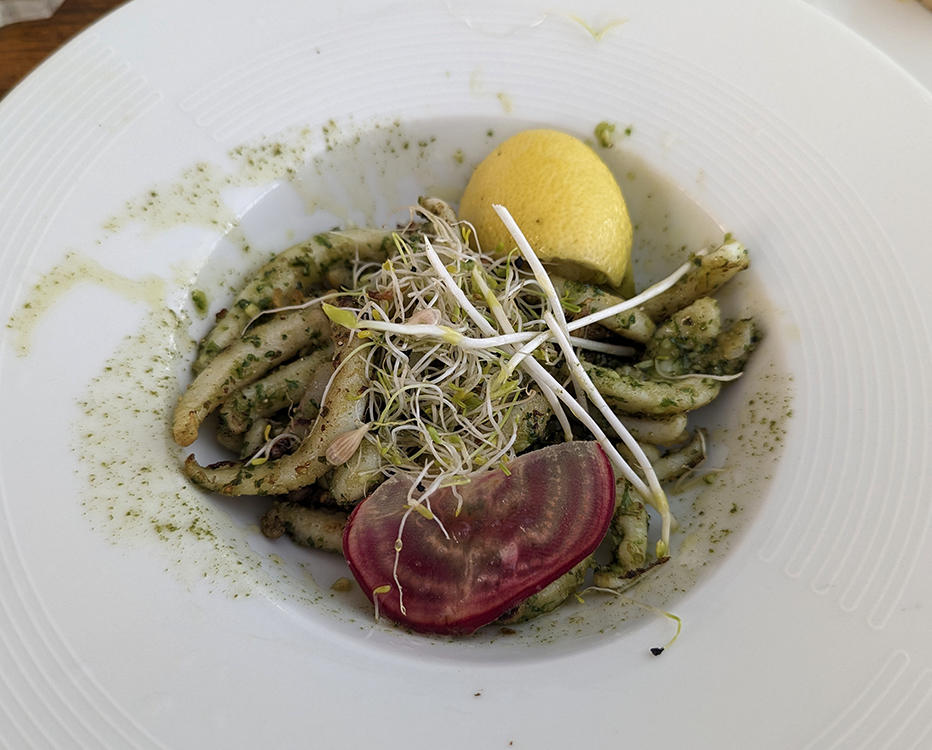

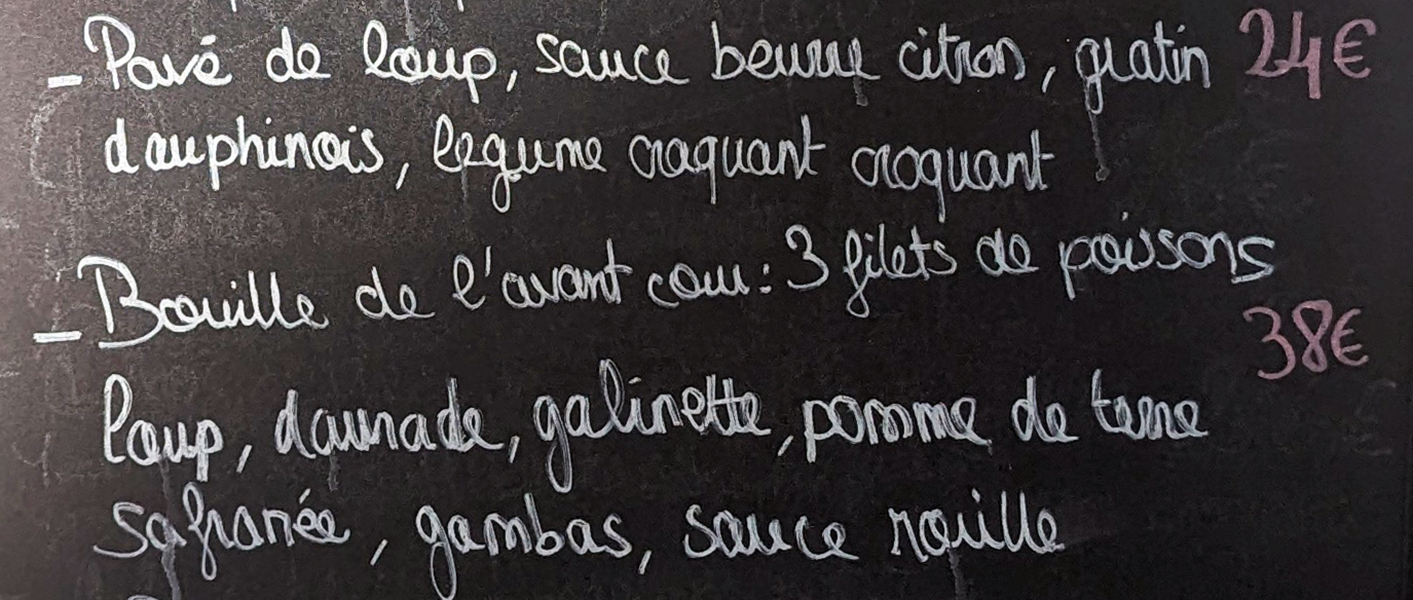
Above: L’Avant Cour
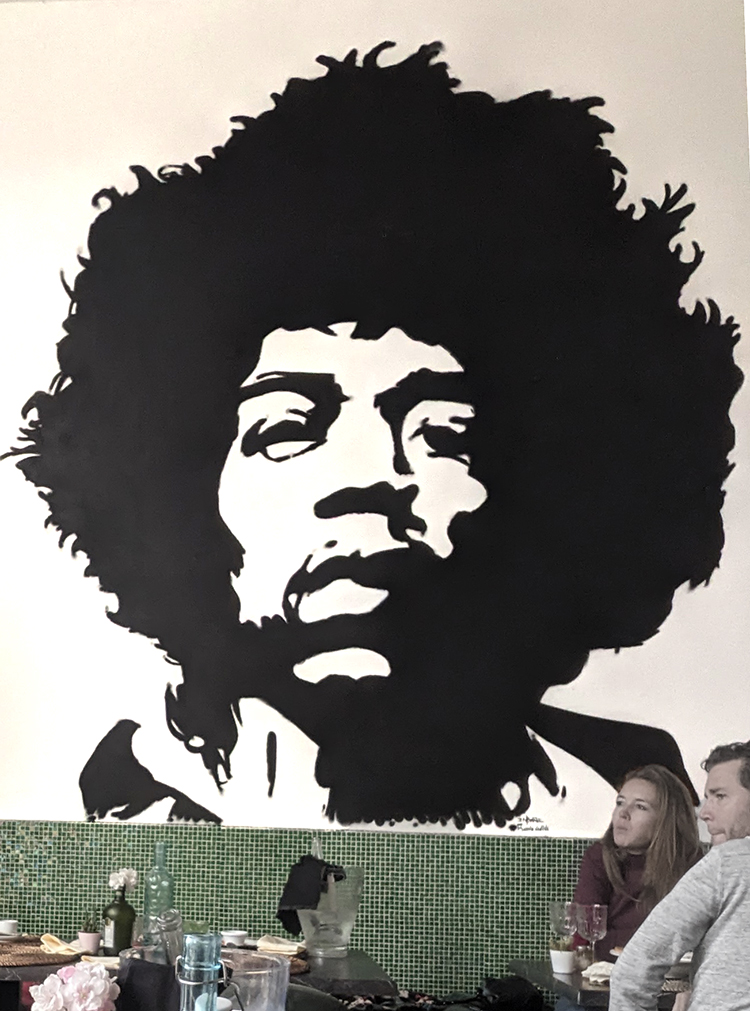
Hippie as a cuisine (was there such a thing?) is something that might resemble a raw food bar lined with bins of seeds and sprouts that was the vegan option on a college campus I visited about 1972. But the name hints that this Joliette district spot is more upscale than that and not in a backpacker’s budget – Le Hippie Chic Cafe.
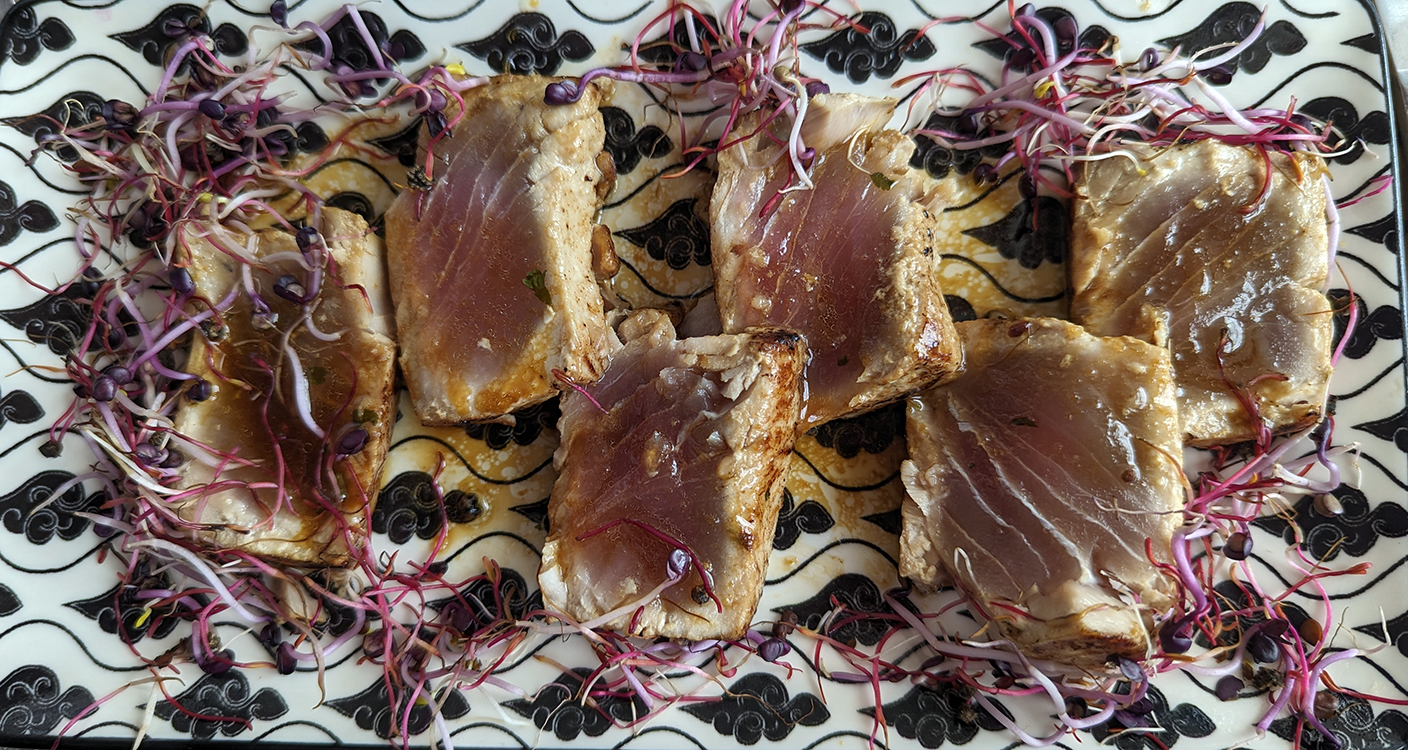
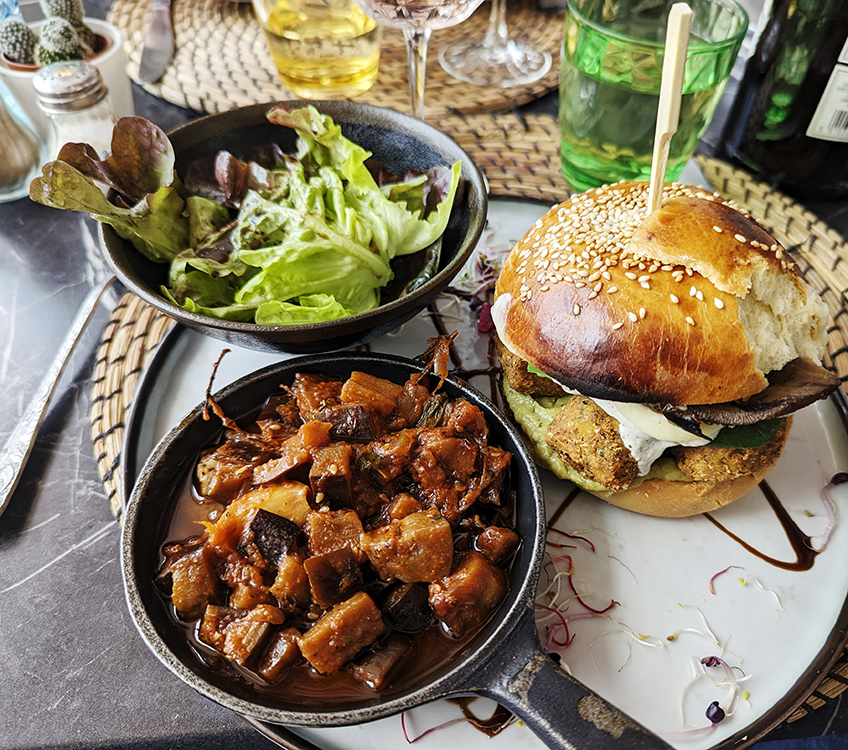
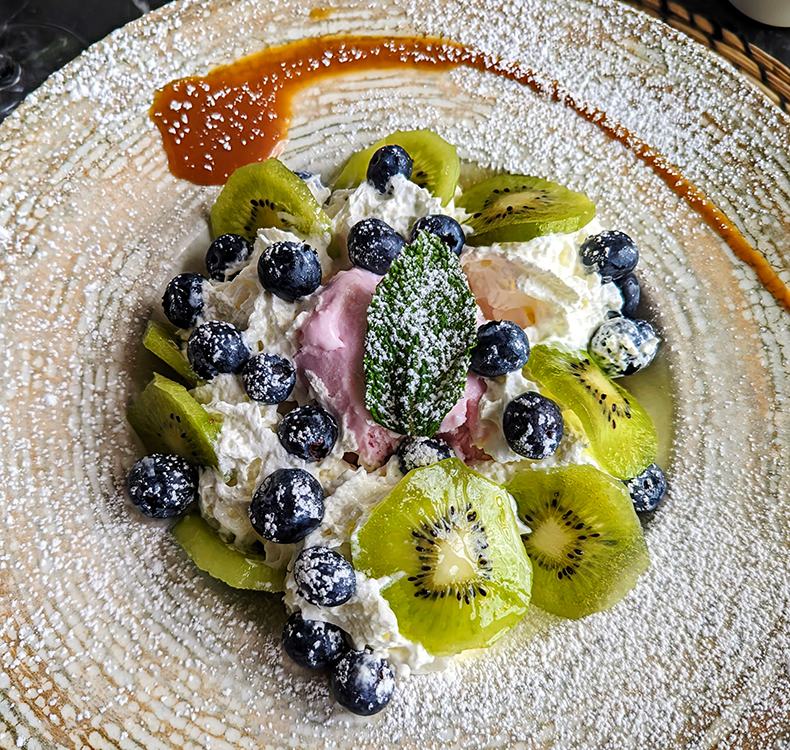
It’s all about “peace and love” and good food. The falafel burger came well-dressed with guacamole and a slice of grilled eggplant, plus a generous side of ratatouille. Tuna tataki melted in my mouth, and the fruit-covered pavlova for dessert was delightful.
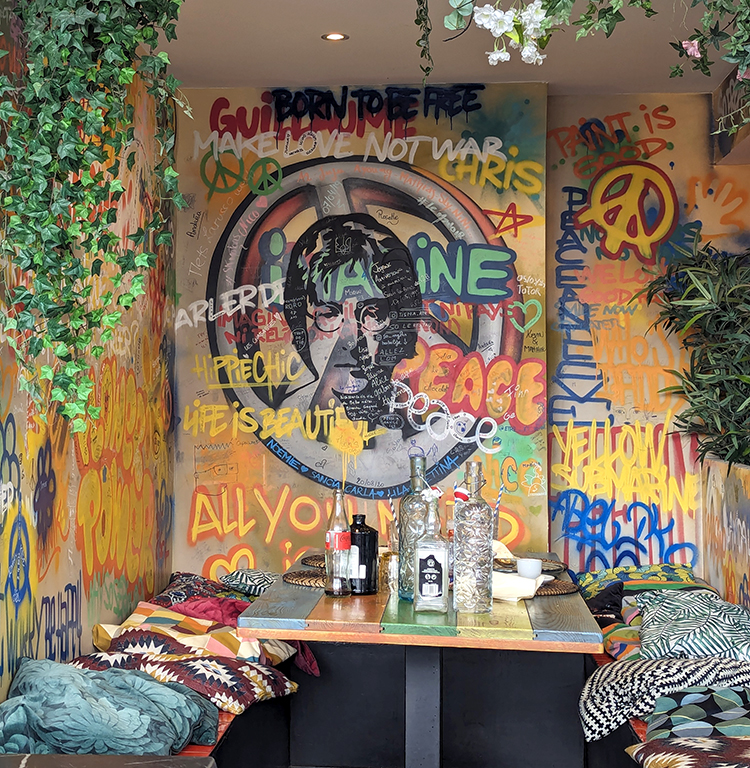
Above: Le Hippie Chic Cafe
An institution in the neighborhood since 1898, it has seen generations of regulars come and go! Penniless students, alone or with the kids, workers from the neighborhood or committed artists, everyone crossed paths on this sunny terrace. Here you can sip your first pastaga, drink your morning coffee with Provence in hand, accumulate scratch games without ever winning, spend hours in your assigned seat, and you can also wipe out your first love failures or play a game of chess with the older ones.”
New owners have renovated this old brasserie, and the copy from their website sounds an exaggeration except we found their patio indeed packed with locals greeting one another warmly. Inside, you will find that old-school brasserie atmosphere and menu. The offerings were good but not exciting. Unlike many a restaurant, the kitchen does not shut down abruptly between lunch and dinner.
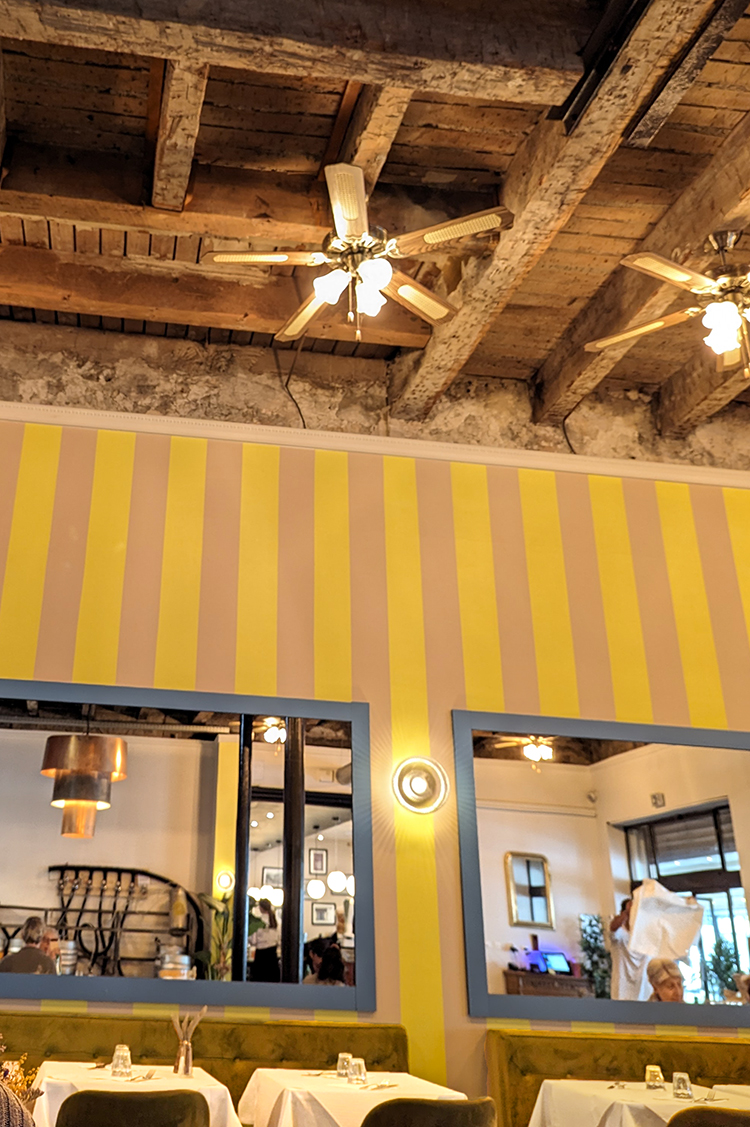
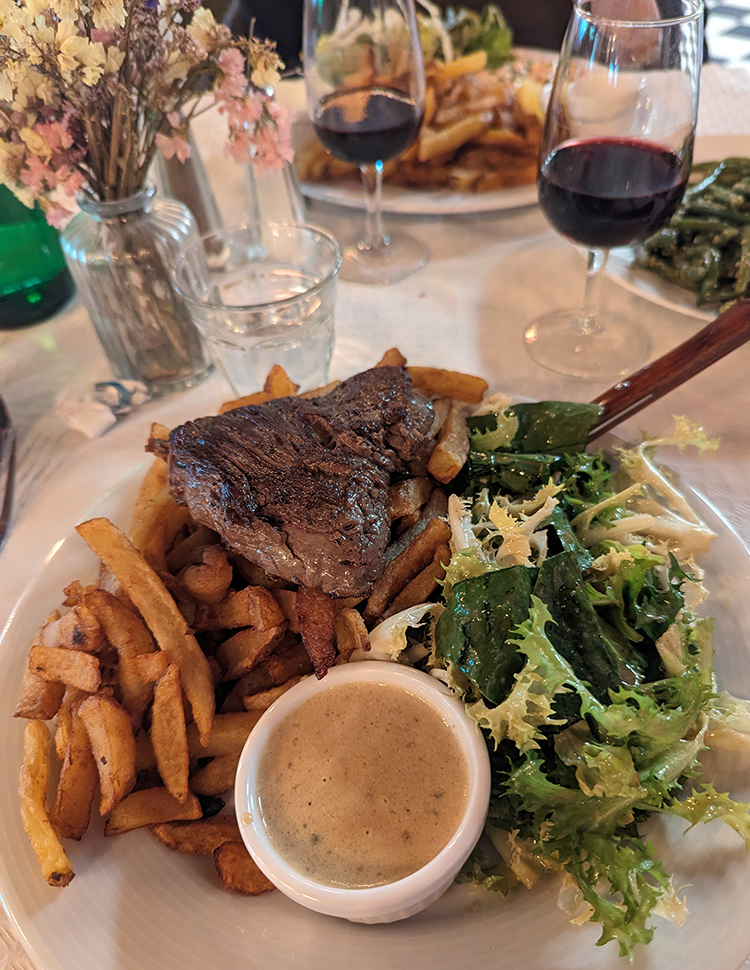
Above: Les Danaides Brasserie
The entrance of Limmat, midway up the stairs of Rue Estelle, is camouflaged by surrounding grafitti for which the Cours Julian neighborhood is known. The night fish soup might have been the best and most richly flavored seafood stew we tasted during our entire month or so in France. And, wait, it was only seven euros. The savory ricotta gateau, cheesecake, with assorted vegetables in an arugula and almond pesto proved a strikingly unusual main course, and there was strawberry pavlova for dessert.
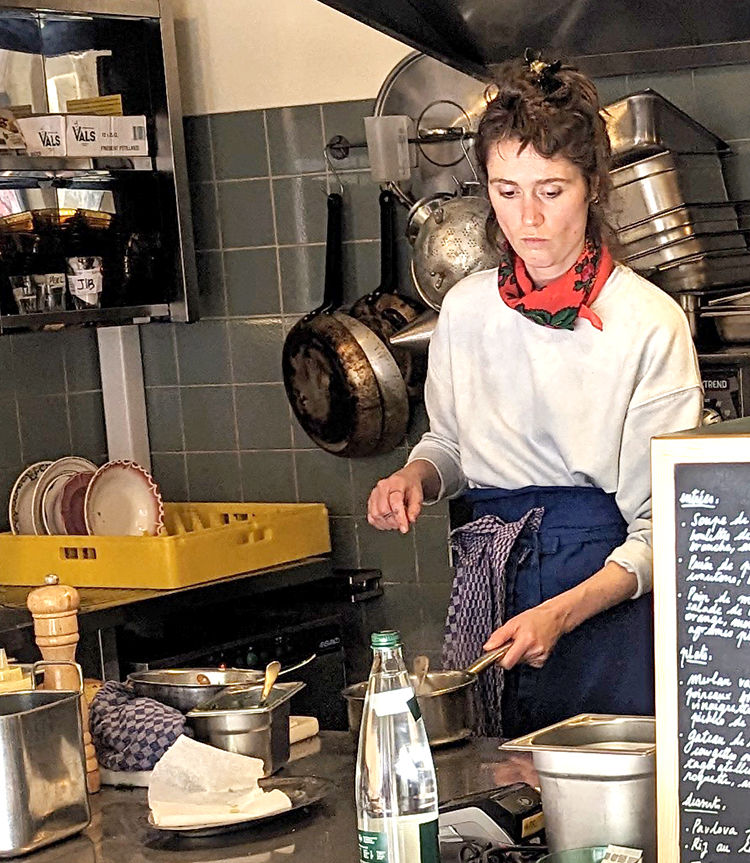


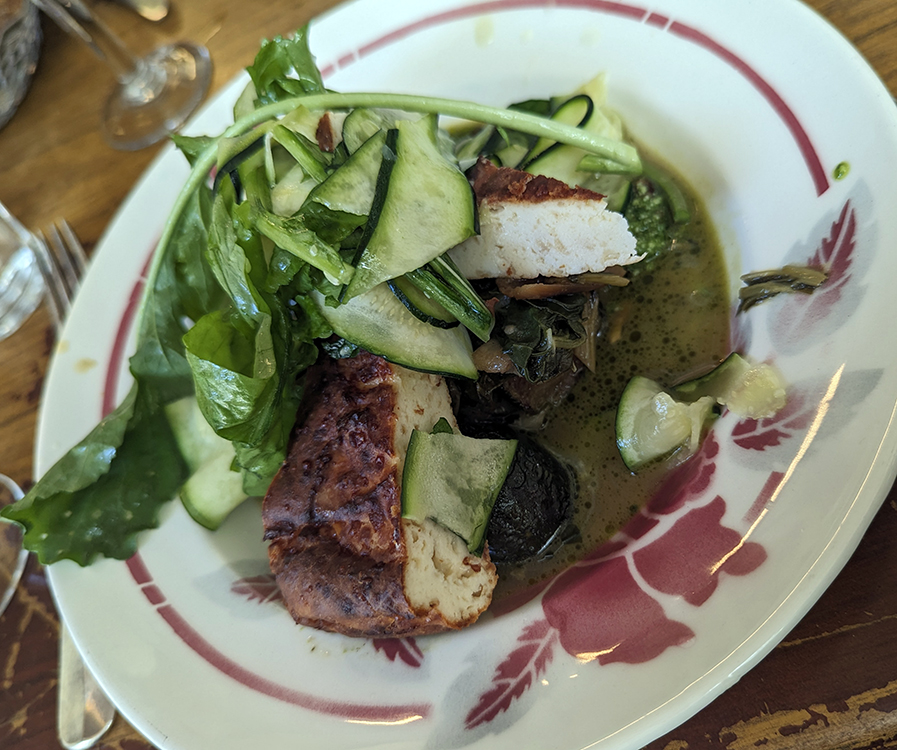
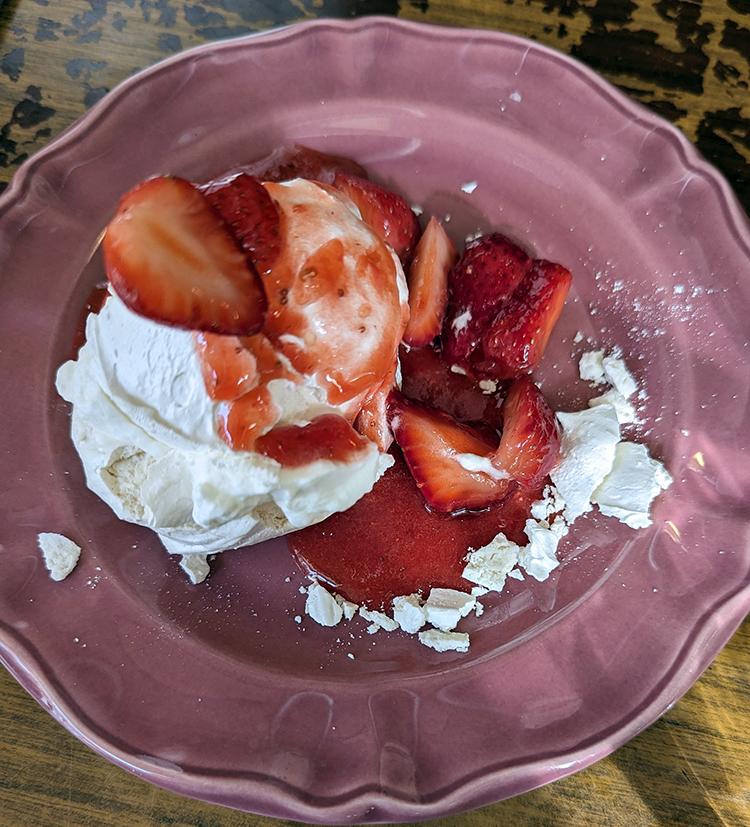

Above: Limmat
We were wandering around Le Panier on one of our first days in Marseille and were shocked to realize how many restaurants closed on Sunday. Of Corsican descent, the friendly owner of the tiny Restaurant a Strega fortunately welcomed us. We shared generous portions of supion a la Provencale and eggplant a la parmigiani. Kind of wished we had returned near the end of our stay to let him know how much we enjoyed Marseille.
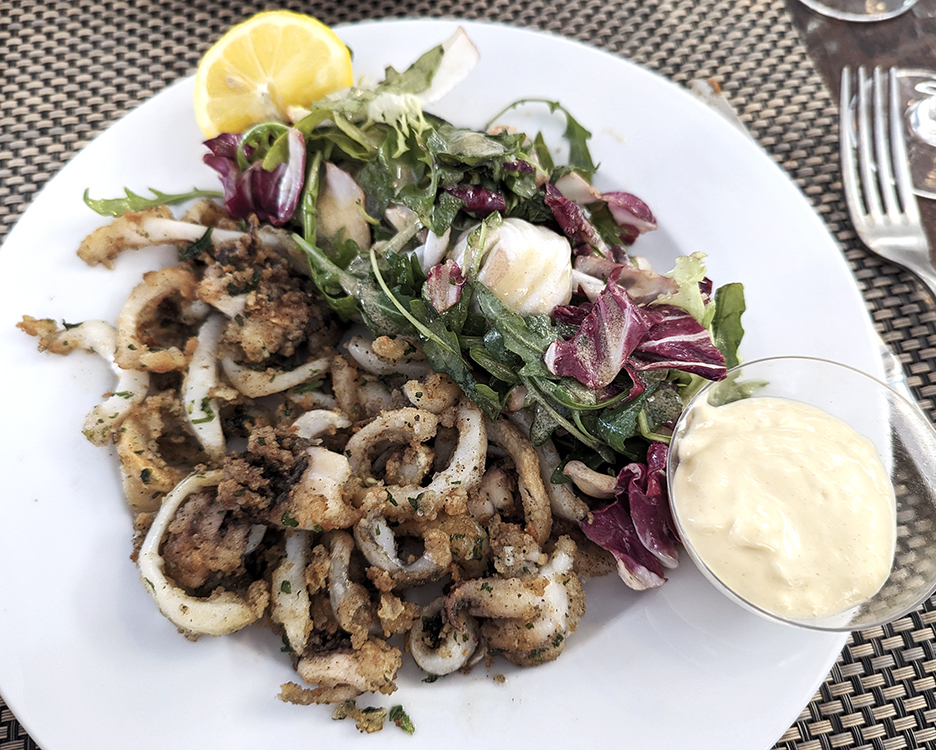

Above: Restaurant a Strega
If you follow my food posts, you might assume we repeated a humorous error. But in our defense, we actually were in Marseille a month prior to traveling to Istanbul. Middle Eastern restaurants in Marseille tend to remain open on Sundays, a huge day for families of Middle Eastern descent to dine out together. We did our research, or so we thought, and saw photos online of full wine glasses on tables at Sur le Pouce. Turned out, there was no wine of any kind. They were glasses of Coca-Cola.
Sunday is not the day to head to this restaurant without a reservation. It was packed with long tables full of lively customers, all talking at once. The owner hesitated but shoehorned us into one a table not even an elbow apart from the next. His hesitation was that it was not a day they had any time to stop and try to explain dishes to Americans. We ordered without making him stop for any explanations or attempts at translation, and then he was much friendlier.
And we over-ordered. A crevette brick turned out to be a nice shrimp-filled crepe. Vegetable couscous arrived in a large pot – more than enough for two as a main course. But then there was the restaurant’s Sunday specialty, mechoui, slow-roasted lamb flavored by saffron and the eight spices known as ras el hanout. Moist, falling-off-the-bone tender, and enormous.
Despite the noise level, the dearth of wine, and knocking of elbows at the next table, the cultural experience was wonderful. Everyone seemed well acquainted with one another, and no one even seemed to notice our intrusion into their neighborhood gathering.
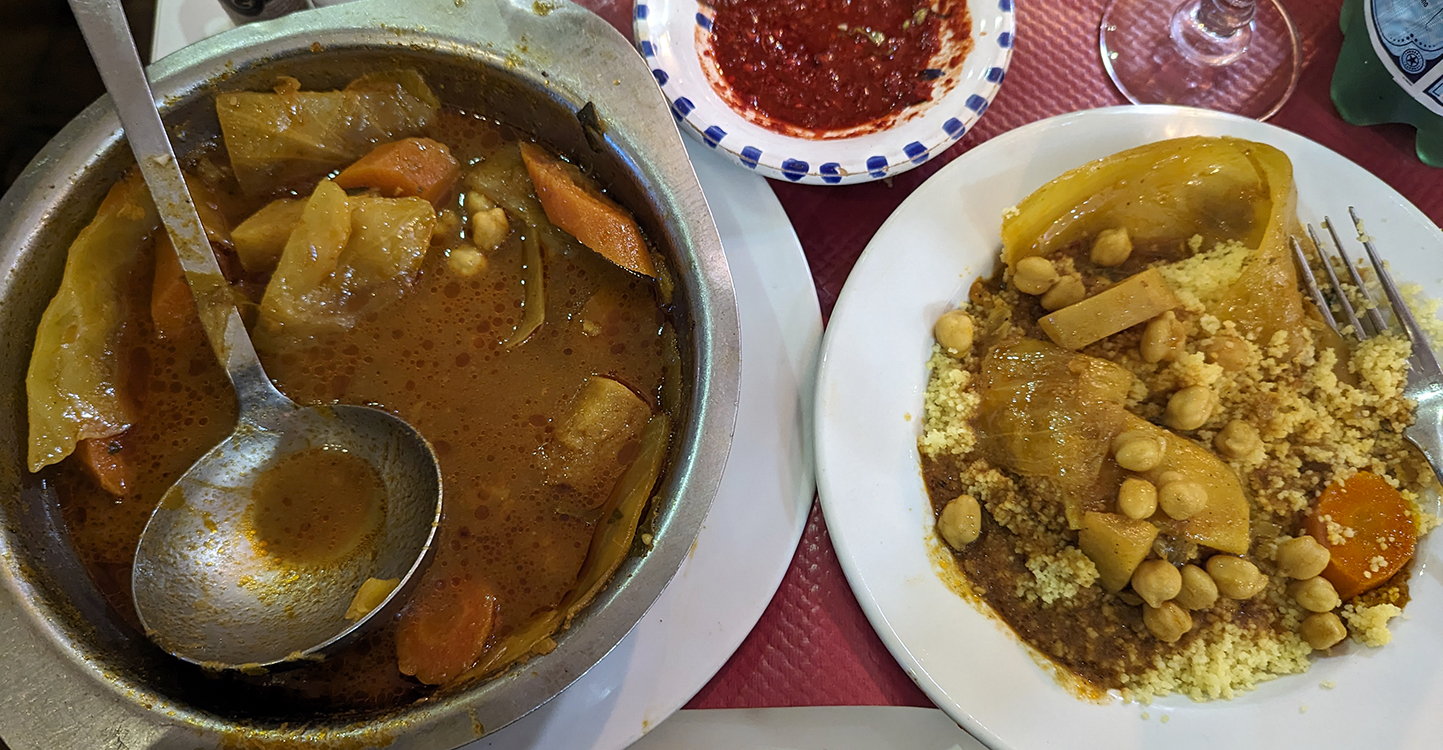
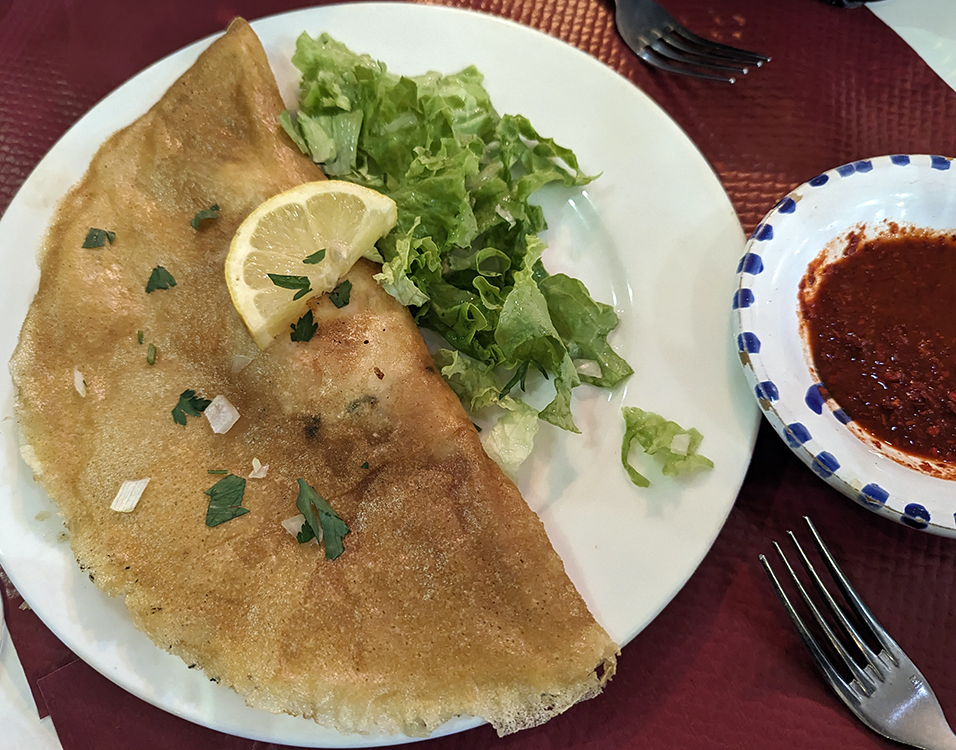

Above: Sur le Pouce
If you’ve made it this far, maybe it’s time to deliver something sweet for dessert.
All the flavors of the Mediterranean were scrutinized and it was obvious that almond and olive oil would be at the heart of the magic formula of what was to become the Espérantine de Marseille-Provence: a subtle marriage of dark chocolate (at least 70% cocoa), sweet almond and candied orange peel, with, at the heart of this creamy blend, an Extra Virgin olive oil that brings nobility and refinement.”
Website of L’Esperantine de Marseille
I would not have thought of blending olive oil and dark chocolate together, but it so works. In only its first year of creation, this chocolatier won Cordon Bleu’s first place for confectionery. We didn’t get its full olive branch or its bouillabaisse presentation, but we did enjoy a small box of L’Espertine’s signature olive leaves. The creamy smoothness of these chocolates leaves its deep flavors lingering on your tongue.

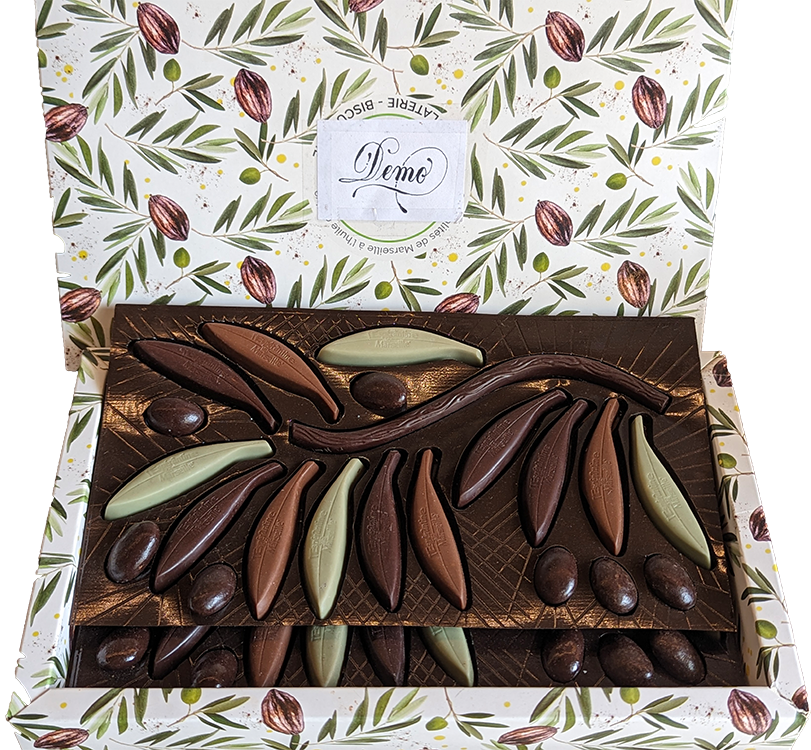

Above: L’Esperantine
When we first arrived in Marseille, we heard rumblings about a most intriguing ice cream flavor. A ‘black vanilla’ whose color and savory taste was rumored to come from squid ink…. The vendor handed us our scoop, so black it looked like a photo negative of a vanilla cone. Our first lick was rich Madagascar vanilla. A few seconds later, the sweet became salty like the seaside air. We were hooked – regardless of what it was made of.”
“Vanille Noire: Back in Black,” Alexis Steinmann, Culinary Backstreets, 2021
The owner of Vanille Noire Glacier stepped away from his career in an export business to pursue his true passion – ice cream. With a goal of “producing the best ice creams on earth,” he earned a diploma at CAP Glacier du Beausset and established his own parlor in 2014.
We passed by the original Vanille Noire every day, as it was at the base of our apartment building. If it was open, there was always a long line. Lamar’s black vanilla almost disappeared before I even had a taste of my hazelnut. Not sure it’s the best in the world, but it might come pretty darn close.
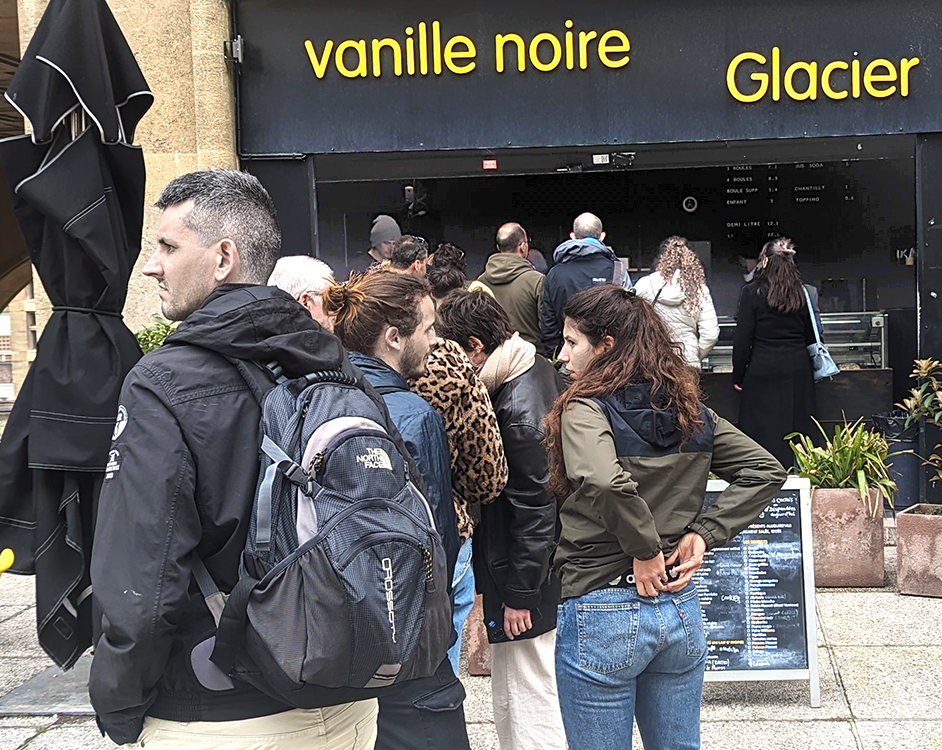
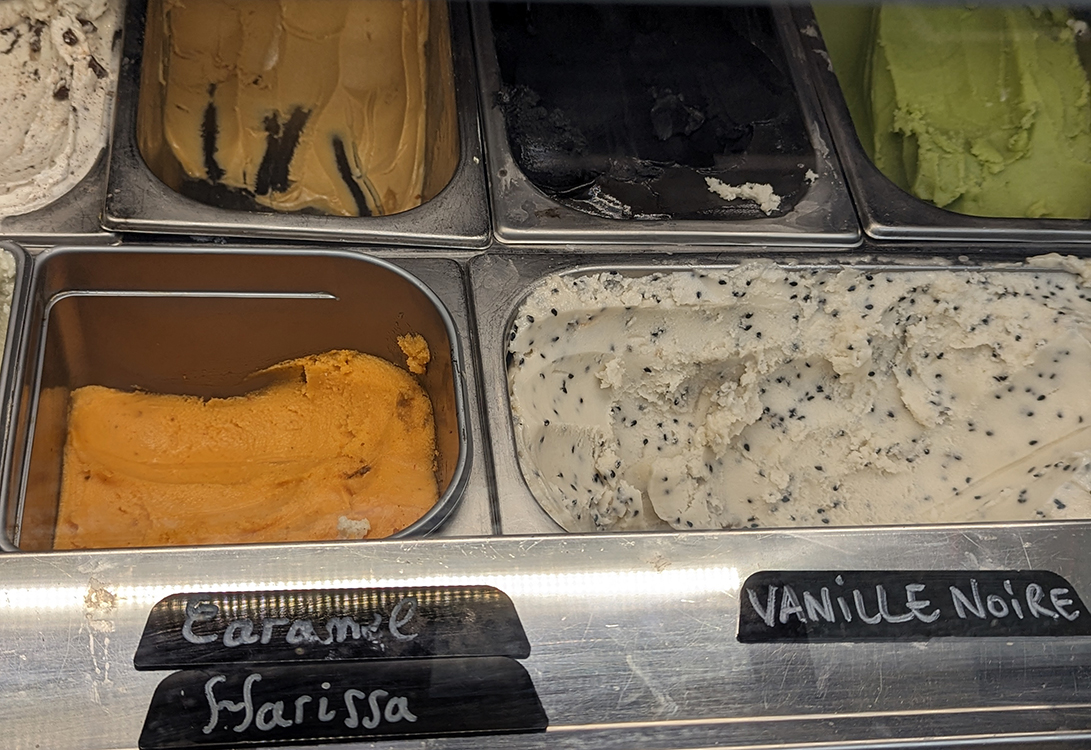
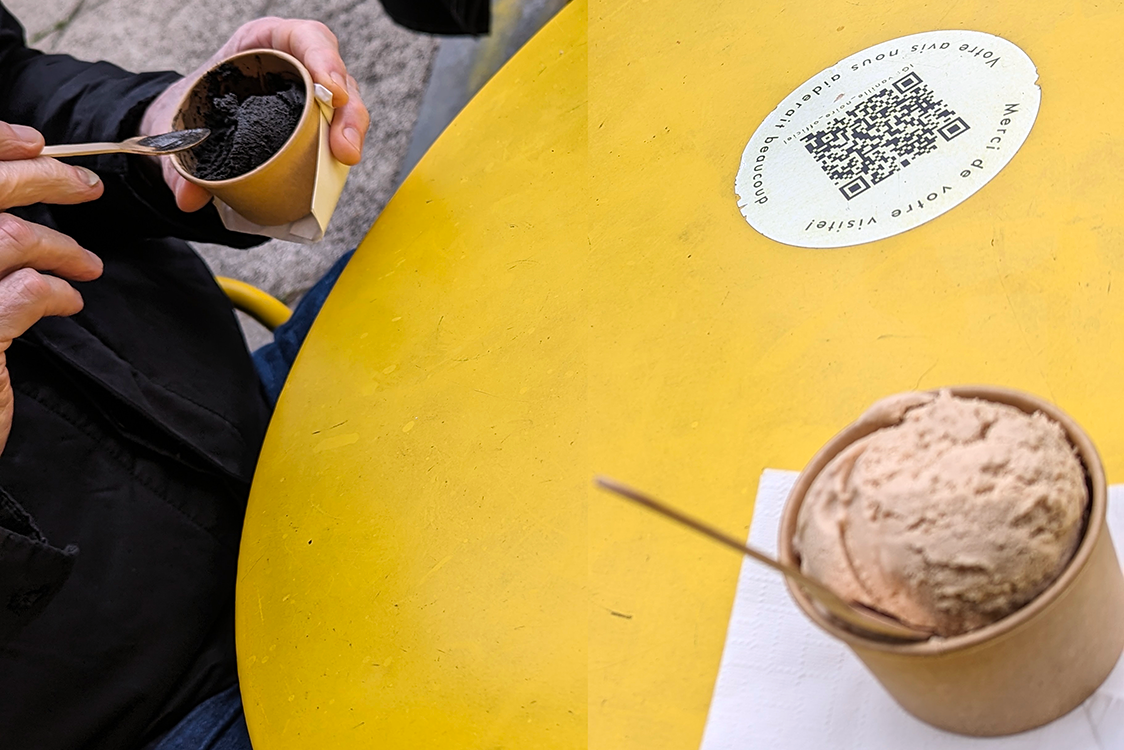
Above: Vanille Noire Glacier
Bon appetit!
 Postcards from Barton Springs
Yum!I love Marseille. Cheers. Ric Lucas
LikeLiked by 1 person