


Above: Racks of wine inside Beyoglu Saraphanesi
A full wine rack in a restaurant in Istanbul became a welcome site for determining where we would eat. If you are a teetotaler, dining options are more plentiful with much lower price points.
Of course, this makes sense. Ninety-nine percent of the population in Turkey is Muslim, a religion that bans the consumption of alcohol. Intoxicants are viewed by many as “abominations of Satan’s handiwork.”
This doesn’t mean you personally are forbidden from partaking; it means that those of us with a certain type of thirst must work to locate restaurants willing to pay the high license fees to offer beer, wine and cocktails. With its Muslim majority, Turkey’s steep sin tax receives high approval ratings. Why not tax those foreign visitors clogging your streets and your young people who already are over-influenced by western culture?
…travel, is flight and pursuit in equal measure. It is both the desire to leave home and the passion to find something new, to pick up stakes and discover who you are in a different landscape and culture….
You are both somebody and nobody, often merely a spectator. I always felt in my bones that wherever I went, I was an alien. That I could not presume or expect much hospitality… that wherever I was, I had no business there and had to justify my intrusion by writing about what I heard. Most travel… can be filed under the heading ‘Trespassing.'”
“The Hard Reality American Expats Quickly Learn,” Paul Theroux, New York Times, January 5, 2025
So let’s talk food. Simit. You see them sold everywhere on the streets where locals grab them on the run. The wreath-shaped bread resembles a cross between a bagel and a soft pretzel in texture and is most often coated in sesame or poppy seeds. Antiochia Concept welcomed us with a fresh one as an amuse-bouche with accompaniments of za’atar, a combination of dried herbs and spices that I rely upon heavily at home; saksuka, chopped cooked vegetables; and red pepper hummus.
We also tried lahori katlama, a spicy pizza-type bread with za’atar. Grilled meats are among the most popular foods in Istanbul, and we enjoyed nicely charred lamb chops at Antiochia. The owner insisted on bringing us a traditional dessert made of jelled pumpkin with tahini sauce and crumbled walnuts – extremely sweet to us so a little went a long way.
Only one of us, not me, enjoys the strong Turkish coffee when we went places. I never developed a fondness for its intense flavor and the mud-like mound of grounds settling in the bottom of the cup.
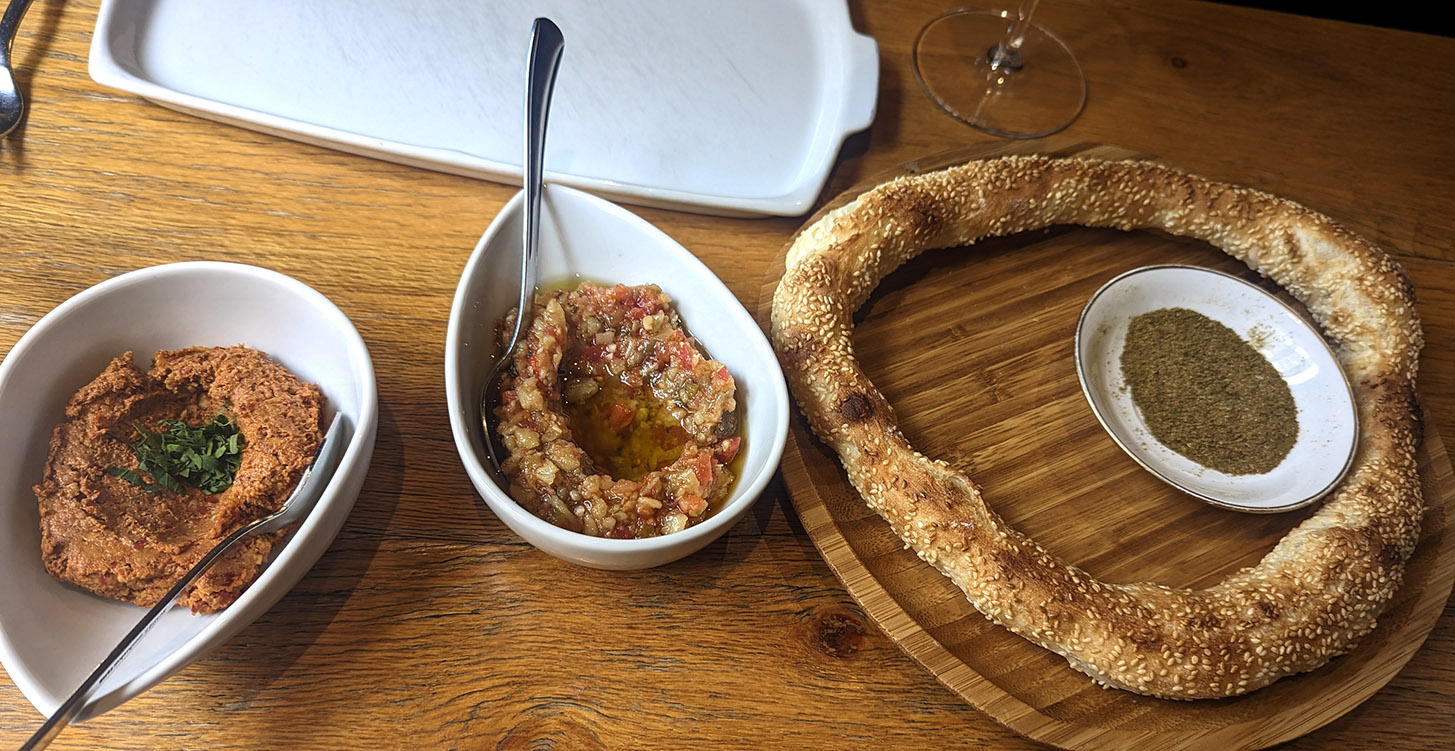
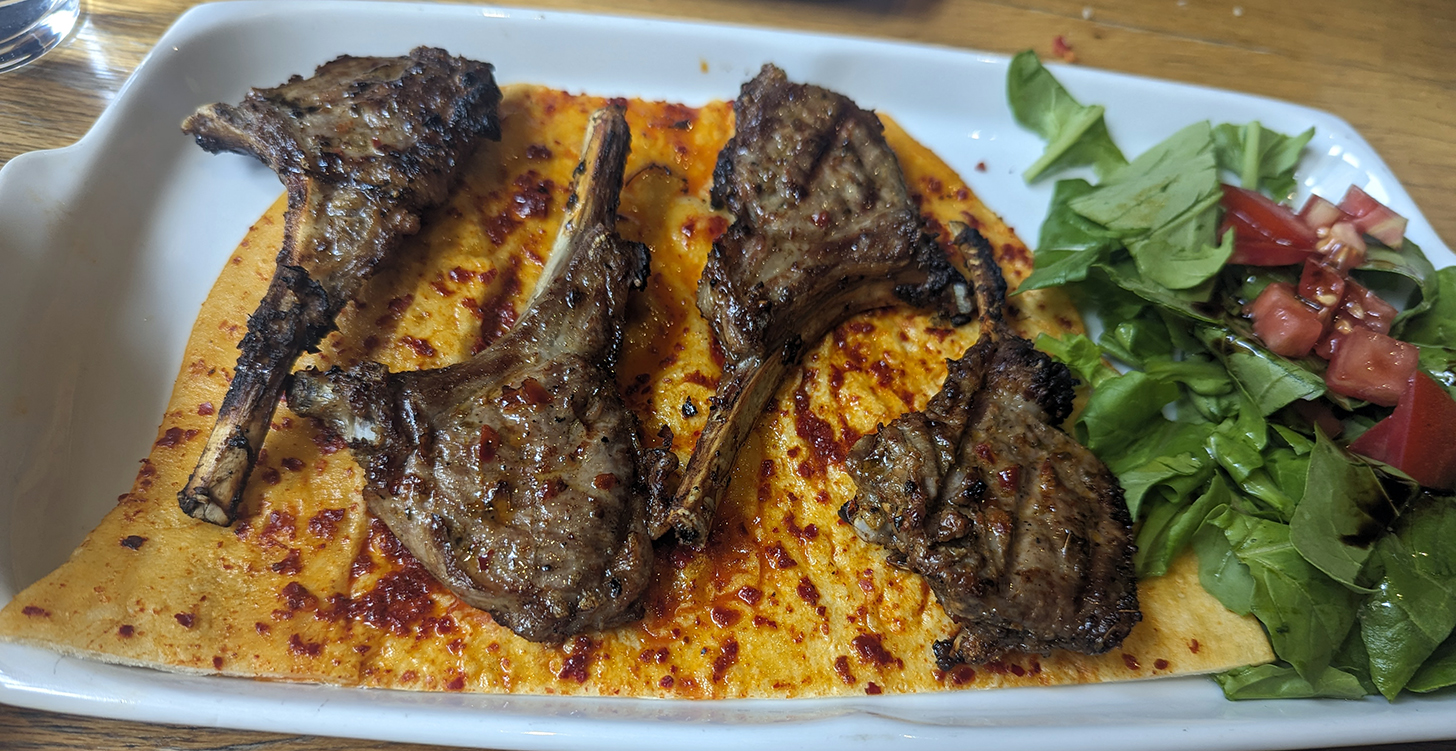

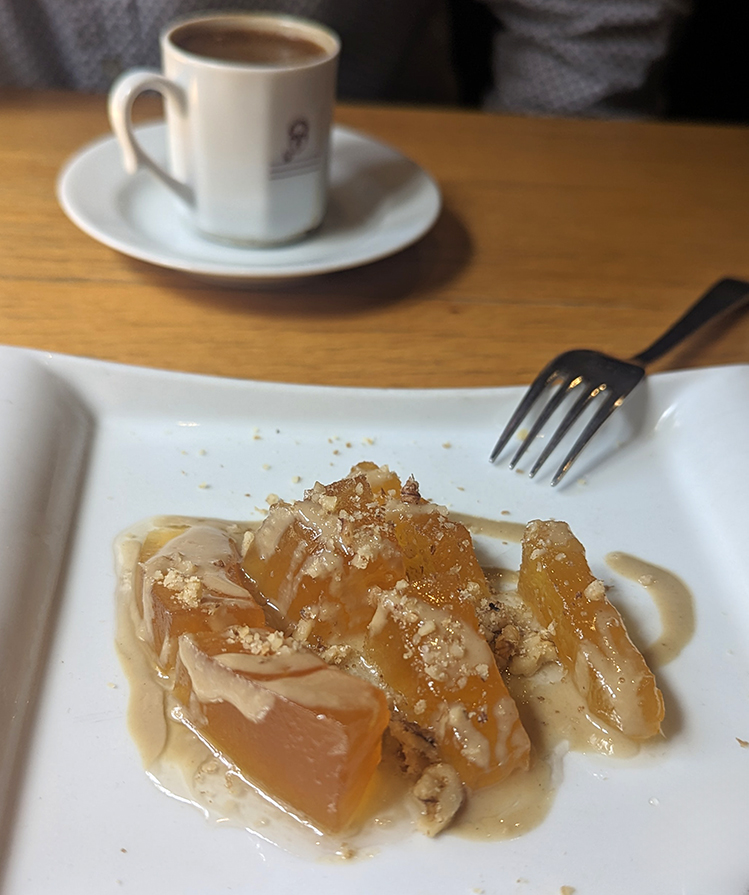
Above: Antiochia Concept
A pebble’s throw away from the apartment we rented in the Cihangir/Beyoglu district of Istanbul, Babel Cafe and Restaurant was the first place we stumbled into the night we arrived. We returned to the comfortable neighborhood spot several times. The kitchen made even a simple lentil soup delectable.
Lebanese and Syrian-influenced Turkish dishes offered are ideal for sharing meze-style on small plates. Dishes we tried included a roasted eggplant and pepper dish; fava beans; kibbeh, spiced ground meat fried in a bulgur wheat shell; eggplant stuffed with spiced grains; and mercimek koftesi, creamy patties formed from mashed lentils, bulgur and vegetables.
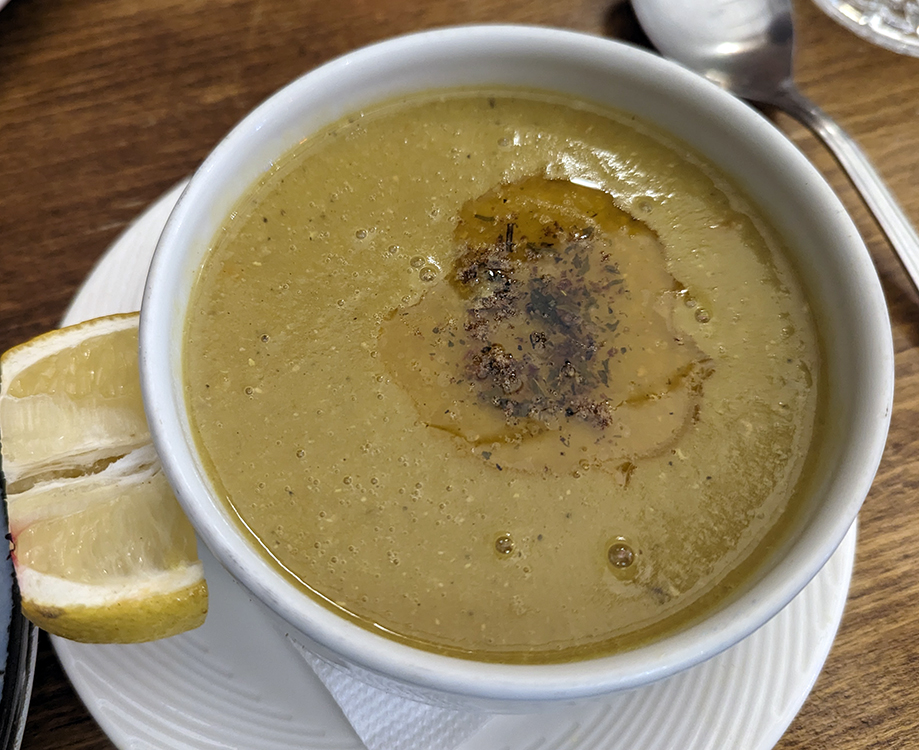
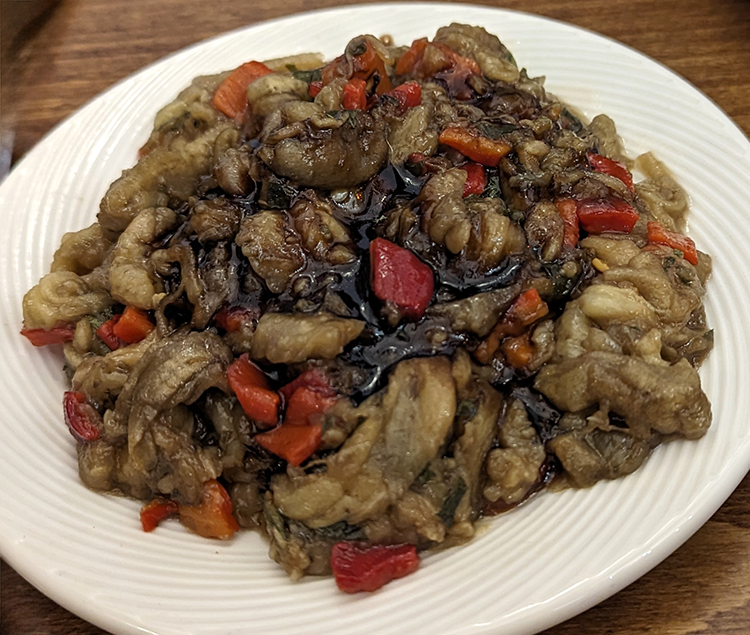
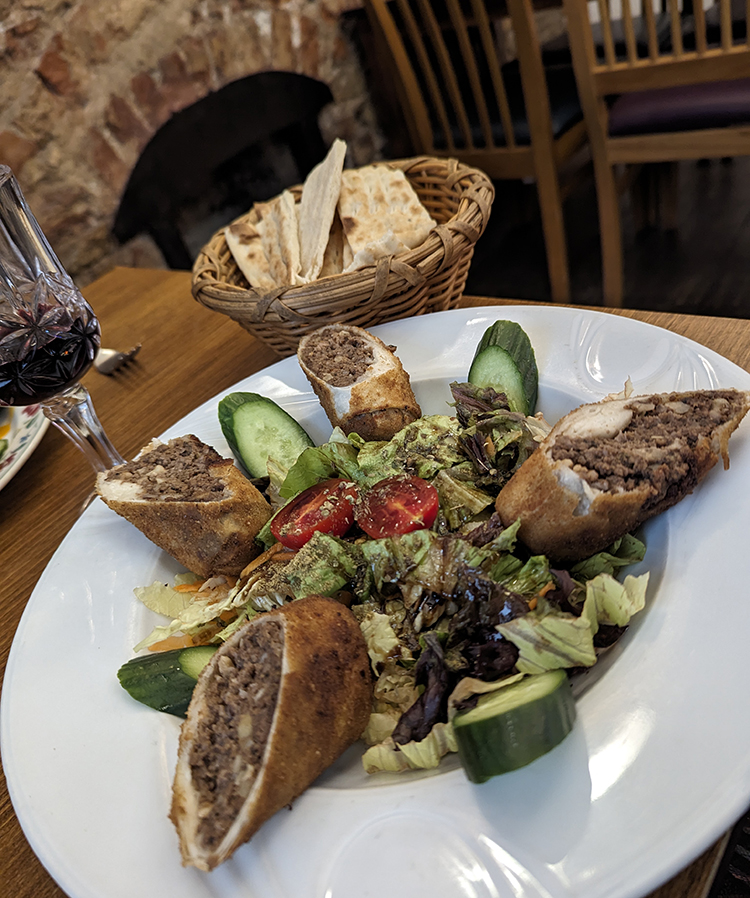


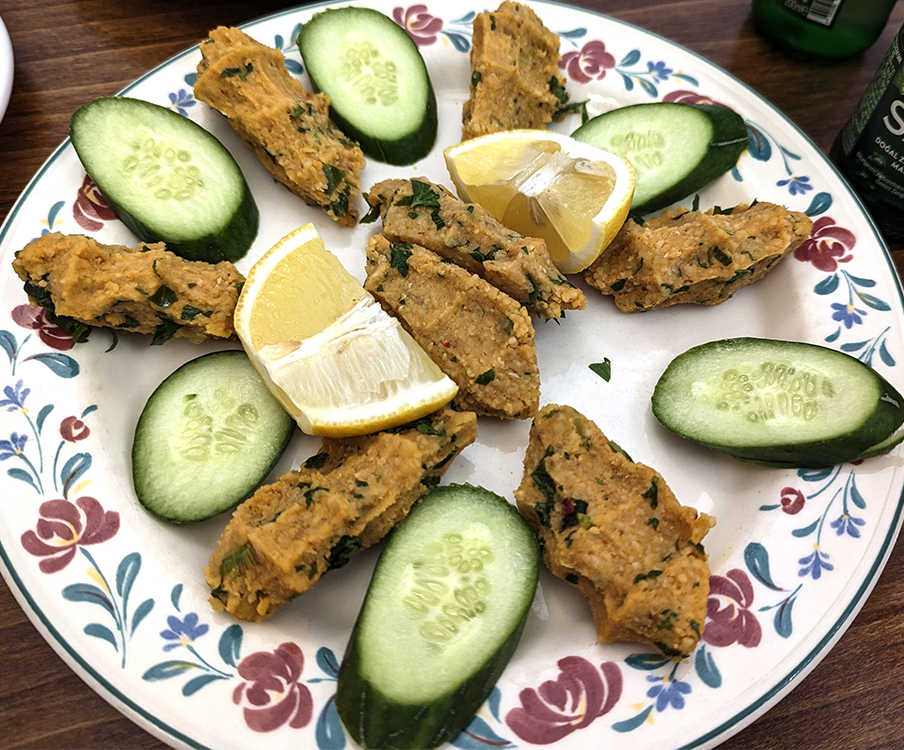
Above: Babel Cafe and Restaurant
Strangely, Turkish vineyards are taxed to the extent we usually wound up choosing South American wine. It’s a shame, because Turkey is a major producer of fine grapes and has numerous well-regarded vineyards. Beyoglu Seraphani Wine Bar features a nice selection, plus a knowledgeable staff to help you select what might suit your individual taste.
Seraphani’s menu veers sharply away from regional fare. The hearty textured bread provided with olive-oil-soaked rosemary is irresistible, and several Mediterranean salads are featured. A generous serving of salmon rested on a bed of lentils, and the mushroom risotto was rich in flavor.

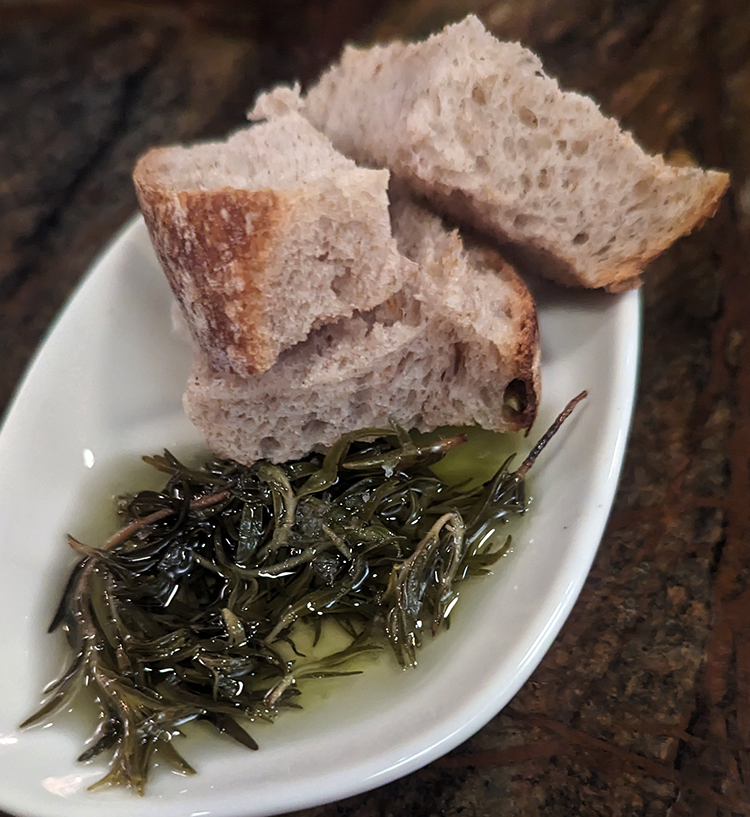

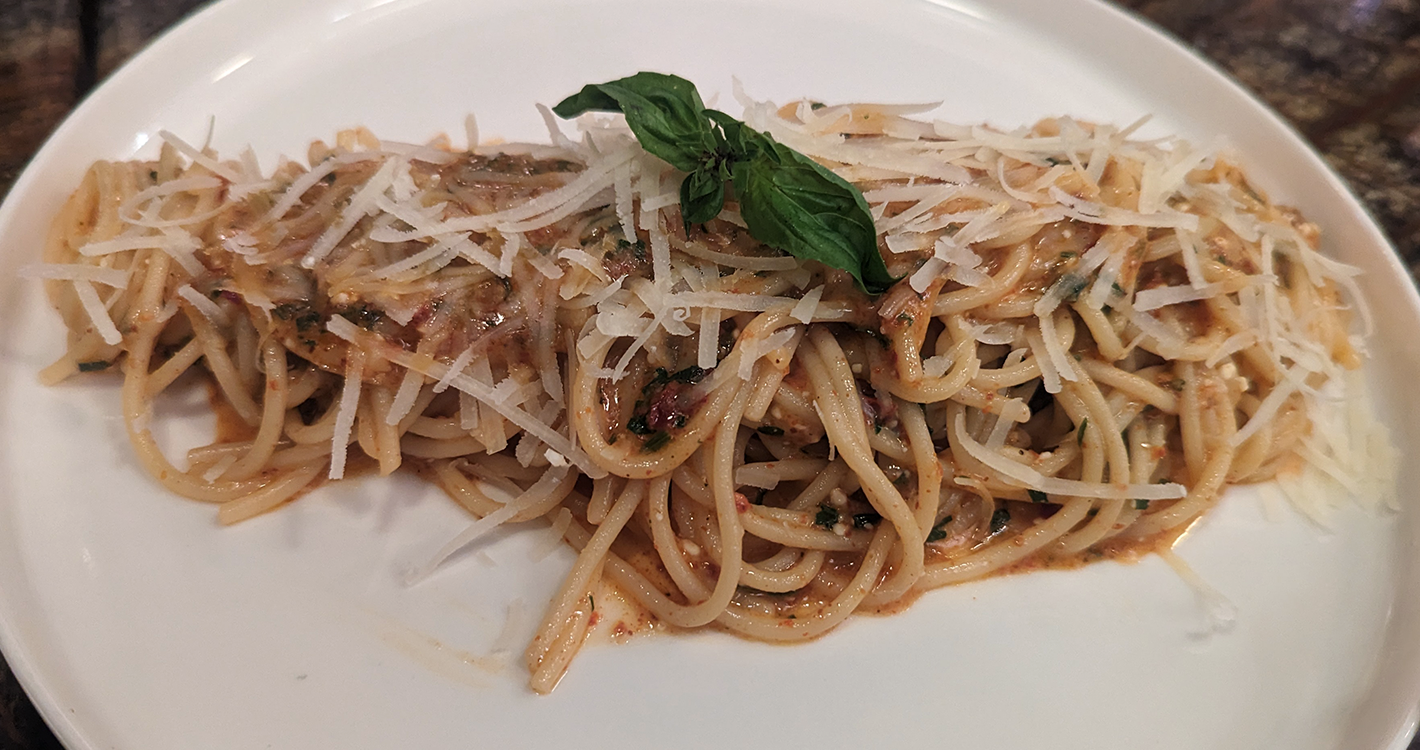
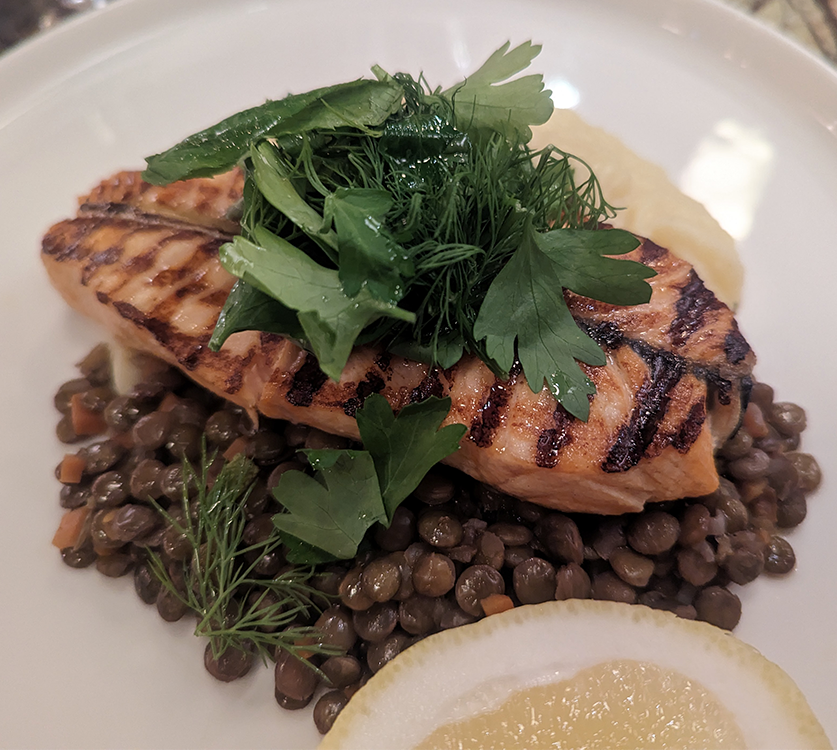
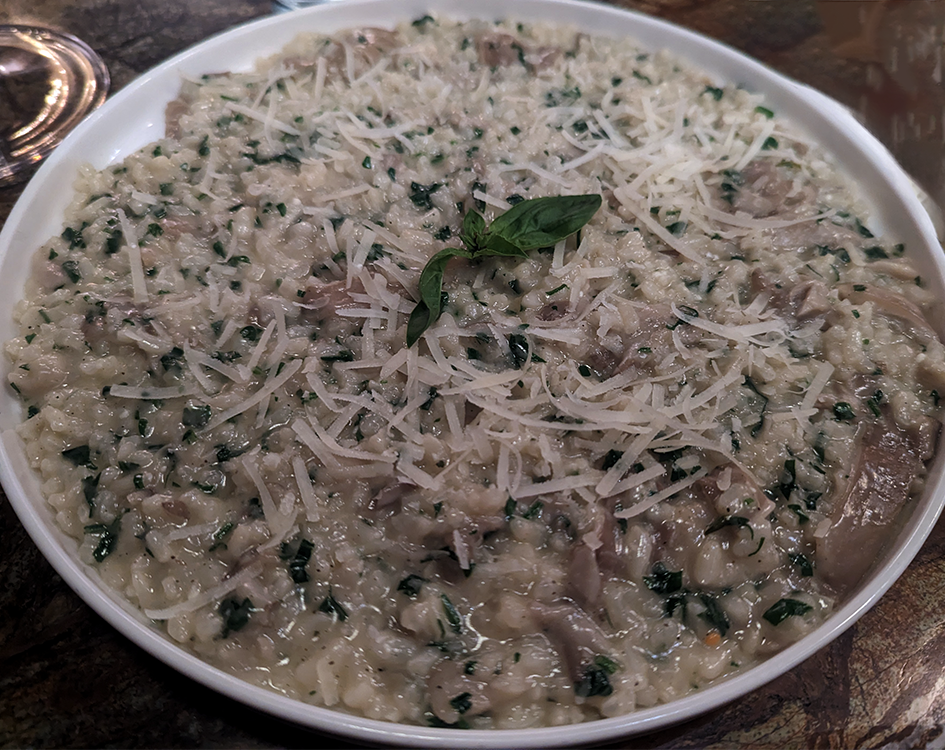
Above: Beyoglu Seraphani Wine Bar
Cuma is an all-day cafe open from breakfast to dinner, definitely more upscale than your average coffee house. Price-wise, the lunch menu is much more approachable than dinner.
Chilled yogurt soup was refreshing, and long sea beans contrasted nicely with a puree of fava beans. Gruyere cheese and caramelized onion topped a hamburger sandwiched inside a seeded brioche bun. Wild mushroom brochettes were pretty amazing – topped with melted haloumi cheese, fried Parmigiano polenta and pomegranate caramelized onion.
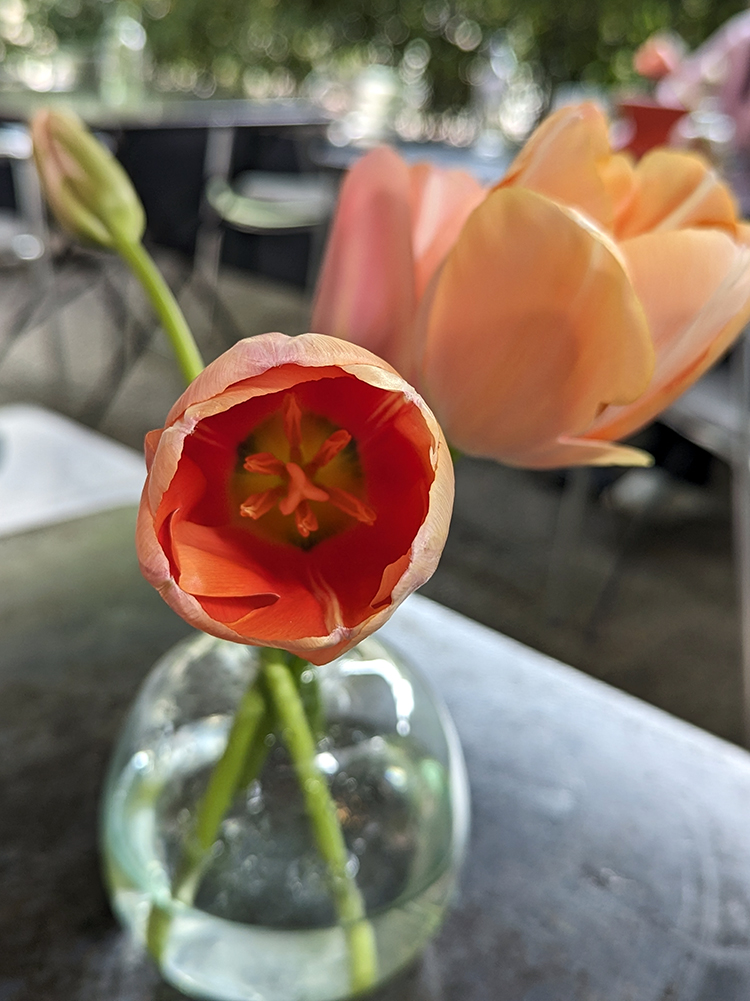

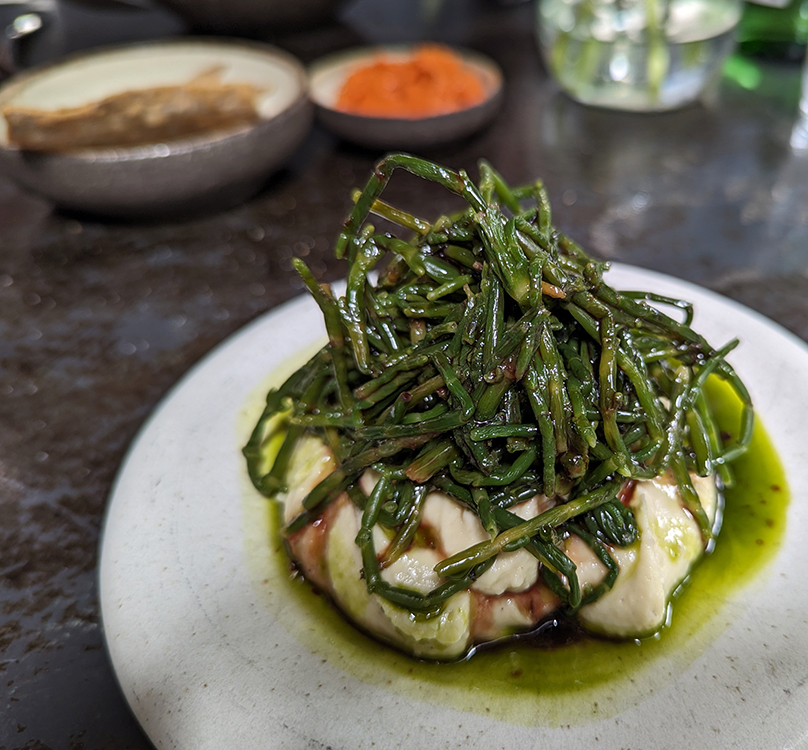
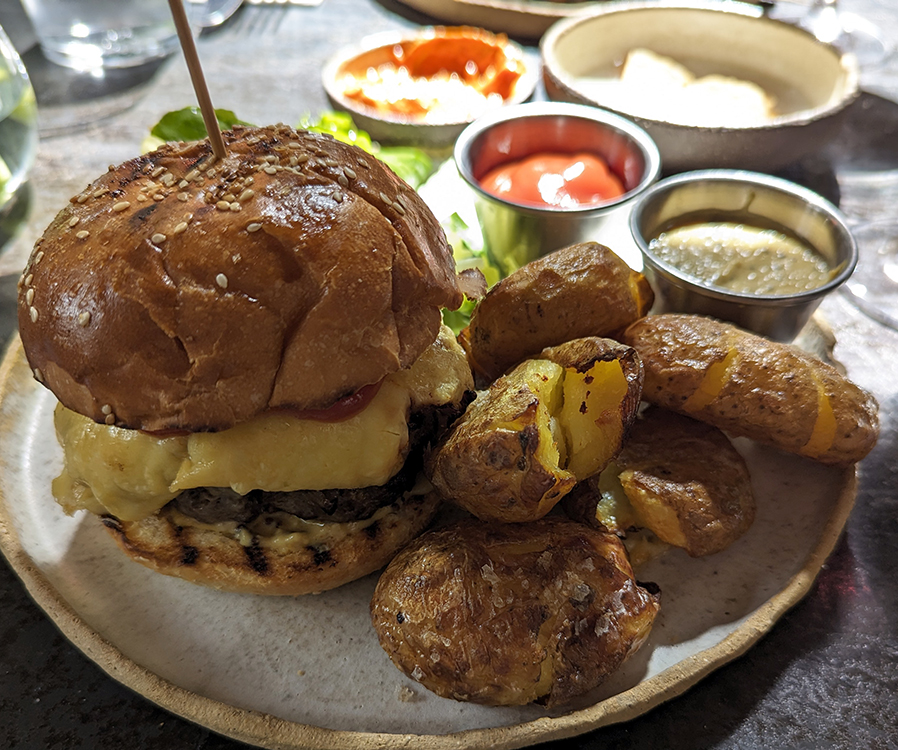

Above: Cuma
Billing its cuisine as a mélange of flavors from both sides of the Aegean, Eleos is known for seafood and a major spread of mezes. Surrounded by families on a Sunday outside near the seaside and based upon observance of nearby tables, we were shockingly parsimonious in the number of dishes ordered from the meze display tray. Amateurs, we only selected sea beans, a salad and fried zucchini. Those huge slices of zucchini almost had me ordering seconds.
Grilled octopus with a caramelized char – the main reason for our visit – was wonderful. The shrimp cassserole was a little too cheesy for us but had no shortage of shrimp. Traditional semolina-encrusted ice cream was delicious. Turkey has so many versions of sweets, one would have to live there a year to even begin to sample them all.
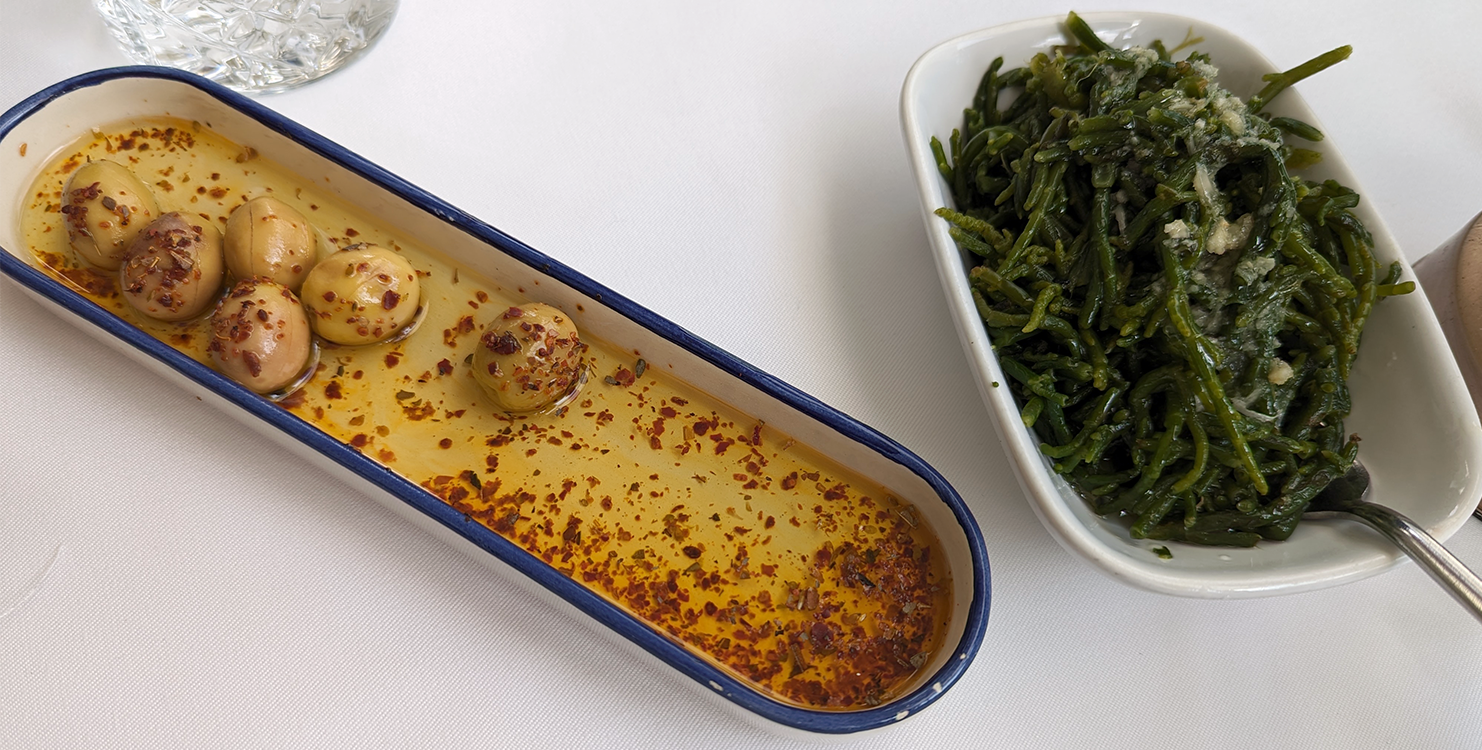


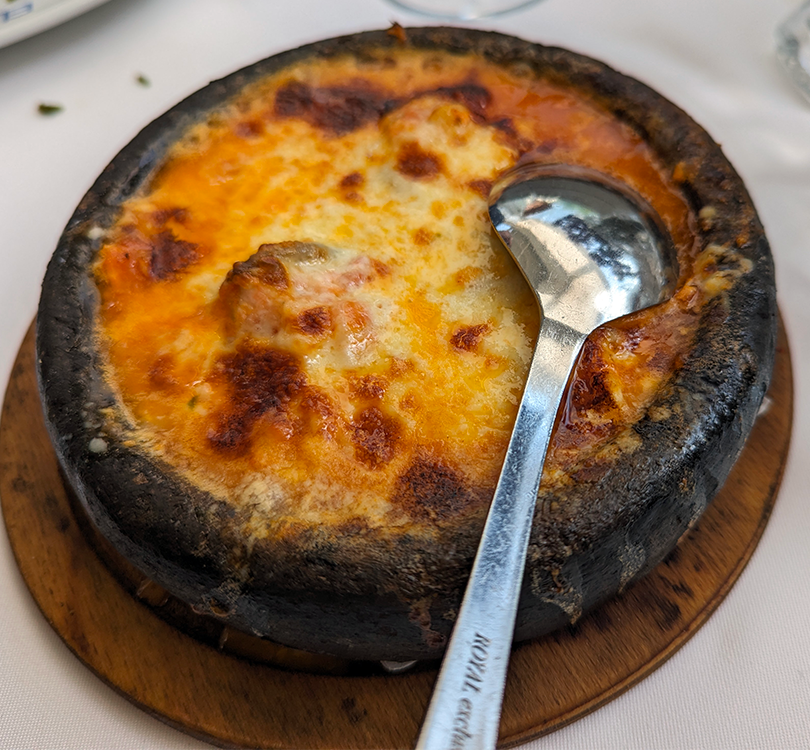
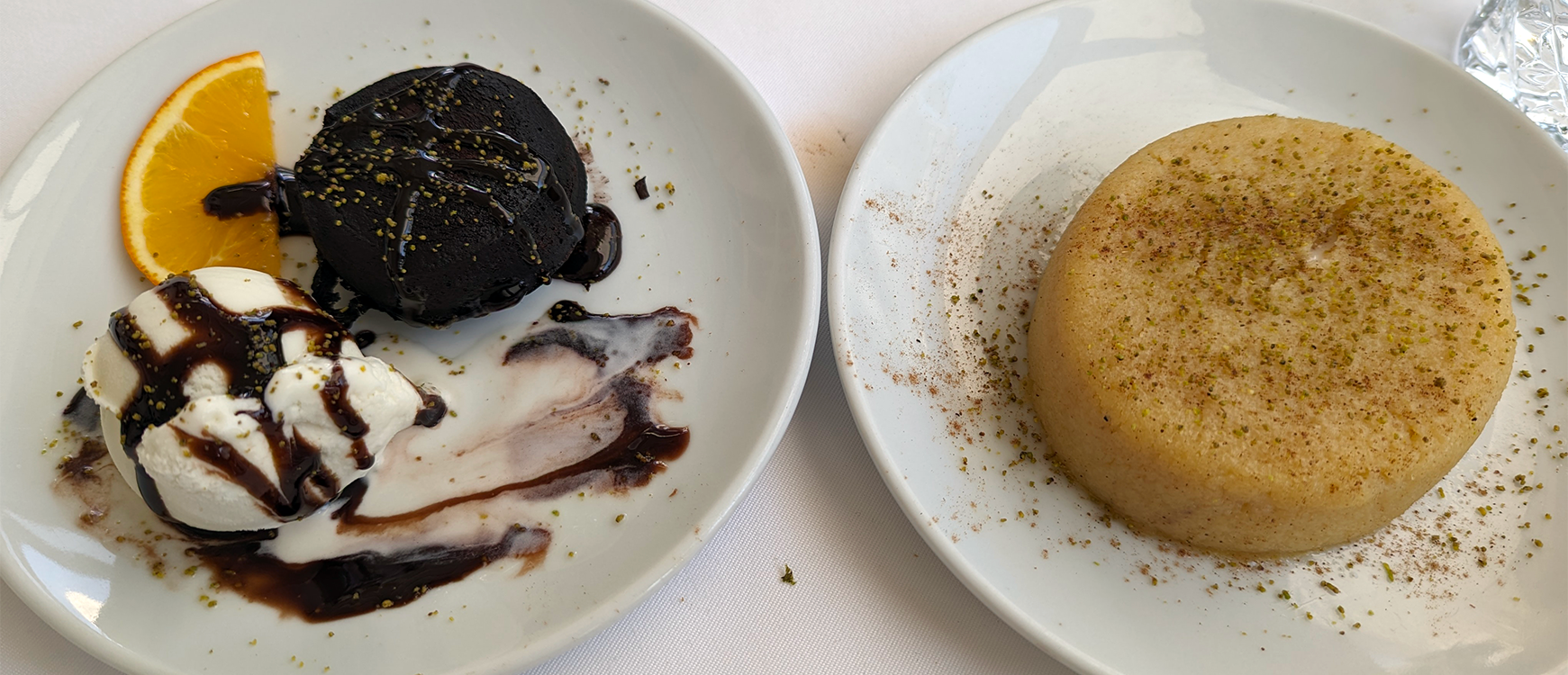
Above: Eleos
Often experiencing guilty pangs for frequenting restaurants that stray from a region’s specific cuisine, I feel a little less so upon reading a recent opinion piece in the New York Times:
We can now observe food cultures develop in real time, shaped by migration and internet connectivity. The old model of chasing cultural cachet by traveling to specific destinations for “authentic” local cuisine is fading fast…. With global foods more accessible than ever, the real cutting edge of culinary exploration lies not in destination traveling but in the next wave of third-culture cuisines at the intersections of tradition, immigration and diaspora.”
“Food Tourism Is Dead, but Something More Interesting Is Emerging,” Brian Lee, New York Times, December 31, 2024
Armed with that excuse postprandial and the fact we explored the flavors of Istanbul for a month, we loved Galaktion. The Georgian restaurant’s cozy basement sheltered us on two chilly, drizzly days.
Pomegranate seeds topped a salad with a walnut dressing. The spices mingling together in our main courses were distinctively different from the Turkish flavors, adding depth to both an eggplant and a chicken casserole, complimented by Georgian wine.
The showstoppers were the pinecone-shaped Khinkali, fried cheese dumplings. They made me want to go through the menu and explore all the Georgian breads and dumplings they offer.


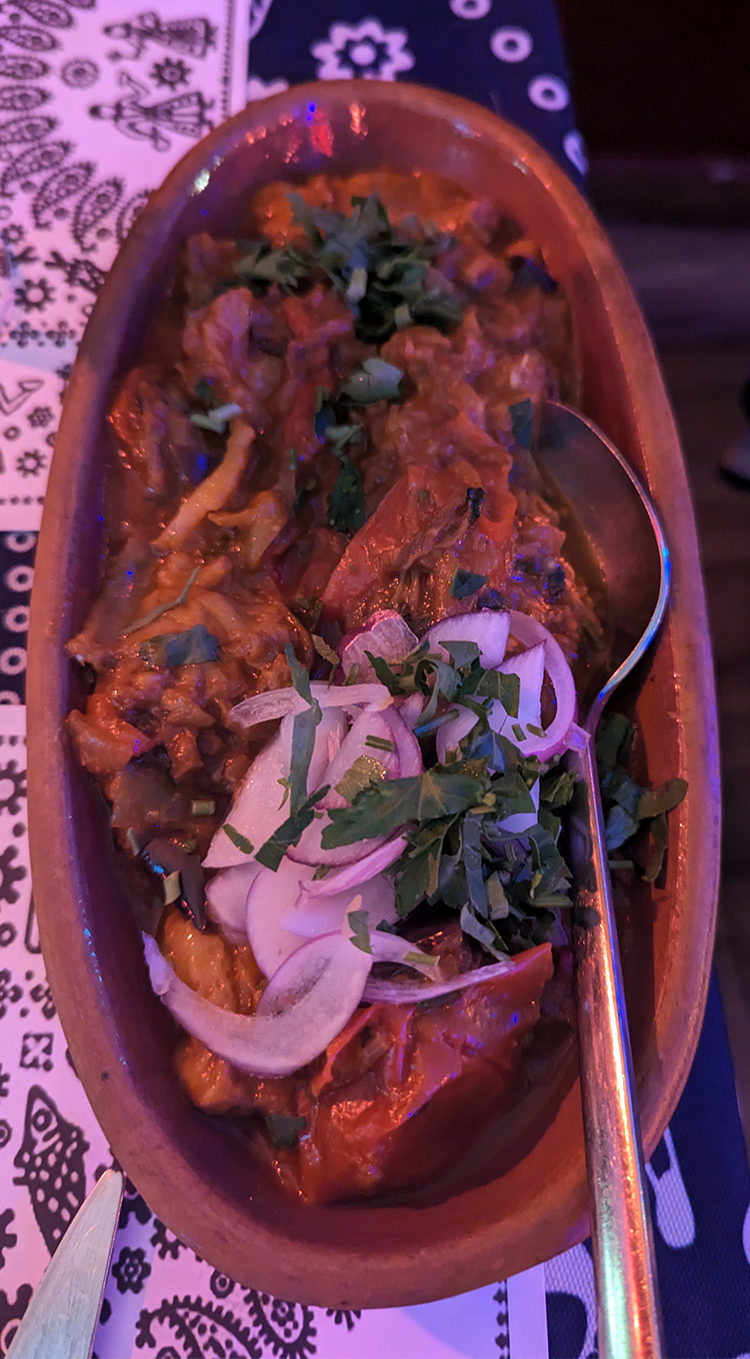
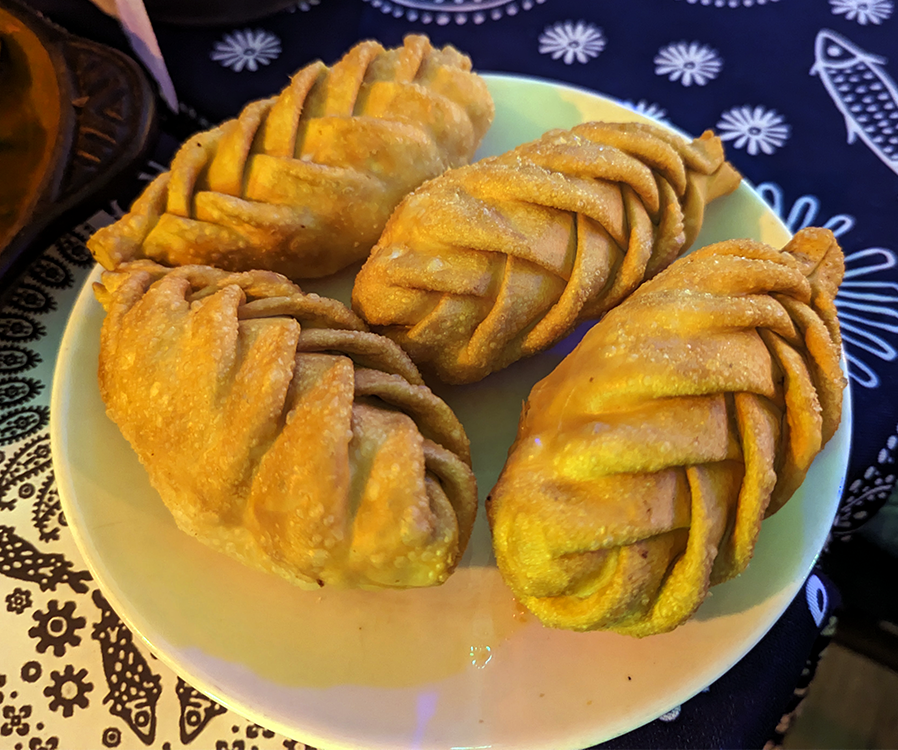

Above: Galaktion
We tried not to wind up in the Sultanahmet neighborhood of Istanbul at lunch time, but sometimes its high concentration of major historic sites and museums made it impossible to avoid. Stepping away a block or two, yet obviously still in the high tourist zone, we found Garden Mezze a good refuge. Outside tables lined an intimate side street and were equipped with personal heaters.
Patlicanli domates, an appetizer of fried eggplant in a tomato sauce, was a delicious starter. A vegetable casserole was overloaded with fresh – not overcooked – mushrooms, zucchini, carrots, eggplant and peppers. A kebap of ground beef and lamb was accompanied by grilled vegetables and a scoop of bulgur rice.
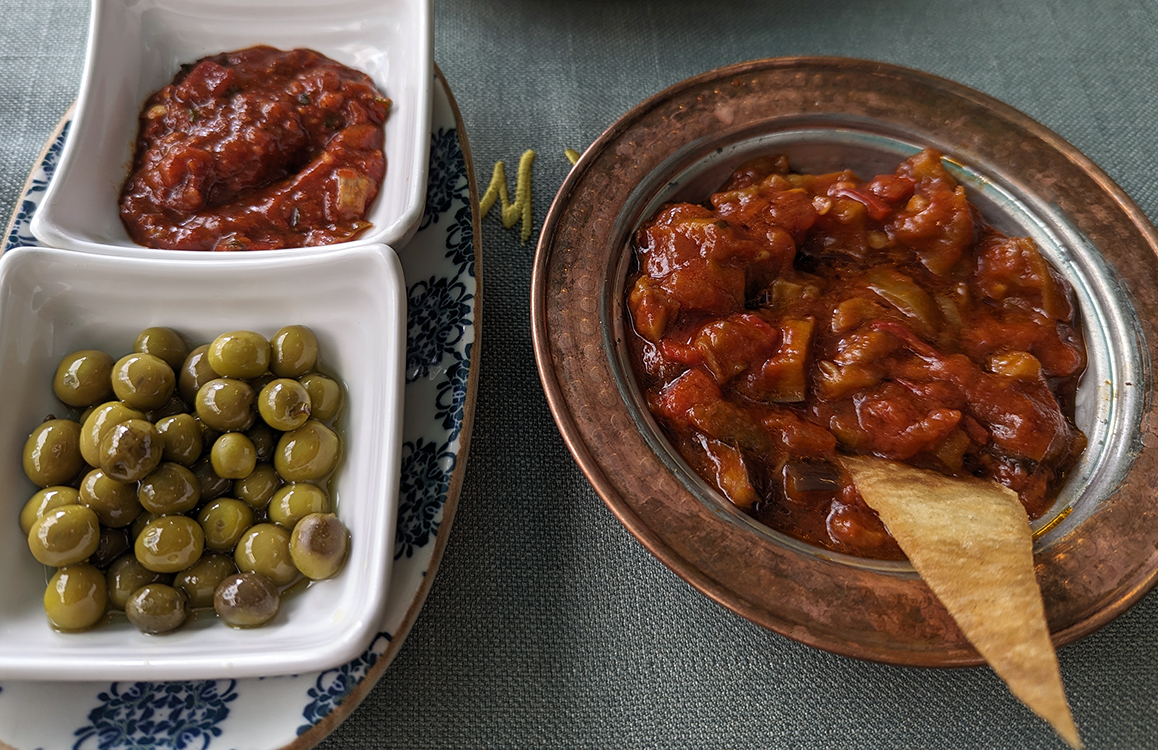

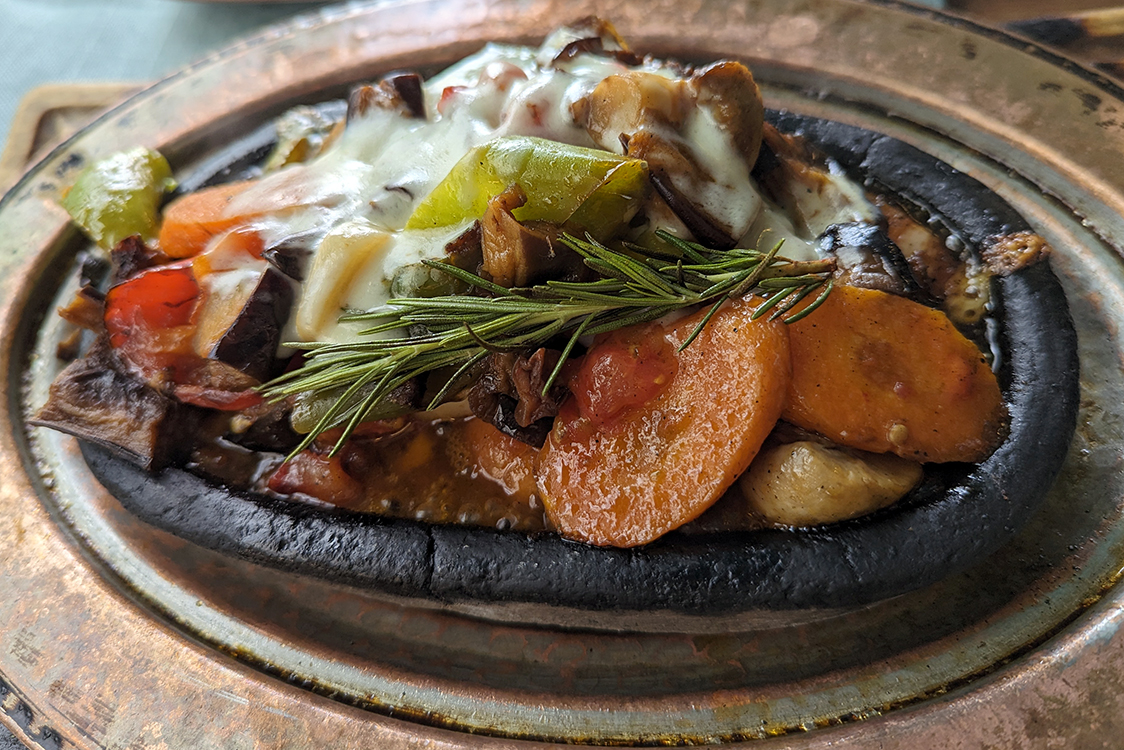
Above: Garden Mezze/Anadolu Mutfagi
Istanbul is filled with small restaurants with glass display windows seductively displaying something we are always craving – vegetable dishes. One always packed with locals close to our apartment was Hayvore Karadeniz Mutfagi, which translates to “I am Here. Black Sea Cuisine.”
Although there is a menu, the translation of Hayvore was about the only sign of English. As this was too early in our stay for us to know many of the names of dishes, the owner sighed with relief that we were willing to stand and point at what we wanted.
We over-pointed and ended up with zucchini fritters, kale, chard, broad beans and a huge serving of what he called pizza and I’d call a crustless anchovy and greens quiche. All great.
To wash it down? No wine. No beer. Most of this style of businesses are more respectable than that. Sparkling water was available, and we certainly had scored vegetables.


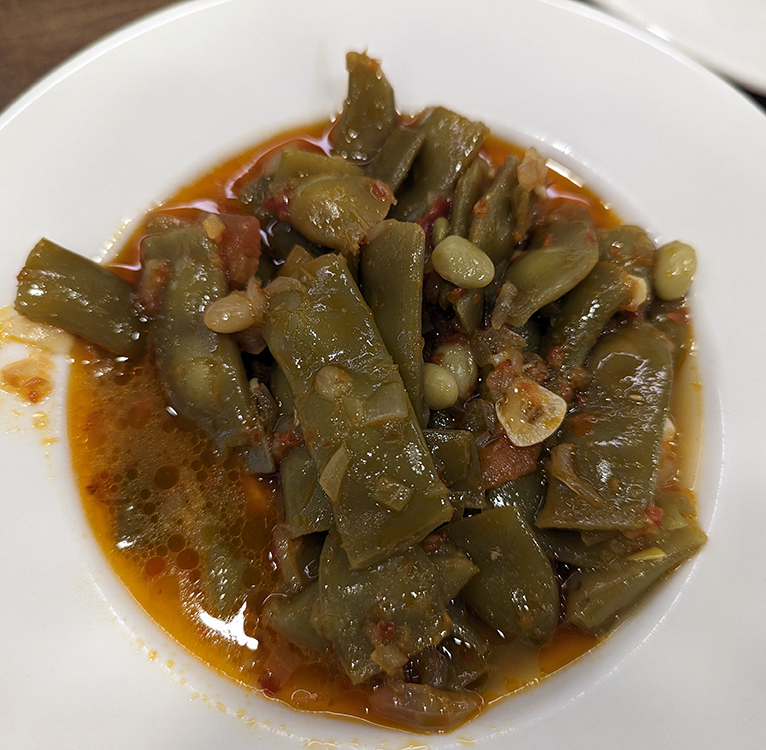

Above Hayvore Beyoglu
…traditional cultures confound foreigners with the strictures of their religions….”
“The Hard Reality American Expats Quickly Learn,” Paul Theroux, New York Times, January 5, 2025
And that means that sometimes, to better understand the culture of the neighborhood you are invading and savor its cuisine, the boulevardier in you must sit back, relax, smile at the kindness of strangers and sip water.
Stay tuned for the second half of this report of our food experiences in Istanbul.
 Postcards from Barton Springs