

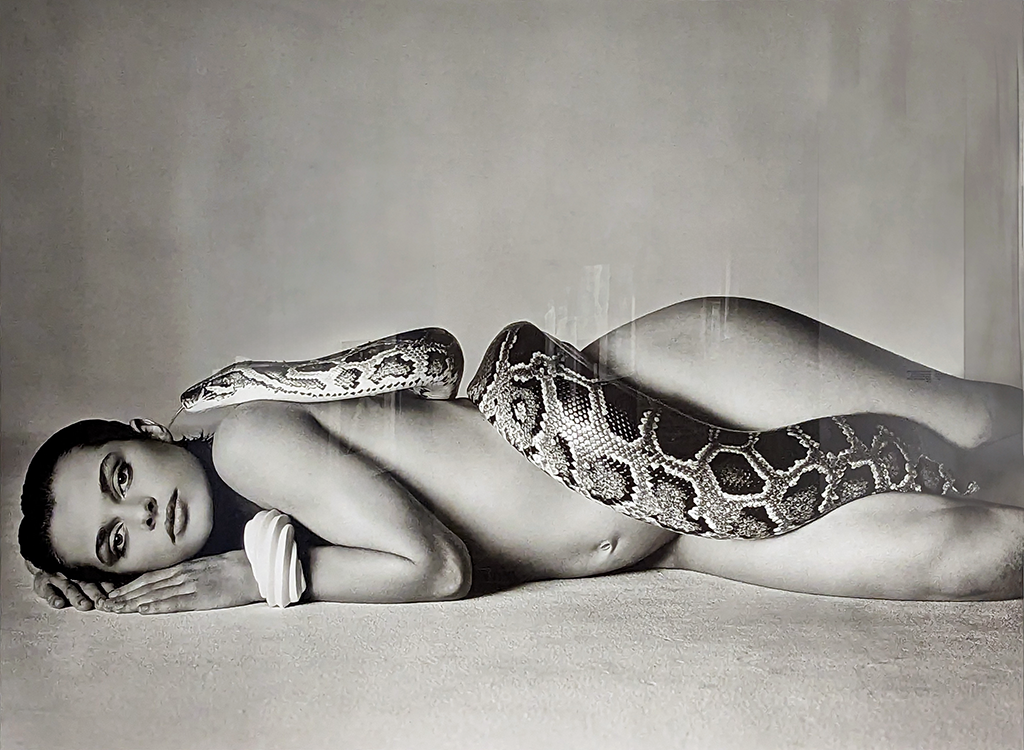
Above: Richard Avedon’s 1981 photograph, “Natassja Kinski and the Serpent,” is superimposed over one of a cage protecting a cluster of bones in the crypt below Sant’Anna la Misericordia, home to Palermo’s Galleria d’Arte Moderna.
Granted this Richard Avedon photo of “Natassja Kinski” in the nude was not displayed in such close proximity to bones in the crypt of the church of Sant’Anna alla Misericordia, but, after all, nothing is more naked than bones. And churches in Italy have always been home to art, religious art that in the time of its creation was considered contemporary.
When citizens in Palermo determined they needed to have a Modern Art Museum in 1906, they boldly ventured forth to Venice in 1907 to acquire avant-garde works to supplement their Sicilian collection. Launched in 1895, the Venice Biennale quickly garnered international prestige. Ongoing buying trips through the years enabled the museum to trace the evolution of symbolism and modernism in art.
Galleria d’Arte Moderna Palermo opened in 1910 in the foyer of a theater where its burgeoning collection remained for almost a century. The city began restoring the architectural complex surrounding Sant’Anna in 1996, and the art museum relocated there in 2006. Entry is through Palazzo Bonet, a 15th-century palace built for a wealthy Catalan merchant. The compound includes a 17th-century Franciscan convent with cloisters surrounding a courtyard and connecting to the church. A Baroque facade transformed the church following an earthquake in 1726.


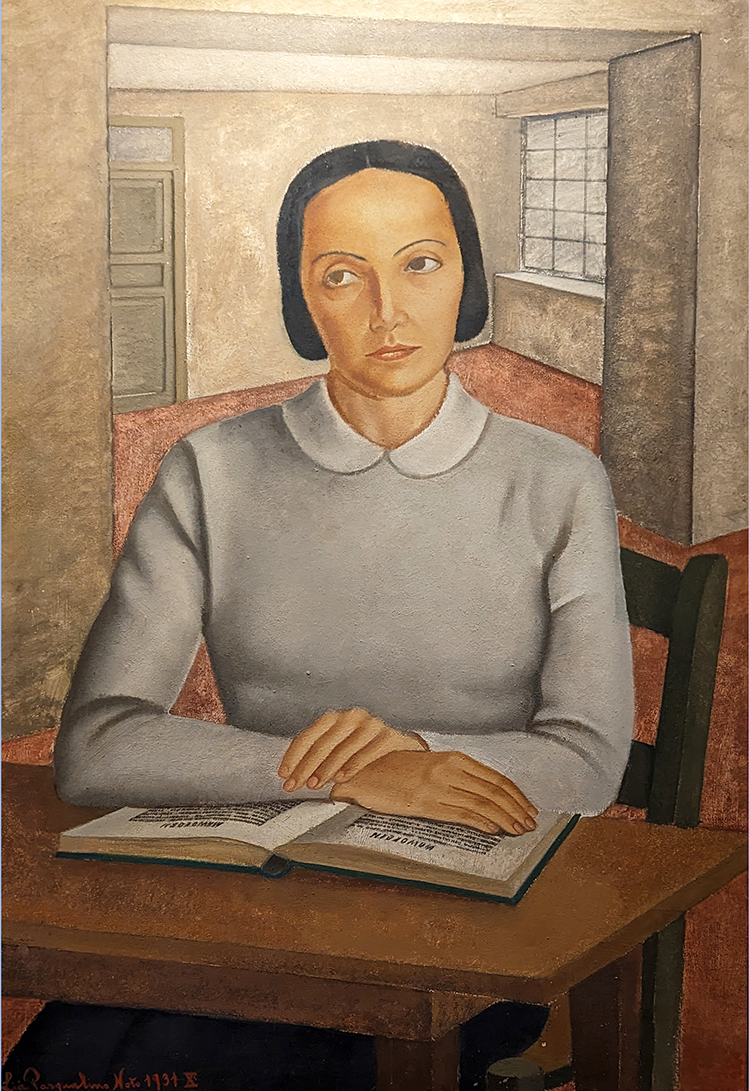
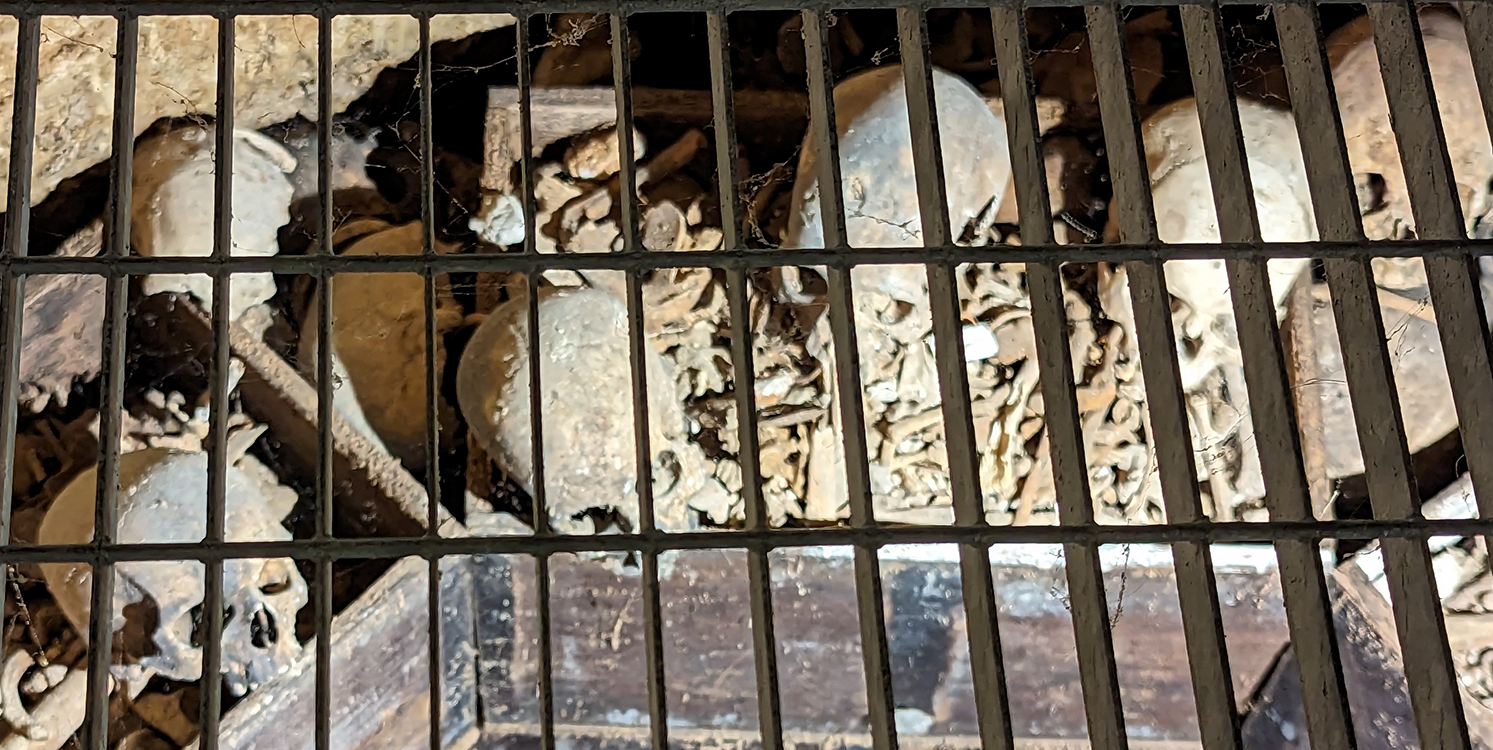
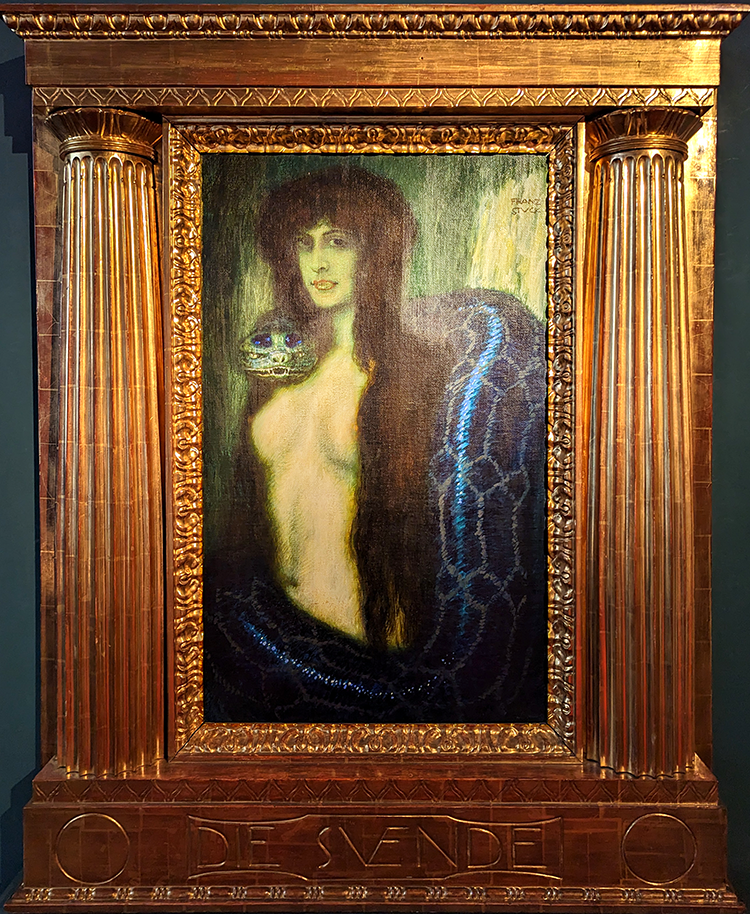
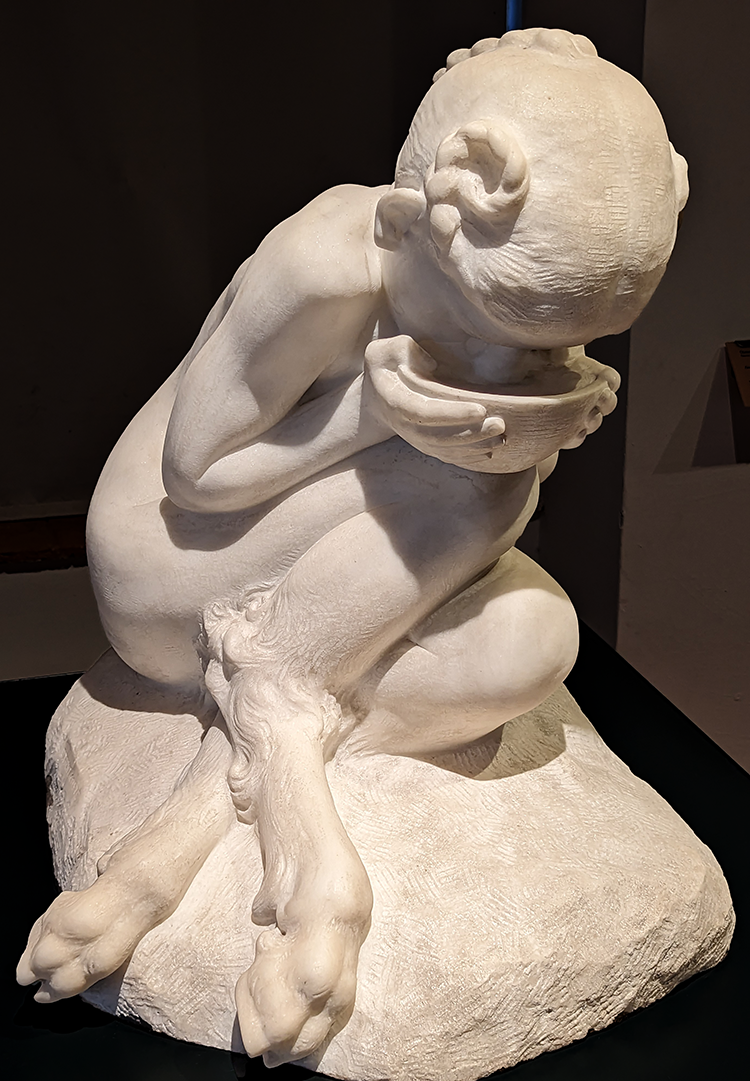

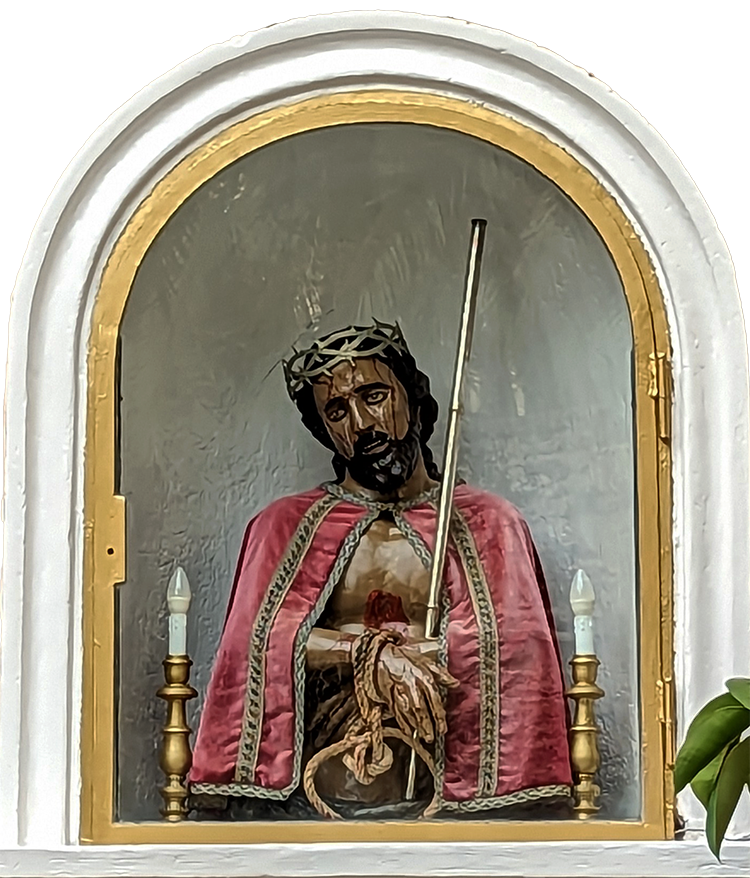
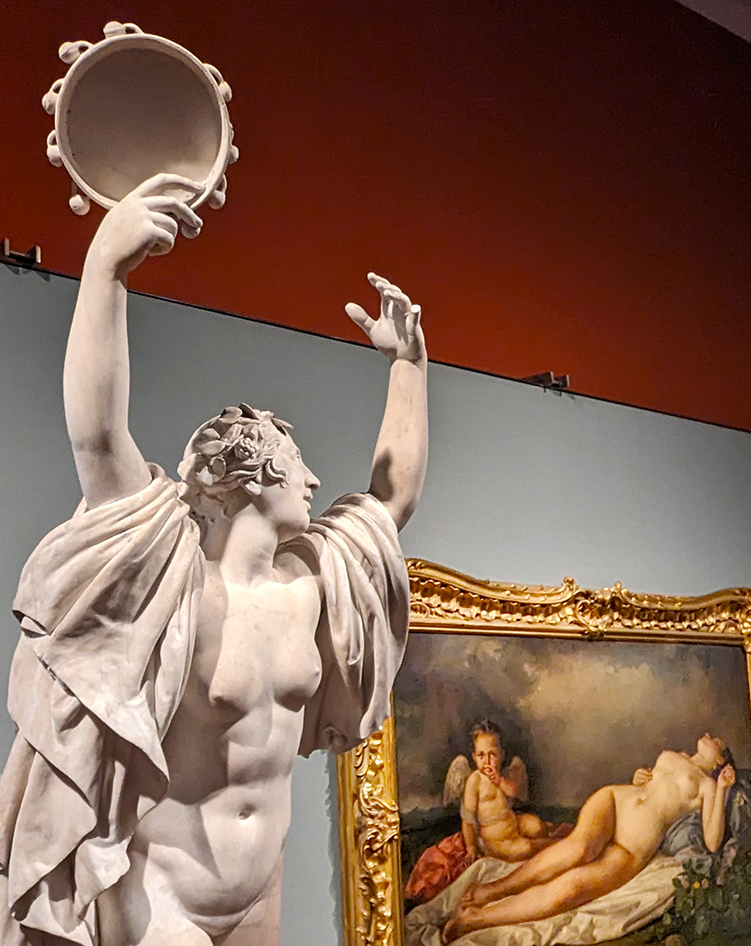
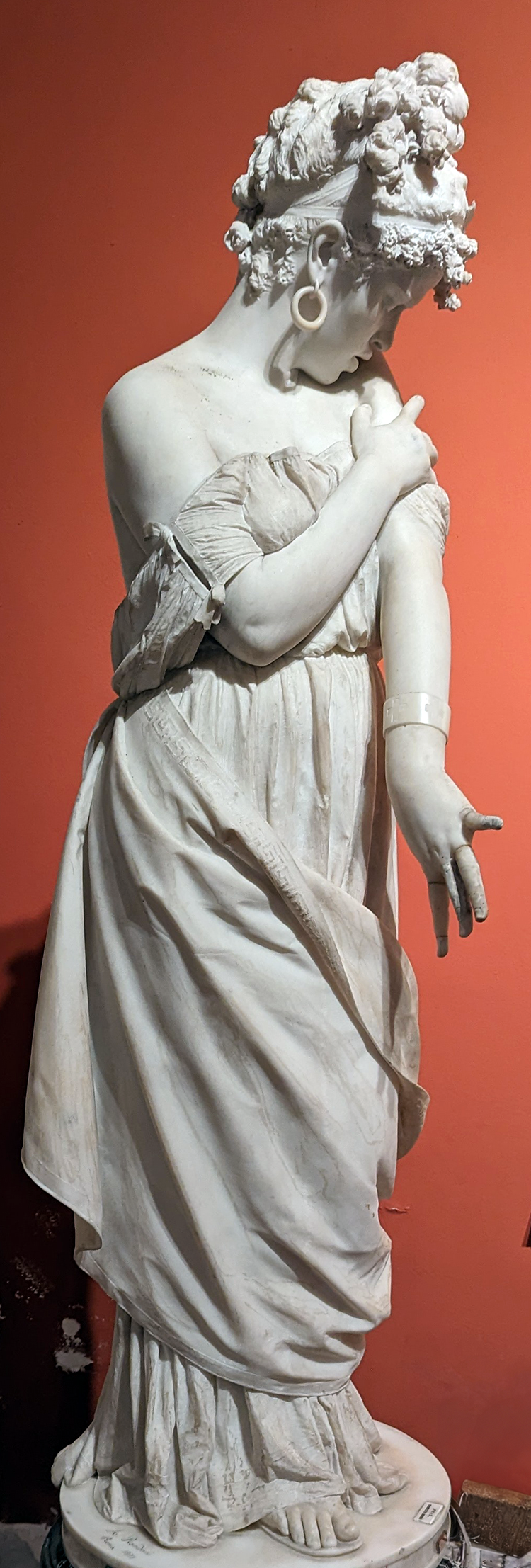
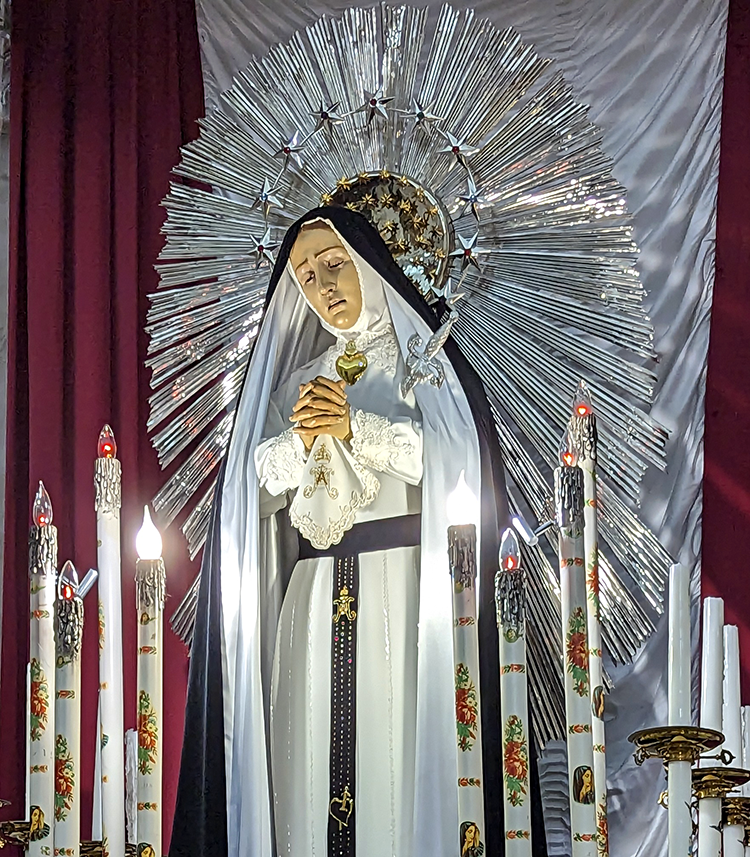
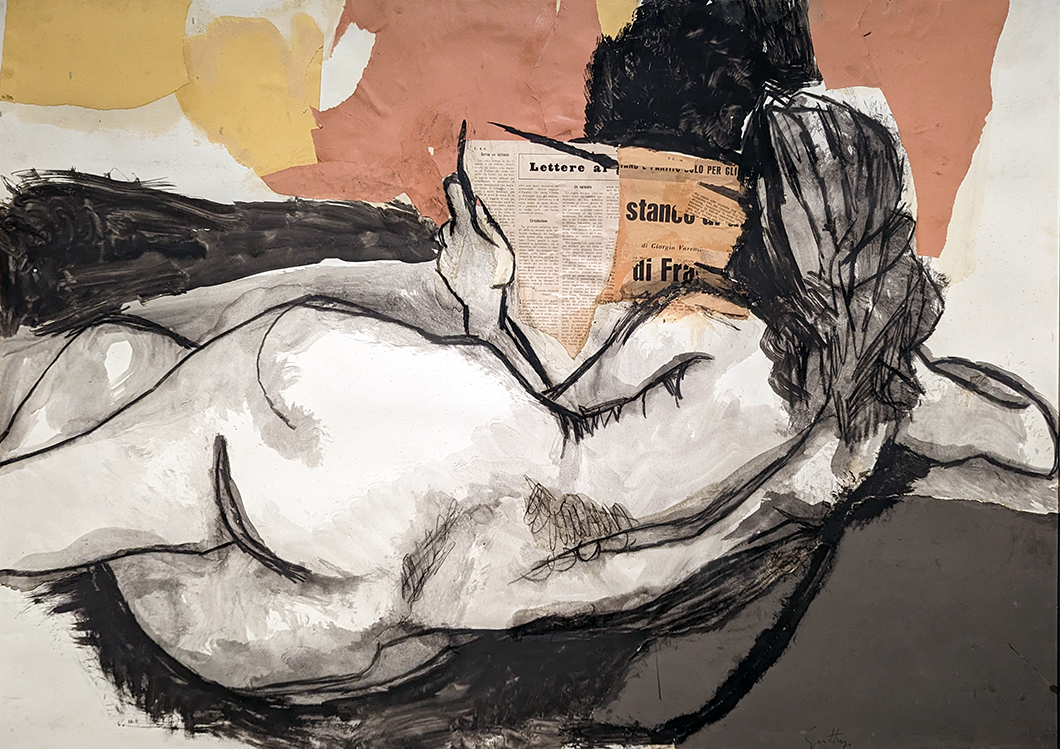
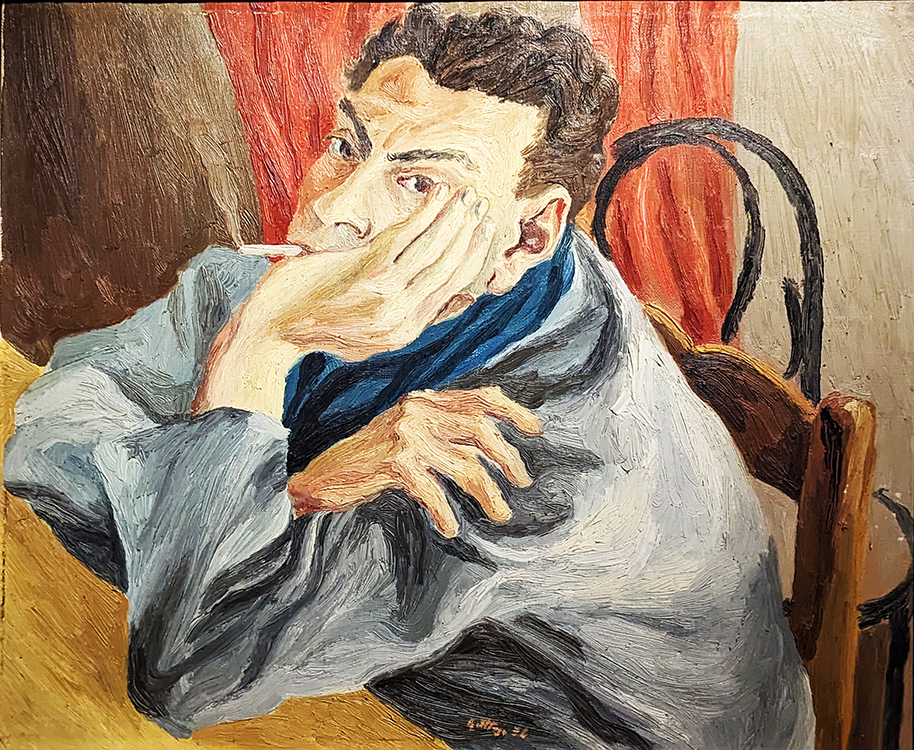
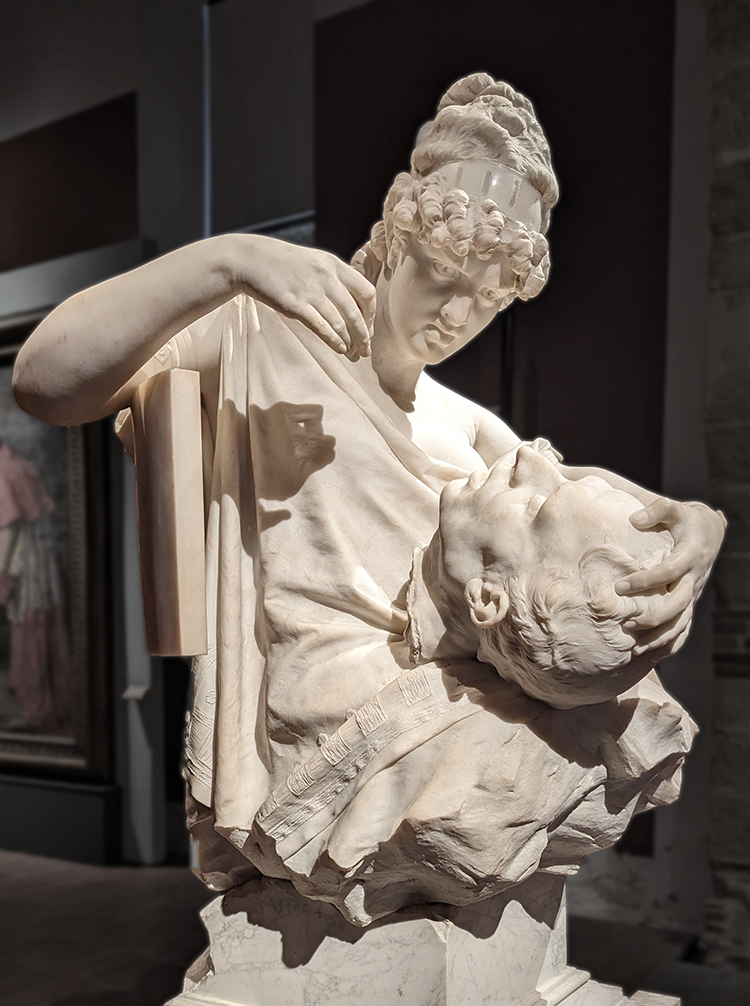
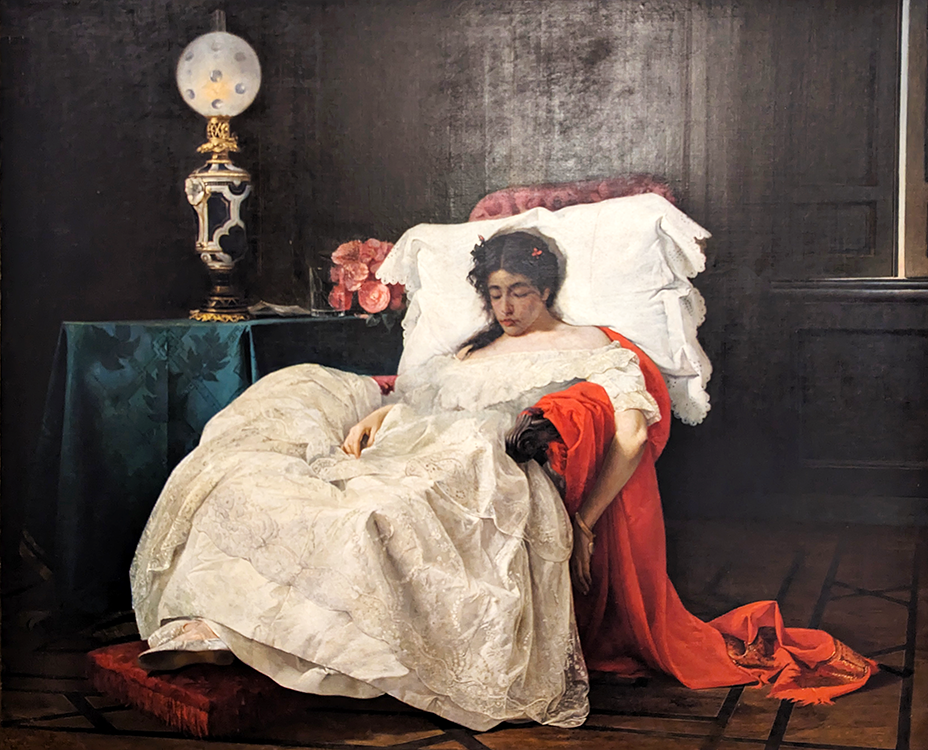
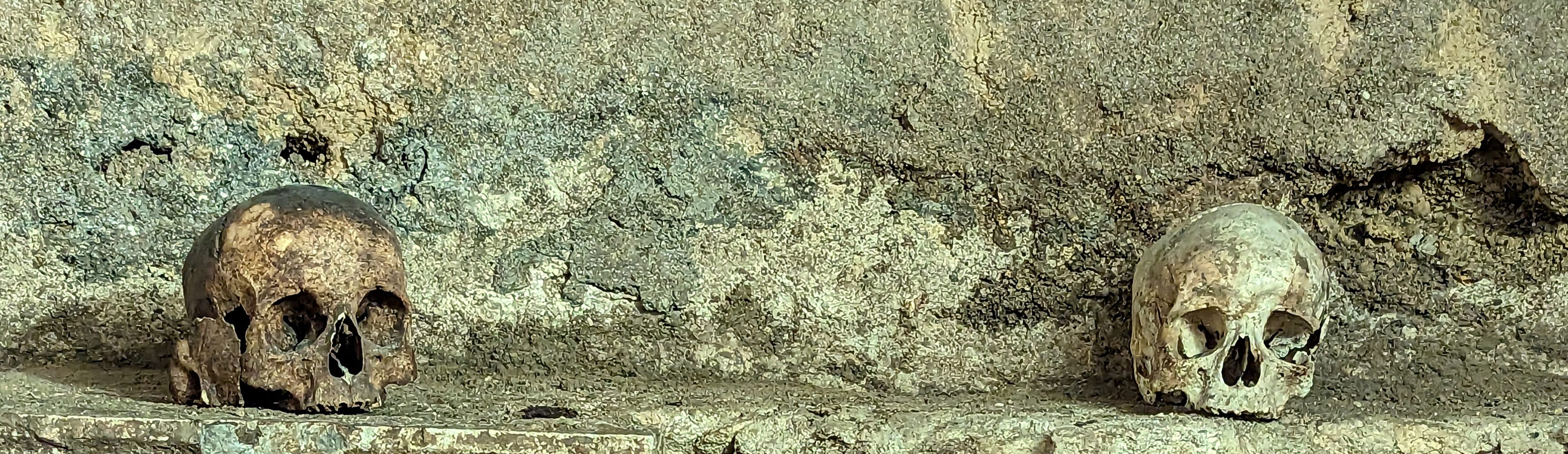
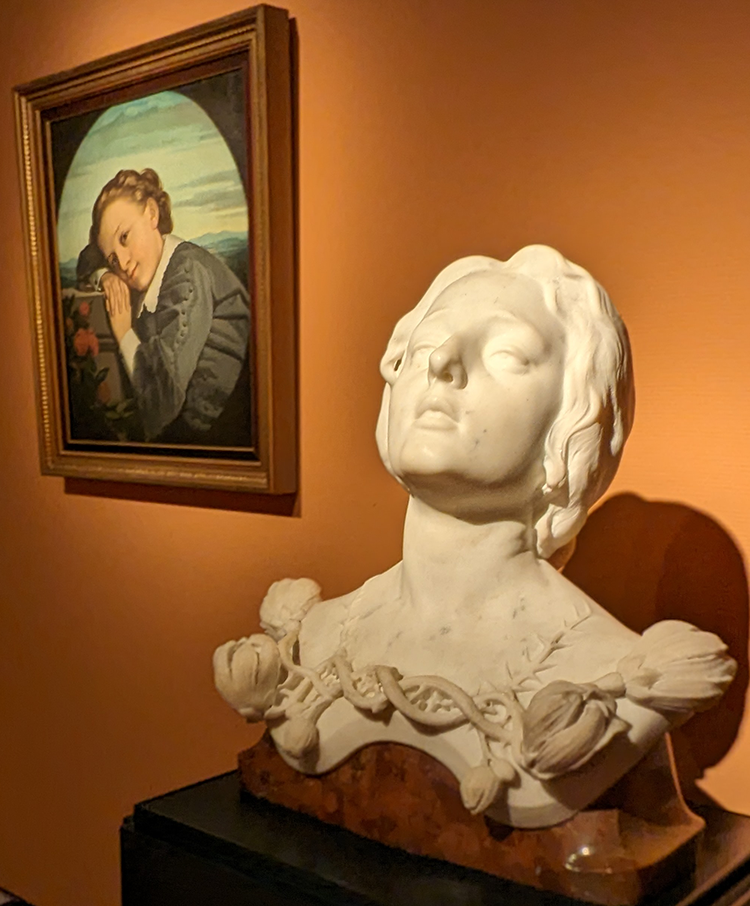
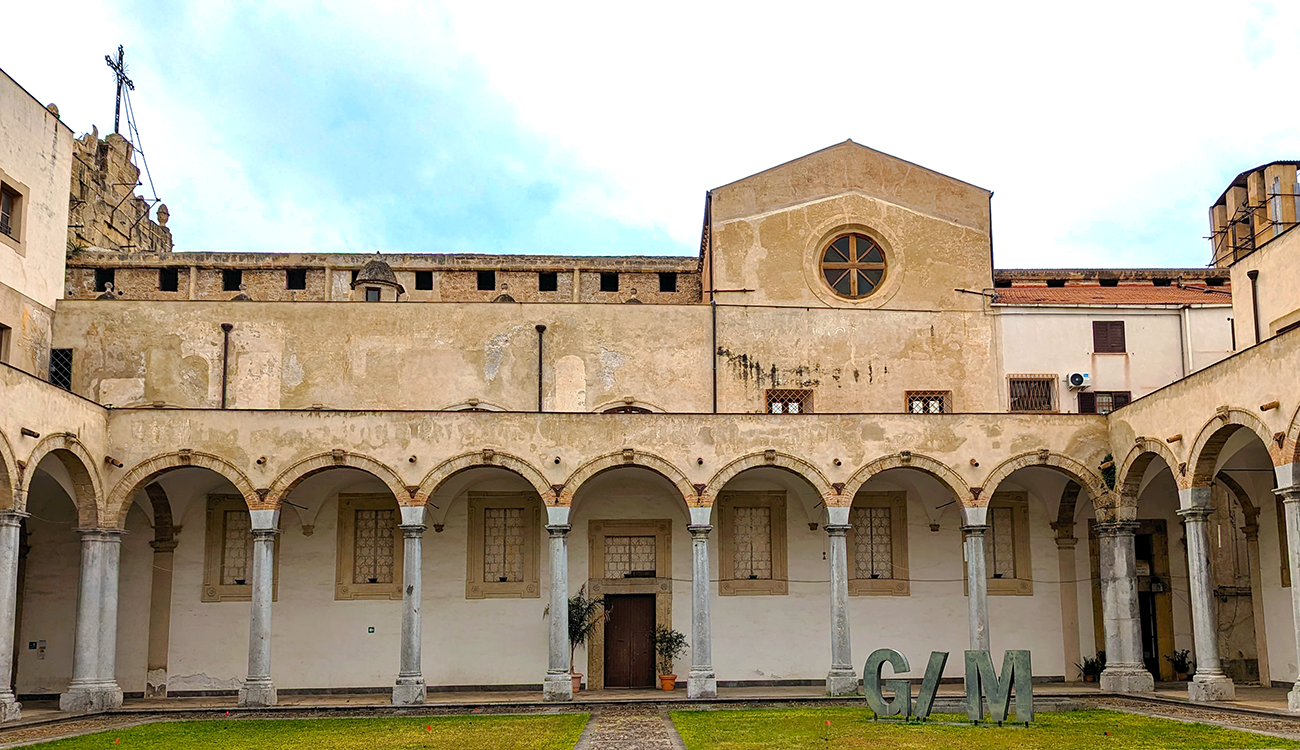
Somehow, the contrast of the religious art of the church and the ancient skulls underneath it intertwined in my mind, as well as in the order of the photos we took. So that’s the way I kept them for this postcard.
A semi-logical progression. The story of Adam and Eve and original sin is straight from the Bible. The boa draped seductively around the shoulders of the bare-chested woman in Franz von Stuck’s “Il Peccato/The Sin” created quite a stir at the 1909 Venice Biennale and presumably when it was unveiled in Palermo.

And it appears an inspiration for Richard Avedon’s photo of Kinski almost a century later.
The temporary exhibition, “Richard Avedon. Relationships,” featured more than 100 photographs drawn from his career spanning more than 60 years. According to Photo Vogue, Avedon’s early photos featured models assuming a role, often in urban locations. His later work was characterized by his usage of minimalist, neutral backgrounds with all attention focused on the model and fashions.
I always prefer to work in the studio. It isolates people from their environment. They become in a sense… symbolic of themselves.”
Richard Avedon, 1923-2004

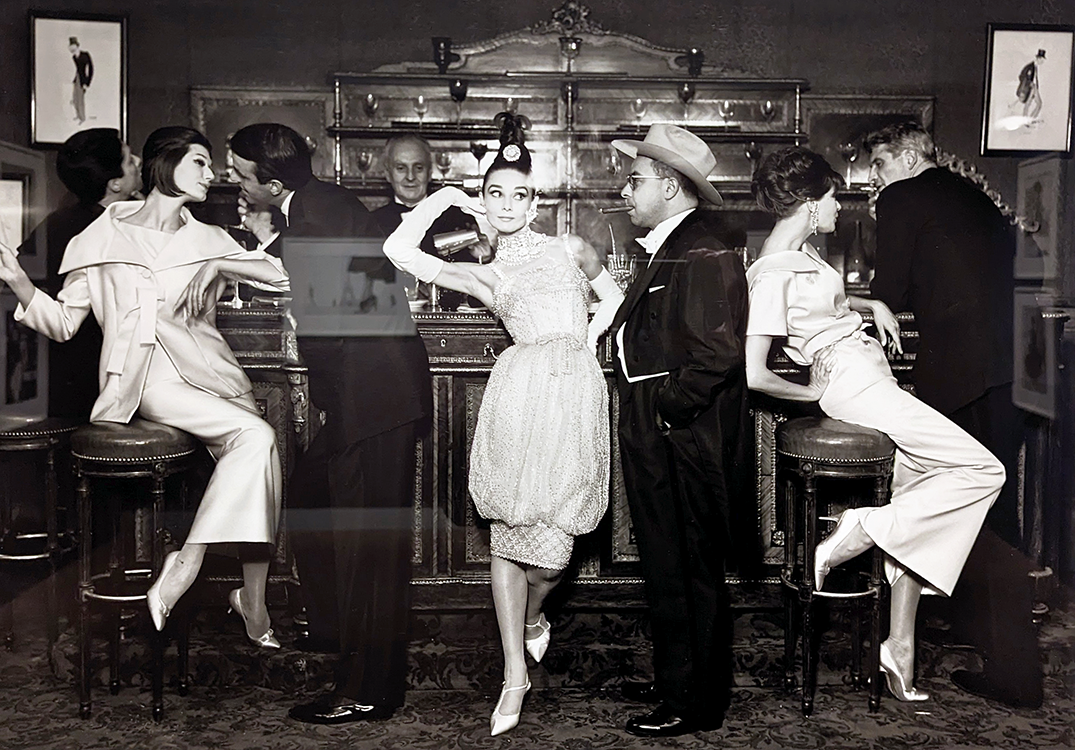

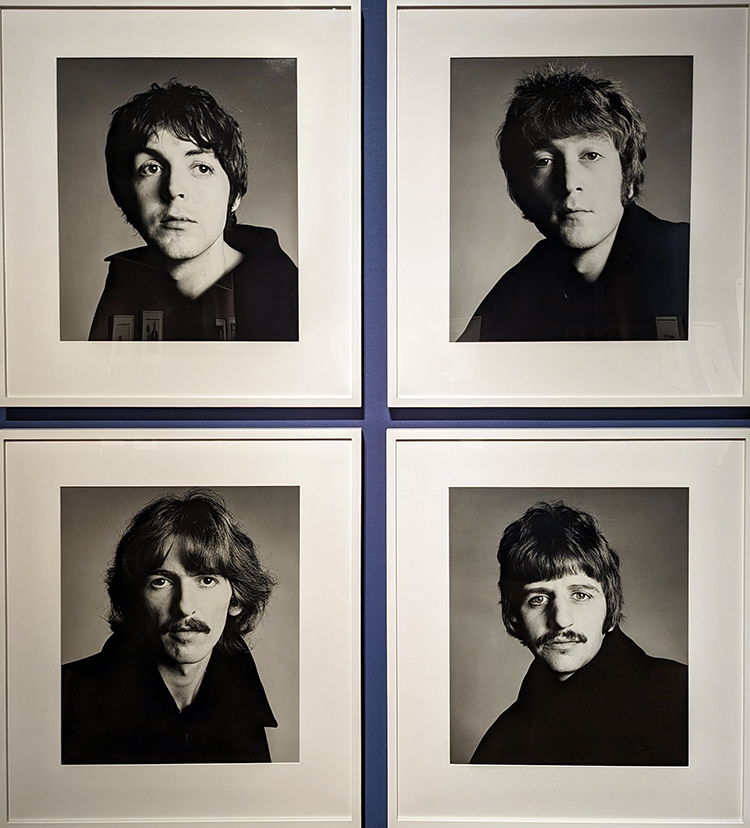
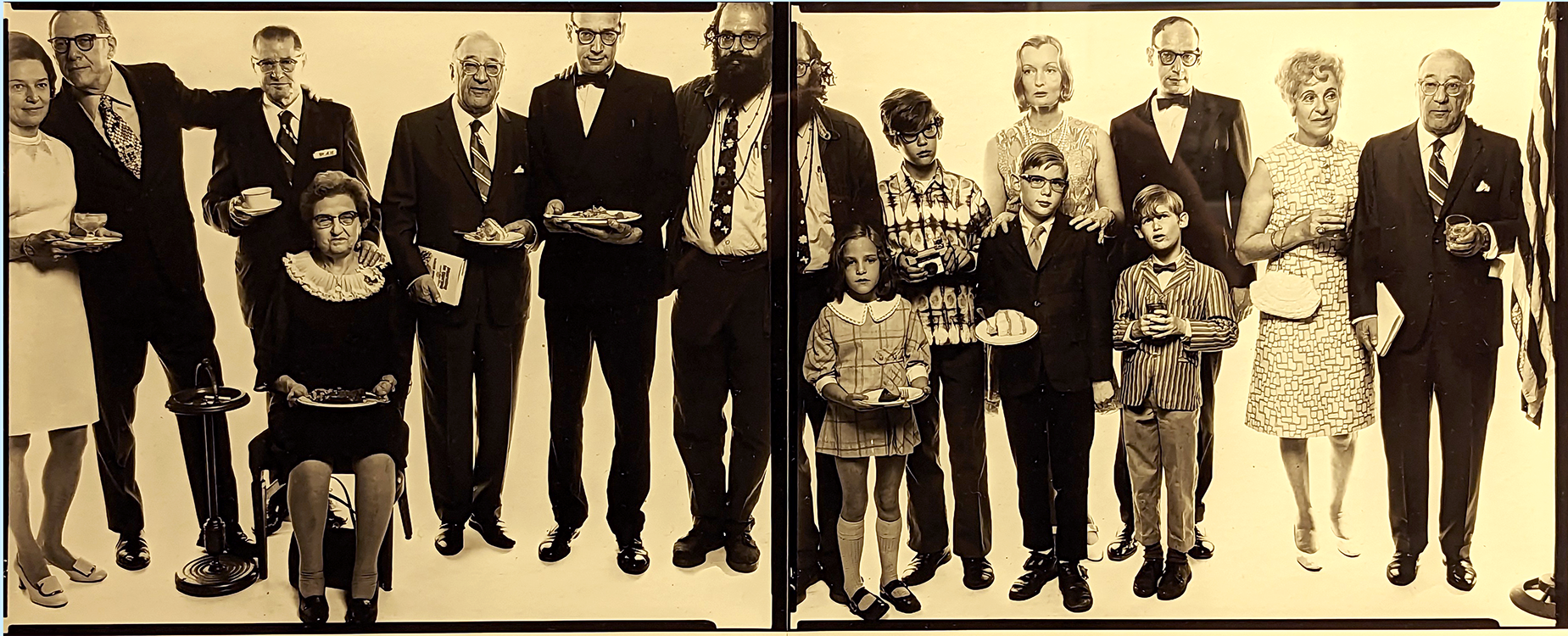
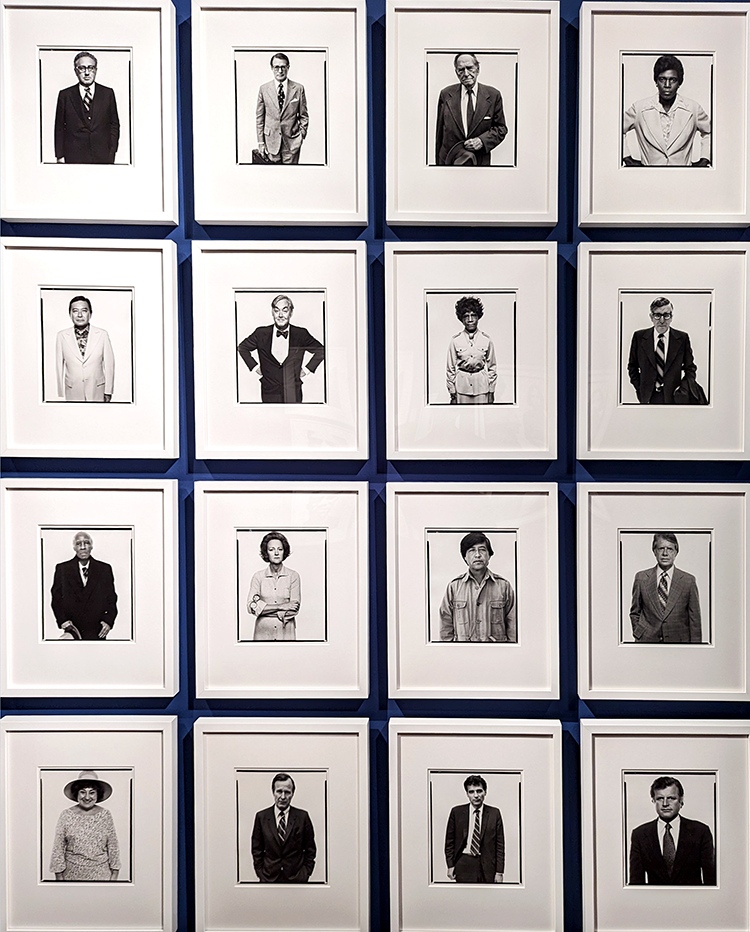
Above: Images from “Richard Avedon. Relationships”
He revolutionized the way models are photographed, transforming them from static subjects to actresses who are protagonists of the set also showing their human side; on the other hand, his striking celebrity portraits, in black and white and often large format, are capable of revealing the innermost psychological side of the person portrayed.”
Photo Vogue, November 5, 2022
Maybe a stretch… but kind of similar to the stunning sculptural representation of Saint Mary in mourning found inside the church.
 Postcards from Barton Springs
Avedon created perhaps the most memorable photo of Streisand for the cover of the album “What About Today.” I’ve always been partial to it because it seemed to bring together Haight Ashbury graphics and Aubrey Beardsley’s ornate drawings. It’s a picture of Barbra completely in its own class. The title song has always had its appeal, bringing out the frustration of personal idealism in the face of an uncaring or hostile socio-political environment. Two lines from the song by David Shire capture that sentiment pretty well: “I can’t help wondering if tomorrow comes. And what’s my life been lived for if it never comes?” All impossible dreamers know that heartbreak.
LikeLiked by 1 person
I’m in love with the Allen Ginsberg family photograph. I want to un-freeze them and eavesdrop on the gathering. “The poignancy of a photograph comes from looking back to a fleeting moment in a floating world. The transitoriness is what creates the sense of the sacred.” ~ Allen Ginsberg
LikeLike