

Gaspacho. Spelling the word with an “s” and not a “z” makes a world of difference in Morelia. Cubes of refreshing fruit with no tomatoes in the mix. Traditional gaspacho stands are found everywhere in the heart of the city, with locals more than willing to line up at their favorite ones. Although customized for the individual, don’t miss out experiencing estilo Moreliano with its contrasting flavors of tangy lime juice, cotija cheese and chile layered into the combination of regional fruit. Beware. It’s highly addictive.
With that ideal breakfast out of the way, time to head out for more substantial repasts at restaurants listed alphabetically. By chance, these first three spots are a bit off the main tourist grid but are all a walkable distance from the center.
An amuse-bouche greeted us upon arrival at Chango Restaurante. A nice spicy gazpacho with a “z.” But our faces fell a bit when our margaritas arrived. Frozen. But, if one is going to sip frozen, this one was great. Plus, it trained us to specify pocas rocas nowadays, even deep in the heart of Mexico. On a later visit, Chango’s bartender did prove he knew how to a shake up a good one.
We sampled two ceviches. The fresco was a bit fruity for out tastes, but the Peruano with tuna in leche de tigre was just right. Chango’s tuna with a seared crust of peanuts and sesame seeds is recommended, and the pictured tacos are shrimp in a coconut sauce and tuna tiradito.
In photos of numerous restaurants, you might notice avocados often are unpeeled. The state of Michoacan produces 80 percent of the avocados consumed in the United States, and the majority are grown in nearby Uruapan, watered by its 64 inches of rain per year. The state has a rich, volcanic soil and a climate that allows avocados to be harvested at different elevations 365 days of the year. We were in Morelia when the avocados are round and very tender-skinned, known as the loca bloom season.


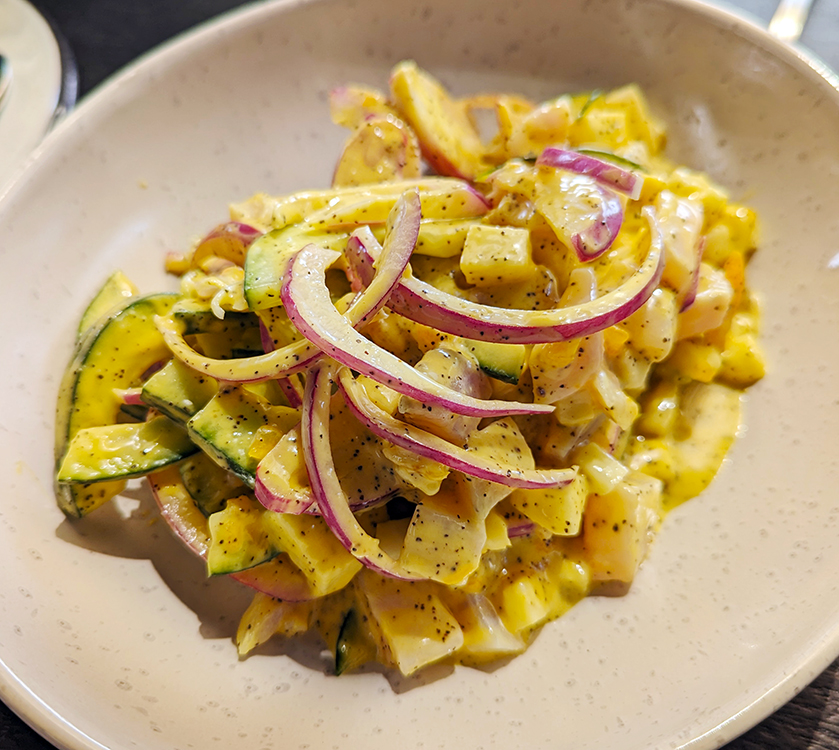


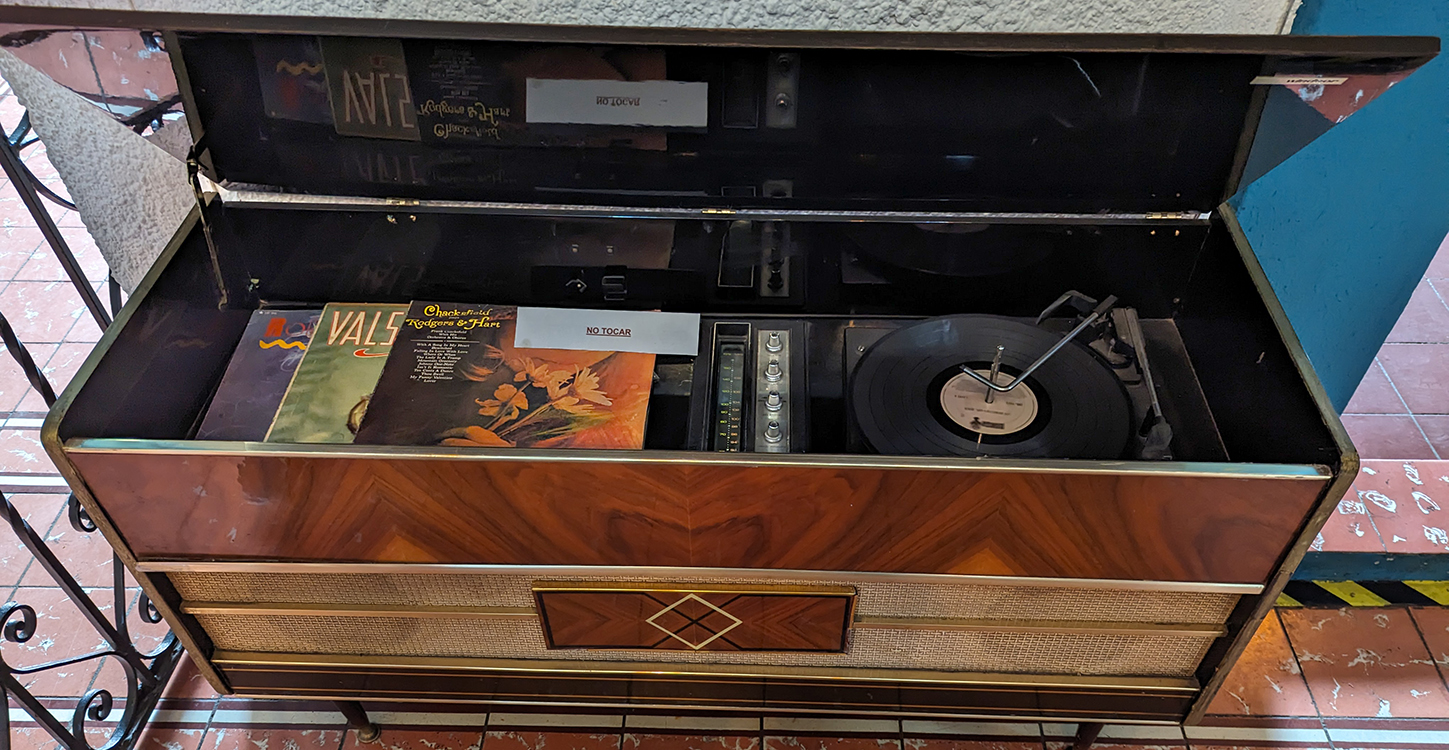


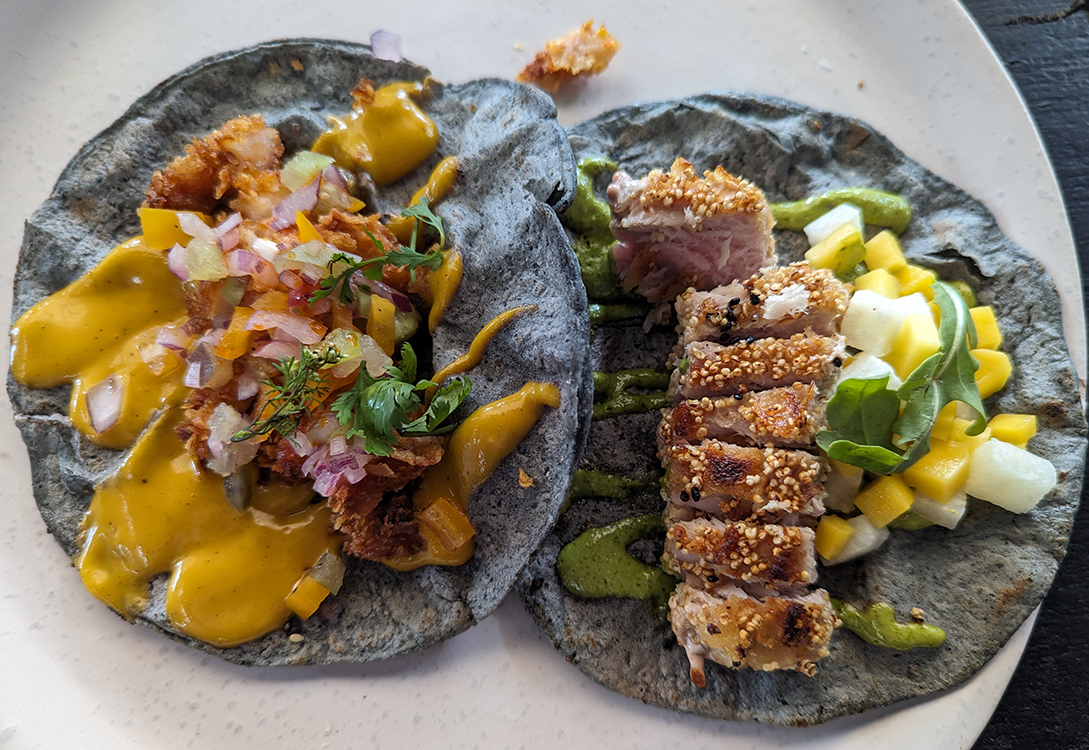
Above: Chango Restaurante
A long hike and with an easy-to-miss stairway entrance, Cielo Cocina Fusion is a comfortable neighborhood spot with some out-of-the-ordinary dishes. We enjoyed a watermelon-ball summer salad, portobello noodles with a mountain of sauteed vegetables and gyros. And then continued to relax with a creme brulee and an affogato.

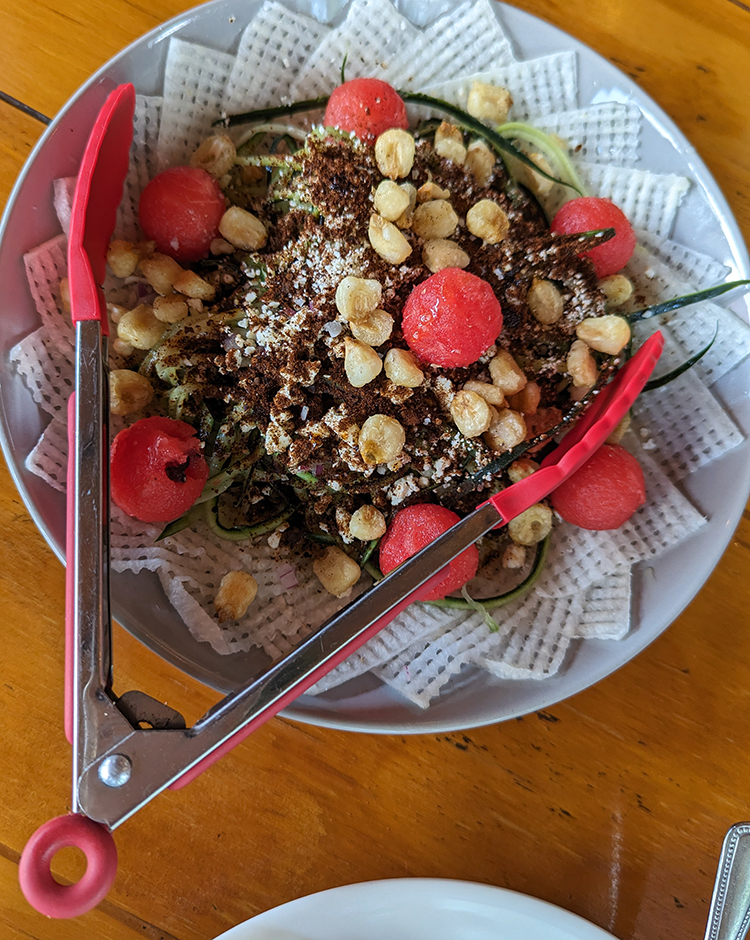

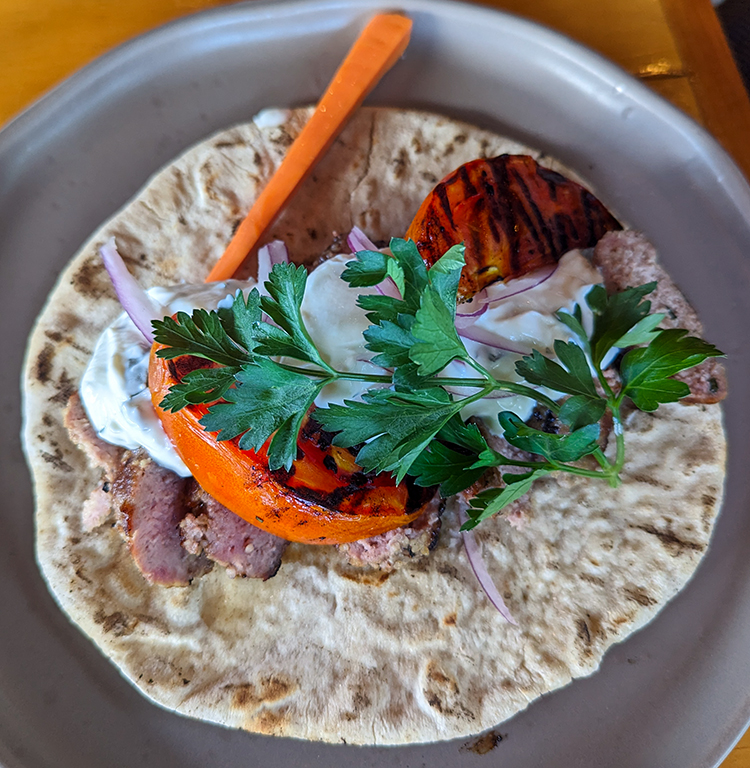
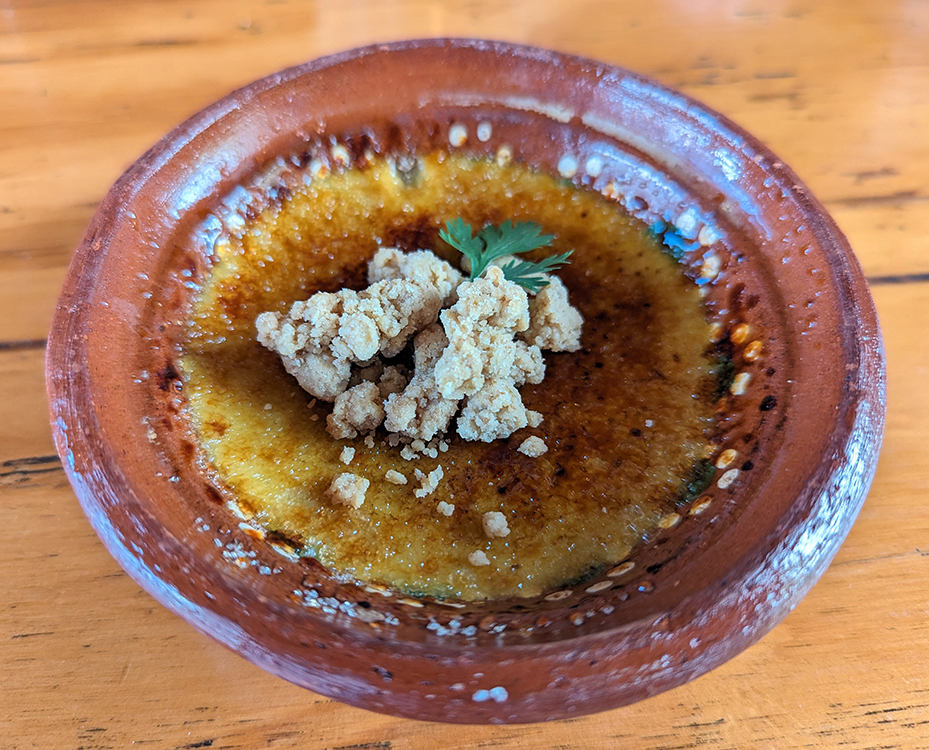
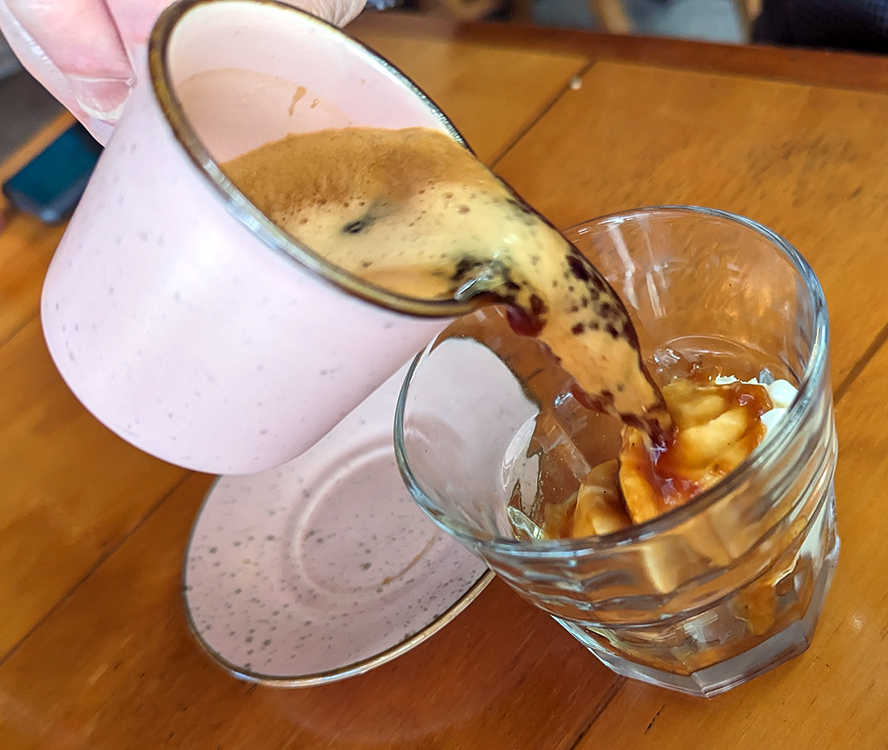
Above: Cielo Cocina Fusion
Cuish Cocina delivered a dish we had been seeking and had last chomped on about 30 years earlier on a small boat docked on Lake Patzcuaro. Fried charales – small freshwater fish traditionally harvested from the lake with butterfly nets. You pop whole crispy fishes into your mouth like popcorn. As the population around the lake has grown since then, pollution and overfishing have brought regulations to limit harvesting them from the lake. Most of the charales served in Morelia are caught in Lake Chapala. The shrimp tlayuda was a tasty version of the Oaxacan street food, but the chicken dishes were drowning under heavy-handed applications of thick moles.


Above: Cuish Cocina
Although generally we follow the rule of avoiding meals on the central plazas of cities when traveling, we broke the rule in Morelia. Not overrun with tourists, restaurants cannot survive without the capability of attracting locals. La Conspiracion de 1809 is on the more expensive side of the plaza’s more mom-and-pop-style spots, but the food is not over-priced for its presentation and service.
Plus, located in a former Spanish Colonial casa, the restaurant comes with a history. Complicated, but let’s blame it on the expansionist desires of Emperor Napoleon Bonaparte (1769-1821). Napoleon invaded Spain in 1808, creating enough tumult that King Charles IV of Spain (1748-1819) abdicated. Secession-wise, Ferdinand VII (1784-1833) was next in line. Favoring his personal nepotism to Spain’s, Napoleon forced Ferdinand to abdicate in favor of the emperor’s older brother, Joseph Bonaparte (1768-1844).
Meanwhile, back in Valladolid, which Morelia was named while under Spanish rule, a group of civilian, religious and military leaders chafed at the thought of falling under the French flag. So they clandestinely gathered in the house of Don Mariano Michelena (now the referenced restaurant) on the plaza to plot. The conspiracy drawn up was to form a junta, or council, to rule Valladolid independently until Ferdinand could be reinstalled to the crown that rightfully was his. Alas, they were caught, but they did live on to participate in Mexico’s later revolution in other ways.
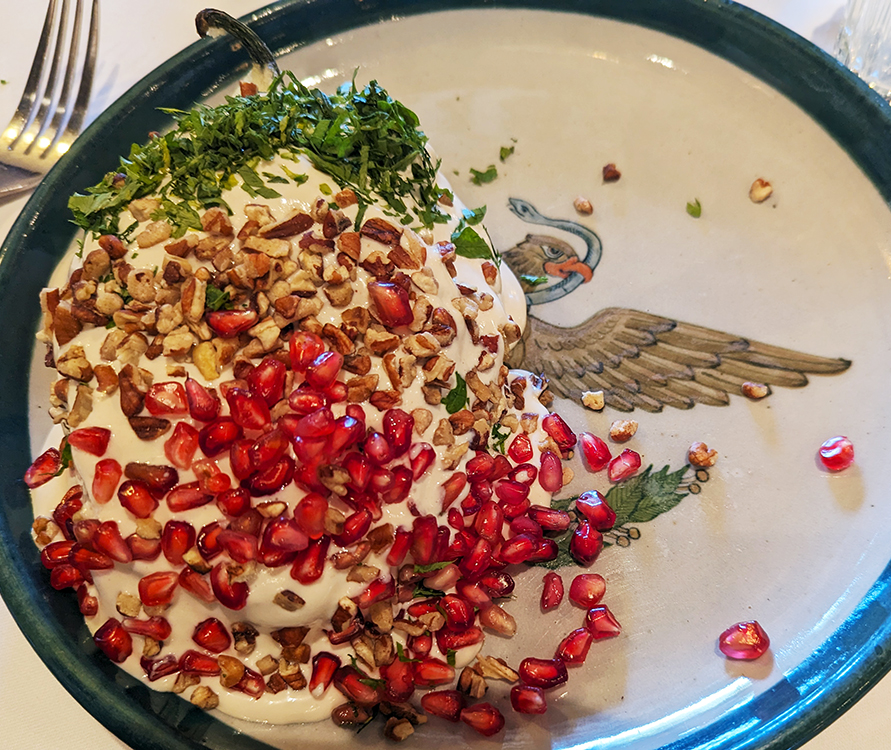
Okay. Okay. Enough history. Both the food and your interest are getting cold. Mid-August is the beginning of the season when fresh poblano chiles, walnuts and pomegranates all are available for preparing chiles en nogado. La Conspiracion’s patriotic presentation reflected the colors of the Mexican flag with a plump roasted poblano pepper filled with spiced ground meat and dried fruits and topped with a creamy pecan sauce instead of the traditional walnut one.
Chamorro la piedad was a generously sized beef shank that had been cooked at a low temperature for 14 hours. The tender meat was served atop a rich, chipotle sauce. Perhaps the restaurant’s most unusual fish offering was trout covered with capers and candied dried jamaica, hibiscus flowers. A luscious lime and meringue tart with a biscuit crust was crowned with two scoops of ice cream.

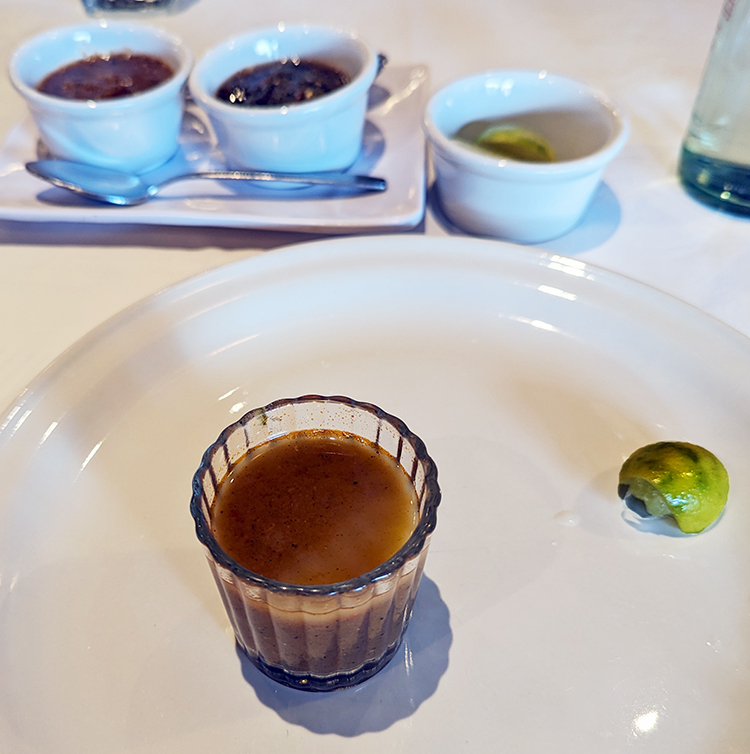




And fittingly, the Mister secretly conspired to arrange the surprise arrival of an old friend from Queretaro to celebrate my rather monumental birthday.

I promise to offer you the rest of the alphabeticised restaurant list soon.
And a footnote. I thought an animated cartoon version of the 1809 conspiracy would be about my level. My linguistic skills are embarrassing, but here’s a bicentennial version of the incident for you.
 Postcards from Barton Springs