

Above: A representation of the story of Adam and Eve eating the forbidden apples, Museo Regionale di Palazzzo Bellomo
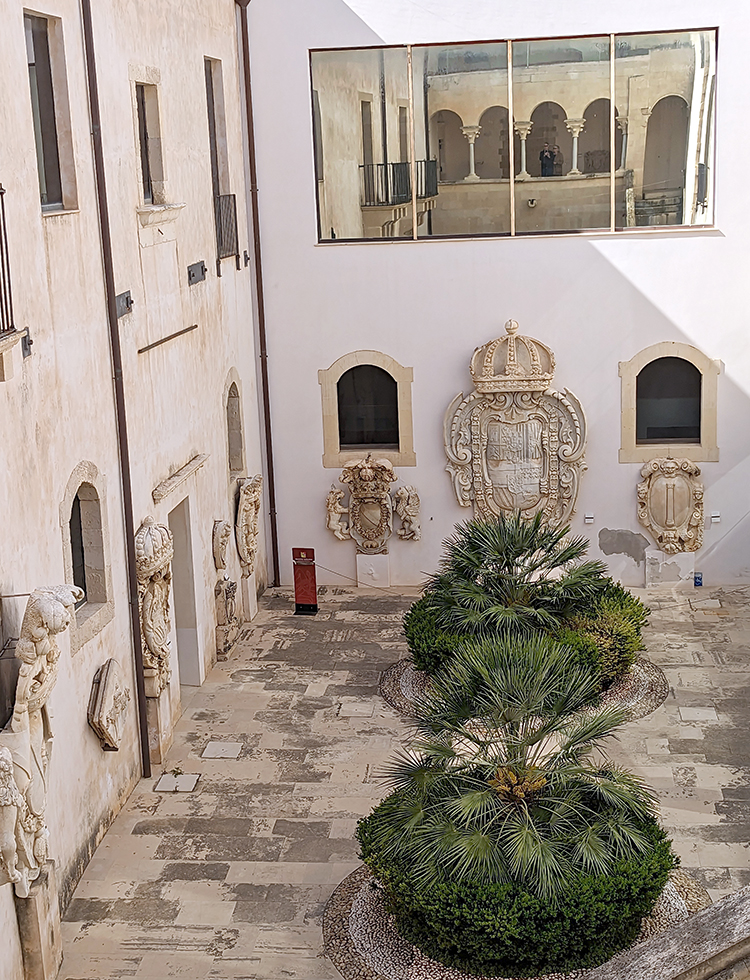
A stark façade conveys the 12th-century origin of the Bellomo Palace. The interior spaces, however, reflect several centuries of architectural alterations, much like the centuries of regional Sicilian art housed within. Benedictine monks occupied the palace in the 18th century, merging it and an adjacent palazzo into one compound.
The Risorgimento, the ongoing unification of the Kingdom of Italy, represented a disaster for many Catholic religious orders. In Sicily, the government seized property and buildings, including this monastery in 1866. In 1940, the government repurposed the compound as a museum, with the 1866 confiscated religious art forming a major portion of its collection. The Bellomo underwent substantial renovation in 2004.





A series of small panels surrounding a gilded painting of Saint Agatha below offers an opportunity to bring up another Sicilian saint, even more popular than Santa Lucia. Like Saint Lucy, Sant’Agata di Sicilia (231?-251?) is among the virgin saints always mentioned during Mass, and her pathway to martyrdom was painfully similar to hers as well.
When Agatha was 15-years-old, she vowed she would forever remain a virgin. She dressed in the costume of a deacon, a white tunic and red veil, as she prepared young followers to receive their first sacraments. The pious young woman was born into a wealthy family of Catania, but that afforded little protection to advances from the ruling Roman governor. As with the suitor spurned by Santa Lucia, the vindictive man informed Roman authorities of her illegal Christian activities. He sent her to a brothel, but Agatha still failed to deny her beliefs.

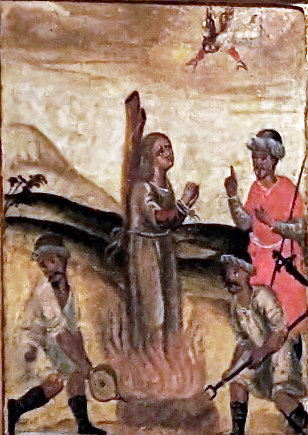


Above: The martyrdom of Saint Agatha
Determined to torture her until she did, the governor had her stretched on a rack with multiple additional implements of torture added one by one. Her flesh was torn with hooks, burnt with torches and shredded by whips. As she had pledged to never have children, her torturers assumed she had no need for breasts, ripping them off with iron tongs.
Yet Agatha still hung onto life and her faith. The governor sentenced her to burn at the stake, but she was left in her cell as earthquakes rippled through the island. An apparition of Saint Peter visited her there, miraculously healing her multiple wounds. She died an imprisoned woman.
Saint Agatha is the patron saint of Catania, where her intervention is credited with sparing the city from the fiery lava of Mount Etna. She also is believed to have spared Catania from rampage by Emperor Frederick II (1194-1250) in 1231. Even longer after her death, Saint Agatha is said to have appeared in a vision to a Benedictine nun in Malta in 1551. Her intercession served as an advance warning to Malta, sparing the island from invasion by Turks.
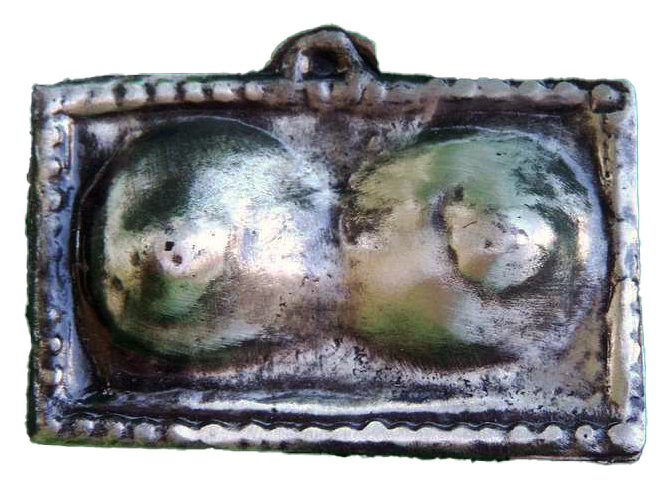
As Santa Lucia is often depicted bearing eyes on a platter, Saint Agatha holds a platter with breasts. Catholic women throughout the world beseech Saint Agatha to protect them from or rid them of breast cancer.

An unexpected tribute to the saint is a popular Sicilian dessert named and eaten in her honor – minne di Sant’Agata. For this, a layer of marzipan is pressed into the bottom of a round mold. This is topped with a mixture of chocolate, citron and ricotta, which is then somehow tamed into the appropriate shape with thin, sponge cake. After refrigeration, each mound is coated with a powdered sugar glaze and, you guessed it, a cherry on top.
You can’t eat just one, meaning don’t. The proper serving of minne is always a pair.
 Postcards from Barton Springs