
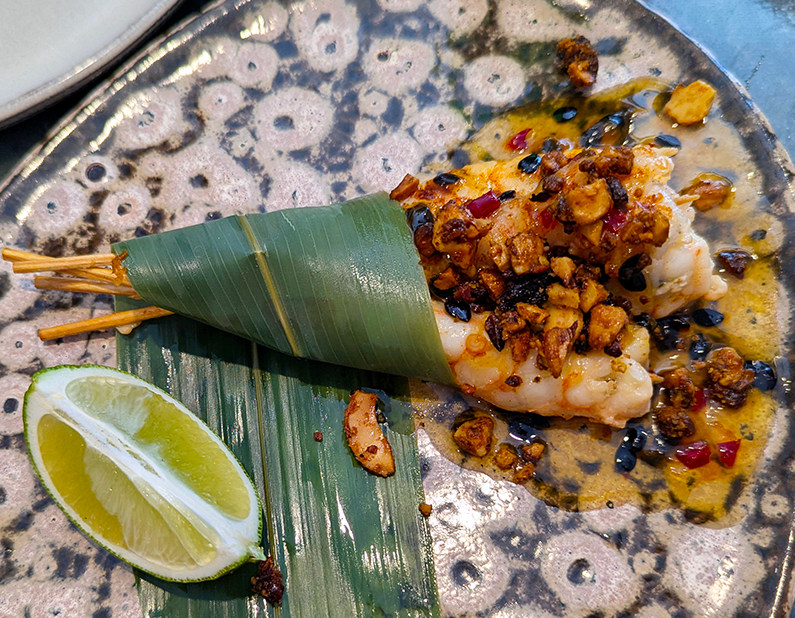

Above: Shrimp pinxtos with passion fruit and nuts at O Filho da Mae
The majority of visitors to Braga are day-trippers based in Porto or on cruise ships, as the city is located a mere 30 miles north of the bustling port city. We stayed a bit longer, as we tend to do. Here is a brief look into dishes we sampled in restaurants listed in alphabetical order, plus a bonus from nearby Guimaraes where we were the day-trippers,
When we stumbled into Casa de Pasto das Carvalheiras, we must have looked somewhat bedraggled. Braga was the first place we were staying overnight on land since leaving Austin. The staff welcomed us warmly into the pub-like environment. An easy first stop. Shaved melon brought out the flavor of tuna carpaccio with pistachios; and mussels arrived in a spicy broth. Barley risotto was flavored by paprika and pork sausage, as one expects in this Minho region of Portugal.
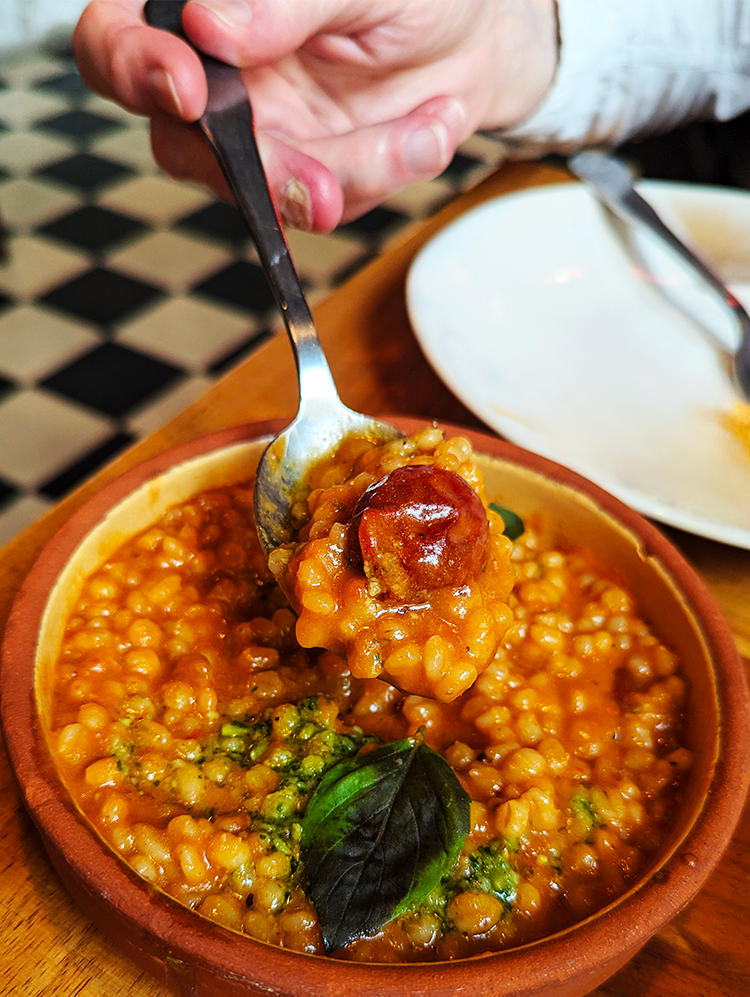
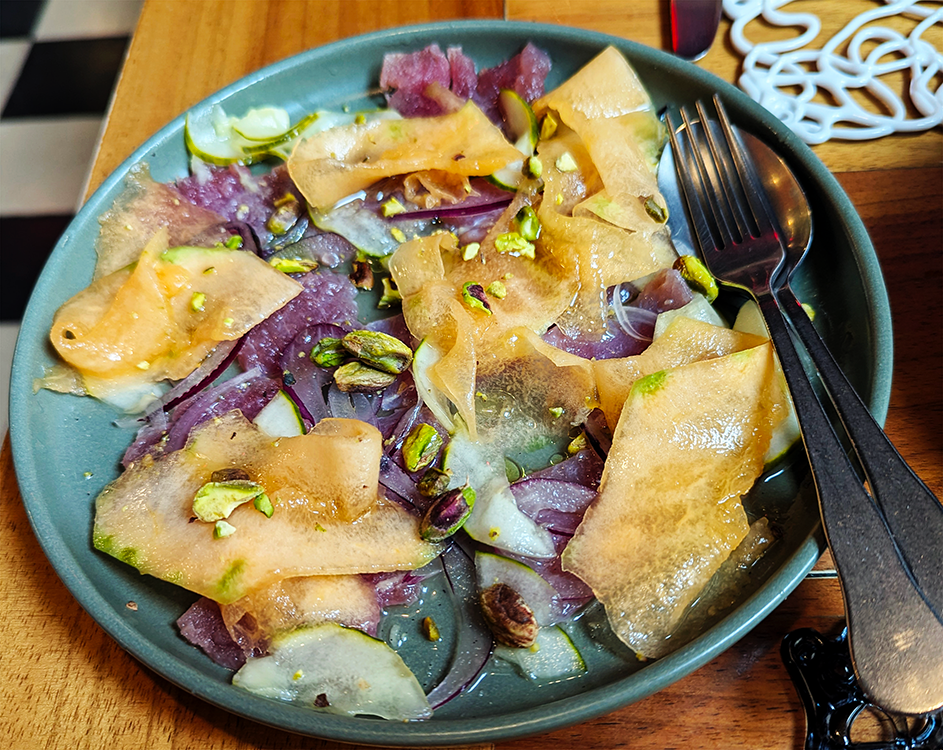
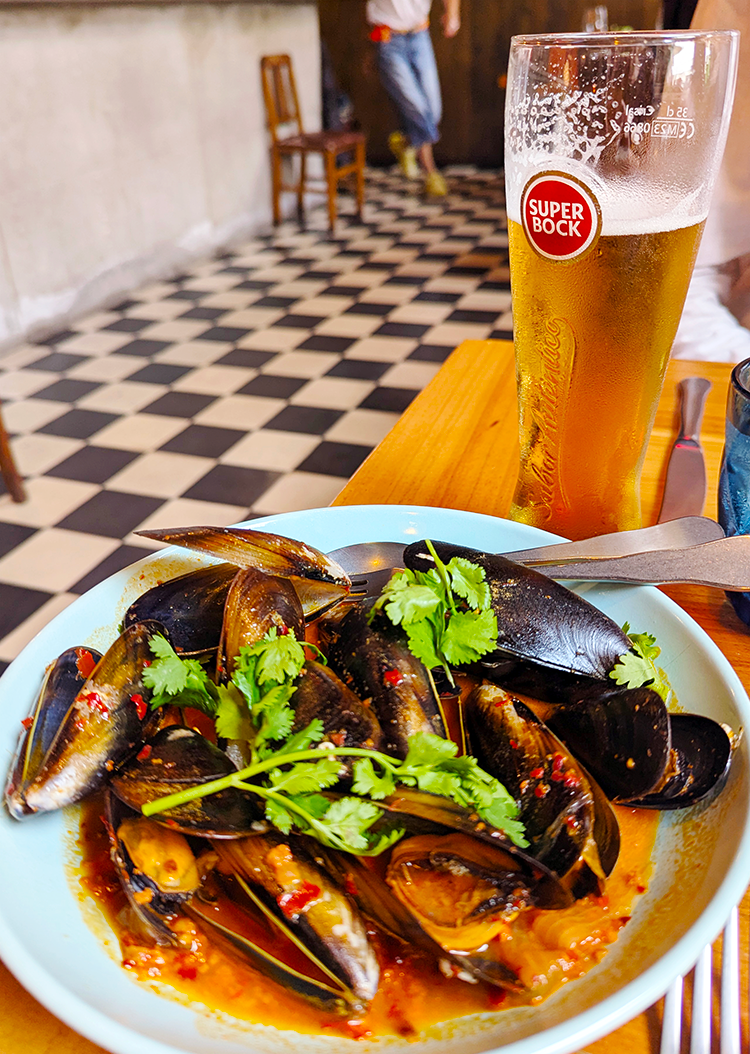
Above: Casa de Pasto das Carvalheiras
On the opposite end of the atmospheric spectrum is Inato Bistro. The website oozes with overwrought, oversell lingo, such as a menu “meticulously structured in Acts…. every moment is a carefully orchestrated scenario….” Don’t get me wrong. Inato is an extremely well-run, handsome restaurant, but it sets such high expectations of magnificence. Its trying-too-hard atmosphere failed to put us at ease, perhaps because its “play” that day was sparsely attended.
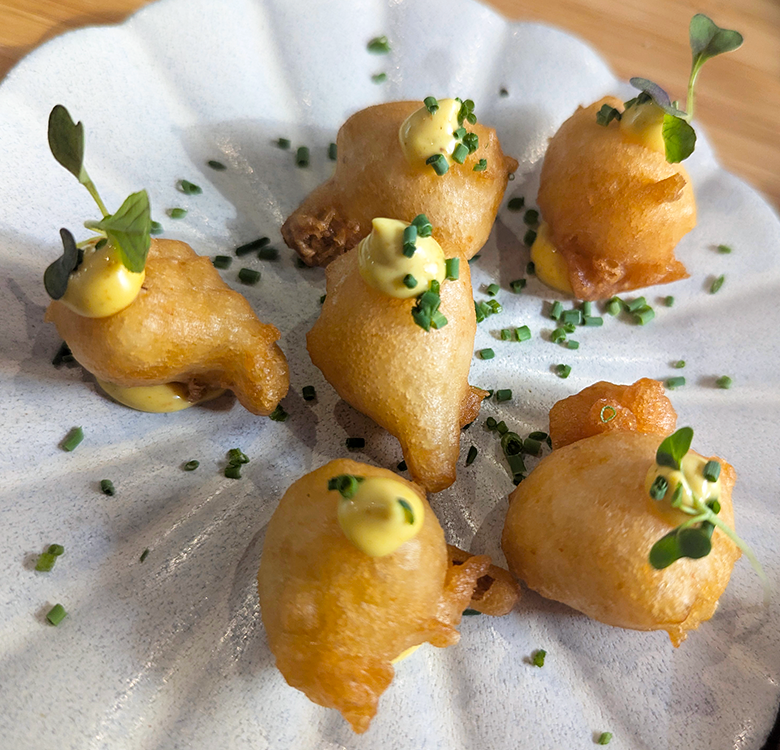
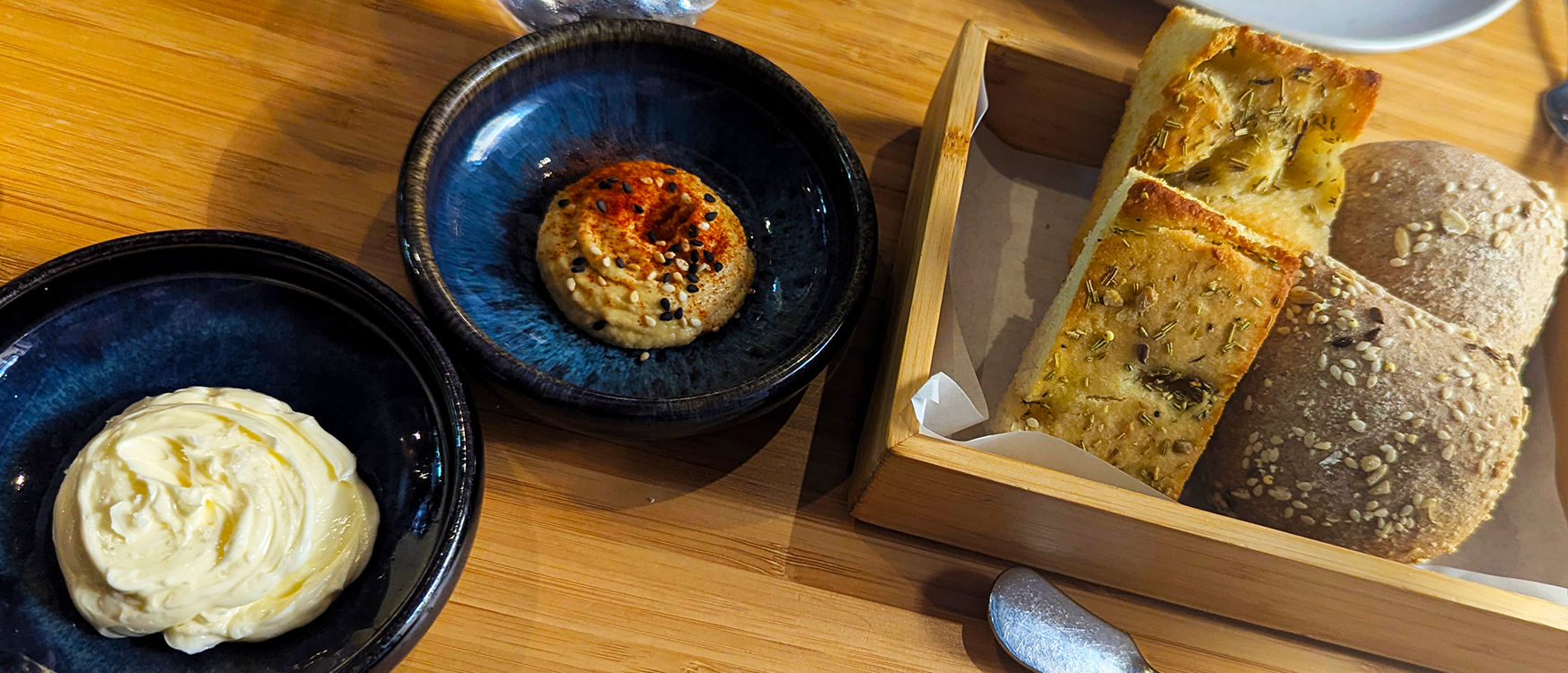
We had been advised the cauliflower tempura with spicy mayonnaise was a must-have-Act-II order; Act I being the bread, rich butter and hummus – delicious. Nicely battered and fried, the cauliflower needed flavor enhancement from more than a dot of mayonnaise.
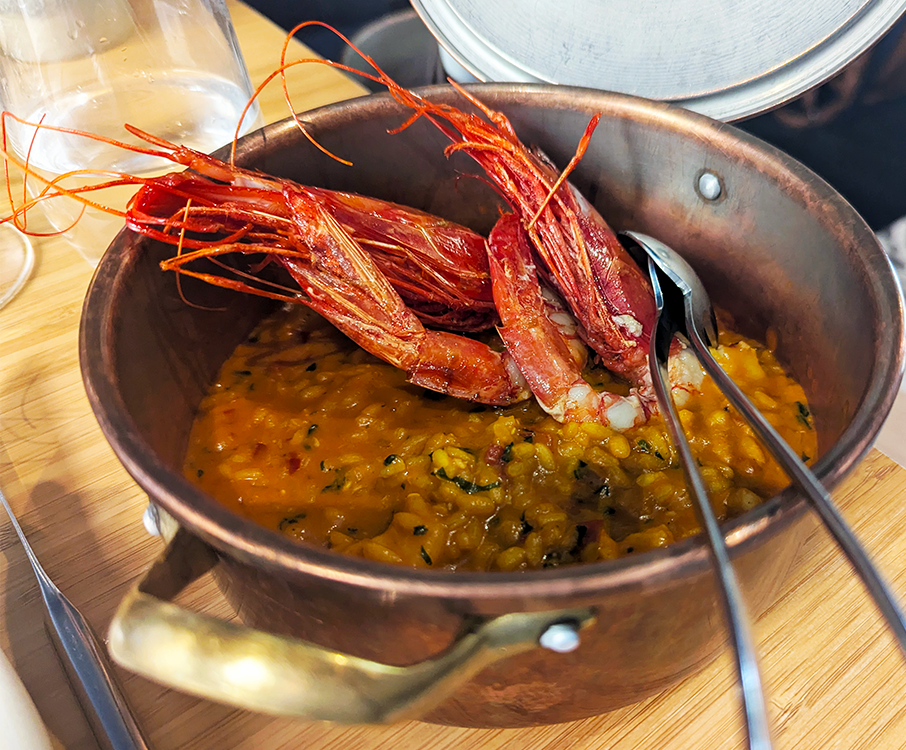
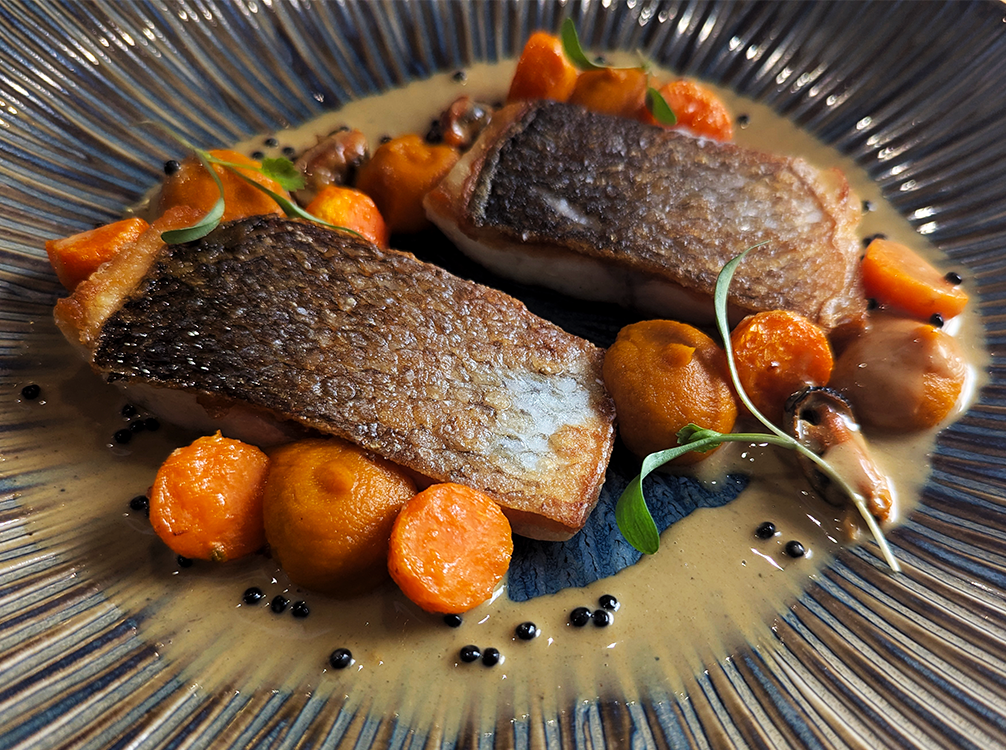
Act III brought impressive stars to the stage. Perfectly cooked crispy-skin sea bass was surrounded by several mussels and a roasted carrot. A traditional seafood broth studded with rice and seafood arrived with the head and tails of a glamorous pair of the prized Carabineiro prawns posed upright in the pot.
I read somewhere that the Portuguese regard someone who fails to suck the head of shrimp as untrustworthy. I don’t think of us that way, yet we still have shied away from the practice, sinfully wasting what is considered the most flavorful part of the creatures. Next trip, I’ll try it. Maybe with a smaller type of prawn though.
Act IV brought us a dessert of whipped mascarpone with guava, nuts and grated Parmesan. As you can tell, everything looks perfect. We have no complaints about the service or quality of ingredients; we just felt no need for an encore. Recommend experiencing it when there’s a larger audience, perhaps at night instead of midday.
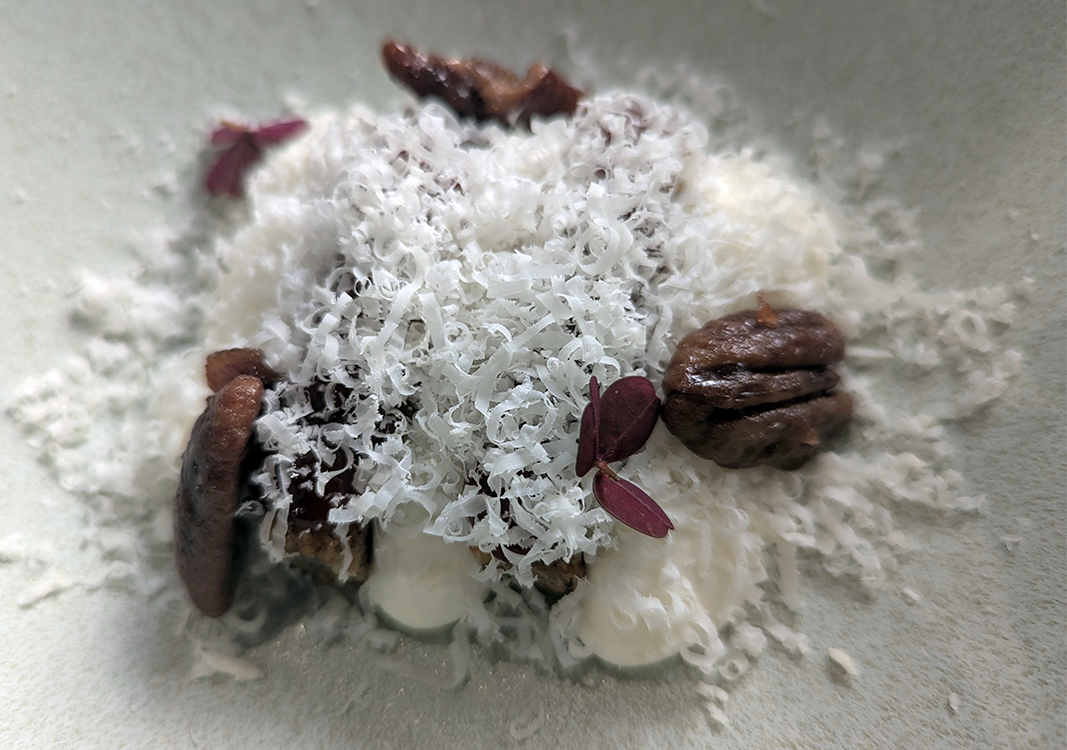
Above: Inato Bistro
O Filho da Mae delivered a showstopper right off the bat: a delicate pani puri shell filled with a fish tartare reflecting the chefs’ Latin American roots. The skewered shrimp in the photo at the top definitely was not lacking in flavor. An unexpected punch of fried capers complimented an appetizer of delicate slices of raw sea bass and nectarines.
Accompanied by sweet potato, corn and platano, white fish ceviche was a bit heartier. Fried empanadas were filled with tender, rich oxtail. Desserts included a coconut pastry with quince, lime cream and pink peppercorns; and a substantial brownie coated with a caramel praline sauce. All, fusion at its best that did command an encore visit.
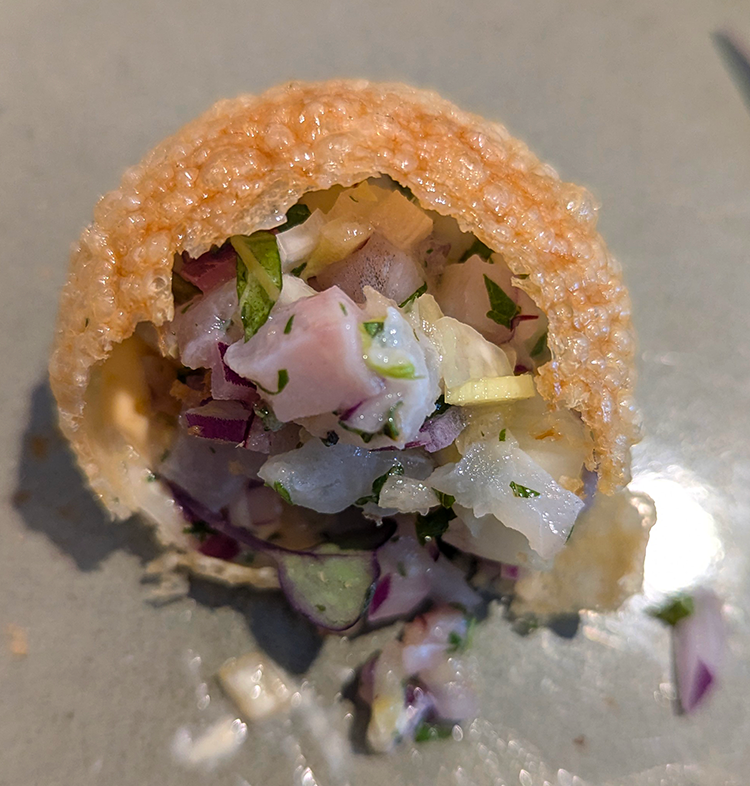
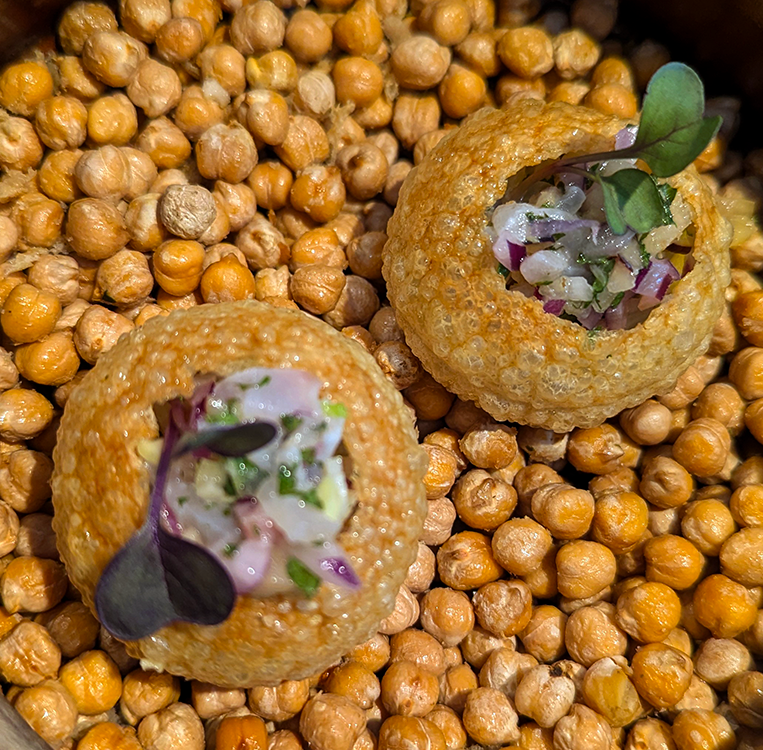
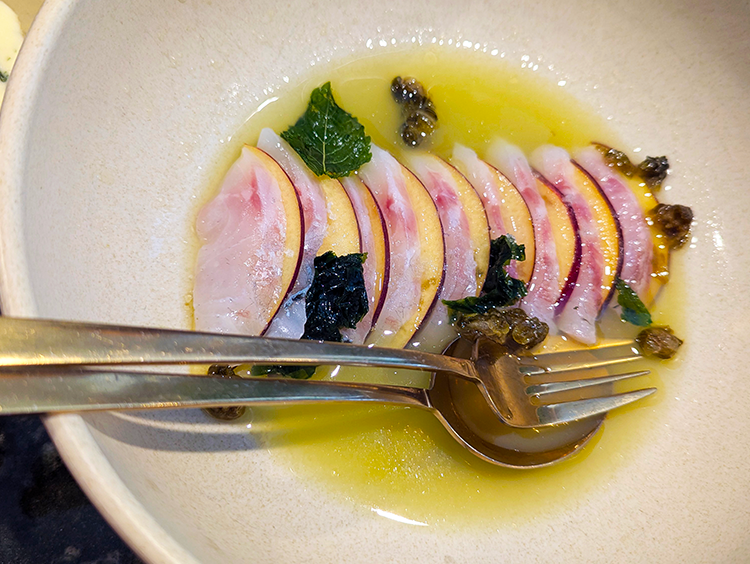
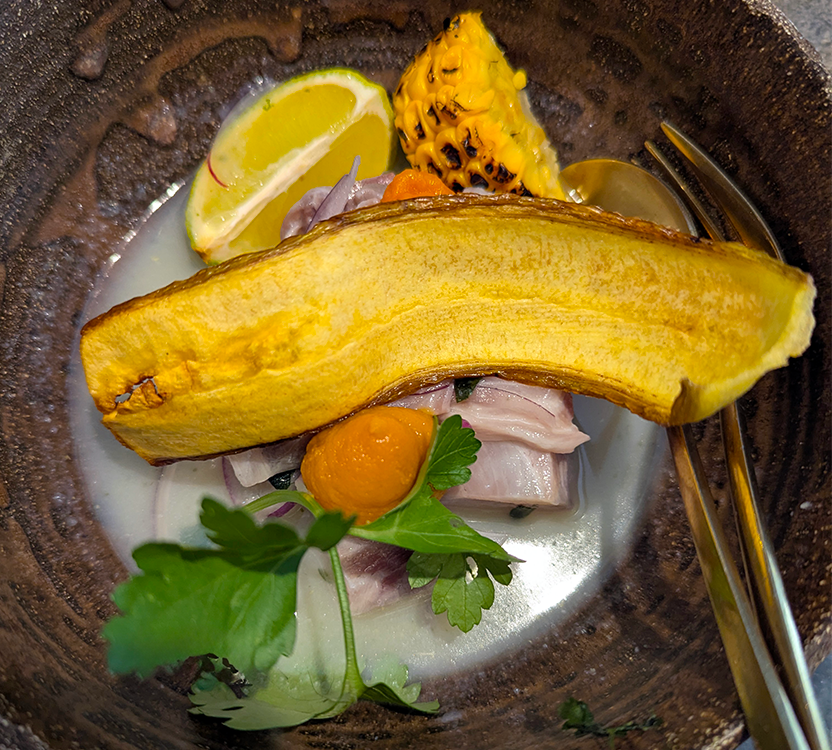
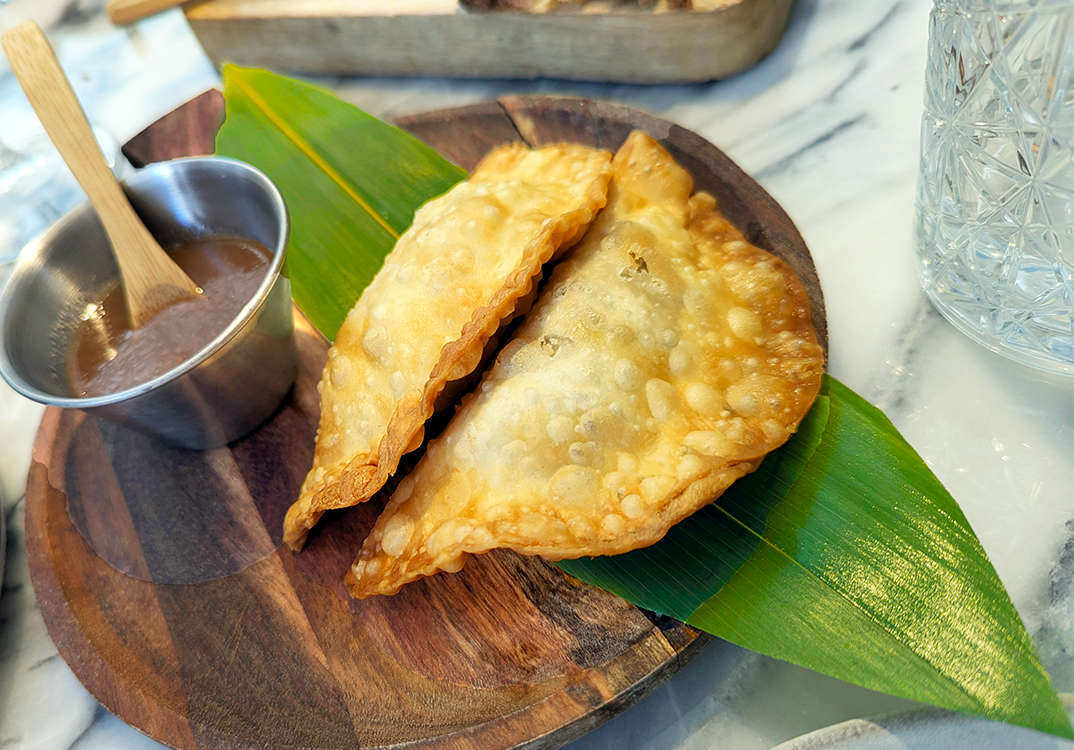
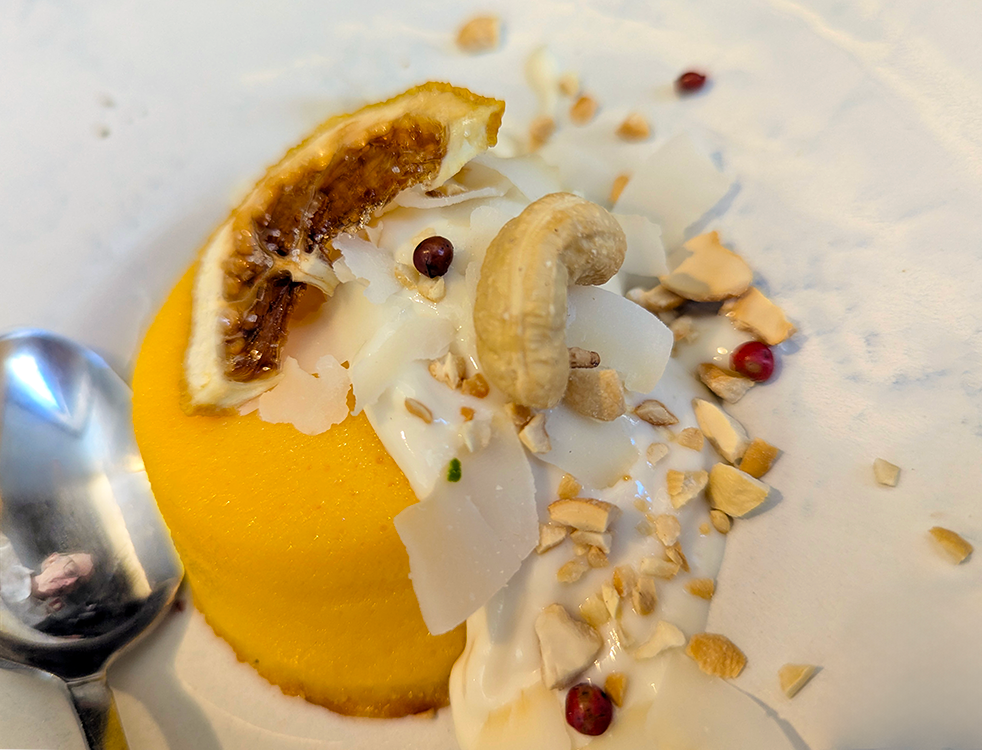
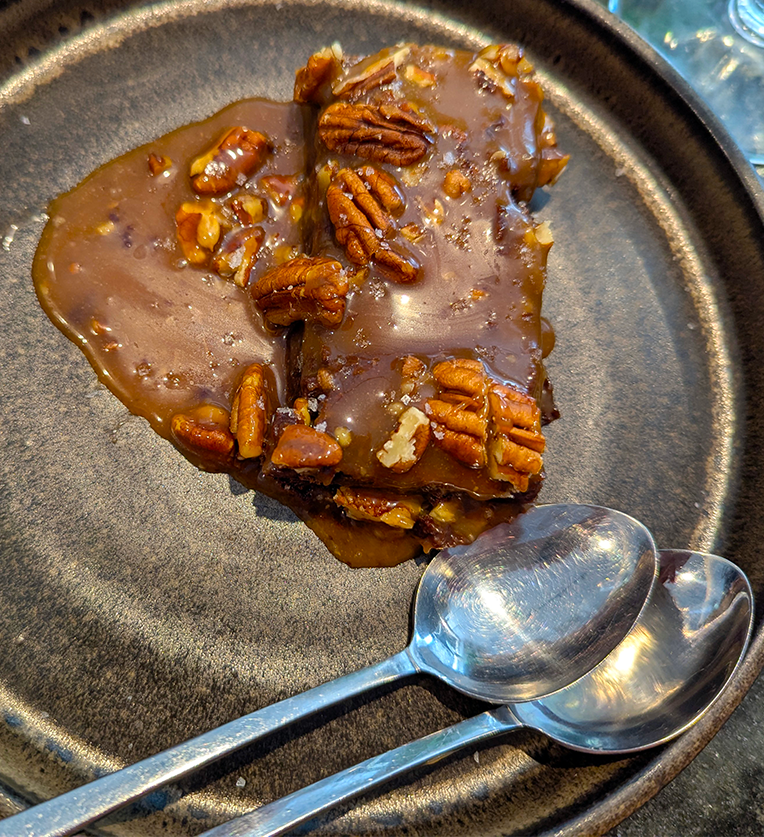
Above: O Filho da Mae
The owner at Restaurante Cozinha da Se told us he had some Indian chiles that were similar to padrons, only a tad hotter. After one or two, they scorched our tongues more than our Texas palates cared to withstand.
Aside from that, the restaurant concentrated on tamer fare. We ordered sauteed shrimp with chiles and garlic; and an octopus feijoada, a traditional bean stew. The texture of the octopus seemed canned – not an insult in this land known for gourmet tinned fish, but unexpected and off-putting to us. Walnuts and luscious honey at the end of the meal erased any remnants of those searing Indian chiles from our tongues.
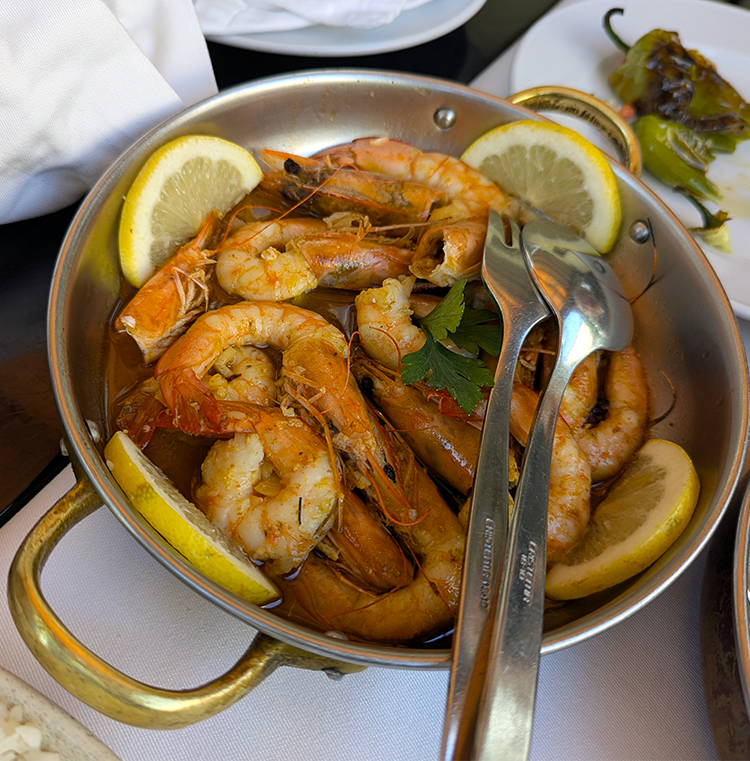
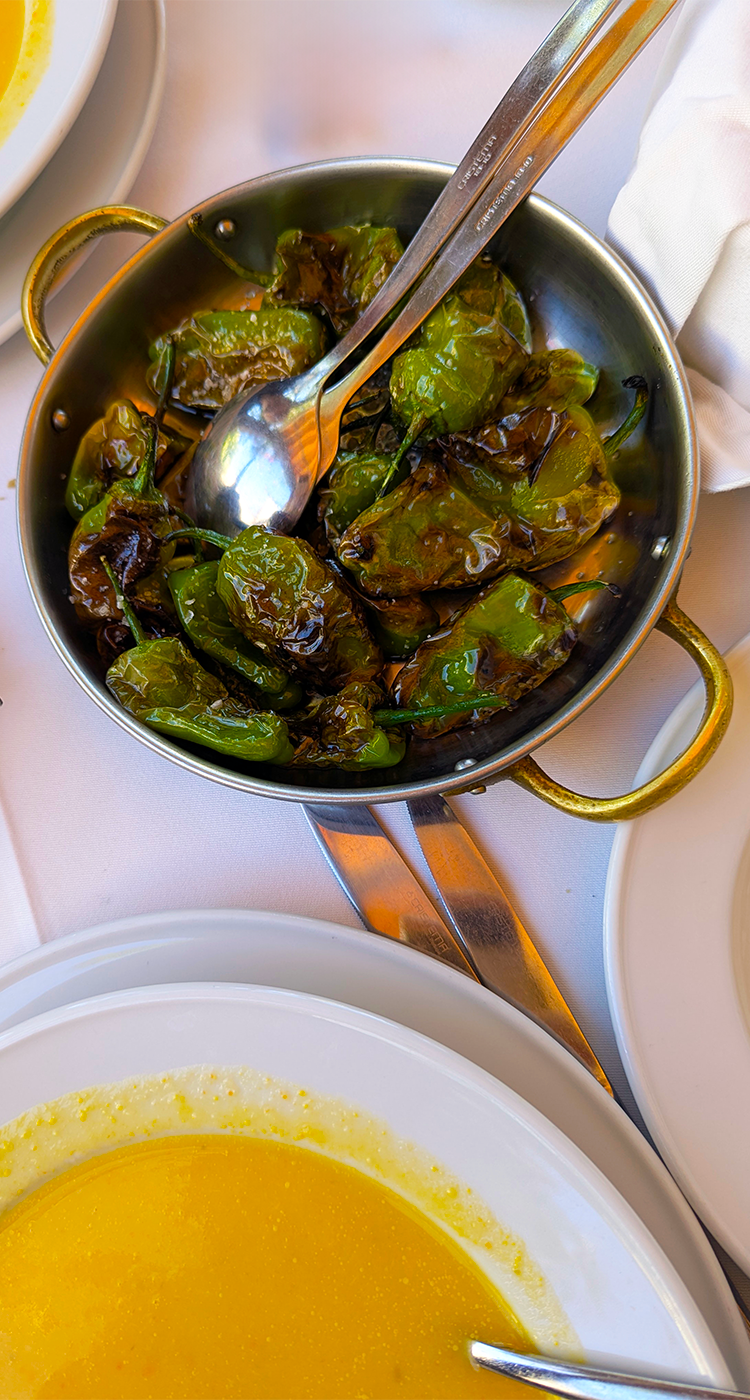
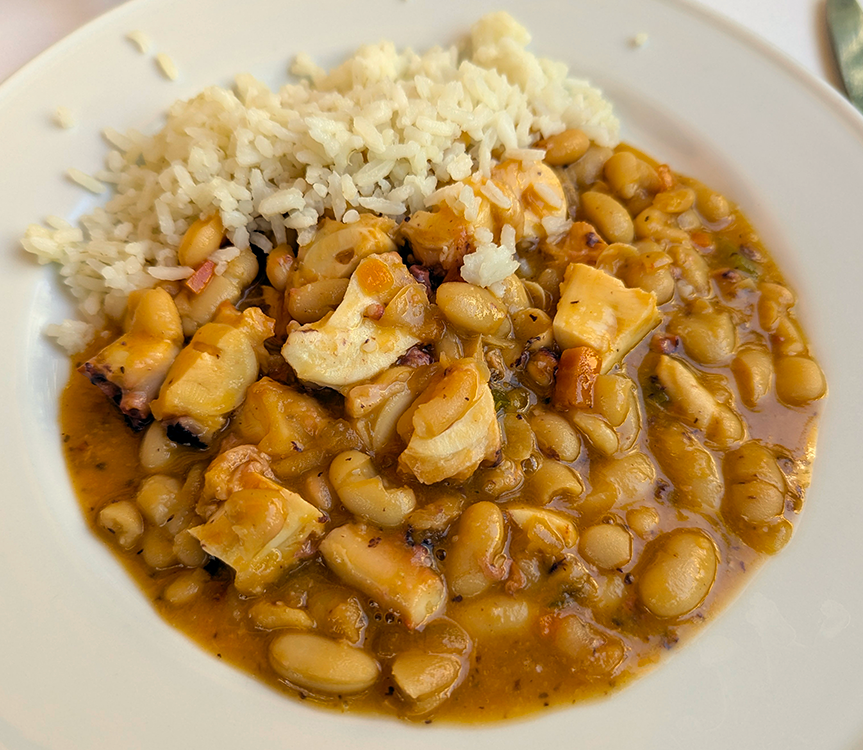
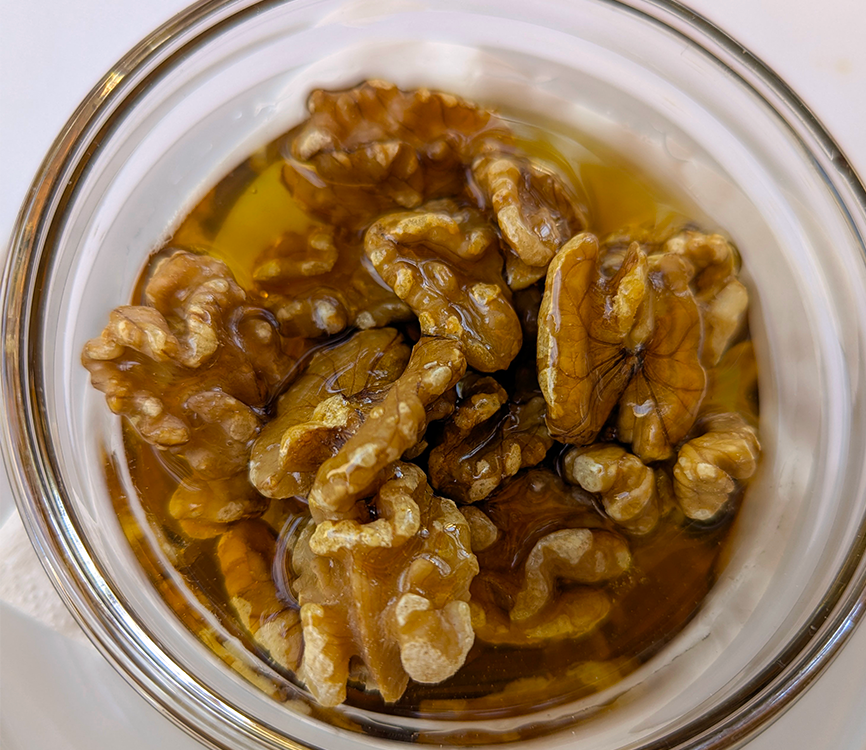
Above: Restaurante Cozinha da Se
Ever-present on menus of traditional Minho restaurants is caldo verde, a green broth made from potatoes and onions accented with slivers of a close kin of collard greens. Trota’s Restaurante prides itself on such regional specialties.
For entrees, we ordered a battered fish and arroz de pato, or duck rice. For this Minho rice dish, the duck is braised until tender enough to shred easily. The rice is cooked in the duck stock and then combined with the shredded pato. Baking in the oven makes the outer layer of the rice mixture slightly crispy and chewy – delicious. As an aside, the average annual consumption of rice per person in Portugal is 35 pounds, ten more than in the United States.
For dessert, a light mango mousse and pudim Abade de Priscos, which I thought was a traditional creme caramel. In someways it is, but a 19th-century abbott in Braga is credited for creating this rich iteration. First, sugar, lemon zest, a cinnamon stick and raw bacon are boiled together. After slight cooling, egg yolks and port are whisked in, then baked in a warm bath, resulting a smooth, dense flan, definitely on the rich side. No wonder “sighing” nuns in Portugal learned to make suspiros, or meringues, with leftover egg whites.
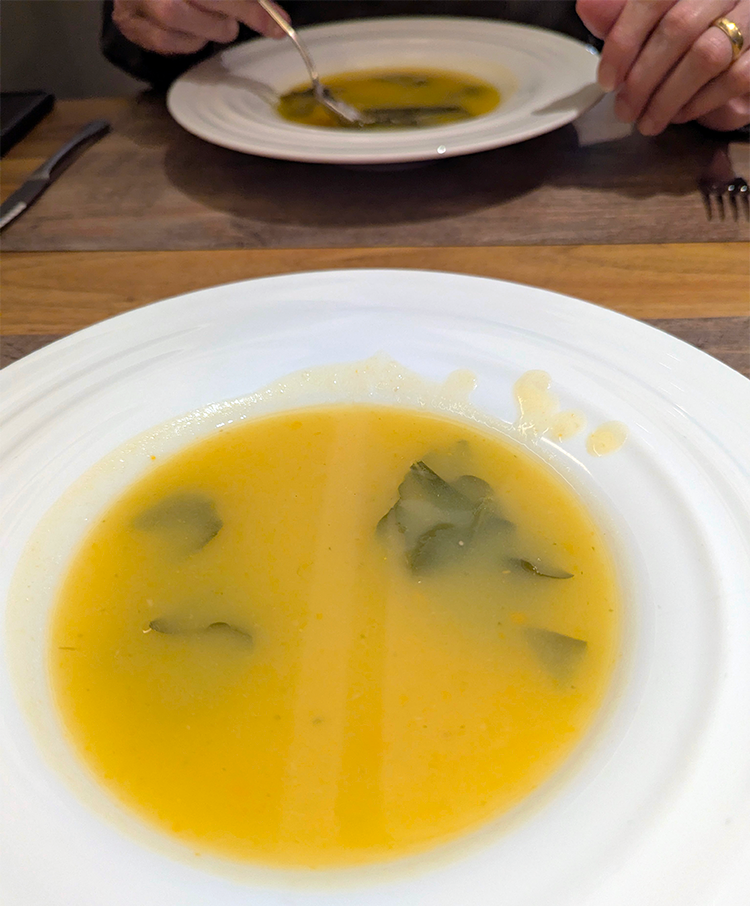
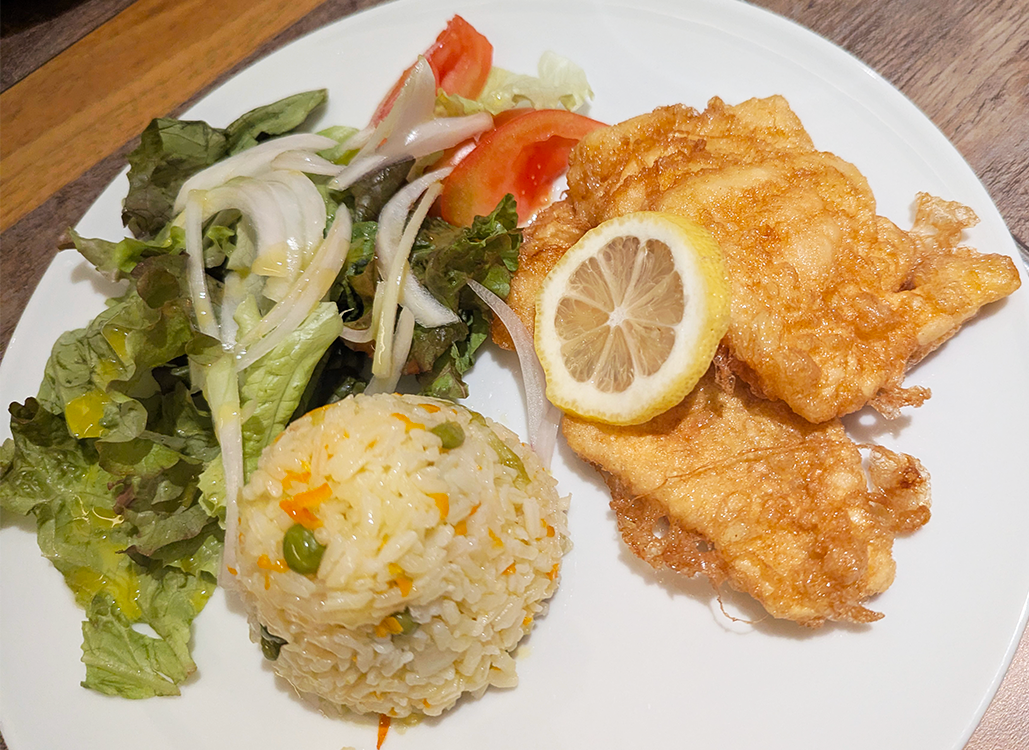
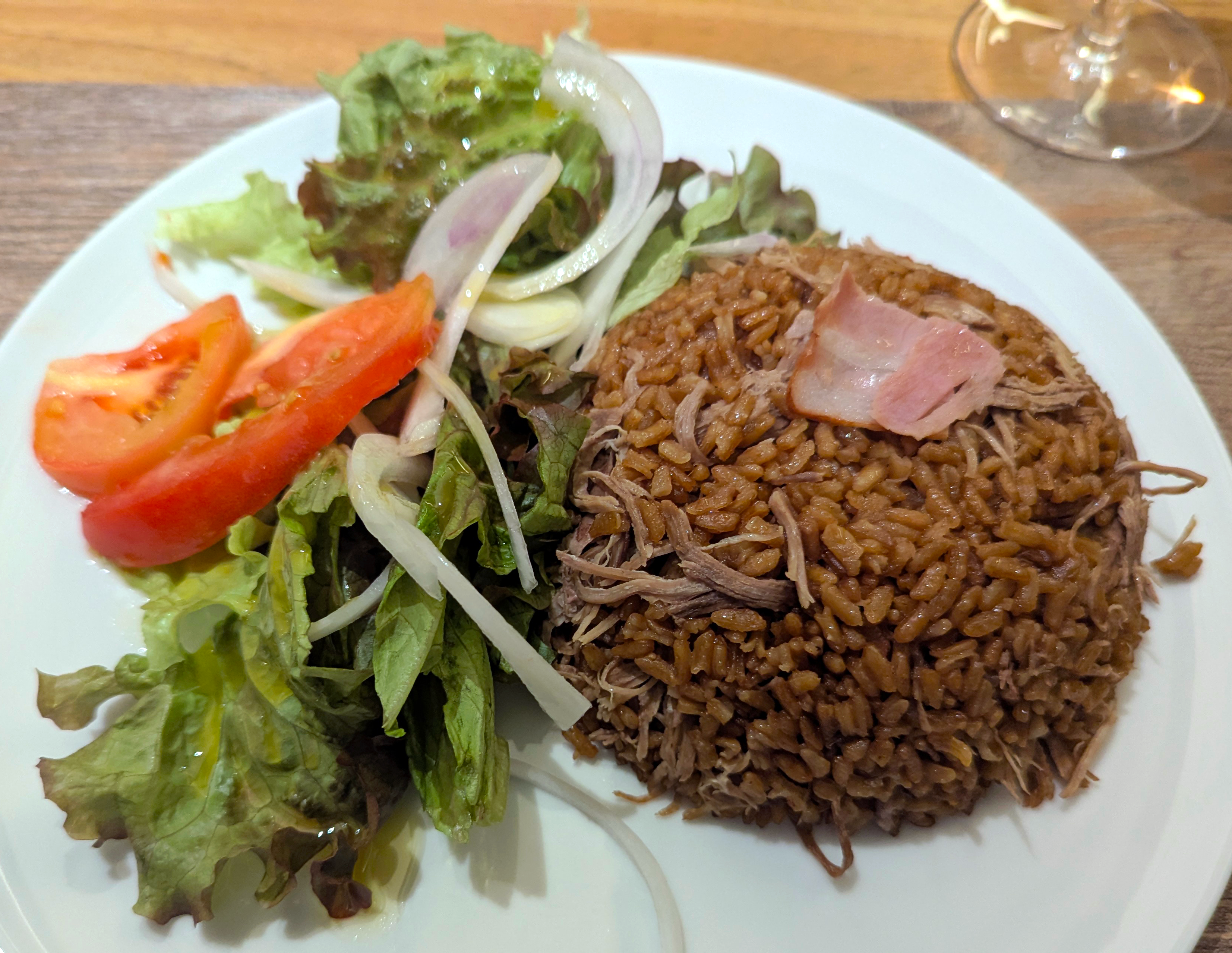
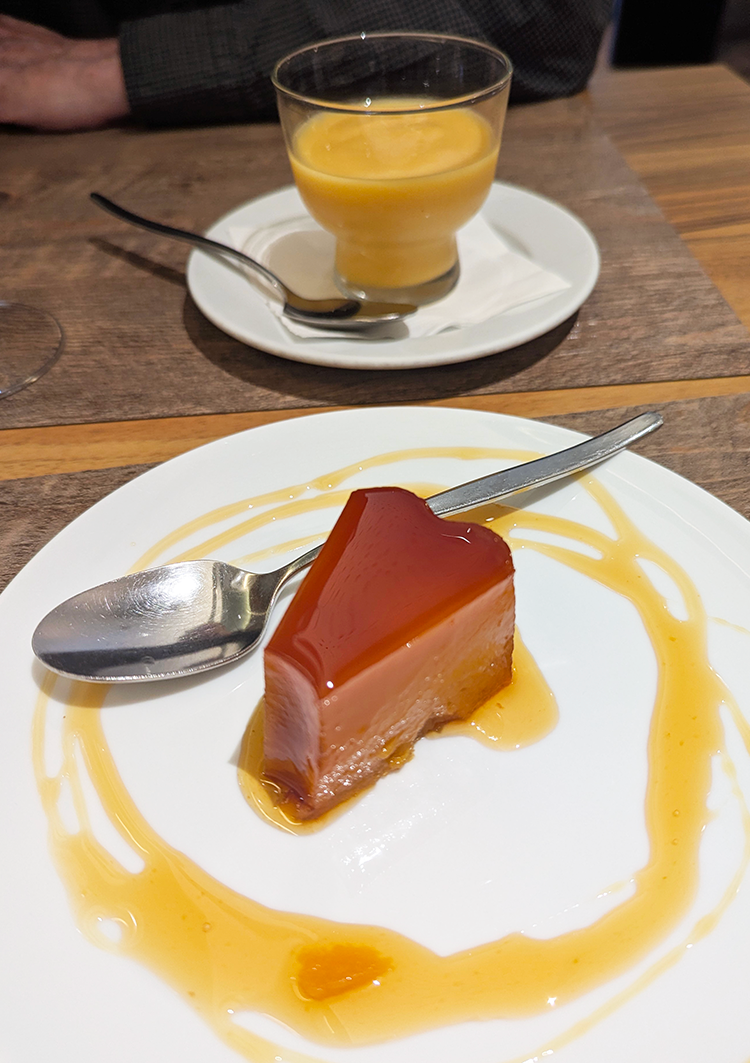
Above: Trota’s Restaurante
A mere 15 miles outside of Braga, we found Cor de Tangerina, a vegetarian restaurant in Guimaraes. Intimate small dining rooms are found inside, but on a bright sunny day, the outdoor patio is an idyllic spot. A starter of fresh figs and cheese drizzled with a balsamic reduction – heaven.
Instead of traditional pork sausage croquetas, the delicious bolinhas accompanying potato mille-feuilles were composed of smoked mushrooms with beetroot mayonnaise and cubed Freixo do Meio acorns alongside. No longer reserved for the free-ranging pigs destined to become jamon Iberico, acorns are now making their way to dinner plates in Portugal. The brick-sized potato pave topped with a generous helping of chanterelle mushrooms could easily have been shared.
Then there was an arroz de pata feliz – the duck “happy” because there was no duck in the rice gratin with mushrooms, assorted vegetables and smoked tofu. Rare that you will hear this complaint from me, a turophile, but the gratin was swallowed by way too much cheese for me to enjoy. Berry ice cream topped a light brownie for dessert.
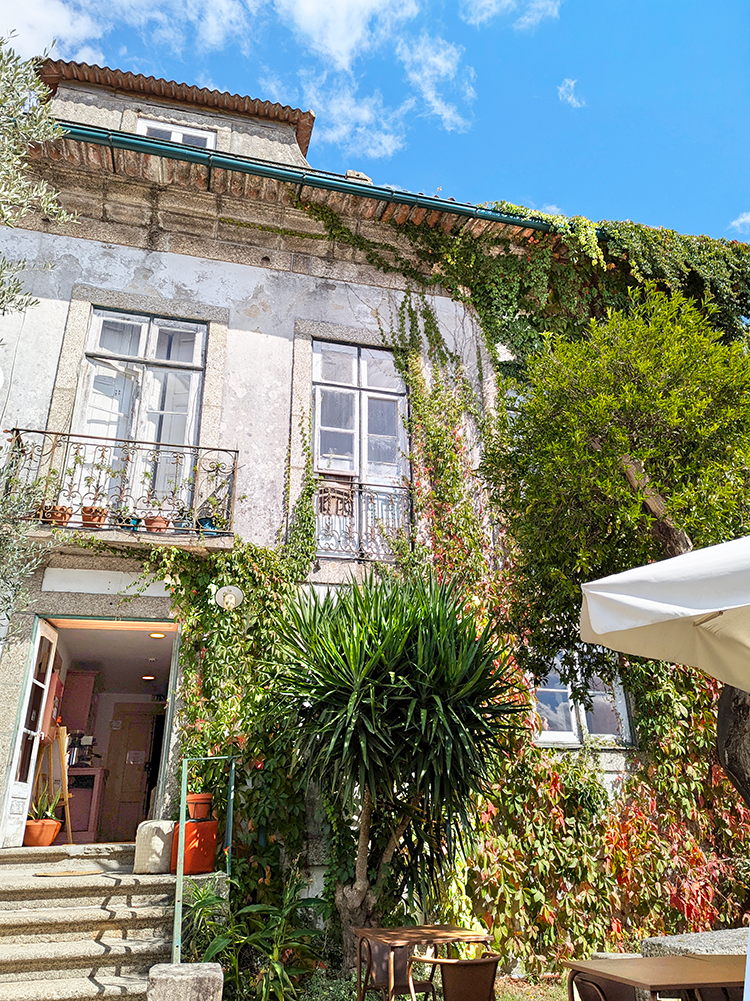
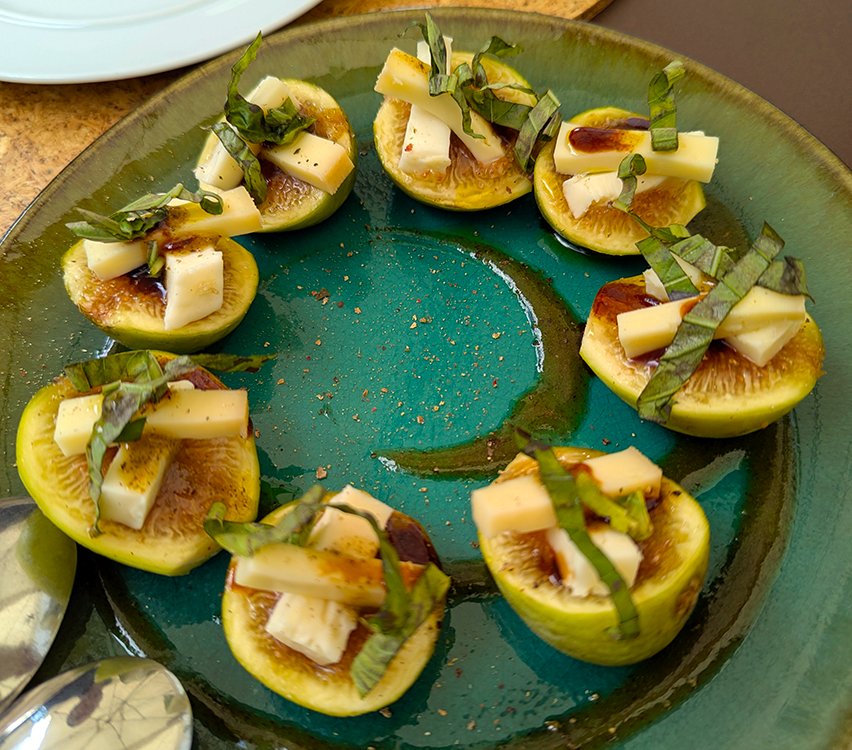
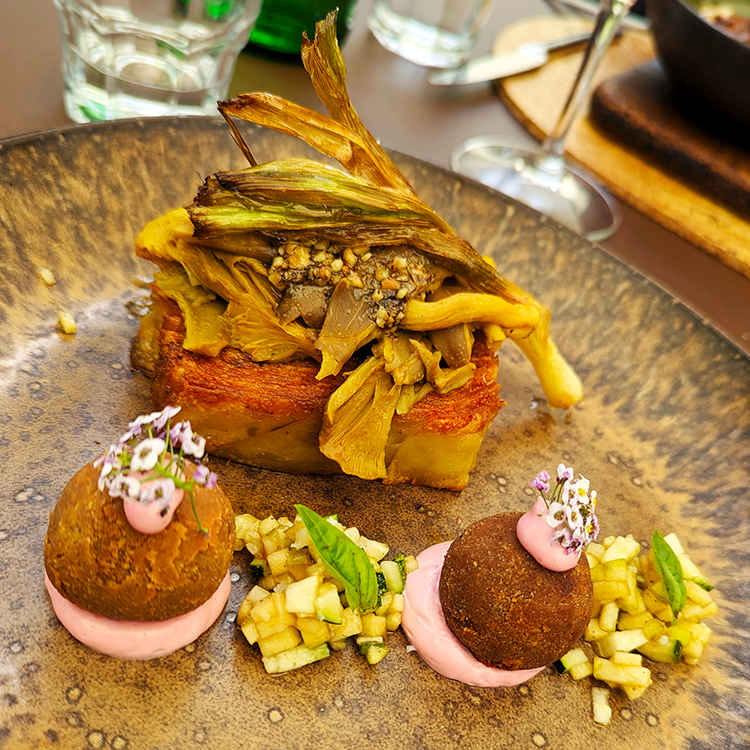
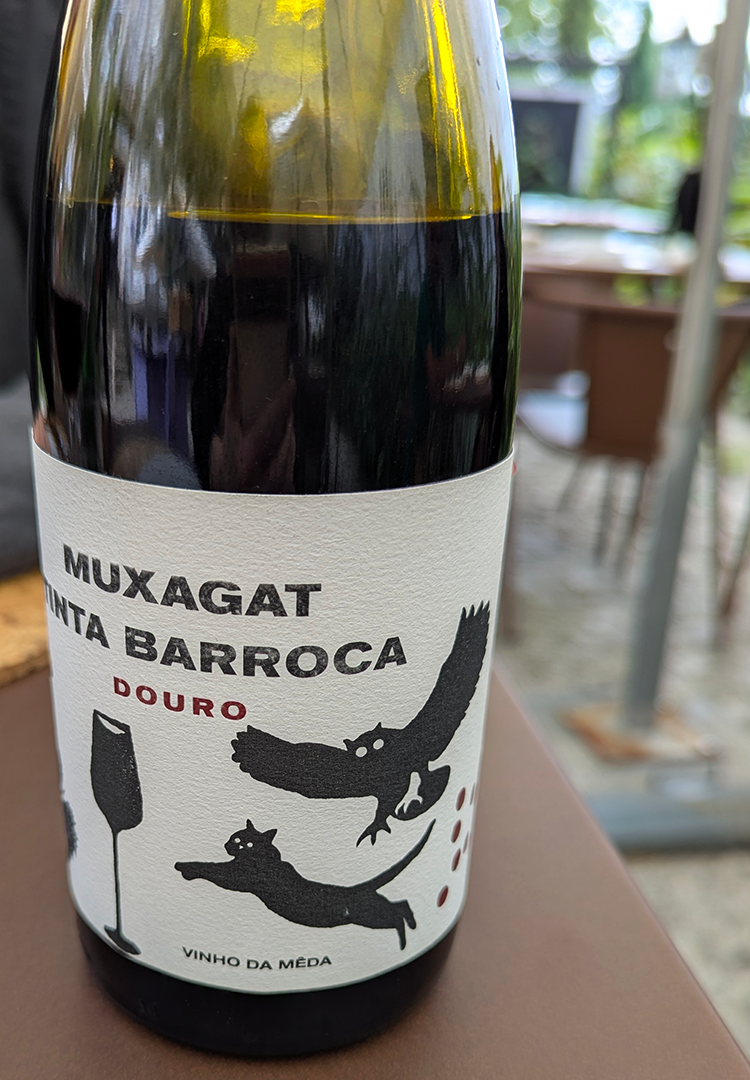
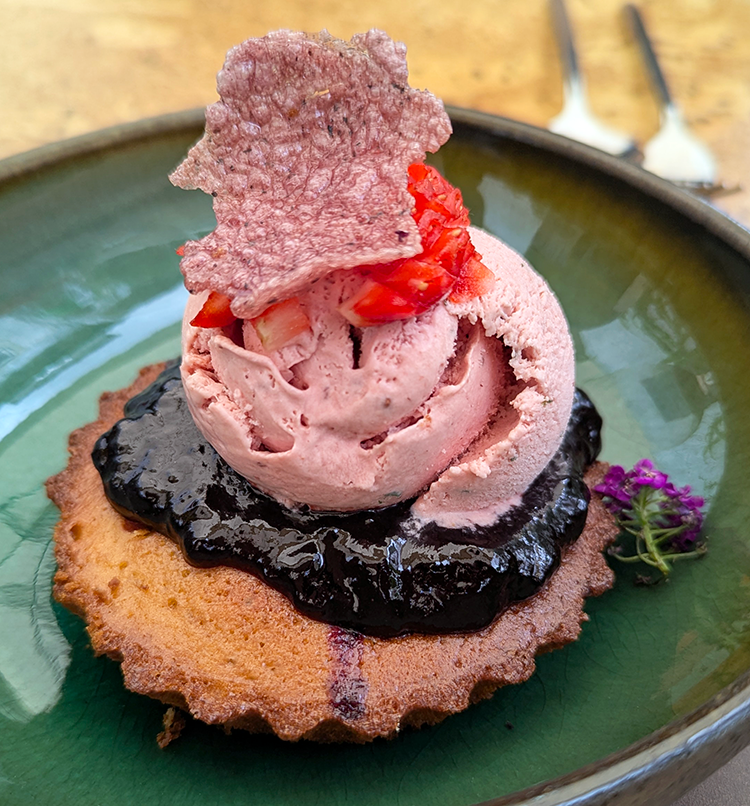
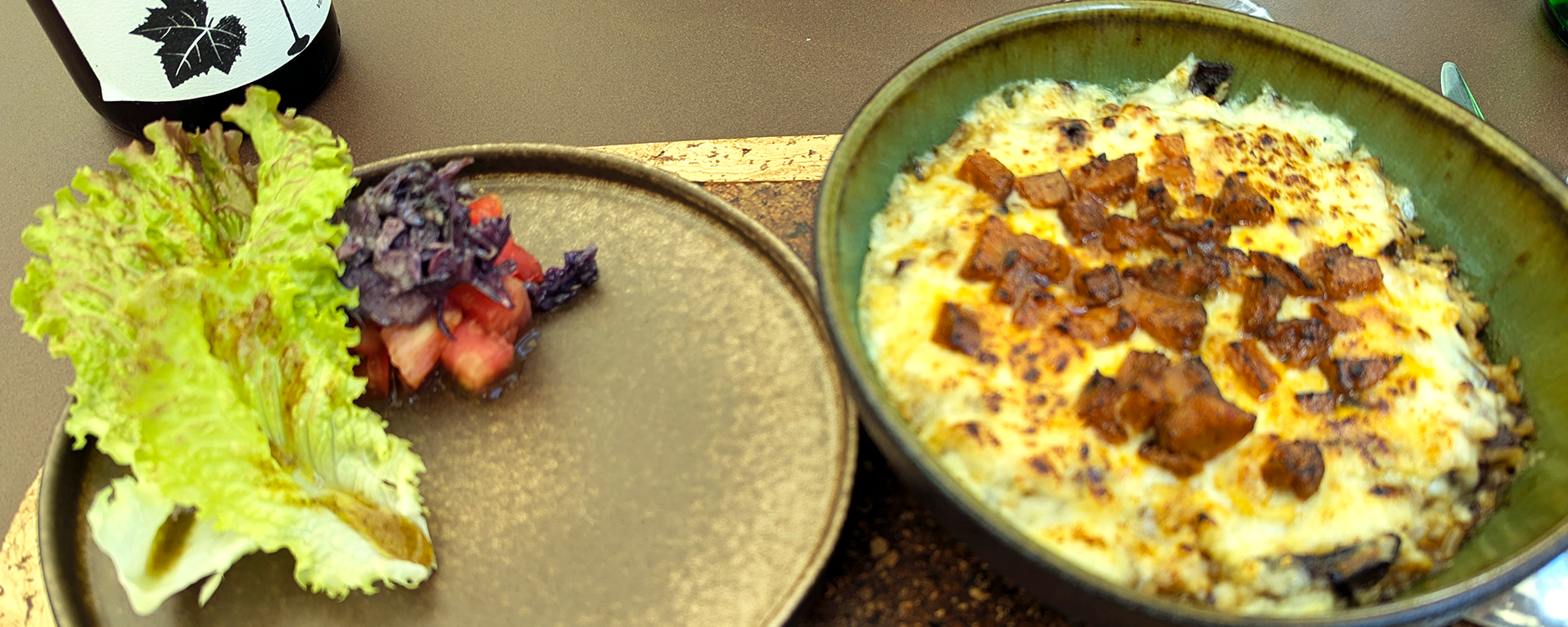
Above: Cor de Tangerina
Bom apetite!
 Postcards from Barton Springs