


Above: A version of a negroni created in honor of Mount Etna at Moro Acireale superimposed over a view of the simmering volcano in the distance.
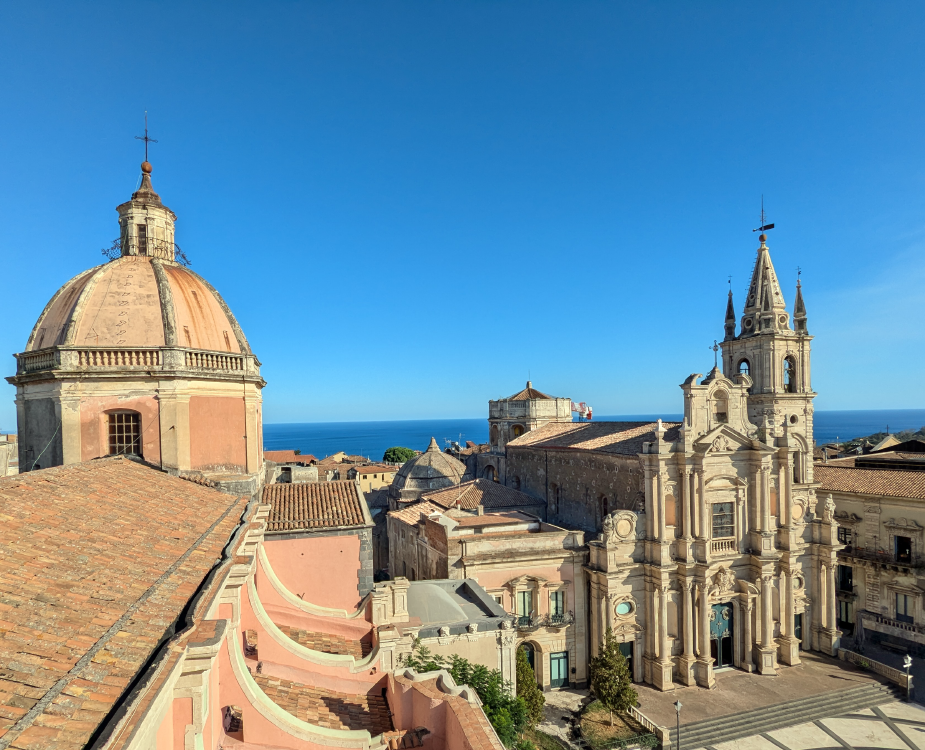
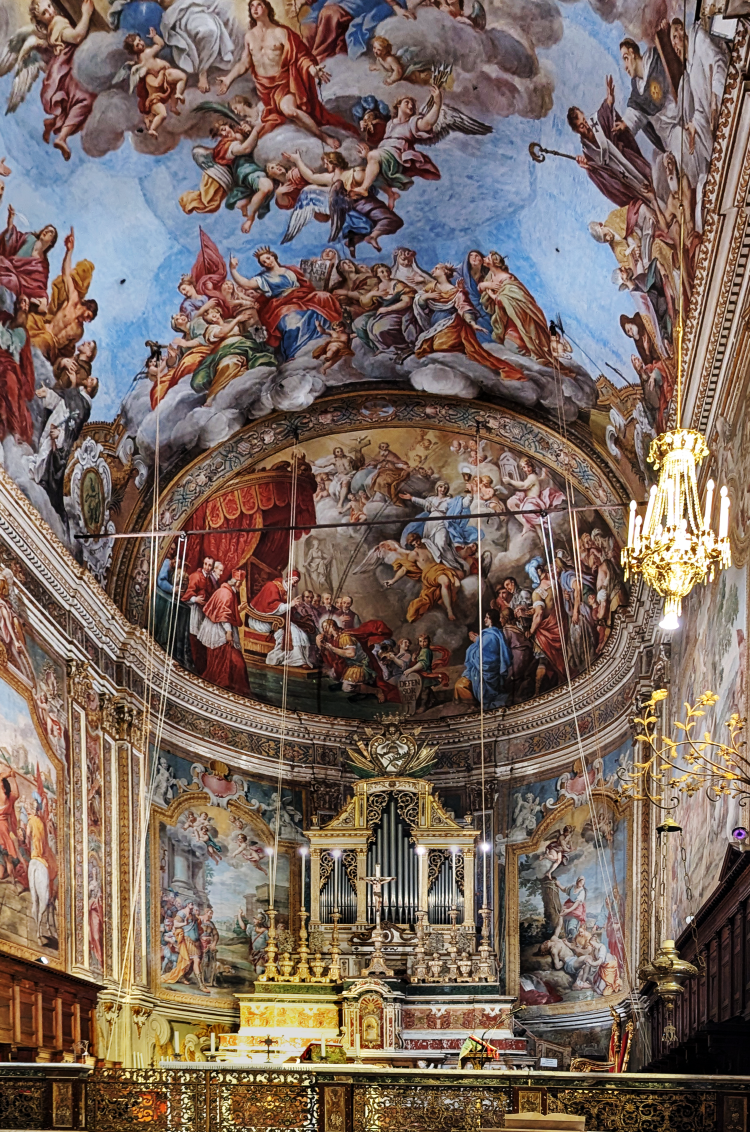
Ambling sounded appealing, and, with a tenth of the population of bustling Catania, nearby Acireale beckoned. The predominant style of its architecture is Late Sicilian Baroque, sometimes referred to as “Earthquake Baroque.”
Then came an earthquake so horrible and ghastly that the soil undulated like the waves of a stormy sea, and the mountains danced as if drunk, and the city collapsed in one miserable moment….”
Account from an eyewitness to the 1693 Val di Noto Earthquake, The Genesis of Noto: An Eighteenth-Century Sicilian City, Stephen Tobriner, University of California Press, 1982
At the start of the new year in 1693, Mother Nature cursed most of southeastern Sicily with a triple whammy: Etna erupted; an earthquake believed to have measured well above 7 on the Richter Scale struck; and a tsunami hit. One way or another, more than 60,000 perished in the disaster.
All these cities, towns and manors are leveled without even the foundations showing. The city of Catania is like the palm of your hand, except for the seaward walls.”
Report from the Viceroy of Messina, The Genesis of Noto, Stephen Tobriner
So out of ruins, the center of Acireale arose Baroque. To help prevent future catastrophes rebuild all your churches and add more for good measure. So many churches that Acireale is known as the city of 100 bell towers. Three of its impressive churches are papal-designated basilicas.
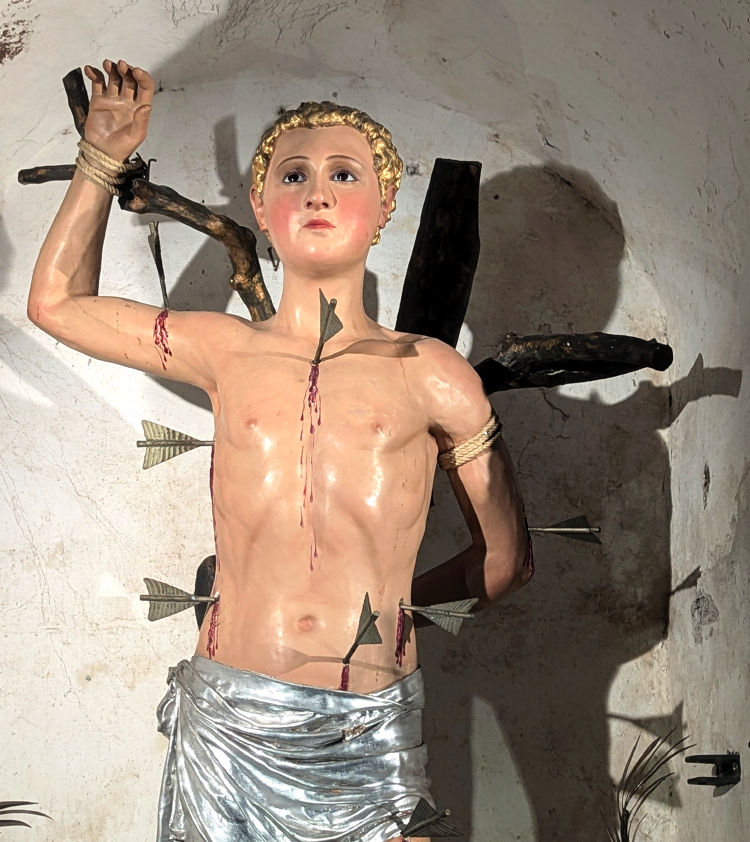
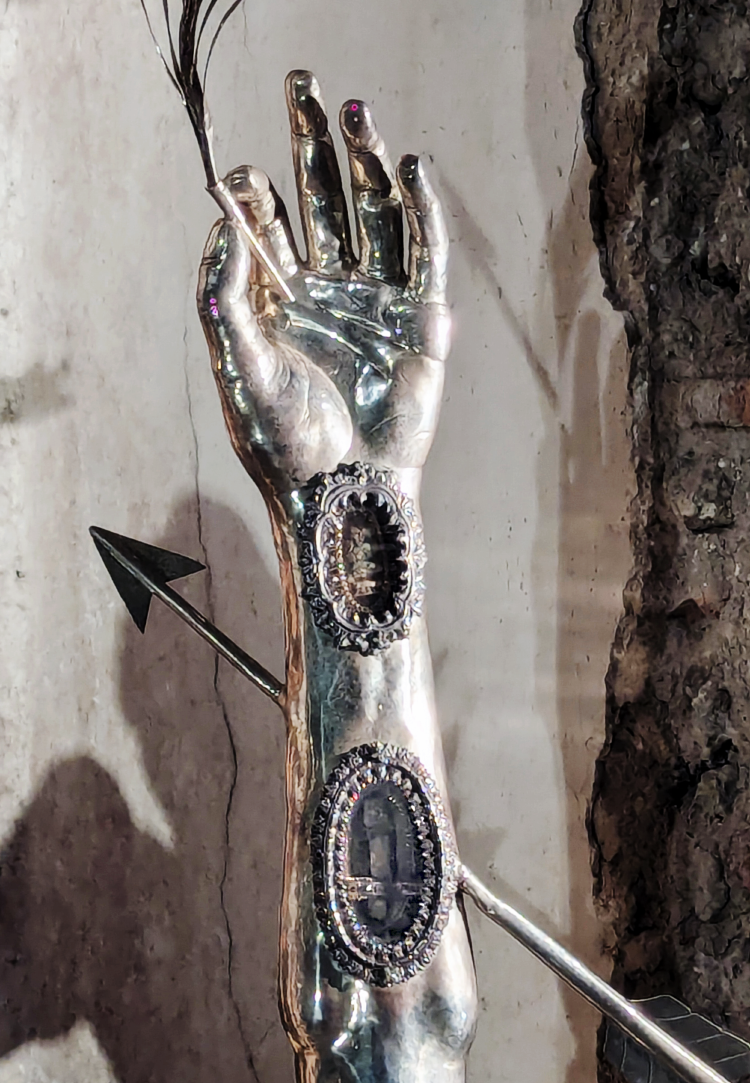
The basilicas house reliquaries of saints important to the city. Those of Saint Venera, an early Christian martyr and one of the city’s patron saints, are found in Cathedral Maria Santissima Annunziata. The other patron saint of the city is San Sebastiano, with remnants of his left arm displayed in an elegant silver, arrow-pierced reliquary in a basilica bearing his name.
Then there’s the rather impressive full-body-reclining reliquary stretched out in the Cathedral and labeled San Clemente de Martire, Pope Clement I. Although Acireale heralds these relics on the pope’s feast day, the bones bear no kinship to the patron saint of mariners.
Around 1770, the mother church of Acireale appealed to the pope to obtain relics…. It is not known whether this request was made to give prestige to the church, recently repaired from the damage of the earthquake…. The pope granted the church of Acireale a body from the early Christian Catacombs of Praetextatus in Rome. These nameless remains were therefore brought to Sicily in 1778, analyzed by a special congregation, that of Indulgences and Relics, which considered them authentic and sealed them in their shrine, attributing them to a Christian martyr of the first century. However, this body could not remain anonymous, so it was decided to give it a name. It was called Clement, in honor of Pope Clement XIV who had granted the relics to the church, and who in the meantime had died. So the unknown martyr from then on had the name of San Clemente and began to be celebrated on the day of this famous saint of the same name, on November 23rd.”
“The Mystery of the Nameless Saint,” Samuele Schiro, Palermoviva
Supplementing the potency of the relics of saints and the unknown are abundant architectural grotesques, carved flourishes to ward off evil.





We encountered some transportation issues, not uncommon in Sicily, attempting to make the short trip to Acireale by bus. A scheduled bus that never came. We waited along with others. And waited until we stood alone. We ended up taking a train, then a cab into the historic center.
After wasting an unexpected amount of time, we didn’t want to fritter our afternoon stay away on lunch. We opted for a table with a view of the Cathedral and its plaza at Moro. A nice plate of arancini, a plump rustic sandwich, and avocado toast with salmon and fried egg left us more than satisfied.
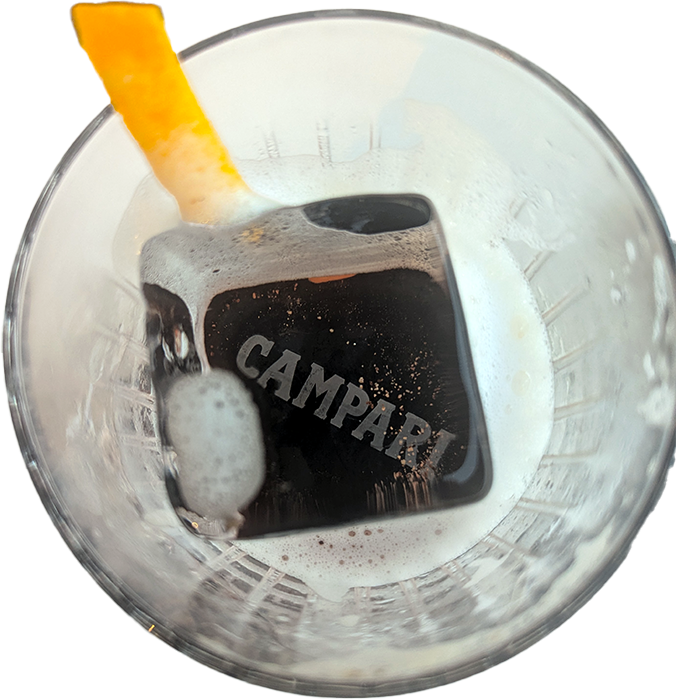
We returned to Moro for apertivo hour before our early evening train back to Catania, and Lamar fell in love with the bartender’s Etna negroni. Madeira fortified wine was substituted for Vermouth, deepening the rich flavors of the Campari and gin. Perfect down to the single, clear ice cube remaining in the bottom of his glass. In his view, this cocktail topped with foam mimicking the smoke hovering over Etna should make Moro of Acireale famous.


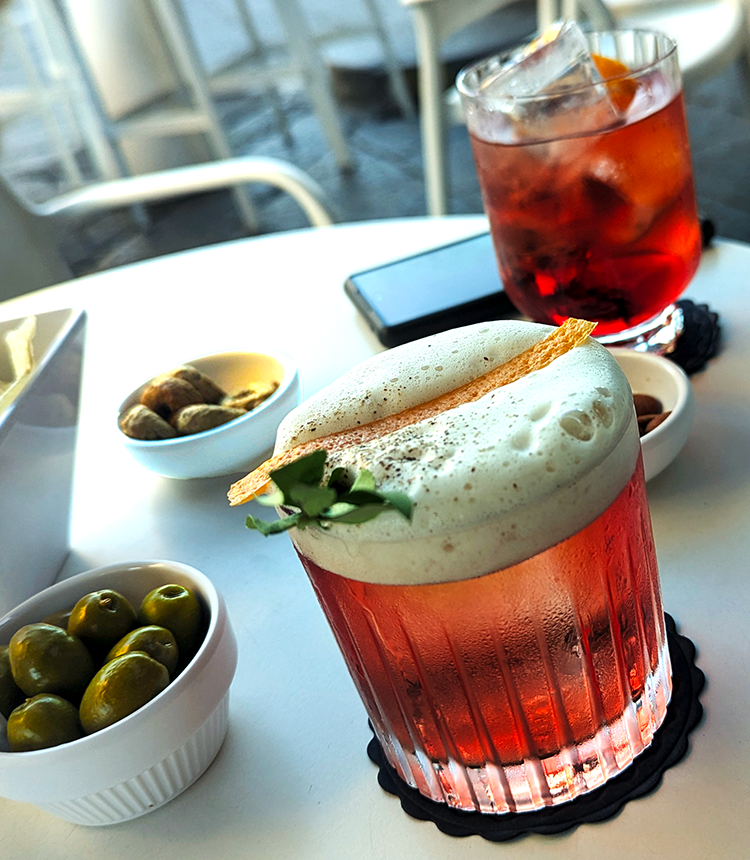
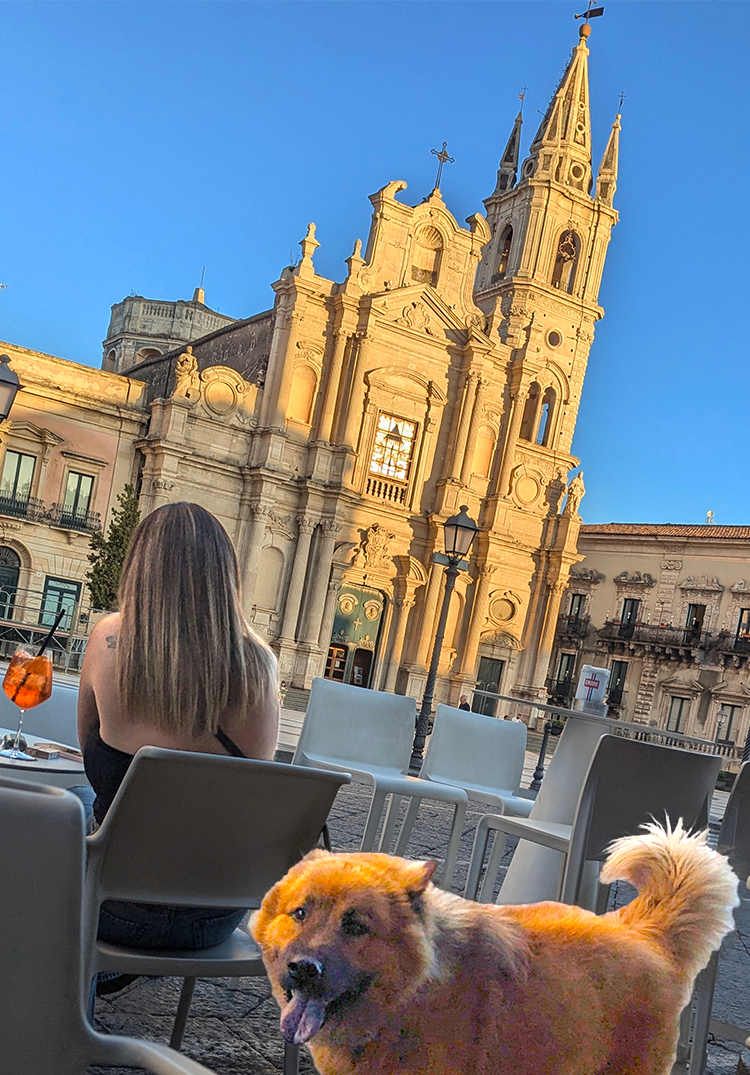
Above: Lunch and apertivos at Moro on Piazza del Duomo
 Postcards from Barton Springs
I still remember the day that our student bus drove through the streets of central Catania. At the time I thought the city was nothing special, having spent an entire year in Rome, Firenze, Venice, Perugia, Orvieto, Siena, etc. Its cityscape was nothing special for our architecture survey, just a place to drive through to destinations further on. We spent the next 10 days studying and sketching the Greek temples and amphitheater of Taormina, Siracusa, Agrigento et al. // I thought the statue of Mary and the little Lord Jesus in your photo essay was wonderfully odd. Baby Jesus seems to have a left foot where his right should be and vice versa. This must be a sign of some sort for the local Mafia. Or what else could it mean?
LikeLike
Thanks for noticing something afoot with Baby Jesus. I can’t decide about which is which, but perhaps they were switched during post-earthquake repair? Catania itself does have some splendid architecture, but much of it is dingier in appearance because of frequent coats of ash burped out of nearby Etna. There are hordes of day tourists swarming in certain areas as cruise ships stop there and tour buses come and go from the volcano. It’s less museum-like than the center of an Ortigia or Orvieto. It has a down-to-earth real-city feel, and its university students keep it lively.
LikeLike
The baby’s odd feet became obvious when I noticed the relative size of the toes on each foot. The big toes are not in their proper place. More telling: the little toes are not quite right. Thanks for mentioning the soot from Etna. When we were there in 1973 that was not the case, as much as I can remember. I was wondering in your photos why so many of those walls had dirty surfaces. // Which is in stark contrast with buildings in Rome. They are so much cleaner than any of us in the Rome Program remember them being. Piazza Navona is so clean now. Back then it definitely had the patina of centuries. I’ll email you a pic I made one winter morning with the sun out. Buildings have incredibly rich colors.
LikeLiked by 1 person