

Above photo: The handsome copper-domed grill above is located in Zebeyir Ocakbasi in the Beyoglu neighborhood. Ocakbasis are meat-centric open-grill restaurants which, like meyhanes, offer meze and alcoholic beverages.
If you long to imbibe a bit of alcohol with your food in Istanbul, the safest bet is to look for an ocakbasi or a meyhane. Meyhane is derived from mey meaning wine and hane meaning house – a tavern. Meyhanes have existed for centuries around the port of Istanbul, but tolerance of them swings depending on who rules the country.
The 17th century was also marked by a vicious cycle of banning and then legalizing the meyhane. As Kocu (Resad Ekrem Kocu, 1905-1975) wrote: ‘Sultan Ahmet I (1590-1617) prohibited the use of alcohol in July 1613, and also closed all meyhane and their guild. But, as a contemporary historian later on wrote, “As human nature is inclined towards depravity and evil, soon people were back to their drinking habits.”‘”
“Joie de Vivre – A History of Istanbul Meyhanes,” Yavuz Sac and Tan Morgul,” Gastromondiale, March 3, 2024
I have no idea whether it is by law or not, but there are blocks lined with meyhanes one after another, and the same is true of ocakbasis. Meyhanes offer a selection of traditional meze dishes and seafood in a simple setting.
They attract an unlikely trio of customers: thirsty tourists like us, young people at night and tables of older males who gather to sip coffee or raki together. Raki is made from the dregs of grapes left in the winepress that are distilled twice and flavored with aniseed.
Mavi Melek was on one of the streets with a high concentration of meyhanes. We weren’t particularly bowled over by the place, yet the unpretentious food surprised with its flavor. I wish I knew how to duplicate the magical mixture that transformed simple produce into Mavi Melek’s spicy salad. The eggplant and tomato dish had deep flavors. A fried platter of fresh seafood was perfectly cooked, although a few of the species were a bit bonier than we prefer.
The memorable part of the meal was dessert – our first taste of kunefe, always prepared in a metal pan. A layer of dry finely shredded dough is pressed on the bottom, then a layer of a white Turkish cheese and another of the shreds. A buttery sugar syrup, often flavored with rosewater, is poured over the top before it is browned in the oven. Pistachios are sprinkled over the crispy top, and the whole shebang is served hot, making cheesy middle oozy and stringy – decadently luscious. Never imagined shredded wheat could taste this heavenly.
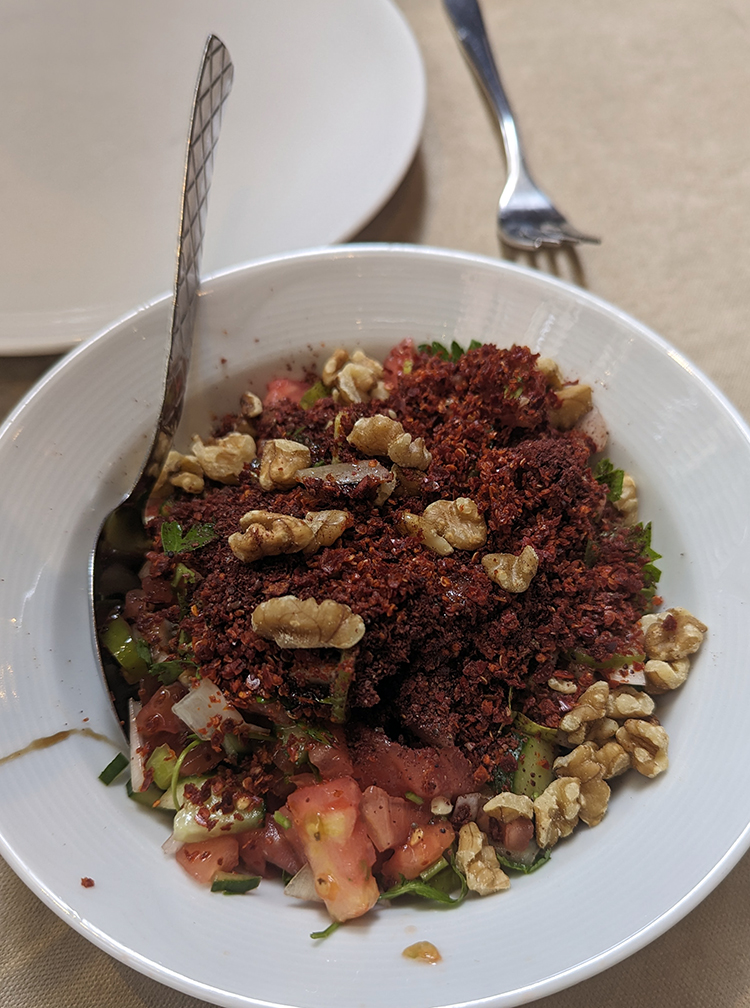

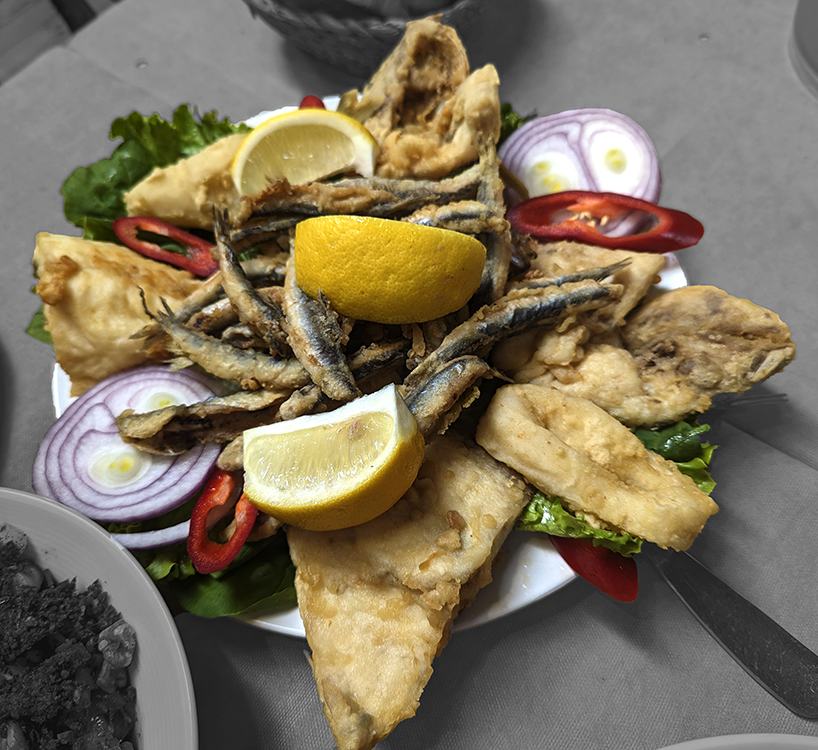
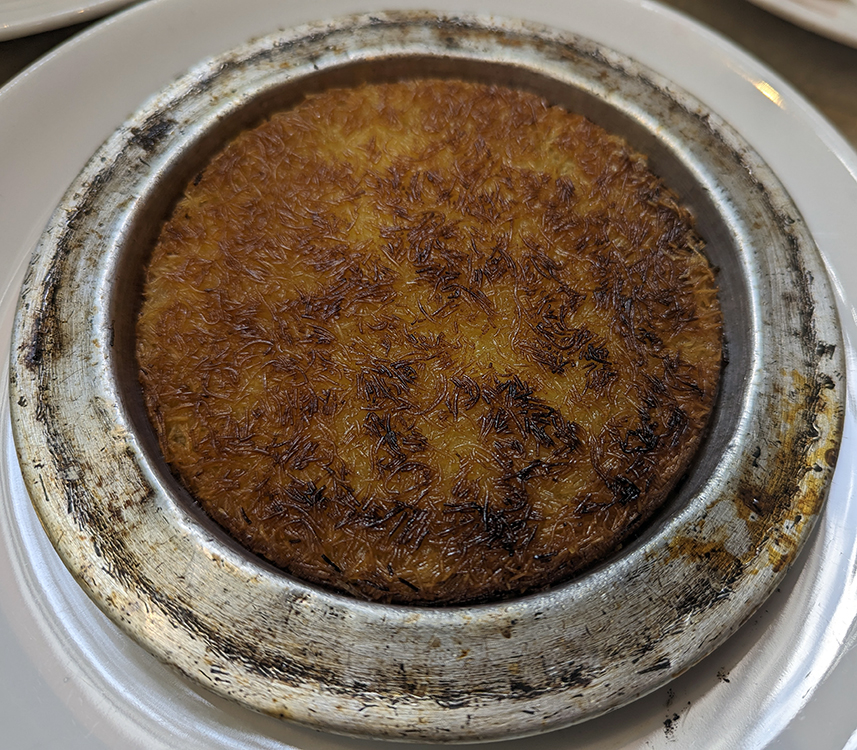
Above: Mavi Malek
The sterile flat expanse of Taksim Square was not our favorite neighborhood, but, in the mood for Indian food, we trekked through it to Musafir, which means traveler. Palak paneer, chickpeas and chicken biryani were okay for a city not known for outstanding Indian food, and Musafir was inexpensive.
The one caution is to not request wine. There was no wine list, but the owner said he could offer us a couple of glasses of red. Nice of him to accommodate us, but it was hands-down the worst wine I’ve tasted since high school. I did not raise my glass for a second sip.
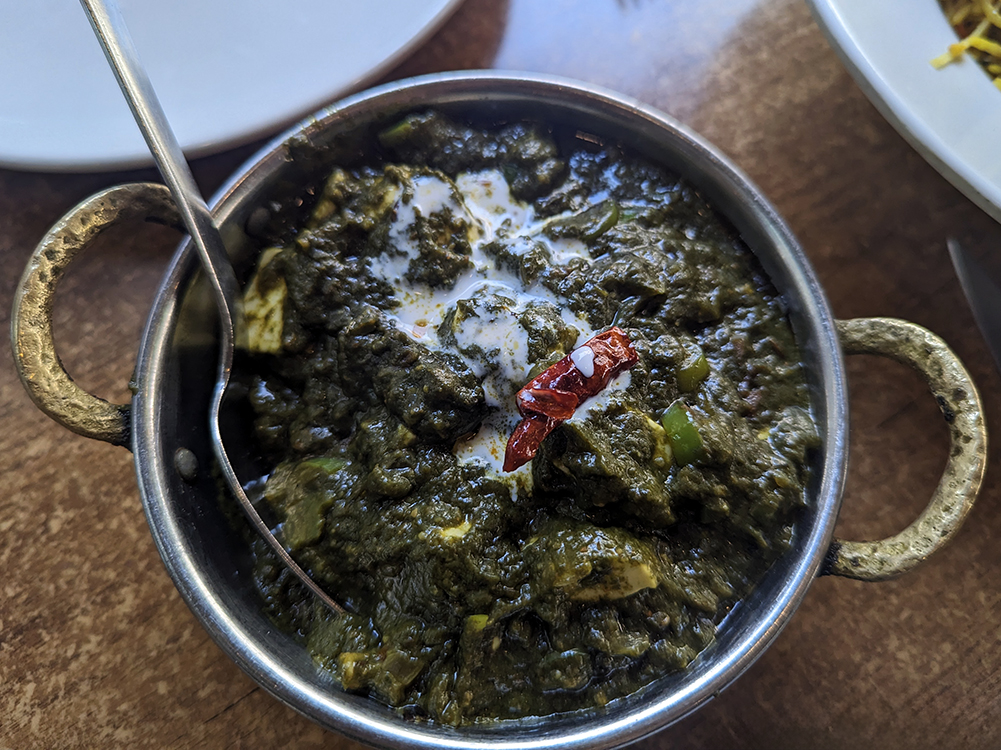
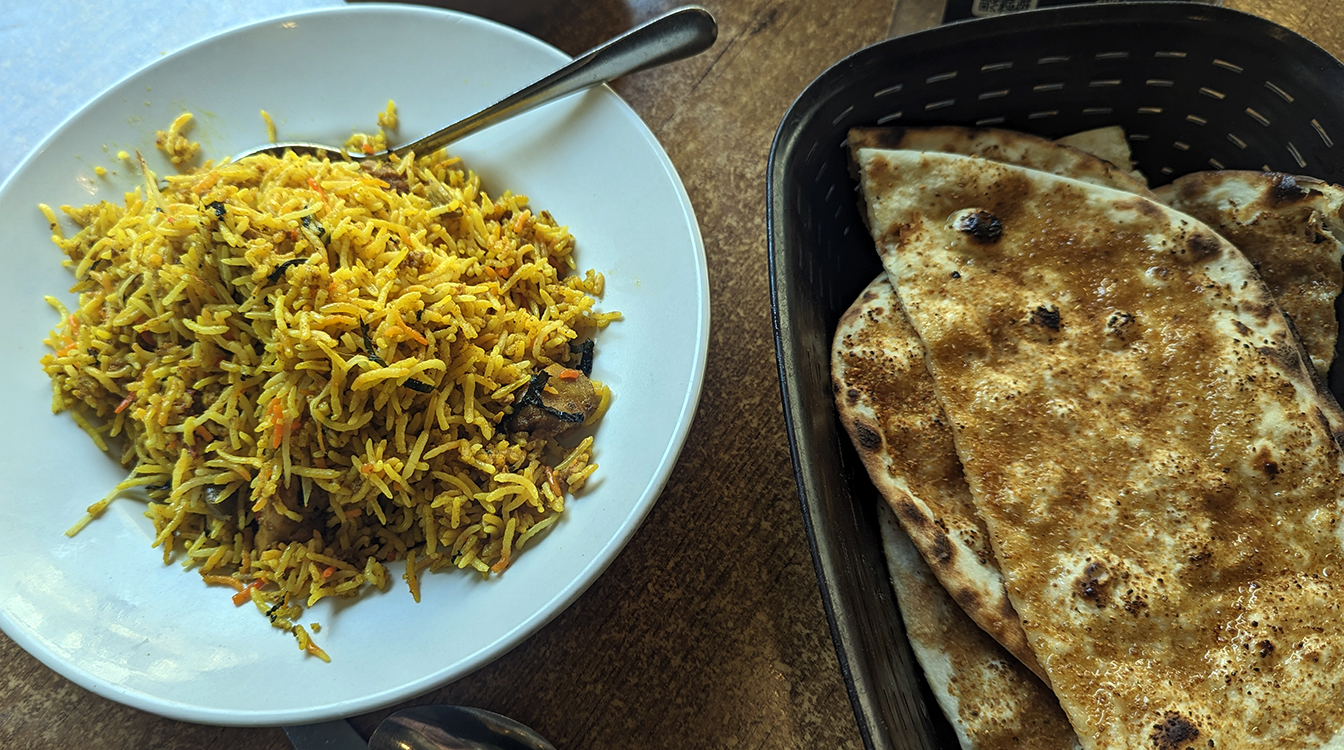
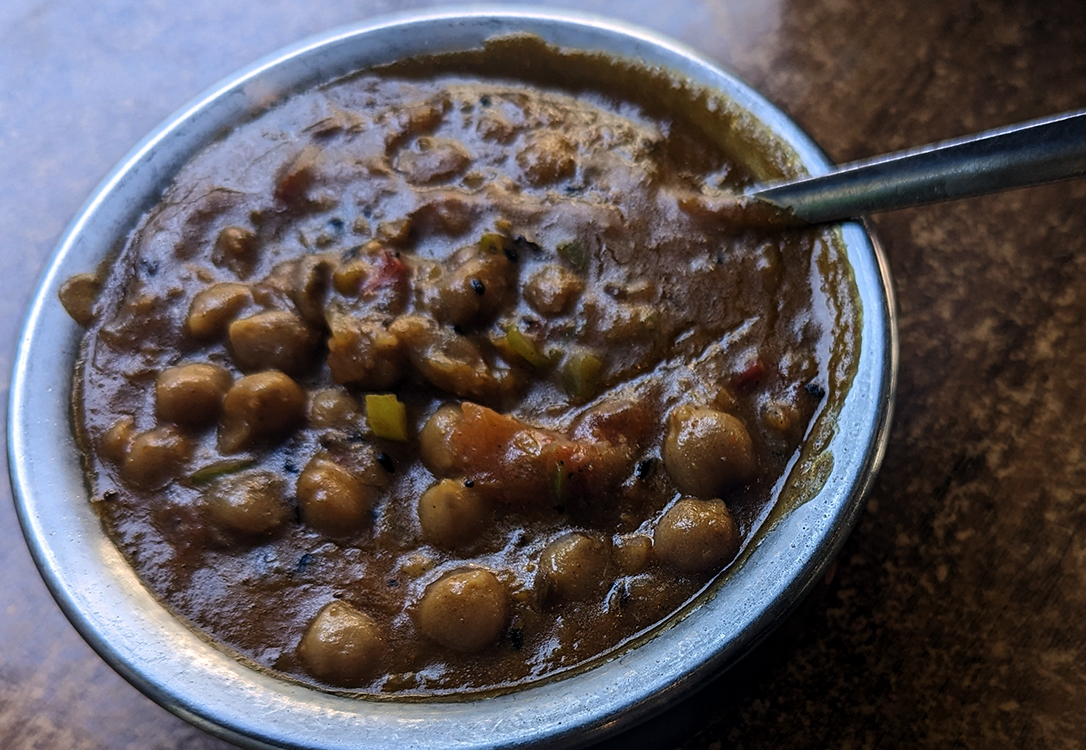
Above: Musafir Indian Restaurant
Ney’le Mey’le Meyhane offered another chance to sample the atmosphere of a traditional seafood tavern on the street they dominate. The chard and a giant bean stew were welcome meze, and fried mackerel were crisp and moist. A well-seasoned casserole was loaded with sea bass and chunks of shrimp, the only detractor being canned mushrooms. The friendly owner brought us some extremely sweet halva prepared similarly to creme brulee to sample.

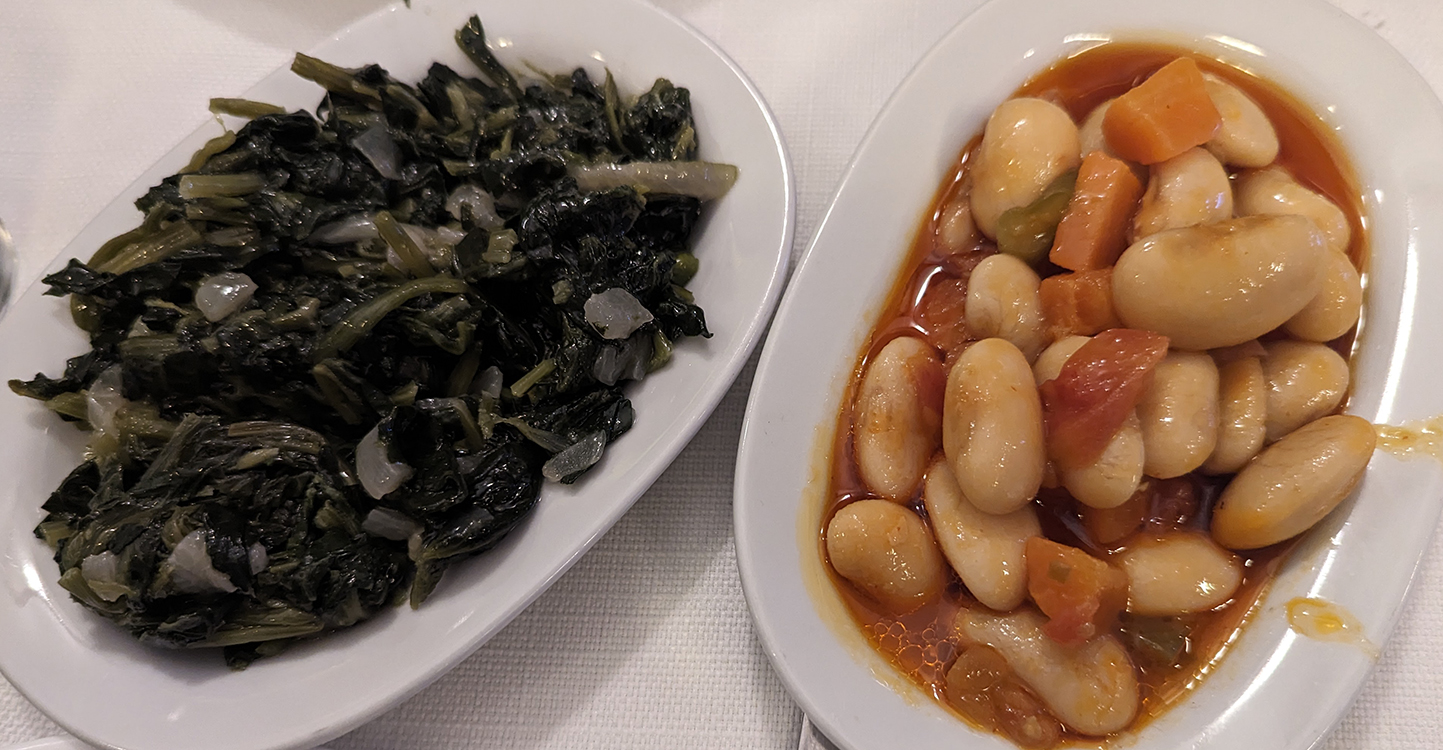


Above: Ney’le Mey’le Meyhane
Our neighborhood pizza spot, 49 Cukurcuma, had no trouble attracting us with its flexible hours, Desperate House Wine and cocktails. The bartender descends into the wine cellar via an old pulley-operated elevator in the middle of the floor, a remnant of the building’s former commercial use. We never tried 49 Cukurcuma’s pasta dishes, but we did enjoy several salads and pizzas on its great people-watching corner.
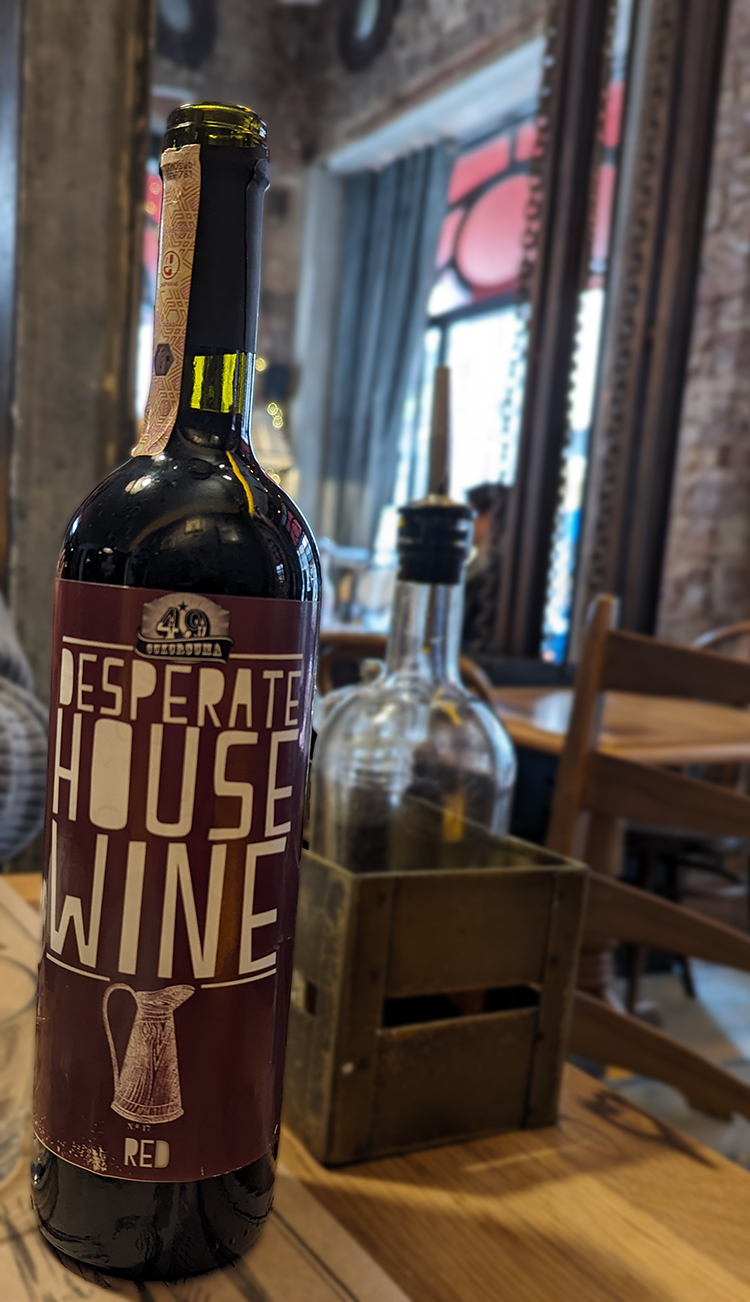
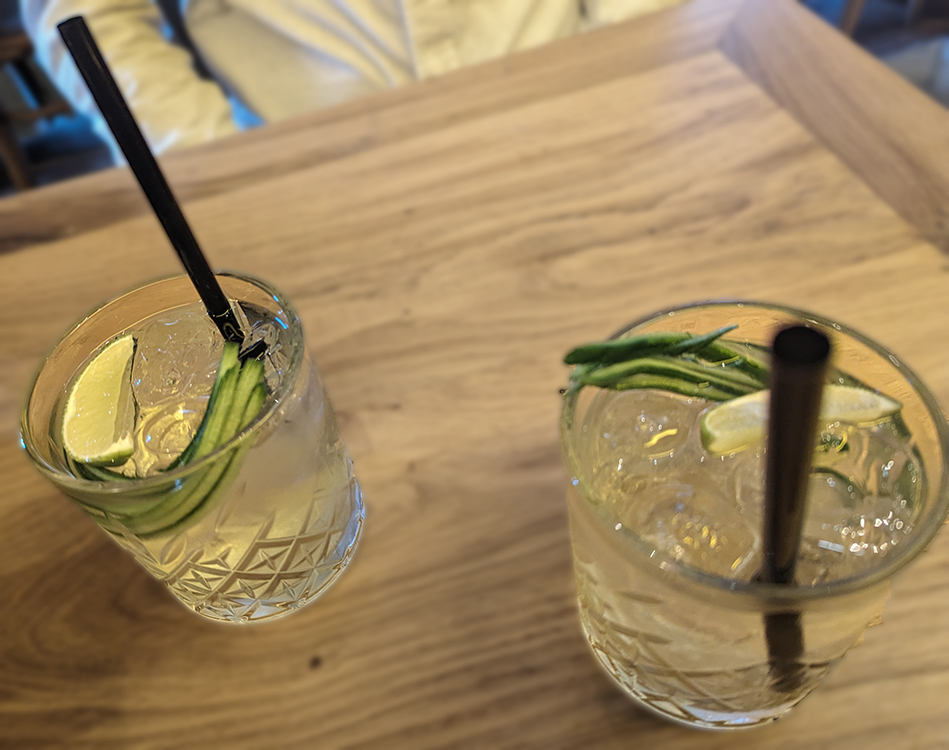
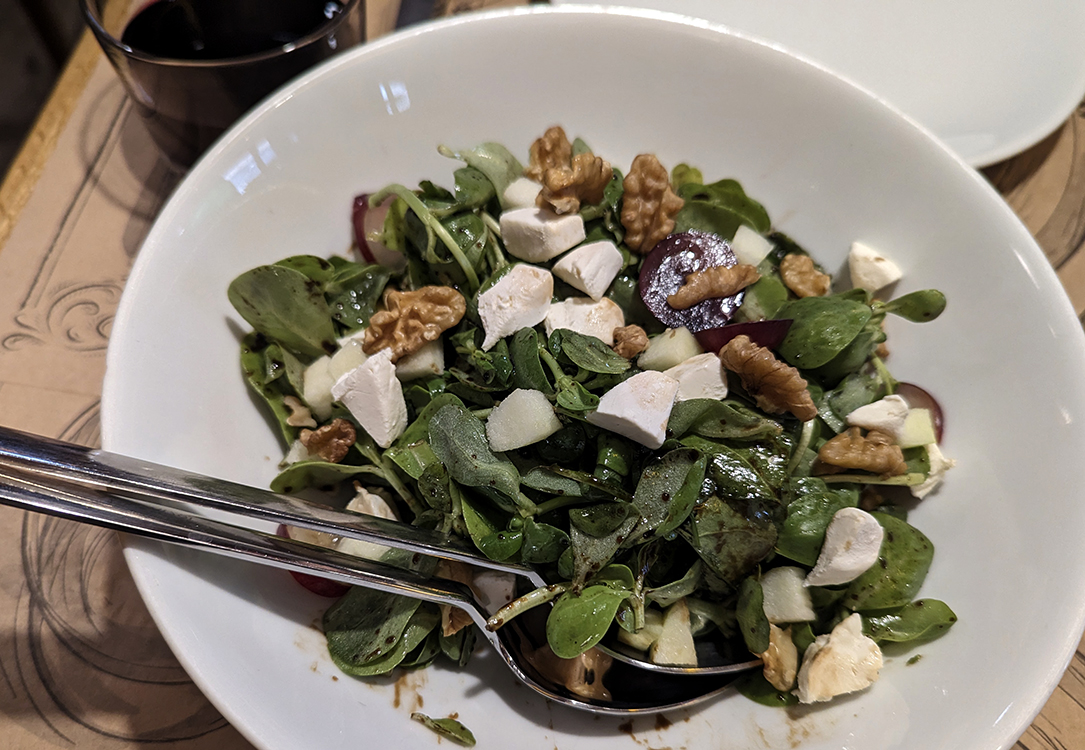

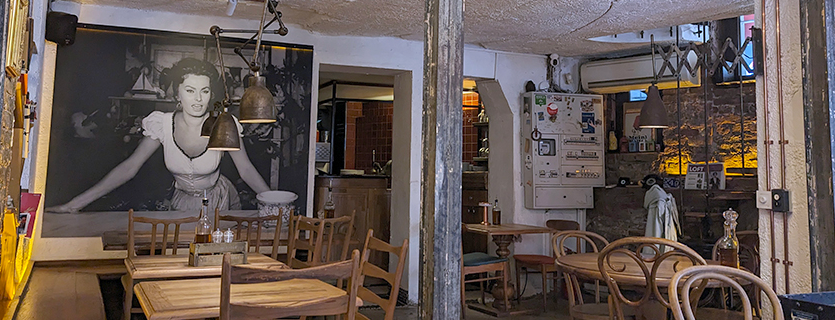
Above: 49 Cukurcuma
Surprisingly to me, Pera Thai Kitchen has been open for more than two decades. To some, it might seem a bit pricey, but the tablecloths and soothing service were welcome after so many simple interiors. Thai fish cakes were nice and plump, and we enjoyed a green papaya salad and shrimp pad Thai. A scoop of spicy dark chocolate ice cream was delicious.
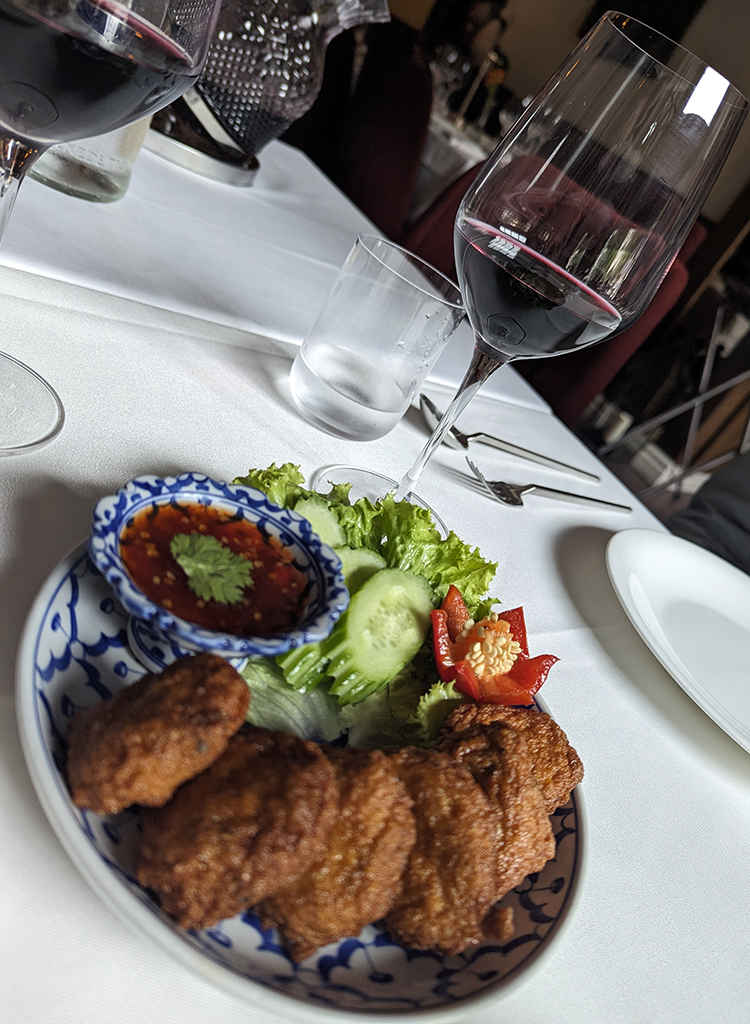
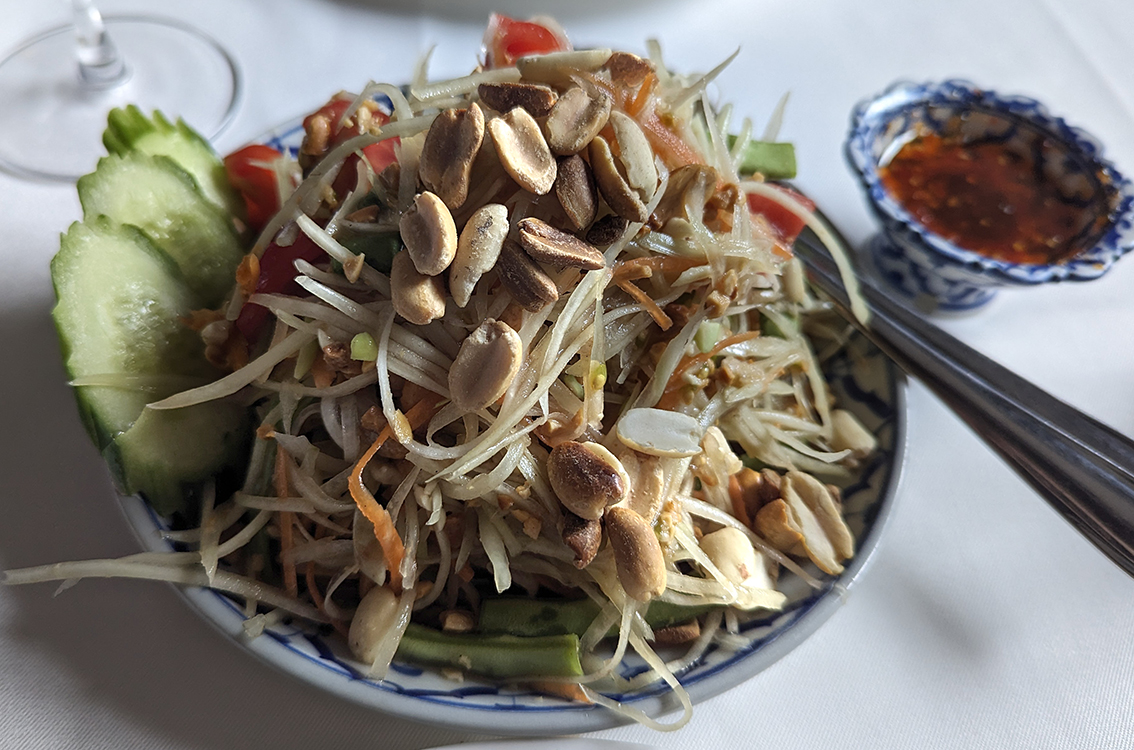
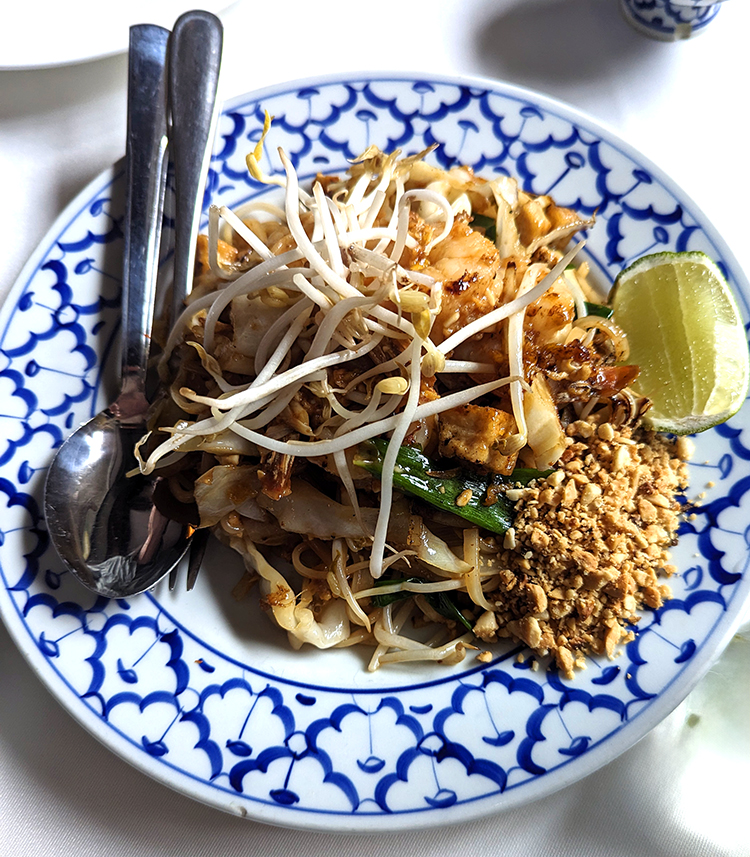
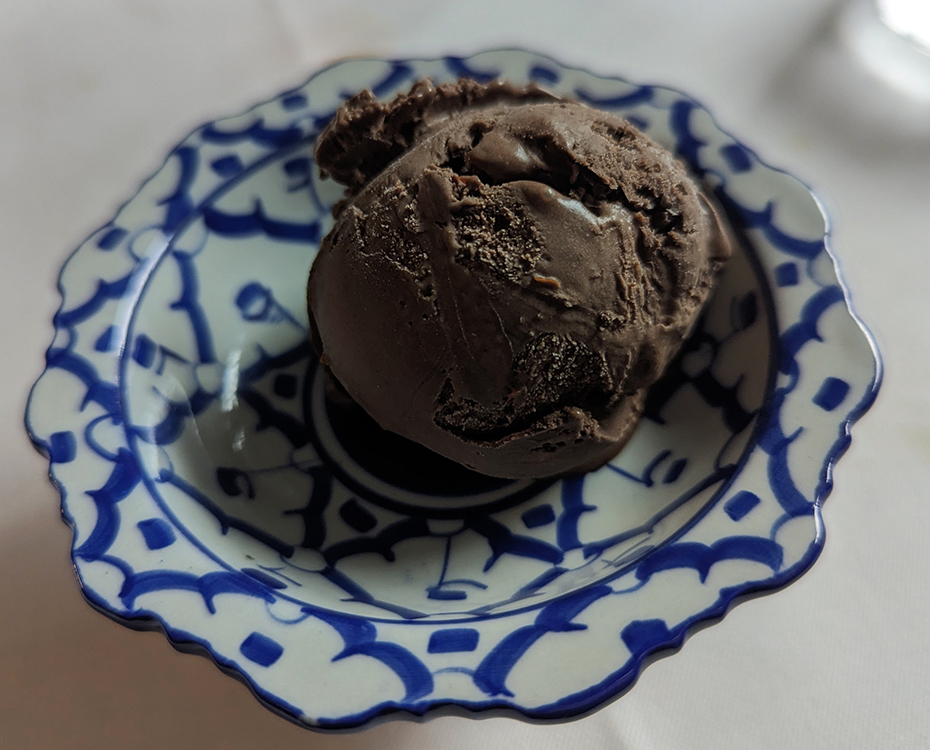
Above: Pera Thai Kitchen of Bua Khao
Taking a ferry across to the southern side of the Golden Horn, we were shocked by the number of tourists in Balat. Busloads, perhaps from cruise ships? Traditional Turkish restaurants were cheek-to-jowl along the main street, with shops geared to tourists crowding adjacent side ones.
We finally settled on Primi Balat, known for its pasta made on premise. The fried eggplant salad was bountiful, and we opted for a lamb ragu ravioli and a more unusual one with blueberries, goat cheese and walnuts.
Wait. Italian food without wine? Where was that Desperate House Wine when it was needed most? Balat is one of the most conservative Muslim neighborhoods in town.
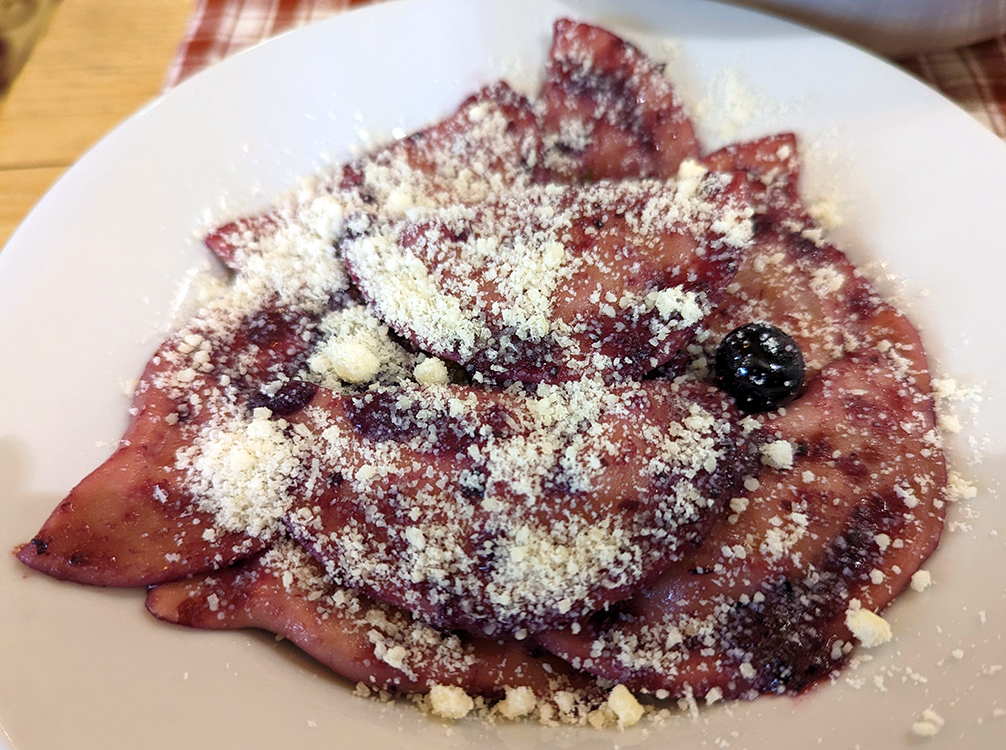


Above: Primi Balat Locanda della Pasta
A cozy spot in the Galato neighborhood, Privato Cafe is known for its Turkish breakfasts, of which we never partook. We did enjoy a fresh house salad there and loved the hearty zucchini fritters. There was no shortage of shrimp in a casserole, yet the dish served as another example of, when a menu in Istanbul lists cheese, expect an abundance.
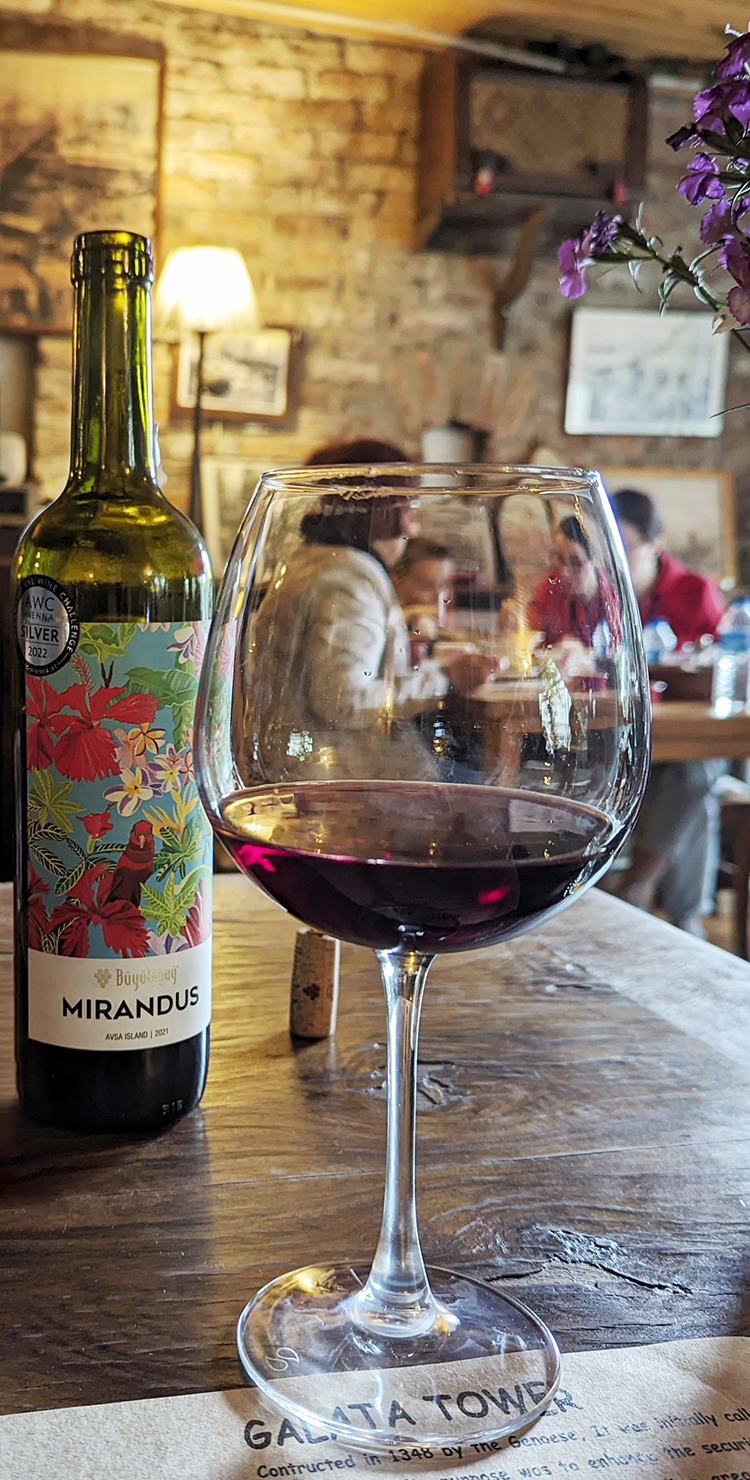

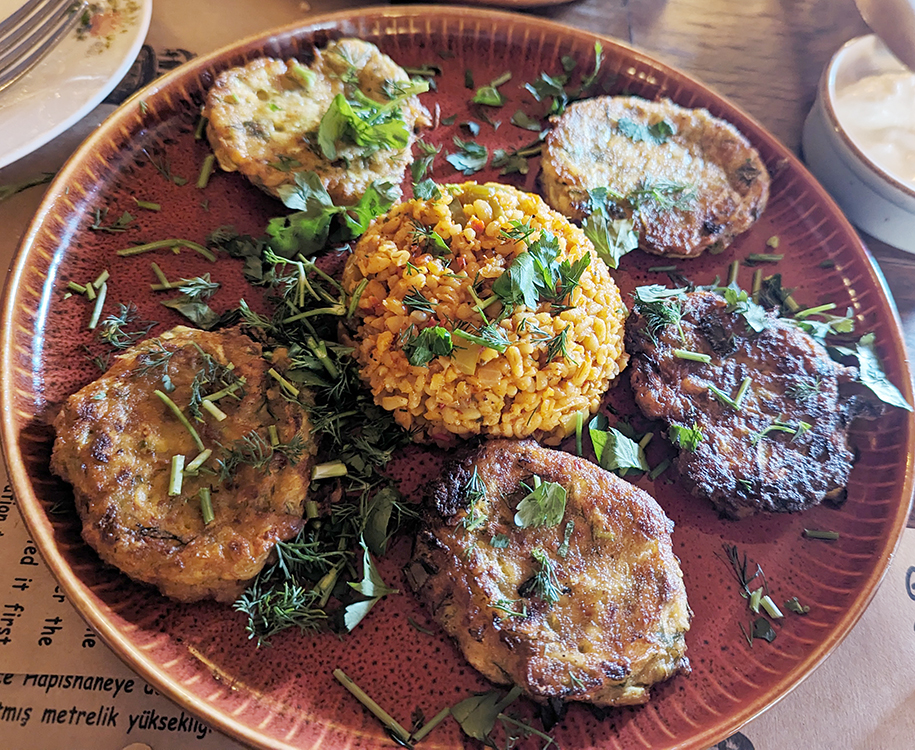
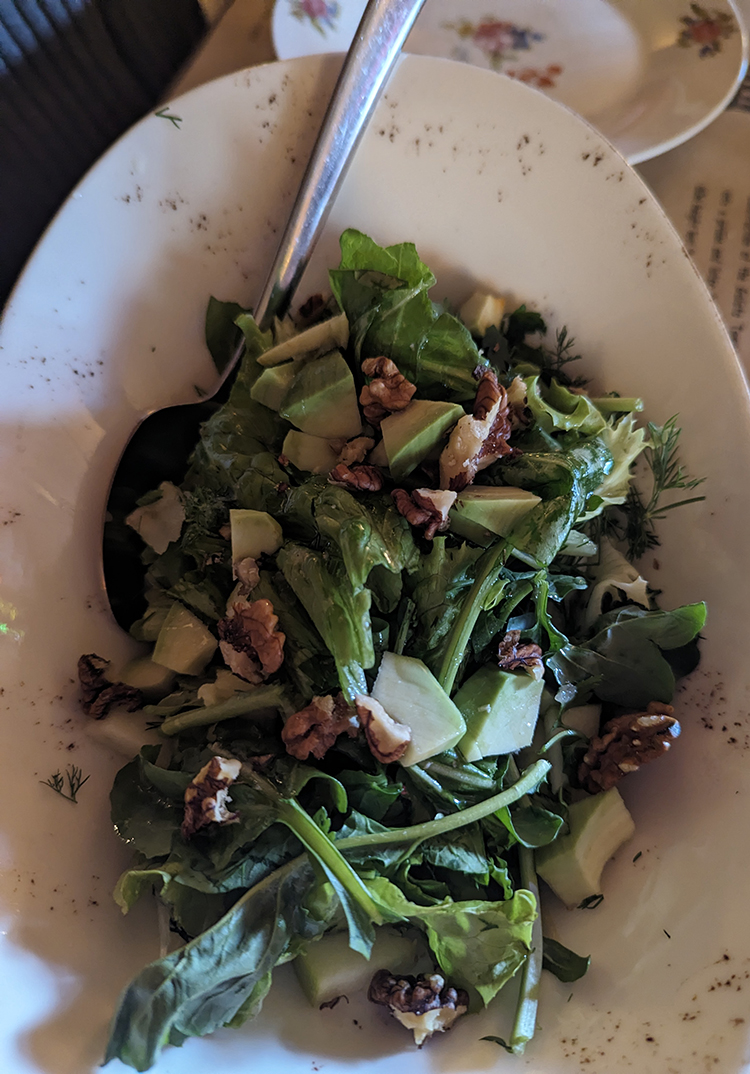
Above: Privato Cafe
Apologies to Az Cok Thai, but I am too far along to correct my alphabetic placement for the restaurant I had thought it was known as Thai Cok. Chef Khun Nuch emerged from the Michelin-listed kitchen of Cok Cok Thai to open this casual cafe in Changir.
The spinach was absolutely wonderful and the green papaya salad good. Vegetables were abundant in a noodle dish, but they seemed lacking in a molded mound of fried rice, neither a value proposition. Green tea cheesecake was beautiful looking but seemed rather timid in flavor after Thai food.
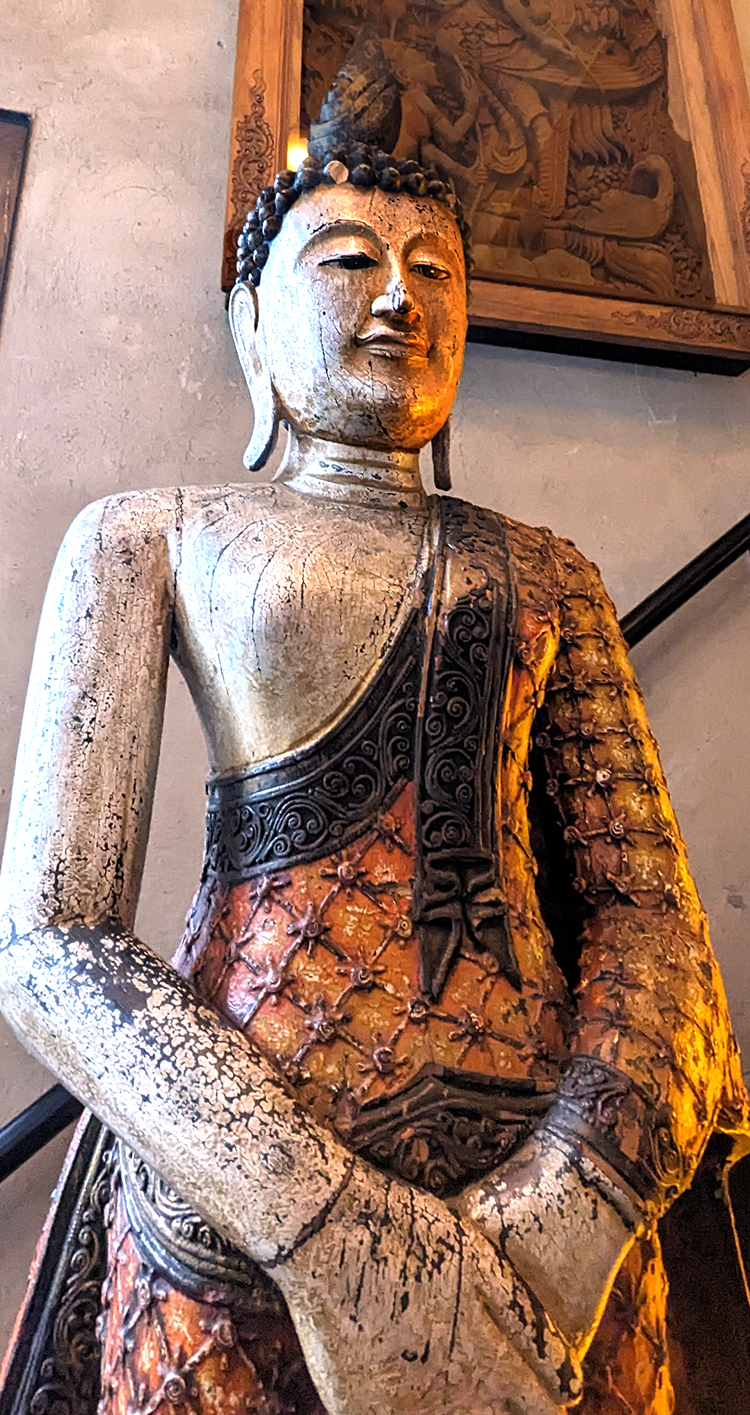
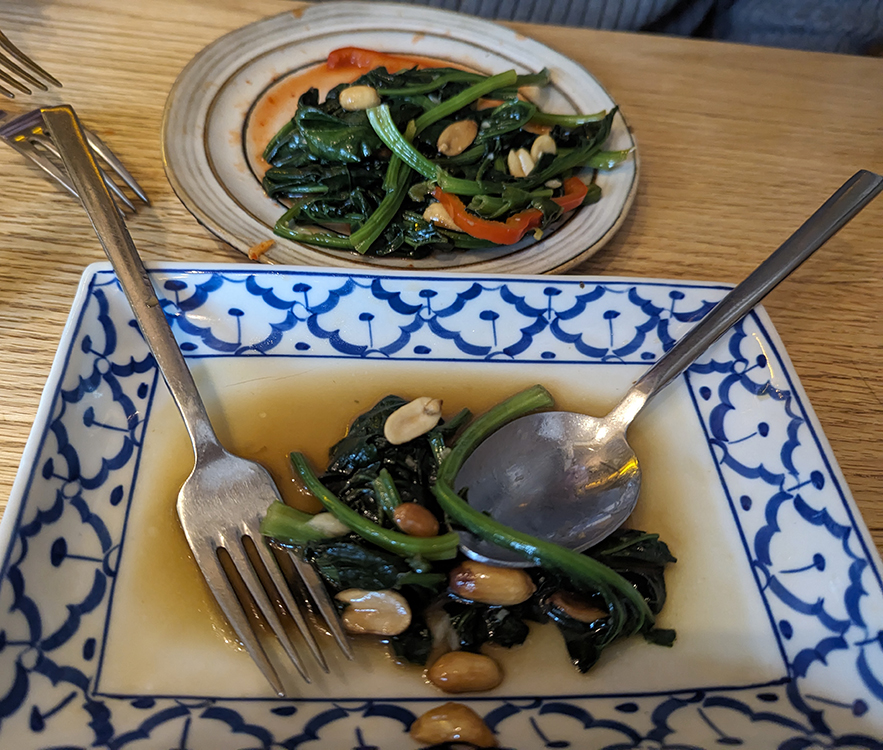

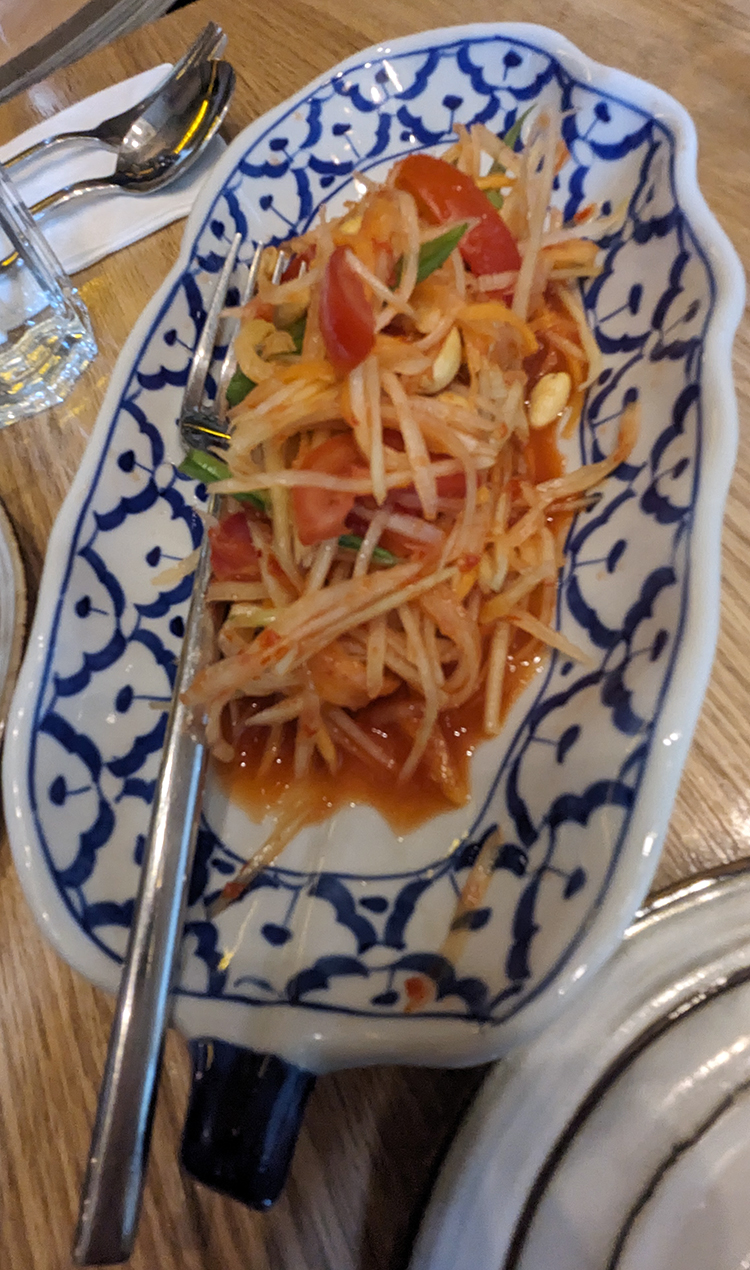
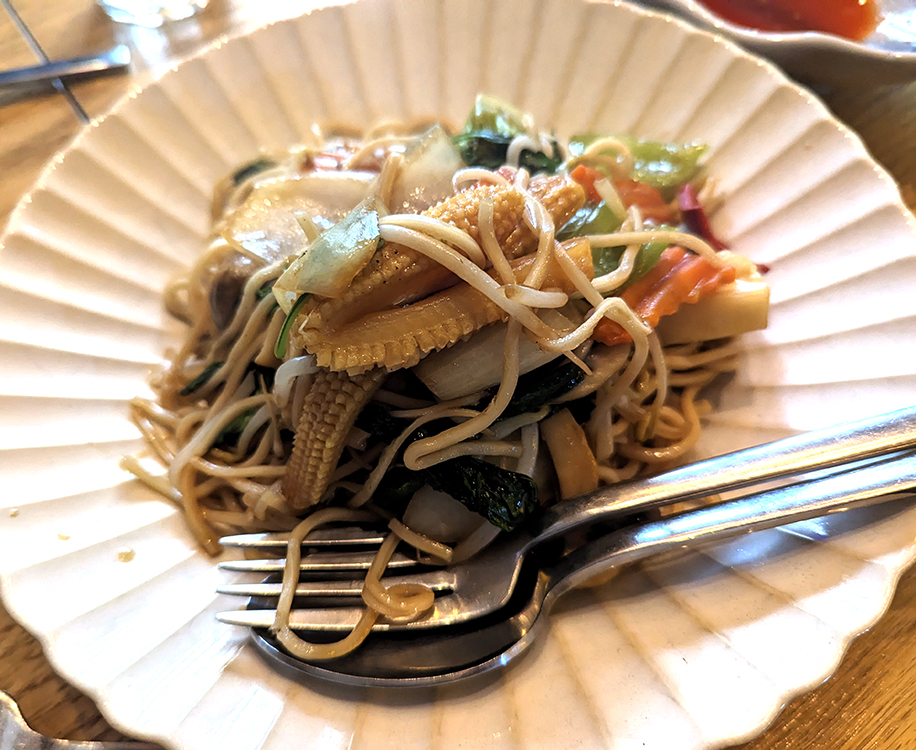
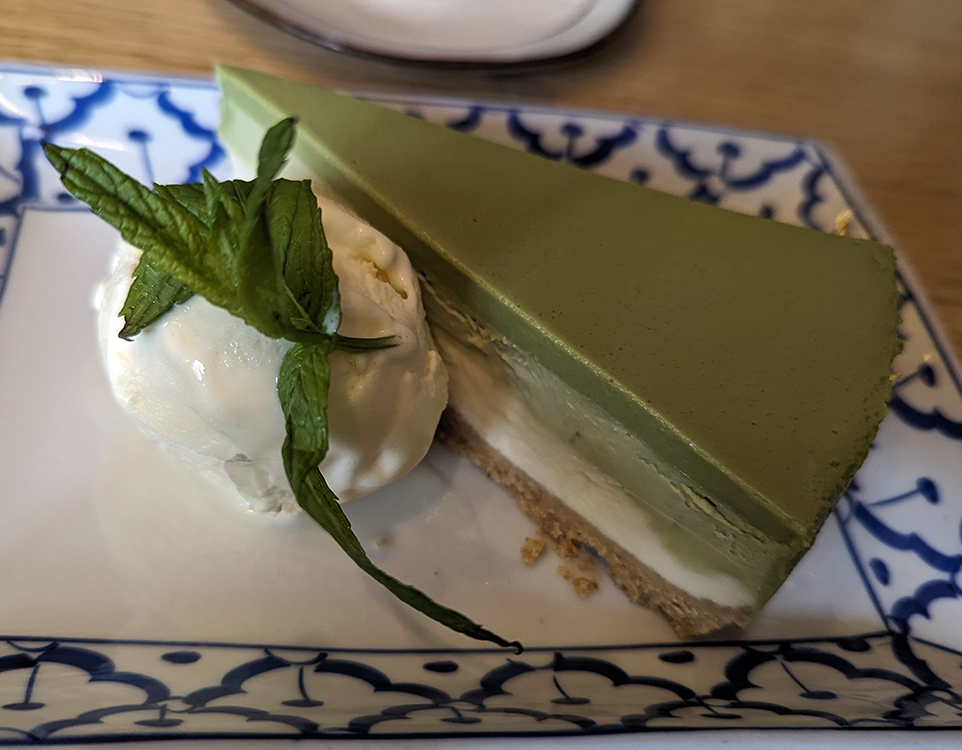
Above: Az Cok Thai
Winding things up with an ocakbasi stop, Zebeyir. The sizzling meats are what draw most people to an ocakbasi, and Zebeyir’s spicy ground meat kebab did not disappoint. That same grill, however, does an amazing job with vegetables.
Observing this pair of Texans devouring aci sivri biber, a chile similar in flavor to padron or shishito, our waiter brought us some heavily spiced roasted garlic. Definitely recommend requesting it.
A layer of verdant fried parsley helped make the tabouli the best we’ve ever tasted. Roasted eggplant was delicious, but the onions? The roasted onions melted in our mouths.


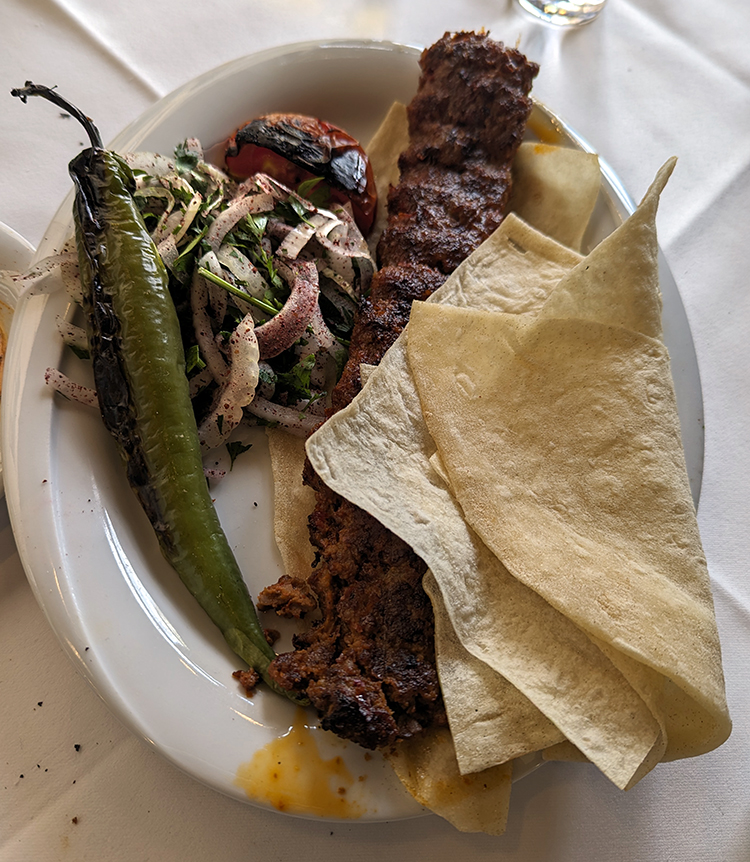

Above: Zebeyir Ocakbasi
The world’s next great cuisine is…. being created right now, in the spaces where cultures, traditions and technologies mingle. That’s where the real food adventure begins.”
“Food Tourism Is Dead, but Something More Interesting Is Emerging,” Brian Lee, New York Times, December 31 2024
 Postcards from Barton Springs