

Above: A contemporary overhead walkway sensuously links galleries in a recently renovated 18th-century palace, Palazzo Butera.
At first, I tried to resist, but Francesca insisted, saying, ‘You can fulfill all of your dreams here.’”
Massimo Valsecchi, interviewed by Elaine Sciolino for an article published in The New York Times on September 26, 2024
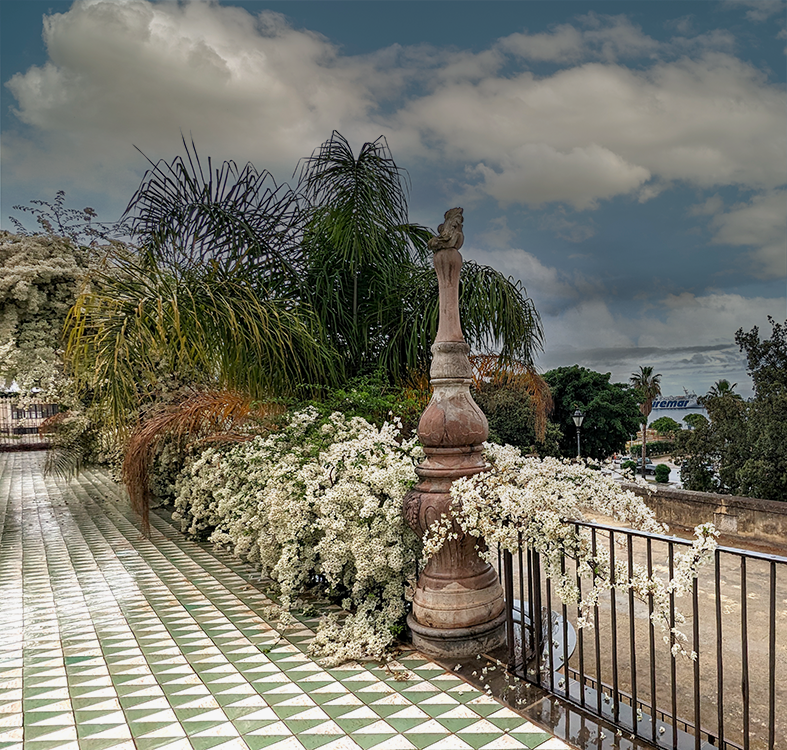
We stayed in the Kalsa District, the old Arab quarter in Palermo, for a month in the spring of 2023. This meant we strolled upon a portion of an impressively long tiled veranda addressing the sea numerous times. However, we were clueless about the possibility of visiting the adjacent Palazzo Butera to discover the beauty contained within its walls.
Freshly renovated, the palace did not open its doors to the public as a museum until 2021 and, when we visited, still seemed the city’s best-kept secret. It certainly hadn’t made the guidebooks yet. The New York Times article quoted above nudged me to retrieve this postcard from the backlog of unmailed ones.
‘Everyone said we were mad,’ a serene Francesca Valsecchi admits with a smile as she recalls the decision she and her husband Massimo took in 2015, when they moved from an apartment in Cadogan Square in London to the colossal Palazzo Butera in Palermo…. what Massimo describes as his ‘crazy Enlightenment project.’”
Susan Moore, Apollo Magazine, August 30, 2022
Crazy? To undertake restoration of a sprawling, as in 120,000 square feet of space, 18th-century palace when you were in your seventies and had no pre-existing Sicilian connections?
The dreams the couple possessed, are perhaps best explained by Massimo:
I like collections that come alive. So I believe contemporary art should be used as part of a more efficient, alternative system to educate university students and other young people about the interrelationships between the old and new….
I have been doing projects with universities and cities to use contemporary art as a catalyst between the past and present to produce ideas for the future. Usually these institutions have an incredible amount of material, going back centuries, and the concept is to create centers for interdisciplinary study combining science and humanism. There are numerous ways that you can combine various things, not just chronologically, to elicit the connections between everything and, in turn, a more complex perception of the world.”
Massimo Valsecchi, interviewed by Cathryn Drake for Art Basel
Originally, the goal had been to establish a center promoting connections between ancient and contemporary in Milan, where the couple had a well established art gallery. Plans went awry.
Visiting Palermo for the first time in 2014, the Valsecchis fell in love with the beauty and eccentricities of the city itself and this palace – for sale to anyone with patience to wade through negotiations with the by-then legions of heirs and the requisite paperwork.
Palermo offered a brave new world. ‘It was different from any other place we knew — Paris, New York, London, Milan, they all have the same look in fashion, in restaurants,’ Frua de Angeli said. Her husband finished her thought, adding, ‘Sicily is a place of migrations, of layers, of mixing of cultures — Phoenician, Greek, Arab, Norman. We are in a friendly place here.’”
Elaine Sciolino for The New York Times
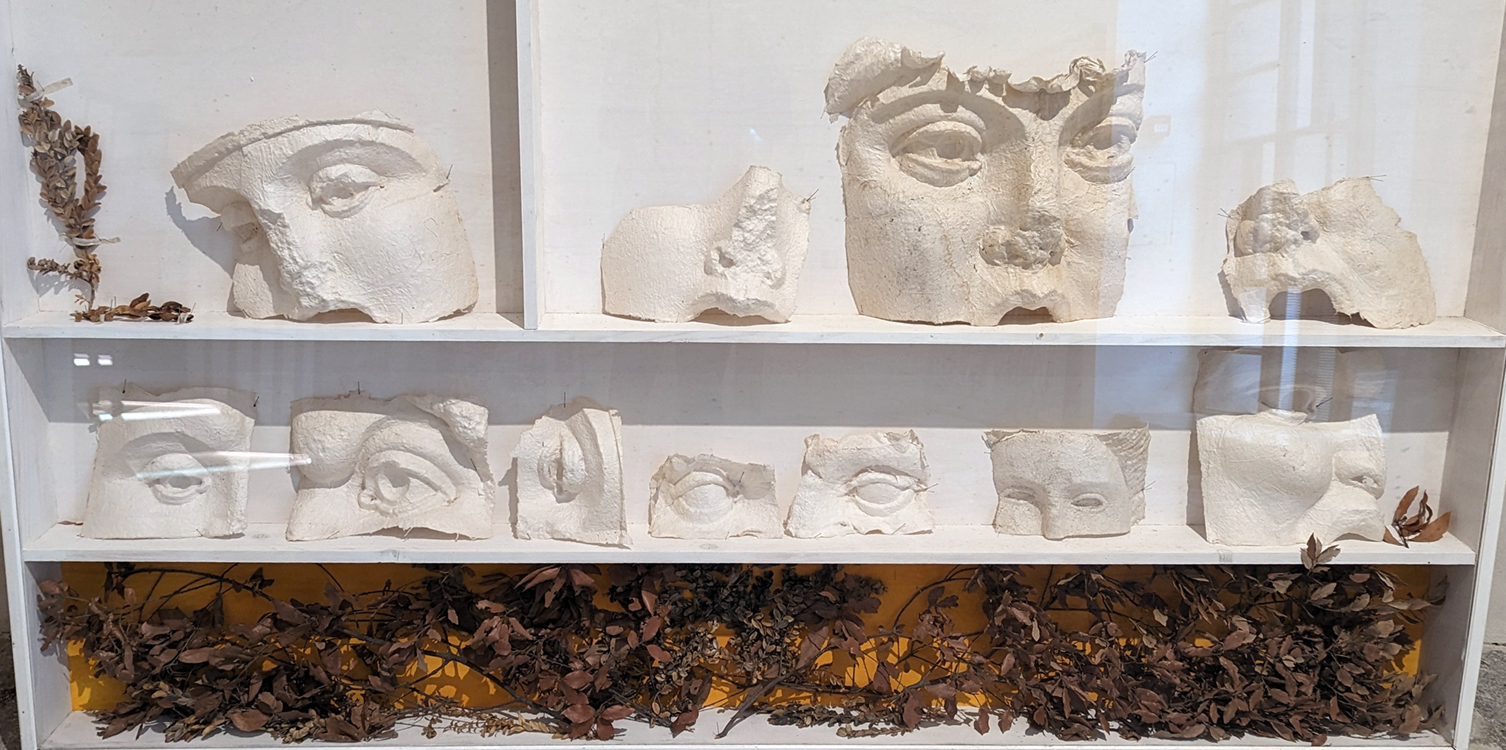

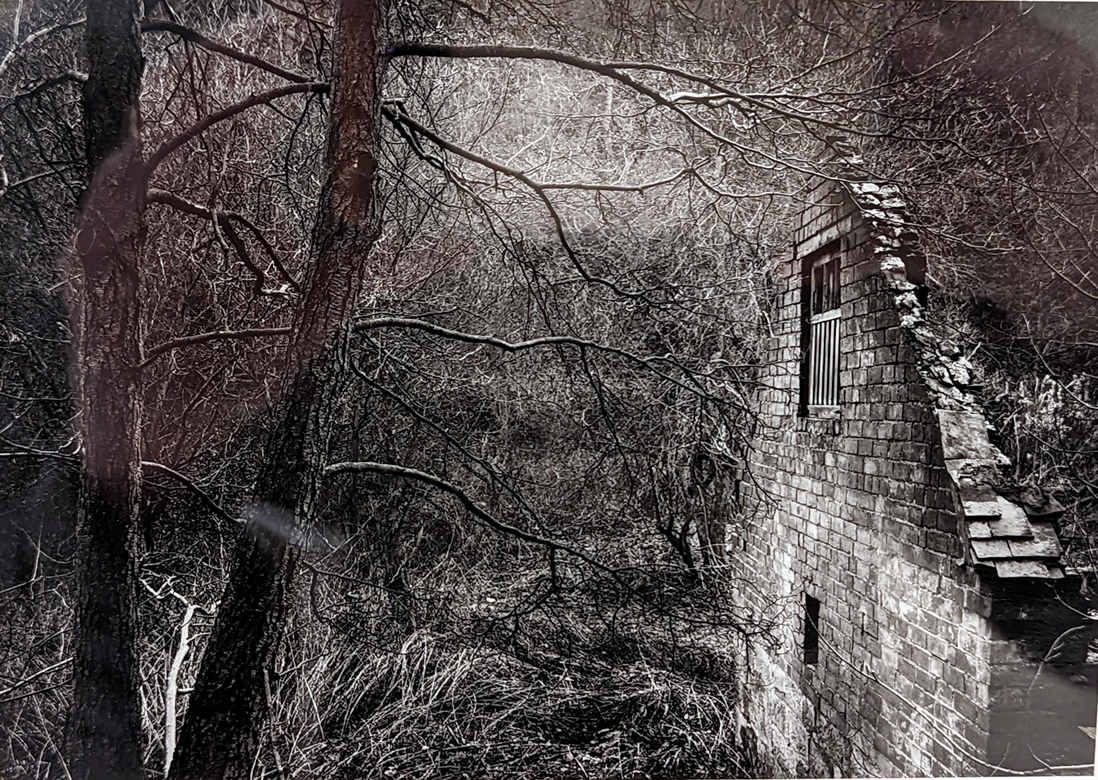



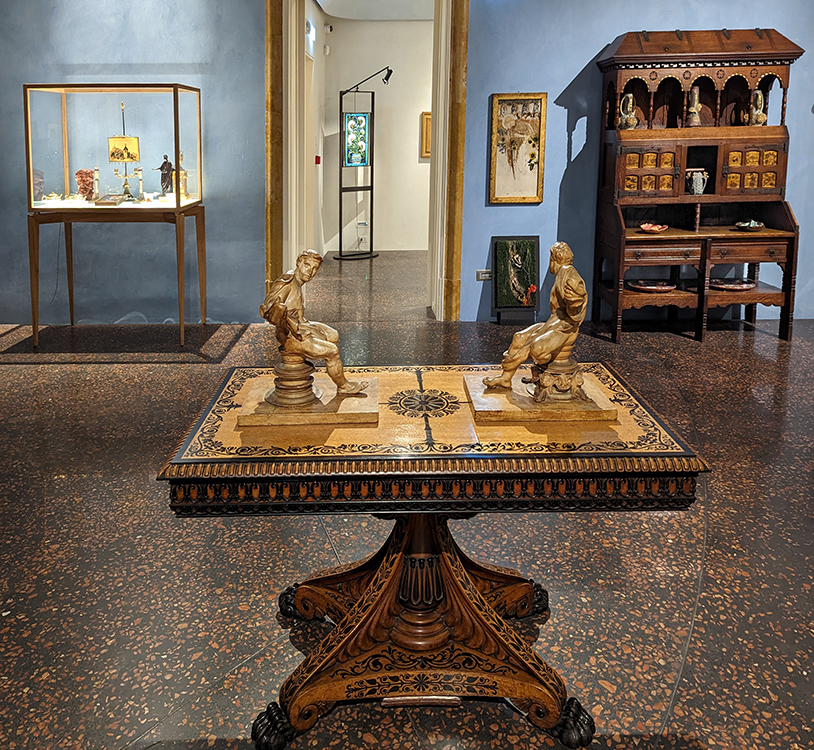


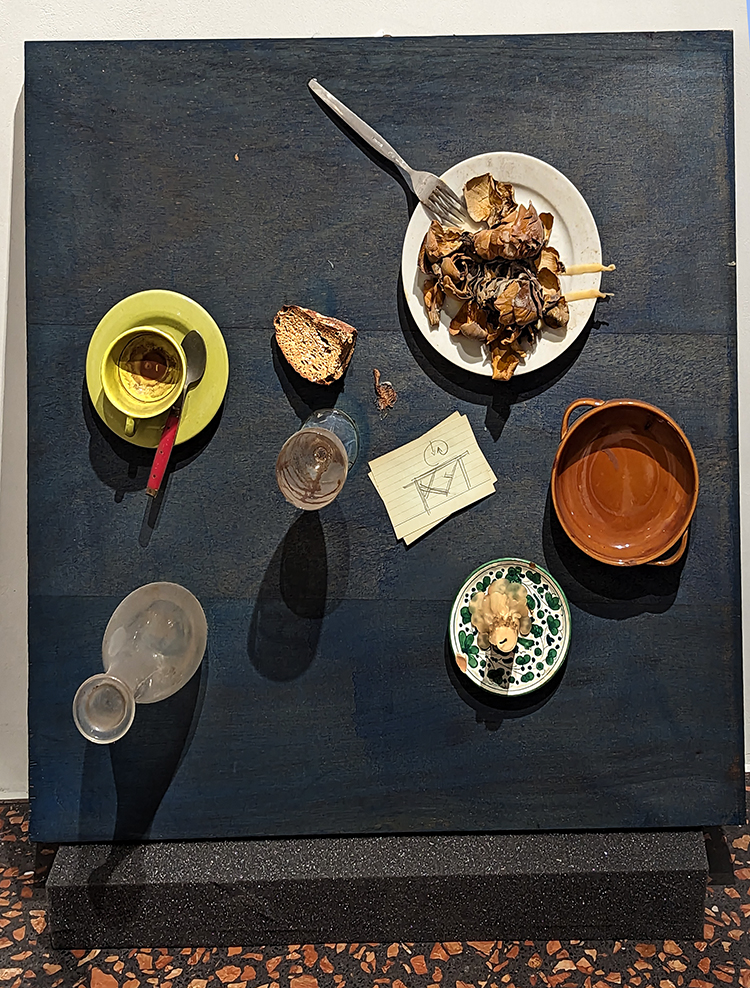


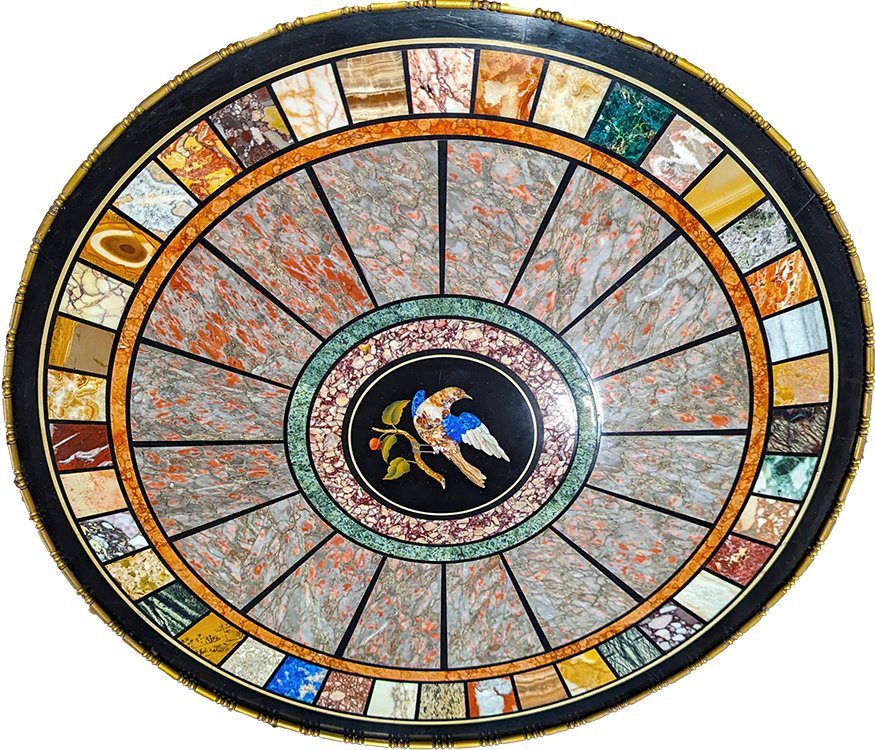
Through the years, the couple had amassed an enormous personal collection of art. Selling a particularly valuable piece or two provided the funds to launch the massive restoration project.
And now they have a space to showcase the rest in unexpected combinations to stimulate thought. All are unlabeled, encouraging viewers to react intuitively.
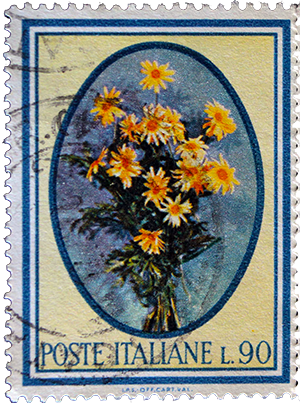
The small diamond-shaped portrait in a square gilded frame you can find above caught my attention when we wandered through the extensive museum. If The New York Times article had come out first, I certainly would have pulled the image out to incorporate in my earlier post focusing on the Valsecchis’ collection of Tom Phillips’ works:
The couple insist that they have no favorite artworks in their collection, but late in the tour, in one of the galleries, Valsecchi stopped in front of a painting by Lawrence Alma-Tadema. It is a 1873 portrait of Charles Deschamps, Tadema’s art dealer, and his wife, which the painter gave to them as a wedding present. In the portrait, they are together, looking intently at the painting. ‘This is Francesca and me,’ Valsecchi said. ‘This is us, absolutely. What you see here is who we are. Continuing the dialogue.’”
Elaine Sciolino for The New York Times
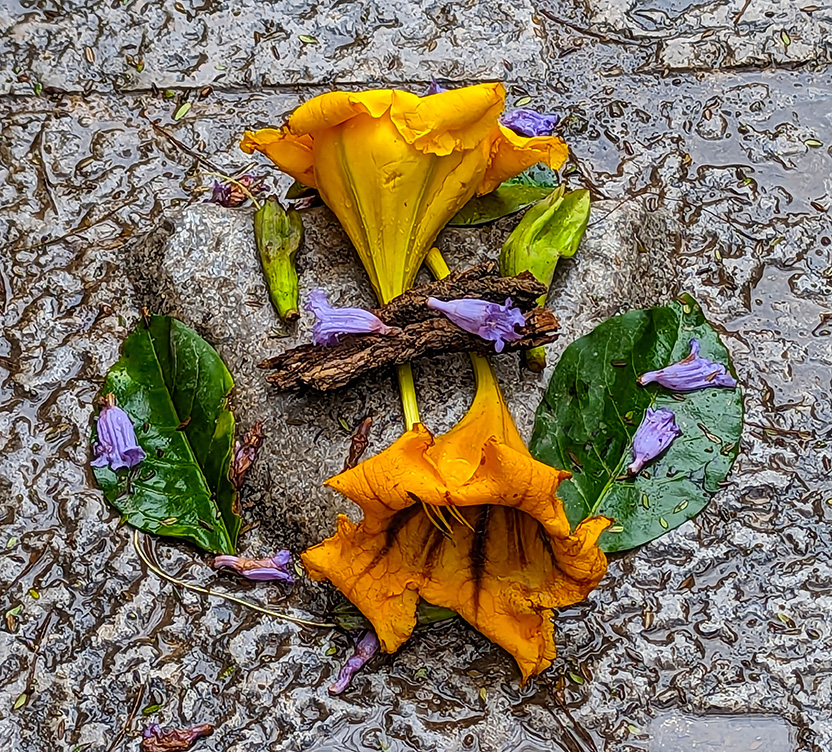
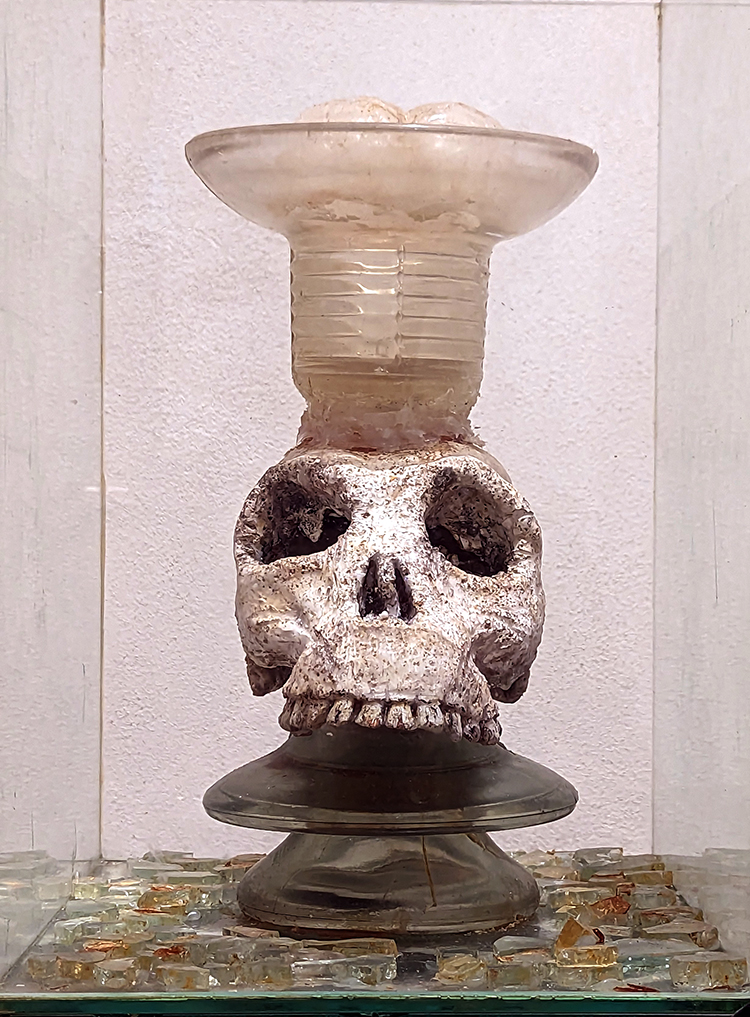
Unconsciously, the photos of flowers and skulls above appear chosen to coincide with Day of the Dead. To me, the careful arrangement of fading orange and yellow trumpet flower blossoms found in the middle of courtyards during our spring visit reflect the thoughtful approach to even the smallest details.
The Valsecchis applied this attention to the restoration of the palace and to their curation of its contents. All carried out with love. Down to even the smallest blossom.
 Postcards from Barton Springs