


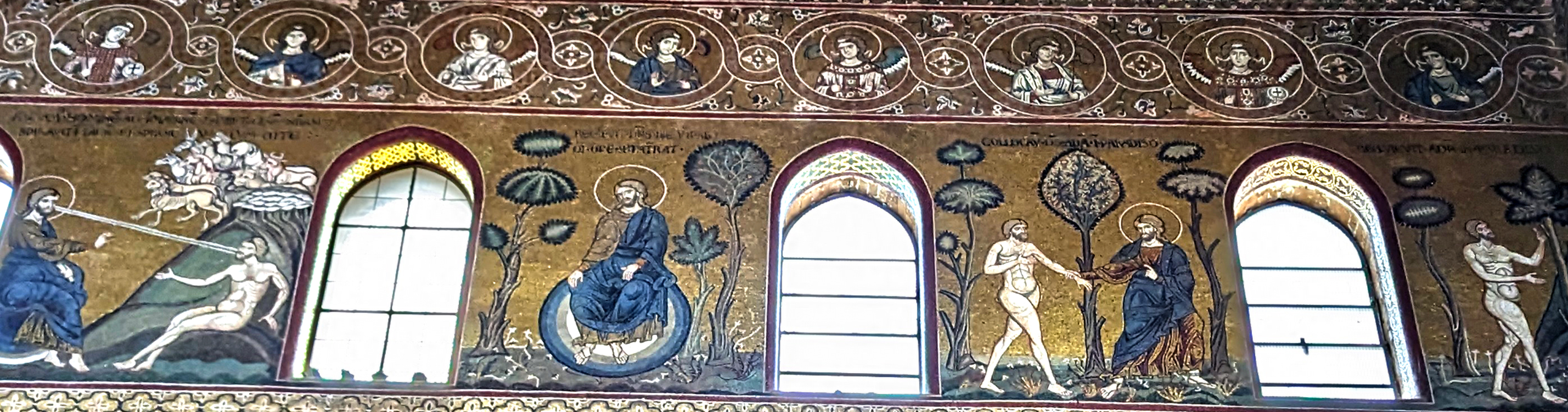
Above: Byzantine-style 12th-century mosaics relate Biblical stories inside the Cathedral of Monreale
Tired from a day of hunting in the woods of Monte Caputo above Palermo, King William II (1153-1189), later known as William the Good, lay down under the shady canopy of a carob tree. He was awakened from his nap by a vision of the Virgin Mary, and she requested he build a church on that very spot in her honor.
This meant the tree had to go, but, when it was chopped down, lo and behold, a golden treasure was found amongst the roots. Gold to fund the project. According to legend.
William the Good commissioned a mammoth church and a Benedictine abbey for Monreale. He gifted the church in honor of Santa Maria Nuova, a contributing factor to his reputation as good, forever distinguishing him from his father, referred to as King William the Wicked (1120-1166).
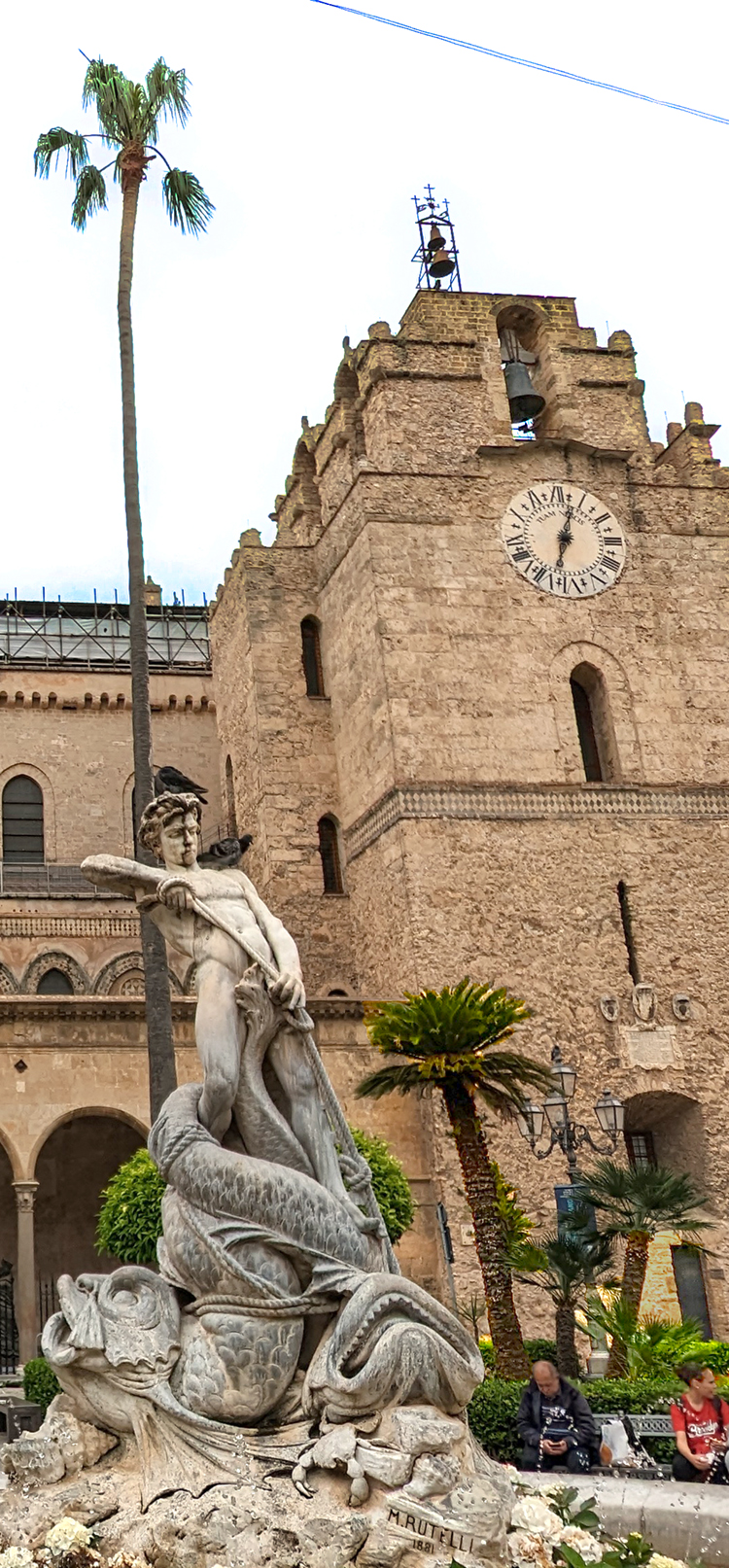
Stark with a crenulated fortress-like crown, a portion of the facade reflects the roots of the last of the line of Norman kings of Sicily. Major architectural alterations have fancied up that through the centuries.
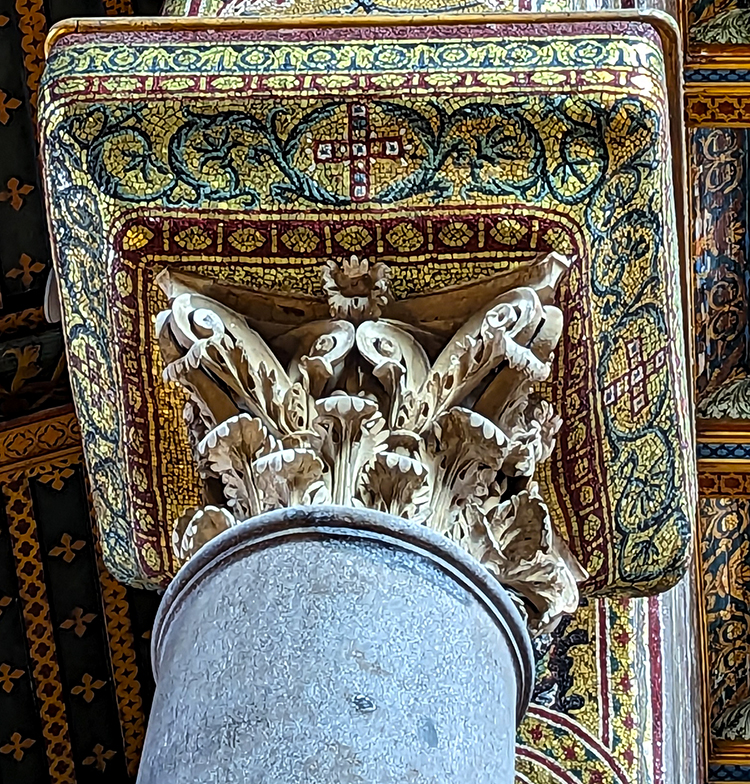
The interior is overwhelming with its opulence – 70,000 square feet of glittering glass tesserae completed in the Byzantine style by master artisans from both Constantinople and Sicily itself. The figurative stories from the Bible alone represent a lot to absorb, but the ceiling is covered with complex patterns and some of the remaining original floors are covered with bold geometric shapes cut from colorful marble. Pope Alexander III (1100-1181) shipped massive marble columns of ancient Rome to support the main nave.



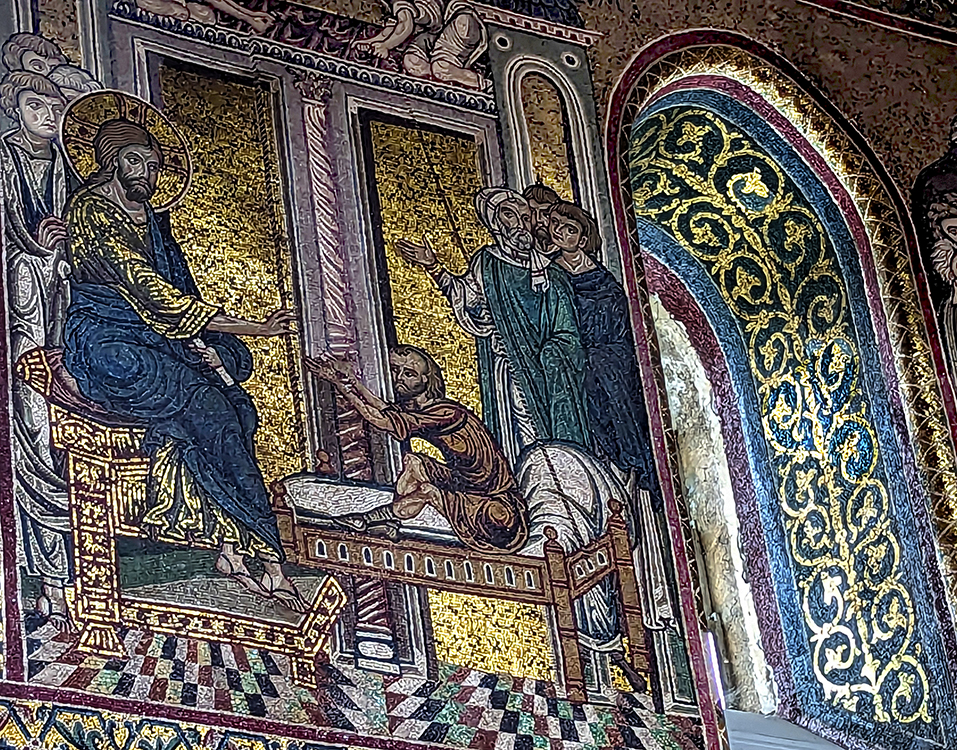


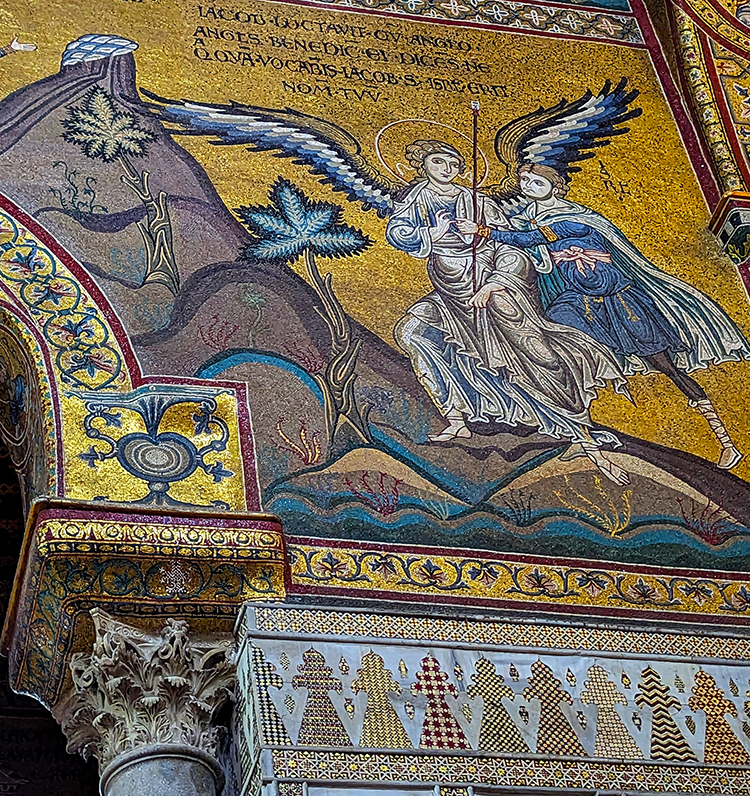
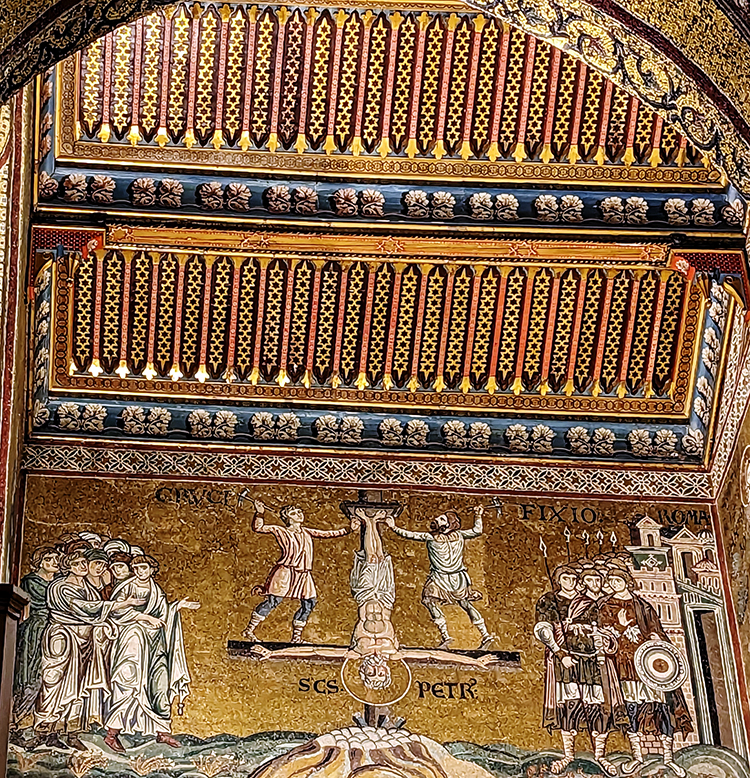
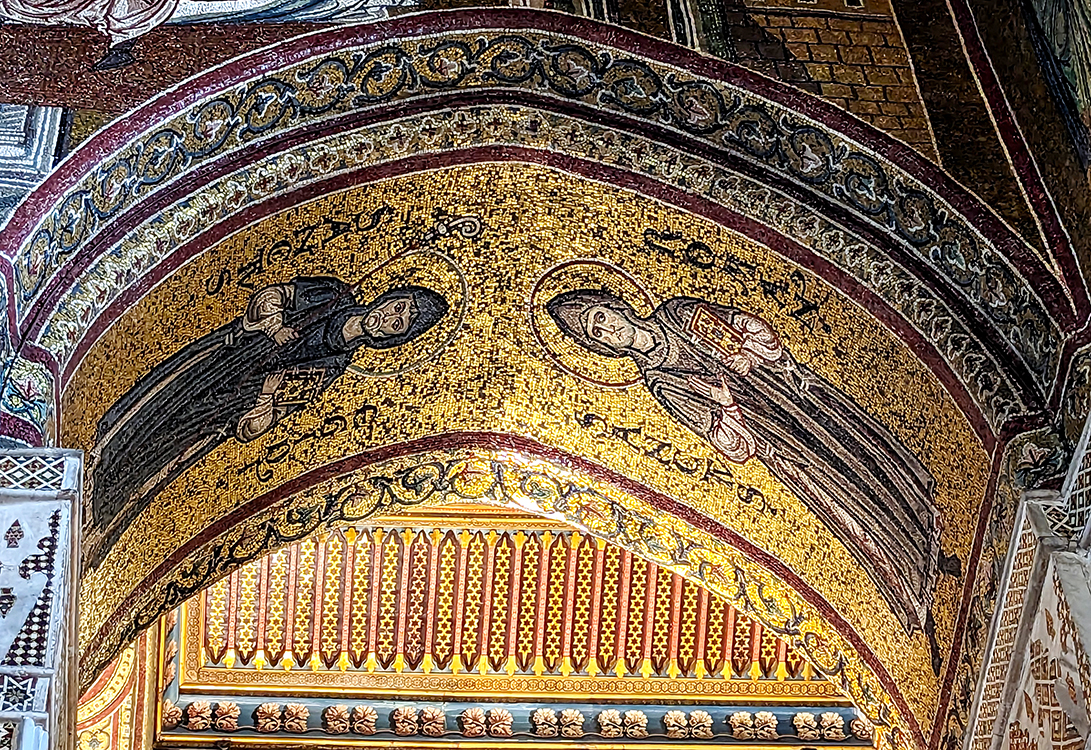


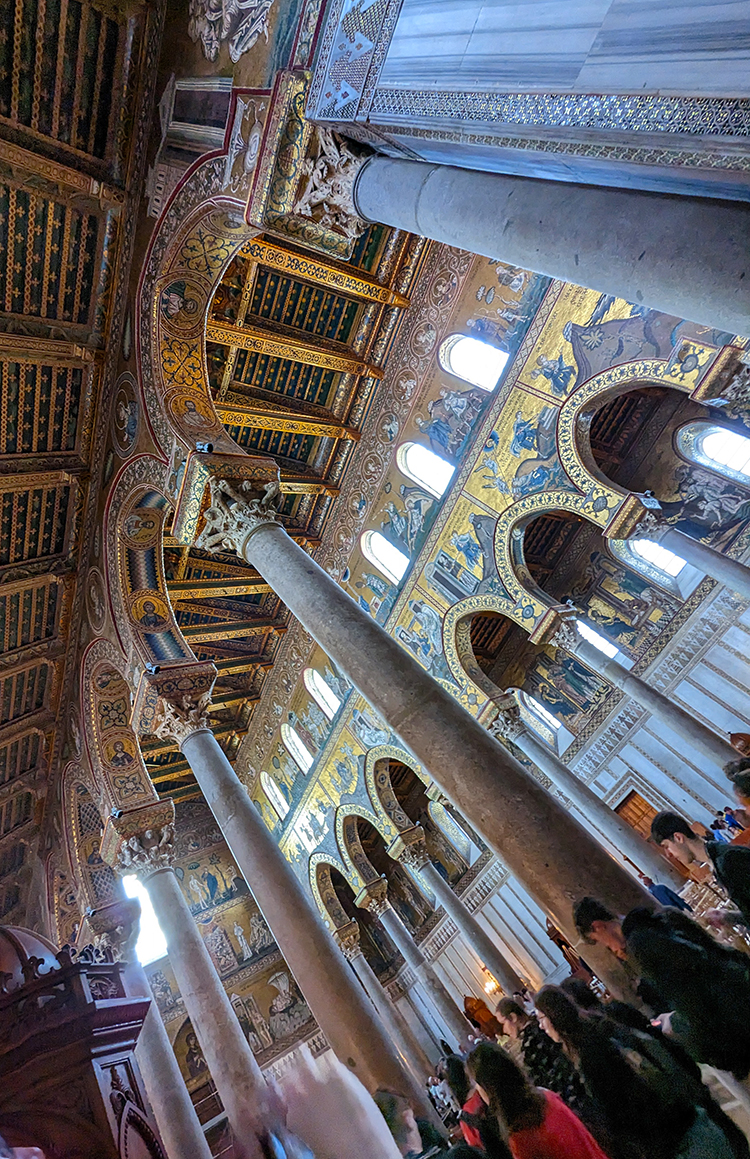


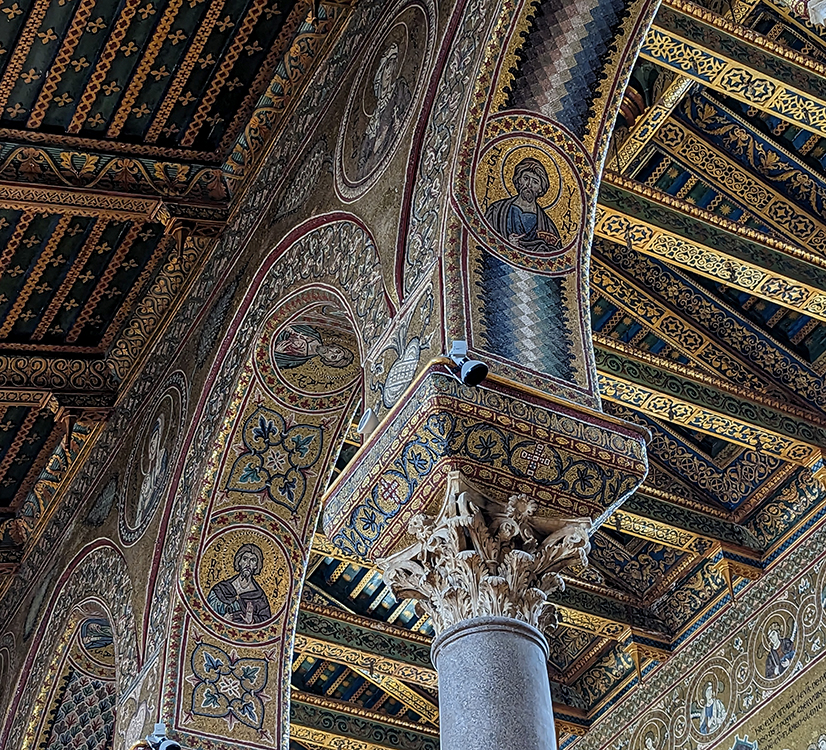



Lightning struck in 1811. The fire resulted in the major restoration of some areas, and, as pictured above, conservators are hard at work again today.
Both the good and wicked Williams are entombed in the Cathedral, plus a relic of Saint Louis is preserved in an urn. While his accomplishments benefitting France and the Catholic Church were many, King Louis IX (1214-1270) was among the Catholic monarchs who believed in harsh enforcement of Inquisition laws against heretics. Blasphemy would result in mutilation of tongues and lips.
And the pious king personally led his forces crusading in faraway lands. In 1250 during the Seventh Crusade, he was captured in Egypt. A king’s ransom was paid for his freedom – the equivalent of $80 million today. King Louis IX moved his forces to the Kingdom of Jerusalem for four years to help fortify that kingdom.
His fervor undiminished, the king joined the Eighth Crusade, landing his forces in Carthage to invade Tunis in 1270. His battle plans were derailed by dysentery* sweeping through his troops, and the king was not spared. Among many, Louis IX perished, and the leftover Crusaders purchased their withdrawal from Tunis.
Of course, one couldn’t leave a king behind to be buried in Muslim lands. It was a long way from Carthage to Catholic shores, and cremation was forbidden by the Pope.
So, what to do with the king but mos Teutonicus? Maybe you already know what this means, but, despite my bizarre fascination with quirks of Catholicism, this practice was not on my radar.
Warning: Squeamish readers should stop here.
Carrying rotting flesh great distances in the heat would be highly unpleasant and unsanitary, so, for Crusaders too noble to be left behind in pagan lands – mos Teutonicus. First, pot-size dismemberment was necessitated for boiling in milk or wine. Boiling separated flesh and internal organs from the bone. The flesh and organs were preserved with salt in pottery jars (Sorry, but I can’t shake the similarity with a canned ham.). This enabled transporting the bones and leftovers home safely.
Louis IX’s younger brother, King Charles I (1227-1275) of Naples, deposited the urn containing his brother’s heart and intestines in the care of Monreale. While Louis IX’s skull reputedly “rests” in a gilded reliquary in Sainte Chapelle, erected in Paris earlier in his reign, his various parts were awarded by his descendants to different churches from their homebase in Saint Denis: a rib bone and jawbone to Notre Dame.
Apologies for the digression. Less macabre treasures from Monreale ahead.
*Scientific examination of the saint’s jawbone in 2019 revealed scurvy might have been the cause of death, according to Smithsonian Magazine. His diet was limited by his cibophobia, fear of food, or in his case, fear of foreign food.
 Postcards from Barton Springs
Definitely
LikeLiked by 1 person