


Above: Detail from “Curriculum Vitae XI,” Tom Phillips
The muses visit children in disguise with shrouded gifts ~ Terpsichore gives her a skipping rope ~ From Clio he receives old stamps of far forgotten colonies ~ Darkly to me Apollo and his team present the pnuema ~ the creative spark ~ all strife of art inside a filing clerk.”
Excerpt of text on Tom Phillips’ “Curriculum Vitae XI”
Last spring, we almost missed what emerged as our favorite museum in Palermo. Palazzo Butera was newly opened. Although we passed by it often, we didn’t see it in any guidebook or even resources online.
Word art by British artist Tom Phillips (1937-2022) so captivating it demands you stop in your tracks to slowly digest every morsel of poetry within each piece. But how could I absorb them all when we had a whole museum ahead of us?
The amazing part of this is his process. Most of his “Curriculum Vitae” series is composed in iambic pentameter, a form of traditional English poetry with ten syllables per line (Yes, I learned this through labels.). Yet, they are written, or carved as it were, somewhat on the fly.
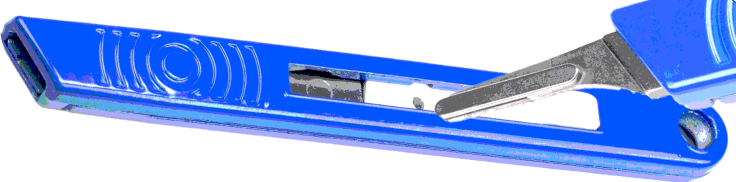
The script itself… is carved back from the rough letter form rather than painted how it is seen (I have gone through more Swann & Morton no. 15 Scalpel blades than a surgeon in his whole career). Since each line of verse has only a line of the script to accommodate its ten syllables, much shuffling about at the roughing-in stage is necessary to space the words correctly….
On a good day (composition of the text aside) I can clock up to about two and a half lines…. The text is not written in advance, and I am normally only a couple of lines ahead of the painting. I have no idea how the whole text of each panel will end up when I start: often they take quite a different turn from what I’d imagined.”
Tom Phillips
I’m not going to introduce you yet to Palazzo Butera as a whole, other than to advise that, if I don’t finish a follow-up post about it before you go to Palermo, don’t miss this museum. For now, I invite you to savor some of this first room.


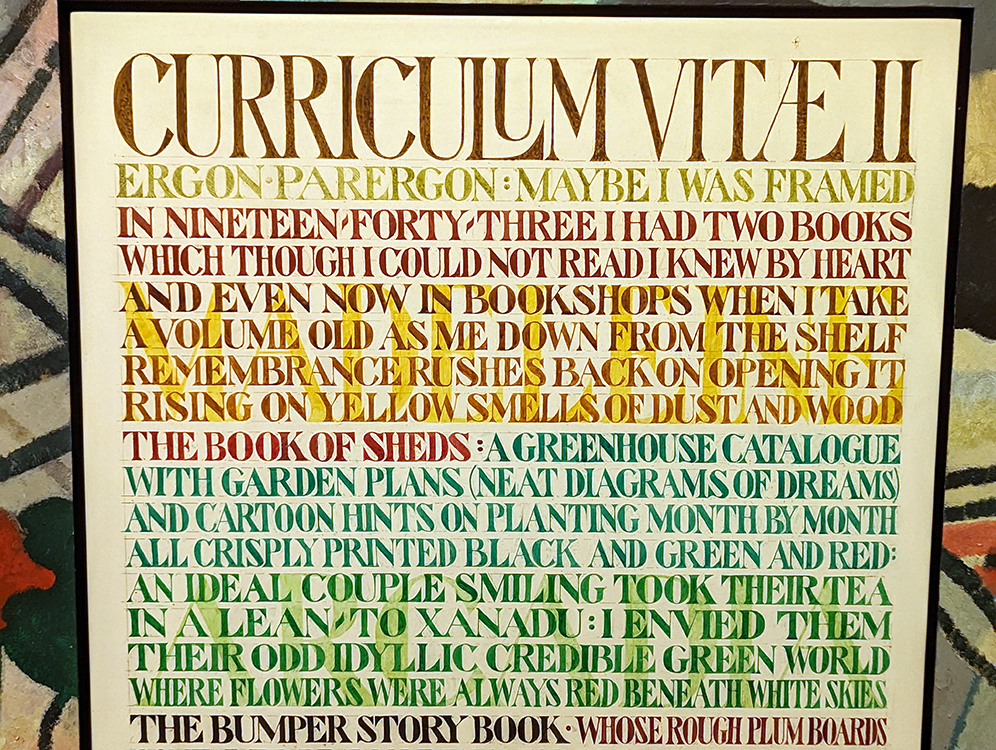
Above: Details from “Curriculum Vitae” series of paintings by Tom Phillips, 1986-1992
Most children like sets of things. The stamp and cigarette-card collecting, however, usually become, with the chemistry sets and rainbow rows of coloured pencils, transmuted in adulthood into filing systems and golf clubs….
My particular love of amassing sets of things has turned into the making of them. Time and again I have painted a picture only to find the call for another to provide a pair, and to yield then to the irresistible urge to add another and another to ‘build up a set’ (the magic of the phrase still excites), of works of identical size on the same theme, hoping of course that some big boy in the great playground of the art world has in turn retained his passion for set collecting and will swap me lots of money for it.”
Tom Phillips
And, while the above desire sounds crass, the palazzo’s owners did just that. They acquired all 20 in the series and assembled even more of Phillips’ works to share.

Above: Detail of “The Skin Game,” Tom Phillips, 1974

Above: “Rima’s Wall,” Tom Phillips, 1991
Then, there’s “Memento Mori” from Phillips’ series of “Treated Skulls:”
No object has had a longer history in the art of the world than the human skull. The treated or decorated skull appears in the art of Oceania and Africa and most gloriously in the sky-coloured turquoise-covered crania of Pre-Columbian America.
It is now quite difficult to acquire a skull other than one’s own. The particular example on which these works are based was bought from an ethnographic dealer and is a fetish skull from the Southern Seas. All were adaptations of a cast of this, worked on and re-cast in bronze or glass (via wax) or directly ‘treated’ in collage or other techniques of application.”
Tom Phillips

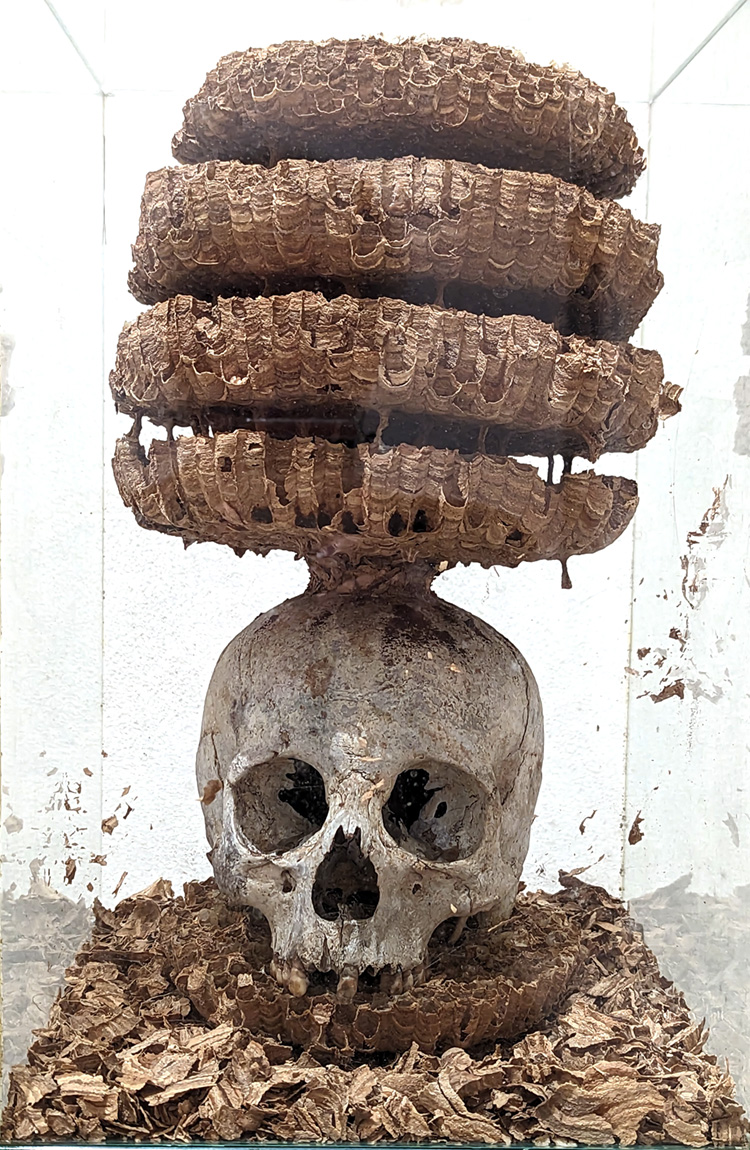
Above: “Memento Mori,” Tom Phillips
So it’s Phillips’ fault I have been posting stamps from my childhood stamp collection on the blog recently. A new excuse to cling to those albums holding once-treasured, monetarily worthless ephemera. Plus, now I can claim to do it in memory of a great artist.
 Postcards from Barton Springs