

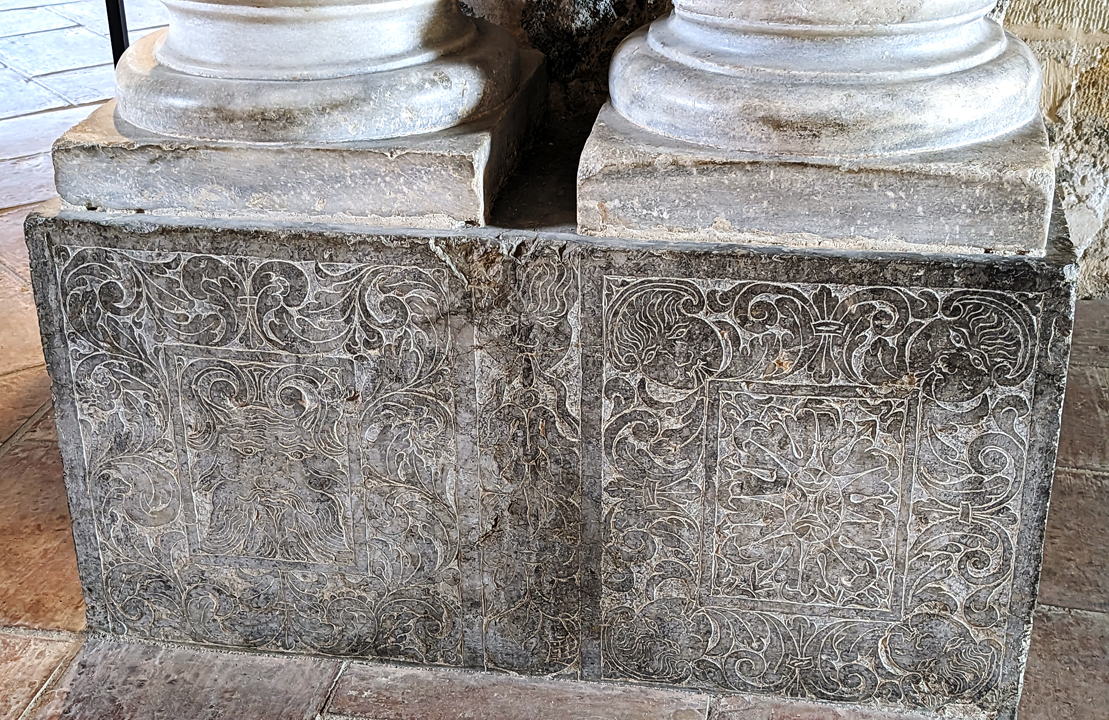
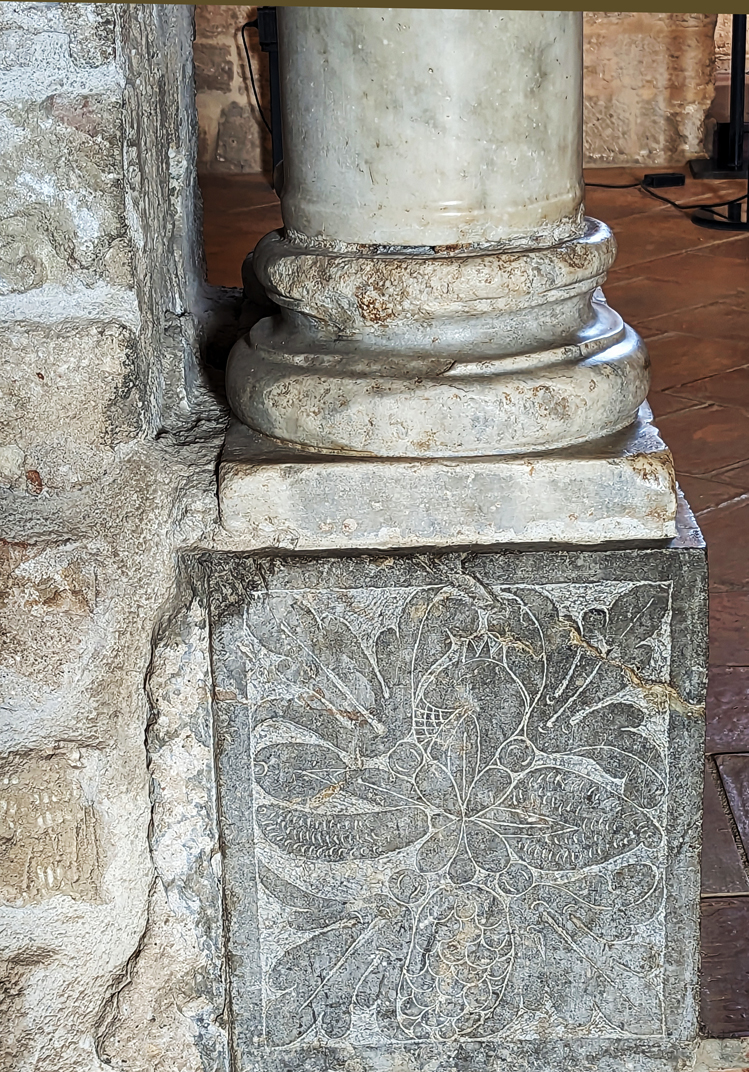
Above: Marble sepulcher marker of Anna, died in 1148, inscribed in Jewish, Latin, Greek and Arabic
The fourth-born son of a king rarely grows up preparing to ascend to the throne. Yet, the deaths of the eldest three sons of Roger II (1095-1154), King of Sicily and Africa, all preceded their father’s. Ready or not, William I of Sicily (1121-1166) inherited the crown.
Of course, that makes things sound simpler than they were. Naturally, he faced challenges, quickly losing Africa to the Moors. Then there problems with popes, Byzantines, Romans, Greeks, scheming relatives and revolting barons. King William managed to stay in power, while refusing Sicilian nobles the participation in government they coveted. While his father was known as Roger the Great, William was dubbed the Bad or the Wicked. Perhaps this was unfair, but the history of his reign was penned by a nobleman with a definite chip on his shoulder.
When things finally became less rocky for King William, he sought a retreat from Palermo, a place where he could hunt and relax. A site west of the city, not yet part of it, was selected for a summer retreat built to take advantage of seasonal sea breezes. If one wanted to hire experienced craftsmen that meant turning to Moorish ones remaining on the island. So instead of harsh Norman interiors, the palace was constructed with Arabic features, including arches vaulted with ornate honeycomb patterns known as muqarna, or mocarabe.
Dying before the completion, William I never was able to enjoy the palace. Al Aziz means noble, glorious or magnificent in Arabic, so the palace completed during the reign of King William II (1153-1189) was called Zisa. Inheriting a rare period of semi-peace and tranquility from his father, William II went down in history as William the Good.
Not sure how Anna’s marker wound up in the palace, as the date of her death precedes the start of its construction. But the multi-lingual inscription certainly reflects the diversity of the populace of Palermo at the time.
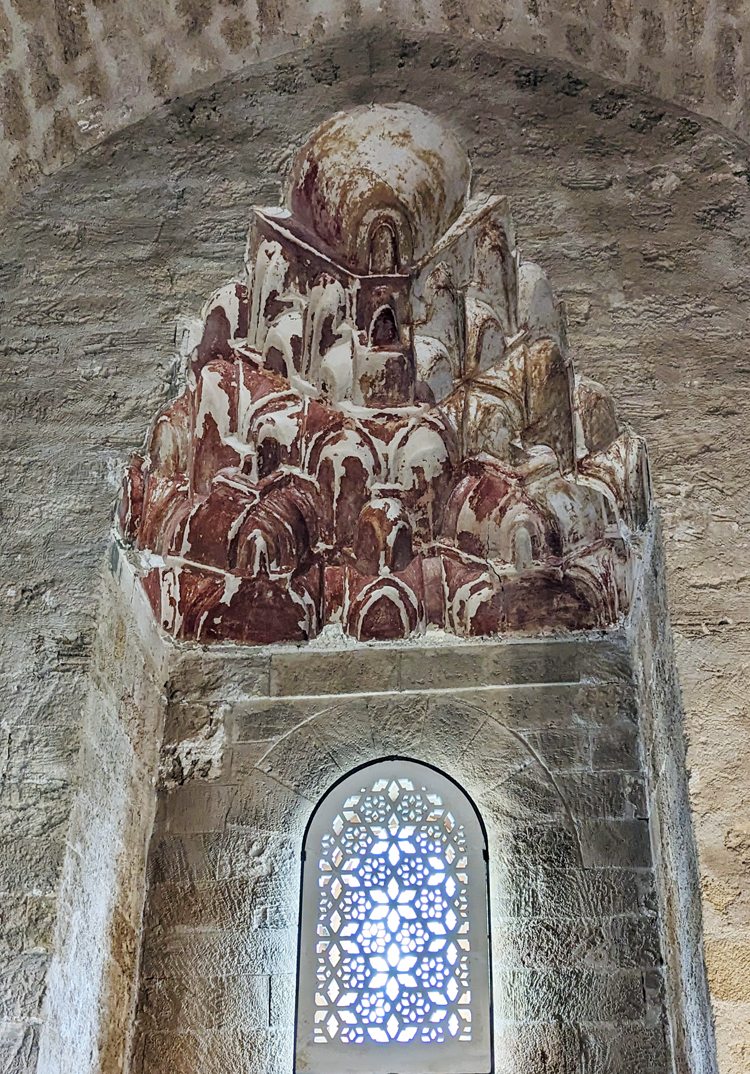
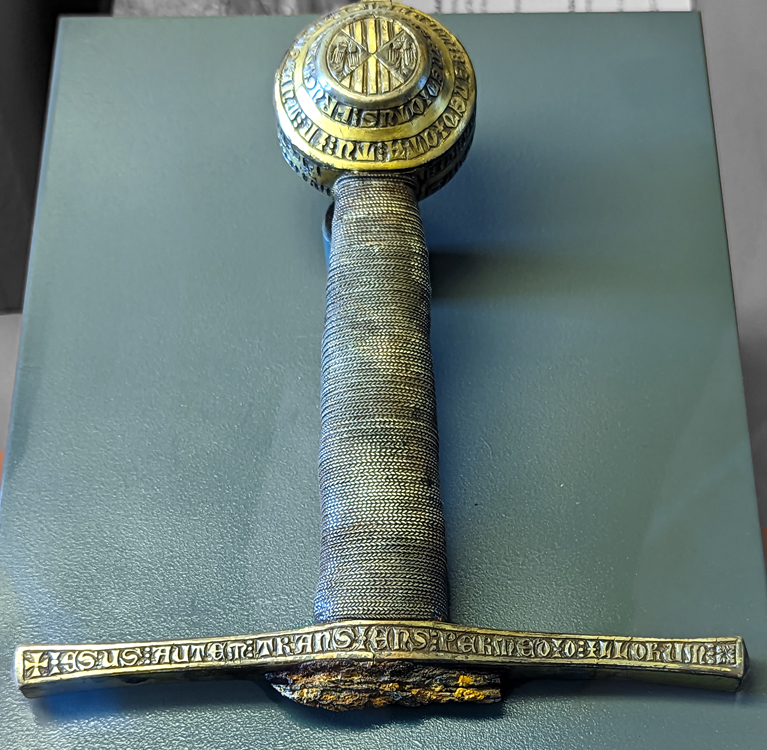
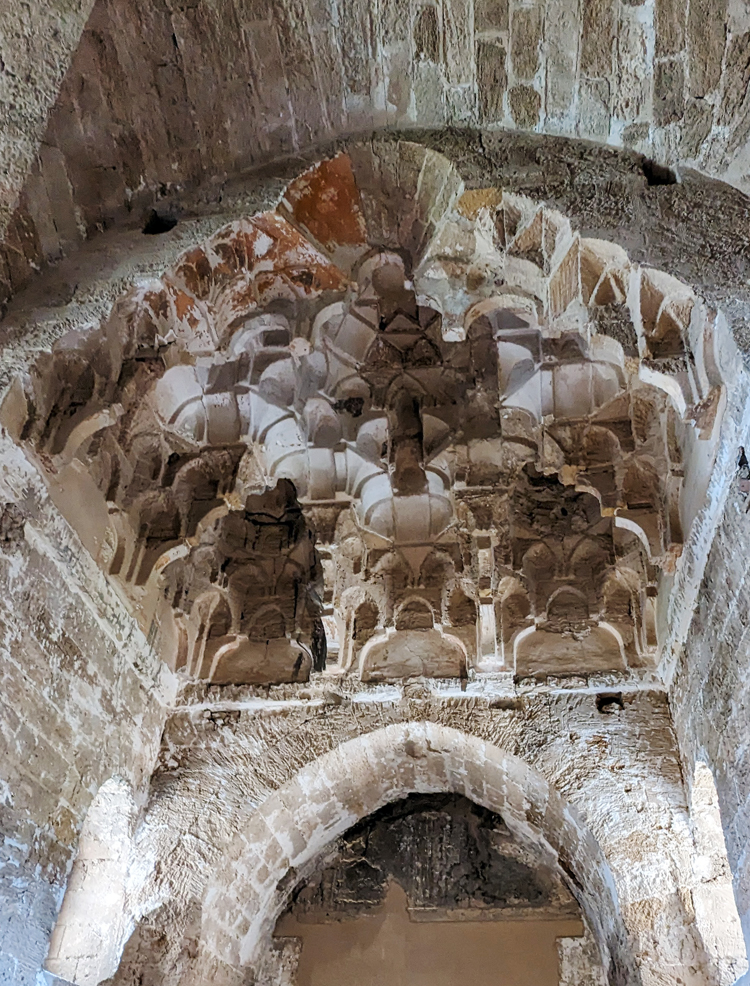

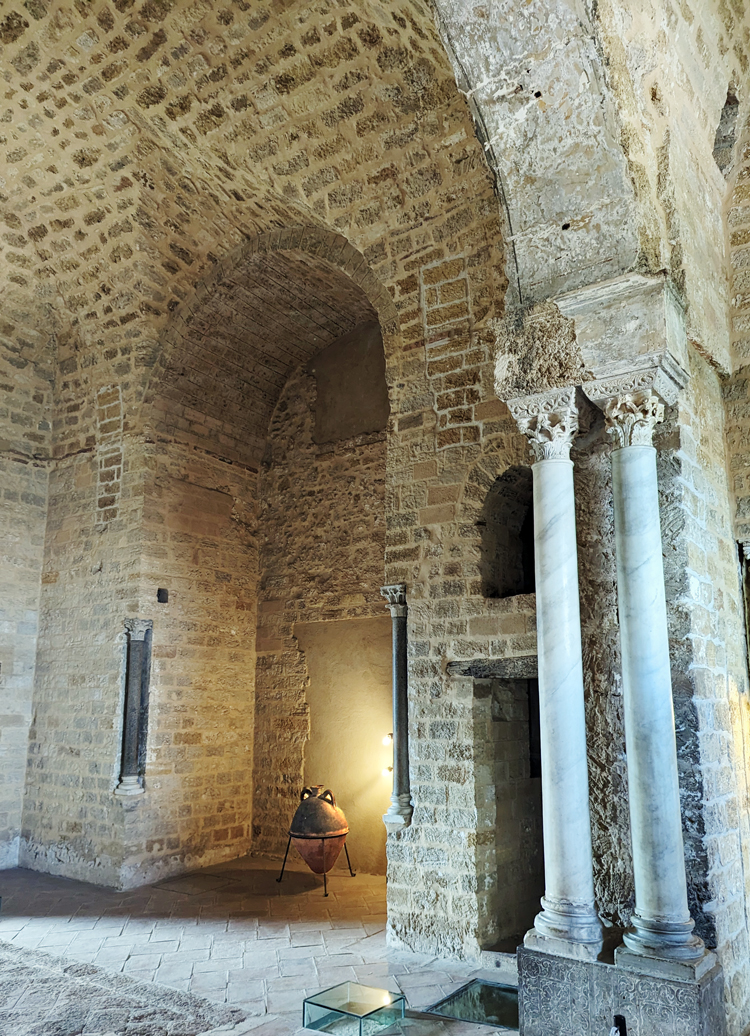
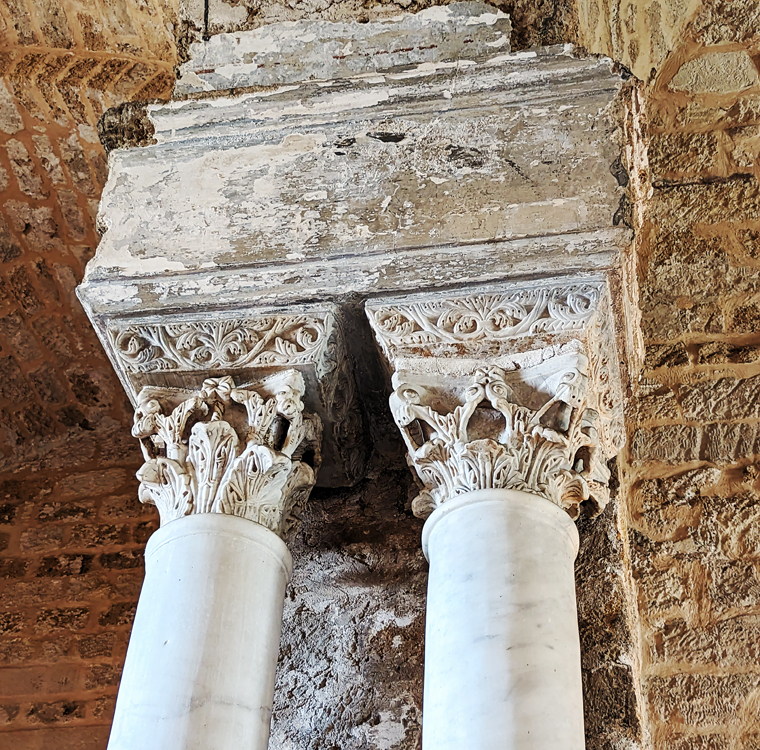

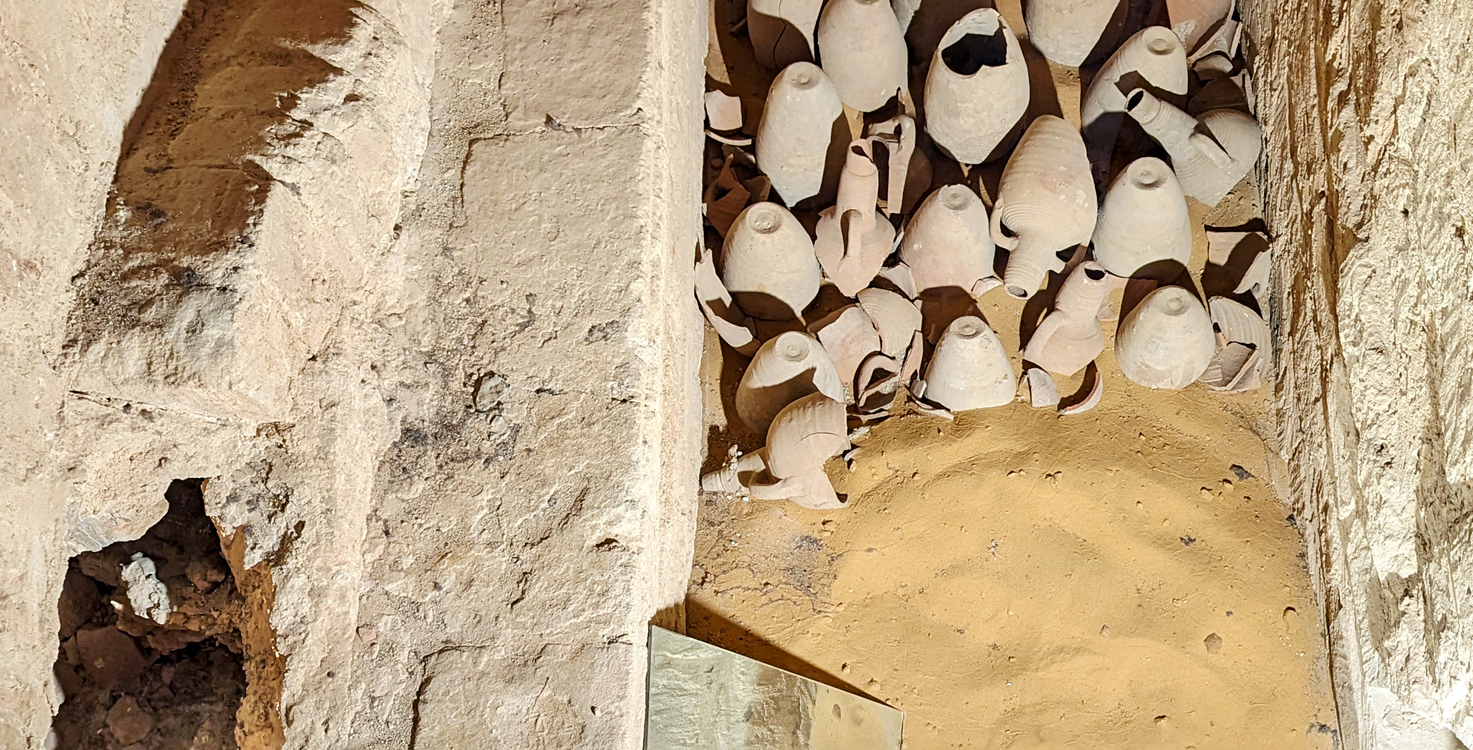
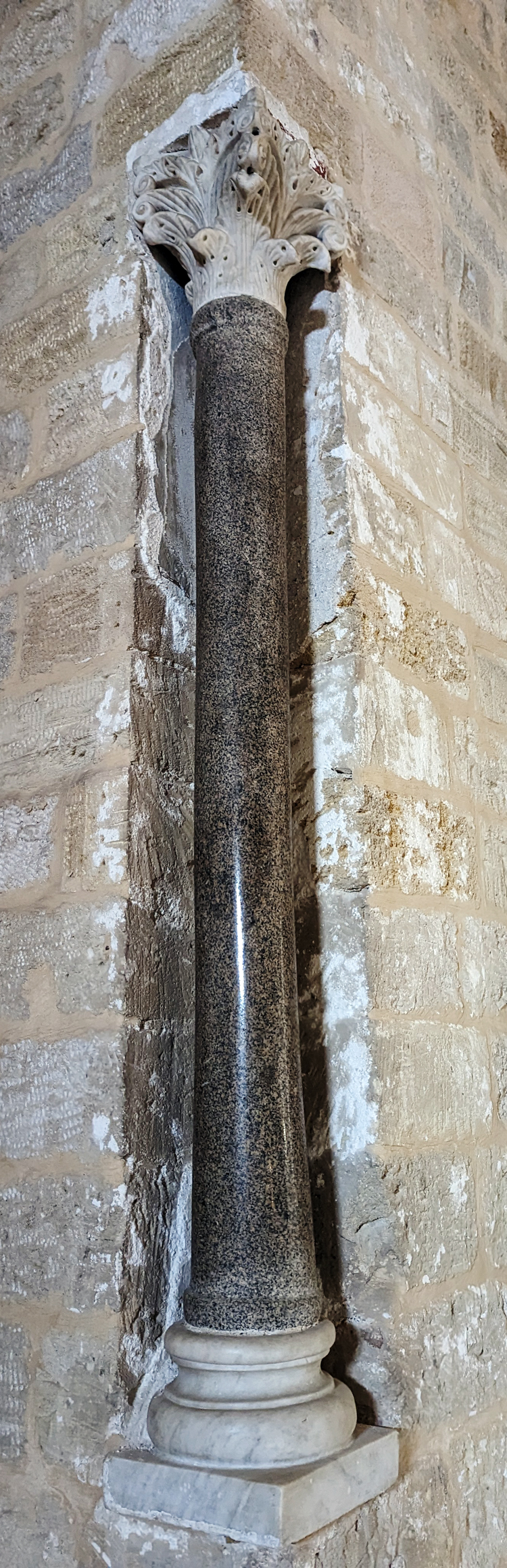
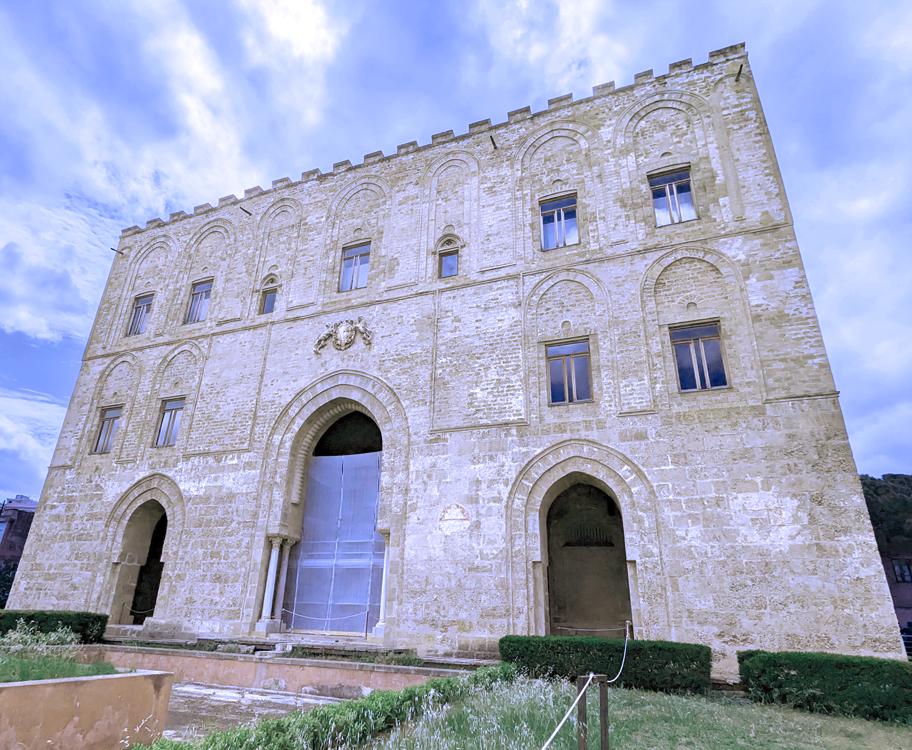
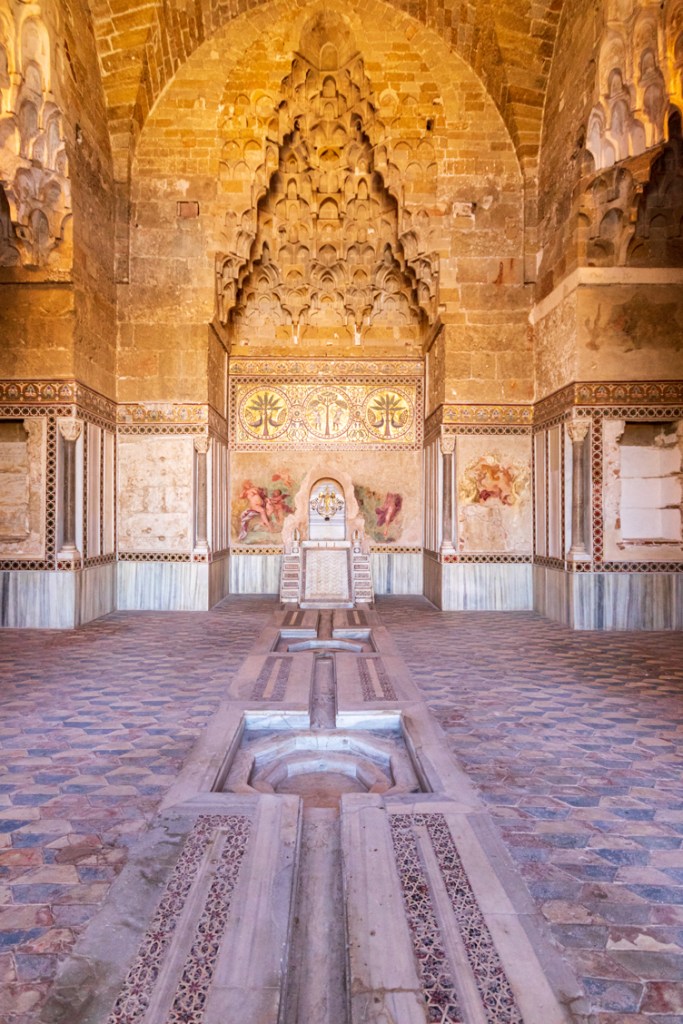
The most impressive feature is said to be the Main Hall, or Fountain Room. Fortunately, it is undergoing extensive restoration; meaning, unfortunately, we only obtained a few peephole peeks. I am including a pre-restoration photo from another source.
On the left: Interior of the Zisa Palace before restoration work closed this portion off temporarily. Matthias Sussan (matthias-suessen.de) Licence CC BY-SA via Wikimedia Commons
The pedestrian route Google mapped out for us was an interesting one. At its behest, we wandered into a less populated, semi-rural neighborhood. Fresh eggs were offered for sale a stone’s throw from their henhouse, and not a tourist was in sight.
The few people we encountered were friendly and quick to notice our hesitation about the direction. Unasked, they encouraged us onward. The final ascent through a narrow dirt passageway seemed unlikely to lead to anything except trouble, but we took their word for it and finally made it to streets leading to the palace.
Reading later, I discovered we had passed right by a large farm cooperative that welcomes visitors. So trust Google, and drop by the farm. But maybe check to see if the restoration of the palace is finished before making the trek.
 Postcards from Barton Springs