
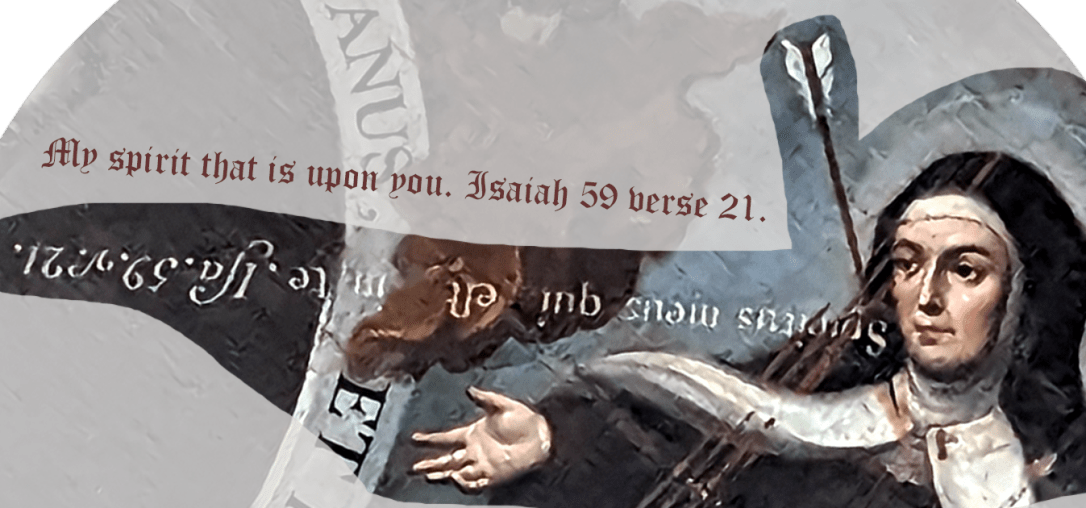
“My spirit that is upon you,” Isaiah 59 verse 21, translation of one of the Latin phrases floating around the canvas of “El Obispo Juan de Palafox y Mendoza” by Miguel Cabrera
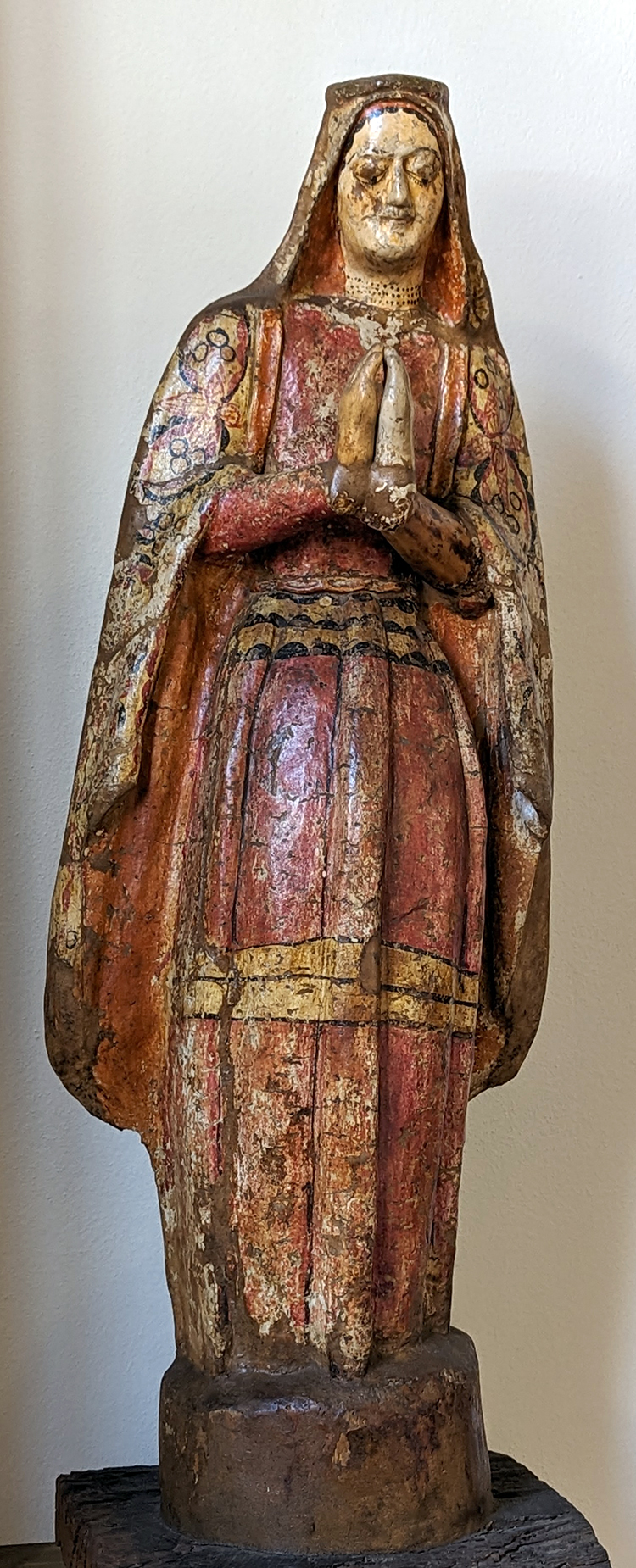
As in Europe, art served as a primary tool for friars to introduce the mysteries of Catholicism to those of other beliefs. Consequently, religious paintings from that period form the core of the collection of Museo de Arte Colonial. The works are displayed in a house of the Colonial period which was renovated in 1984.

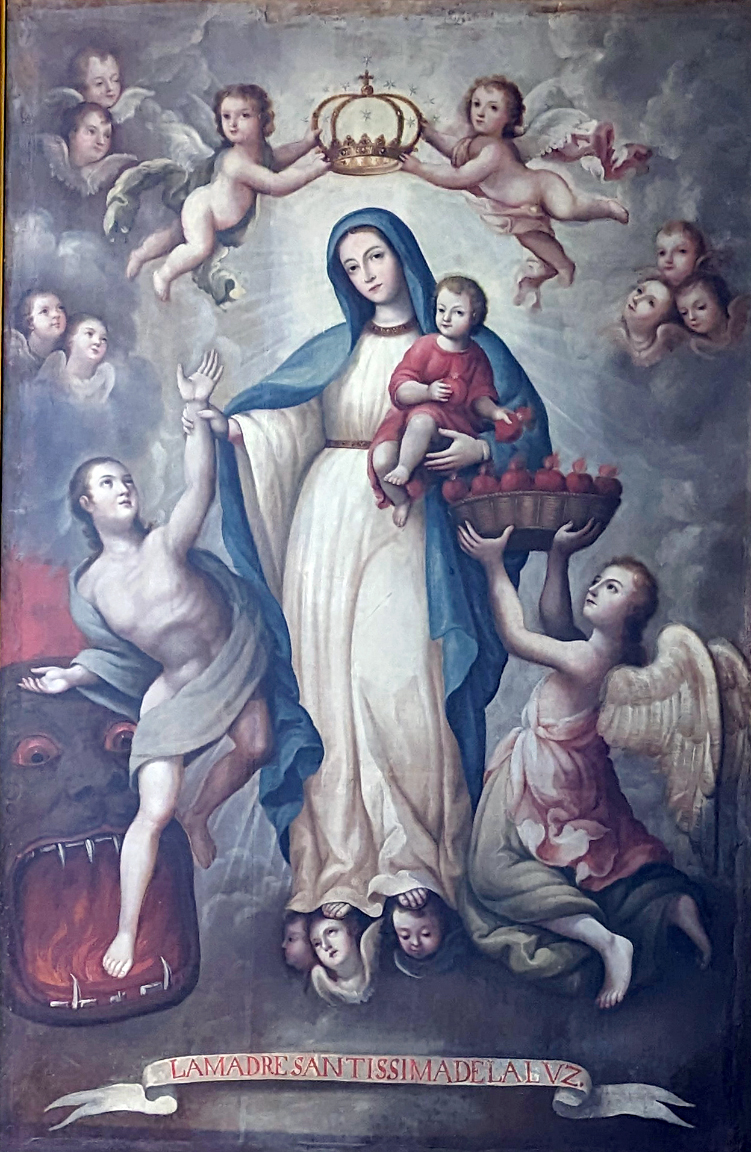

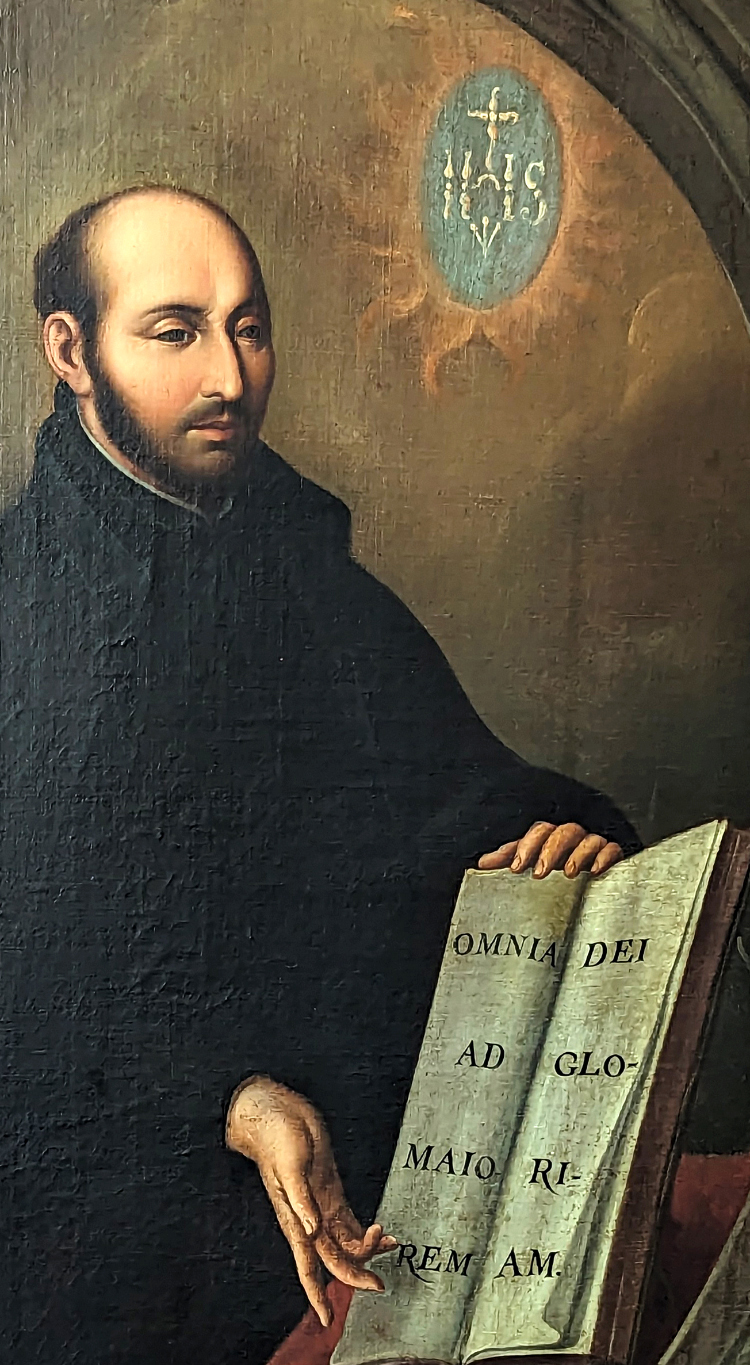
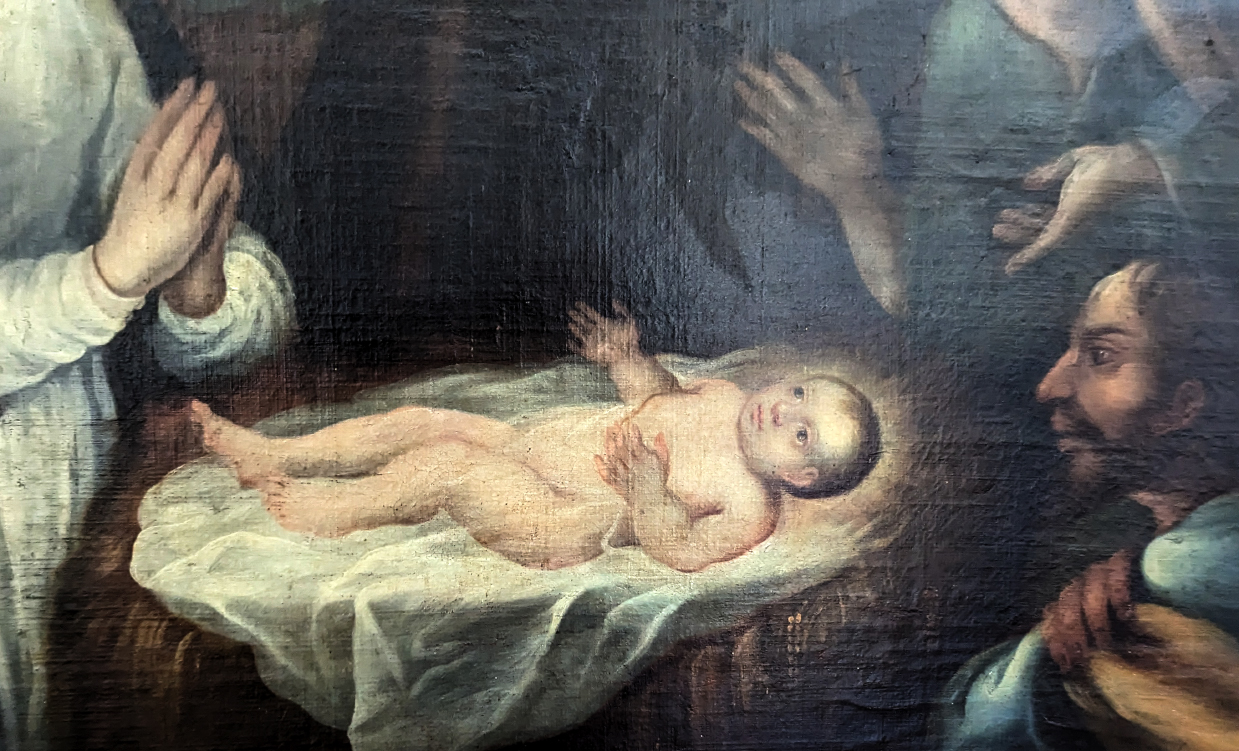
Among the most celebrated are two large paintings by Oaxaca-born Miguel Cabrera (1695-1768), whose talents led the Archbishop of Mexico to appoint him as the official painter of his court.
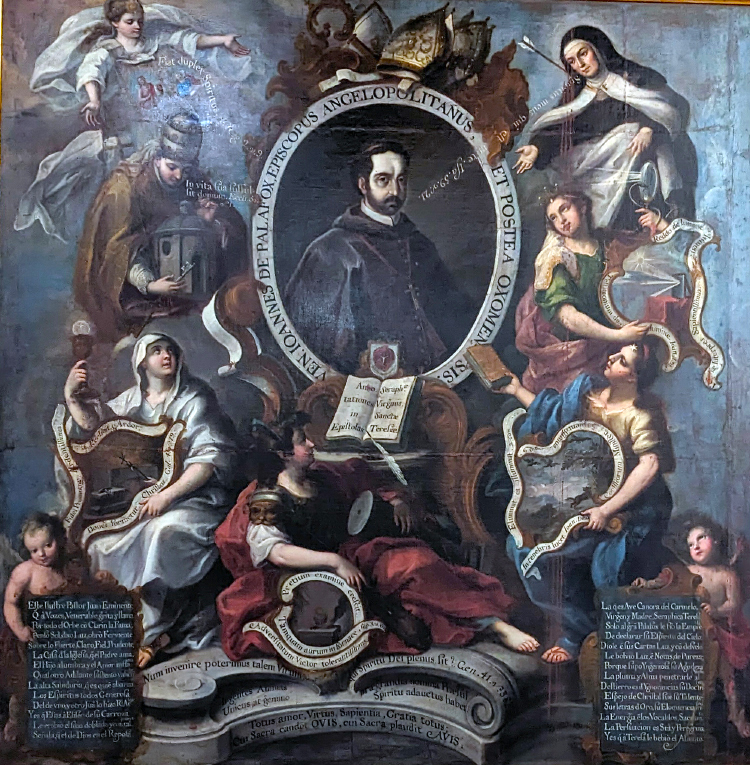

Above left: “El Obispo Juan de Palafox y Mendoza,” Miguel Cabrera. Above right: detail from “San Ignacio de Loyola,” Miguel Cabrera.
More than 100 crucifixes from the 16th through 19th centuries, most crafted by indigenous converts to Catholicism, cover the walls of two rooms. Prior to the arrival of the Spanish, Purepeche artisans often depicted their deities by applying a corn paste over wood and letting the cana de maiz dry before sculpting. The traditional technique was adapted to Catholic imagery, including some of crucifixes exhibited.


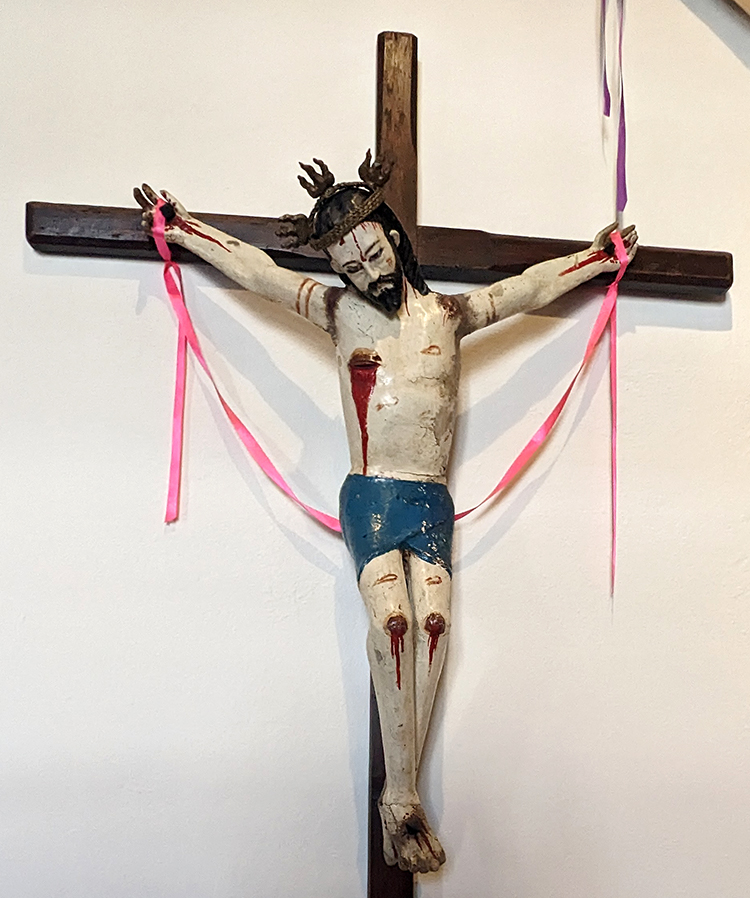

Strange, but seeing a multitude of crucifixes hung side by side, this was the first time I’d ever noticed that Jesus’ head is usually portrayed as tilting slightly down to the right.
 Postcards from Barton Springs