

Above: The ballroom of Palazzo di Nicolaci di Villadorata
Tuna fish, and evidently a lot of it. Riches earned in the lucrative fishing industry of the 17th-century enabled the upper-middle-class Nicolaci family to buy their way into nobility in Noto. After the 1693 earthquake wiped out the fortunes of much of Noto’s high society, Corradino Nicolaci purchased land and the accompanying title of Baron of Bonfala in 1701.
Corradino’s son, Baron Giacomo (1711-1760), supervised the 1720 design of a four-story palace with more than 90 rooms, which took 40 years to complete. While the ground floor was relegated to food storage and stables, the second-floor piano nobile was decorated lavishly for entertaining guests – a necessity later as another member of the family succeeded in acquiring the title of Prince of Villadorata in 1774.
The frescoes of the ballroom featured in the above photo were added in 1831 to accommodate a royal wedding. Along the walls are a series of faux balustrades punctuated with red columns meant to echo the style of porches surrounding ancient houses of Pompeii. The center of the ceiling fresco is a copy of “Aurora and the Chariot of the Sun” by Bolognese painter Guido Reni (1575-1642).
With the cumbersome name of Corrado Nicolaci Maria Pasquale Antonino Vincenzo (1918-2004), the last Prince of Villadorata to inherit the royal title died with no heirs. After some restoration work, the City of Noto opened nine rooms of the Piano Nobile to the public.

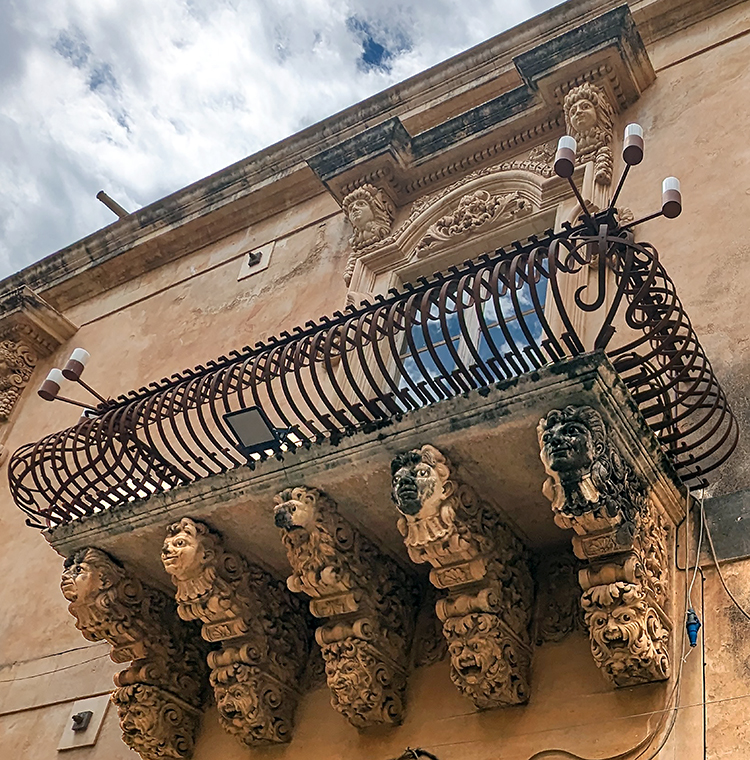


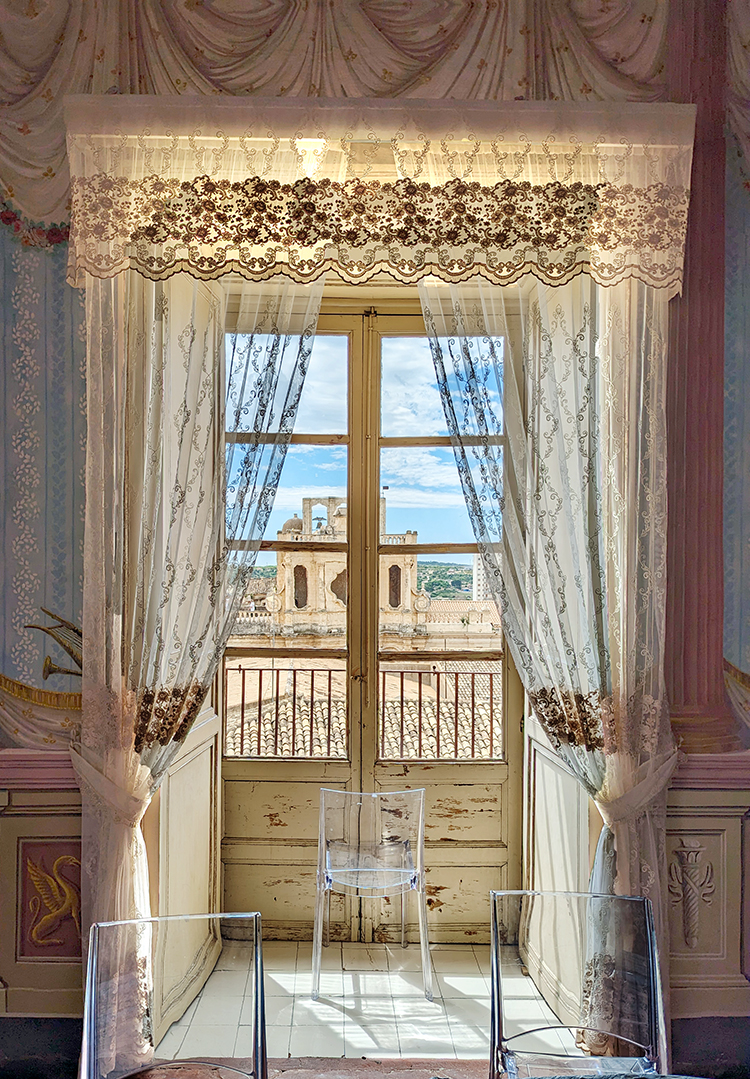


Above: Palazzo di Nicolaci di Villadorata
Who would understand the needs of a film company better than a fellow producer/director? It seems only natural that Jean-Louis Remilleux was willing to entrust his 1782 palazzo in Noto, Palazzo Castelluccio, to director Joe Wright for his 2021 Cyrano.
The Frenchman had purchased the rundown palace from the Order of the Knights of Malta in 2011. With Giuseppe Tomasi di Lampedusa’s The Leopard inspiring his design, Remilleux devoted four years to renovating the mansion before opening it to the public.
Of course, it wasn’t like Remilleux had to move out of his 16,000 square-foot house during the production, as this is not where he makes his home. At the same time he was restoring Palazzo Castelluccio, he purchased a more spacious castle, Chateau de Digoine in Palinges, Saone-et-Loire, close enough for him to commute to Paris.


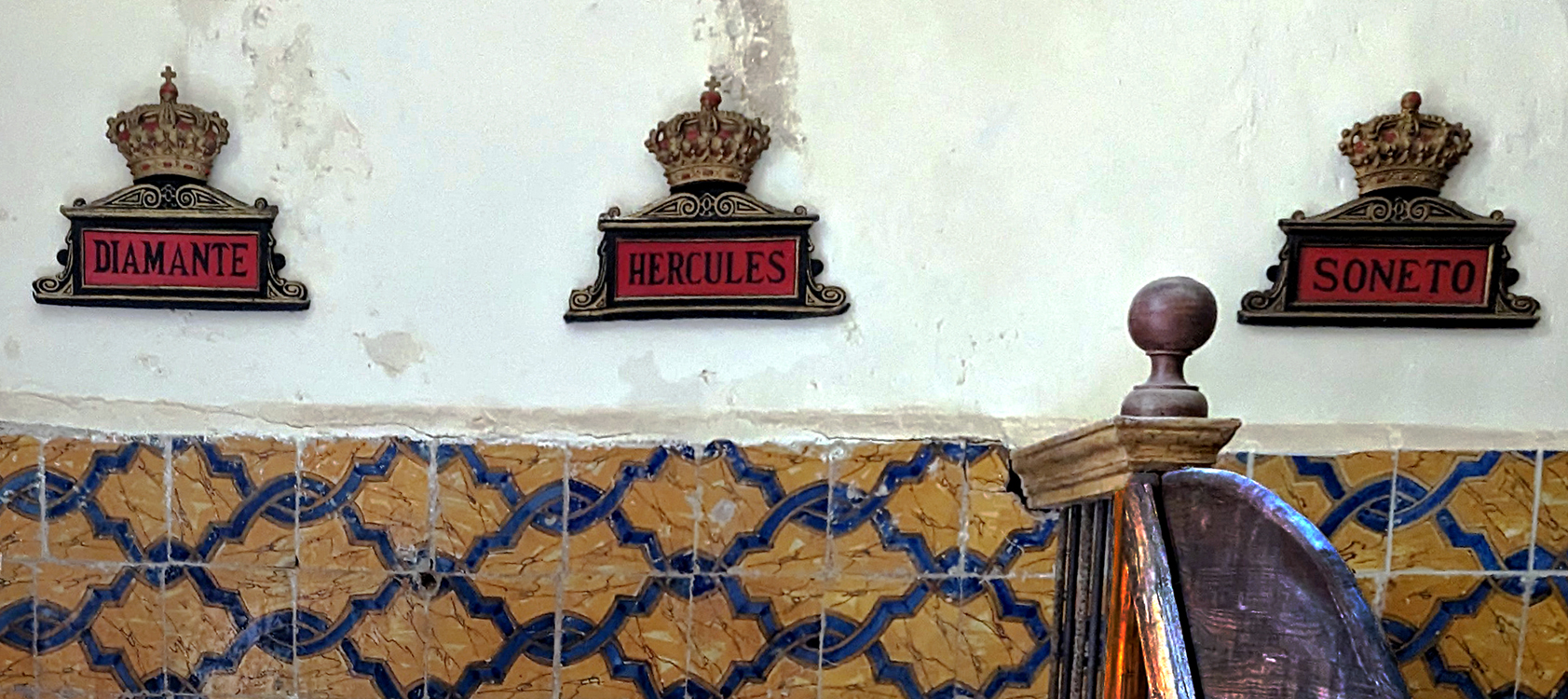


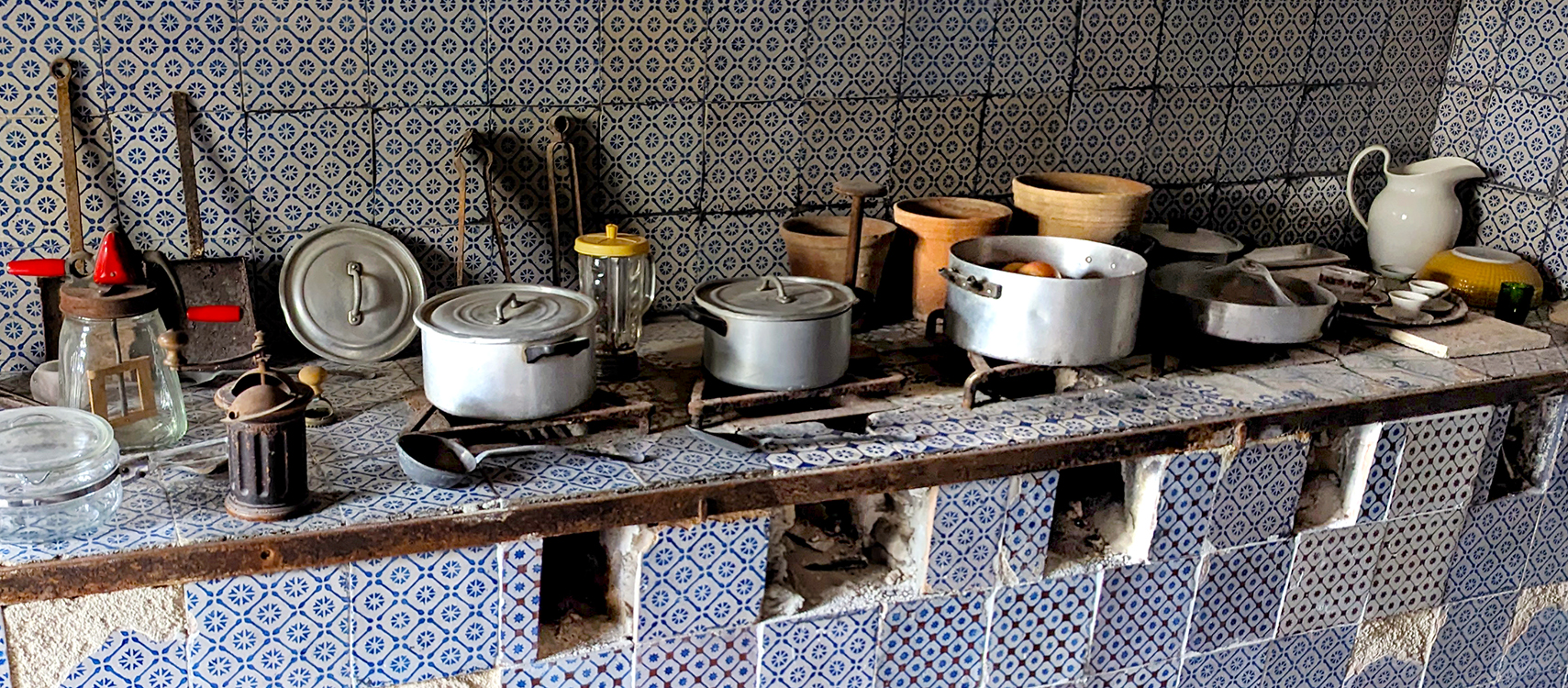
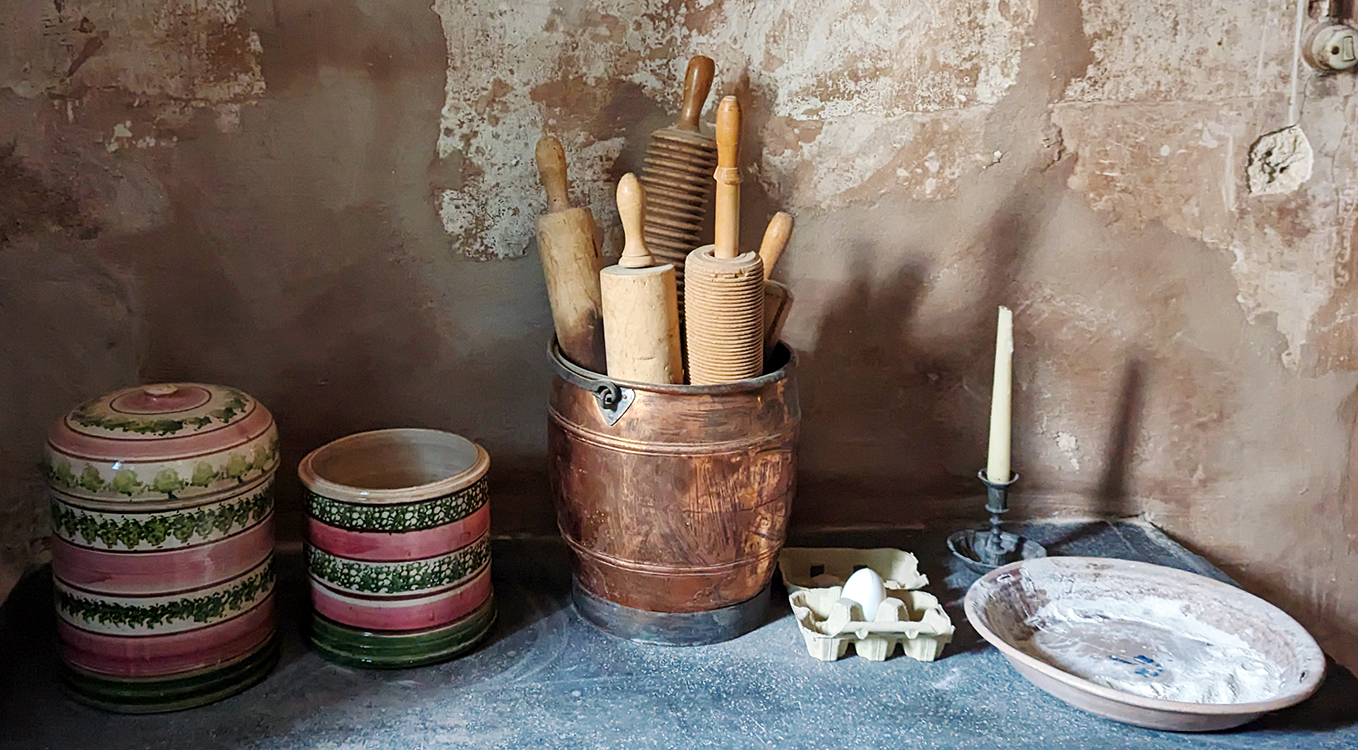

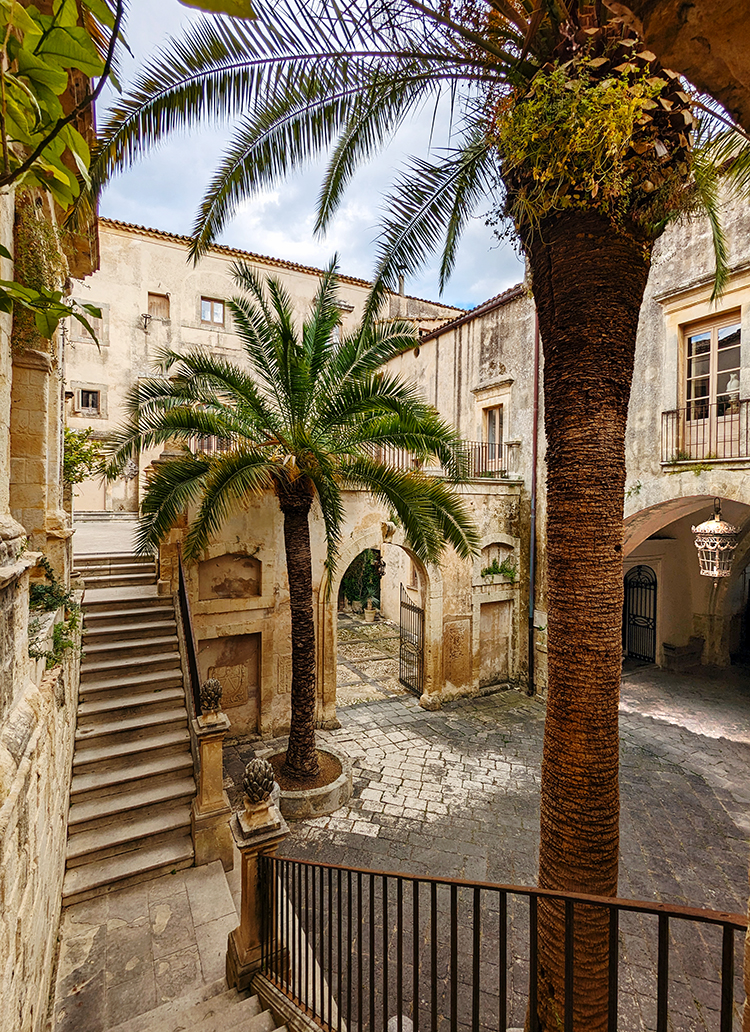
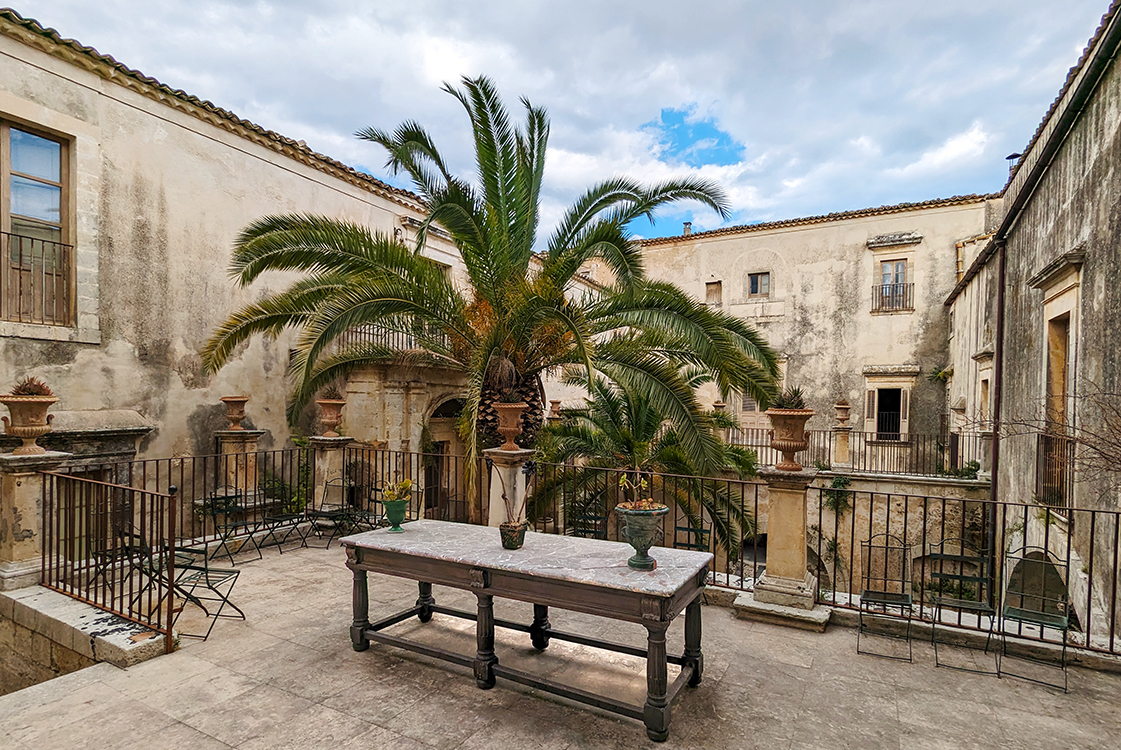

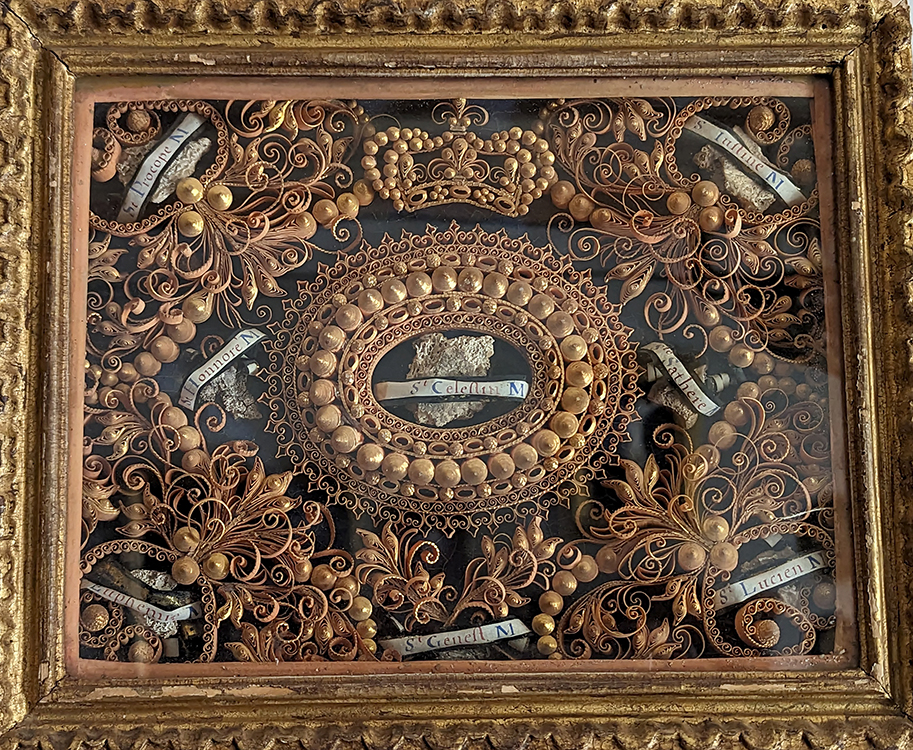

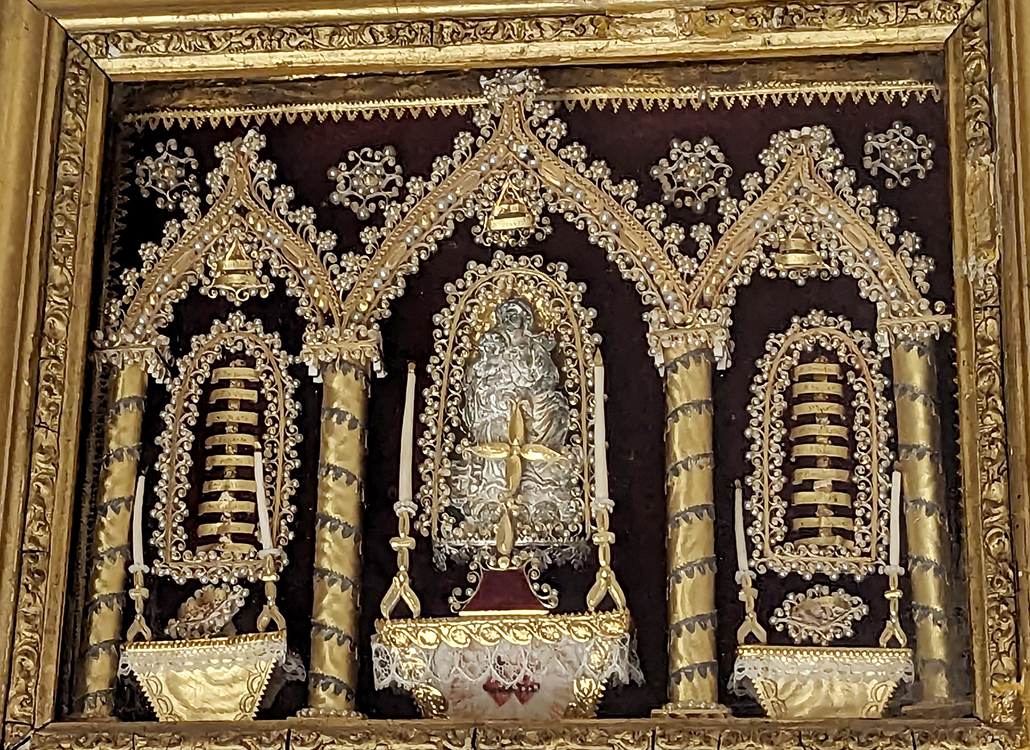


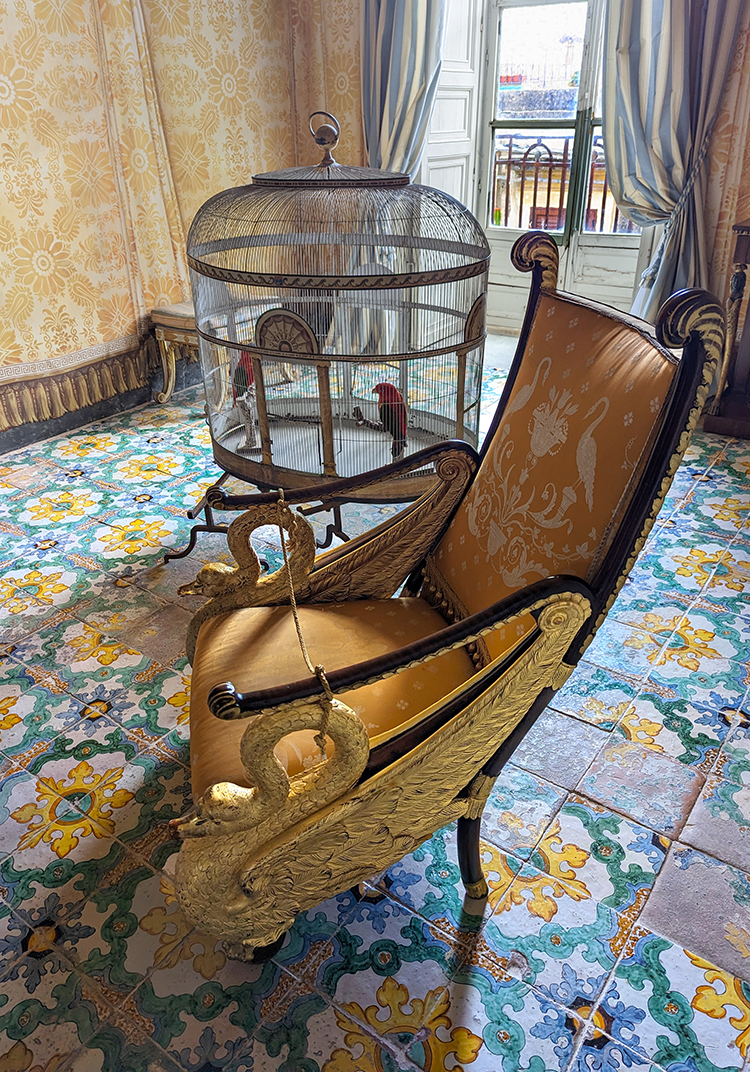

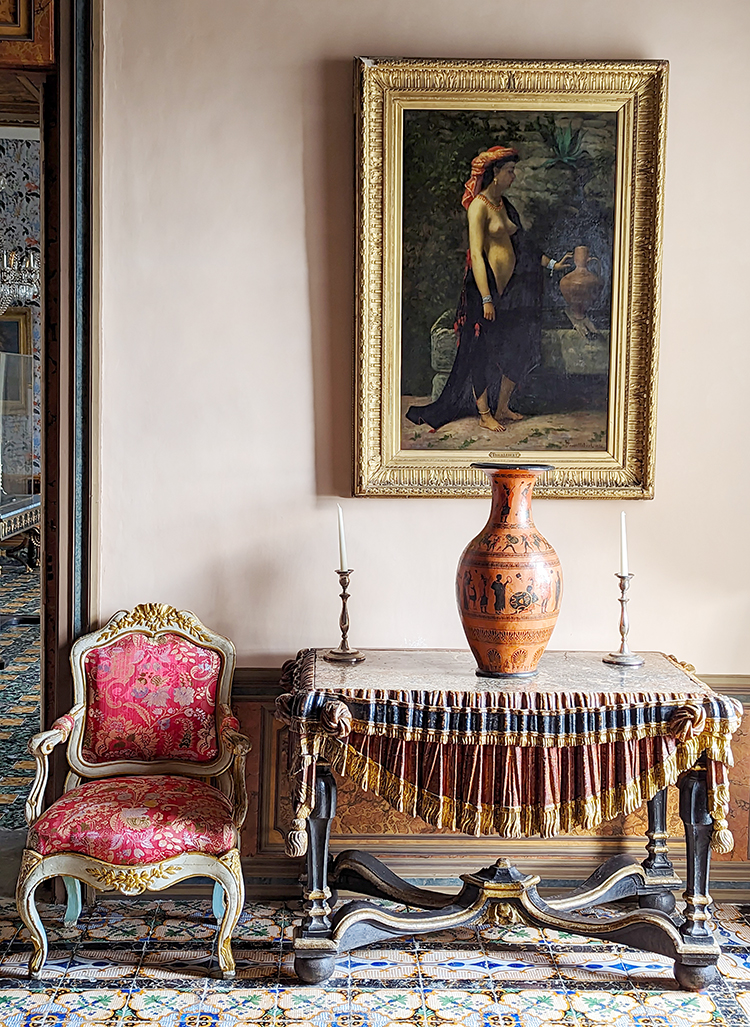
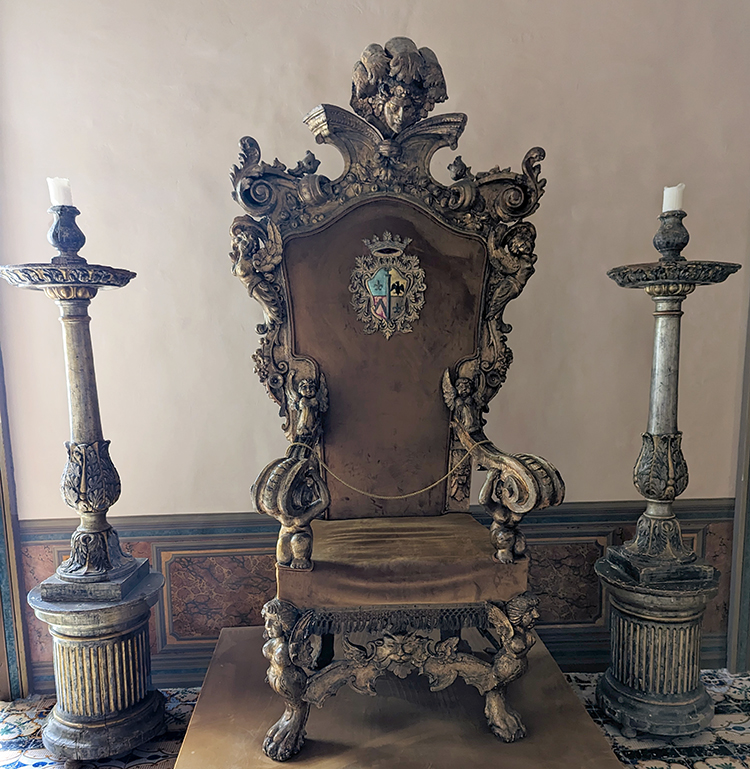

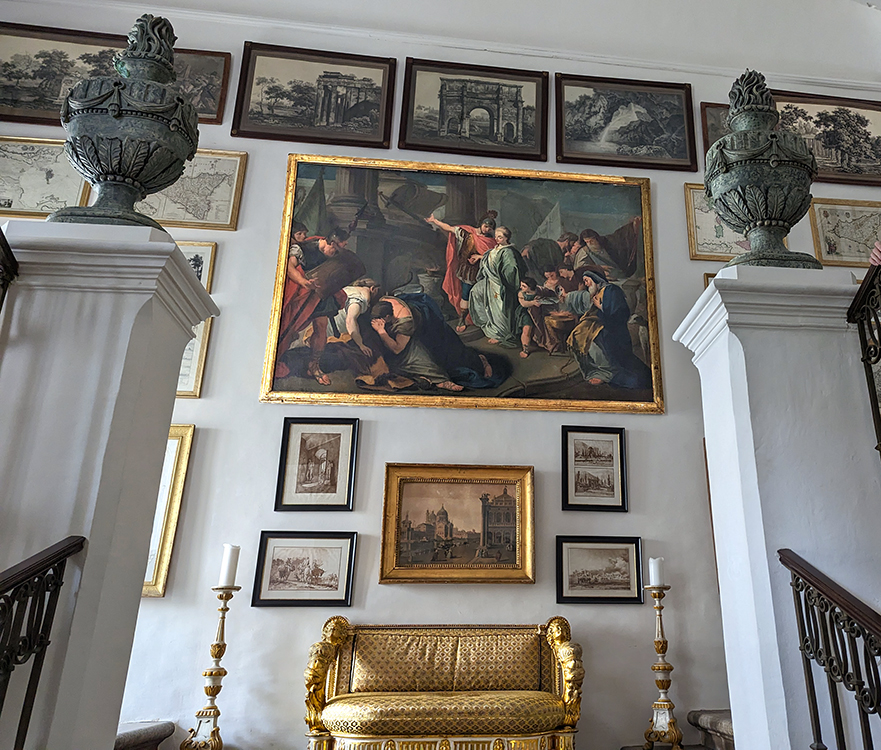


Above: Palazzo Castelluccio
I started watching Cyrano the other night and loved recognizing scenes shot all around Noto, as well as some from Ortigia. There is a wonderful rowdy bawdy scene in a theater with lots of audience participation and choreographed sword play. Peter Dinklage is always a fascinating actor to watch, but the solos in the musical ended up boring me. I admit not making it all the way through, but it is beautifully filmed.
Not to let my viewing habits have the last word, this is from Justin Chang on NPR’s Fresh Air:
A lot of great actors have played Cyrano de Bergerac over the years, including José Ferrer, Christopher Plummer, Gérard Depardieu, Kevin Kline and Steve Martin, if you count — and why not? — the 1987 modern-day comedy Roxanne.
The latest to join their distinguished company is Peter Dinklage, and he’s the rare actor not to wear a fake nose for the role. Here, it’s not a big schnoz but rather Cyrano’s diminutive stature that makes him think he’s unworthy of Roxanne, the woman he loves, played by Haley Bennett….
As he did in past films like Pride & Prejudice and Anna Karenina, Wright controls the camera with fluid grace, letting us see the actors and dancers moving through space with none of the busy cutting you get in so many contemporary movie musicals….
Dinklage shows you the deep ache at Cyrano’s core, and makes you feel the sting of his unrequited love. Some purists may miss that big nose, but there’s something about the lack of prosthetic enhancements that makes Dinklage’s performance all the more poignant….
Only a truly committed director would have opted to shoot a climactic battle scene at 16,000 feet above sea level on the side of Mount Etna, a live volcano. It’s a showy flourish, for sure — but also a fitting one for a story of such grand, operatic passion.
Hmmm. Maybe I need to tune back in for that scene.
 Postcards from Barton Springs