

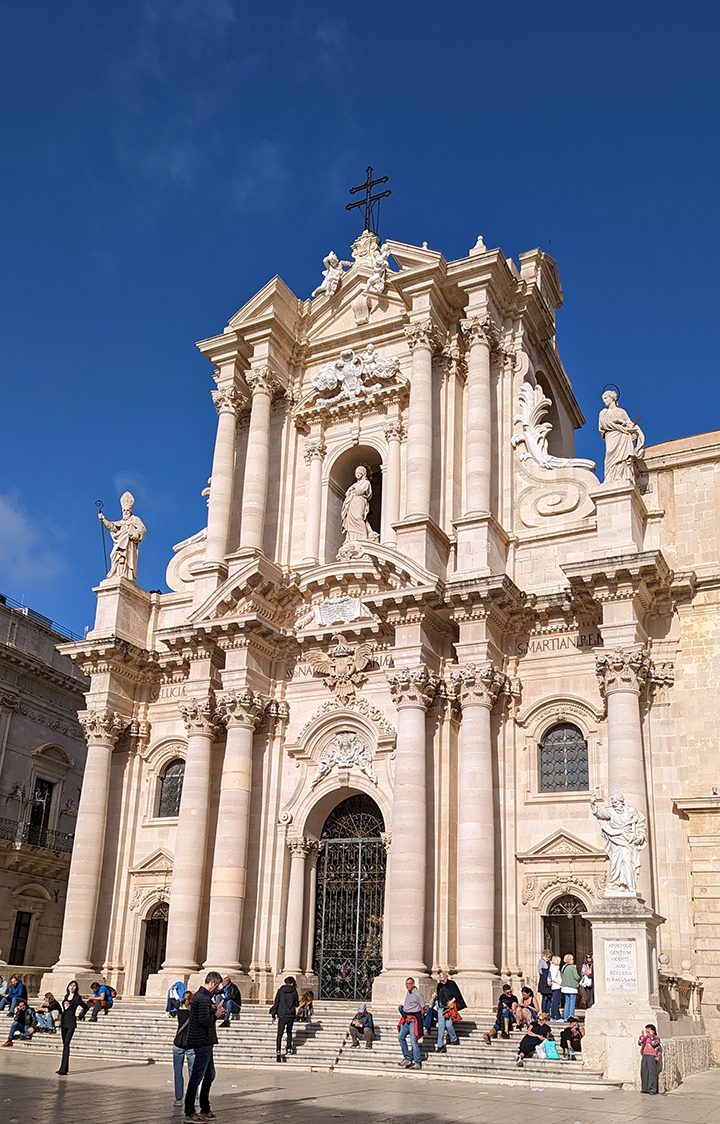
Above: Façade of the Duomo di Siracusa, or Cattedrale della Nativita di Maria Santissima
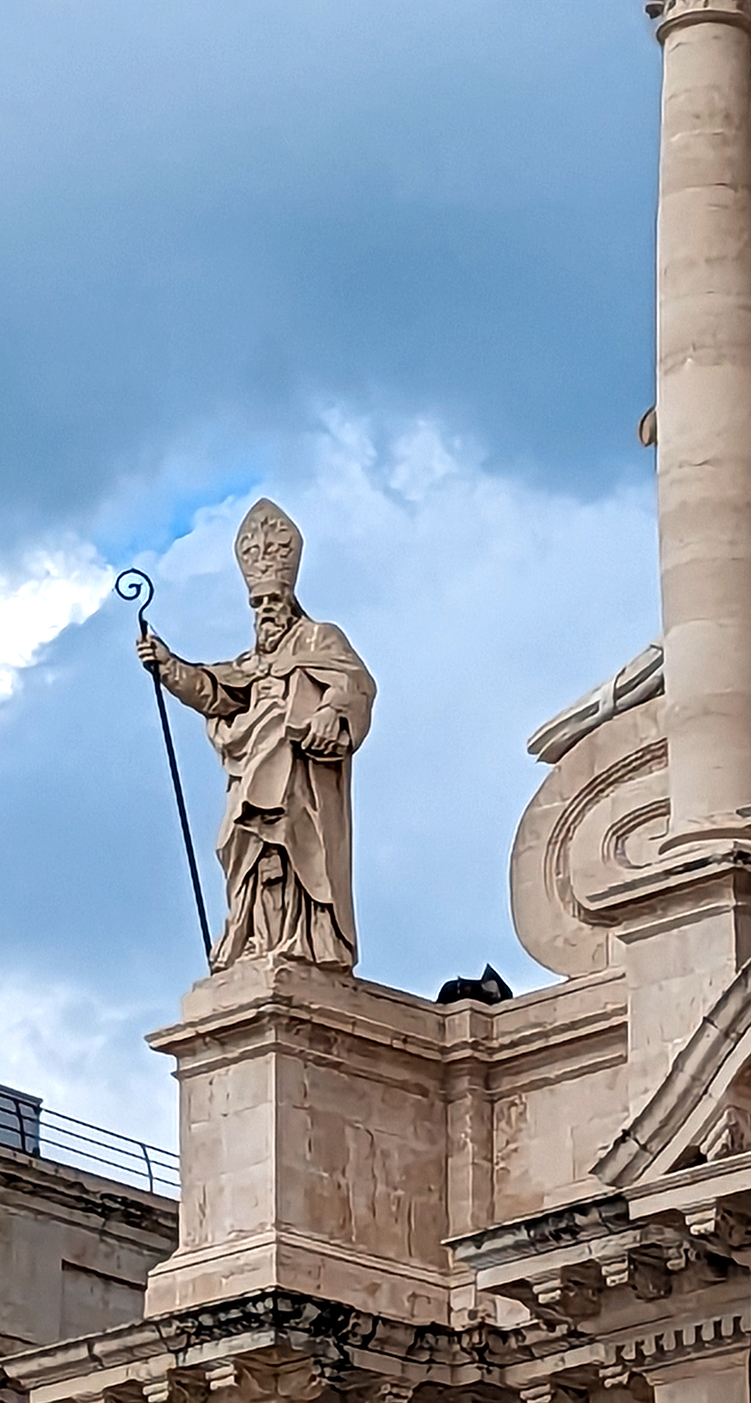
The chapel where some of Santa Lucia’s relics, featured in a recent post, are housed in the Cathedral of the Nativity of Mary Most Holy. A statue of her reigns up high on its façade to the right of the Virgin to whom the church is dedicated. Up on the left is San Marciano of Siracusa with San Pietro and San Paolo flanking the entrance down below.
Over the past 2,000 years, the history of Saint Marcian of Syracuse has become somewhat muddied. One version is that he was a follower of Peter the Apostle, who dispatched him to Sicily to preach in the year 40. His conversion rate was so high that the ruling Romans deemed him dangerous, and he was put to death. San Marciano became known as the first bishop of the city and is the patron saint of the archdiocese.
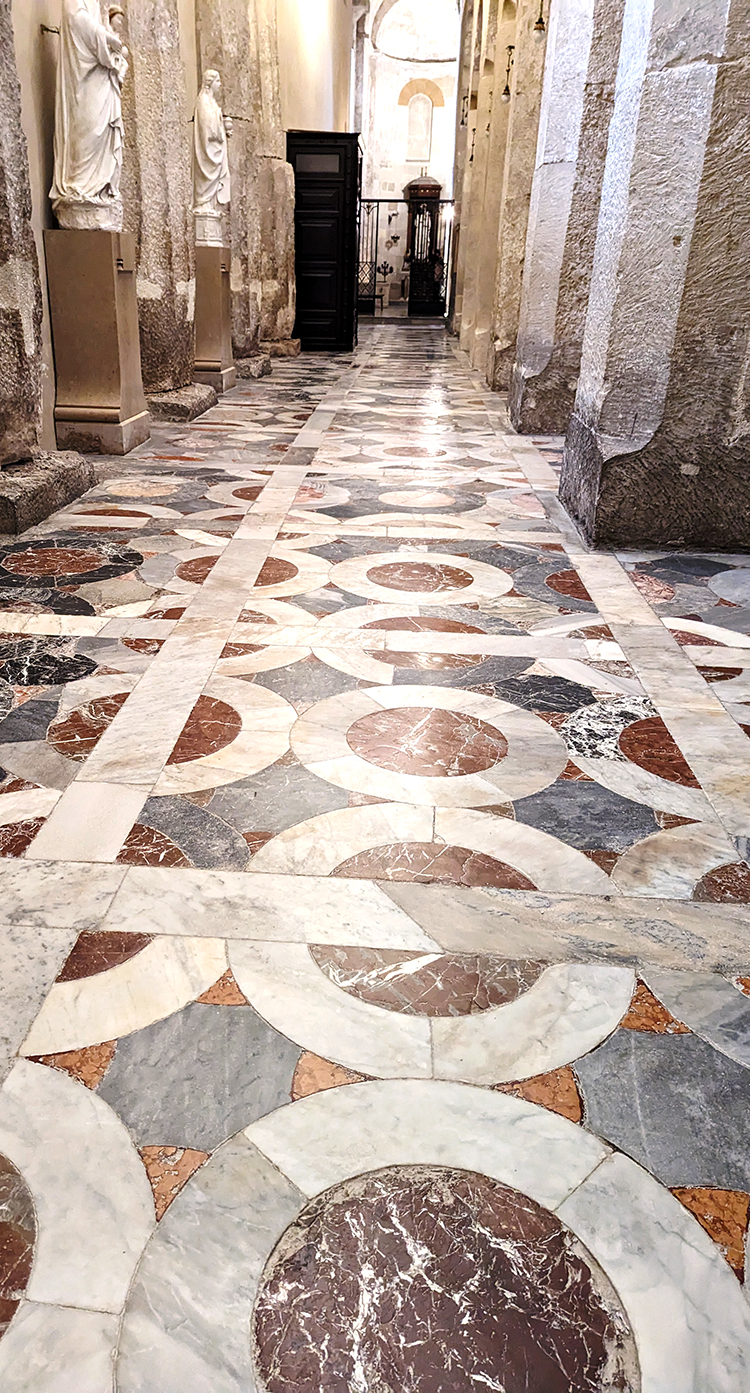
The “new” façade of the cathedral dates from after the 1693 earthquake and reflects the style categorized as High Sicilian Baroque. But the rest of the building has much deeper roots. The site was occupied by a 5th-century BC temple of Athena, possibly constructed under Dionysius I. Thirty-six substantial columns surrounded the outer perimeter of the temple – columns so substantial they withstood the devastating earthquake and can still be viewed on the north side of exterior and within the cathedral itself.
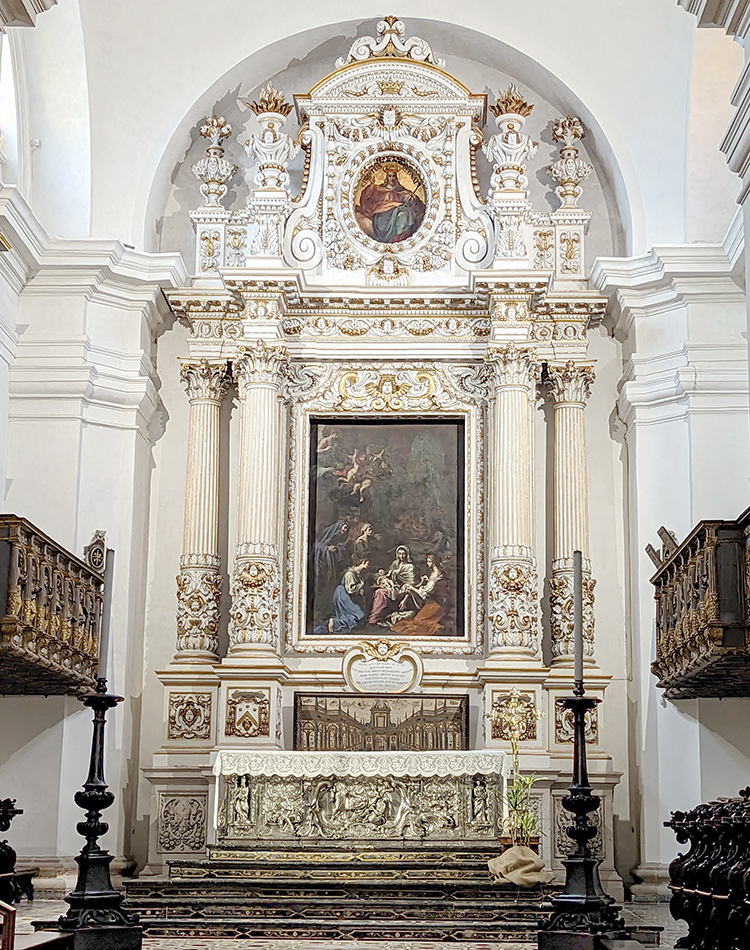
Byzantine rulers later enclosed the space between those Doric columns to create a central nave with two side aisles. In the 9th century, Arab rulers converted the structure into a mosque. Roger I of Sicily (1031-1101) reclaimed Siracusa in 1085, transforming the then-mosque back into a Catholic Church. All of these major changes has left the interior a combination of plain rustic walls contrasting with flamboyant Baroque sculptural details.


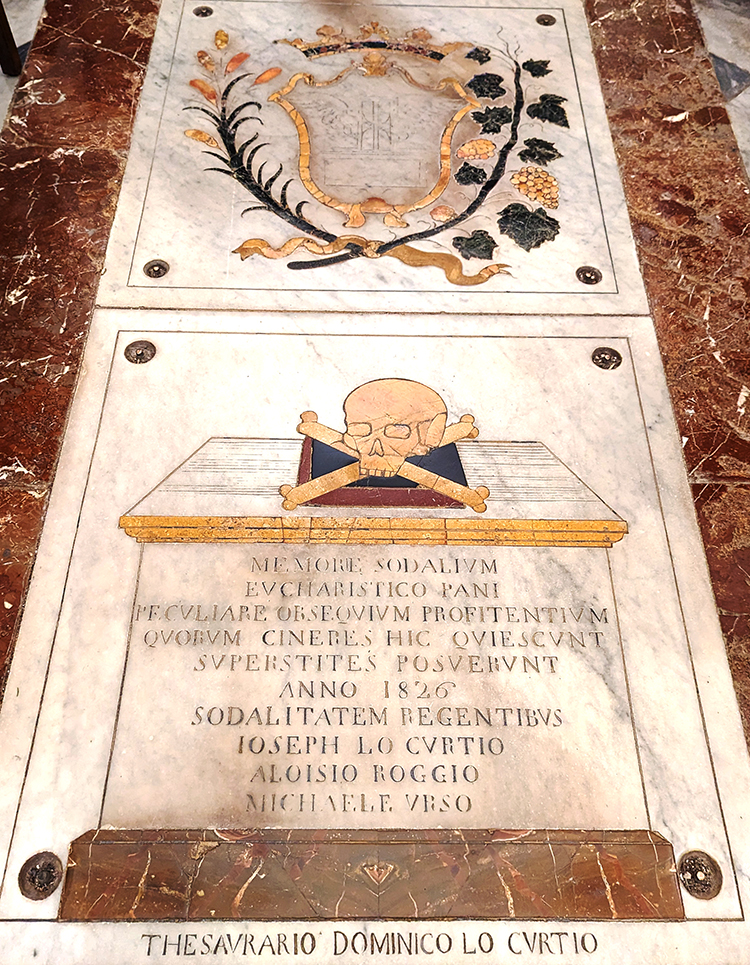

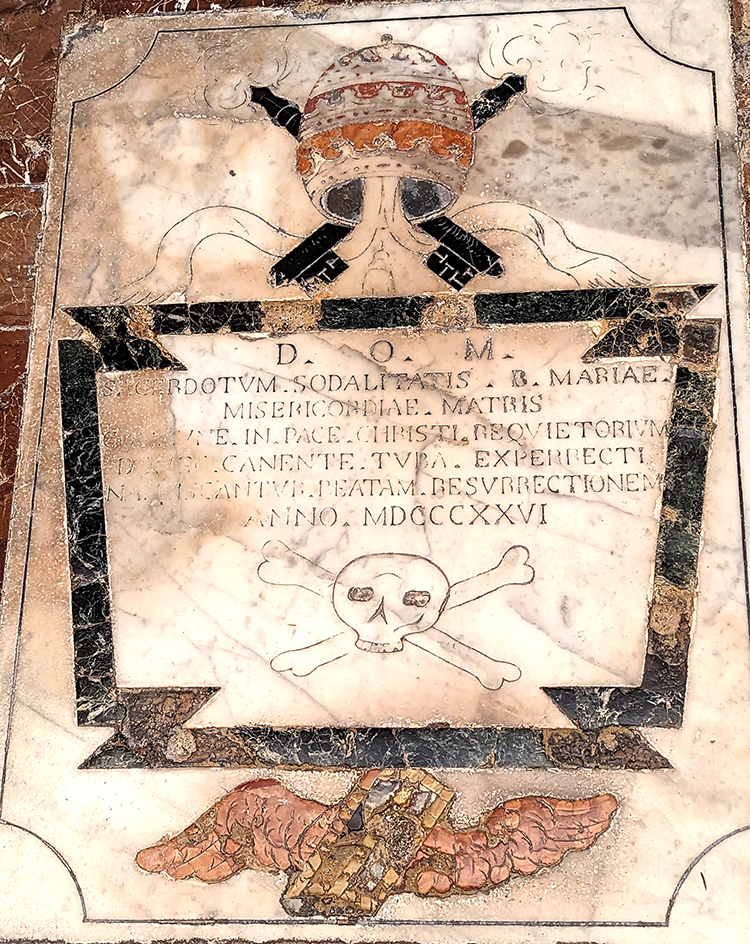
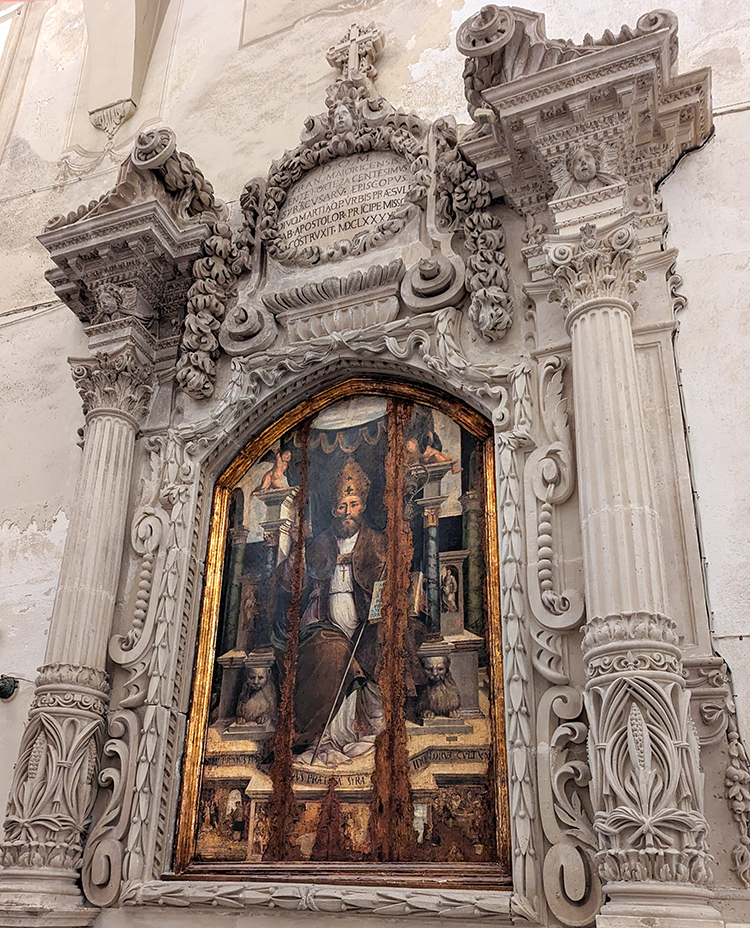
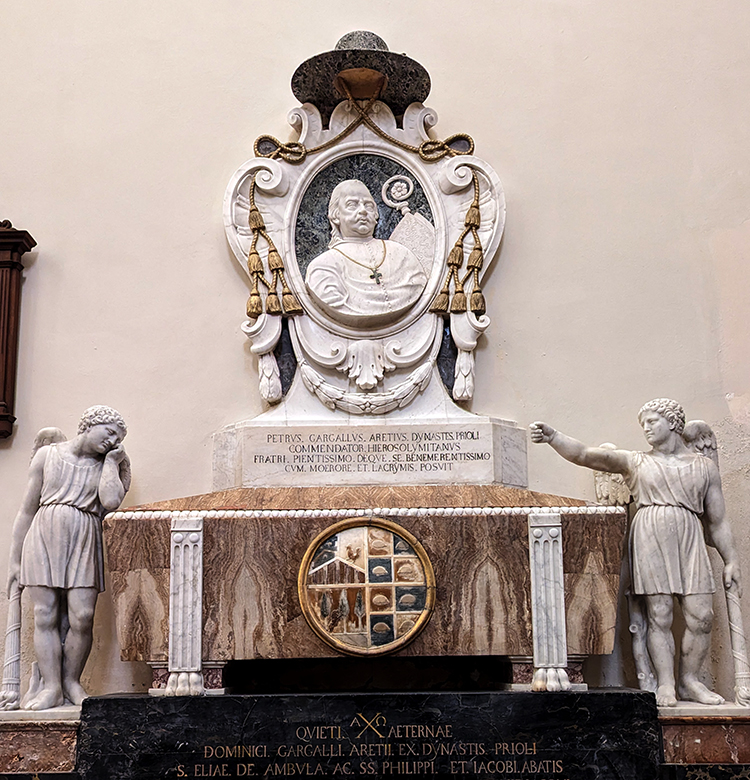

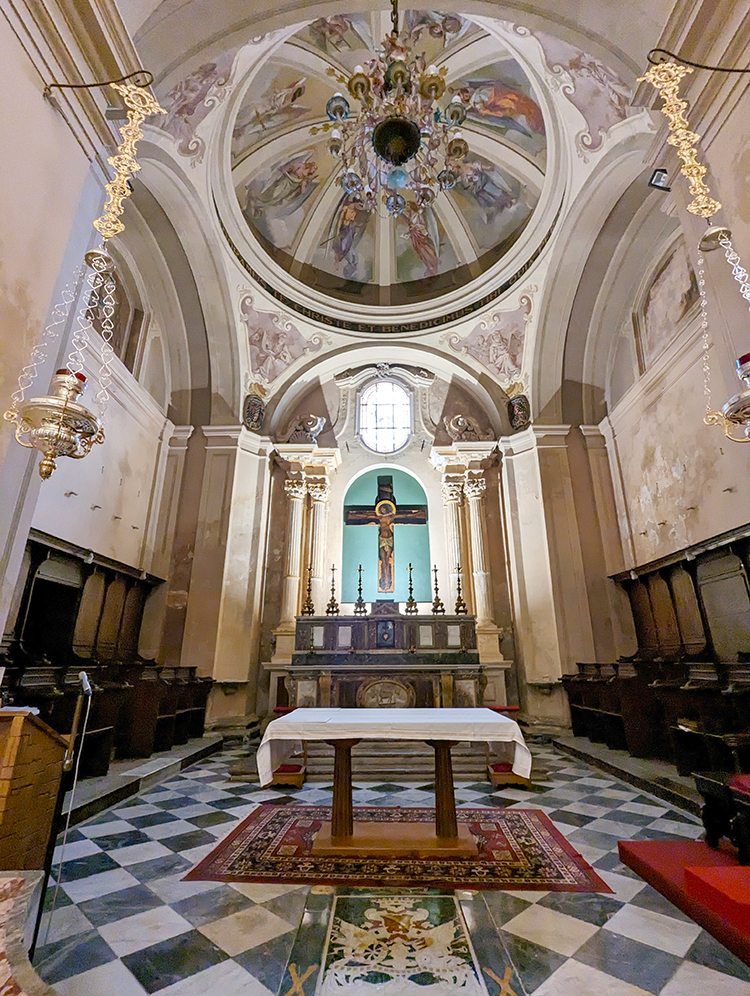

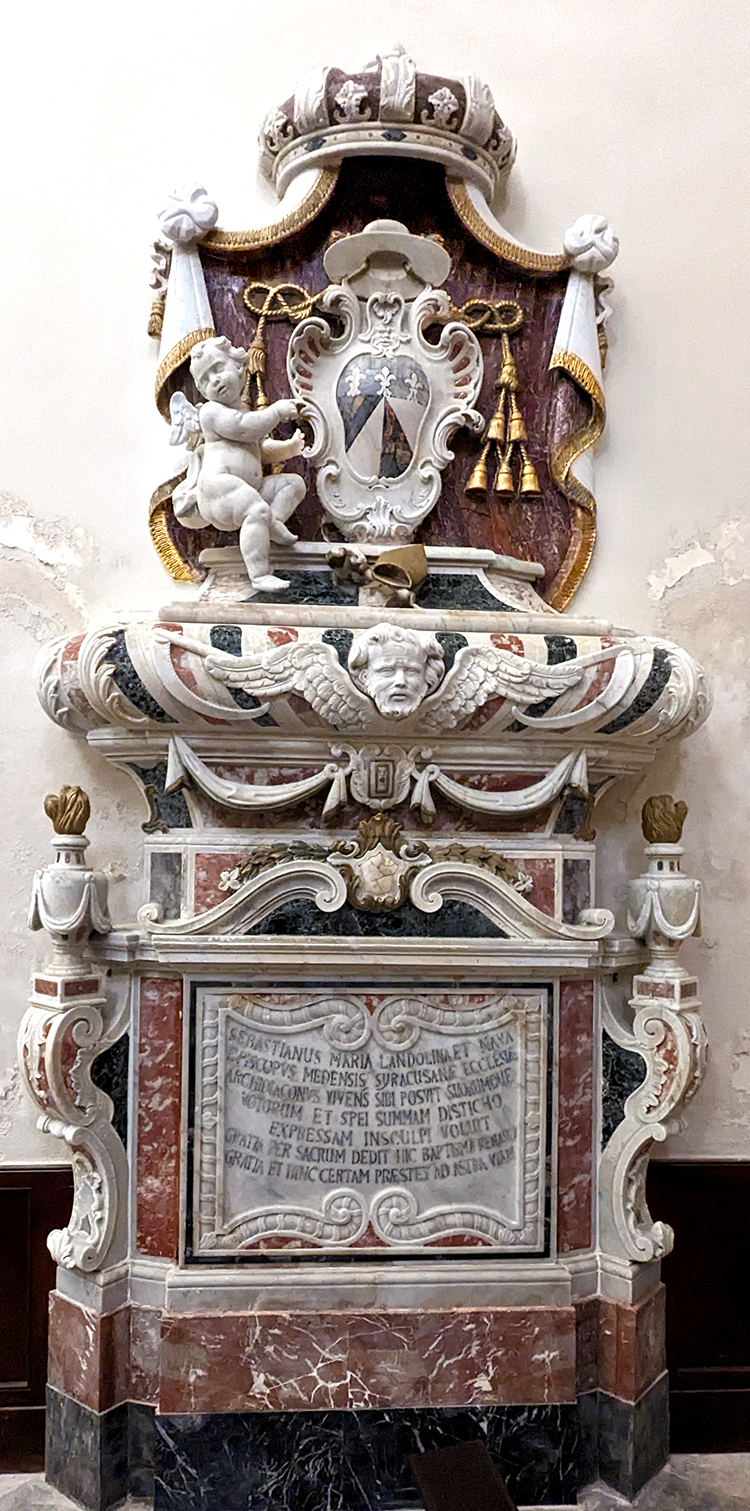
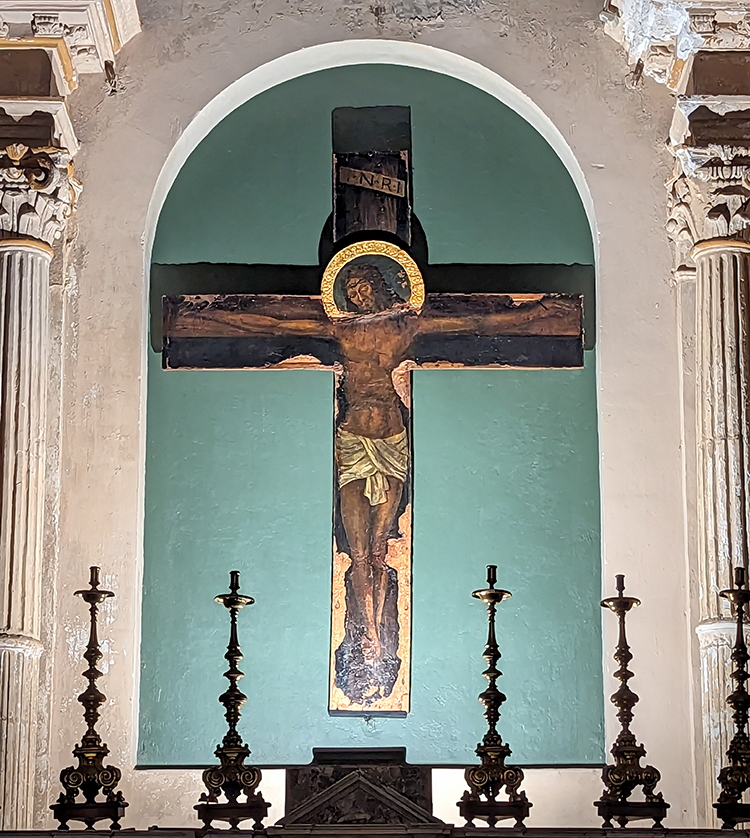
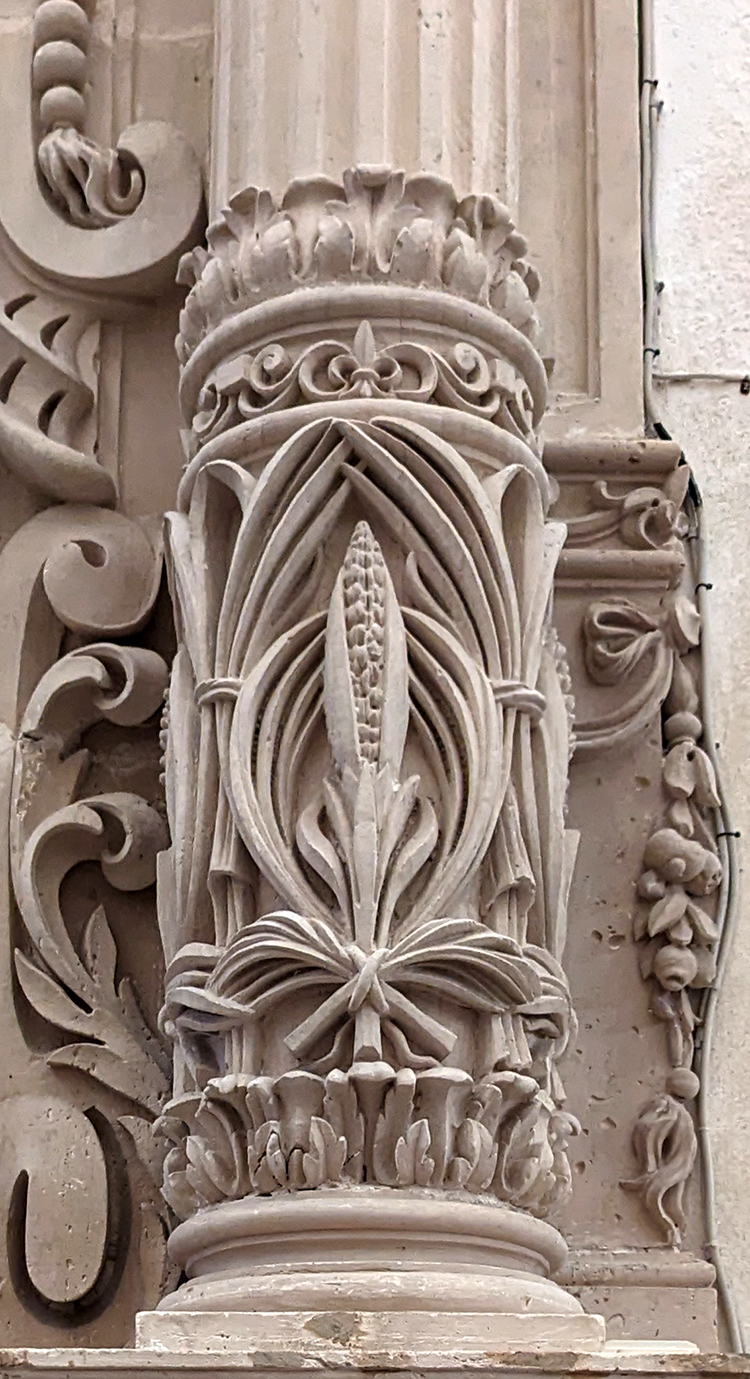
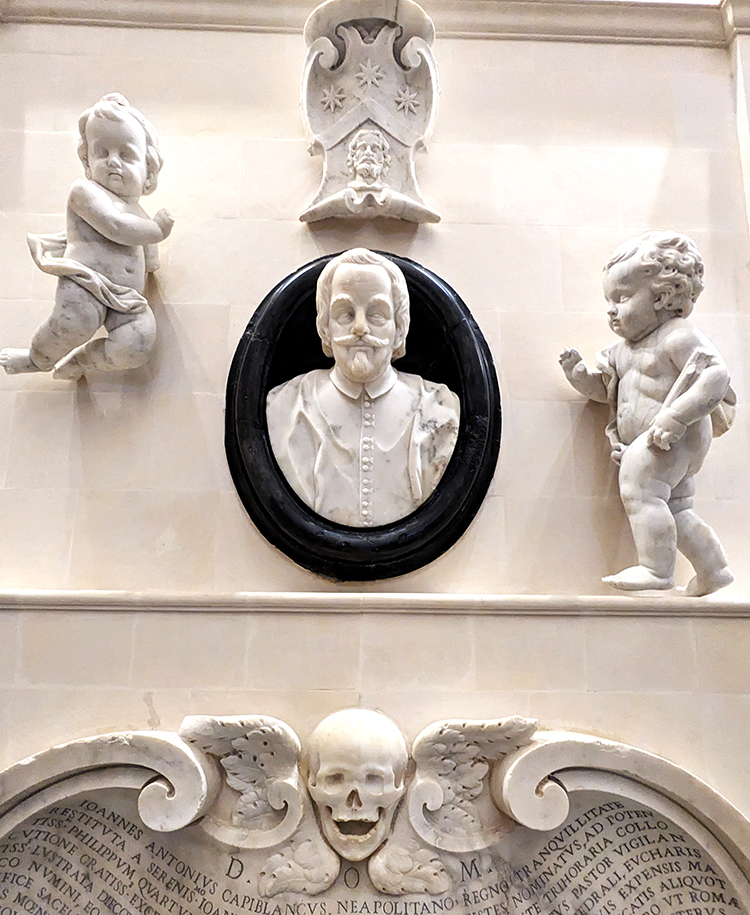


Numerous mitres and tasseled galeros indicate bishops entombed within the Cathedral, but others of the enshrined are mysterious to me. Roman numerals embedded in one marble tomb in the floor translate to 1826. The headpiece here appears to be a formal triple-crown papal tiara, no longer worn by popes, but no pope died that year?
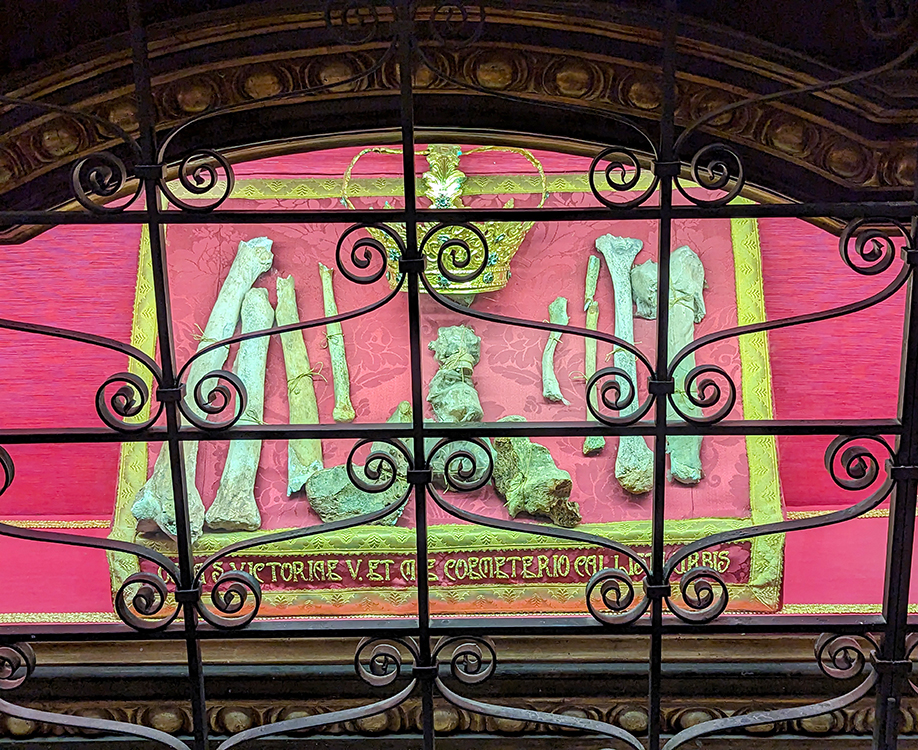
Then, there are two reliquaries with major chunks of bones topped with bejeweled crowns of gold. A king and queen who were later declared saints? Again, I am clueless as to whom those bones once belonged. Hoping someone can fill me in….
 Postcards from Barton Springs
We visited Siracusa a few days ago. Like you, I am clueless as to the man in the black hat, but he wouldn’t have been a pope. Very few Sicilian popes. It may be an heraldic symbol.
I was intrigued by the huge statue of St Lucy they carry through the streets on her saints day. And by her story. It is worth reading her entry in wikipedia. Some of the bones were hers, I believe.
LikeLike
Eric – You must have fried in the heatwave this past week. The black tasseled hat is known as a galero and definitely symbolizes a bishop or archbishop. There’s a red helmet-looking hat that appears to be a papal tiara on a tomb on the floor. I definitely am confused by its symbolic use on what, by the date, could not possibly be a spot any pope was buried. Pondering sending the question to the Archdiocese. There’s more about Santa Lucia in an earlier post dated June 27, with photos of some her relics from a chapel in the cathedral near the bottom. Hope you are enjoying your travels.
LikeLike