Biannual roundup of an ad-free blog

alamoplaza2

This blogger has blogged so prolifically she has used up all the free space WordPress has to offer. This is good news for you because ads will no longer pop up at the bottom of posts, but it was bad news for me because I actually have to pay a small amount to engage in this form of therapy. I’m not complaining though, because I have never understood how WordPress can afford to offer this service at no charge. I’m grateful for enjoying a free ride for several years.

This list represents the most-read posts during the past 12 months, and interest in the Alamo and its plaza rose to the top once again. But thanks for continuing to give me the freedom to wander around the globe and send postcards back to San Antonio as well.

The numbers in parentheses represent the rankings from six months ago:

  1. Don’t Let Battle Zealots Overrun the Crockett Block, 2016
  2. The Madarasz Murder Mystery: Might Helen Haunt Brackenridge Park?, 2012 (1)
  3. Take pleasure in little unauthorized treasures along the River Walk before they vanish, 2015 (7)
  4. How would you feel about the Alamo with a crewcut?, 2011 (3)
  5. Please put this song on Tony’s pony and make it ride away, 2010 (5)
  6. Postcards from San Antonio a Century Ago, 2016
  7. Playspace of Yanaguana Garden bursts into bloom October 2, 2015 (8)
  8. Postcard from Madrid, Spain: Flavorful food memories, 2015
  9. Postcard from Puebla, Mexico: An unlikely trio of favorite restaurants, 2015
  10. Reviving Dia de los Muertos, 2015
  11. Postcard from Sintra, Portugal: Masonic mysteries surface at Quinta da Regaleira, 2014
  12. Postcard from Oaxaca, Mexico: Settling into La Biznaga, 2016

Thanks for dropping by every once in a while. Love hearing your feedback.

mandarezpark


Postcard from Ravenna, Italy: A pair of baptisteries

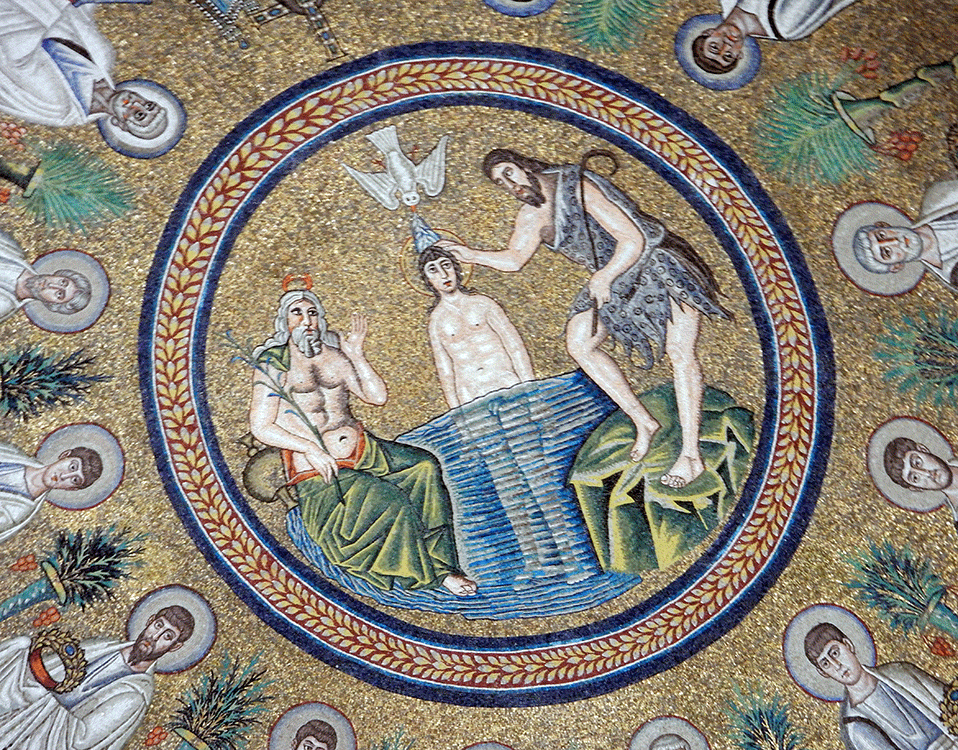
Ravenna has a pair of octagonal brick baptisteries dating from the first 500 years or so of Christianity. The oldest of the two, the Neonian Orthodox Baptistery, is named for Bishop Neon who had the existing structure crowned with a masonry dome. The second baptistery was built by Theodoric the Great, the King of the Ostrogoths, because…?

Maybe Theodoric wanted one closer to his palace; although Ravenna certainly is walkable. Plus, Theodoric was an Arian Christian, as opposed to Orthodox or Roman Catholic. To those mainstream Catholics, Arian Christians were heretics. Not a theologian, I have little understanding of the distinctions. Obviously, the differences are major or there would not have been two baptisteries, and the Ostrogoths and those they battled probably would have gotten along better.

The followers of these religions all believed in Jesus, but differed concerning the balance of power. Arians made Jesus subservient to God, His Father, and there was no Trinity. Arians, therefore, were not haunted by the Holy Ghost as part of the religious triumvirate. That made things much simpler to explain to potential converts because the Holy Spirit is conceptually difficult to grasp, particularly since the image is not personified.

Theodoric’s mosaic artists probably were not Arian because the Holy Ghost, represented as a dove, is hovering above spurting water over the scene above to assist the John the Baptist, modestly clad in a leopard-skin cloak. This was fortunate because, when the Arians were kicked back out of Ravenna only a couple of decades later, the mosaics were not destroyed as heretical.

The duplication of baptisteries is particularly interesting because, according to an article by Annabel Jane Wharton, the ceremonial structures were rarely used:

In the early Church, the principal baptismal liturgy took place once a year, on Easter Sunday eve: the of the Resurrection was deemed the most appropriate moment in which to die and be reborn in Christ…. Enrollment of those to be baptized took place at the beginning of Lent…. In the weeks of Lent efforts were made to prepare initiates for their admittance into the full fellowship of the Church through an arduous routine of fasting, catechism, and daily exorcism.

Wharton wrote participants entered the baptisteries and faced west first to renounce the Devil, then east to embrace Christ. Garments probably were removed before the baptism, leaving the new believers as exposed as Jesus above, with his navel the geographical center of the artistic composition and the dome. Then the baptized donned white garments as a sign of their new-found purity.

Because I feel fairly confident few religious scholars would read very far into my posts, I have taken the liberty of jumbling the photographs from the two baptisteries together into one collage. When returning from trips and sorting through images, I sometimes feel as though someone took the whole proverbial slide tray, dumped them out and shuffled them to confuse me. I do believe all of these photos belong to one baptistery or the other.

While years of Saturday catechism classes at Star of the Sea left me with a rather hazy understanding of the role of the Holy Spirit, I am sure happy the nuns opted for a rap on the knuckles instead of requiring daily exorcism during Lent.

Postcard from Ravenna, Italy: Not to overlook what’s underfoot

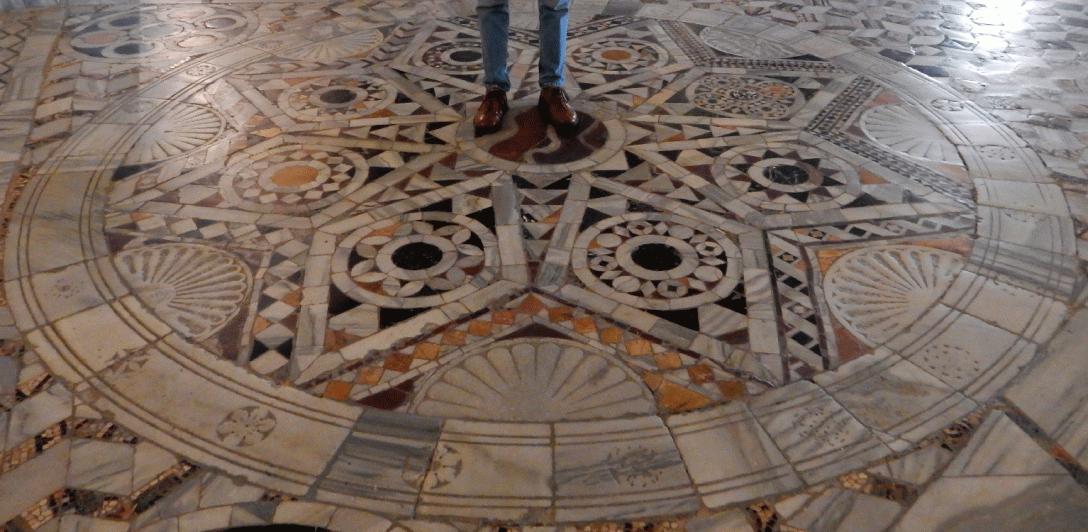
Before we look up at the walls and the ceilings covered in mosaics, we are going to look underfoot. The shimmering mosaics above make it almost easy to overlook the amazing mosaic and marble floors found in landmarks in Ravenna dating from the first millennium.