


Above: Stag rhyton, Milas, Turkey, 400 BCE, displayed in the Istanbul Archaeological Museum
The elegant stag rhyton pictured above must have been quite a status symbol for its owner in ancient Turkey. Today’s value of the combination wine aerator and drinking vessel, $3.5 million, probably made it even more so for the billionaire American collector who acquired it without verifiable provenance.
For decades, Michael Steinhardt displayed a rapacious appetite for plundered artifacts without concern for the legality of his actions, the legitimacy of the pieces he bought and sold, or the grievous cultural damage he wrought across the globe. His pursuit of ‘new’ additions to showcase and sell knew no geographic or moral boundaries, as reflected in the sprawling underworld of antiquities traffickers, crime bosses, money launderers, and tomb raiders he relied upon to expand his collection.”
Cyrus Vance, Jr., District Attorney of Manhattan, December 2021 Statement
Now it is part of a growing collection of repatriated stolen antiquities proudly showcased in the Istanbul Archaeological Museum.
Thanks to the exemplary cooperation of the Manhattan District Attorney’s Office, the United States Department of Homeland Security, and the Ministry of Culture and Tourism of the Republic of Turkiye the 28 cultural property seized as a result of three separate investigations have been restituted to their country of origin.”
Prominent signage in the Istanbul Archaeological Museum
A bronze statue valued at $15 million was among items recovered in 2023 from the home of yet another innocent-pleading prominent American collector, Shelby White. These were from a Roman site in southwestern Turkey.
More than 50 years ago, farmers uncovered an archaeological treasure trove at Bubon…. The area, likely a shrine used to worship the emperor and his family, contained several rare bronze statues of Roman emperors and empresses…. Rather than reporting the find to the government, as required by law, the locals sold the statues, which were then smuggled out of the country…. Some of farmers involved in the looting back in the ’60s are helping investigators, examining images from catalogs and museum websites to identify pieces they had stolen….”
Teresa Nowakowski, Smithsonian Magazine, April 7, 2023
Overall, the collection housed in the museum in Istanbul is a stunning one dramatically displayed.


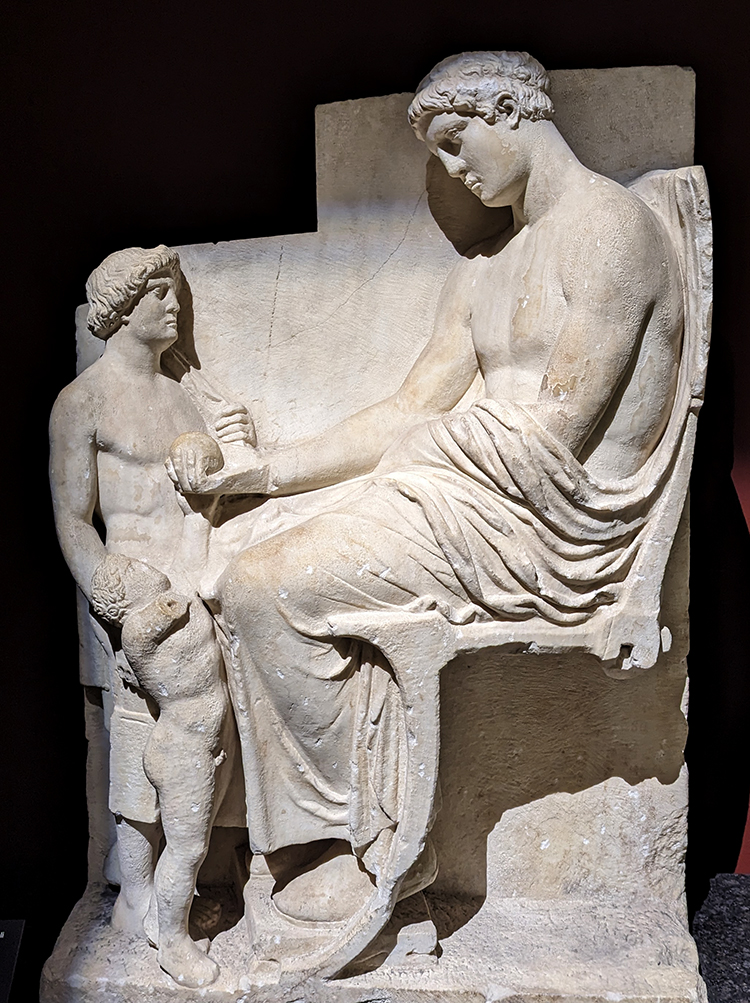


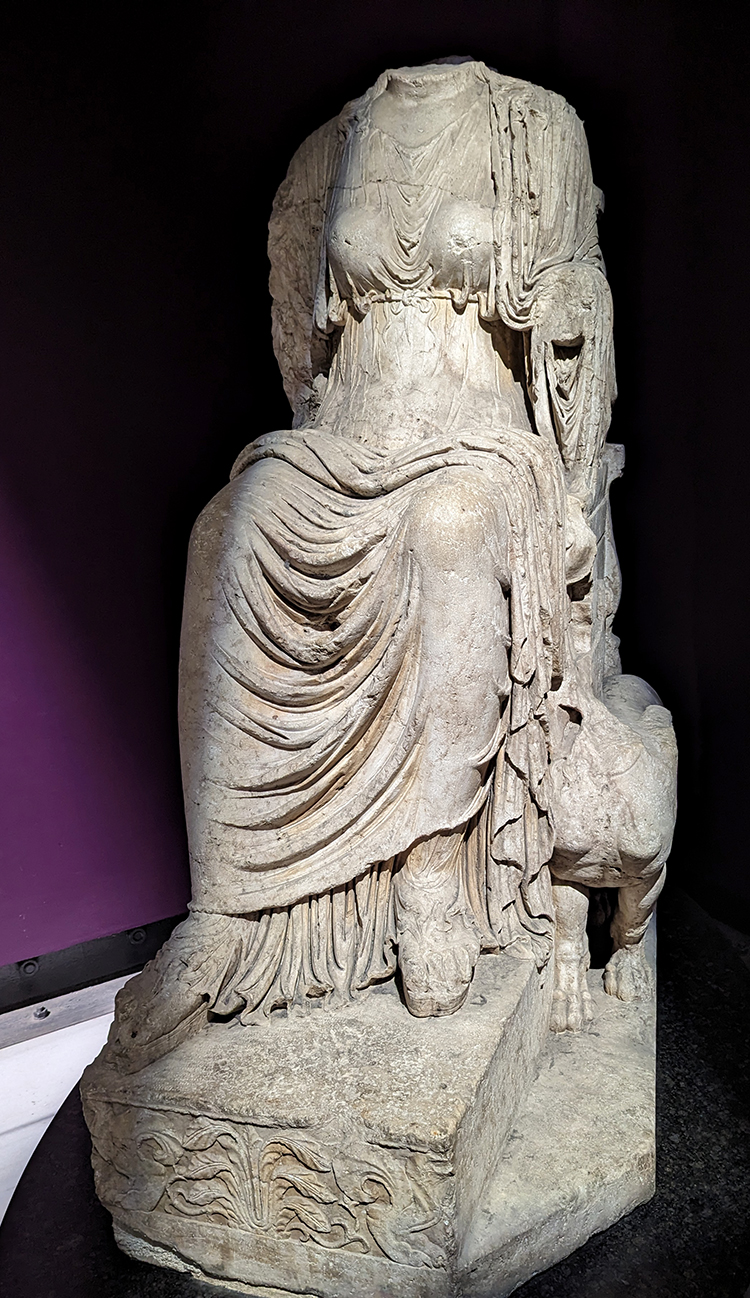
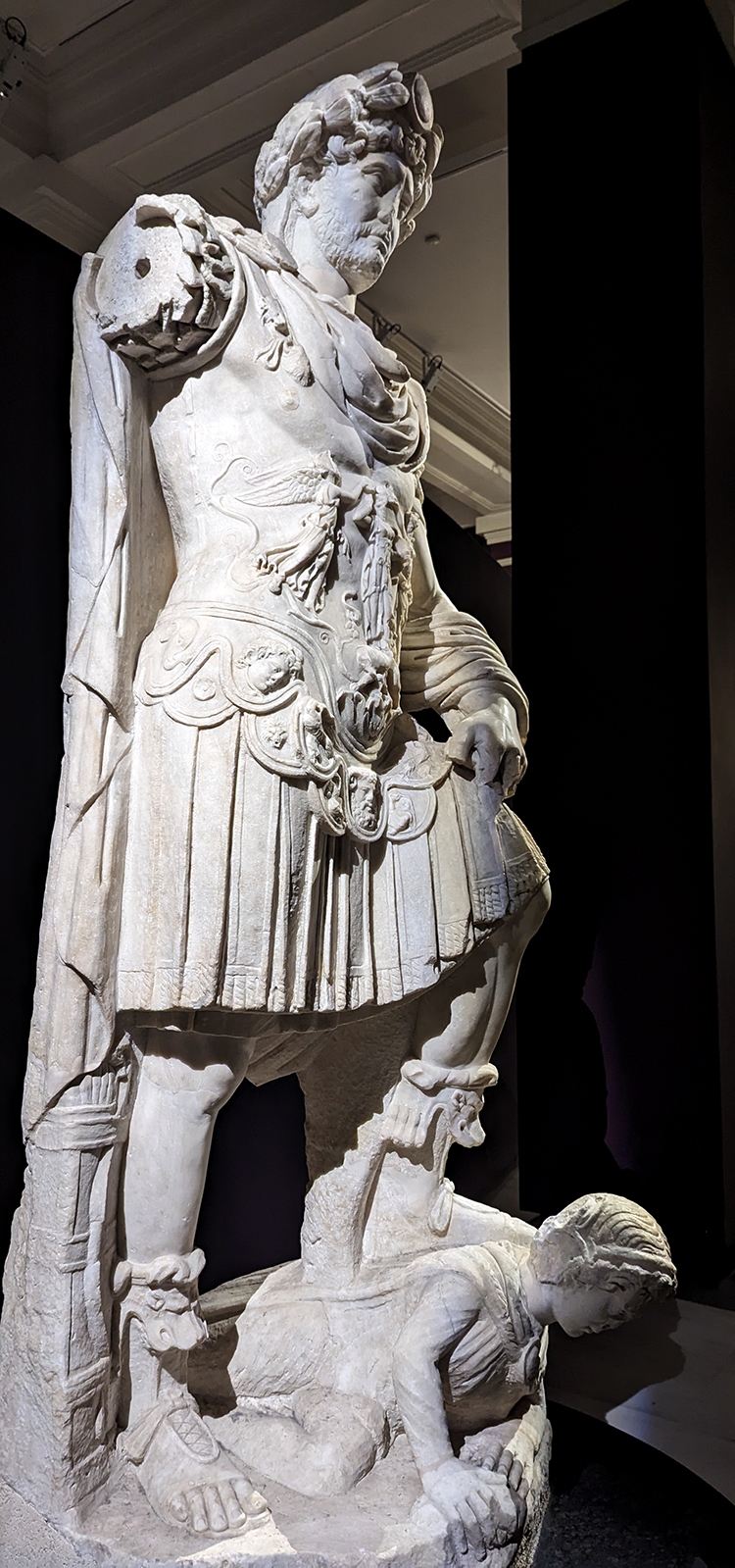
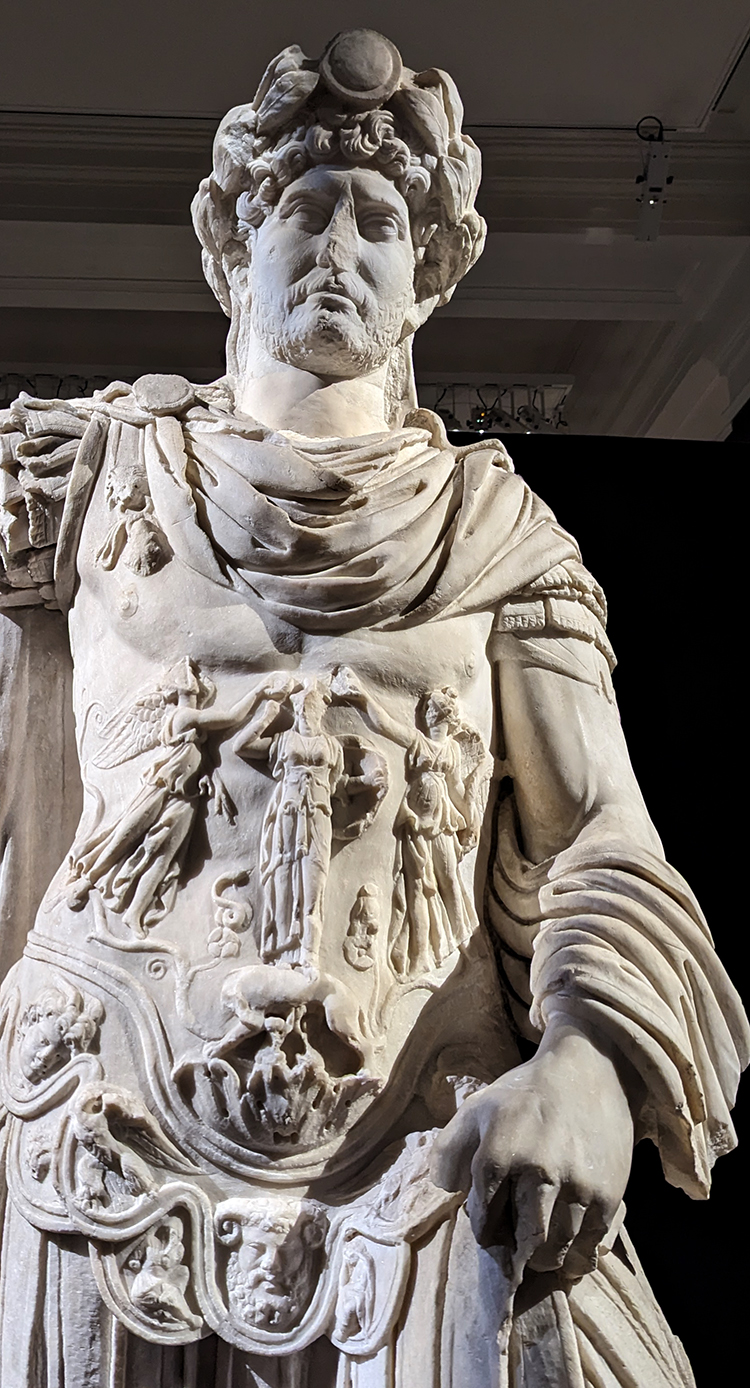
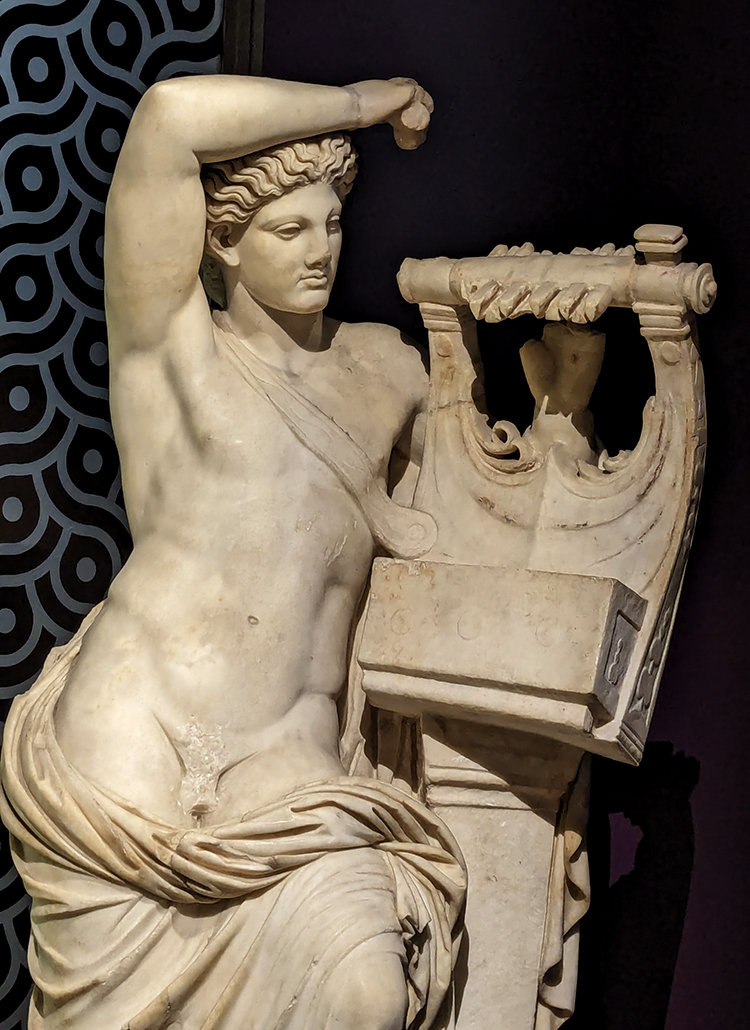
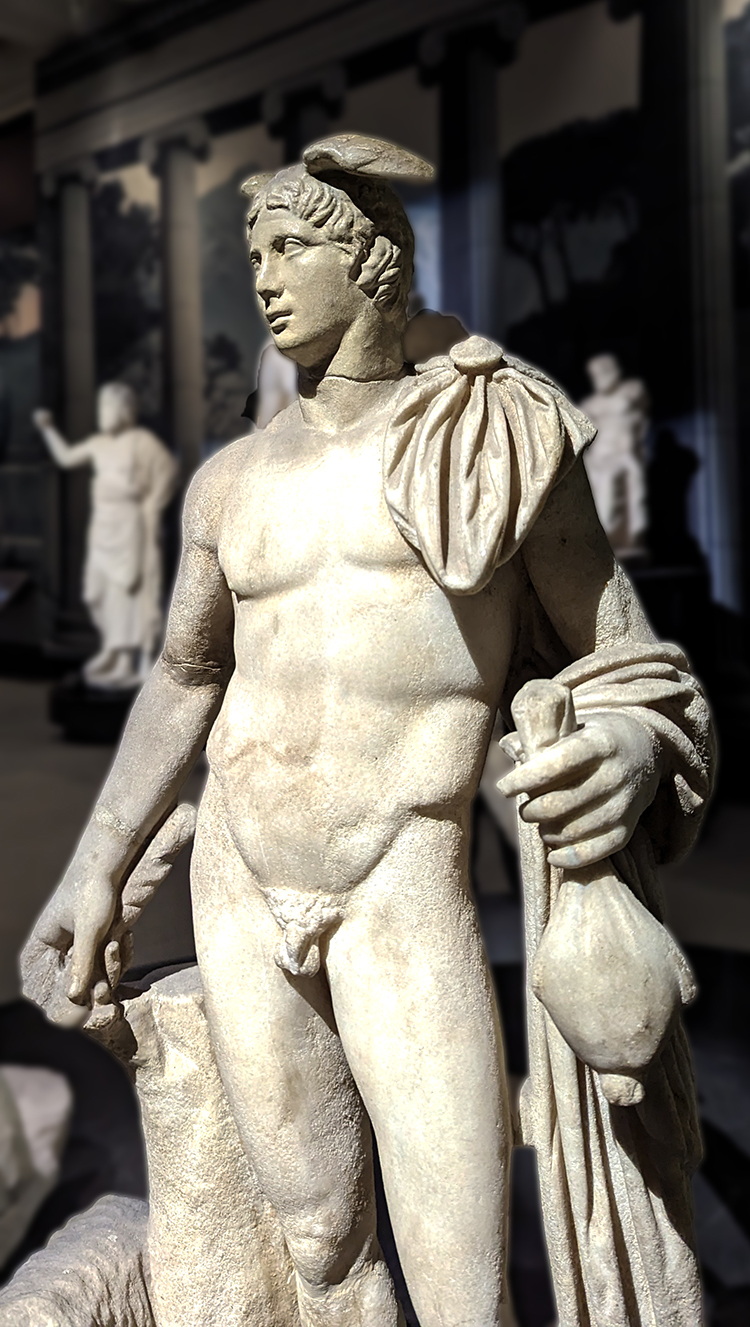


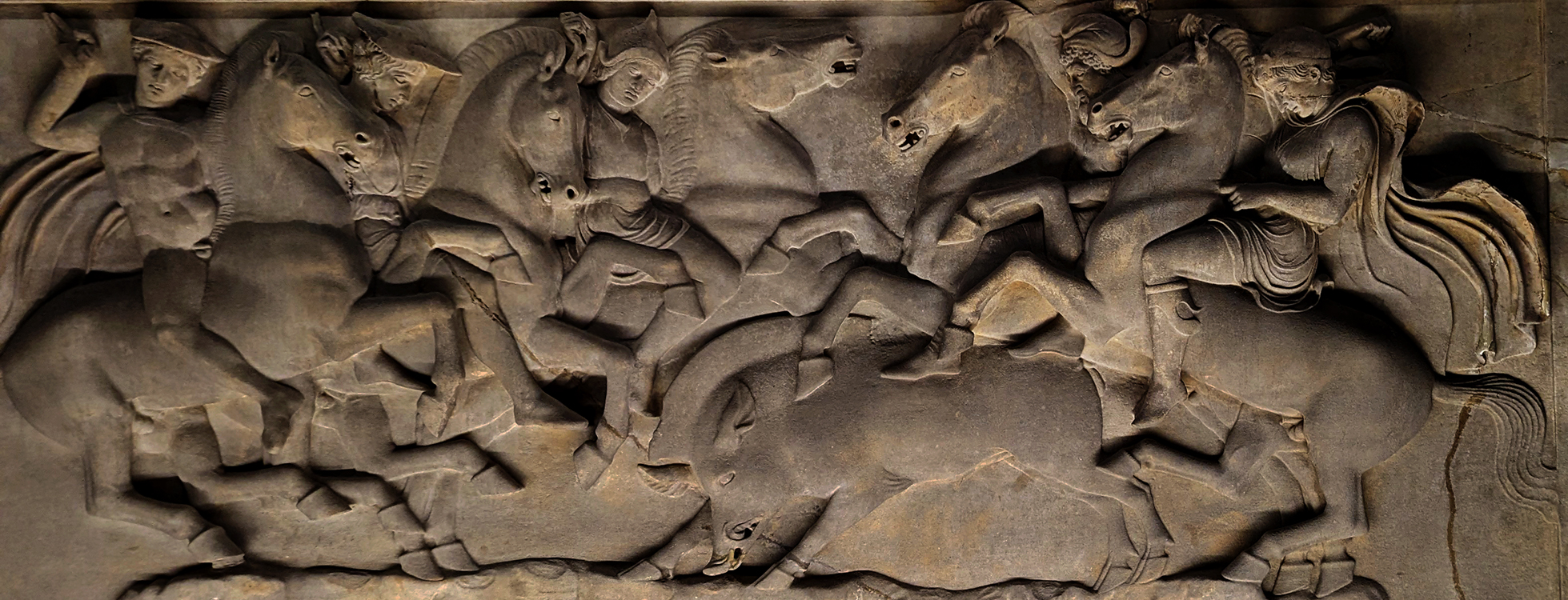


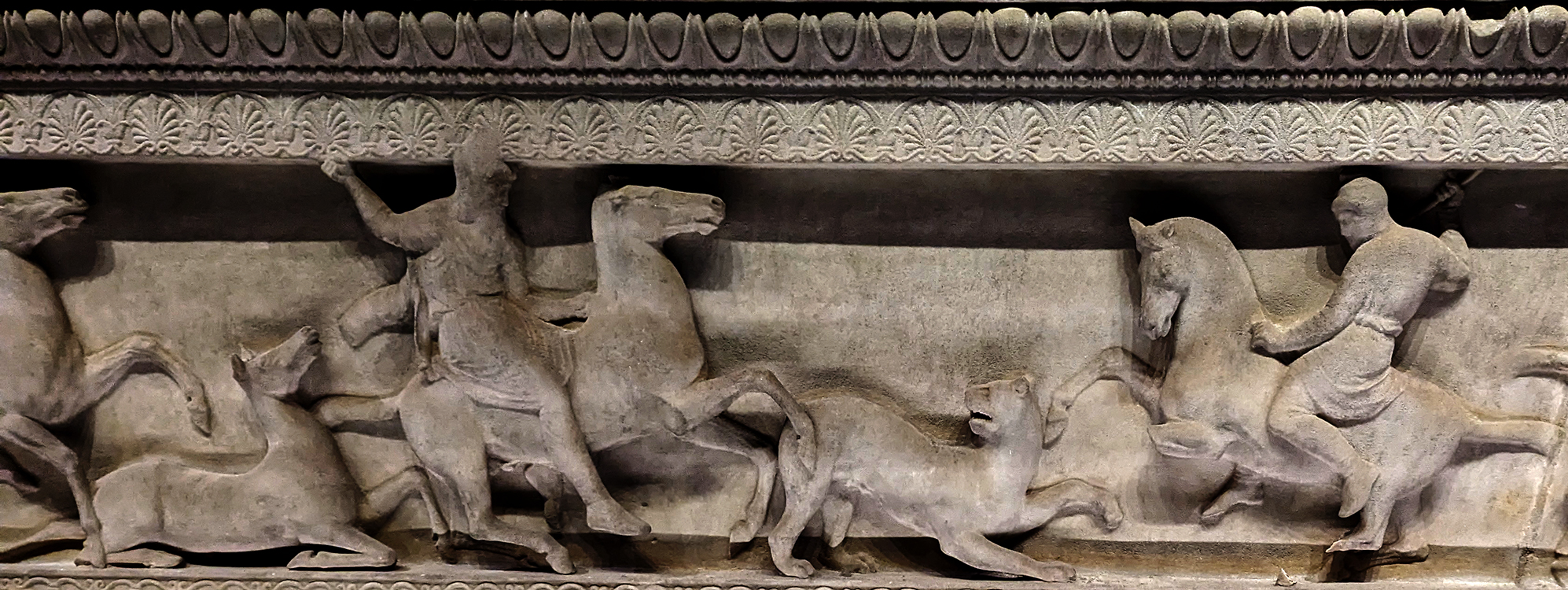


The fine sculptural work on several sarcophagi is exceptional. Most are from Anatolian region of Turkey. But the complexities of provenance confuse me. What about ancient artifacts unearthed in what is now Lebanon?
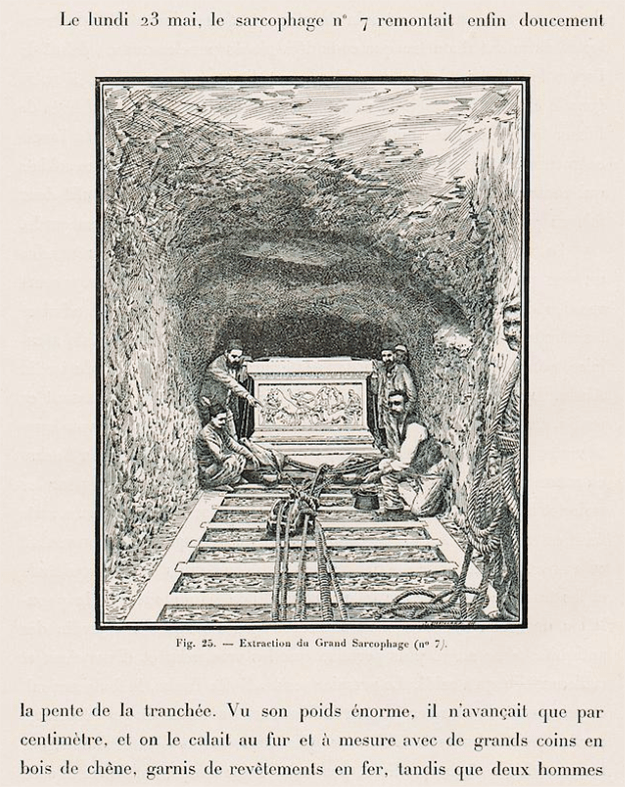
In 1887, Saidi, Lebanon, was under the rule of the Ottoman Empire when several 4th-Century-BCE sarcophagi were brought to light by the museum’s curator, Osman Hamdi Bey (1842-1910). The only existing access to the hypogeum was by rope or ladder.
The process of raising the weighty tombs from their underground chambers was complicated and laborious. The curator supervised the construction of a straight, long and gently sloping tunnel from the chamber to the surface. Wooden rails were built inside the tunnel, and ropes were employed to extract them on sledges made by Saida shipbuilders. Construction of a roadway to the port was necessitated before shipping the sarcophagi to Istanbul.

Above: Detail of a lion hunt on the Alexander Sarcophogus, brought from Saidi to Istanbul in 1887, shows traces of polychrome once brightly coloring it.
Perhaps who owns what antiquities is governed by the Greek goddess of luck, Tyche, responsible for determining both good and bad fortunes.
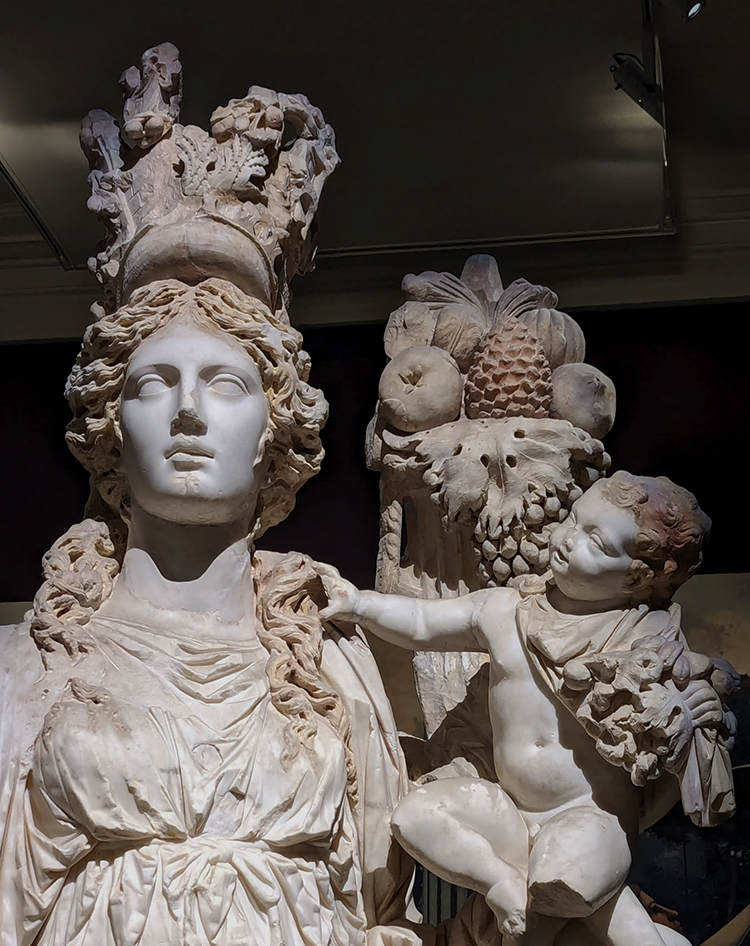


Above, left and right: Greek goddess Tyche holding Plutus, Prusias ad Hypium, Turkey, 2nd century CE. Center: Winged erotes betting on a cockfight, Tarsos, Turkey, 2nd century CE.
Repatriation, and restitution, was the big headline in the art world in 2023.”
Emily Burack, writing for Town & Country, December 14, 2023
The pressures for museums’ voluntary repatriation of antiquities, whether looted or not, continue to build. If you are a gambling person, bet money that the trend toward returning antiquities to their countries of origin is not short-lived.
Who knows? Maybe even Great Britain will bow to Greece’s demand for the return of the Elgin Marbles removed from the Acropolis in 1801. Tyche probably is on the Greeks’ side on that one.
 Postcards from Barton Springs