Postcard from Zaragoza, Spain: Cheerful toasts echo around plazas

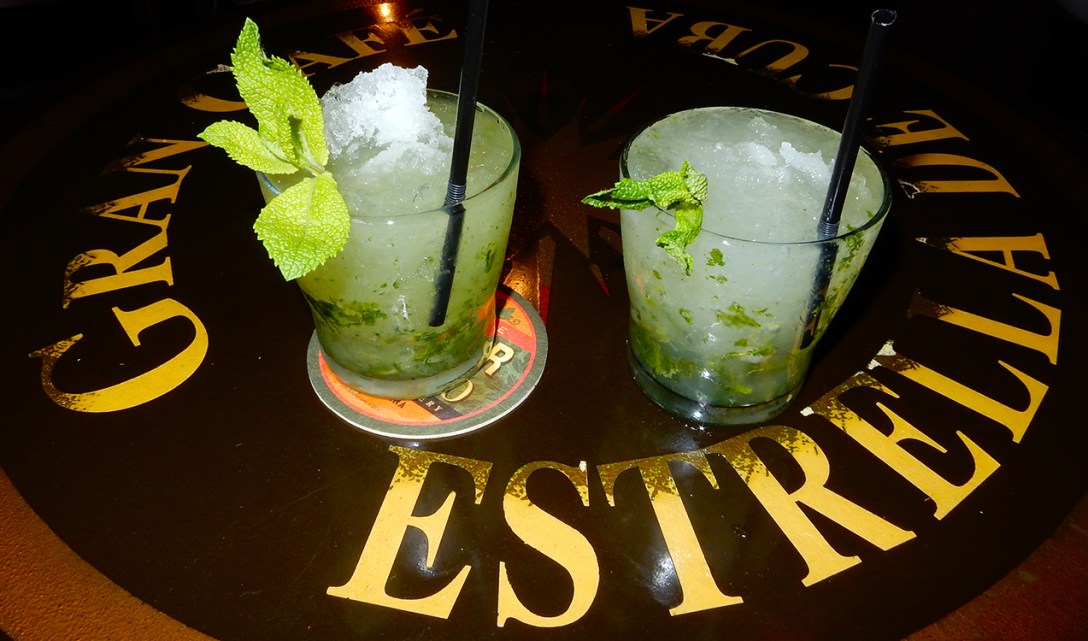
Above: Well-muddled mojitos at Gran Cafe Estrella de Cuba

Gathering for lively conversation over cocktails seems important in Zaragoza, and not just for young late-night partiers spilling out of tapas bars crowding the narrow streets of the city’s famed El Tubo district. People like us, canosos (gray-haired), jockey for hard-to-score tables on neighborhood plazas with college students and families with baby carriages to enjoy beer, wine and gin and tonics at all times of day – our kind of place.

We were there in the late spring, and, with COVID restrictions just loosening up, the few tourists around barely had a chance of winning the competition for outdoor spots. Maybe we were witnessing the first exuberant gatherings locals were having with friends and family they had missed seeing, their first opportunities to finally escape their apartments after the long lockdown, their first reunification with vices given up for Lent. Perhaps this is simply the year-round pursuit of happiness in Zaragoza – a good way to live.

Continue reading “Postcard from Zaragoza, Spain: Cheerful toasts echo around plazas”
Postcard from Zaragoza, Spain: Competing patron saints and cathedrals, plus some miracles

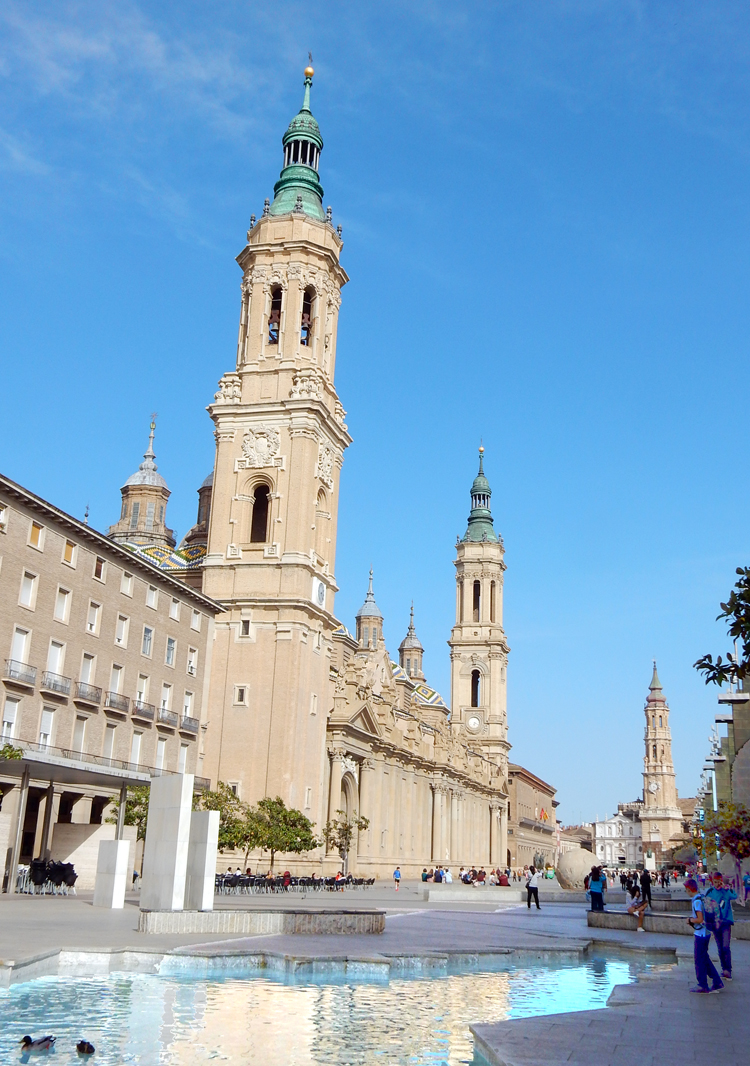
Above: La Basilica de Nuestra Senora del Pilar is on the left while La Seo de Zaragoza anchors the far end of the plaza.

Although conquered by The Battler, Alfonso I (1073-1134), the Moorish rulers of Zaragoza left rich architectural contributions in their wake. The main mosque was an impressive one, so The Battler opted for adaptive reuse, making alterations for Christian purposes and consecrating the new church in the name of San Salvador in 1121.

The Battler’s predilection for war unfortunately extended to his life with his wife, with no heirs produced from the contentious marriage. Leapfrogging over the resulting confusion following Alfonso I’s death, Ramon Berenguer (1114-1162), the Count of Barcelona, was betrothed to one-year-old Petronilla of Aragon (1136-1173) in 1137. The toddler’s father, known as Ramiro II (1086-1157), transferred the rule of the kingdom of Aragon to his new son-in-law so he could retire to a normally peaceful monastic life. As this post is not really about Ramiro the Monk, we will not dwell on his priestly qualifications that include the legend of his beheading of a dozen nobles who opposed him and using the head of their leader as the clapper for the bell of Huesca.

Demonstrating his dedication to the marriage-acquired territory of Aragon, Ramon had much of Zaragoza’s mosque/Catholic church razed to begin construction of a Romanesque replacement in 1140. This church became the home for coronations of Aragonese kings, and, with the papal appointment of an archbishop of Zaragoza in 1318, a cathedral.

Continue reading “Postcard from Zaragoza, Spain: Competing patron saints and cathedrals, plus some miracles”

Postcard from Zaragoza, Spain: Vowing to map out street-art stalking

Above: “No al Maltrato Animal,” #savethechicken

There are pockets in Zaragoza full of street art, but somehow our meandering paths this past spring did not stumble across many of them. The city’s efforts to turn abandoned buildings into artists’ canvases through its Festival Asalto can be found here, a website I wish I’d tracked down while there.

So this post combines a few of our snapshots of art seen on the streets with artistic commercial signs and will remind me to do a minimal amount of research before striking out on long urban walks on future trips.

Continue reading “Postcard from Zaragoza, Spain: Vowing to map out street-art stalking”