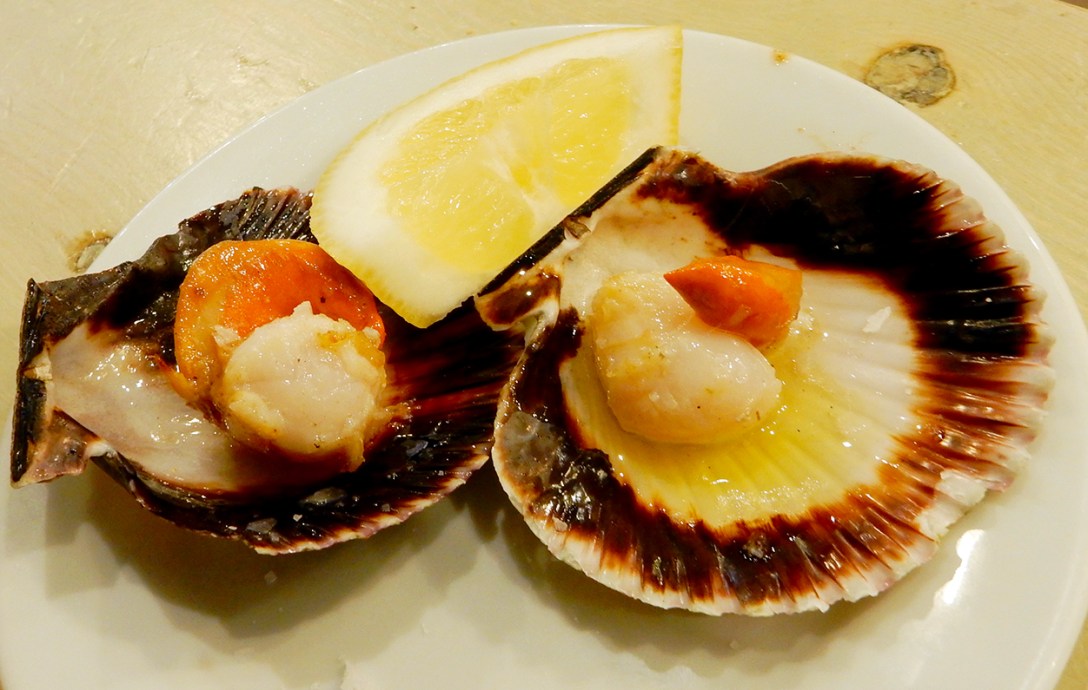
Postcard from Zaragoza, Spain: Seductive scallops and marisquerias

Above: Zamburinas at Marisqueria Tony

Faithful making the long Camino de Santiago pilgrimage crossing from France through Spain, perhaps a 500-mile hike, wanted to return with a souvenir as proof of the arduous journey afoot. A shell found commonly on the Galician coast just beyond the route’s destination of Santiago de Compostela became that evidence, a variegated or calico sea scallop, zamburina.

Continue reading “Postcard from Zaragoza, Spain: Seductive scallops and marisquerias”
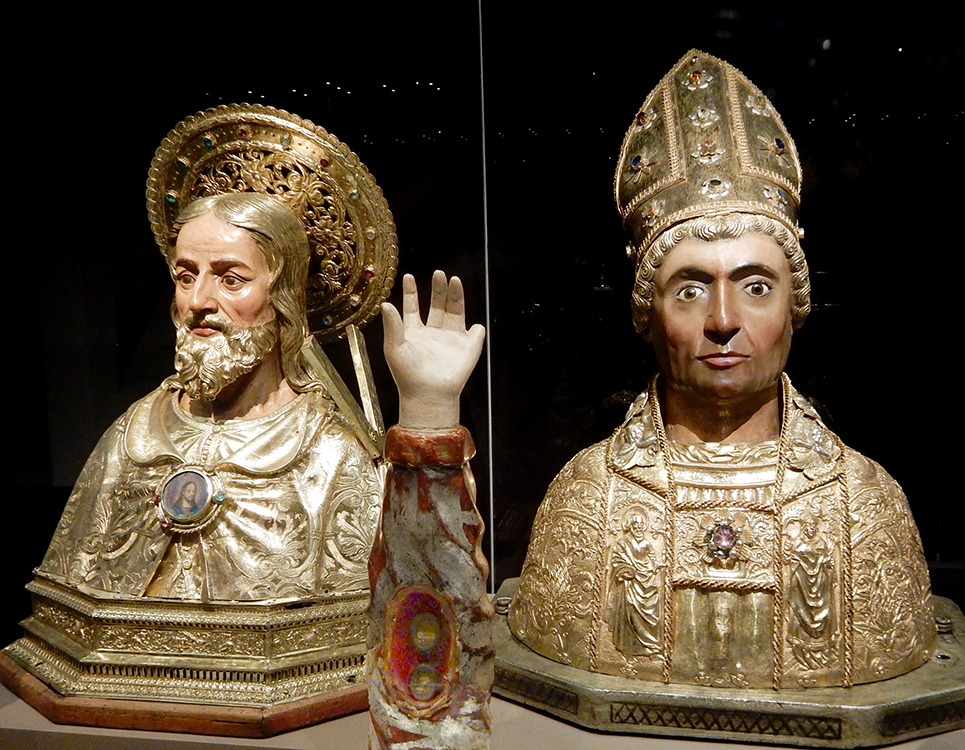
Postcard from Zaragoza, Spain: Alma Mater and the Countless Martyrs

Above: Reliquaries in the Alma Mater Museum

After Aragon King Alfonso I (1073-1134), the Battler, conquered the Moors (prior post), construction began immediately on a cathedral atop a former Mosque. The king gifted the archbishop with adjacent land for his headquarters.

When Aragon King Alfonso II (1157-1196) ascended to the throne, he had other plans. The Aljaferia Palace was not grand or comfortable enough for him, so he began major remodeling and additions to this prominent location. Upper floors in the Mudejar and later Renaissance traditions reflect the styles favored by subsequent royals of Aragon and Spain.

Continue reading “Postcard from Zaragoza, Spain: Alma Mater and the Countless Martyrs”

Postcard from Zaragoza, Spain: Palace celebrates the elevation of Moorish culture

The prominent promotion of culture and arts seemed paramount to Ahmad al-Muqadir (1046-1081) when he focused on the construction of his Aljaferia Palace on the banks of the Ebro River. Zaragoza was the capital of the taifa, or state, under his rule as part of the Banu Hud dynasty, and he wanted his “House of Joy” to reflect its greatness. Heirs to his kingdom followed suit, leaving architectural beauty behind that would influence regional styles for centuries ahead.

Continue reading “Postcard from Zaragoza, Spain: Palace celebrates the elevation of Moorish culture”