Postcard from Mexico City: ‘For Main Course We’ll Have That’

Am slinging out these final food shots from our fall visit to Mexico City like a short-order cook in a bad diner, but I am off taking new photos of meals in an entirely different spot on the map.

Most of these are from the Roma Norte neighborhood where we stayed. Am keeping my comments at a minimum, so the pictures will have to serve in helping you decide about restaurants when journeying there yourself.

Particularly enjoyed the abundance of vegetable dishes, including a no-pasta spaghetti, at Bowie Cocina de Humo, but the restaurant does take its name seriously. Every course is tinged with smoke-infused flavor. By the end of the meal, my mouth almost felt as though I’d been smoking. We found the much-heralded Nudo Negro with its show-off parade up to the kitchen to receive your amuse-bouche from the hands of a chef a tad bit pretentious, but the long-roasted eggplant, split open and topped with humus tableside, melts in your mouth.

There must be thousands of less expensive places to eat a Mexican-style breakfast in Mexico City, but the park-facing patio of Café Toscano on Orizaba is so pleasant the higher price tag was absorbed without question. Both the red and green chilaquiles are wonderful, and the fresh juice combinations round out the meals.

We loved the neighborhood comfort feeling of having pizza on the patio at Cancino Roma or shrimp arancini and a bowl of robust roasted tomato soup at Macelleria, where, as you can see from the featured photo, the restaurant correctly profiled us with the name of the house wine. Few tables at the popular Huset fail to order avocado pizza.

The variety and freshness of ingredients and recipes never disappointed us at Delirio. Fresh salads and sandwiches, moussaka and falafel and fresh meringues are among the celebrated bakery’s fare.

Veering even farther away from stereotypical Mexican food, the curries and toms at Galanga Thai Kitchen are worth seeking. The green papaya salad in particular drew us out for a return visit. With its flavorful chicken, roasted eggplant and falafel moistened with spinach, Paprika enticed us back for multiple meals as well.

From there, jump into downtown for the old-school formality of service in the high-ceilinged Casino Espanol, worthy of entering for viewing the stained-glass in its Porfirio-era home alone. The croquetas, boquerrones and seafood soup transported us to Spain.

We almost avoided Casino Espanol after reading a review describing it as the type of restaurant attracting old suits entertaining young mistresses, but there were only a pair or two seeming to fit in that category. The poor Mister and Vic, unsuited and in the company of old wives.

Whether squiring old spouses or young paramours, diving into a throwback to the past is a recommended ingredient balancing out all the trendy contemporary kitchens so abundant in this bustling culinary capital.


Postcard from Valencia, Spain: Opting for neighborhood comfort over anything near the Michelin trail

Having already posted about paella and our favorite restaurants, will mainly let photos do the talking for some other restaurants you might want to try if you are staying in Valencia for more than a few days.

Our neighborhood was so comfortably casual, and somehow we quickly developed almost a reverse snobbery when we ventured into tonier neighborhoods to eat. We had an excellent lunch at Seu Xerea during restaurant week, and the service was perfect. Pumpkin croquettes with blue cheese and curried meatballs were among our starters, and the Valencian rice with mussels and saffron was well executed. But, we ended up not returning because the restaurant was a bit more formal than our hood in Carmen and a bit pricier as well.

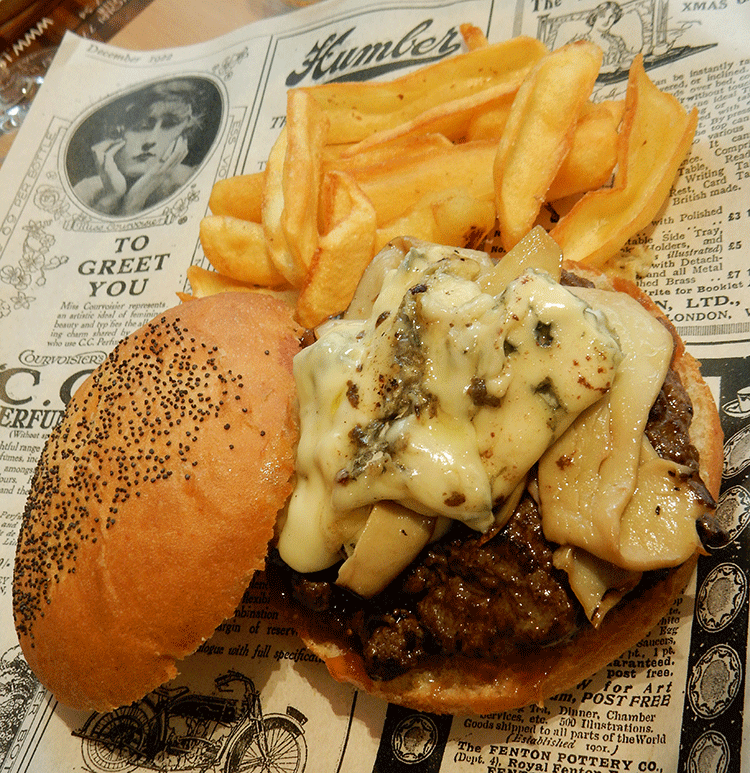
Hamburgers are everywhere in Valencia, as they are all over Europe, and Mar Cuatro Cocina Mediterranea presents an upscale opportunity to experience flavorful oxen burgers. But, again, we were out of our adopted neighborhood and the price crept up, particularly the wine, as a result. For great burgers in a more laidback setting closer to our apartment, we preferred the Martinez brothers’ popular Lamburguesa Urban Food.

For a total change of flavor, we recommend delving into Moroccan dishes at Restaurant Dukala. Both their chicken croquettes and pastilla – in this case the sweet and savory chicken mixture completely encased in flaky pastry – have loyal followers crowding into the restaurant on weekends.

Here are a few more places to consider exploring if the related food photos above seem appealing:

Postcard from Bologna, Italy: We did eat at more than one restaurant

Rightfully, Bologna is renowned for its food. And, although this postcard is a bit belated, I’d hate to leave one with the impression our only recommendation for those traveling there is E’ Cucina Leopardi. We truly did venture away from our favorite spot… sometimes.

The lack of pretension accompanied by a comfortable, casual hospitality made the small farm-to-table Osteria Marsalino a favorite. Bruschetta and daily pastas were ever-changing based on what was fresh and the chef’s mood. Our food always was perfect, and the complimentary aperitif at the end of the meal contributed to our loyalty.

Fresh organic products are stressed at the always bustling Alce Nero Berbere. One lunchtime option is to order the daily vegetable assortment, consisting of five or six separate small plates of varying salads, greens, beans and/or roasted seasonal fare. There is a movement afoot among chefs in Italy, which we first encountered at Borgo 20 in Parma, to fret about digesting pizza dough. Although we never have noticed this to be a problem, we certainly again enjoyed the results at Berbere.

This is Berbere’s complex explanation of what makes the restaurant’s pizzas so “light” and good:

One of the principal characteristics of Berberè pizza is the substitution of leavening with natural maturation: we don’t use chemical yeast, but rather living sourdough. This maturation process lasts at least 24 hours at room temperature and not in the refrigerator (hence it is “slow” pizza). Thanks to the skill of our pizzaioli and their passion for what they do, the quality of the base dough obtained with the starter and semi-whole grain stone-ground flours guarantees a high digestibility and a distinctive flavor, while the selection and mixture of flours other than wheat (spelt, enkir, kamut) offers alternatives that are interesting and diverse from an organoleptic point of view. Berberè’s pizza is therefore lighter, healthier, and better. And to optimize the digestibility of the pizza, the chefs at Berberè have successfully experimented with an innovative fermentation method, completely free of yeast, based on the physical process of starch hydrolysis.

We followed a herd of locals to get the prosciutto in which residents of Emilia-Romagna take such pride. After ordering an appetizer plate laden with the thinly sliced ham, we ordered what we thought was a plate of grilled vegetables at Pane Vino e San Daniele. What we didn’t realize is that bountiful servings of prosciutto cover everything on almost every dish, including the vegetables.

Of course, we enjoyed many pizzas, grilled vegetables, pastas, risottos and panini elsewhere in our wanderings throughout our month-long stay. But, not to offend the Bolognese, we did break away from the regional cuisine several times. For Indian food. Ristorante Indiano Taj Mahal rewarded us well for it. The Indian dishes were much better than what we have encountered in San Antonio and, as a bonus, represented an incredible bargain. And the owner was so friendly and gracious for our patronage.

Jumping back now to our task at hand, figuring out where we want to eat lunch in Campeche. A whole different world.