Postcard from Burgos, Spain: Cathedral a welcome sight for weary pilgrims

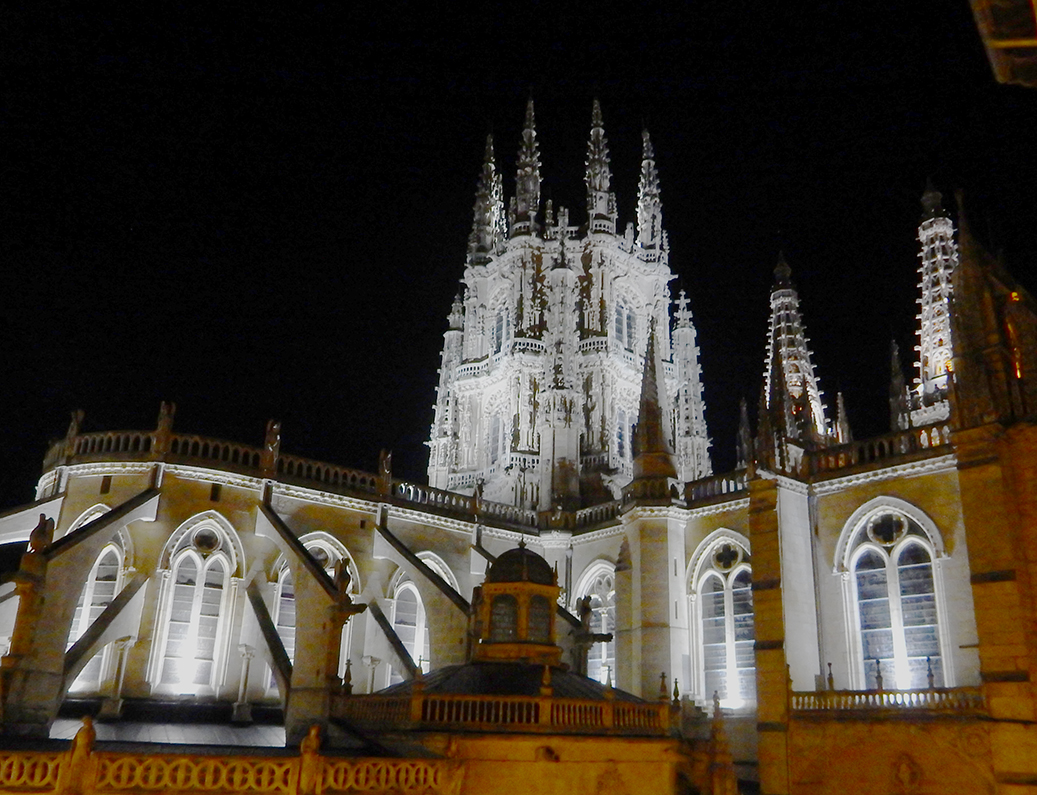
Above: Night-time view from our rental of the octagonal crossing lantern tower, or cimborrio, of the Cathedral of Saint Mary of Burgos, Santa Iglesia Basilica Catedral Metropolitana de Santa Maria de Burgos

Our Lady of Burgos was begun in the 13th century at the same time as the great cathedrals of the Ile-de-France and was completed in the 15th and 16th centuries. The entire history of Gothic art is summed up in its superb architecture and its unique collection of works of art, including paintings, choir stalls, reredos,* tombs and stained-glass windows.”

“Burgos Cathedral,” UNESCO World Heritage List
Continue reading “Postcard from Burgos, Spain: Cathedral a welcome sight for weary pilgrims”

Postcard from Zaragoza, Spain: Seductive scallops and marisquerias

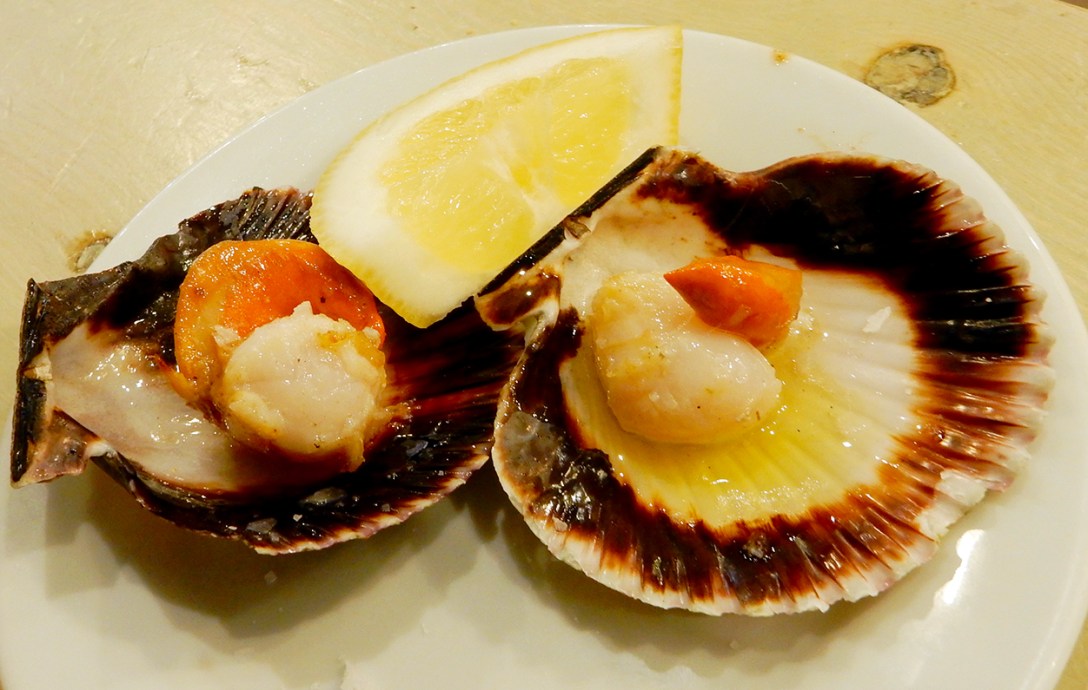
Above: Zamburinas at Marisqueria Tony

Faithful making the long Camino de Santiago pilgrimage crossing from France through Spain, perhaps a 500-mile hike, wanted to return with a souvenir as proof of the arduous journey afoot. A shell found commonly on the Galician coast just beyond the route’s destination of Santiago de Compostela became that evidence, a variegated or calico sea scallop, zamburina.

Continue reading “Postcard from Zaragoza, Spain: Seductive scallops and marisquerias”

Postcard from Cordoba, Spain: A city filled with churches

When Ferdinand III (1199-1252), King of Castile, conquered Cordoba in 1236, he launched a flurry of construction projects to formalize the city’s conversion to Catholicism. The mosques destroyed in the process provided convenient foundations and served as quarries for building numerous of these. Through the centuries, the original medieval structures received Renaissance alterations topped by a Baroque overlay.

Shells left by pilgrims who have traveled the Camino de Santiago dangle from the statue of Santiago, or Saint James the Greater, in the temple built atop a mosque and dedicated to the saint. Following the death of Jesus, James proselytized throughout the Iberian peninsula before returning to preach in Samaria and Judea.

In the year 44, King Herod Agrippa I (11 BC-44 AD) ordered him beheaded, making James the first of the 12 apostles to be martyred. According to Acts 12:20-23, Herod himself perished later that same year because: “he had not given the glory to God, an angel of the Lord struck him down, and he was eaten by worms and died.” Legends associated with Santiago as the patron saint of Spain claim he, with neck intact, miraculously appeared armed atop a horse to lead outnumbered Christians to victory in a battle with the Moors – 800 years following his death.

And, continuing on a saintly topic, a large silver vessel enshrined in the Basilica of San Pedro contains a jumbled assortment of skulls and bones purported to belong to the Martyrs of Cordoba. According to accounts recorded by San Eulogio, these 48 Christians were beheaded by their Muslim rulers between 851-859 for their violations of Islamic law, mainly blasphemy and apostasy, or renunciation of the Islamic faith.

Eulogio’s writings, The Memorials of the Saints, ended abruptly upon the priest’s own execution in 859.