Postcard from Palermo, Sicily: Operatic backdrop fit for explosive finale

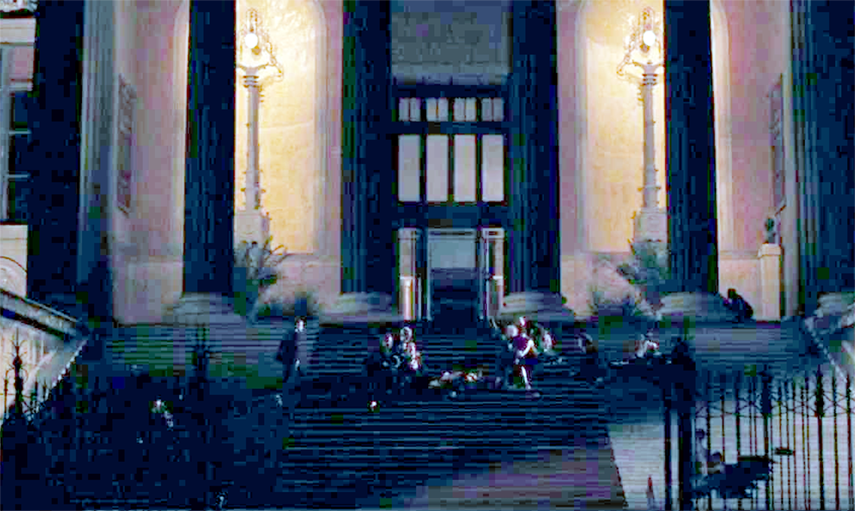
Above: Scene from The Godfather III shot on the steps of Teatro Massimo

Even if you have never seen The Godfather III, a spoiler alert scarcely seems necessary when revealing lots of bodies fall during the last few scenes of the film. You’d expect no less in any of Francis Ford Coppola’s trilogy of films revolving around the Corleone family.

But who knew a silent scream could be rendered so powerfully as Michael Corleone’s? The unheard-scream scene was rendered on the steps of Palermo’s Teatro Massimo Vittorio Emanuele, the largest opera house in Italy.

Continue reading “Postcard from Palermo, Sicily: Operatic backdrop fit for explosive finale”

Dangling horse dominates, but you’ve a hearty appetite as well

Above: Skyline of downtown Austin, 11:59 p.m., December 31, 2023

Smoking mezcal cocktail delivered in Palermo, Sicily

Readers of this blog seem drawn to the embalmed horse, of course, suspended by artist Maurizio Cattelan from a dome in a former castle above Turin, Italy. And any mention of the Alamo always attracts a crowd, even when I’m drawing no line in the sand but waving a flag of truce. But you also seem drawn to photos of food, or cocktails, no matter the country of origin; street art; ghosts; and saintly tales not taught by nuns.

The following list represents the biannual results of the most-read postcards on this ever-rambling blog, with the numbers in parentheses indicating rankings from six months ago when applicable.

Continue reading “Dangling horse dominates, but you’ve a hearty appetite as well”

Postcard from Palermo, Sicily: Zisa Palace bears Moorish imprint

Above: Marble sepulcher marker of Anna, died in 1148, inscribed in Jewish, Latin, Greek and Arabic

The fourth-born son of a king rarely grows up preparing to ascend to the throne. Yet, the deaths of the eldest three sons of Roger II (1095-1154), King of Sicily and Africa, all preceded their father’s. Ready or not, William I of Sicily (1121-1166) inherited the crown.

Of course, that makes things sound simpler than they were. Naturally, he faced challenges, quickly losing Africa to the Moors. Then there problems with popes, Byzantines, Romans, Greeks, scheming relatives and revolting barons. King William managed to stay in power, while refusing Sicilian nobles the participation in government they coveted. While his father was known as Roger the Great, William was dubbed the Bad or the Wicked. Perhaps this was unfair, but the history of his reign was penned by a nobleman with a definite chip on his shoulder.

Continue reading “Postcard from Palermo, Sicily: Zisa Palace bears Moorish imprint”