Postcard from Provence, France: Monumental cemeteries where Impressionists rest

Blue postage stamp featuring a scenic view of Nice, France, with trees and hills, inscribed with 'République Française' and 'CFA'.

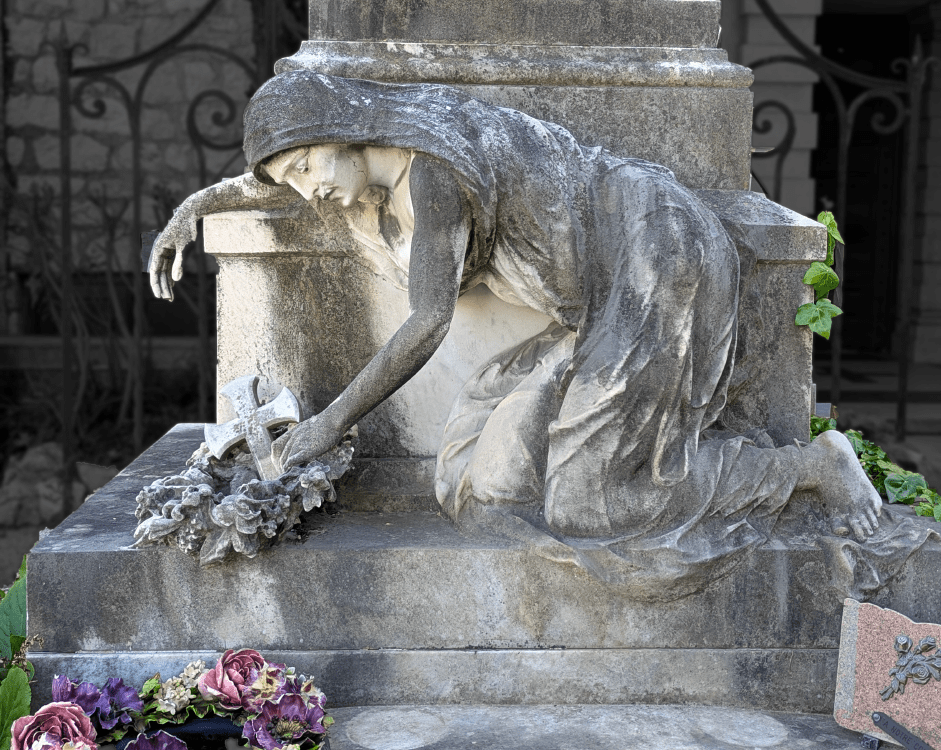
Above: Monument in Cimitiere du Chateau, Nice, France

A military citadel once crowned a hill overlooking the Bay of Nice. Bearing in mind that Nice did not become a permanent part of France until 1860, as part of one of the many wars fought during his reign, King Louis XIV (1638-1715) of France ordered the castle-fortress destroyed in 1706.

A portion of the grounds of the old citadel were opened as Cimetiere du Chateau in 1783. Instead of sentinels, monuments in the cemetery now occupy the most prominent vantage points for viewing the bay and surrounding countryside.

The cemetery* is an open space among the ruins, covered in winter with violets and daisies. It might make one in love with death, to think that one should be buried in so sweet a place.”

Preface to Adonais, Percy Bysshe Shelley, 1821

Continue reading “Postcard from Provence, France: Monumental cemeteries where Impressionists rest”

A season when cemeteries reunite the living and the dead

Above: No rearranging of the surroundings would be needed to film a horror movie in the dark and cavernous Cimitero delle Fontanelle in Naples, Italy.

It’s not surprising that a writer who would include Haunting the Graveyard as part of a book title is drawn to cemeteries. A few random headstones can reveal stories about individuals and entire communities.

Someone in the family demonstrates great patience with sating my taphophilia wherever we travel. Naturally, All Saints Day and All Souls Day are among my favorite times to do so. Posts in this blog are filled with the resulting photos, and the links below will take you to a few from our past travels. So many graveyards from which to choose….

Continue reading “A season when cemeteries reunite the living and the dead”

Oakwood Cemetery: Gleaning snippets of history from headstones

At the urging of President Mirabeau B. Lamar*, the Congress of the Republic of Texas selected a site on the Colorado River to serve as the country’s capital. In October of 1839, the government was loaded into oxcarts and moved to a site bounded by Shoal Creek and Waller Creek and newly named in honor of Stephen F. Austin.

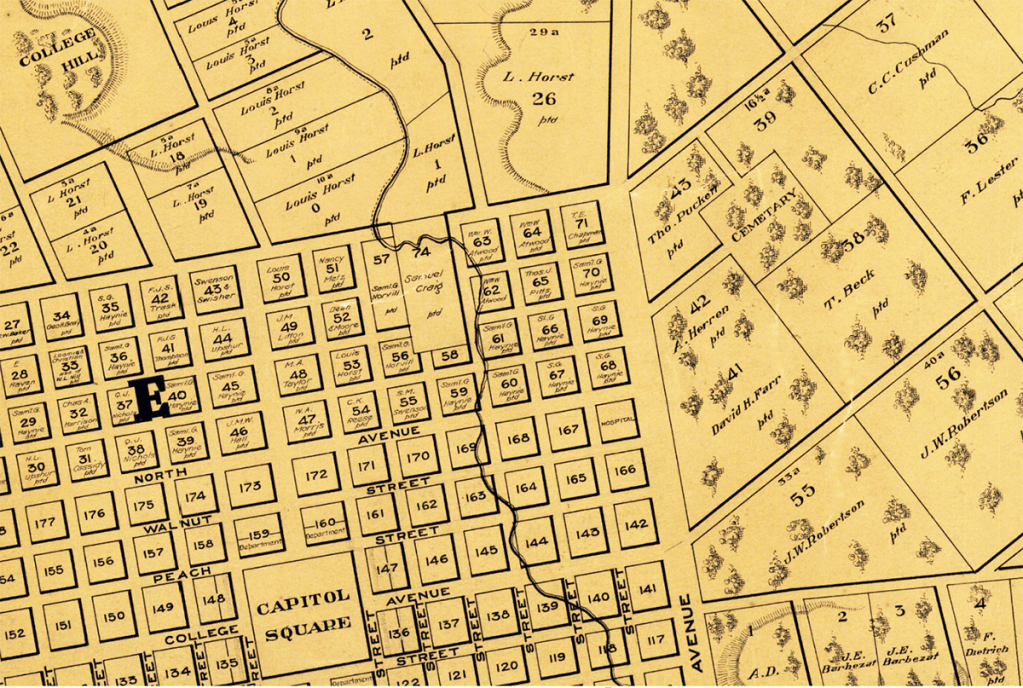
William H. Sandusky’s 1840 map of the new capital, Austin, indicates a square plot of land dedicated for use as a cemetery. Texas General Land Office collection.

By January 1840, the population swelled to 839, and the need for a cemetery was obvious. The original core of what would later become known as Oakwood Cemetery is marked on the right of the map above.

Continue reading “Oakwood Cemetery: Gleaning snippets of history from headstones”