Postcard from Guanajuato, Mexico: From corn fritters to affogato

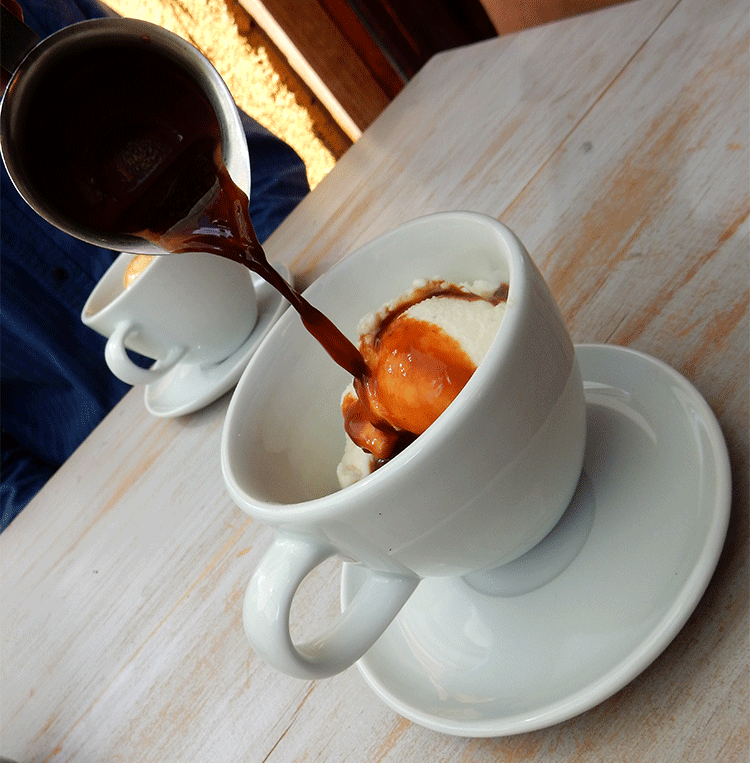
Kicking this food post off with our favorite way to end a meal in Guanajuato: an affogato from Estacion Gelato. Particularly when cardamom gelato is among the offerings to serve as the base for the pour of espresso.

Most craved dish is the corn and jalapeno fritter appetizer at Los Campos Cantina y Restaurante. In fact, Los Campos proved our all-around favorite restaurant during our fall visit.

We were also taken by the addition of a new sister spot, Metate Tacos – Mezcal – Vino. The best guacamole ever, spicy fried chickpeas, a delightful stuffed guero chile and falling-off-the-bone-tender pork shank for making tacos to share at the table. The owners were tinkering with the menu though, and the last time we tried to go none of those were available. The online menu appears as though the chef settled on keeping most of the dishes we loved. If you go, let us know.

Enjoyed new menu items at the upscale Mestizo. Pulpo carpaccio was sweet and tender, and the tuna “carnitas” tacos were a nice change.

In the Presa neighborhood, Amatxi appeared particularly popular with chilangos, but we found the laidback front porch of nearby La Victoriana a more suitable fit for us.

While restaurants encircle the intimate, shady and mariachi-filled Jardin de la Union, we have always shunned eating there. Kind of more of a beer-sipping people-watching spot. We decided to end our snobbery and try the always-bustling Casa Valadez. We found nothing wrong with the food and extremely professional service; all fine if you want to pay higher prices than needed and be assured of eating with all tourists.

We countered that by going into the hole-in-the-wall seafood spot tucked away behind Iglesia de San Diego – La Vela Marisqueria. As tiny and casual as a shack on the beach, La Vela has great fresh ceviche and tacos.

And El Santurrona Gastropub is a perfect spot for people-watching away from the jardin. The fried chicken sandwich is not a bad choice at all.

And then, for a total change in flavor, the fresh food at Delica Mitsu, Campenero location, is great, and you find yourself surrounded by a sea of young Asian college students who agree.

We also enjoy the funky Escarola with its fresh falafel burger. But we must confess that part of its appeal is its convenient location near our favorite after-lunch spot – Estacion de Gelato.

Postcard from Saluzzo, Italy: Meals from last summer

My apologies to the restaurants of Saluzzo. Although they delivered a rich sampling of the foods of the Piedmont region of Italy, the “postcards” are so slow to be delivered everything is now a jumble.

Le Quattro Stagioni d’Italia is a surprisingly large restaurant with a spacious patio always packed with locals. We found ourselves drawn to both food and patio several times. Taverna San Martino is small, cozy and intimate and regarded by many as the best in town. Osteria Nuovi Mondagli is completely unpretentious, with its magnetic draw a shaded patio perched above one of Saluzzo’s picturesque petit plazas.

Obviously, the town kept us well-fed.

Postcard from Turin, Italy: Home to many a food “invention”

Some of the members of the House of Savoy you were introduced to in the prior post get credit for additions to Turin’s distinctive flavors. Grissini, thin crispy Italian breadsticks, were invented to meet special dietary needs of Vittorio Amadeo II (1666-1732). Perhaps most significant to Italians, Emanuele Filiberto (1553-1580) brought the first chocolate to Italy.

As in Spain, the earliest ways to consume chocolate imported from the New World were in a liquid form. This has survived through the centuries in Turin in the form of bicerin, a rich triple-layered beverage (more like a dessert to me) consisting of thick hot chocolate, espresso and foamy cream. Numerous major chocolate factories are found in the city. With hazelnuts the most popular nut, it is not surprising Nutella was created there. Vermouth and Campari originated in Turin; the city is home to the Slow Food movement; and the first Eataly opened there.

The region’s lean grass-fed beef, fassone, seems most popular when consumed ground and raw. Locals eat huge patties of the meat tartare. I was happy my sampling of it was restricted to a petite amuse bouche. Which is partially why I expected the area cuisine to be dominated by head-to-tail meat offerings.

Much to my pleasant surprise, Turin residents prize their locally grown vegetables. There were a remarkable number of vegetarian restaurants, such as the highly regarded somewhat pricey Soul Kitchen. But even our humble homey neighborhood restaurant, Trattoria Alla Locandina, offered several vegetable dishes, including grilled eggplant and fried zucchini blossoms filled with cheese.

Our go-to lunch spot in Turin, E Cucina Torino, was like a reunion with an old friend. We first encountered Chef Cesare Marretti’s concept of providing limited-menu fixed-price meals in Bologna three years ago. Expect locals to be lined up here for the 10-euro special: a starter; a choice of a meat, seafood or vegetarian entrée; a small dessert; a glass of wine; and an espresso. I found myself always falling for the vegetable platter which included a side salad, a mountain of fresh vegetables hiding a vegetable flan underneath and a ball of fresh mozzarella too massive for me to ever conquer. The Mister was more apt to explore the other options.

Then there is the featured photo above, perhaps my favorite dish in Turin: a layered vegetable tian with a gorgonzola and almond sauce at Ristrot Guviol. We encountered wonderful creations emerging from this kitchen. An impressive crab shell arrived atop a dish of spaghetto with crab and grape tomatoes. A ribbon of raw salmon made a bright stripe across a rich risotto, and there was a tagiolini with squid and a crown of mullet roe.

The food of the Piedmont region is without a doubt among the best in Italy.