
“I Guess It’s Christmas,” Bottlecap Mountain
A holiday classic from Austin-based Bottlecap Mountain that you’ll want on your playlist year after year.

Gayle Brennan Spencer – sending random thoughts to and from South Austin
“I Guess It’s Christmas,” Bottlecap Mountain
A holiday classic from Austin-based Bottlecap Mountain that you’ll want on your playlist year after year.

Above: Street artist Ememem repairing a pothole in a sidewalk on Rainey Street in Austin
I’m just a sidewalk poet…. My work is the story of the city, where cobblestones have been displaced.”
Street artist Ememem, interviewed by Arnesia Young for My Modern Met
Sometimes I feel like a stalker on the trail of tile mosaics of the sidewalk poet of Lyon, France. (See the photos from 18 months ago at the bottom of this post.) So meeting Ememem in person at work Sunday afternoon in Austin left me gobsmacked.
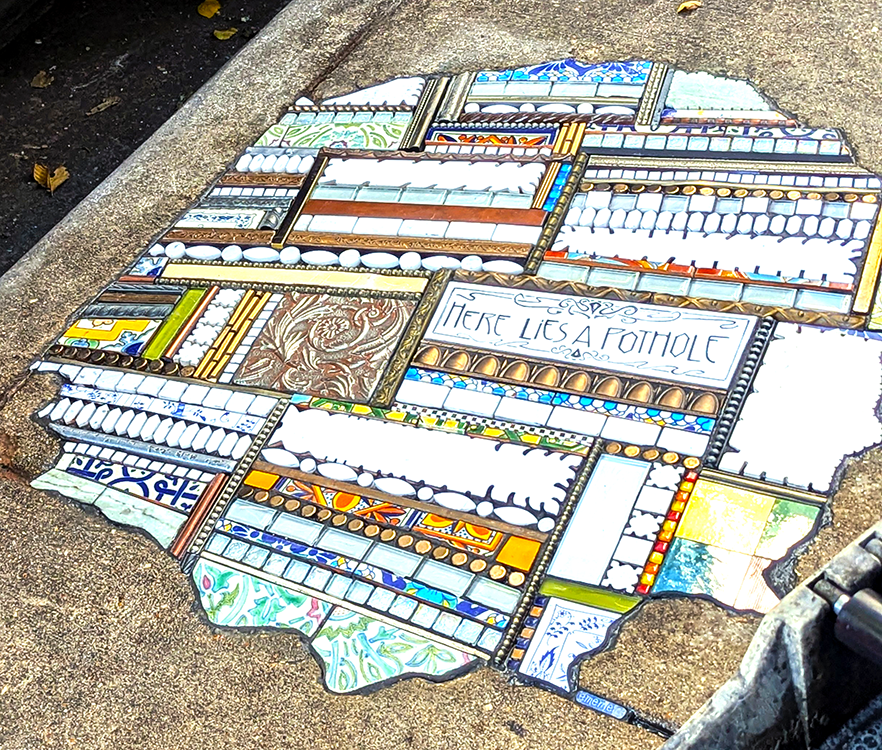
Above: “Here Lies a Pothole,” Ememem, Rainey Street, Austin, 2025
The street doctor tries to maintain his anonymity, stealthily installing his mosaics in the dead of night. I imagine that’s due to the fact that often his sidewalk improvement projects are unauthorized.
Continue reading “Protecting the identity of the pothole patcher”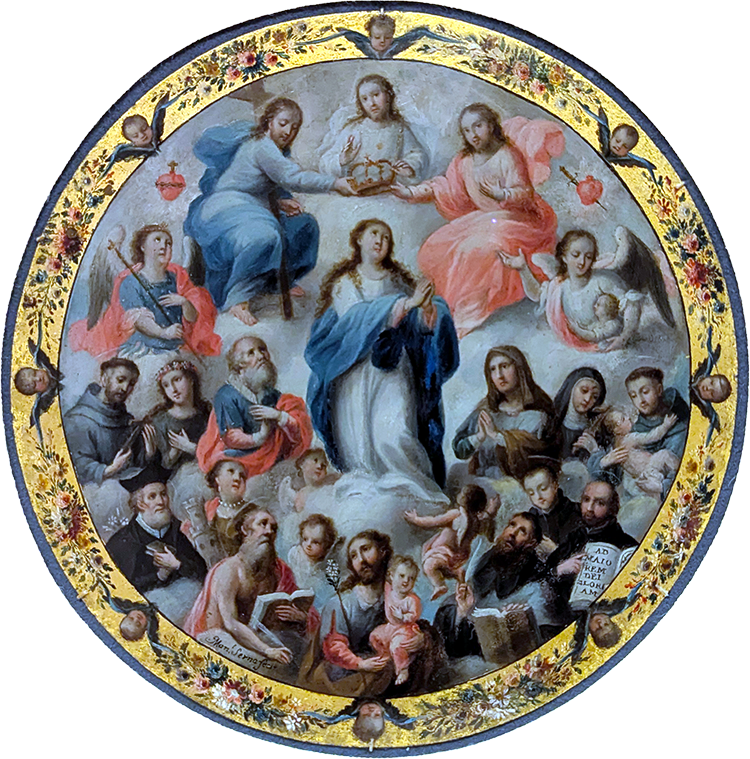

Above: “Annunciation and Saints,” Jose de Paez, Mexican (1727-1790), oil on copper, 1750-1760.
“Spirit & Splendor: El Greco, Velázquez, and the Hispanic Baroque” surveys 150 years of Spanish art leading to the Baroque period with works culled from the collection of the Hispanic Society of America in New York City. Some of Spain’s most renowned and respected artists are represented in this ongoing exhibition at the Blanton Museum of Art, but don’t expect much more than a dozen of these works.
What I love are the pieces demonstrating the Baroque style translated by transplants and native-born artisans in the Americas. Artists took advantage of materials available in this so-called “New” World – copper, shells and, of course, more precious metals. They added a magical sheen to art designed to convert “pagans” to the foreign beliefs held by the Catholic conquerors.
Continue reading “Old and New World artistry merge in Hispanic Baroque” Postcards from Barton Springs