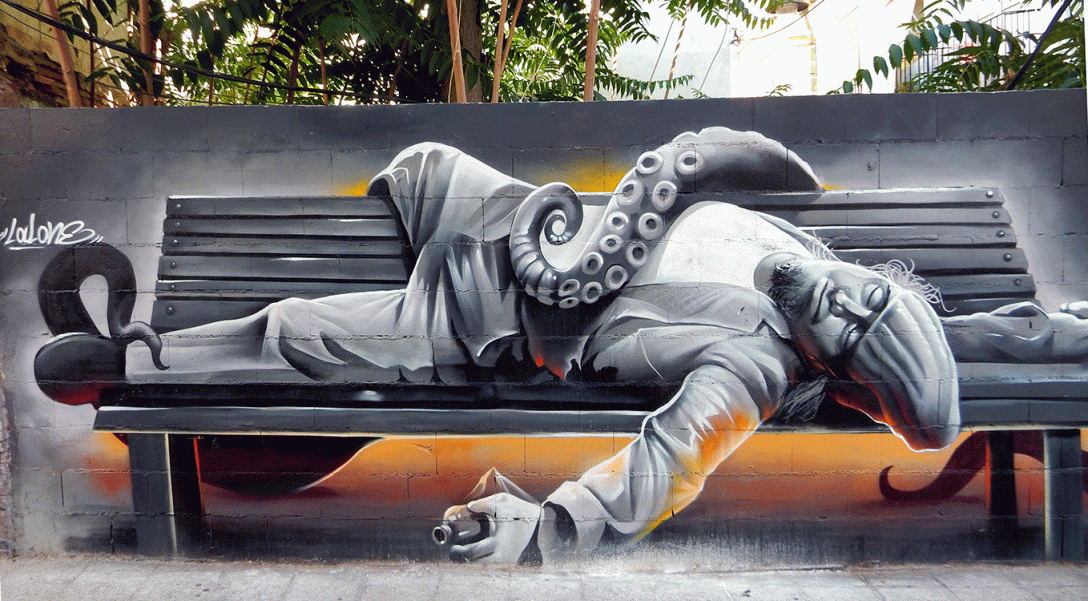
Pulpo and wine. Not an uncommon combination for us while in Malaga, but fortunately we had an apartment for recovery. And octopi never invaded dreams, as far as I know.
The historic center of Malaga is pretty pristine, with polished marble pavers on pedestrian streets gleaming as though in a palace.
A few steps outside, and artists displaying varying degree of talents begin to commandeer attention in several neighborhoods. Some work is obviously invitational or approved; others unauthorized. Some artists cannot resist reminders that this is the birthplace of Picasso.
This post represents one of a series of shots snapped during wanderings. For visitors, street art always seems a way to gain a deeper understanding of people inhabiting a city.
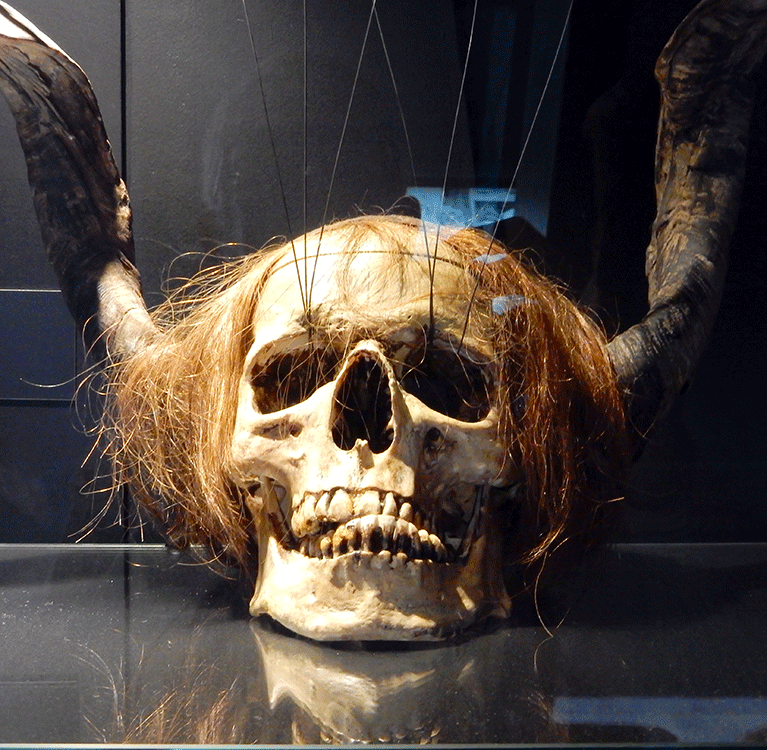
The ghoulish lyre above is far from what I normally would choose to lead off this post about MIMMA, Museo Interactivo de la Musica Malaga. But it is high Halloween season. Impressively, the lyre is made from all-natural organic materials, hopefully found objects not freshly harvested for the crafting of the musical instrument.
MIMMA overall is far from fear-inspiring; it is melodic dream-inspiring. There is a learning lab for kids to experiment with sound. There are huge percussion instruments one can strike, and there is a room with play-me instruments, an invitation the Mister did not turn down.
While the Mister was distracted in a sound-proof room toying with electronic sound boards of some sort, I engaged with the interactive screens. Instead of wandering around gazing at obscure old instruments wondering at their sounds, you can tap the screen and listen to a recording of someone playing appropriate music on them. Mesmerizing.
Carmen, the Buleria Machine
Melquiades, the Flamenco Beat Machine
Melquiades, the Flamenco Beat Machine
arched harp
Hohner multi-sided harmonica
Hohner trumpet harmonica
zanfona, or hurdy-gurdy
lyre guitar
double-neck guitar
West African guembri and balafon for parades
sitar
Nipper and “His Master’s Voice,” a Gramophone
Nipper
Ariston mechanical organ
Chopin recital
interactive “escuchar” screen
Favorite instruments though were two 21st inventions by Ignacio Rodriguez Linares, both of which appear vintage. They present solutions for when the band or dancers fail to show. Carmen, a rather complex machine:
…has a series of levers that when activated, interpret Buleria percussion. It also includes the specific clapping accompanying this type of dance., as well as other typically used Buleria sounds, such as the rhythm and off beats, triples, calling, climax and conclusion, in addition to syncopation, 2, 4, and 6-beat bass, 3-beat sharps and 12-beat (clave) rhythms.
Then there are the cute petite stomping feet featured on his Melquiades Flamenco Beat Machine. This novelty allows musicians to select the appropriate rhythms for the seven most common Flamenco styles (Lajos – Kathleen Trenchard definitely needs this for Christmas).
Máquina flamenca “Carmen,” del inventor Ignacio Rodríguez Linares on Al Sur
But what photo would I have featured were it not Halloween? Nipper. The most important thing in the museum to me is Nipper.
With his brother’s part terrier mix dog, nicknamed for his annoying habit of nipping at the heels of any passersby, as his inspiration, Mark Henry Baraud painted the dog with his head cocked toward a Gramophone, listening to “his master’s voice.” The Gramophone Company paid the artist 100 pounds for it in 1898. Eventually the rights to the image made its way to RCA Victor.
While the Nipper in MIMMA appeared a little cold, it still felt like a reunion of sorts with my sleeping companion for several years. Some friends of my parents who owned an appliance store in Virginia Beach showed up one night for dinner when I was six years old with what would become my favorite stuffed animal, a three-foot high version.
Nipper joined George, a green monkey; Tony, the toucan; and little Lambs-Eat-Ivy to occupy a good 2/3 of my single bed. Despite the crowded sleeping arrangement, I never once let any of them fall off the bed. We had a mutual protection agreement. I kept them from the edge of the precipice above the alligator pit under the bed, and Nipper vigilantly prevented any alligators from scaling a bedpost. The alligator problem was Davy Crockett’s fault (Or my sister’s. It’s a long story).
Although alligators never got any of us, it was a tough assignment. Nipper sometimes suffered from leaking innards and had to undergo surgical repairs at the capable hands of my mother several times before his eventual retirement to the attic.
Back to the museum. We were ready to leave, when the nicest man asked us to stay for a Chopin piano recital in a small performance hall. Wine time was calling, but his invitation was so sincere. And there were only six of us in the audience. A rather intimate personal recital. It was beautiful.
Peering over the pianist’s shoulder, merely eyeing the number of notes on the sheet music was humbling, to say the least. There was no way I could have begun to follow the music enough to even have volunteered to serve as a page-turner.
There appears no shortage of ancient Catholic churches in Naples. Yet even by the 16th century, their walls, floors and underground catacombs were oversubscribed by the faithful demanding interment inside. Something needed to give.
Clever undertakers found a solution. They began digging up older remains, the ones of souls long forgotten, to free up space for the newcomers. The ancient bones were carted away discreetly to shallow graves in an enormous system of caves – natural caverns extended by ancient Greek and Roman tunnels and quarries for building materials for the city.
Then came the plague of 1656, decimating the population. The spiraling number of corpses led to their mass disposal atop the existing shallow graves in the caves.
The anonymous pile might have been forgotten were it not for an end-of-the-century flood washing all the bones out and depositing them helter-skelter on the streets below. The bones were returned to the cave, which then was deemed a more official location for disposing of deceased paupers.
An 1837 cholera epidemic swelled the number of residents unceremoniously dumped together in disorderly fashion. The charnel house became known as the Cemetery of the Fountains – Cimitero delle Fontanelle.
Caring souls tend to some of the bones in the Cimitero delle Fontanelle in Naples, Italy.
In 1872, a priest took pity upon all of the remains of the departed, many tossed inside without receiving their last rites. He had them sorted and arranged in a more orderly fashion, which attracted renewed interest among compassionate Catholics.
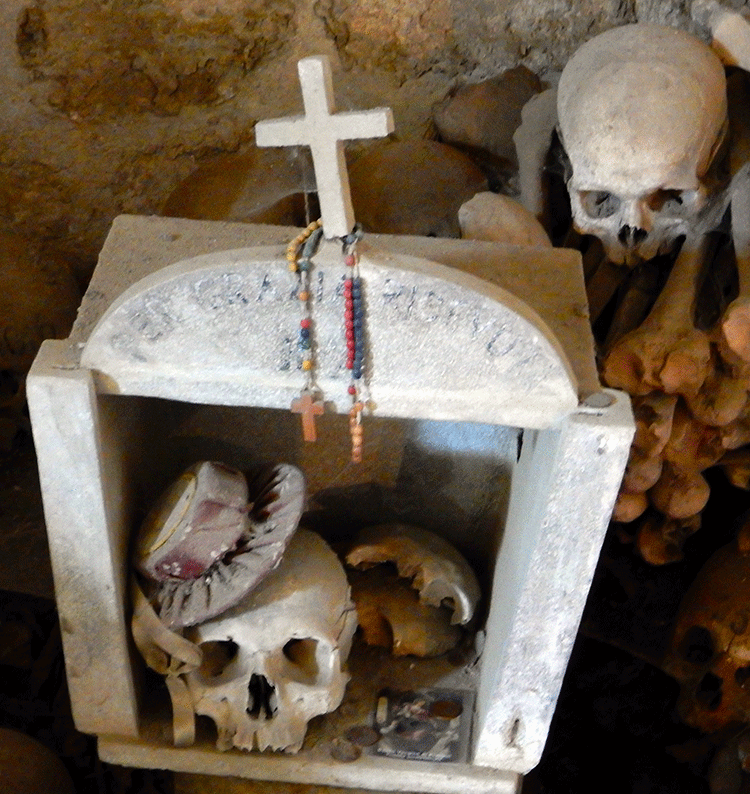
A cult arose, as people began to lovingly adopt skulls – capuchelle – of the abandoned souls – pezzentelle – in return for protection. They assigned the unknown names that appeared to them in dreams. They cleaned them, brought them small tokens of their affection, and kept them company.
Then, in 1969, the Archbishop of Naples decreed the practice fetishism and closed the entire ossuary to visitors. The deprivation of visitation rights to ancient adopted kin proved unpopular.
The cemetery was restored in early 2000 but was only unlocked for visitation a couple of times a year. Following protests including an overnight occupation, the cavernous space was reopened on a daily basis in 2010.
Only spotted one caregiver inside. She dashed down the entire length, her boyfriend lagging a ways behind. She stopped mid-right in the last chapel. Obviously, she only had eyes for but one skull amongst the abundance. She stooped to present something to her capuchelle, murmured a word or two, and then dashed back out as quickly as she entered. Her fidanzato rushed to keep up.
As you wander in the dimly lit chambers with bare rock walls and soaring ceilings, the space feels as hallowed as that of any ornately gilded church nave. The named capuchelle do indeed began to assume personalities of a sort, indicating that no two skulls are alike. They all are individuals; each with a story.
As in Mexican cemeteries on the first days of November, by the time you leave, keeping company with the dead no longer appears as bizarre. Eerie, yet somehow soothing.
And there are 30,000, 40,000, maybe even 50,000 more skulls stacked up, waiting for adoption.
Update on October 28, 2020: AtlasObscura has released a video touring Fontanelle.







 Postcards from Barton Springs