Postcard from Paris, France: Purging art to ‘cleanse’ culture

French stamp depicting a figure being restrained by two soldiers, symbolizing resistance.

Above: “The Pinch of Snuff (Rabbi),” Marc Chagall (1887-1985), mid-1920s

This painting, in which a rabbi sells his soul to Satan for a pinch of tobacco, was acquired by the Mannheim Kunsthalle in 1928. In 1933, Mannheim became the scene of an intense campaign of purge and defamation of modern art orchestrated by the Nazis…. the painting was dragged through the streets of the city with the message: ‘You who pay taxes should know where your money is being spent.'”

“‘Degenerate’ Art: Modern Art on Trial under the Nazis,” Curator Notes, Musee Picasso Paris, 2025

One evening at the end of May, we were fortunate to slip into a last remaining timeslot for viewing “‘Degenerate’ Art: Modern Art on Trial under the Nazis” at Musee Picasso Paris. It was packed with procrastinators, rendering the air-conditioning incapable of keeping the day’s lingering heat at bay. Yet, we all found ourselves crowding close to the artwork in an attempt to devour every word of the informative curator notes.

Most of the featured art had been included in a major exhibition of 600 works mounted by the Nazi regime in Munich in 1937. The purpose of this was not to shine light on exemplary art; instead, it was designed to condemn entartete kunst, or degenerate art, and the evil artists who spawned it.

Continue reading “Postcard from Paris, France: Purging art to ‘cleanse’ culture”
Postcard from Zaragoza, Spain: Renaissance landmark rescued from Paris

Above: Contemporary painting depicting Patio de la Infante (by Jacqueline Treloar?)

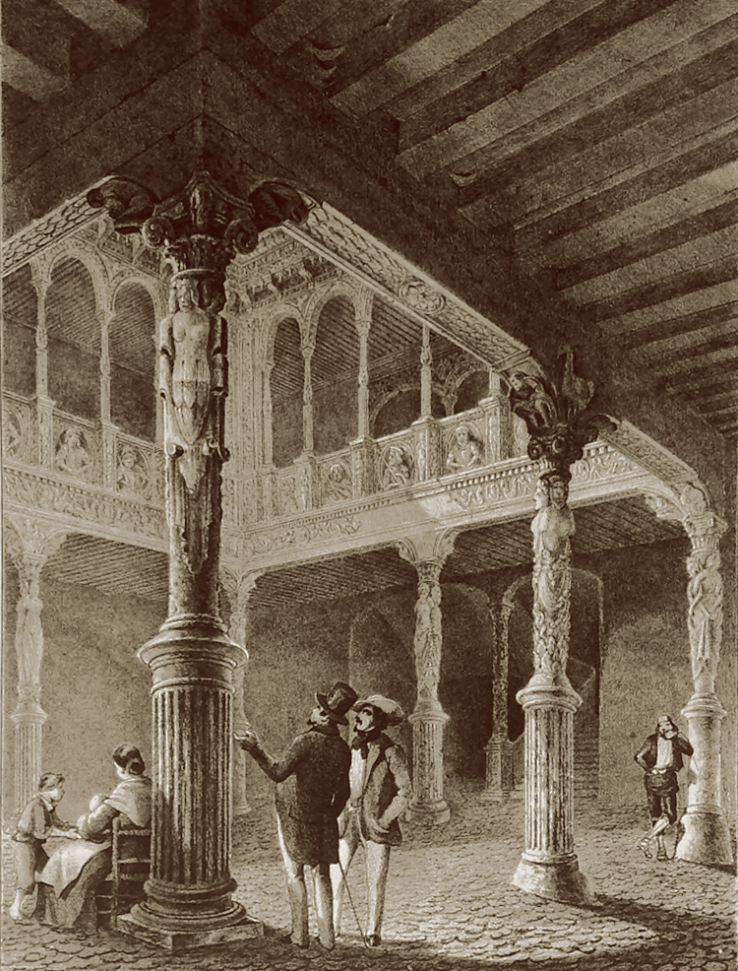
“Courtyard of the Princess,” F.J. Parceriso, lithograph, circa 1850

On the edge of the former Jewish Quarter in Zaragoza, Micer Gabriel Zaporta (abt 1500-1580) built an 18,000-square-foot house in 1549 in honor of his second wife. Zaporta himself was born into a Jewish family whose members converted to Catholicism in compliance with the Edicts of 1492 and enforced by the Inquisition. The elegant house built around a central courtyard with elaborate Italianate ornamentation reflected Zaporta’s success as a merchant and a banker who served as treasurer to King Charles I of Spain (1500-1558).

Continue reading “Postcard from Zaragoza, Spain: Renaissance landmark rescued from Paris”

Postcard from Guanajuato, Mexico: Makes no sense to start with a pair of French restaurants, except…

Above, a pistachio and berry chocolate tarte and a strawberry tarte from La Vie en Rose

I thought that love was just a word | They sang about in songs I heard | It took your kisses to reveal | That I was wrong, and love is real. | Hold me close and hold me fast | The magic spell you cast | This is la vie en rose.

English translation of Edith Piaf’s “La Vie en Rose”

Ah, finally rediscovering the boulevardier-type pleasure of entering a restaurant on a daily basis and ordering from a menu versus all that pent-up time of cooking at home during the past year or so. This blog will be taking you to numerous dining establishments in Guanajuato over the next week to help ignite your wanderlust. Two French ones come first because we are hoping to head to France in about ten days and don’t want you to tire of reading about French food.

Continue reading “Postcard from Guanajuato, Mexico: Makes no sense to start with a pair of French restaurants, except…”