Postcard from Morelia, Mexico: Morelos’ call for justice echoes in this hall

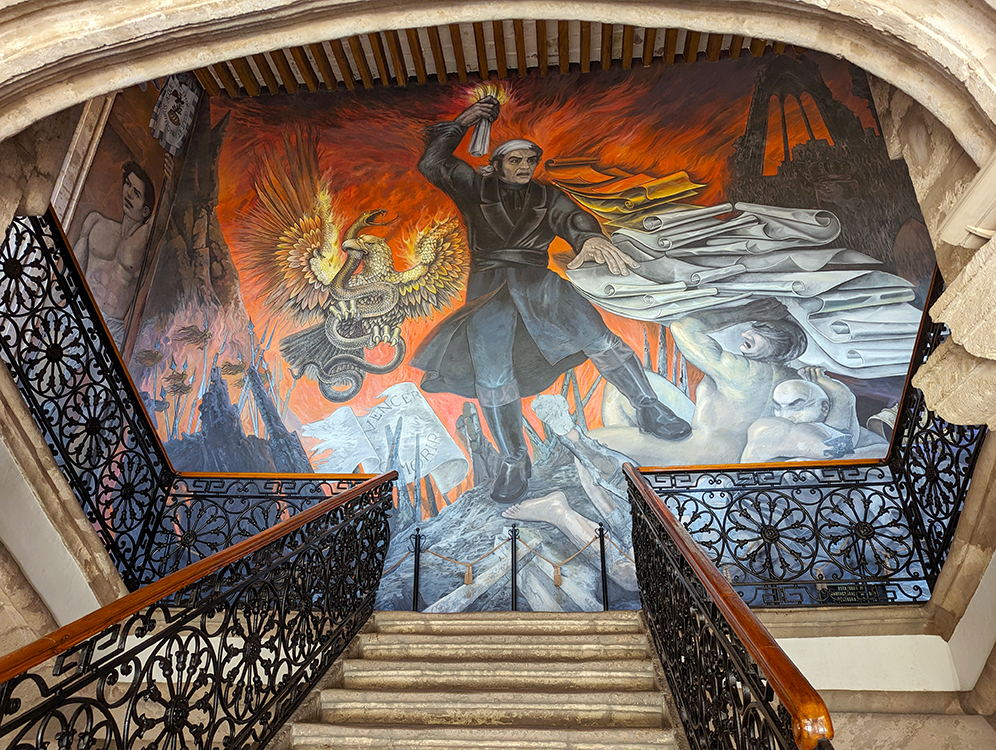
Above: Portion of “Morelos y Justicia” mural, Agustin Cardenas Castro, El Antiguo Palacio de Justicia

Inflamed by the fervor of revolt, Jose Maria Morelos dominates the stairwell of the former governmental headquarters for the Spanish city originally known as Vallodolid on the central plaza of his namesake city. In 1812, the building was repurposed to serve as a mint producing copper coins and postage stamps.

A Belgium engineer hired in 1884 to convert the structure into Michoacan’s supreme court added French architectural detailing to the façade and interior. Particularly distinctive are the pinjante arches, floating double arches with no central support columns.

Continue reading “Postcard from Morelia, Mexico: Morelos’ call for justice echoes in this hall”
Viewing San Antonio through a Spaniard’s eyes

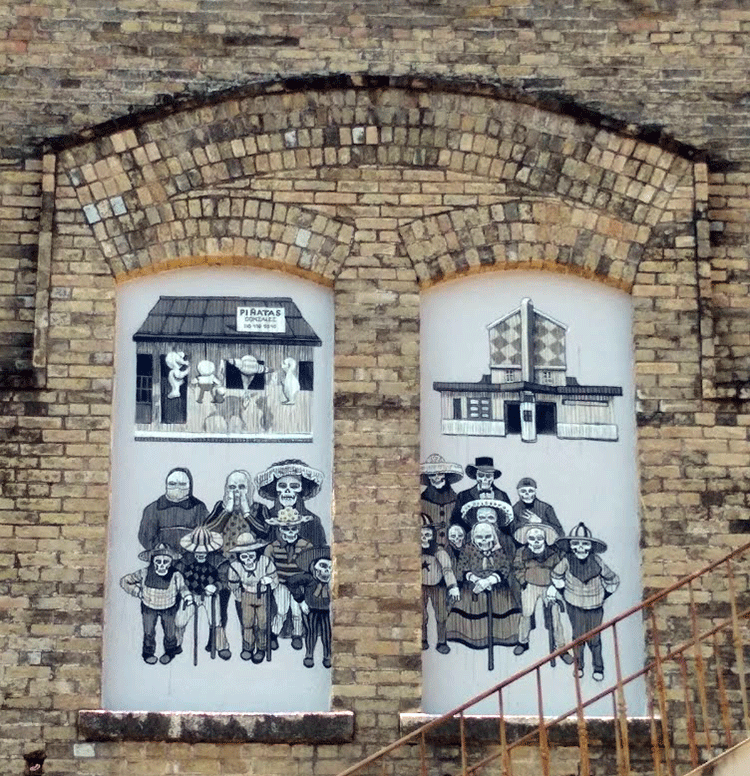
Murals by Spanish artist Daniel Munoz, or SAN, transform window frames bricked in long ago on the back of the former home of the Beethoven Maennerchor in Hemisfair into points of interest. SAN peered into the city’s past and how it contributes to the city of today in recognition of the San Antonio’s Tricentennial. The mural on the back of what is now Magik Theatre was commissioned by the city’s Public Art Department and Luminaria working in conjunction with Ink and Movement in Madrid.

These cellphone snaps represent a small sampling of SAN’s images. Love the way he captured the man peering into the dime store to represent the impending desegregation of the lunch counter in San Antonio; four Blacks broke a major color barrier when they were served there on March 16, 1960. Wonder if the muralist knew the 97-year-old former Woolworth’s, regarded as a landmark in the history of the Civil Rights Movement, is endangered by the current version of the Alamo Comprehensive Interpretive Plan. The building’s significance for the community is obvious even to someone from another country.