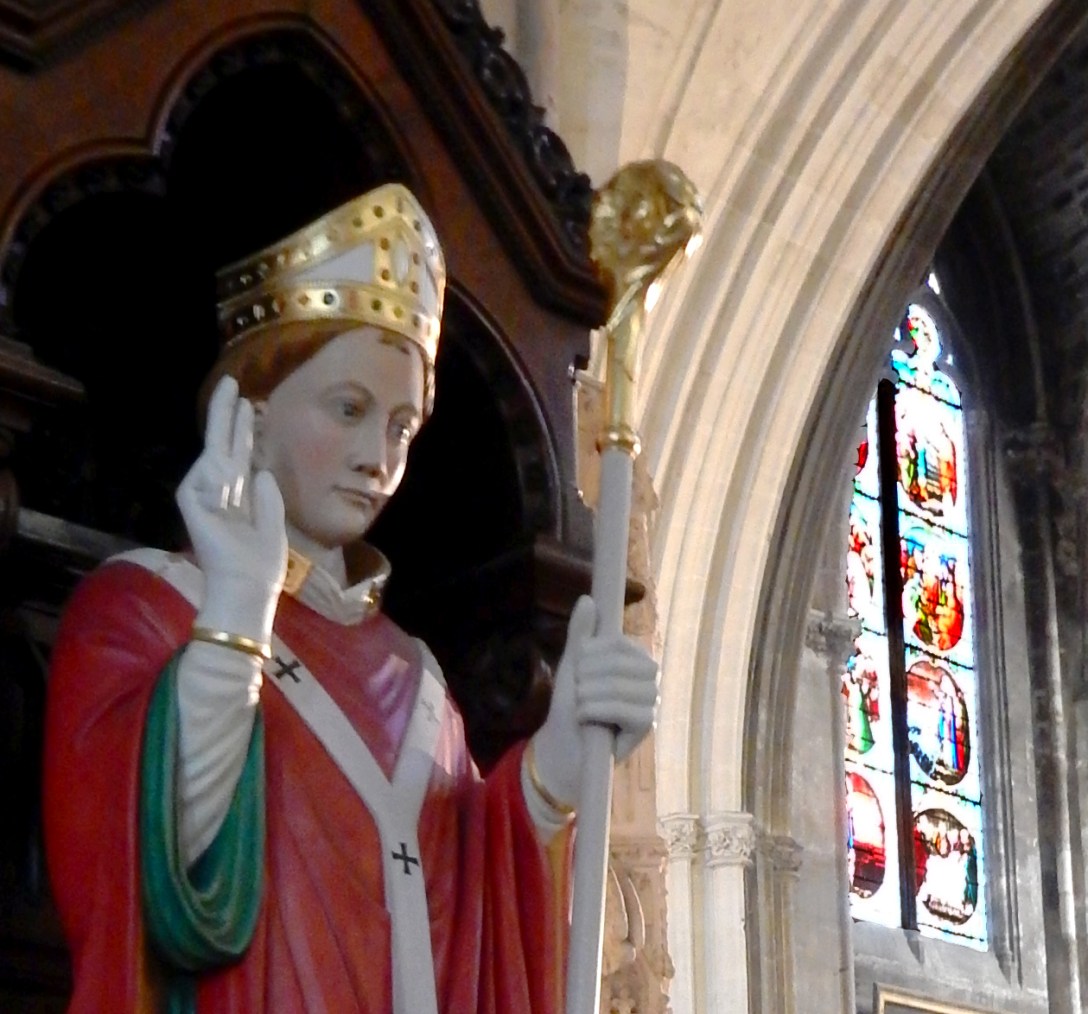
Postcard from Bordeaux, France: Saint Seurin saved the city, but Vikings later destroyed his church

Above, statue of Saint Seurin of Bordeaux

With the withdrawal of Roman protection, Aquitaine became vulnerable to attacks by a host of others – the Vandals, the Goths, the Franks.

According to legends, as Saint Martin of Tours was dying in the year 397, he appeared in a vision to Seurin, a bishop engaged in fighting the spread of Arianism. Saint Martin directed Seurin to go to Bordeaux.

Bordeaux had no job openings for bishop, but, miraculously, the presiding bishop had a vision as well. The Lord directed him to welcome Seurin with open arms. So, the pair met, embraced and entered the church together; Seurin emerged with the title. The timing was fortuitous for the city’s residents, under attack by either Goths or Franks at the time, because Seurin was able to perform numerous miracles to successfully defend the city.

Continue reading “Postcard from Bordeaux, France: Saint Seurin saved the city, but Vikings later destroyed his church”
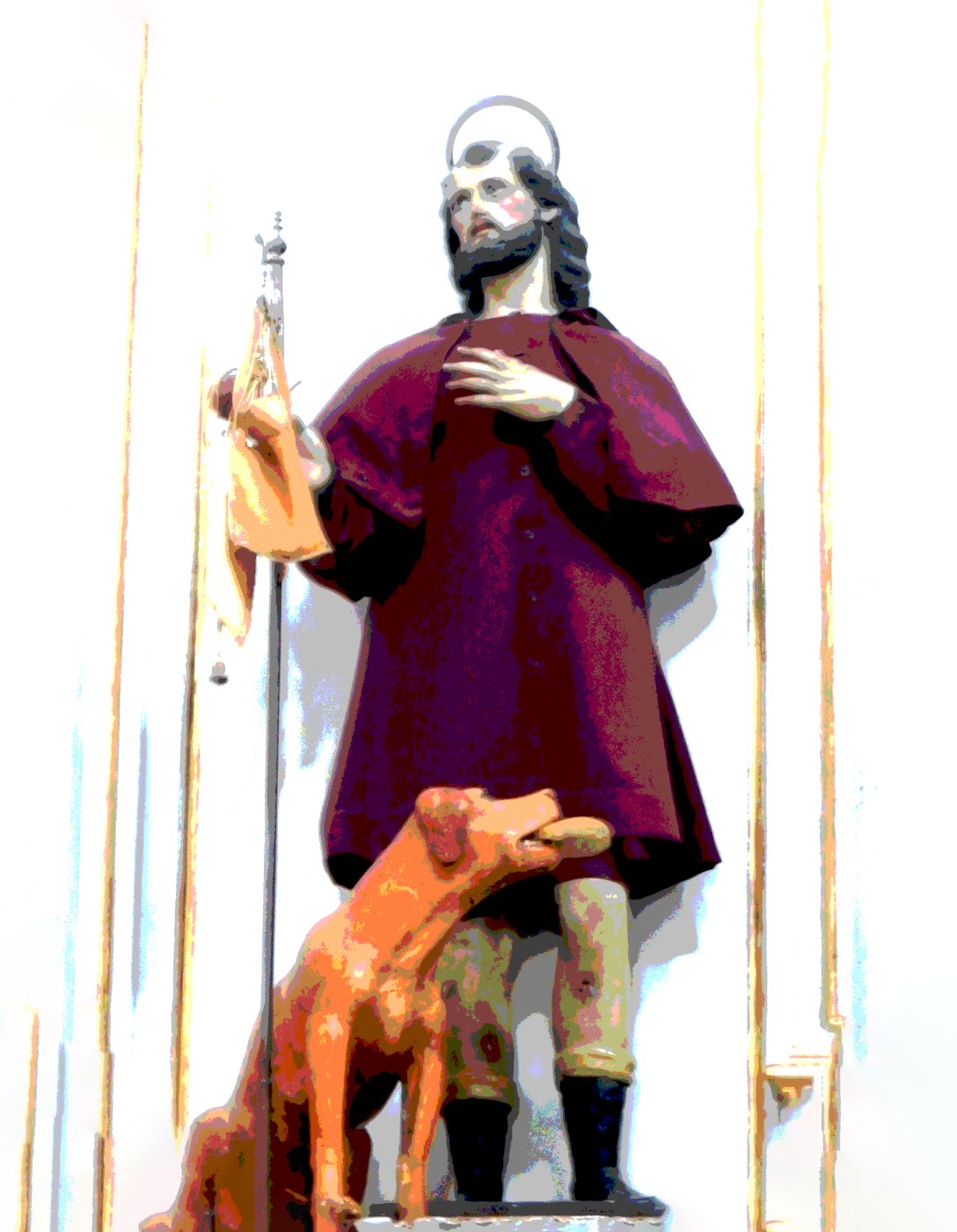
Postcard from Guanajuato, Mexico: Times call for pulling this holy card out of the deck

Having spent the past week a stone’s throw away from Templo de San Roque in the heart of Guanajuato, it seemed imperative to discover more about the saint. He definitely falls into my category of “saintly stories nuns never taught me.”

Hard for a boy born with his breast emblazoned with a red birthmark in the form of a cross to avoid his calling. Following the death of both of his wealthy parents by the time he was 20, San Roque (1295-1327) (although “San” was not what Saint Roch, or Rock, was named until more than a century later) sold his inherited worldly goods and distributed the proceeds amongst the poor in his native home of Montpelier, France. Joining the Third Order of Saint Francis (Does this mean he was married?), he headed out to Italy with an eye to visit the tombs of the apostles.

Continue reading “Postcard from Guanajuato, Mexico: Times call for pulling this holy card out of the deck”

A place to seek miracles

Above, Chapel of the Miracles, photo by Michael Cappelli, 1984

This is, in the words of the Abbe Dubuis, ‘a place of frequent emotions.’

Julia Nott Waugh, The Silver Cradle, 1955
Close-up of El Senor de Los Milagros from Michael Cappelli’s 1984 photo

El Senor de los Milagros, or The Lord of the Miracles, is suspended majestically above an altar in a small privately-owned chapel on the near west side of town. La Capilla de los Milagros stands somewhat in isolation on what was Ruiz Street, now Haven for Hope Way, severed from downtown by IH-10.

The age and origin of this crucifix are part of its mystery. In 1907, Charles Barnes wrote in the San Antonio Express that it was brought to San Antonio by Spanish friars as early as 1716 and placed in San Fernando Cathedral. In a 1928 edition of the Dallas Morning News, Vivian Richardson claimed its origins were local, that “it was revealed to a Mexican that he should make a crucifix for San Fernando Mission.”

Continue reading “A place to seek miracles”