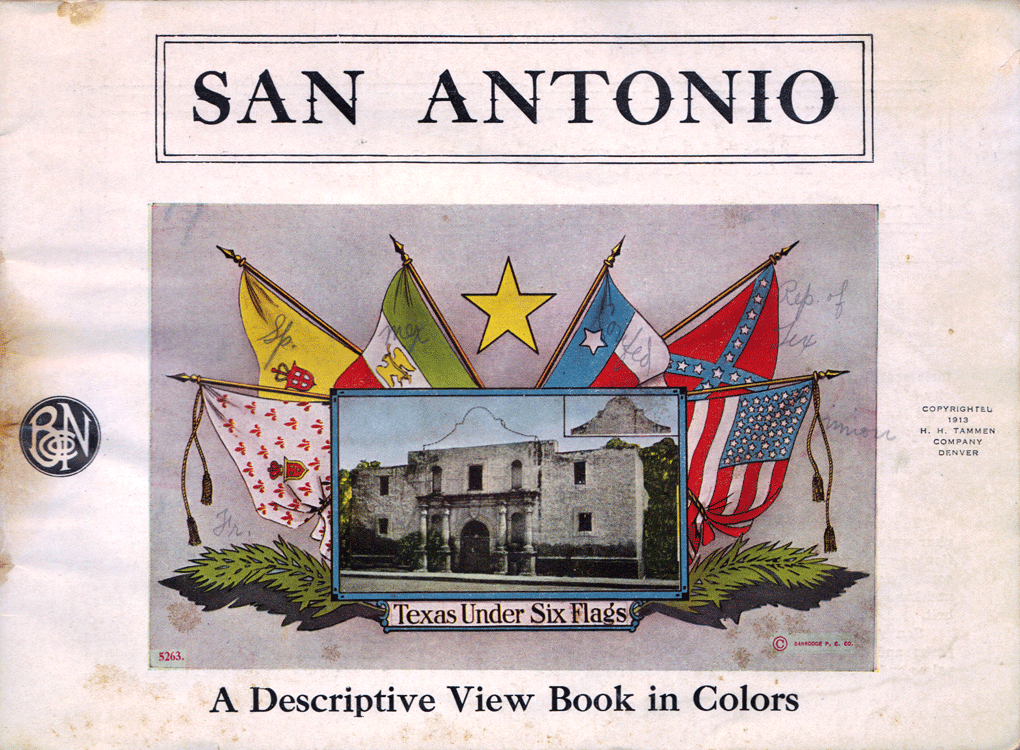
The treatment of the Alamo on the frontispiece of San Antonio, a 1913 “Descriptive View Book in Colors” – a birthday present from a friend – caught my eye with its unusually frank acknowledgement of the major alteration of the facade of the former Mission San Antonio de Valero.
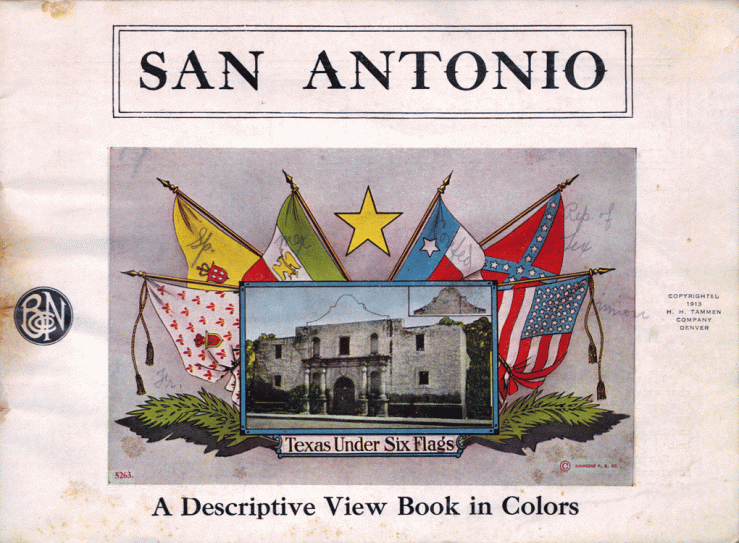
The frontispiece of this booklet showed the Alamo with the added architectural frontispiece removed.

The distinguished curving outline of the facade has become a symbol not only of the battle that took place there in 1836, but of the city itself. The widely replicated outline, commercialized into many a business logo, is recognized worldwide.
But the distinctive parapet was not part of the original church built nearly 300 years ago; nor was it there during the famous battle in 1836.
According to the Handbook of Texas Online, the curvilinear addition is thought to have been the brainchild of an architect and builder by the name of John M. Friese, who designed the Menger Hotel next door to the Alamo a few years later. Friese’s client was the United States Army, which was renting the former mission from the Catholic Church. The project fell under the supervision of Major Edwin Burr Babbitt, assistant quartermaster for the post. According to the Handbook, Major Babbitt actually wanted to tear the Alamo down and erect a completely new building. General Thomas S. Jesup vetoed that idea, fortunately for today’s tourism industry, and the parapet was added in 1850 as part of the adaptation of the building for the Army’s needs.
Through the years, many changes have taken place on the plaza in front of the Alamo, the plaza that was enclosed by crumbling mission walls at the time of the battle.
A group has emerged with plans to recapture those grounds from the city that has encroached upon them. The Texas History Center at Alamo Plaza, Inc., has developed elaborate presentations for what it calls the Alamo Restoration Project.
The stated goal of this proposed project is:
to enhance the visitor’s pilgrimage to the “Cradle of Texas Liberty” by providing a historic atmosphere for personal reflection, inspiration, and learning. We encourage people to seek out their heritage, explore the rich and diverse history of the region, and immerse themselves with the texture of the past.
While this sounds noble on the surface, there are some who think the part of this site’s “heritage” and “diverse history” that is more important than a lost battle might be its much earlier role as a mission outpost.
Another major issue is the problem of a historic landmark built atop of the original western wall of the mission compound. The handsome Crockett Block, designed by architect Alfred Giles, was built only 30 years after the Army added the parapet to the Alamo. The project’s plan is to simply move the massive building, as The Fairmount was relocated in 1985.
What would be left would be a huge open footprint of the grounds at the time of the 1836 battle, but what I see is hot. There are just not many days of the year where people are going to want to stand in the middle of a treeless, shadeless plaza contemplating the battle. Five minutes in the middle of the plaza on a day like today would be more than enough to make one pray for the return of the raspa vendors.
To accomplish this restoration project would mean major battles with not just the Daughters of the Republic of Texas but also with the yellow-hatted ladies of the Battle of Flowers Association, whose parade has a strong historical connection to Alamo Plaza.
While there are pictures on the group’s website showing the Alamo without the added parapet, there is nothing written online that I see calling for its removal. But, to be true to the group’s goals, it obviously should be.
Calling attention to the need for better treatment and interpretation of our most famous tourist site is worthwhile, but stripping the area back to the battle era seems extreme.
And, would San Antonians ever be willing to let go of that distinctive frontispiece for an Alamo with a crewcut? If nothing else above were, those seem like fighting words to me.


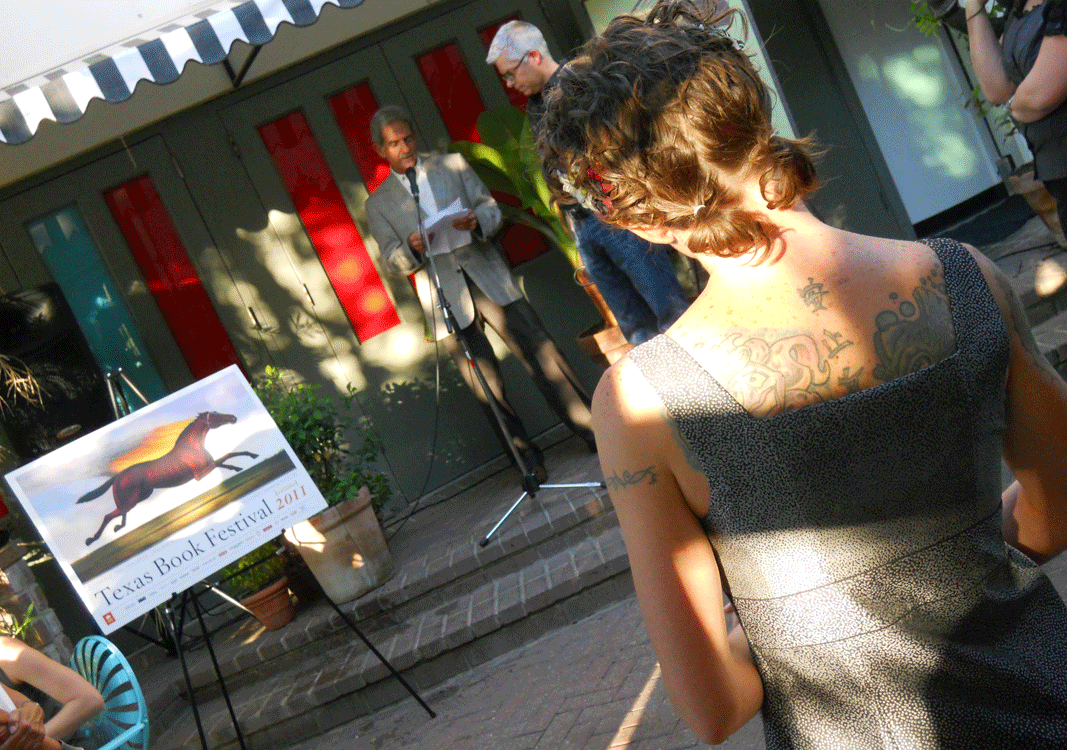
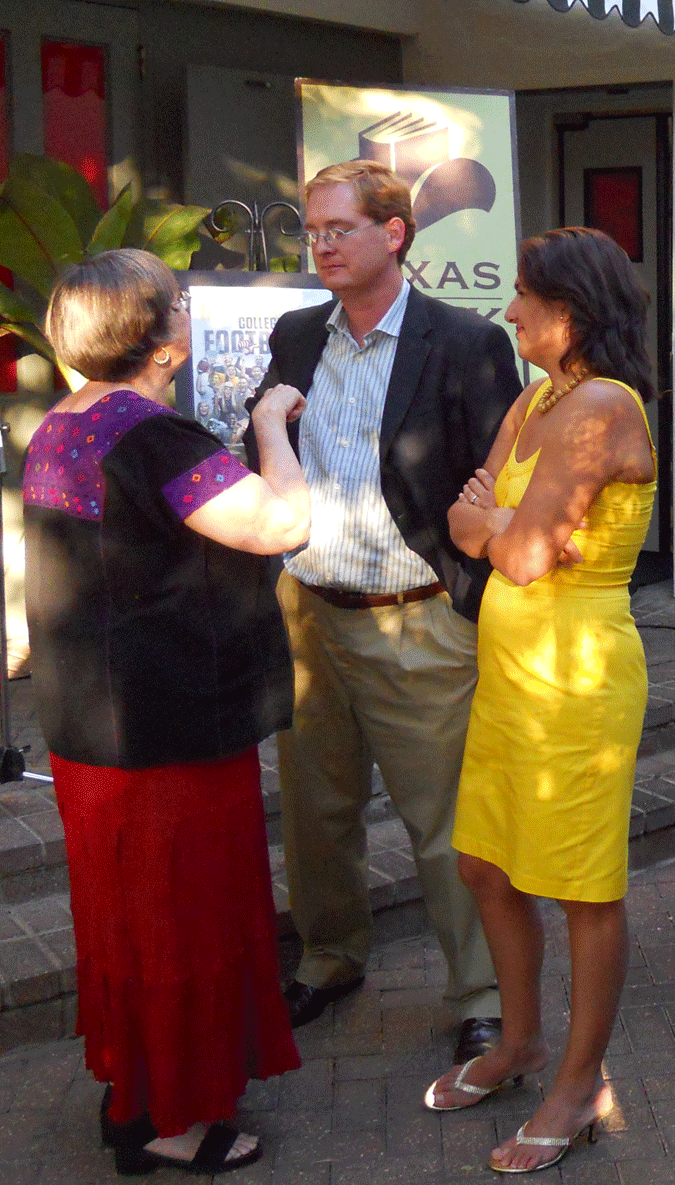 Chair Ron Weiss explained the board wants to increase the festival’s presence outside of Austin, and San Antonio is a logical choice. Reading Rock Stars, the book festival’s program pairing readings by authors for students in economically-disadvantaged schools, already is associated with Ira Ogden and Will Rogers Elementary Schools.
 Hosted by Ocho at the Havana, the affair was nice but small. Representatives from Texas Monthly and Steve Bennett of the San Antonio Express-News was there, along with several authors from San Antonio: Susan Toomey Frost, Sherry Matthews, Bill Fisher and June Naylor.

 Postcards from Barton Springs