
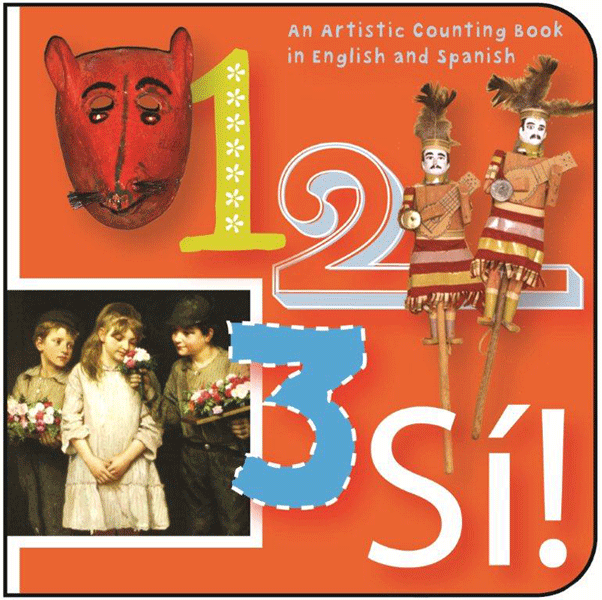
 And the hardest part of counting must have been choosing what colorful images to include in 1, 2, 3, Sí! A Numbers Book in English and Spanish. The partners creating this new bilingual board book had to narrow down what to count from the immense holdings of the San Antonio Museum of Art.
Can’t imagine how they managed. And never have Pre-Columbian earthenware babies looked so appealing and downright ticklish, or a combination of images of eight animals from artisans of different centuries from five different countries seemed so logical.
With the assistance of many donors, the San Antonio Public Library Foundation provides the more than 25,000 babies born in Bexar County each year with their first books. Shortly after the newborns arrive, the books are delivered in the hospital to their parents in a Born To Read tote bag that also contains a Library card application and a map of branch locations throughout San Antonio.

A baby’s first books are so important in starting a child off in the direction of a life-long love of learning. If a book is fun and appealing, a baby will want it read again and again. And again and again.
Our daughter wore out her first copy of Dorothy Kunhardt’s Pat the Bunny, but could not bear to be parted from it. We were forced to buy a second copy and perform countless more readings. Alas though, soon “Fuzzy Wuzzy had no hair.” We finally had to alter the words for the second over-petted rabbit to “Love the poor bald bunny,” foreshadowing her impending graduation to The Velveteen Rabbit.
The Library Foundation changes the books in the Born To Read bags every other year so families with more than one child receive different books. The idea to create a book based on the San Antonio Museum of Art’s collection was inspired by My First ABC. Each letter in this bright board book is illustrated by a work of art drawn from the collection of the Metropolitan Museum of Art, from Paul Cezanne’s “Apples” to an X-shaped painting by Frank Stella.
The expertise of Trinity University Press was tapped to publish 1, 2, 3, Sí! The bright and colorful look of the book was designed by Madeleine Budnick, with photography by Peggy Tenison.
While promoting counting, bilingual literacy and art, 1, 2, 3, Sí! contains smaller-font hints for parents, grandparents, sibling and sitters to use the images for additional interaction. For example, the pages containing ten masks prompts “Which mask would you like to try on?,” with options including a rabbit mask from Mexico, a dog mask from Ecuador and a spirit figure from Papua New Guinea. A mesmerizing pair of eyes from an Egyptian coffin provides an opportunity for playing peek-a-boo.
Other suggestions for stimulating babies’ growing minds will be found in a companion activity booklet being designed by César Proa of Proa Design. Trinity University Press is creating a website – www.123-si.com – with ten related coloring and activity pages for teachers or parents to download and print.
Mayor Julián Castro officially will unveil all of these during a Family Launch on Saturday, September 10, at the Museum of Art. Families need only show their library cards to gain free admission to the museum during the event.
While the publication of 1, 2, 3, Sí! is exciting, there is more to come. The partners promise board books focusing on colors, shapes and animals will soon follow.
For those of us with no babies being born in San Antonio hospitals, 1, 2, 3, Sí! will retail for $7.95.
Born to Read from SAPLF on Vimeo.

 Postcards from Barton Springs