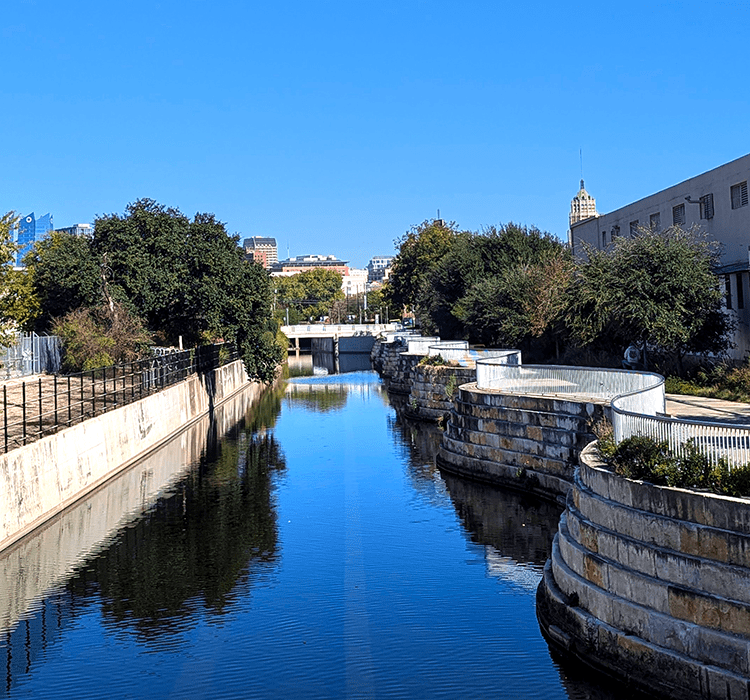
Above: Looking northward to downtown from San Pedro Culture Park pathways
If you follow the ruta of San Pedro Creek, you are on a pilgrimage rooted in the past, destined for the future. As in some ancient legend, a city emerged out of these waters. A city bubbled forth out of this spring-fed stream, running from long before there was anyone here to witness it – or drink from it…. If this creek could speak, in whispers of song, or poetry, it might tell the story of the city that it birthed, brought to the light of history, its most extraordinary, and perhaps unexpected, progeny. Whispers of memories, echoes of song, rhythms of poesy, drumbeats and bugles, punctuated by cannonades – and long intervals of peace.”
“A Creek Tells Its Story: The Mythic Narrative of San Pedro Creek,” John Phillip Santos
Our rare quick trips to San Antonio tend to involve friends and family, so exploring the two miles of improvements along San Pedro Creek is taking a while. In December, we walked a small segment of the former degraded ditch that has been transformed into San Pedro Cultural Park.
Rather than repeat the background, here are links to my earlier blogs: first post, 2018; second post, 2024. Below, find images taken along a newer stretch.
Continue reading “Road trip to art-walk in San Antonio” →





 Postcards from Barton Springs