Postcard from Pontevedra, Spain: Refueling stop for peregrinos

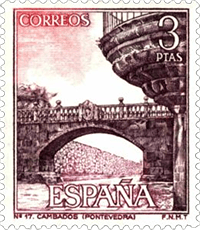
A vintage Spanish postage stamp featuring a bridge over a river, with intricate architectural details and the text 'Correos' and 'España' alongside a denomination of '3 ptas'.

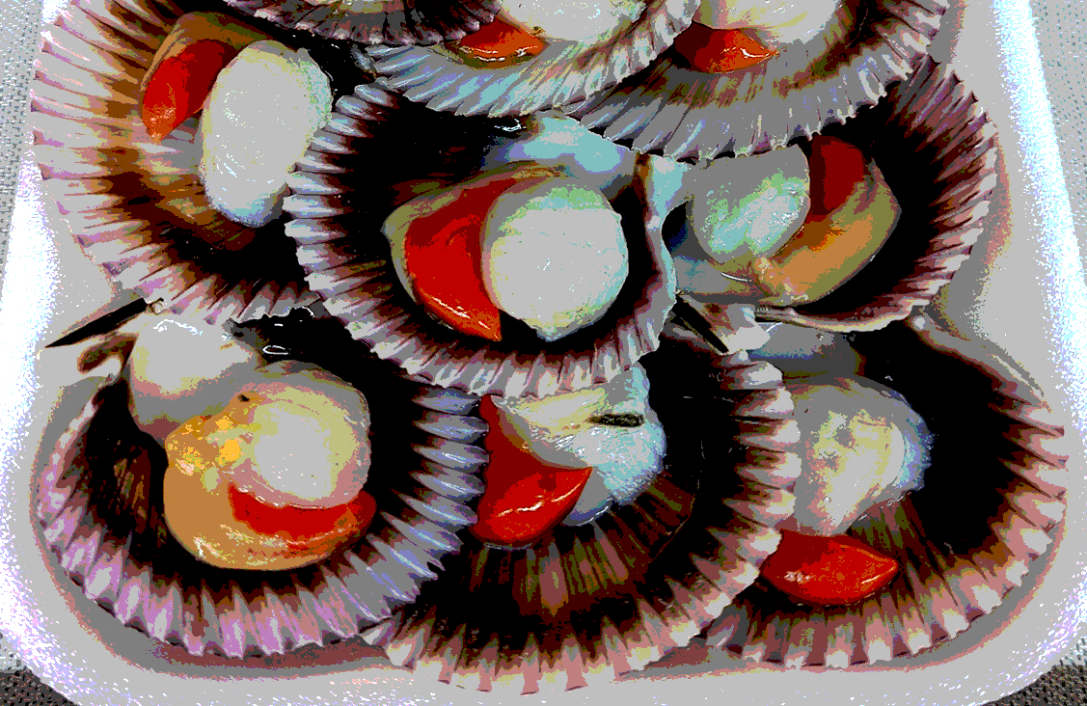
Above: Zamburinas for sale in Mercado de Abastos

During temperate seasons, approximately 280,000 pilgrims strike out on one of the Portuguese routes to Santiago de Campostela, passing through Pontevedra on their way. Pilgrims from around the world walk Camino de Santiago, collecting shell stamps as proof of stops and actual scallop shells as souvenirs. Long ago, it is said these shells served as scoops for food offered at the door of inns along the way.

Myths surround this symbol of Saint James, from his saintly remains being borne ashore at Campostela atop shells to miraculous legends of loved ones who drowned emerging alive from the sea covered in scallop shells. The ridges of the shell symbolize diverse pilgrimage routes, all converging upon Santiago de Compostela.

Whatever the religious symbolism, the zamburinas of the region are famed for their distinctive texture and flavor. Like eggshells for cascarones at Fiesta San Antonio, someone has to empty those shells for the pilgrims. So, we try to do our part by pursuing those delectable Galician zamburinas wherever we can, which translates to every couple of years. (Read about their red “commas” in an earlier postcard sent from Zaragoza in 2022.)

For all of those walkers in Pontevedra arriving tired and hungry yet spiritually recharged, we’ll take a detour before scallops because my alphabetical listing of restaurants dictates it.

Continue reading “Postcard from Pontevedra, Spain: Refueling stop for peregrinos”
Postcard From Madrid, Spain: Bewitched and bedeviled

Vintage Spanish stamp depicting a witch flying with children, inscribed with 'Quinta Sevilla Goya' and 'Correos Aéreos España'.

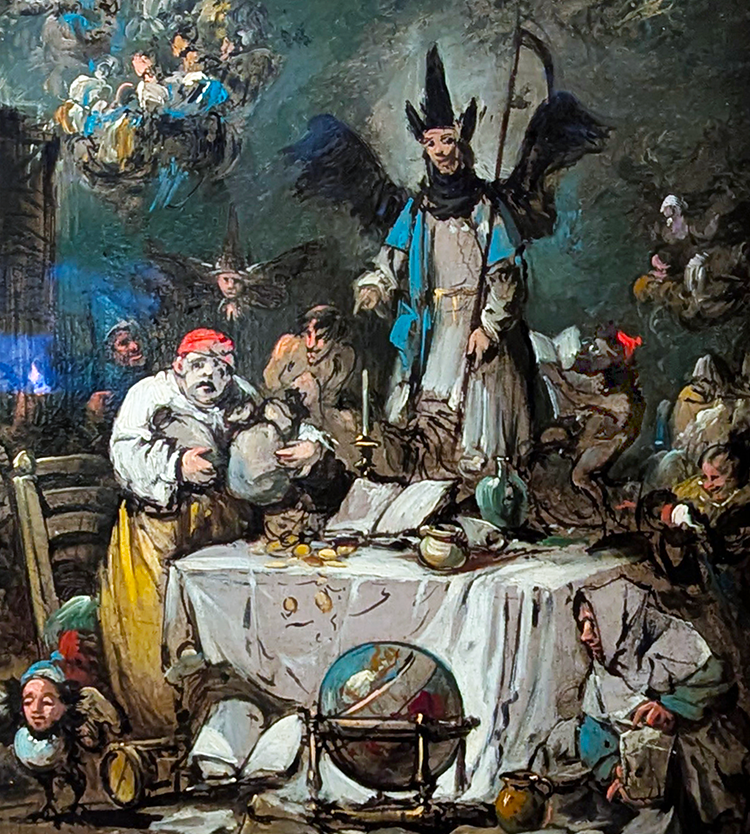
Above: Detail of “Allegoric Capricio,” Eugenio Lucas Velazquez (1817-1870), 1852, Lazaro Galdiano Museum.

Vispera de Todos los Santos. The hallowed eve preceding two holy days in the Catholic Church: All Saints’ Day and All Souls’ Day. Or, for the superstitious, La Noche de Brujas, when the witches fly.

Today, it appears Spain has succumbed to the highly contagious American-style celebration of Halloween. With all its horror-film-like bloody mess.

Continue reading “Postcard From Madrid, Spain: Bewitched and bedeviled”

Old and New World artistry merge in Hispanic Baroque

A 1893 one-cent postage stamp depicting Christopher Columbus and indigenous figures, surrounded by an ornate border. The inscription reads 'Columbus in Sight of Land.'

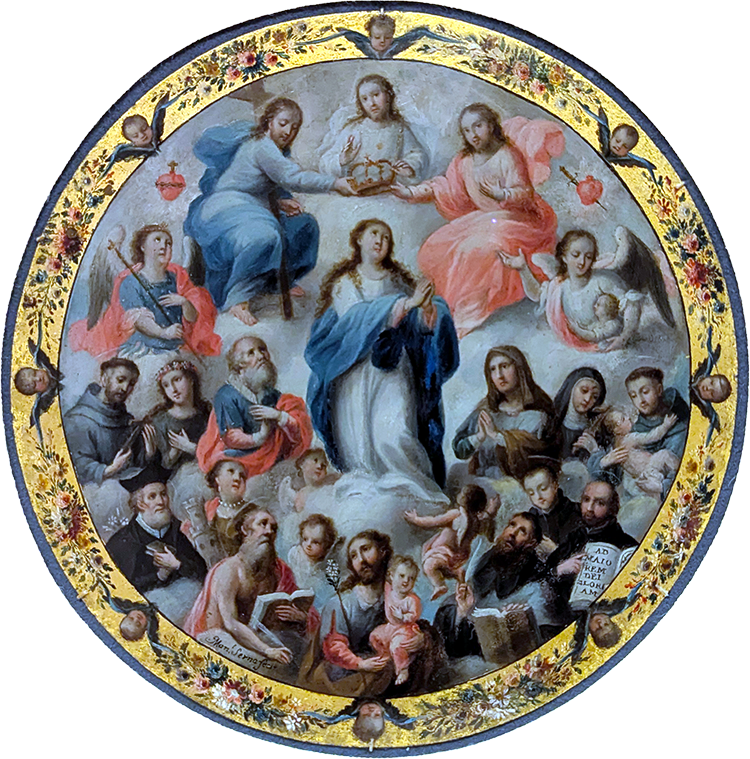
Above: “Annunciation and Saints,” Jose de Paez, Mexican (1727-1790), oil on copper, 1750-1760.

Spirit & Splendor: El Greco, Velázquez, and the Hispanic Baroque” surveys 150 years of Spanish art leading to the Baroque period with works culled from the collection of the Hispanic Society of America in New York City. Some of Spain’s most renowned and respected artists are represented in this ongoing exhibition at the Blanton Museum of Art, but don’t expect much more than a dozen of these works.

What I love are the pieces demonstrating the Baroque style translated by transplants and native-born artisans in the Americas. Artists took advantage of materials available in this so-called “New” World – copper, shells and, of course, more precious metals. They added a magical sheen to art designed to convert “pagans” to the foreign beliefs held by the Catholic conquerors.

Continue reading “Old and New World artistry merge in Hispanic Baroque”