Postcard from Turin, Italy: Home to many a food “invention”

Some of the members of the House of Savoy you were introduced to in the prior post get credit for additions to Turin’s distinctive flavors. Grissini, thin crispy Italian breadsticks, were invented to meet special dietary needs of Vittorio Amadeo II (1666-1732). Perhaps most significant to Italians, Emanuele Filiberto (1553-1580) brought the first chocolate to Italy.

As in Spain, the earliest ways to consume chocolate imported from the New World were in a liquid form. This has survived through the centuries in Turin in the form of bicerin, a rich triple-layered beverage (more like a dessert to me) consisting of thick hot chocolate, espresso and foamy cream. Numerous major chocolate factories are found in the city. With hazelnuts the most popular nut, it is not surprising Nutella was created there. Vermouth and Campari originated in Turin; the city is home to the Slow Food movement; and the first Eataly opened there.

The region’s lean grass-fed beef, fassone, seems most popular when consumed ground and raw. Locals eat huge patties of the meat tartare. I was happy my sampling of it was restricted to a petite amuse bouche. Which is partially why I expected the area cuisine to be dominated by head-to-tail meat offerings.

Much to my pleasant surprise, Turin residents prize their locally grown vegetables. There were a remarkable number of vegetarian restaurants, such as the highly regarded somewhat pricey Soul Kitchen. But even our humble homey neighborhood restaurant, Trattoria Alla Locandina, offered several vegetable dishes, including grilled eggplant and fried zucchini blossoms filled with cheese.

Our go-to lunch spot in Turin, E Cucina Torino, was like a reunion with an old friend. We first encountered Chef Cesare Marretti’s concept of providing limited-menu fixed-price meals in Bologna three years ago. Expect locals to be lined up here for the 10-euro special: a starter; a choice of a meat, seafood or vegetarian entrée; a small dessert; a glass of wine; and an espresso. I found myself always falling for the vegetable platter which included a side salad, a mountain of fresh vegetables hiding a vegetable flan underneath and a ball of fresh mozzarella too massive for me to ever conquer. The Mister was more apt to explore the other options.

Then there is the featured photo above, perhaps my favorite dish in Turin: a layered vegetable tian with a gorgonzola and almond sauce at Ristrot Guviol. We encountered wonderful creations emerging from this kitchen. An impressive crab shell arrived atop a dish of spaghetto with crab and grape tomatoes. A ribbon of raw salmon made a bright stripe across a rich risotto, and there was a tagiolini with squid and a crown of mullet roe.

The food of the Piedmont region is without a doubt among the best in Italy.
Postcard from Marfil, Guanajuato, Mexico: Wait, are you sure we are not in Italy?

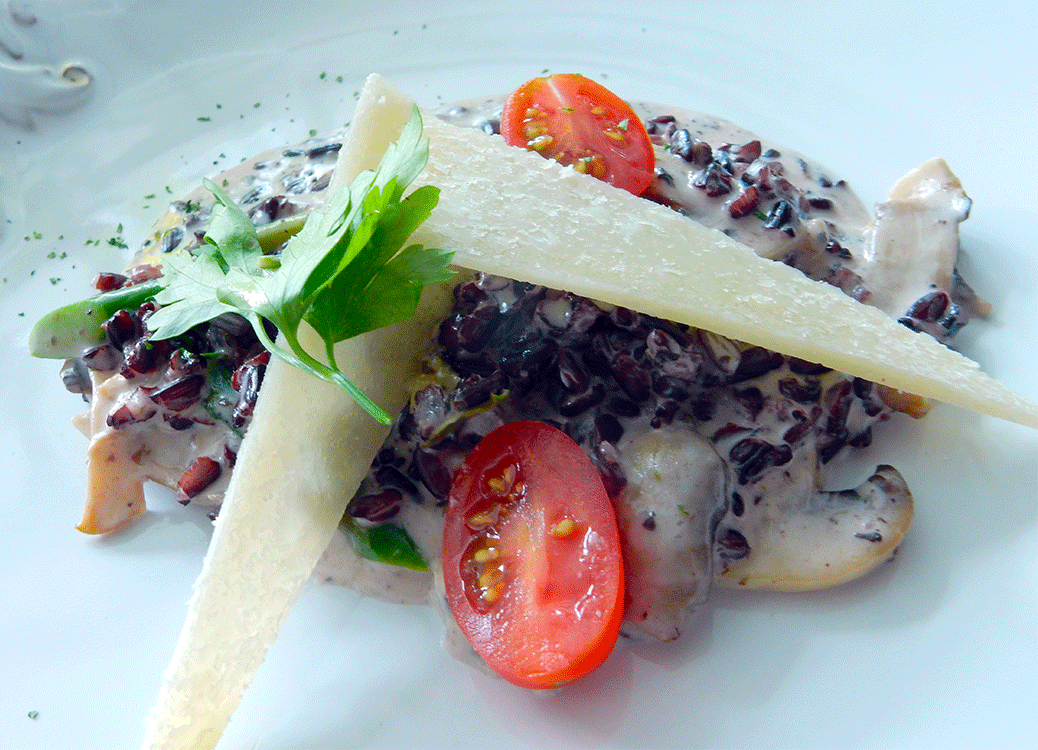
The creamy rich black rice risotto above was one of the best risotti we had in Italy. Wait. We were not in Italy any longer. We were in Guanajuato.

But Peccato di Gola is so good, I dare plop a post about it right here in the middle of “postcards” from Italy. We went to Marfil on the edge of Guanajuato to visit the Casa Museo Gene Byron (more to come about it after delayed Italian posts are delivered). People rave about the food at the museum’s restaurant, but it was closed on a Monday – often an issue when traveling.

So we walked past the ancient dam to the other side of Marfil, not a major hike, to an at-first unappealing strip of restaurants right on the side of the roadway. But stepping inside the comfortably furnished Peccato di Gola quickly altered that first impression.

We were considering opting for pizza, but the owner/chef (who we think is from Rome) piped up that Monday was our lucky day. On Mondays the restaurant offers a 300-peso (about $15) fixed-price lunch. This is not your normal fixed-price offering; no, it is one inviting you to fully understand the restaurant’s name. For our 300-peso per person investment, we could order anything on the menu, except steaks, until we wanted nothing more. Peccato di Gola translates as the sin of gluttony. And we fully consented to commit it.

With a large selection on the menu, we sat back and let him pick our starters while we tried not to fill up on the freshly baked olive bread. The chef definitely had my attention when he bypassed the wood-fired stove to a smoldering grill and placed something over the coals for us. Oh my, grilled octopi. He followed that with fried zucchini blossoms filled with gorgonzola and topped with shrimp. And then a plate layered with rounds of salmon carpaccio and a board bearing caprese salad.

Did we stop there? No, not I said the glutton. We sampled lobster ravioli, again topped with shrimp. And perfectly cooked salmon. Then he brought out a dessert board for us.

I do promise, though, that these photos are from more than one meal. We sinned twice, and then went back one more time to try the pizza.

Although the pizza topped with vegetables popped out from the wood-burning oven looking perfect, it actually was our least favorite dish there. The crust had good texture but had the issue we generally find true in Mexico. Pizza crusts in Mexico often have too much of a white-flour taste compared to what we are accustomed. While not up to Italian standards, this still was the best pizza we found in Guanajuato.

But no matter what day you decide to head to Marfil – a short and inexpensive cab ride from downtown – let Peccato di Gola transport you to Italy. Aside from the pizza, everything we sampled on the menu comes highly recommended.

Oh, to have the opportunity to sin like that again.

Postcard from Genoa, Italy: A seafood-lover’s paradise

The sounds woke me up Monday through Saturday in Genoa. The way-too-early alarm echoed from two doors and two floors down the steep 10-foot-wide street, actually only a pedestrian passageway. The fish monger hurling up the metal shutter, hauling out the trough and filling it with ice to hold the fresh catch of the day. Those jarring noises were followed shortly by the first customers, evidently all friends as interested in exchanging pleasantries, amplified by the four-story buildings, as purchasing seafood.

But the morning sounds quickly reminded me of a meal ahead and what always is central to menus in this port city – an abundance of fresh seafood. Mussels, squid, octopus, shrimp, butterflied fried sardines. The Mister often has remarked that Italians frown upon mixing seafood with cheese, but Genoa breaks that rule. Several restaurants feature striking black and white squares of ravioli filled with fish and ricotta cheese.

Also, Genoa is the home of pesto. Demanding Ligurians expect pesto alla Genovese to be made with D.O.P. basil, found only in the immediate region and terroir-dependent for its flavor. A favorite Ligurian pasta often paired with pesto is trofie, rolled out by hand on a flat surface to taper its ends and then twisted. Another regional specialty sold like pizza by the slice is farinata, made from a mixture of chickpea flour, water, olive oil and salt. The baked-until-golden, somewhat floppy slices are most commonly offered and consumed unadorned .

Almost every guidebook or travel feature tells you to head to Eataly on the harbor. We ventured inside, as we did in Rome, and tried to talk ourselves into eating there. The food did indeed look amazingly good and the displays of high quality, authentic Italian food products were enticing. But the atmosphere felt manufactured. The customer base appeared composed of passengers recently disgorged from the massive cruise ships docked there. Disneyland for foodies. A place to avoid crossing paths with any of the immigrant population now calling the center of Genoa home. We declined to dine. And for shopping? The alleyways in the historic center of Genoa are packed with charming and pristine specialty cheese and pasta shops and meat markets – the places where the locals go.

Instead, we enjoyed a wonderful meal at Locanda Spinola, so popular with locals on a Saturday afternoon that we felt fortunate to get a table. Parents pushed strollers in and out of an upscale cheese shop and a deli across the narrow pedestrian-only street. And now for the gritty side of a port city that keeps many tourists unnecessarily clustered near their cruise ships: a prostitute was standing on the corner. When an interested party approached, the pair subtly would disappear up the street somewhere to take care of business. Another woman immediately took up the station. But Genovesi, young and old alike, were unfazed by their presence. The prostitutes were not harassing or blatantly soliciting passersby, and most locals walking by took no more notice than they would a door of a shop selling products they did not want. The only gawker was me, albeit screened from being caught by the restaurant’s curtained window.

We enjoyed the slow-rise gourmet pizza topped with seared tuna at Savo Pizza Gourmet, and the Mandarin shrimp at Pesciolino were tasty. The casual Le Piastre di Emma is always packed; expect waiting lines. Contributing to the bustling confusion inside is one of the flamboyant owners who dramatically scurries about like a mother hen, perhaps almost to the point of flapping like a chicken with its head cut off. But the place that kept drawing us back was the family-run Trattoria le Maschere. The almost-homely décor fails to draw in many tourists and leaves the tables with their inexpensive platters full of perfectly prepared fresh seafood and classic pesto to the locals. And us.