

The headline only makes sense in San Antonio, Texas. A city filled with parades this time of year, although far from religious in nature. Crowds along the streets yell “Show us your shoes” to duchesses, princesses and queens riding high upon their floats throughout Fiesta San Antonio.
Of course, no one does that in Cadiz during Semana Santa. The continual processions are solemn commemorations of Holy Week.
The floats, or pasos, bear statues of religious figures, not real people. So, watching, you find yourself yearning to focus on the hundreds of participants accompanying the floats bearing the Virgin Mary and Jesus.
But individuality obviously is not the goal.
The Nazarenos are disguised under their capirotes designed to funnel their penitent prayers up toward heaven. You begin seeking eye contact with those continually tugging their hoods to keep their eyeholes in a functional alignment. Is that person male or female? Altering centuries of tradition, many members of today’s “brotherhoods” are women. Found myself analyzing all the different shapes of the robed figures: Is that a pregnant woman or a short beer-loving man or woman? And what does a collapsed cap mean?
The teams of costaleros bearing the weight of the pasos on the back of their necks are hidden under the floats’ heavy velvet skirts. Only their shoes are visible, but the alignment of their footwear conveys how closely they are crammed together and the teamwork required to step in unison as they slowly pound the cobbled streets. Once in a while, you can view them switching out the tired team for a fresh one or someone lifting the skirt to check on their welfare. And we stood next to a rare team of women anxiously preparing to crawl under an unusual paso with wheels to maneuver it along its route.
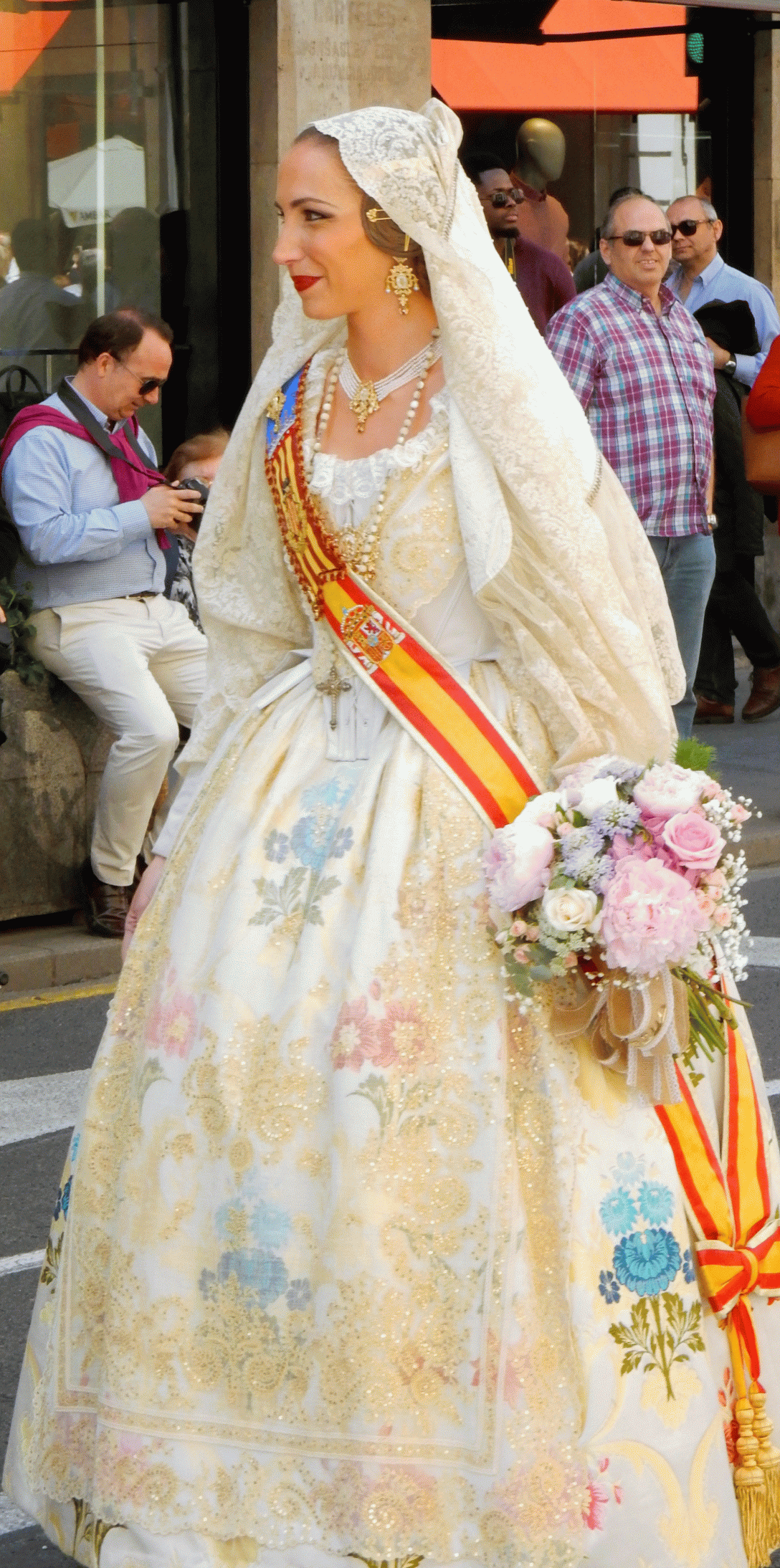
Checking out shoes quickly becomes a spectator habit. Women dressed in clothes of mourning wearing lacy mantillas march in high heels. Then there are barefoot penitentes, some hobbling a bit as the hours pass by. So used to my flat cushiony Skechers that I’m unsure which of those two options would send me into a state of limping faster.


Some members of the cofradias can be seen reaching into their robes to hand out holy cards to children along the way. Some interact with children by tipping their candles onto extended balls of wax growing in girth throughout the week. Children marching often carry baskets of candy to distribute to other children.
The musicians are pied pipers luring you toward processions.
But the goose-stepping uniformed men haunt me somewhat. The stomping of middle-of-the-night marchers on Thursday echoed like storm troopers invading our building. They invoked my childhood fear of the military parade of winged monkeys in the Wizard of Oz except, instead of that rhythmic chorus, there was no music. A woman wailed mournful chants. La Llorona? It took hours to fall back asleep. (Does that amount to a confession that I am still frightened by the winged monkeys?)
The capirotes? They no longer inspire fear, only curiosity about the individual underneath.
On Easter Sunday, the members of cofradias accompanying the float bearing a figure representing the resurrected Jesus wore no hoods. They wore suits. They lost any sense of mystery. Kind of like watching bankers on parade. The camera lens failed to focus on any of them.
While the flower-bedecked gilded floats attract attention and draw the faithful, the faith of the people provides the true beauty of Semana Santa.


 Postcards from Barton Springs