Postcard from Valencia, Spain: Opting for neighborhood comfort over anything near the Michelin trail

Having already posted about paella and our favorite restaurants, will mainly let photos do the talking for some other restaurants you might want to try if you are staying in Valencia for more than a few days.

Our neighborhood was so comfortably casual, and somehow we quickly developed almost a reverse snobbery when we ventured into tonier neighborhoods to eat. We had an excellent lunch at Seu Xerea during restaurant week, and the service was perfect. Pumpkin croquettes with blue cheese and curried meatballs were among our starters, and the Valencian rice with mussels and saffron was well executed. But, we ended up not returning because the restaurant was a bit more formal than our hood in Carmen and a bit pricier as well.

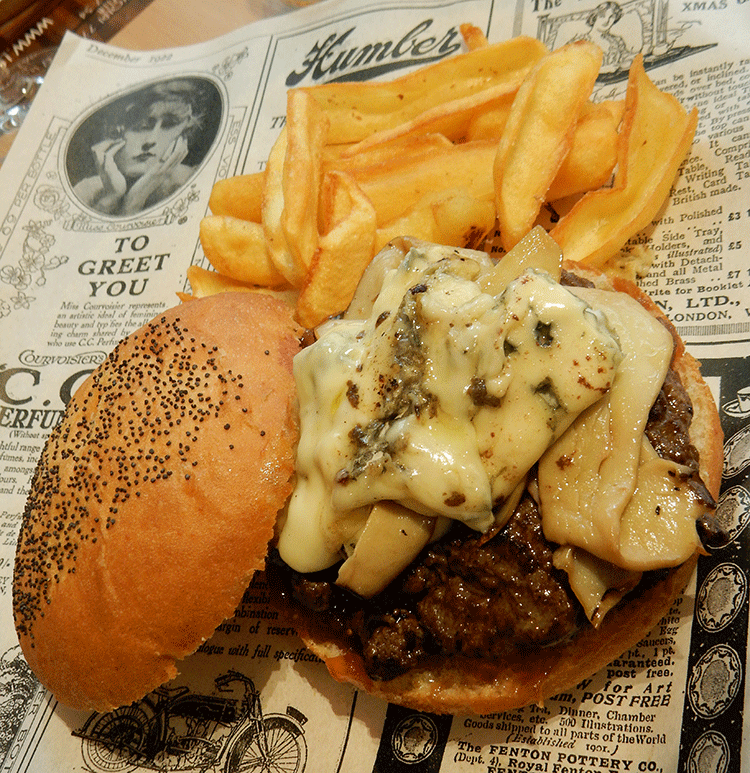
Hamburgers are everywhere in Valencia, as they are all over Europe, and Mar Cuatro Cocina Mediterranea presents an upscale opportunity to experience flavorful oxen burgers. But, again, we were out of our adopted neighborhood and the price crept up, particularly the wine, as a result. For great burgers in a more laidback setting closer to our apartment, we preferred the Martinez brothers’ popular Lamburguesa Urban Food.

For a total change of flavor, we recommend delving into Moroccan dishes at Restaurant Dukala. Both their chicken croquettes and pastilla – in this case the sweet and savory chicken mixture completely encased in flaky pastry – have loyal followers crowding into the restaurant on weekends.

Here are a few more places to consider exploring if the related food photos above seem appealing:

Postcard from Valencia, Spain: More saffron and less of everything else needed in my paella pan

Ask a purely traditional cook from Valencia, Spain, about paella, and you are told there is only one. It contains rabbit, chicken and maybe sausage or snails.

But I realized after a month consuming rice dishes there, we never tried the classic version. Seafood lovers have corrupted many a restaurant kitchen, and experimental contemporary chefs led us into playful flavorful territory.

Two things I learned I have always done incorrectly: I am too stingy with saffron, and I put too much of everything else in the pan. Proper Valencian paella is shallow in depth to allow the rice to caramelize in the bottom and particularly around the edges of the pan. This crispy crust – socarrat – is key, and Valencians are not timid about vigorously scraping the dish, even when served in a communal pan. Of course, I’m not even sure we can buy the real Valencian rice at home – the rice grown specifically for its capabilities of absorbing the broth quickly without turning into mush.

Also, paella should be made only upon ordering. The broad pans are only set on the stove for at least two; you just are out of luck if no one at the table is willing to share. If your paella arrives on a plate dished out of a large deep pre-prepared pan in the kitchen, we’re talking by pure Valencian standards, it’s just wrong.

As the photos demonstrate, we violated tradition by ordering seafood paella, such as the one at Namua, and, horrors, even a verde, all-vegetable one at Viva Mascaraque. We weren’t disappointed at all.

Another rice preparation prevalent in the region adds more rich stock to the pan than the rice can absorb – arroz merloso. Mythos Tapas y Mas featured a different one daily on its comida specials, and we enjoyed a wild mushroom and bean one at Refugio. Foam-topped mussel-plump arroz at Seu Xerea fell into this category as well.

And then, there were the totally unexpected, on our part, arrivals in paella pans – fideo noodles, caramelized the same way as the rice. Don’t tell any of the traditionalists, but my favorite dish delivered in a paella pan was the black fideo filled with tender pulpo served at Viva Mascaraque. We greedily scraped up very bit of socarrat we could. Just wanted to save the kitchen staff some elbow grease.