

Part of the excuse for extending our stay in Portugal until mid-June was to ensure we were there for the Feast Day of Saint Anthony of Padua, June 13, the anniversary of his death at age 36 in the year 1231. Actually, the celebration is more than a day. In Lisbon, the party in honor of Saint Anthony lasts throughout June.
While we call him “of Padua,” he wasn’t from there. He only ended up in Italy because his ship was blown off course during a storm. He was born in Lisbon and studied in Coimbra, and the Portuguese have not forgotten him. His images, and a few personal relics, are everywhere.
They love him. And why not? Few saints are more versatile than Saint Anthony in the types of prayers answered.
So, following my pilgrimage to the homeland of the my city’s patron saint, I wanted to share, in layman’s terms, a few of the things every San Antonian should know about him:
- Saint Anthony must have been fearless. His prime inspiration for becoming a Franciscan was the story of the five Franciscans beheaded by Moors for preaching in Morocco. He yearned to follow in their footsteps.
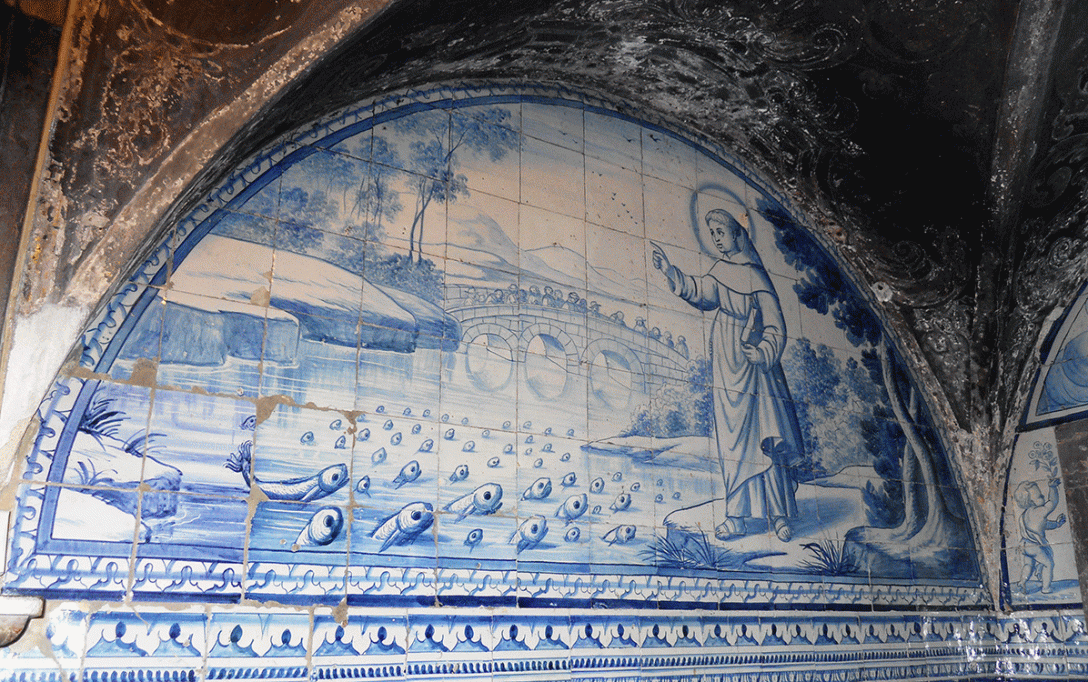
- Forget being impressed by horse-whisperers. Sparrows would flock to hear Saint Anthony preach. A stubborn mule would bow to take sacrament from his hands. Early on, when heretics ignored him, he turned to preach to the fishes in the river, who all popped their heads up, mouths agape, and listened attentively as long as he cared to speak.
- Saint Anthony was such a silver-tongued orator, rock stars would envy the crowds he attracted. His final sermons had to be given far out in the countryside in the open air to accommodate the thousands who swarmed to bear witness. He needed bodyguards to keep from being stripped naked by those who wanted to snip off scraps of his robes to remember him.
- His popularity was so great and miracles so obvious, Pope Gregory IX had to put him on the ultra-fast track to sainthood. He was canonized within a year of his death, and there was none of the fudging about waiving confirmation of a second miracle like Pope Francis had to grant for Pope John XXIII.
- Saint Anthony protects sailors, stemming from the miracle that his ship was merely blown off-course and not destroyed in a storm. Maybe Rio San Antonio Cruises should consider breaking the all-female naming tradition and christen one barge in his honor with a little statue of him on the bow.
- Saint Anthony helps you find lost and stolen things. This stems from a story of a naughty novice who nicked Anthony’s psalter. Saint Anthony sent such a fearful devil of an ax-wielding creature after him, the repentant man scurried back and returned the book. Some of us would find Saint Anthony’s blessing handy every time we head to the car.
- Saint Anthony’s been known to appear to guide lost travelers. Those tourists driving the wrong way down a one-way street downtown yesterday sure needed him on their dashboard.
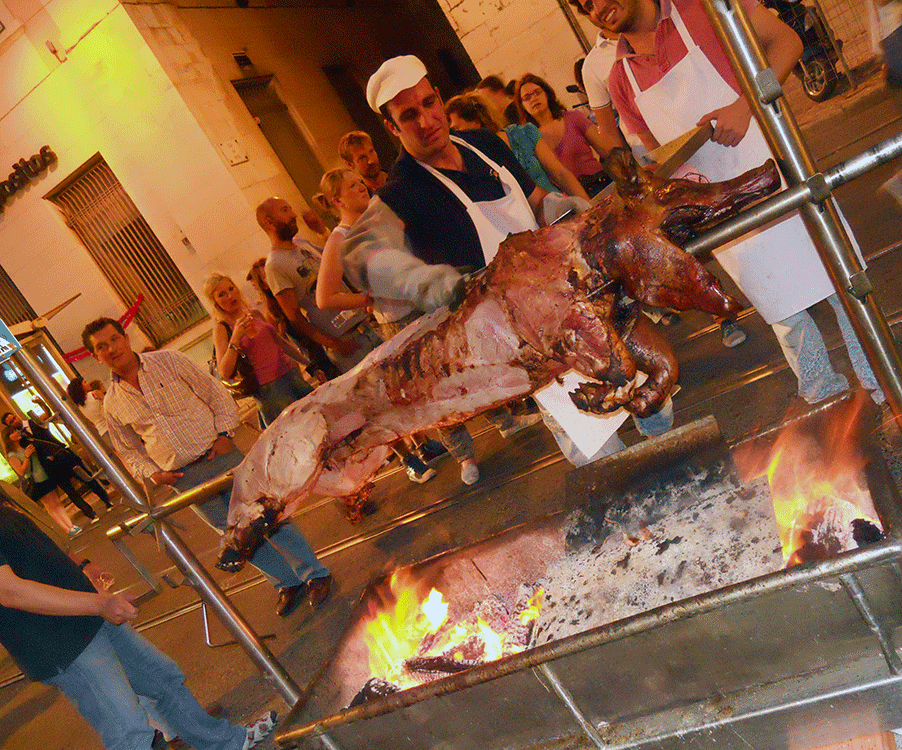
- Saint Anthony helps fishermen, which means bountiful fresh sardines in Portugal during his Feast Month. You might not think that is a good thing, but grilled fresh sardines are moist and sweet. Celebrating St. Anthony’s Month would provide San Antonio with a good excuse to promote their importation.
- And what’s better than sardines? Wine. Faced with a drained keg on his arrival in Provence, Saint Anthony refilled it to the amazement of all.
- In Portugal, people give each other gifts of sweet basil on Saint Anthony’s Day. Wow, how perfect for here. By mid-June everyone in San Antonio could use a fresh pot of basil to replace their summer-stressed straggly ones.
- Even the poor get bread on St. Anthony’s Feast Day. Unsure whether this tradition stems from the French baker who promised to give bread to the poor if only the shop door would open; the mother who pledged to distribute her child’s weight in wheat if Saint Anthony would bring him back to life (which of course he did); or parents donating bread when placing their children under the saint’s protection. He was such an ardent protector of children, it is claimed that the infant Jesus was seen visiting him in his cell.
- Saint Anthony not only can heal the sick and bring the recently deceased back to life, he can reattach limbs. A man confessed to Saint Anthony that he had kicked his mother. Taking his penance a little too literally, the man went home and chopped off his own foot. Upon hearing this, Saint Anthony kindly went to the sinner’s home and reattached his severed foot.
- Saint Anthony helps single women find husbands. Needless to say, grateful brides are honored to be chosen to be part of the multiple-wedding ceremony held on his day.
- And this is truly cool. Superman has to disappear from one place to fly off to do superhuman feats elsewhere, but Saint Anthony could bilocate. This meant he could be preaching a sermon, suddenly remember he was supposed to be up in the loft singing in the choir and do both at once. But it also meant that when his father was falsely accused of murder in Lisbon, Anthony – then based in Padua – was able to appear in court in Lisbon in support of his father. This feat was made even more impressive when Saint Anthony brought the murder victim back to life to offer his testimony as well, leaving no doubt as to the innocence of the saint’s father.
These tales may seem hard to believe, but everyone wants to believe in miracles. Faith is powerful. But enough about miracles for now.
A pair of Spaniards, Father Damian Massanet and Domingo Teran de los Rios, both claim to have named this place in June of 1691.
We just need to be grateful the explorers entered the land the Native Americans called Yanaguana on Saint Anthony’s Day.
And San Antonio certainly needs another excuse for a citywide party.
 Postcards from Barton Springs