Postcard from Siracusa, Sicily: Why everybody wants math nerd on their side

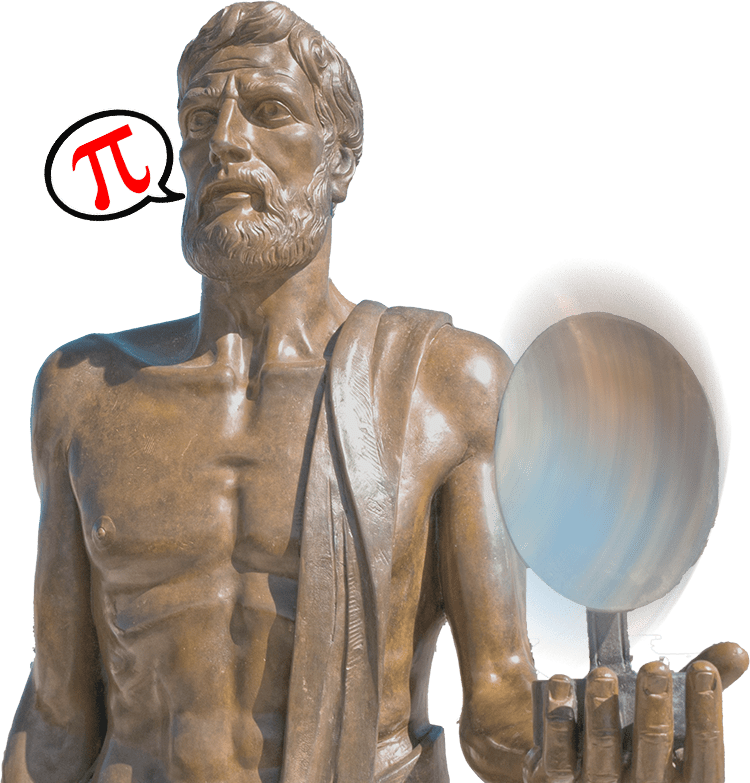
Above: Monument commemorating a hometown hero, Archimedes

Certain things first became clear to me by a mechanical method, although they had to be demonstrated by geometry afterwards because their investigation by the said method did not furnish an actual demonstration. But it is of course easier, when we have previously acquired by the method, some knowledge of the questions, to supply the proof than it is to find it without any previous knowledge.”

Archimedes (About 287-211 BC)

Seriously? The above is an example of Archimedes-speak that is babble to me. Math is far from one of my languages – Greek to me. In fact, I would almost consider Archimedes an enemy – the Father of Mathematical Physics, the Father of Integral Calculus and the man who tortured himself long enough to figure out such seemingly unsolvable puzzles as Pi.

Except, a visit to Siracusa convinced me that in times of war, or peace, you definitely would want Archimedes with all his math and inventions on your side.

Continue reading “Postcard from Siracusa, Sicily: Why everybody wants math nerd on their side”
Postcard from Saint Emilion, France: Treasures ripe for harvesting

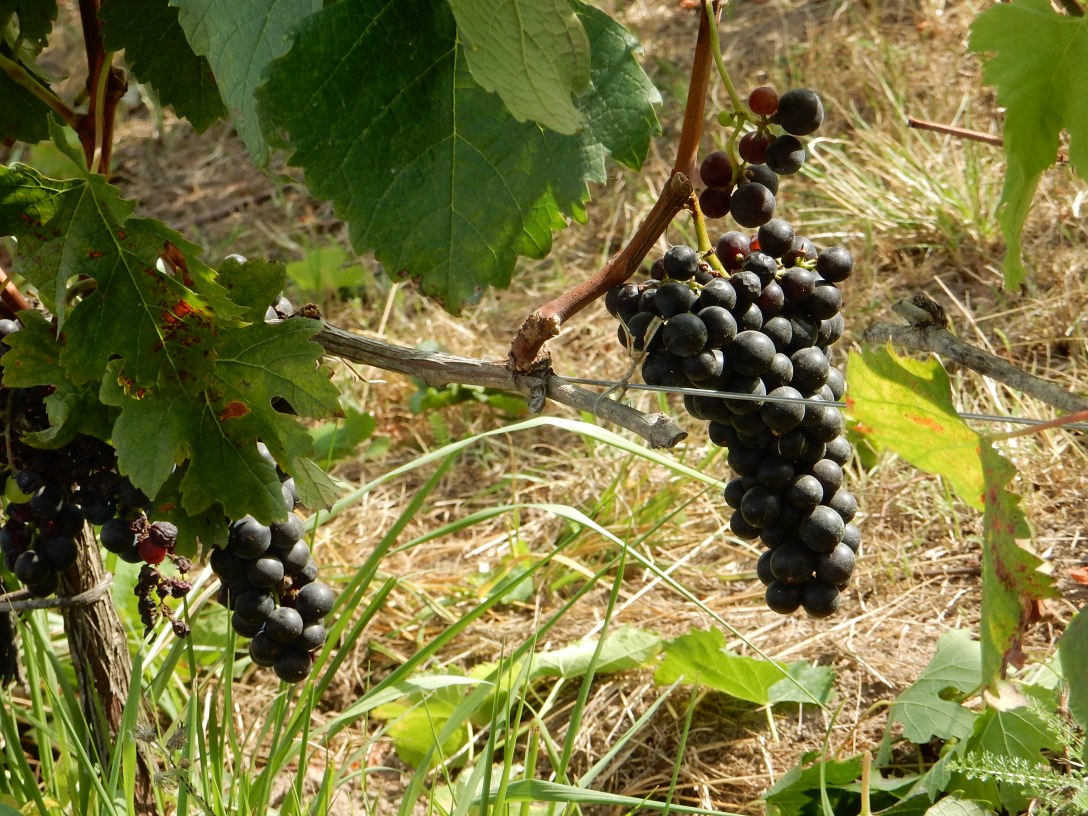
It’s all about the grapes here. And it’s been a rough year, with severe frosts followed by intense summer heat and mold-inducing rain. But the time is nigh for pickers to begin swarming through the tidy rows upon rows of carefully pruned vines.

Continue reading “Postcard from Saint Emilion, France: Treasures ripe for harvesting”

Postcard from Bordeaux, France: Another place Romans trod

Above, detail of a mosaic floor from Roman times uncovered in a house in the historic center of Bordeaux, Musee d’Aquitaine

In an effort to boost his power within the Triumvirate ruling Rome, Gaius Julius Caesar (100 to 44 BC) tucked Gaul under his balteus amongst his growing collection of conquered lands in 56 BC. Burdigalia, later known as Bordeaux, soon emerged as a favored city in the territory called Gallia Aquitania. Grapes assisted immensely: To keep the Roman army in conquering mode, soldiers required copious amounts of wine to wash down their spelt and farro.

The city’s most prominent landmark from the days of Roman occupation is the remains of an amphitheater, Le Palais Gallien. It is thought the once-enormous venue was built to accommodate the multitudes, more than 17,000 spectators, summoned to celebrate a visit from Emperor Lucius Septimius Bassianus, self-ordained as Marcus Aurelius Antoninus (188-217) and better known as Caracalla.

Continue reading “Postcard from Bordeaux, France: Another place Romans trod”