Postcard from Siracusa, Sicily: Restaurants from La to Scu-

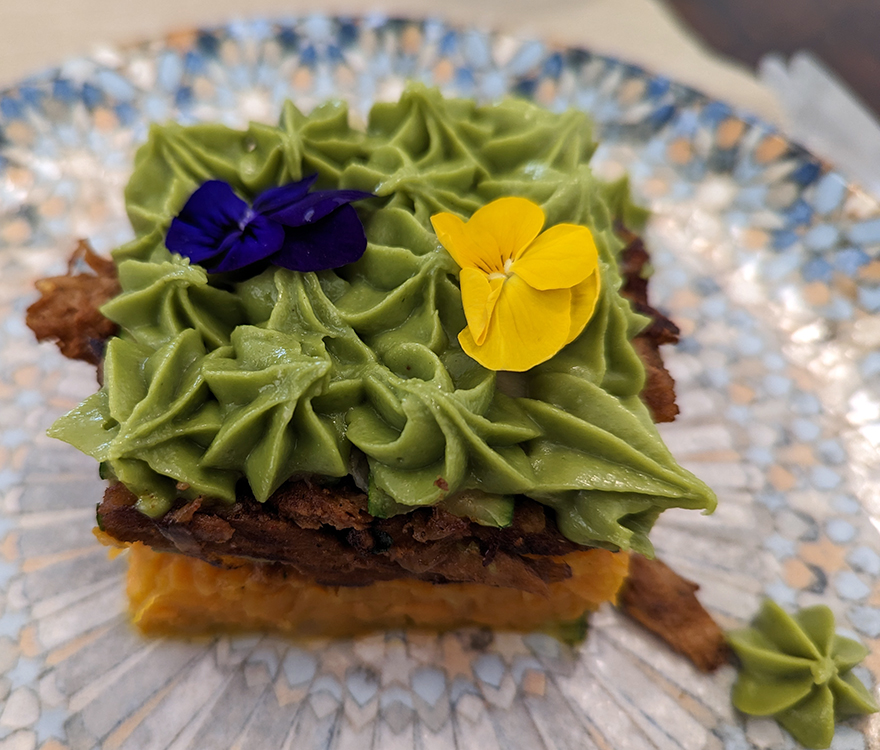
Above: Vegetable strata at Moon

A few more dishes originating in Sicily are introduced in this second part of alphabetized reviews of restaurants we sampled during our stay.

The first is braciolettine Messina, or spiedini. Thin slices of beef, pork, veal or fish are wrapped around a paste-like filling made from bread crumbs, parsley and provolone moistened by olive oil. The small bites are then threaded tightly together on wood skewers before grilling.

Continue reading “Postcard from Siracusa, Sicily: Restaurants from La to Scu-“

Postcard from Siracusa, Sicily: Celebrating the bounty of the sea

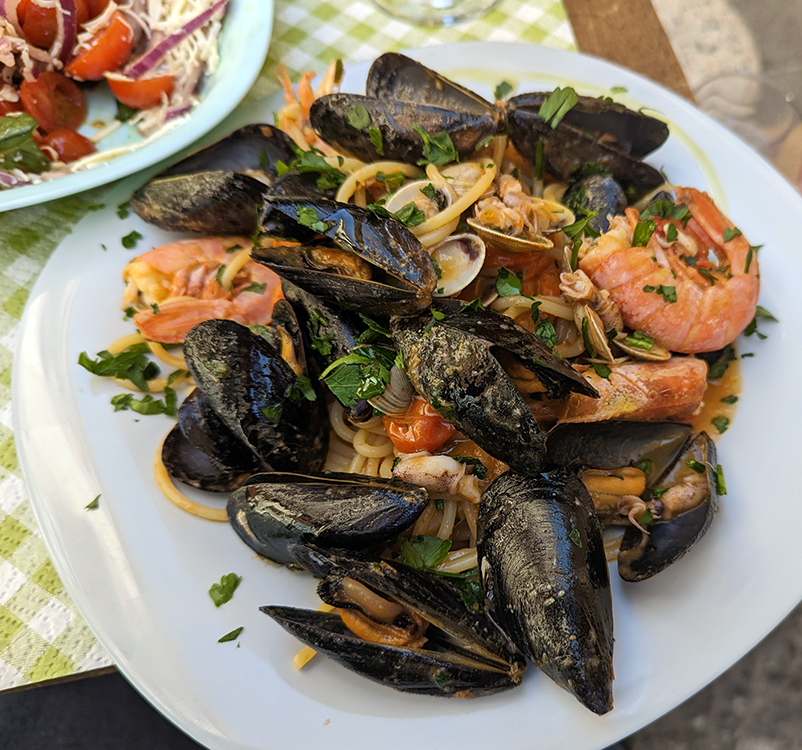
Above: Spaghetti a scoglio at Cod da Saretta

It must be frustrating to a traveler who only wants meat to visit Sicily where seafood dominates. For us, that was heaven. We were surprised we didn’t frequently order some of the dishes we expected to devour almost daily. Too many other temptations popped up on menus.

The first was pizza. Every city anywhere we have been, we are always on the lookout for Neapolitan-style pizzas. We even eat pizza in Austin once a week.

But despite the fact that Sicily has great pizzas exactly the style we love, we only consumed about three in two months. One reason was that the best restaurants and pizzerias, perhaps an over-simplified generalization, only offer it at night; the ones featuring it at lunch time tend to be tourist-oriented and often not as good. We tend to eat a main meal at lunch, one so substantial that’s it for the day. No room for late-night pizzas.

Continue reading “Postcard from Siracusa, Sicily: Celebrating the bounty of the sea”

Postcard from Siracusa, Sicily: Where Plato tested and failed tyrant-taming

Above: Caves created by ancient Greek quarries, including the notorious Ear of Dionysius, line a bluff in the Archaeological Park of Neapolis

Long ago, Siracusa became an important outpost of the Grecian Empire. For strategic reasons, the ancient city first developed on the small island of Ortigia.

A major vestige of this are the ruins of the Temple of Apollo in the heart of the city adjacent to the island’s bustling outdoor market. Forty-two monolithic columns once framed the sixth-century-BC Doric temple dedicated to the sun god. These remnants of the temple incorporated into several private homes and 16th-century military barracks occupying the site were “rediscovered” in the 1890s.

Continue reading “Postcard from Siracusa, Sicily: Where Plato tested and failed tyrant-taming”