
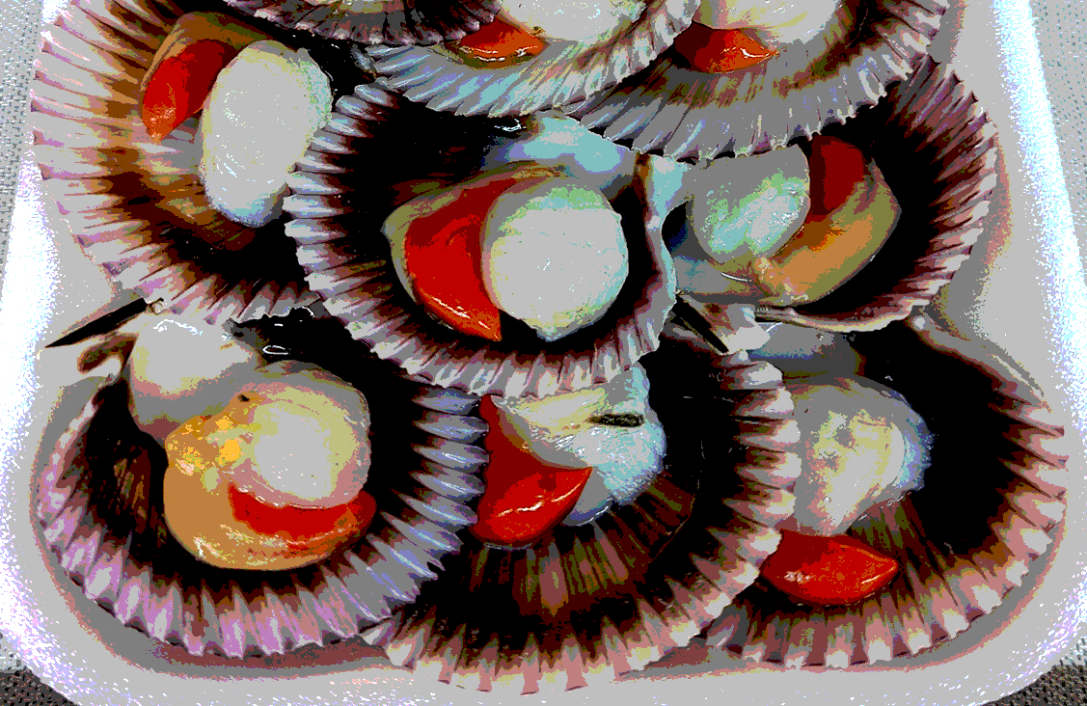

Above: Zamburinas for sale in Mercado de Abastos
During temperate seasons, approximately 280,000 pilgrims strike out on one of the Portuguese routes to Santiago de Campostela, passing through Pontevedra on their way. Pilgrims from around the world walk Camino de Santiago, collecting shell stamps as proof of stops and actual scallop shells as souvenirs. Long ago, it is said these shells served as scoops for food offered at the door of inns along the way.
Myths surround this symbol of Saint James, from his saintly remains being borne ashore at Campostela atop shells to miraculous legends of loved ones who drowned emerging alive from the sea covered in scallop shells. The ridges of the shell symbolize diverse pilgrimage routes, all converging upon Santiago de Compostela.
Whatever the religious symbolism, the zamburinas of the region are famed for their distinctive texture and flavor. Like eggshells for cascarones at Fiesta San Antonio, someone has to empty those shells for the pilgrims. So, we try to do our part by pursuing those delectable Galician zamburinas wherever we can, which translates to every couple of years. (Read about their red “commas” in an earlier postcard sent from Zaragoza in 2022.)
For all of those walkers in Pontevedra arriving tired and hungry yet spiritually recharged, we’ll take a detour before scallops because my alphabetical listing of restaurants dictates it.
Continue reading “Postcard from Pontevedra, Spain: Refueling stop for peregrinos”
 Postcards from Barton Springs