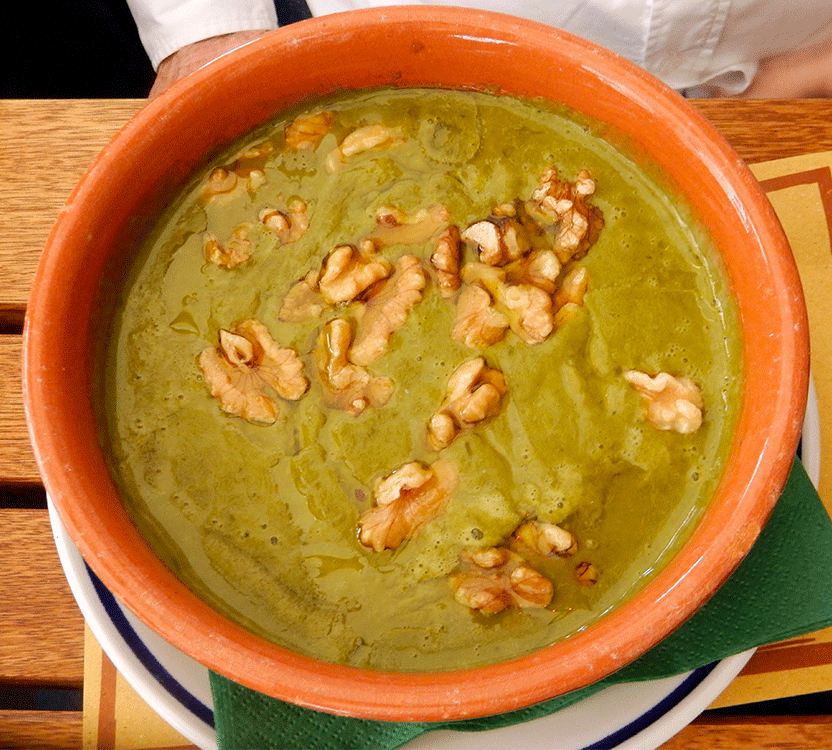
Postcard from Rome, Italy: Offering up a few “last suppers”

These final food photos from our stay in Rome offer a few more glimpses into the confusing multitude of choices available when seeking sustenance in a city of 2.87-million people. TripAdvisor lists close to 6,000 establishments classified as “Italian Restaurants” in Rome.

These are merely listed alphabetically:

Enoteca Buccone – Tables are tucked among well-stocked shelves of wine from which you can select or ask for recommendations without restaurant mark-ups in price.

Knick Knack Yoda – Casual, funky spot with great burger layered with grilled eggplant, spinach and fig jam, but avoid ordering the absurdly expensive bottle of wine with it. Stick with beer.

L’Asino d’Oro – Best part, selecting trio of desserts to share.

Ombre Rosse in Trastevere – Always bustling spot for pizza and salad (spinach and walnut soup featured at top).

Pasta e Vino Come na Vorta – I am bratty about ordering at the counter and being served on paper plates with plastic utensils, but the Mister would have returned often for the rich flavors of coda alla vaccinara, oxtail stew.

Pizza Rustica – One of Rome’s most heralded pizza-by-the-slice spots.

Poldo e Gianna Osteria – Best part of the meal was the pear poached in red wine for dessert.

Popolo Caffe – Crowded, unpretentious neighborhood restaurant with basic good Italian food.

Ristorante Al Borghetto -The risotto with oxtail was among the best risotto dishes ever, but countered by the ridiculously parsimonious presentation of not-inexpensive ceviche.

Ristorante Virginiae – Enjoyed all courses of our fixed-price lunch here.

So many restaurants. So little time.

Postcard from Xativa, Spain: Socarrat good for paella but not for a town

In Valencia, the crispy caramelized socarrat around the edges of the paella pan is a cook’s goal, but scorched is far from ideal when applied to your town.

Spaniards have referred to residents of Xativa as socarrats since the early 1700s. Flush with victory at the Battle of Almansa securing Spain for the Bourbons, the vengeful Phillip V (1683-1746) ordered the town taken and set ablaze. Felipe has not been forgiven, his portrait condemned to hang upside down in the city’s Almodi Museum.

The twin peaks of Monte Vernissa above Xativa have been fortified since Roman times. Himilice, the wife of Hannibal, gave birth to a son there in 218 B.C. Although the fortress appears difficult to conquer, sometimes alliances place one on the conquered side because of battles lost elsewhere.

While under Moorish control, Xativa became the 12th-century European center for production of paper. Most of the walls stretching across the two hilltops today are preserved from the Islamic and Gothic periods. Portions of the castles and fortifications were rebuilt more frequently, including the upper Santa Fe Tower – destroyed by a gunpowder explosion in 1563, an earthquake in 1748 and the French in 1813.

Xativa was home to the powerful Borgia family, known for their Machiavellian political maneuvers. Two of the Xativa-born Borgias became popes, Calixtus III (1378-1458) and Alexander VI (1431-1508). The city also takes great pride as the birthplace of the painter Jose de Ribera (1591-1652).

Out of respect for possible remaining scorched sensibilities, the Mister opted for rabo del toro instead of socarrat-crusted paella. Translated literally, this means bull’s tail, making one think this was one way Spain took care of the remnants of bullfights. But it is oxtail, slowly cooked to an extremely tender stage and served with the resulting rich broth.