Postcard from Oaxaca, Mexico: Trials by fire unite two martyrs across time

Bearing a pair of eyes on a platter, Santa Lucia, or Saint Lucy (283-304), watches all entering the Ex-Convento de Santo Domingo, home to El Museo de las Culturas de Oaxaca. The patron saint for safeguarding eyesight and writers, Santa Lucia always has ranked among my favorites.

Upon reaching what was considered a marriageable age, Santa Lucia opted to dedicate herself to God and pledge herself a virgin. Born into a wealthy family in Sicily, she began distributing her worldly goods to the poor.

Alas, Lucy’s mother previously had promised her daughter’s hand to a suitor, a man displeased with the dispersal of the family’s wealth perhaps more than the personal rejection. Vengeful, he reported her Christian beliefs to Roman authorities.

The Roman authorities sentenced Lucy to reside in a brothel and to be forced into prostitution. Divine intervention rendered her immovable, despite the soldiers’ repeated efforts to budge her in order to carry out the sentence. Thwarted, they gouged out her eyes and set her ablaze. But Lucy proved impervious to the flames so they resorted to ending her life by thrusting a sword through her throat.

This background is why Santa Lucia would seem ideal to offer temporary sanctuary to a Penny Siopsis’ powerful short film, Communion, relating to the end-of-life experience of a Dominican nun, Sister Mary Aidan (1914-1952). The Irish-born doctor, Elsie Quinlan, had devoted years to lovingly tending and healing Black South Africans in a clinic in New London, South Africa, when she turned her automobile into a public square in November of 1952.

Apartheid was institutionalized by the National Party of white rulers of the country, and public gatherings of Blacks were outlawed. The African National Congress spurred a protest in the square as part of the 1952 Defiance Campaign, and soldiers firing into the crowd killed several Blacks.

By the time Sister Aidan drove into the midst of the then angry mob, instead of recognizing a nun who had been helping them the rioters only saw yet another white person determined to harm them. She was stabbed seven times and set ablaze in her car.

The fire had fused my rosary beads….

“voice” of Sister Mary Aidan narrating Communion

The crowd still was determined to avenge the deaths of those shot by the soldiers. The first-person narration continues with the inquest:

Parts of my body were missing. Someone said a lady had a bread knife.

By the time police broke up the riot, the government admitted to fatal shootings of at least nine. Unofficial reports placed the number at closer to 200.

And that is all of the tragic tale I can bear to relate. What could be sadder than, as artist Siopsis described during a dialogue with artist William Kentridge, “being killed by people you love and who love you?”

The film is part of “Hacer Noche/Crossing Night: Arte Contemporaraneo del Sur de Africa,” an exhibit at the Museo de las Culturas closing February 5.

The dancing skeletons visible in the background of one of the photo’s of Simphiwe Ndzube’s “Rain Prayers” are a frame from Kentridge’s short film “30% of Life/30% de Vida.”

To see more of Kentridge’s work, visit an older post from Puebla in 2015. For more photos from the Museo de las Culturas de Oaxaca, visit here.
Postcard from Oaxaca, Mexico: Blurring boundaries between art and craft and embroidering border politics

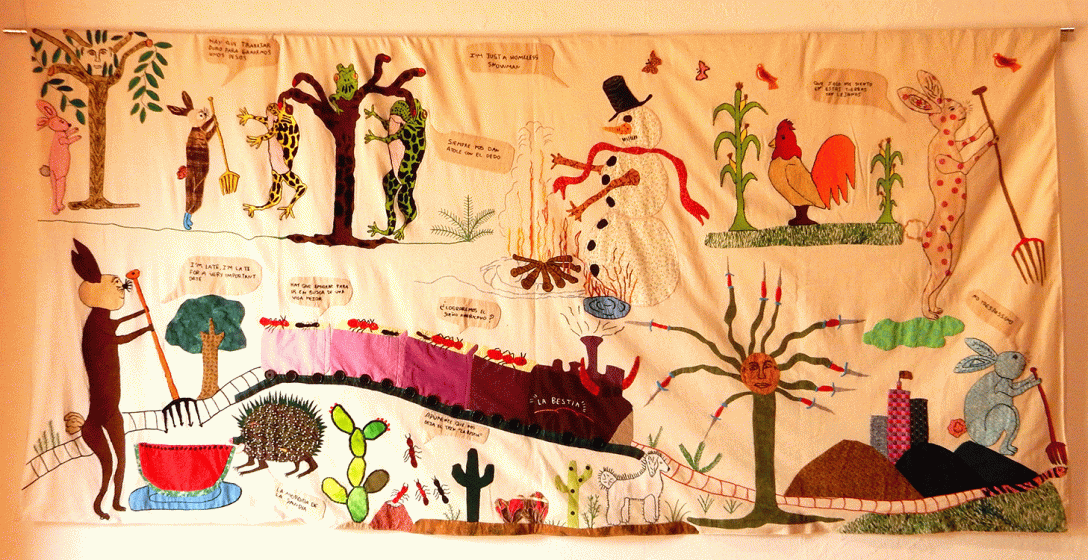
I don’t think about the differences between art and craft. It gets in the way of seeing what is there. Did I teach them anything? No, Las Hormigas did not need me to teach them anything…. working together confirmed that we are more the same than different.

Fred Escher on collaboration with Taller Hormigas Bordadoras

Curator Marietta Bernstorff paired 13 artists from throughout North America with artisans from workshops engaged in traditional crafts in Oaxaca for an exhibition currently displayed at Museo MACO, Museo de Arte Contemporaneo de Oaxaca. Tinwork, ceramics, gourd-carving and stitchery are among the forms of art employed in “Bajo la bóveda azul cobalto/Under the Cobalt Blue Sky.”

The majority of these photos reflect the results of these collaborations that can be viewed through March 20, 2019.

This exposition is a demonstration of what can happen when we accept our differences and our similarities; it is an example of coexistence under the same blanket of stars.

“Bajo la bóveda azul cobalto,” website of MACO

Postcard from Marfil, Guanajuato, Mexico: Wait, are you sure we are not in Italy?

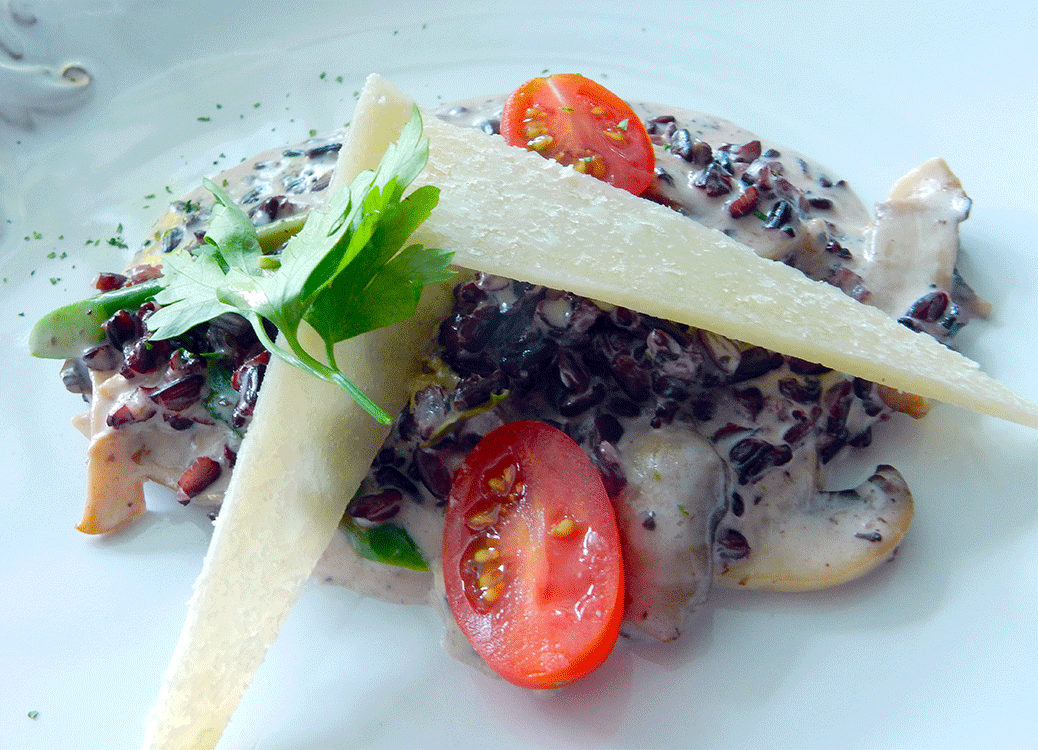
The creamy rich black rice risotto above was one of the best risotti we had in Italy. Wait. We were not in Italy any longer. We were in Guanajuato.

But Peccato di Gola is so good, I dare plop a post about it right here in the middle of “postcards” from Italy. We went to Marfil on the edge of Guanajuato to visit the Casa Museo Gene Byron (more to come about it after delayed Italian posts are delivered). People rave about the food at the museum’s restaurant, but it was closed on a Monday – often an issue when traveling.

So we walked past the ancient dam to the other side of Marfil, not a major hike, to an at-first unappealing strip of restaurants right on the side of the roadway. But stepping inside the comfortably furnished Peccato di Gola quickly altered that first impression.

We were considering opting for pizza, but the owner/chef (who we think is from Rome) piped up that Monday was our lucky day. On Mondays the restaurant offers a 300-peso (about $15) fixed-price lunch. This is not your normal fixed-price offering; no, it is one inviting you to fully understand the restaurant’s name. For our 300-peso per person investment, we could order anything on the menu, except steaks, until we wanted nothing more. Peccato di Gola translates as the sin of gluttony. And we fully consented to commit it.

With a large selection on the menu, we sat back and let him pick our starters while we tried not to fill up on the freshly baked olive bread. The chef definitely had my attention when he bypassed the wood-fired stove to a smoldering grill and placed something over the coals for us. Oh my, grilled octopi. He followed that with fried zucchini blossoms filled with gorgonzola and topped with shrimp. And then a plate layered with rounds of salmon carpaccio and a board bearing caprese salad.

Did we stop there? No, not I said the glutton. We sampled lobster ravioli, again topped with shrimp. And perfectly cooked salmon. Then he brought out a dessert board for us.

I do promise, though, that these photos are from more than one meal. We sinned twice, and then went back one more time to try the pizza.

Although the pizza topped with vegetables popped out from the wood-burning oven looking perfect, it actually was our least favorite dish there. The crust had good texture but had the issue we generally find true in Mexico. Pizza crusts in Mexico often have too much of a white-flour taste compared to what we are accustomed. While not up to Italian standards, this still was the best pizza we found in Guanajuato.

But no matter what day you decide to head to Marfil – a short and inexpensive cab ride from downtown – let Peccato di Gola transport you to Italy. Aside from the pizza, everything we sampled on the menu comes highly recommended.

Oh, to have the opportunity to sin like that again.