Postcard from Bologna, Italy: My taphophobia trumps my taphophilia*

I afterwards went to the beautiful cemetery of Bologna, beyond the walls; and found, beside the superb burial ground, an original of a custode, who reminded me of the grave-digger in Hamlet. He had a collection of capuchins’ skulls, labelled on the forehead; and taking down one of them, said, This was Brother Desidero Berro, who died at forty years, one of my best friends. I begged his head of his brethren after his decease, and they gave it to me. I put it in lime and then boiled it. Here it is, teeth and all, in excellent preservation.

Baron George Gordon Byron, Letter and Journals of Lord Byron: With Notices of His Life, published posthumously in 1831

According to Lord Byron’s guide, more than 50,000 people already inhabited the Certosa di Bologna two decades after its establishment, so its population almost two centuries later must be significant. These new residents rest atop a former Etruscan necropolis. The original grounds and initial buildings were part of San Girolamo di Casara, a former Carthusian monastery established in 1334 but closed by the order of Napoleon in 1796.

When the city of Bologna staked its claim to the land for its cemetery in 1801, it declared it to be a “monumental” one with palaces for the dead designed as suitable lodging for Bologna’s nobility. The wealthy responded by providing employment to artisans and noted sculptors to create lasting tributes to their dynastic glories.

The site quickly was promoted as a must-see destination for visitors, with tours offered soon after its founding. Lord Byron described an interesting monument pointed out during his tour:

In showing some of the older monuments, there was that of a Roman girl of twenty, with a bust by Bernini. She was a Princess Barlorini, dead two centuries ago: he said, that on opening her grave, they had found her hair complete and as yellow as gold.

With only Lord Byron as our guide, we wandered seeking ancient graves, ones predating 1800. His instructions were not specific, however, and the population of the cemetery has increased.

We never found any of the earlier graves, but our urge to search was dampened by the hovering presence of one bird cawing ominously as he seemed to follow us around.

I scare easily. I’m always the one in horror films to say don’t open the door to the basement; don’t go upstairs to the attic; and no, no, no, Wendy, whatever you do, do not peek at what Jack is typing…. So, of course, I heeded the bird’s warning.

We might have been able to find them if I had been willing to take any of the stairways leading into a dark and damp maze of catacombs underground. I had no bread with me to leave a trail of crumbs, and, in my mind, crumbs only would have been consumed by some unfriendly creatures scurrying around below. Leaving us lost among the dead. Forever.

Instead, I assured the Mister my taphophilia temporarily was sated by the massive number of impressive monuments we passed. So we left our feathered friend behind and returned to the more vibrant heart of Bologna.

*My fear of being buried alive is far greater than my love of wandering through graveyards.

Reviving Dia de los Muertos

When I first moved to San Antonio, the places to see flowers and foods placed on graves to encourage visits from their inhabitants were the old San Fernando Cemeteries. Most of the wrinkled pilgrims picnicking with their deceased loved ones on All Saints and All Souls Days, November 1 and 2, appeared poised to repose alongside them. The remnants of the Dia de los Muertos traditions enduring from when San Antonio had been part of Mexico were dying with them.

Bedoy’s Bakery, founded in 1961, credits Father Virgil Elizondo with encouraging the bakers to dust off traditional old recipes for dead bread, pan de muerto. I used to buy the breads around Halloween, but felt guilty when we selfishly ate them without offering to share them with the dead.

In the past decade or two, artists in San Antonio began adding contemporary twists to ancient Day of the Dead traditions, and now the city sponsors a full-blown fiesta for Dia de los Muertos in La Villita. Altars, processions and even a concert by Girl in a Coma were part of this year’s event, held a bit early because the city’s Day of the Dead calendar is getting more crowded.

While a far cry from the celebrations we witnessed outside of and in San Cristobal de las Casas last November, San Antonio’s spirited version represents traditions worth reviving and refreshing for new generations.

Although I cannot comprehend why the marketing department at Coca-Cola is not all over sponsorship opportunities for this event. In Mexico, Coca-Cola dominates the graveyard market in San Juan Chamula, Chiapas:

One would think a people who have rejected so many standards held by outsiders would not consider taking even one sip of a Coca-Cola. But expelling evil spirits from the body is key. Spitting helps, but burping is best. And what is better at inducing burping than a few shots of rapidly consumed Coke….

But, what marketing genius convinced the Chamulans a half-century ago to incorporate Coke into not only their Sunday church-going regimen, but everyday life? I mean, Chamulans need to continually maintain their guard against those invasive evil spirits, burping them out on a regular basis.

And whoever the lucky holder of the local bottling franchise is really struck a home run with this. The market is larger than just the living. On Dia de los Muertos, even the dead are served Cokes to quench their parched throats from so much time spent underground and to burp away any evil spirits hanging around the cemetery.

Just think how large Coca-Cola’s market share would soar if this practice spread to the dead everywhere.

Here are some posts from last year in Chiapas, Mexico:


Neighborhood memories embedded in the walk

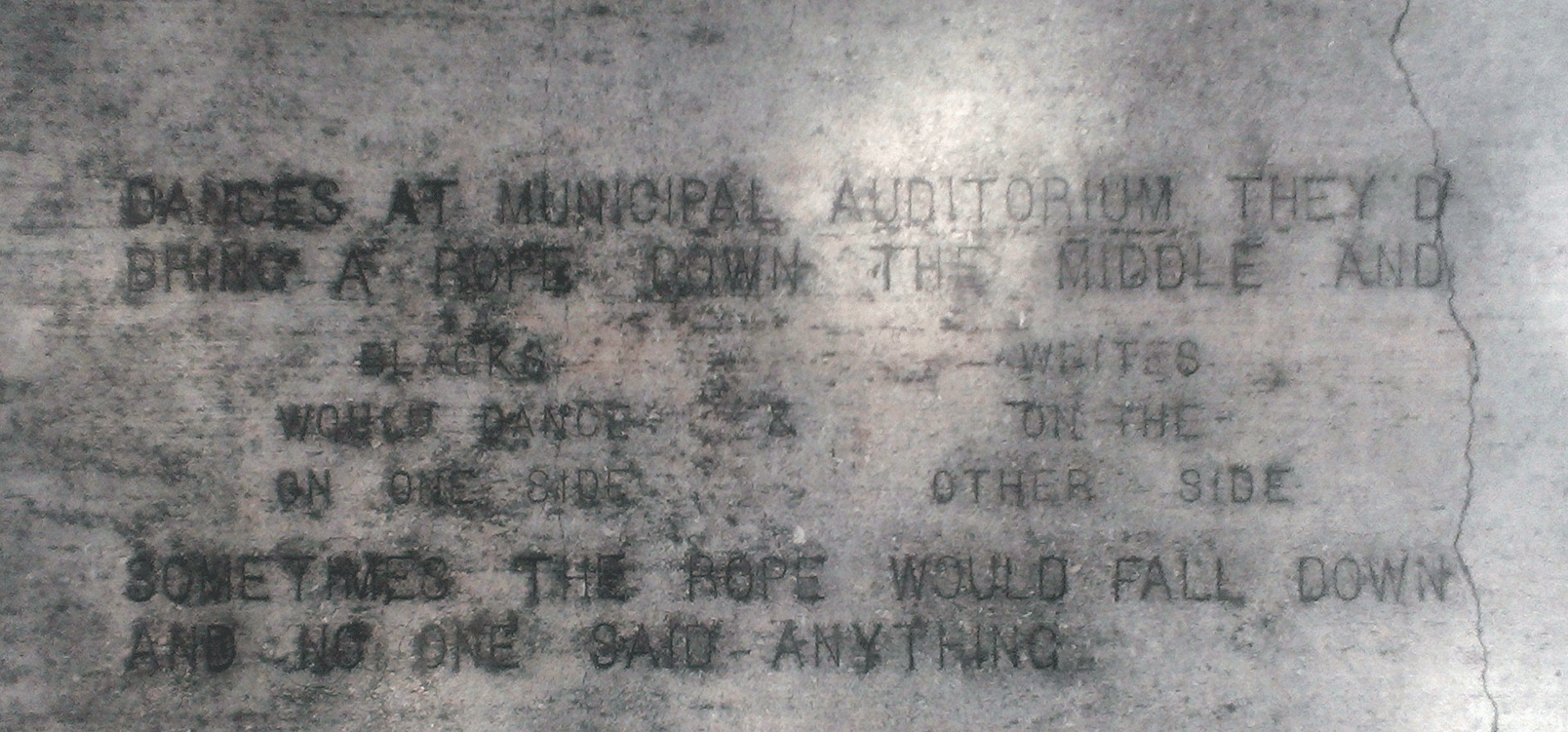
dances-at-auditoriumDances at Municipal Auditorium They’d

bring a rope down the middle and

blacks would dance on one side

whites on the other side

Sometimes the rope would fall down

and no one said anything

Varied our morning walk and was reminded of one of my favorite sidewalk-art sites in Southtown – neighbors’ remembrances embedded around the pocket park on South Presa. This one seems appropriate with the completed transformation of Municipal Auditorium into the Tobin Center for the Performing Arts.

The walk also took me by an old haunt, the un-graves of the Meier Brothers.

And here’s the transformation of the auditorium to the Tobin Center as viewed from the offices of Marmon Mok. No rope down the middle.